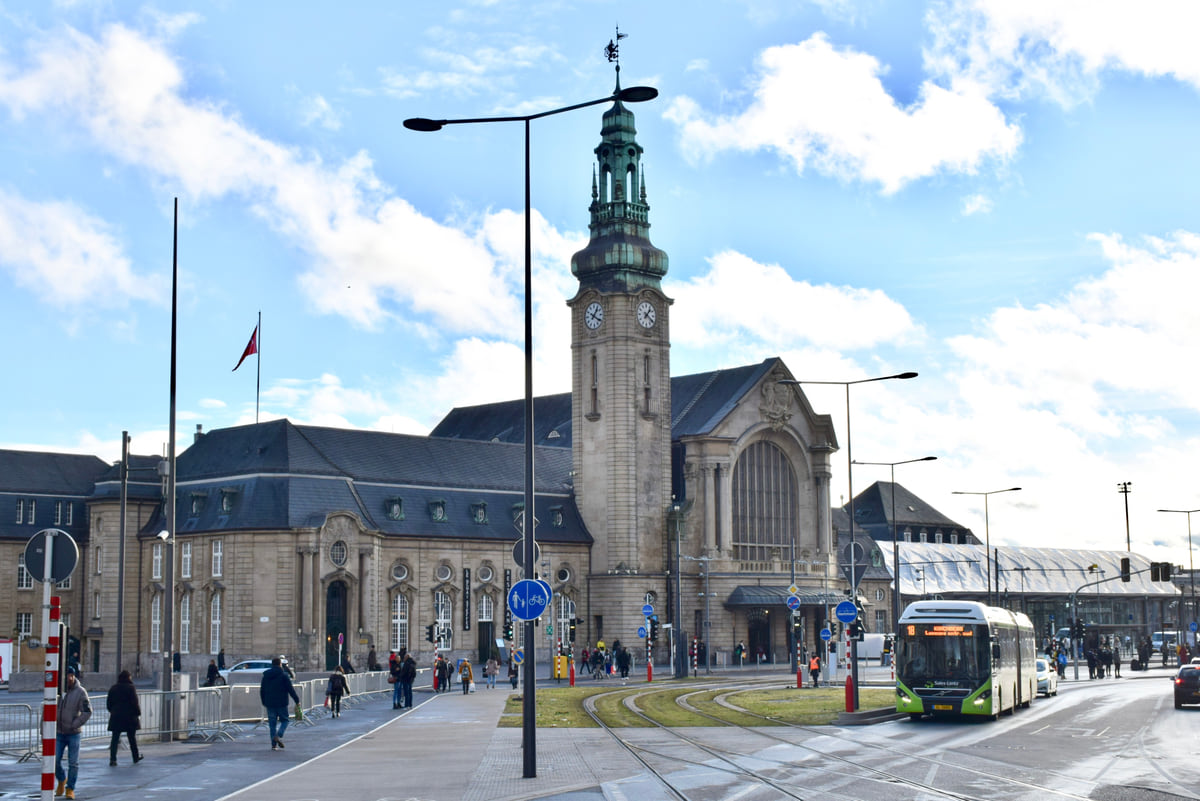
Tram, buses, trains, a funicular and lifts
Getting around Luxembourg on free public transport

- Fares
- Free since 1 March 2020
- Tram
- Line T1, 16 km, 24 stops
Getting around Luxembourg is free for everyone since 1 March 2020, visitors included, on buses, trams, second-class trains and the funicular. In the capital you use tram T1, 16 km with 24 stops, and the buses, with a night service on Fridays and Saturdays until 3:30; elsewhere, trains and regional buses. Only first class (€3 for two hours, €6 a day) and cross-border journeys are paid. Timetables are on mobiliteit.lu.
Public transport options in Luxembourg
| Mode | What I'd use it for | Price |
|---|---|---|
| Tram T1 | Airport, Kirchberg, centre and station | Free |
| City (AVL) and regional (RGTR) buses | Suburbs of the capital and villages | Free within the country |
| CFL train, second class | Esch-sur-Alzette, Ettelbruck, Clervaux, Wiltz | Free within the country |
| CFL train, first class | More room on longer trips | €3 for 2 hours, €6 a day |
| Pfaffenthal-Kirchberg funicular | From the train up to the Kirchberg tram | Free |
| Pfaffenthal lift | Old town down to the valley | Free |
| City Night Bus | Friday and Saturday nights | Free |
transports.public.lu, cfl.lu and vdl.lu, checked on 29-09-2026. First-class fares as of September 2026.
Step by step
-
From the airport
Tram T1 runs from Findel to the city free of charge, with no ticket to buy.
Free
-
Around the capital
Use the T1 and city buses by day, and the night bus on Fridays and Saturdays.
Until 3:30
-
Up and down the hills
The Pfaffenthal lift and the Kirchberg funicular save the steep climbs.
Free
-
Beyond the city
Trains and regional buses reach the rest of the country; plan on mobiliteit.lu.
Second class free
I wouldn't hire a car for the capital. Tram, buses and the Pfaffenthal lift get me everywhere for nothing, and I'd only drive in the north to string several castles into one day.
If you only read this
Full read: 3 min
- Luxembourg's public transport has been free since 1 March 2020 for everyone, visitors included.
- It covers buses, trams, second-class trains and the funicular within the country.
- First class (€3 for two hours, €6 a day) and cross-border legs are paid.
- There's no underground; the capital's backbone is tram T1 from the airport to Stadion.
Notebook
Before you go to Luxembourg, this
-
01 To save money
No ticket, no travelcard, no Oyster
Inside the country you simply board the bus, tram or second-class train. There's no visitor card to buy for transport, because travel is already free for residents, commuters and tourists alike.
Luxembourg free public transport -
02 Getting there
One tram for the airport, station and Kirchberg
Line T1 runs from Findel airport to Stadion in the Cloche d'Or via Kirchberg, Hamilius and the Gare Centrale, every few minutes on the central section.
Luxembourg tram -
03 My tip
A lift down to the Pfaffenthal
The panoramic lift drops 60 m in 30 seconds between the old town and the Pfaffenthal, daily from 05:45 to 01:00 and free. It closes from 09:00 on one Monday a month for maintenance.
Pfaffenthal lift -
04 Money
The only things you pay for
First class on the train (€3 for two hours, €6 until 04:00 the next day) and any leg past the border. Bought on board, the surcharge is €1 to €9, cash only.
trains in Luxembourg
What I would book ahead
Getting around Luxembourg for free, with two exceptions
On 1 March 2020 Luxembourg made every form of public transport free, for residents, cross-border workers and tourists alike. You don’t buy or tap anything, you simply board. For comparison, before then a day ticket for the whole network cost €4. That matters more than it sounds in a country of 2,586 km² (see how big is Luxembourg), where nearly everything a visitor wants to see sits within an hour of the capital.
Two things still carry a price. First class on the train, which CFL sells at €3 for two hours and €6 until 04:00 the following day, and any journey that crosses the border, because free travel stops at the last point inside the country. Coming from the UK, that’s the bit to get your head round, since your Eurostar and onward ticket only needs to reach the border. The small print is in Luxembourg free public transport.
How I’d get around on a first visit
I’d stay near a tram stop, so the airport, the station and Kirchberg are all one ride away. I’d walk the old town, the Grund and the Pfaffenthal, using the lift for the climb back up. On days out of the capital I’d take the train north or the bus to the Mullerthal, without spending a penny on fares. First class on a long run is the only transport cost I’d even consider, and in a country this small I doubt you’ll miss it.
Tram and buses in the capital
The spine of the city is tram T1. It runs 16 km with 24 stops from Findel airport to Stadion, calling at Kirchberg, the Étoile, Hamilius and the Gare Centrale. Luxtram runs a tram every 3.5 to 4 minutes on the central stretch and every eight at either end. Times and stops are in Luxembourg tram. Trams are step-free from the platform, which makes a real difference if you arrive at Findel with a big suitcase and head straight for your hotel.
Buses fill the gaps. In the capital they’re the city’s own AVL routes; around the country, the regional RGTR network and CFL’s buses. At weekends the City Night Bus adds eight lines that keep going until 03:30, on Friday and Saturday nights only. Which route to take where is in Luxembourg buses.
If you are staying the night, see the best hotel deals in Luxemburgo for your dates: the well-placed rooms go fast.
Train or bus beyond the city?
For the old mining south and for the north, the train. CFL lines run to Esch-sur-Alzette and Rodange, to Ettelbruck, Clervaux and Troisvierges, to Wasserbillig and to Kleinbettingen. For places without a station, such as Vianden, Echternach or Remich, the regional bus. My method is simple. I put the journey into mobiliteit.lu, which plans across train, tram and bus, and let it choose the connection. The rail network is covered in trains in Luxembourg.
Lifts and a funicular for the hills
The city is split into levels, and the climbs matter more than the distances. Free vertical shortcuts take care of that. The panoramic lift links the old town with the Pfaffenthal, 60 m in 30 seconds, from 05:45 to 01:00. For the rest of 2026 it closes from 09:00 on 7 December. The Pfaffenthal-Kirchberg funicular, the only one in the country, climbs 40 m in 63 seconds from the railway halt to the Kirchberg tram. There’s also a lift between the plateau du Saint-Esprit and the Grund.
Before you fix your dates, compare train and coach tickets to Luxembourg: the same journey can cost very different amounts from one day to the next.
Taxis, cars and bikes
Taxi fares in Luxembourg are unregulated, so there’s no set price to check in advance. The FCDO advises using official cabs from marked ranks, which display their prices, and checking the rate per kilometre first, since some charge well over the odds. By law the driver must take the shortest route. I’d save a taxi for the small hours or a pile of luggage.
A car only makes sense to me for chaining northern castles or the Mullerthal into a single day without watching connections. If you do drive, speed limits and other rules are covered in driving in Luxembourg. Cyclists get a national network of more than 600 km and free bike carriage on domestic trains.
So you do not lose the morning at the ticket office, browse tickets and tours in Luxemburgo on GetYourGuide.
If you would rather go at your own pace, see the car hire deals in Luxembourg: the earlier you book, the more cars are left to choose from.
If you are staying the night, see the best hotel deals in Luxemburgo for your dates: the well-placed rooms go fast.
Late-night and early-morning services
| Service | Published times |
|---|---|
| Tram, last departure from Findel | 00:06 every day |
| Tram, first departure from Stadion | 04:00 every day |
| City Night Bus CN1 | Fri and Sat nights, 21:30 to 03:30, every 10-15 min |
| City Night Bus CN2 to CN8 | Fri and Sat nights, 00:30 to 03:30, every 30 min |
| Pfaffenthal lift | 05:45 to 01:00 |
luxtram.lu and vdl.lu, 29-09-2026. The lift closes from 09:00 on 7 December 2026 (5 October and 2 November have passed).
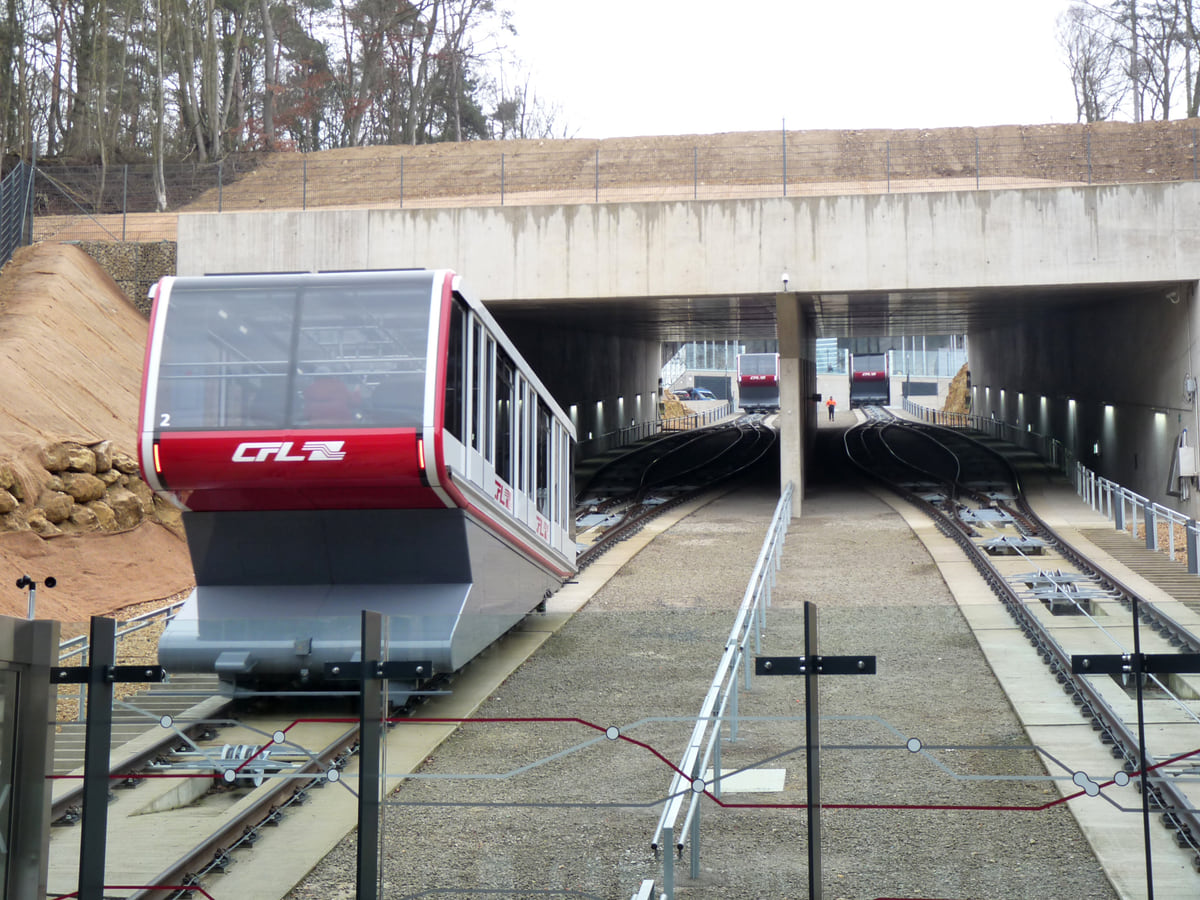
A red and white car of the Pfaffenthal-Kirchberg funicular on its inclined track beside the concrete station
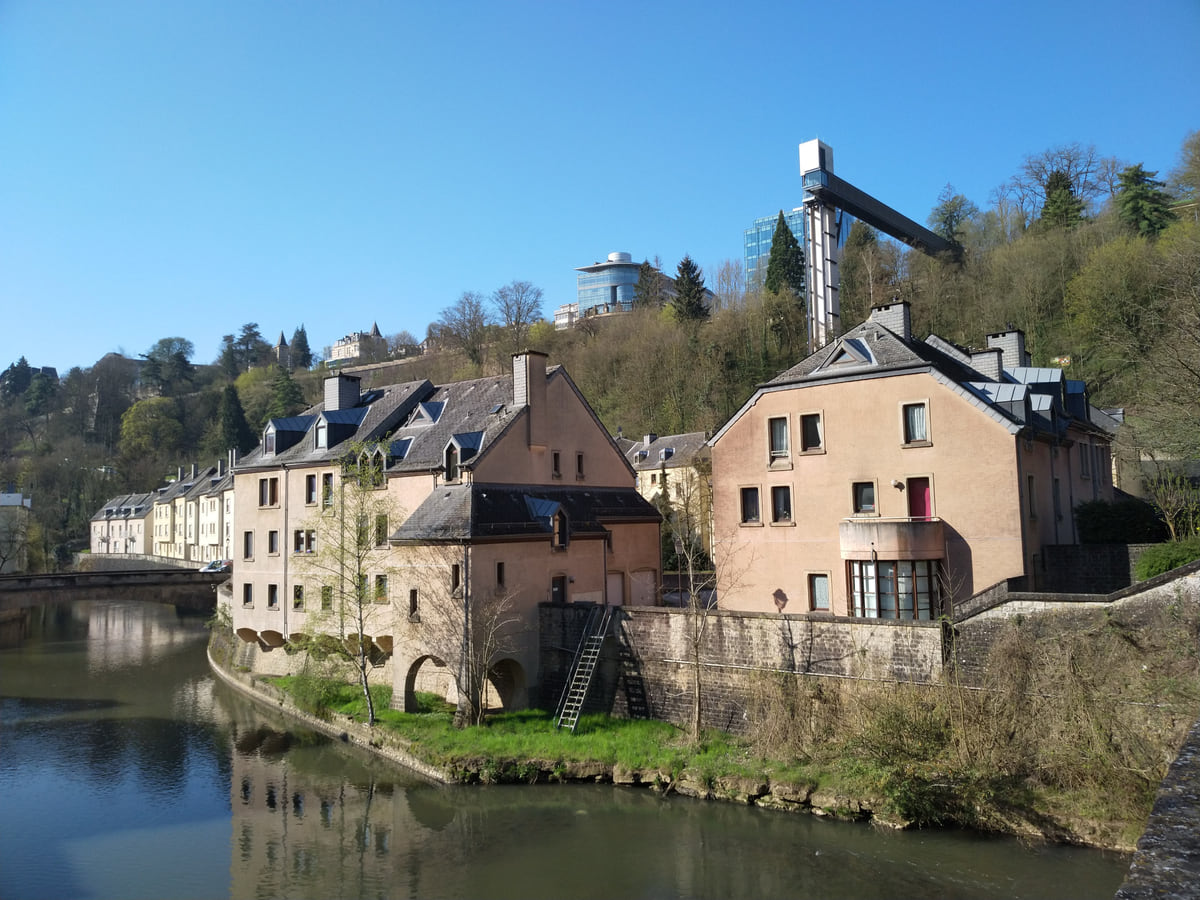
The Pfaffenthal panoramic lift on the hillside, with old houses of the quarter reflected in the Alzette
Test yourself
True or false?
0/3 Pick before you peek.
-
Luxembourg City has an underground railway.
See the answer
False. There's no underground. The capital's main line is tram T1, 16 km long with 24 stops, from the airport to Stadion.
-
Tourists travel free on Luxembourg's buses and trams too.
See the answer
True. Free travel since 1 March 2020 applies to residents, cross-border commuters and tourists, on buses, trams, second-class trains and the funicular.
-
Luxembourg taxis charge a fixed, regulated fare.
See the answer
False. visitluxembourg says taxi prices are free. Official cabs display their price list and may charge extra in the evening and on Sundays.
- Buses, trams and second-class trains
- €0
- Tram line T1, with 24 stops
- 16 km
- Height covered by the Pfaffenthal lift
- 60 m
- Last City Night Bus, Fri and Sat
- 03:30
0 of 425 Luxembourg guides
Your next stamp
- Free public transport
- On a budget
- With kids
- Free things to do
- Buses
- By train
- Cheap hotels
- Kirchberg funicular
- A Possen Museum
- American Cemetery
- Ansembourg
- Ansembourg Castles
- Asselborn
- Bascharage
- Beaufort castles
- Belval
- Belval blast furnaces
- Berg Castle
- Bernard-Massard cellars
- Bourglinster Castle
- Bourscheid Castle
- Brandenbourg
- Brandenbourg Castle
- Caves St Martin
- Christmas
- Clervaux Castle
- Echternach
- Echternach Abbey
- Ehnen
- Ehnen Wine Museum
- Esch-sur-Alzette
- Esch-sur-Sûre Castle
- European Museum Schengen
- Fond-de-Gras
- General Patton Museum
- German war cemetery
- Haff Réimech
- Hohllay
- Hollenfels Castle
- Hosingen
- Kautenbach
- Kneiff
- Koerich Castle
- Larochette Castle
- Lasauvage
- Mersch Castle
- Military History Museum
- Moersdorf
- Mondorf Domaine Thermal
- Munsbach Castle
- National Mining Museum
- Parc Merveilleux
- Park Sënnesräich
- Places to visit
- Remich
- Rindschleiden
- Schiessentümpel
- Septfontaines Castle
- Slate Museum
- Stolzembourg
- Tudor Museum
- Useldange Castle
- Valley of the Seven Castles
- Vianden
- Vianden Castle
- Ville Haute
- Wasserbillig Aquarium
- Weiswampach lakes
- Wiltz Castle
- Ahn
- Berdorf
- Bourscheid-Plage
- Butterfly garden
- Clervaux
- Differdange
- Echternach lake
- Grevenmacher
- Heringer Millen
- Hollenfels
- Luxembourg City
- Luxembourg Science Center
- Meysembourg Castle
- Mullerthal
- National Day
- National Resistance Museum
- Perekop
- Remerschen
- Schoenfels Castle
- The Family of Man
- Things to do
- Upper Sûre Lake
- Vianden chairlift
- Wasserbillig
- Clervaux Abbey
- Echternach Roman villa
- Éislek
- Insenborn
- Kallektuffquell
- Machtum
- Most beautiful places
- Our Nature Park
- Pétange
- Pettingen Castle
- Schueberfouer
- Schwebsingen
- Victor Hugo House
- Waldbillig
- Dudelange
- Kuelscheier
- Lultzhausen
- Moselle Valley
- Octave
- Prettiest villages
- Sanem
- Schengen
- Wellenstein
- Wiltz
- Wolfsschlucht
- Beaufort
- Bech-Kleinmacher
- Éimaischen
- Gaalgebierg
- Guttland
- Marnach
- Mondorf-les-Bains
- Putscheid
- Schifflange
- UNESCO World Heritage
- Carnival
- Consdorf
- Ellergronn
- Käerjeng
- Kayl
- Map
- Minett
- Munshausen
- Tandel
- Bech
- Buergbrennen
- Esch-sur-Sûre
- Rumelange
- Where is Luxembourg
- Is it a country?
- Lac de la Haute-Sûre (commune)
- Rosport-Mompach
- Wormeldange
- Larochette
- Mondercange
- Regions
- Bettembourg
- Bock Casemates
- Cantons
- Dancing procession
- Diekirch
- Fischbach
- Garnich
- Mersch
- Moselle wine route
- Ettelbruck
- Grund
- Heffingen
- Kehlen
- Lintgen
- Moselle river cruises
- Pétrusse Casemates
- Towns and villages
- Chemin de la Corniche
- Erpeldange-sur-Sûre
- Junglinster
- Kopstal
- Lorentzweiler
- Nommern
- Pfaffenthal
- Population
- Bissen
- Clausen
- Grand Ducal Palace
- Koerich
- Schieren
- Size
- Vallée de l'Ernz
- Feulen
- Kirchberg
- Languages
- Notre-Dame Cathedral
- Reisdorf
- Steinfort
- Bettendorf
- Habscht
- St Michael's Church
- Helperknapp
- Luxembourgish
- Place Guillaume II
- Name
- Place d'Armes
- History
- Place de la Constitution
- Grand Duke
- Colmar-Berg
- Flaxweiler
- Gare
- Hamm
- Luxembourg fortress
- Mamer
- Mertert
- Minett Trail
- Mullerthal Trail
- Neumünster Abbey
- Parc Hosingen
- Pfaffenthal lift
- Political system
- Redange
- The Passerelle
- Wine festivals
- Winseler
- Beckerich
- Biwer
- EU institutions
- Goesdorf
- Limpertsberg
- Mudam
- Natur Musée
- Pulvermühl
- Stadtbredimus
- Troisvierges
- Wenzel walk
- Bonnevoie
- Bous-Waldbredimus
- Ell
- Flag
- Kiischpelt
- Manternach
- Philharmonie
- Vauban circuit
- Weiswampach
- Betzdorf
- Boulaide
- Dräi Eechelen Museum
- Facts
- Hollerich
- Lenningen
- Useldange
- Wincrange
- Bourscheid
- Dalheim
- Gasperich
- Public holidays
- Red Bridge
- Saeul
- Belair
- Second World War
- Vichten
- Battle of the Bulge
- Merl
- Préizerdaul
- Cents
- EU and Schengen
- Groussbus-Wal
- Entry requirements
- Neudorf
- Rambrouch
- Currency and payments
- Mertzig
- Weimerskirch
- Adolphe Bridge
- Beggen
- Escapardenne
- How to get there
- International March of Diekirch
- MNHA (National Museum)
- Rock climbing
- Sandweiler
- Bridges
- Eich
- Flights
- Golf
- Hesperange
- Lëtzebuerg City Museum
- Canoeing and kayaking
- Dommeldange
- Luxembourg airport
- Strassen
- Villa Vauban
- Airport to city centre
- Bertrange
- Casino Luxembourg
- Mühlenbach
- Swimming pools
- From Brussels
- Pétrusse Valley
- Rollingergrund
- Walferdange
- Cessange
- Day trip from Brussels
- Municipal Park
- Steinsel
- Free walking tours
- From Paris
- Niederanven
- From Frankfurt
- Schuttrange
- Sightseeing train and bus
- Contern
- By coach
- Weiler-la-Tour
- Driving
- Luxembourg in one day
- Pretzel Sunday
- Rham Plateau
- Tour de Luxembourg
- Candlemas (Liichtmëssdag)
- Car hire
- Luxembourg in two days
- Saint-Esprit Plateau
- Luxembourg in three days
- Melusina statue
- Parking
- St Nicholas Day (Kleeschen)
- Fête de la Musique
- Luxembourg in four days
- Museums in Luxembourg
- Petrol
- Place de Clairefontaine
- A week in Luxembourg
- Luxembourg Marathon
- Tram and Bus Museum
- Parks in Luxembourg City
- Road trip
- Belgium and Luxembourg
- Tram
- Viewpoints
- Trains
- Luxembourg station
- Cycling
- LuxembourgPass
- Prices and budget
- Mobile and roaming
- Healthcare
- Safety
- Scams
- Tourist information
- Packing list
- Swimming lakes
- With a dog
- Markets
- Tipping
- Shopping
- What to buy
- Shopping centres
- For couples
- Playgrounds
- Adventure parks
- Nightlife
- Castles
- Theatres and concert venues
- Leudelange
- Nature parks
- Where to stay
- City-centre hotels
- Hiking
- Nature reserves
- Reckange-sur-Mess
- Hotels near the station
- Roeser
- Frisange
- Hotels in Kirchberg
- Airport hotels
- Dippach
- Hotels in Vianden
- Hotels in Echternach
- Hotels in Clervaux
- Hotels in Mondorf-les-Bains
- Hotels in Esch-sur-Alzette
- Hotels on the Moselle
- Mullerthal hotels
- Upper Sûre lake hotels
- Hotels in Diekirch and Ettelbruck
- Luxury hotels
- Boutique hotels
- Spa hotels
- Family hotels
- Apartments
- Weather
- Youth hostels
- Best time to visit
- Campsites
- Holiday cottages
- In winter
- Castle hotels
- In spring
- Day trips
- In summer
- Around Luxembourg
- In autumn
- Ice skating
- Trier day trip
- Metz day trip
- Arlon day trip
- In January
- In February
- In March
- In April
- In May
- In June
- In July
- In August
- In September
- Food
- In October
- In November
- Where to eat
- In December
- Michelin restaurants
- Cheap eats
- Judd mat Gaardebounen
- Bouneschlupp
- Gromperekichelcher
- Kniddelen
- Quetschentaart
- Rieslingspaschtéit
- Events
- Wine
- Crémant
- Beer
Getting around Luxembourg: questions and answers
Is public transport free in Luxembourg for tourists?
Yes. Since 1 March 2020 buses, trams, second-class trains and the funicular have been free for everyone within the country, visitors included. First class and cross-border journeys are still paid.
Does Luxembourg have an underground?
No. The capital has a single tram line, T1, running 16 km with 24 stops from the airport to Stadion, backed up by city buses.
Is it easy to get around Luxembourg without a car?
Very. In the capital the tram, buses and your feet cover it, helped by the Pfaffenthal lift and the funicular. For the rest of the country, CFL trains run north and south and RGTR buses reach villages without a station.
Where can I check timetables?
On mobiliteit.lu, run by the public transport administration, or in its app for iPhone and Android. It plans journeys across buses, tram and trains together.
Are taxis expensive in Luxembourg?
There's no fixed fare, prices are set freely. Official taxis display a price list and can add a surcharge in the evening and on Sundays, so ask the rate per kilometre before you get in.
Is there public transport late at night?
The last tram leaves Findel at 00:06, and on Friday and Saturday nights the capital's City Night Bus runs eight lines until 03:30.

Questions about Luxembourg? Write to me
If your question is not answered here, write to me and I will look it up in the official sources.
My email sergiolepone@gmail.com
By
Tourism graduate with a master’s in Tourism Management and Planning from the University of Málaga, who has travelled across Europe. He writes every guide from official sources and his own judgement.
Published on . Updated on . Facts checked on .
Sources
Some links in this guide are affiliate links: if you book through them, the site earns a commission at no extra cost to you. Affiliate disclosure
Photos: Zinneke (CC BY-SA 3.0); Smiley.toerist (CC BY-SA 4.0); Paul Braun (CC BY 4.0), via Wikimedia Commons.