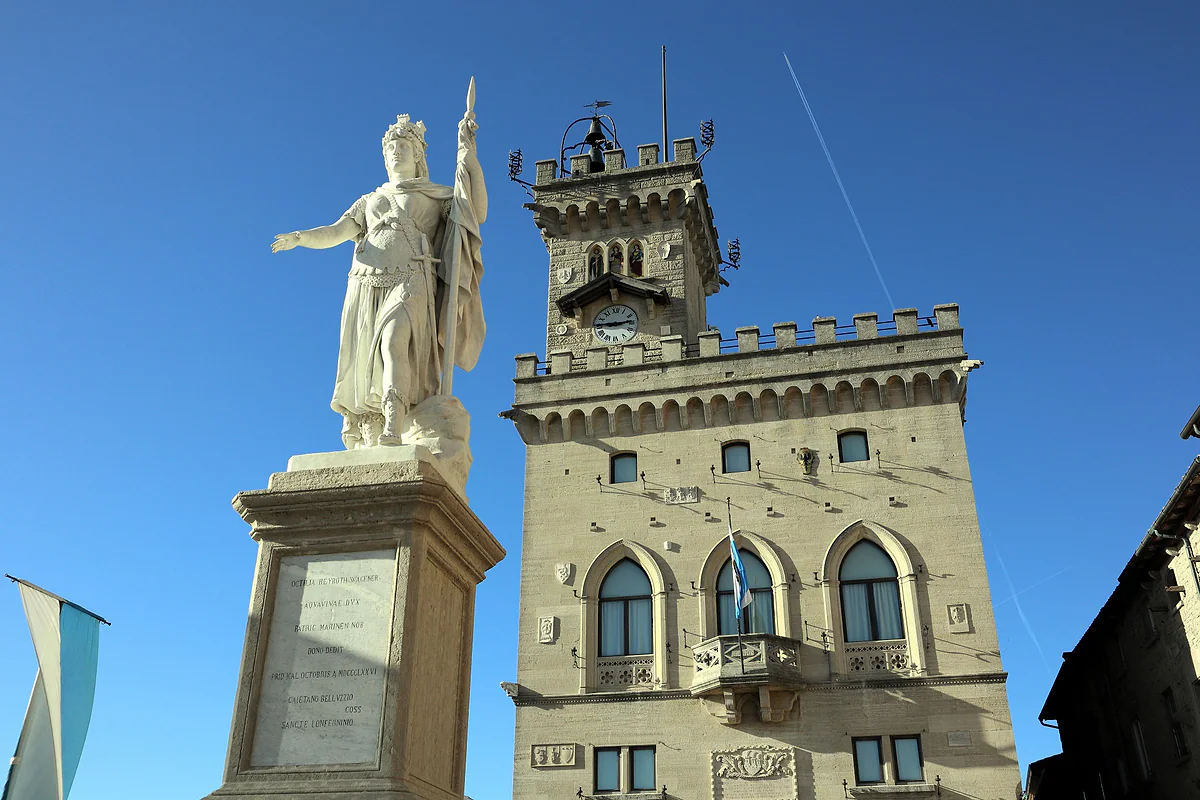
Borders unchanged since 1463
The history of San Marino, seventeen centuries on one mountain
Tradition dates San Marino's origin to 3 September 301, when the stonemason Marinus took refuge on Mount Titano. The first records of its institutions are 13th-century, with two consuls named in 1243. In 1463 it gained the castles that give it its present shape; it outlasted Napoleon and Italian unification, and in 2008 UNESCO recognised its continuity as a free republic.
In 30 seconds
Full read: 3 min
- Tradition dates San Marino's founding to 3 September 301; written records start in the 13th century.
- In 1463 Pope Pius II granted it four castles and its borders haven't changed since.
- Napoleon recognised it in 1797, Garibaldi sheltered there in 1849 and Lincoln accepted its honorary citizenship in 1861.
- The 1906 Arengo brought elections to the Council, and in 2008 UNESCO listed the centre and Titano.
If I had to pick one date, it wouldn't be 301, which is tradition, but 1463. That year San Marino gained four castles and stopped growing, and its map hasn't moved since. That refusal to expand, repeated with Napoleon, is to my mind the key to why it still exists.

Before you go
What I would keep in mind
-
01 Most beautiful
You can read the history in the towers
The Guaita's core is 11th-century and sheltered Titano's first inhabitants; the Cesta appears in a document of 1253. Climbing the towers is the most direct way to touch the country's past.
Three Towers of San Marino -
02 My tip
The public holidays are chapters of its history
5 February marks the end of Alberoni's occupation in 1740, 25 March the 1906 Arengo and 3 September the founding. The State Museums open free on 5 February and 3 September.
events in San Marino -
03 My tip
Two heads of state since the 13th century
The consuls recorded in 1243 are the origin of today's Captains Regent, who are still two and still serve six months. How they're chosen and what they do has its own page.
Captains Regent of San Marino -
04 To save money
The State Museum is on the €11 pass
The archaeology of the territory, from the first traces on Titano, fills the ground floor of the State Museum, which is included in the single State Museums pass along with the towers.
San Marino State Museum
What I would book
- Places to stayBooking.com Stay inside the historic centre The historic centre and Titano are UNESCO-listed. Sleeping inside lets you explore them before and after the day-trippers.
- Tours and ticketsGetYourGuide A guided walk to put dates to the stones If history is what brings you, a guided walk around the centre places each tower, gate and square in its century.
San Marino’s history tends to be told in a rush, the 301 founding and the oldest-republic tag, and left there. What interests me is what came after, because founding a state on a mountain isn’t the hard part. Keeping it going for seventeen centuries, surrounded by much bigger neighbours, is. Here’s the story, separating tradition from what’s on paper.
A stonemason, a mountain and the year 301
Tradition says that on 3 September 301 a stonemason from the island of Arbe, now Rab in Croatia, named Marinus, fled Diocletian’s persecution and built a small Christian community on Mount Titano. The same tradition has the mountain’s owner, a wealthy woman from Rimini called Felicissima, give it to the community. The state still celebrates the feast of the patron saint and the founding every 3 September.
It’s worth being clear. No official source presents this as historical fact, and I’d tell it as what it is, the country’s founding story. What you can see is how the state itself tells it. Emilio Retrosi’s large 1894 painting in the parliament chamber shows the saint at the foot of Titano handing the Sammarinese their legacy of liberty and independence.
From the 13th century to the statutes
The records begin in the Middle Ages. The core of the Guaita, first of the three towers of San Marino, is 11th-century and sheltered the first inhabitants. On 12 December 1243 comes the first document naming two consuls, Filippo da Sterpeto and Oddone di Scarito, the origin of today’s Captains Regent. The earliest known statutes date from 1295 to 1302.
Back then the Arengo governed, an assembly of heads of household that met in the porch of the Pieve at the ring of a bell. Over time power passed to the Council of Sixty, which the 17th-century statutes call the supreme and absolute prince of the community. From it comes the Great and General Council, which still has 60 members.
How did San Marino get its territory?
In 1463, in the war between Sigismondo Pandolfo Malatesta, lord of Rimini, and Pope Pius II’s league, San Marino sided with the Pope. As a reward it received Domagnano, Fiorentino, Montegiardino and Serravalle, and Faetano asked to join that same year. The government confirms Serravalle, once a Malatesta outpost, passed to San Marino then. The borders haven’t moved since, and the nine castelli of San Marino are the result.
There were close calls. The best remembered is the occupation by Cardinal Giulio Alberoni, papal legate in Romagna, which ended on 5 February 1740, the feast of Saint Agatha. She has been co-patron of the Republic ever since, and a mural in the Palazzo Pubblico, the Alberoni plaque, commemorates it.
Napoleon, Garibaldi and Lincoln
According to Wikipedia, Napoleon’s France recognised San Marino in 1797 and offered to extend its territory to the sea. The regent Antonio Onofri replied that the Republic, content with its smallness, didn’t dare accept the generous offer. I think that answer explains its survival better than anything.
In 1849, after the fall of the Roman Republic, Garibaldi crossed into San Marino with his column and asked for asylum. The regent Belzoppi granted it on condition there’d be no fighting on its territory, and a plaque in Piazza di sopra in Borgo Maggiore recalls the stay of Anita and Giuseppe. In 1861 the regents wrote to Abraham Lincoln offering honorary citizenship, and he accepted with a line the State Department preserves, that although their dominion was small, their state was one of the most honoured in all history.
From oligarchy to the ballot box
The 19th century closed with the new Palazzo Pubblico, built between 1884 and 1894 by Francesco Azzurri. The big shift came on 25 March 1906, when the Arengo met again and the Sammarinese chose to elect the Council by vote rather than co-option. That date is now a public holiday. In 1932 the Rimini-San Marino railway opened, and its tunnel can now be walked in Borgo Maggiore.
In the Second World War San Marino stayed neutral and, according to Wikipedia, took in more than 100,000 displaced people as the front crossed the Gothic Line. The National Gallery gives its first room to those years. Since 1945 the regents have been elected by the Council rather than drawn by lot, as they had been since 1483. Then came the 1974 Declaration of Rights, the core of San Marino’s constitution, the Council of Europe in 1988, the UN in 1992 and UNESCO in 2008. What all this means today I cover in is San Marino a country?.
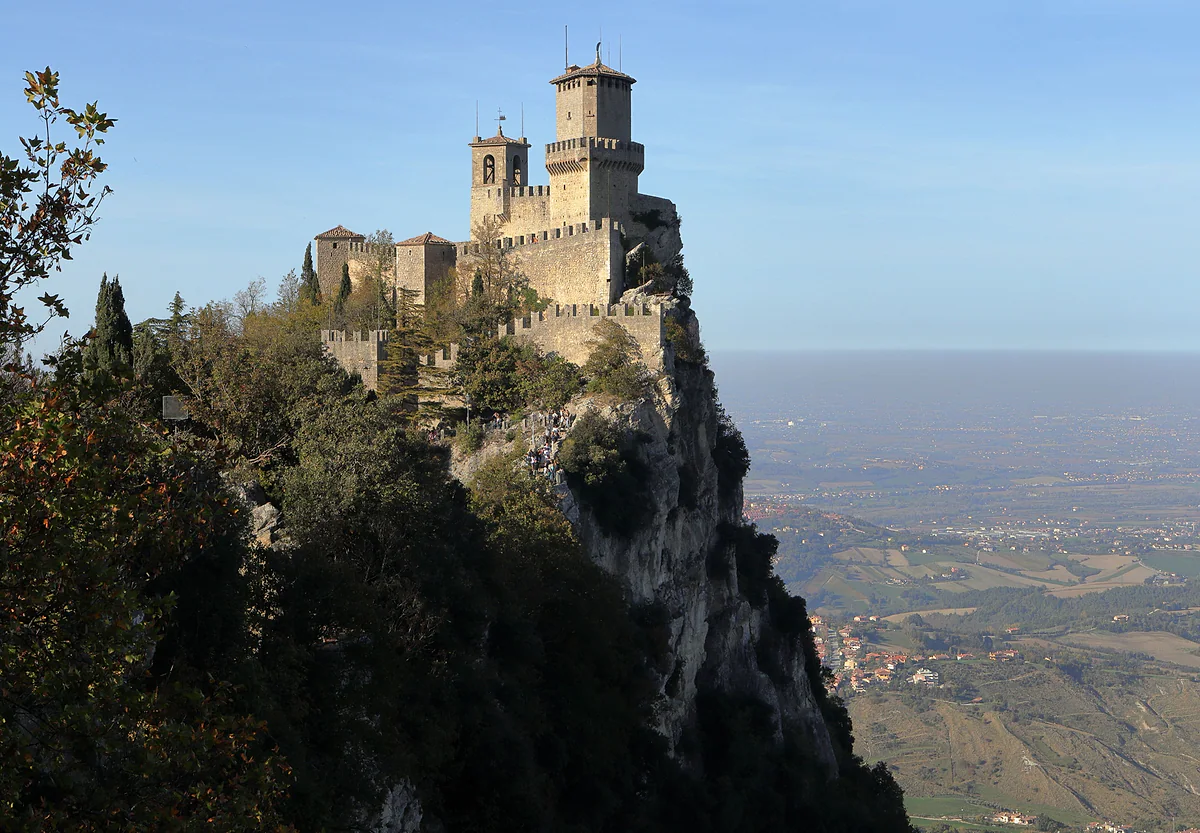
The Guaita, San Marino's first tower, on its rocky crag with its battlemented walls and the plain towards the Adriatic behind.
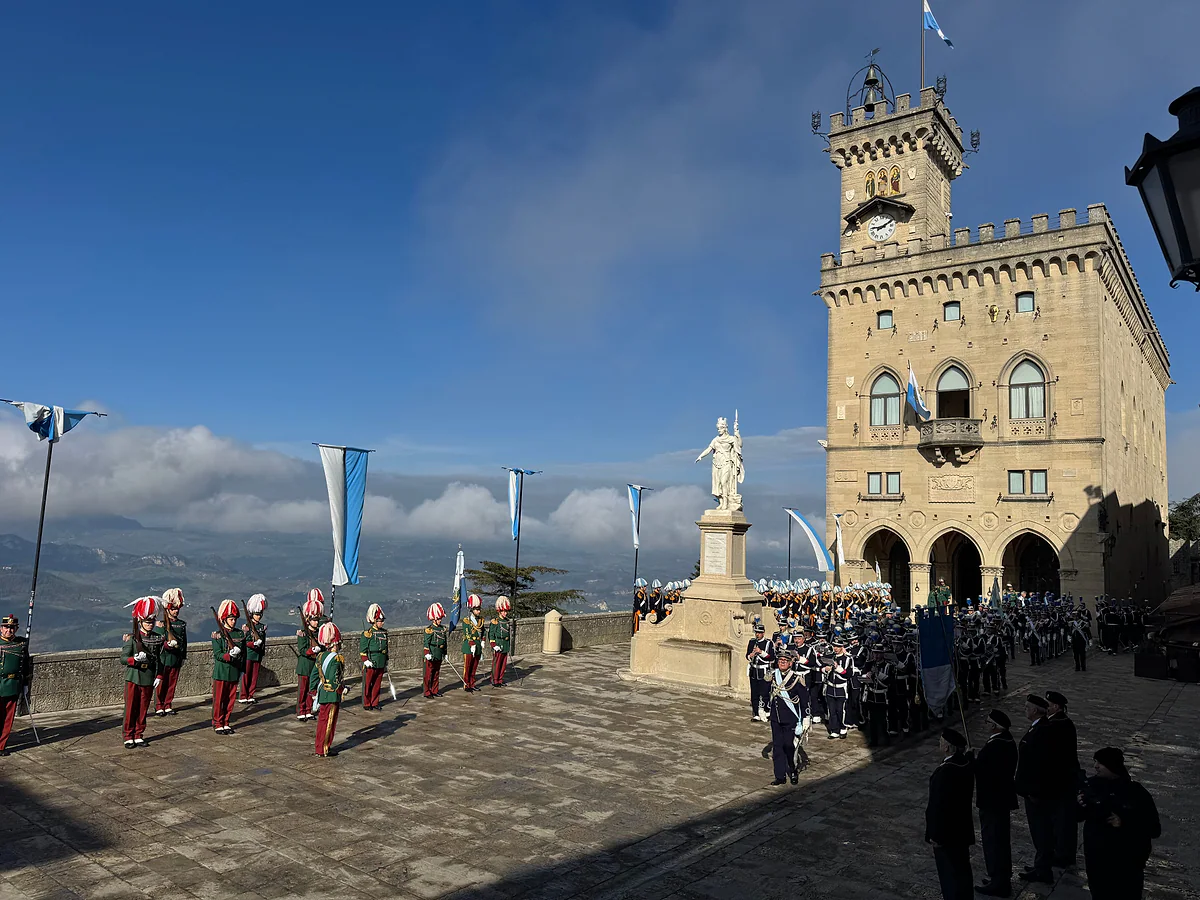
Uniformed guards parading in Piazza della Libertà, in front of the Palazzo Pubblico and the statue, with blue and white banners.
Key dates in San Marino's history
| Year | What happened | Source |
|---|---|---|
| 301 | Founding according to tradition, 3 September | Tradition; official holiday |
| 11th century | Core of the Guaita, refuge of the first inhabitants | State Museums |
| 1243 | First document naming the two consuls | Regency |
| 1295-1302 | Earliest known statutes | Regency |
| 1463 | Pius II grants four castles; today's borders | Government and Wikipedia |
| 1740 | Cardinal Alberoni's occupation ends, 5 February | State Museums |
| 1797 | Napoleon's France recognises the state | Wikipedia |
| 1849 | Garibaldi takes refuge in San Marino | Government and Wikipedia |
| 1861 | Lincoln accepts honorary citizenship | US Department of State |
| 1894 | Today's Palazzo Pubblico is inaugurated | State Museums |
| 1906 | The 25 March Arengo brings elections to the Council | Parliament |
| 1932 | The Rimini-San Marino railway opens | Wikipedia |
| 1945 | Regents chosen by vote rather than lot | Regency |
| 1974 | Declaration of Rights, the constitutional basis | Regency |
| 1988 and 1992 | Council of Europe and United Nations | Wikipedia |
| 2008 | UNESCO World Heritage listing | UNESCO |
Test yourself
True or false?
0/4 Pick before you peek.
-
The earliest records of San Marino's institutions date from 301.
See the answer
False. 301 is the traditional date. The first document naming the two consuls, forerunners of the regents, is from 12 December 1243.
-
San Marino's borders haven't changed since the 15th century.
See the answer
True. In 1463 Pope Pius II granted it Domagnano, Fiorentino, Montegiardino and Serravalle, and Faetano asked to join that year. They haven't moved since.
-
Until 1945 the Captains Regent were chosen by lot.
See the answer
True. From 1483 to 1945 they were drawn by lot from pairs of councillors. Since 1945 the Council has elected them by vote.
-
San Marino fought in the First World War alongside Austria.
See the answer
False. What San Marino did, according to Wikipedia, was run a field hospital on the Italian front from October 1917 to December 1918, treating more than 3,000 people.
- Founding year according to tradition
- 301
- First document naming the two consuls
- 1243
- Year its borders were fixed
- 1463
- UNESCO listing
- 2008
Map
Where History is
Every number opens its guide. The towers sit on the ridge, the city beside them and Borgo Maggiore below, linked by the cable car.
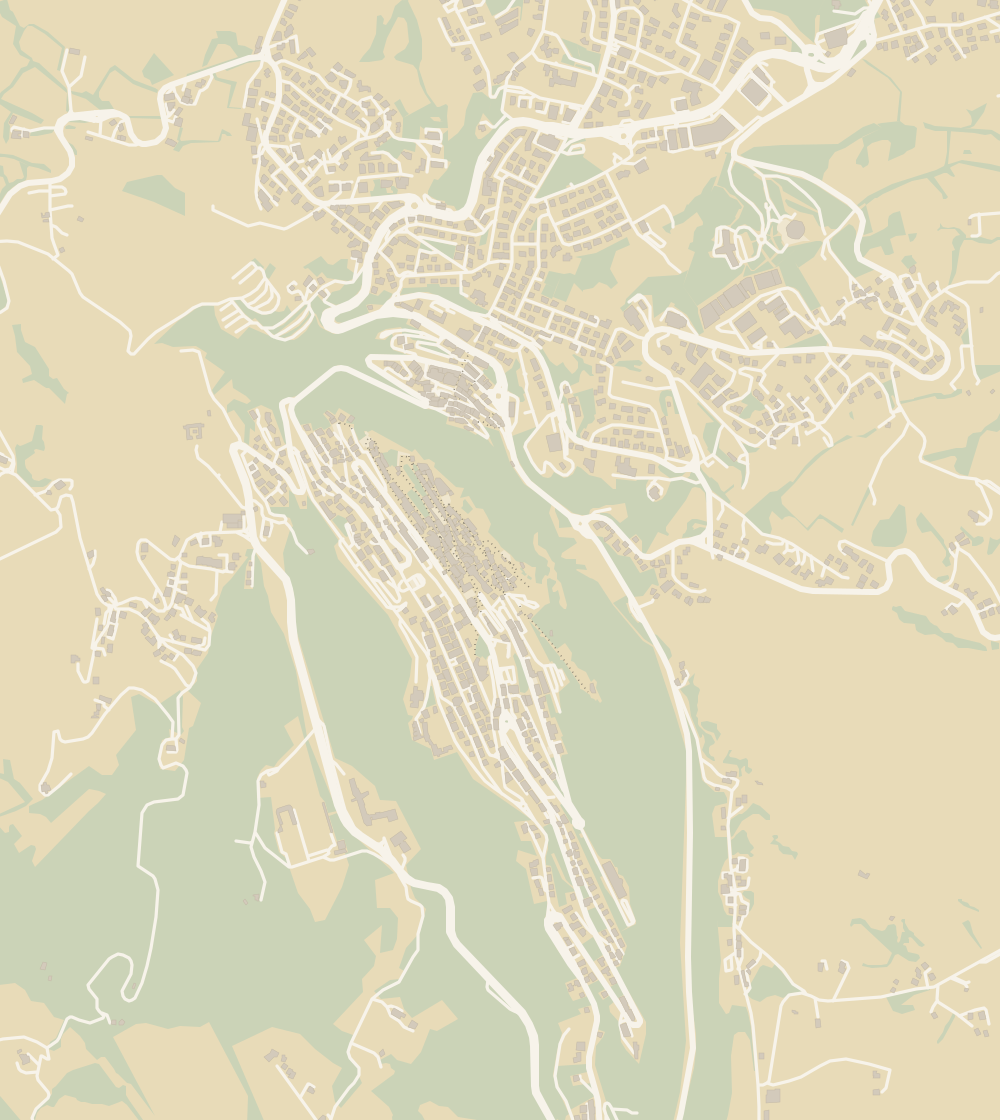 1The Three Towers 2Guaita Tower 3Cesta Tower and Arms Museum 4City of San Marino 5Montale Tower 6Borgo Maggiore 7Witches' Passage 8Palazzo Pubblico 9Changing of the guard 10Basilica of Saint Marinus 11Mount Titano 12Museums 13State Museum 14San Francesco Art Gallery 15Torture Museum 16Cable car (funivia) 17Quirky museums 18Stamp and Coin Museum 19National Gallery 20Valdragone 21San Giovanni sotto le Penne 22Medieval Days 23Christmas 24Hotel Titano 25Grand Hotel San Marino 26Hotel Rosa 27Hotel Crocenzi 28Hotel La Rocca 29Porta San Francesco 30Cava dei Balestrieri 31Map 32Teatro Titano 33Church of San Quirino 34Trenino Bianco Azzurro 35Consolazione Sanctuary 36University 37Prison 38Piazza della Libertà
 Map data © OpenStreetMap contributors (ODbL)
- 1The Three TowersTwo open inside, the third only from outside
- 2Guaita TowerAn 11th-century fortress that was a jail until 1970
- 3Cesta Tower and Arms MuseumThe top of Mount Titano, at 755 metres
- 4City of San MarinoWorld Heritage since 2008
- 5Montale TowerNo ticket, no hours, no pass
- 6Borgo MaggioreA cable car to the capital every 15 minutes
- 7Witches' PassageAbout 200 metres of battlements, no ticket
- 8Palazzo PubblicoClosed for restoration in 2026
- 9Changing of the guardNo timetable in any reliable source
- 10Basilica of Saint MarinusNeoclassical, begun in 1826, free to enter
- 11Mount Titano755 metres at the top of the Cesta
- 12MuseumsOne €11 ticket, seven venues
- 13State MuseumOpen to the public since 1899
- 14San Francesco Art GalleryIn the Franciscan cloister since 1966
- 15Torture MuseumMore than 100 original instruments
- 16Cable car (funivia)Closed from 21 to 23 October 2026
- 17Quirky museumsThree private museums with their own websites
- 18Stamp and Coin MuseumStamps since 1877, on the €11 pass
- 19National GalleryOpened on 7 July 2018
- 20ValdragoneA curazia of Borgo Maggiore
- 21San Giovanni sotto le PenneA curazia of Borgo Maggiore, below the towers
- 22Medieval DaysJuly, the old town and free entry
- 23Christmas28 November to 6 January, with a caveat
- 24Hotel TitanoOpen since 30 September 1894
- 25Grand Hotel San MarinoA hot tub on the third-floor terrace
- 26Hotel RosaFamily-run and open all year since 1965
- 27Hotel Crocenzi1 km from the cable car, 3 km from the old town
- 28Hotel La RoccaNot the Rocca, but on the road up to it
- 29Porta San FrancescoA guard post since 1361
- 30Cava dei BalestrieriThe crossbowmen's range since 1965
- 31MapNine castelli in 61 km²
- 32Teatro Titano2026-27 season from 22 October
- 33Church of San QuirinoOn the 5-cent coin
- 34Trenino Bianco AzzurroRimini to the City, 1932 to 1944
- 35Consolazione SanctuaryConsecrated on 11 June 1967
- 36UniversityCreated by law on 31 October 1985
- 37PrisonEmpty on the day the European inspectors arrived
- 38Piazza della LibertàIt used to be called the Pianello
0 of 108 San Marino guides
Your next stamp
- Constitution
- University
- Facts
- Chiesanuova
- Faetano
- Basilica of Saint Marinus
- Wine
- Things to do
- One day
- Two days
- The Three Towers
- Guaita Tower
- Cesta Tower and Arms Museum
- The 9 castelli
- City of San Marino
- Montale Tower
- Borgo Maggiore
- Witches' Passage
- Palazzo Pubblico
- Serravalle
- Changing of the guard
- Dogana
- Acquaviva
- Mount Titano
- Domagnano
- Fiorentino
- Montegiardino
- Museums
- State Museum
- San Francesco Art Gallery
- Torture Museum
- Cable car (funivia)
- Quirky museums
- Viewpoints
- Murata
- Stamp and Coin Museum
- Walking trails
- Cailungo
- National Gallery
- Valdragone
- Best time to visit
- Getting there
- Ventoso
- Rimini to San Marino
- San Giovanni sotto le Penne
- Weather
- Getting around
- In winter
- With kids
- In summer
- Parking
- Passport stamp
- Rainy day
- Nightlife
- Phone and roaming
- Casino
- Gualdicciolo
- Money
- Coins and stamps
- Torraccia
- Falciano
- Shopping and tax-free
- Rovereta
- Lake Faetano
- Events
- Beaches
- Medieval Days
- Christmas
- MotoGP
- Where to stay
- Hotel Titano
- Where to eat
- Food
- Grand Hotel San Marino
- Luxury hotels
- Free and cheap
- Hotel iDesign
- Day trips
- Hotel Rosa
- Safety and rules
- Hotel Crocenzi
- Language
- Entry requirements
- Hotel La Rocca
- Healthcare and emergencies
- Plugs and voltage
- Is it a country?
- Opening hours
- Porta San Francesco
- Tap water
- Cava dei Balestrieri
- Map
- Post office
- Cost of a trip
- Flag
- Teatro Titano
- Accessibility
- Church of San Quirino
- Captains Regent
- Trenino Bianco Azzurro
- With a dog
- Consolazione Sanctuary
- Weddings
- Prison
- Camping
- Piazza della Libertà
- Is it worth visiting?
Frequently asked questions
What is the history of San Marino?
Tradition starts it in 301 with a Christian stonemason sheltering on Titano. Records begin in the 13th century, it won its present territory in 1463, survived occupations such as Cardinal Alberoni's in 1739 and 1740, was recognised by Napoleon and stayed out of a unified Italy.
Who founded San Marino?
According to tradition, Saint Marinus, a stonemason from the island of Arbe, now Rab in Croatia, who fled Diocletian's persecution and founded a small Christian community on Mount Titano on 3 September 301.
Is San Marino the oldest country in the world?
That's the line you hear, but I'd qualify it. UNESCO calls it one of the world's oldest republics and the only surviving Italian city-state. The 301 founding is tradition; its institutions are documented from 1243.
What happened to San Marino in the Second World War?
It stayed neutral and, according to Wikipedia, sheltered more than 100,000 people displaced from the surrounding area as the front crossed the Gothic Line. The National Gallery devotes its first room to those years and the aftermath.
Why does San Marino exist?
A mix of mountain, size and caution, as I see it. It was a hard place to take, it kept its territory small after 1463 and, according to Wikipedia, it even turned down Napoleon's offer to extend it to the sea in 1797.
What did Garibaldi do in San Marino?
In 1849, after the fall of the Roman Republic, he sought refuge in San Marino with his column and was granted asylum on condition there was no fighting on its soil. A plaque in Piazza di sopra in Borgo Maggiore marks his stay with Anita.
By
Tourism graduate with a master’s in Tourism Management and Planning from the University of Málaga, who has travelled across Europe. He writes every guide from official sources and his own judgement.
Published on . Facts checked on .
Sources
Photos: Terragio67 (CC BY-SA 4.0); Terragio67 (CC BY-SA 4.0); Hayden Soloviev (CC BY 4.0), via Wikimedia Commons.