A vineyard lease in Valdragone dated 1253
San Marino wine, from a 1253 vineyard lease to the Cantina
San Marino's leading winery is Cantina San Marino, the former Consorzio Vini Tipici founded in 1979 by the state and two growers' co-operatives. Its vineyards run from 50 m above sea level in Dogana to 400 m in Montegiardino, Sangiovese leads the reds and Biancale is the most planted white. The winery and its shop are on Strada Serrabolino in Borgo Maggiore, with tastings on request.
In 30 seconds
Full read: 4 min
- San Marino's leading winery is Cantina San Marino, the former Consorzio Vini Tipici founded in 1979.
- Vineyards run from 50 m in Dogana to 400 m in Montegiardino.
- Sangiovese leads the reds and Biancale is the most planted white.
- The winery is at Strada Serrabolino 89, Borgo Maggiore, with a shop and tastings on request.
- The earliest record of Sammarinese wine is a vineyard lease in Valdragone from 1253.
I wouldn't buy wine in the souvenir shops of the old town. I'd head down to the Cantina's own shop in Borgo Maggiore, ask to try a Biancale and a Brugneto, and take home a bottle of Oro dei Goti, of which about 2,000 are made a year and which you'll struggle to find anywhere else.

Before you go
What I would keep in mind
-
01 Most beautiful
Vines beneath the Titano cliff
The winery says the vines right behind it, in the shadow of Mount Titano's cliff, are among the oldest in the country. Valdragone, the slope named in its first document, still grows Sangiovese.
Valdragone, the valley of convents -
02 Worth the splurge
The Goths' passito, 2,000 bottles
Oro dei Goti is picked in late October, spends 12 months in French oak and runs to about 2,000 bottles. Its name recalls the Gothic treasure found in San Marino. It's the bottle I'd give as a present.
-
03 My tip
Book your tasting ahead
The winery asks you to get in touch for a visit with tasting. The shop opened Monday to Friday 8:30-12:30 and 14:30-18:30, plus Saturday morning, and was closed on Sundays.
-
04 To save money
The food side lives in another guide
This page is about the winery and the bottles. The dishes, sweets and the full list of wines and liqueurs, from Mistrà to Tilus, are in my guide to Sammarinese food.
food of San Marino
My ranking, scored
What I'd ask for at the Cantina shop
My personal order, weighing how hard each bottle is to find outside San Marino and how much it says about the place. These are my opinions, not tasting scores.
0 of 5 seen
-
Oro dei Goti
A small-run passito with a year in oak and a name borrowed from Gothic treasure. It sums up a tiny country that makes little, and makes it carefully.
9.1 out of 10
-
Brugneto Riserva
The house's serious Sangiovese, made only in the best vintages and in about 3,000 bottles. The one for anyone after an aged San Marino red.
8.6 out of 10
-
Biancale
The country's most planted white, of uncertain origin somewhere between Trebbiano and Bianchello. It's the grape that sets San Marino apart from neighbouring Romagna.
8.0 out of 10
-
Sangiovese di San Marino
The everyday red, 40,000 bottles aged in steel. Fine with lunch, and the one you're most likely to see on restaurant lists.
7.4 out of 10
-
Moscato grappa
If wine won't fit in your hand luggage, a spirit from the same winery weighs less and is still from here. Check your airline's liquids rules first.
6.8 out of 10
Ask whether San Marino makes wine and the short answer is yes. The longer answer is more interesting. Its leading winery was set up by the state itself, the vineyards fit inside a country of 61 km², and some bottles are made in runs of two thousand. For anyone who likes wine, that’s exactly what makes a short trip worthwhile.
Wine with paperwork going back to 1253
The winery starts its own story with a piece of notarial paperwork. It dates from the spring of 1253, a vineyard lease between two Sammarinese, and the plot lay at Valdragone. Its timeline also mentions an agricultural statute of 1813 with rules for growing vines, and a rural land register of 1775 already listing Biancale, Trebbiano, Moscatello, Albana and Sangiovese. I like that many of today’s grapes are the same ones farmed two and a half centuries ago.
By the late 19th century, again according to the winery, the caves of Borgo Maggiore were where fairgoers stopped to taste local wine, and several Sammarinese growers took silver and bronze medals at the Paris Exposition Universelle in 1878, 1889 and 1890. That’s a more serious wine history than you’d expect from a country most people see in an afternoon.
The Cantina, or the state as winemaker
The turning point came in 1979, when the Consorzio Vini Tipici di San Marino was founded, bringing together the Eccellentissima Camera (in plain English, the state) and two growers’ co-operatives. What followed was a group of growers working to a strict specification, new vineyards with local clones alongside international varieties and, in 2013, the current shop and barrel room. In 2017 part of the vineyard went organic, and in 2019 L’Intruso became its first certified organic wine. The consortium now trades as Cantina San Marino.
This model strikes me as very San Marino. In a country this small, putting the state and the growers into one project makes more sense than twenty wineries that never reach critical mass, and the upshot is a wine rarely seen outside the country. For what to eat with it, and the full list of wines and liqueurs, head to San Marino food and drink. Here I’m sticking to the winery.
Its 2026 range goes well beyond the classic red. There are two sparkling wines, Briza Brut and Riserva Titano, whites such as Caldese, Roncale and Grilèt, reds such as Tessano and Sterpeto Riserva, a Val Dragone line in red and white, still and sparkling Moscato, and grappa made from Brugneto and from Moscato. For a first visit I wouldn’t try to cover it all. Two whites, one red and the sweet passito tell you most of what San Marino does.
From Dogana to Montegiardino, terroir in miniature
The winery describes vineyards at very different heights, from about 50 metres around Dogana to 400 around Montegiardino, on clay, limestone and sandstone, with winds from both the Adriatic and the Apennines. Harvest starts in early August and ends in early October, and the same grape can ripen fifteen days apart between the top and the bottom of the country.
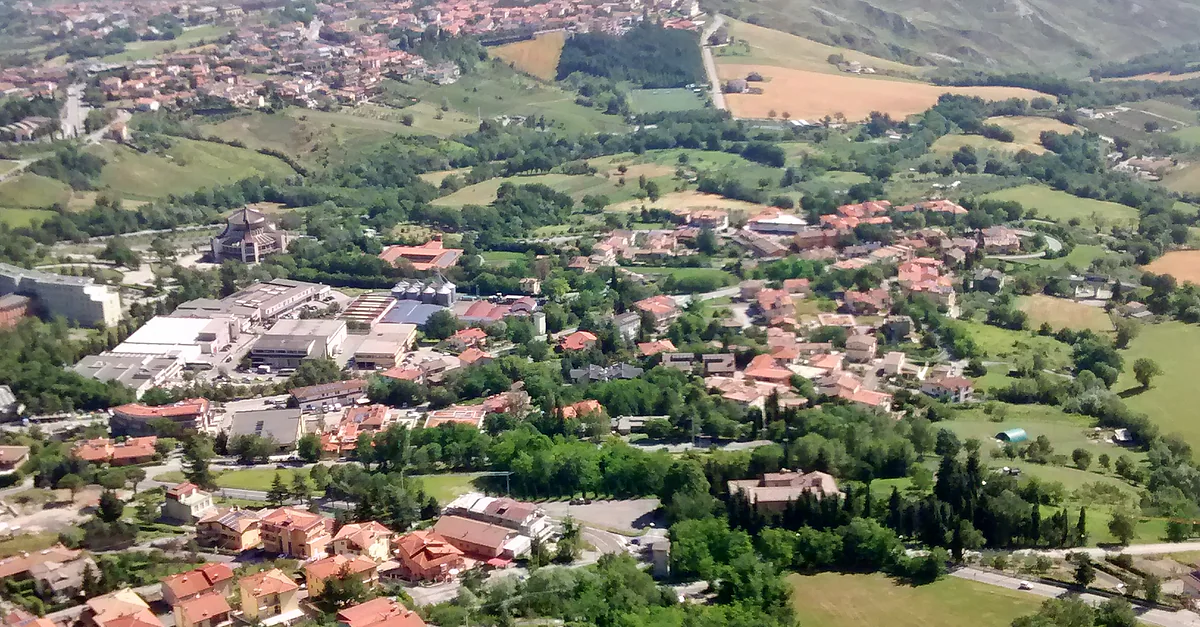
It names a few special spots. Monte Pulito in upper Faetano, windy all summer with cool nights. The Cinque Vie in upper Falciano, where Sangiovese gets the full southern sun. And Valdragone, whose Sangiovese the house calls fresh and easy-drinking, plus the vines right behind the winery, under the Titano cliff, which it counts among the country’s oldest. The most planted white is Biancale, of disputed origin between Tuscan Trebbiano and Bianchello, grown mainly around Falciano, Serravalle and Faetano.
Can you visit the winery?
Yes, if you get in touch first. The Cantina is at Strada Serrabolino 89 in Borgo Maggiore, and its website asks visitors to make contact for a visit with tasting. In the February 2026 copy of its site, the shop opened Monday to Friday 8:30-12:30 and 14:30-18:30 and Saturday 8:30-12:30, closed on Sundays. It sells the wines, spirits, a vermouth and a bitter, plus Consorzio Terra di San Marino produce.
I’d go in the morning, before or after heading up to the old town, and not leave it for a Sunday. If you’re tasting, someone shouldn’t be driving, which is a good argument for staying down in Borgo. To compare with what the old town sells, my guide to shopping and tax-free in San Marino has the details.
The grape festival in Ventoso
The official 2024 calendar of festivals in the castelli listed the Festa dell’Uva in Ventoso, a village of Borgo Maggiore, from 23 to 25 August. Wikipedia places it in mid-September, in the Passo del Sorbo park, as the symbolic start of the harvest. Two sources, two dates and nothing announced for 2026, so the Borgo Maggiore council is who I’d ask before building a trip around it.
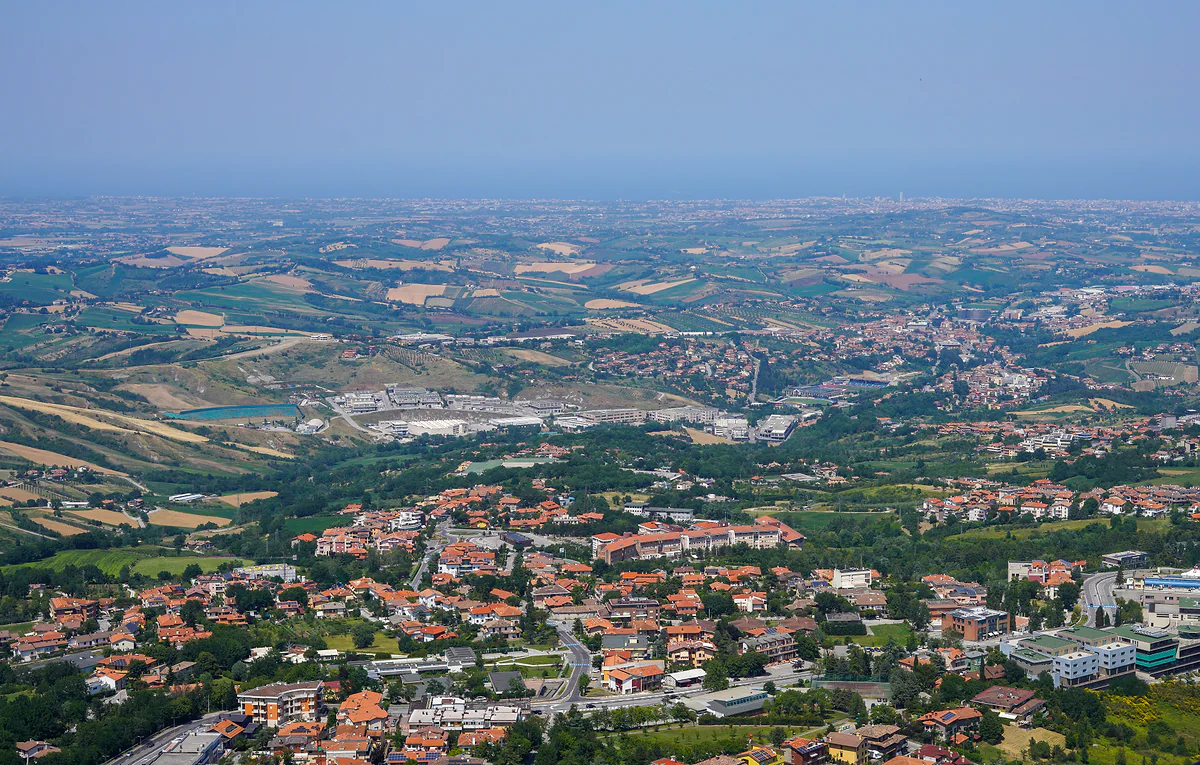
Borgo Maggiore and the Rimini plain seen from Monte Titano, stretching all the way to the Adriatic coast on the horizon.
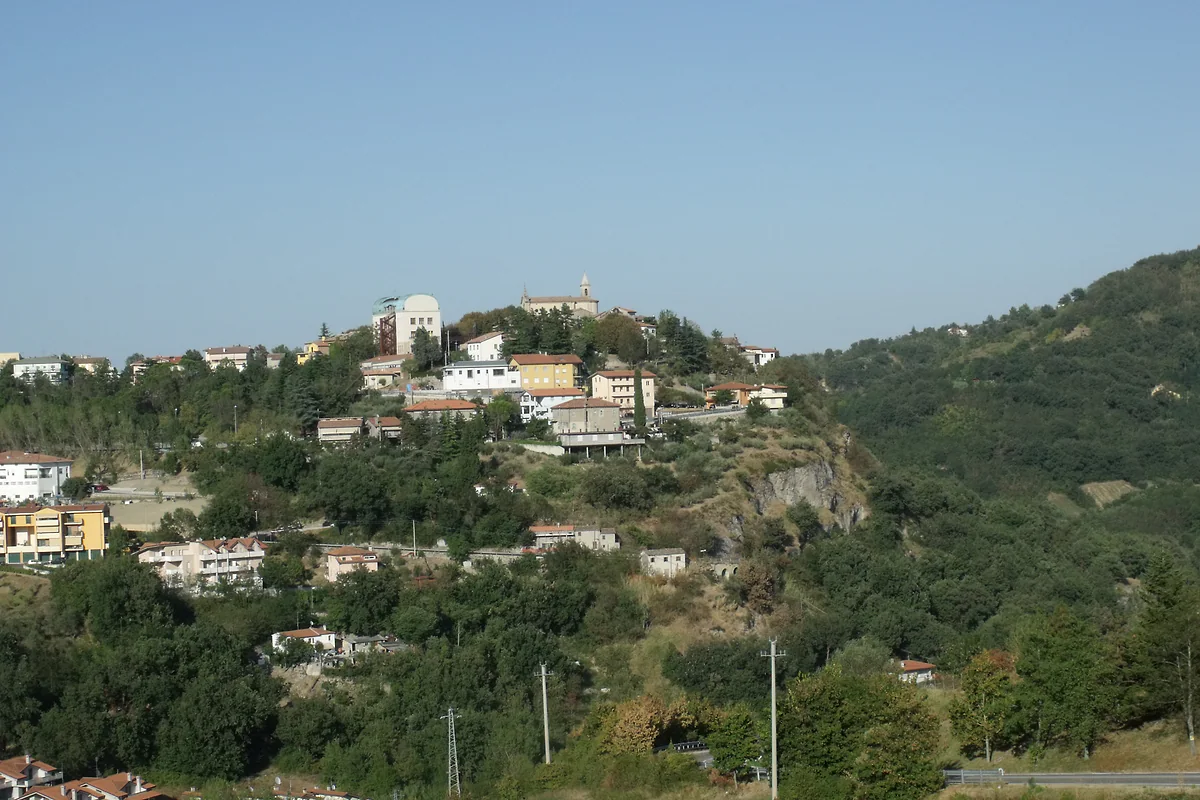
Faetano seen from above, with red-roofed houses among meadows and copses running down towards the Marano valley.
Three Cantina bottles and their numbers
| Wine | Grape and ageing | ABV | Bottles |
|---|---|---|---|
| Sangiovese di San Marino | Sangiovese, stainless steel | 13% | 40,000 |
| Brugneto Riserva | Sangiovese from the best vintages, 12 months in French oak and 6 in bottle | 14% | 3,000 |
| Oro dei Goti | Passito, picked in late October, 12 months in French oak | 14.5% | 2,000 |
Technical sheets from Cantina San Marino's website, read in web.archive.org copies from January to April 2026.
Visiting the winery
| What | Detail |
|---|---|
| Address | Strada Serrabolino 89, 47893 Borgo Maggiore |
| Phone and email | 0549 903124, [email protected] |
| Shop, Monday to Friday | 8:30-12:30 and 14:30-18:30 |
| Shop, Saturday | 8:30-12:30 |
| Sunday | Closed |
| Visit with tasting | On request, contact them first |
Opening hours from the winery's website as archived on 10 February 2026; they may change. The shop also sells Consorzio Terra di San Marino produce.
Test yourself
True or false?
0/4 Pick before you peek.
-
The San Marino state helped found its leading winery.
See the answer
True. The Consorzio Vini Tipici was founded in 1979 by the Eccellentissima Camera, meaning the state, together with two growers' co-operatives.
-
All of San Marino's vineyards sit high up on Mount Titano.
See the answer
False. They're spread across the country, from about 50 m in Dogana up to 400 m in Montegiardino.
-
Biancale is the most widely grown white grape in San Marino.
See the answer
True. So says the Cantina, which places it mainly around Falciano, Serravalle and Faetano.
-
San Marino wines won medals at the Paris Exposition Universelle.
See the answer
True. According to the winery's timeline, Sammarinese growers took silver and bronze medals in Paris in 1878, 1889 and 1890.
- Earliest recorded vineyard lease, in Valdragone
- 1253
- Consorzio Vini Tipici founded
- 1979
- Height of the highest vineyards
- 400 m
- Bottles of Oro dei Goti per vintage
- 2,000
Map
Where Wine is
Every number opens its guide. The towers sit on the ridge, the city beside them and Borgo Maggiore below, linked by the cable car.
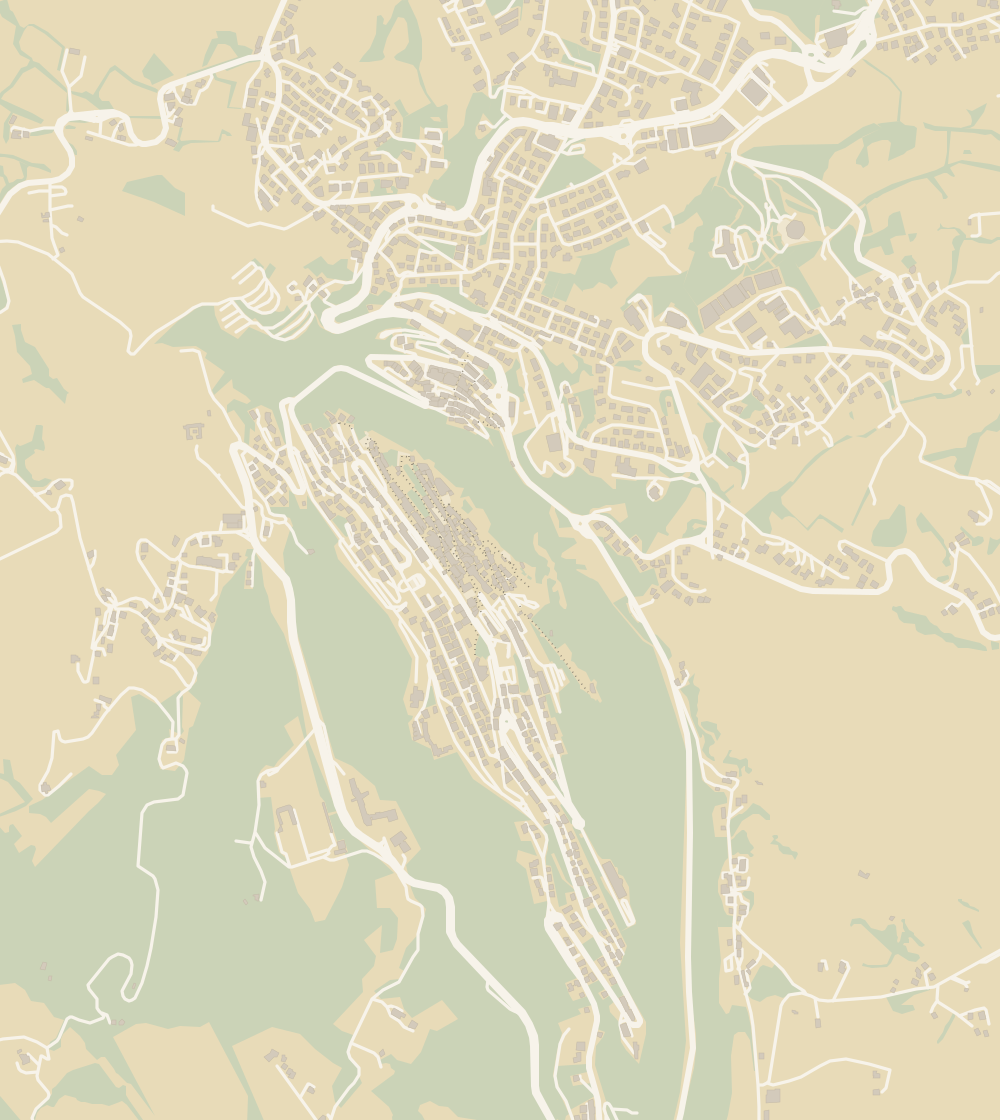 1The Three Towers 2Guaita Tower 3Cesta Tower and Arms Museum 4City of San Marino 5Montale Tower 6Borgo Maggiore 7Witches' Passage 8Palazzo Pubblico 9Changing of the guard 10Basilica of Saint Marinus 11Mount Titano 12Museums 13State Museum 14San Francesco Art Gallery 15Torture Museum 16Cable car (funivia) 17Quirky museums 18Stamp and Coin Museum 19National Gallery 20Valdragone 21San Giovanni sotto le Penne 22Medieval Days 23Christmas 24Hotel Titano 25Grand Hotel San Marino 26Hotel Rosa 27Hotel Crocenzi 28Hotel La Rocca 29Porta San Francesco 30Cava dei Balestrieri 31Map 32Teatro Titano 33Church of San Quirino 34Trenino Bianco Azzurro 35Consolazione Sanctuary 36University 37Prison 38Piazza della Libertà
 Map data © OpenStreetMap contributors (ODbL)
- 1The Three TowersTwo open inside, the third only from outside
- 2Guaita TowerAn 11th-century fortress that was a jail until 1970
- 3Cesta Tower and Arms MuseumThe top of Mount Titano, at 755 metres
- 4City of San MarinoWorld Heritage since 2008
- 5Montale TowerNo ticket, no hours, no pass
- 6Borgo MaggioreA cable car to the capital every 15 minutes
- 7Witches' PassageAbout 200 metres of battlements, no ticket
- 8Palazzo PubblicoClosed for restoration in 2026
- 9Changing of the guardNo timetable in any reliable source
- 10Basilica of Saint MarinusNeoclassical, begun in 1826, free to enter
- 11Mount Titano755 metres at the top of the Cesta
- 12MuseumsOne €11 ticket, seven venues
- 13State MuseumOpen to the public since 1899
- 14San Francesco Art GalleryIn the Franciscan cloister since 1966
- 15Torture MuseumMore than 100 original instruments
- 16Cable car (funivia)Closed from 21 to 23 October 2026
- 17Quirky museumsThree private museums with their own websites
- 18Stamp and Coin MuseumStamps since 1877, on the €11 pass
- 19National GalleryOpened on 7 July 2018
- 20ValdragoneA curazia of Borgo Maggiore
- 21San Giovanni sotto le PenneA curazia of Borgo Maggiore, below the towers
- 22Medieval DaysJuly, the old town and free entry
- 23Christmas28 November to 6 January, with a caveat
- 24Hotel TitanoOpen since 30 September 1894
- 25Grand Hotel San MarinoA hot tub on the third-floor terrace
- 26Hotel RosaFamily-run and open all year since 1965
- 27Hotel Crocenzi1 km from the cable car, 3 km from the old town
- 28Hotel La RoccaNot the Rocca, but on the road up to it
- 29Porta San FrancescoA guard post since 1361
- 30Cava dei BalestrieriThe crossbowmen's range since 1965
- 31MapNine castelli in 61 km²
- 32Teatro Titano2026-27 season from 22 October
- 33Church of San QuirinoOn the 5-cent coin
- 34Trenino Bianco AzzurroRimini to the City, 1932 to 1944
- 35Consolazione SanctuaryConsecrated on 11 June 1967
- 36UniversityCreated by law on 31 October 1985
- 37PrisonEmpty on the day the European inspectors arrived
- 38Piazza della LibertàIt used to be called the Pianello
0 of 108 San Marino guides
Your next stamp
- Food
- Valdragone
- Falciano
- Ventoso
- In winter
- History
- University
- Things to do
- One day
- Two days
- The Three Towers
- Guaita Tower
- Cesta Tower and Arms Museum
- The 9 castelli
- City of San Marino
- Montale Tower
- Borgo Maggiore
- Witches' Passage
- Palazzo Pubblico
- Serravalle
- Changing of the guard
- Dogana
- Acquaviva
- Basilica of Saint Marinus
- Mount Titano
- Chiesanuova
- Domagnano
- Faetano
- Fiorentino
- Montegiardino
- Museums
- State Museum
- San Francesco Art Gallery
- Torture Museum
- Cable car (funivia)
- Quirky museums
- Viewpoints
- Murata
- Stamp and Coin Museum
- Walking trails
- Cailungo
- National Gallery
- Best time to visit
- Getting there
- Rimini to San Marino
- San Giovanni sotto le Penne
- Weather
- Getting around
- With kids
- In summer
- Parking
- Passport stamp
- Rainy day
- Nightlife
- Phone and roaming
- Casino
- Gualdicciolo
- Money
- Coins and stamps
- Torraccia
- Shopping and tax-free
- Rovereta
- Lake Faetano
- Events
- Beaches
- Medieval Days
- Christmas
- MotoGP
- Where to stay
- Hotel Titano
- Where to eat
- Grand Hotel San Marino
- Luxury hotels
- Free and cheap
- Hotel iDesign
- Day trips
- Hotel Rosa
- Safety and rules
- Hotel Crocenzi
- Language
- Entry requirements
- Hotel La Rocca
- Healthcare and emergencies
- Plugs and voltage
- Is it a country?
- Opening hours
- Porta San Francesco
- Tap water
- Cava dei Balestrieri
- Map
- Post office
- Cost of a trip
- Flag
- Teatro Titano
- Accessibility
- Church of San Quirino
- Captains Regent
- Trenino Bianco Azzurro
- With a dog
- Consolazione Sanctuary
- Facts
- Weddings
- Prison
- Camping
- Piazza della Libertà
- Is it worth visiting?
- Constitution
Frequently asked questions
Does San Marino make its own wine?
Yes. The leading winery is Cantina San Marino, the former Consorzio Vini Tipici set up in 1979 by the state and two co-operatives, with vineyards across the country and grapes such as Sangiovese, Biancale, Ribolla and Moscato.
Can you visit a winery in San Marino?
Cantina San Marino offers visits with tastings if you contact them first. It's at Strada Serrabolino 89 in Borgo Maggiore, and its shop opens Monday to Saturday mornings and weekday afternoons.
What grapes are grown in San Marino?
The winery lists Sangiovese, Biancale, Ribolla, Moscato, Chardonnay, Merlot, Cabernet Sauvignon and Pinot Nero. Biancale is now the most planted white, mainly around Falciano, Serravalle and Faetano.
What is Brugneto di San Marino?
It's one of the country's red wines, made from Sangiovese. The Riserva version comes only from the best vintages, spends 12 months in French oak and 6 in bottle, and runs to about 3,000 bottles.
What liqueurs come from San Marino?
The best known are Mistrà, an aniseed liqueur, Duca di Gualdo, a herbal one, and Tilus, an amaro with truffle. The Cantina also makes grappa, a vermouth and a bitter.
Is there a grape festival in San Marino?
Yes, the Festa dell'Uva in Ventoso, part of Borgo Maggiore. The official 2024 calendar had it from 23 to 25 August; there's no 2026 calendar published, so check before planning around it.
By
Tourism graduate with a master’s in Tourism Management and Planning from the University of Málaga, who has travelled across Europe. He writes every guide from official sources and his own judgement.
Published on . Facts checked on .
Sources
Photos: Mx. Granger (CC0); Messapi (CC BY 4.0); LigaDue (CC BY 3.0), via Wikimedia Commons.