A constitution that isn't in one book
San Marino's constitution, spread between old statutes and the 1974 charter
San Marino has no constitution written as a single text. Its constitutional rules are spread across several laws, from the medieval statutes and those of the seventeenth century to the Declaration of Citizens' Rights of 8 July 1974, amended between 2000 and 2019. The Arengo, the old assembly, survives as a right of petition.
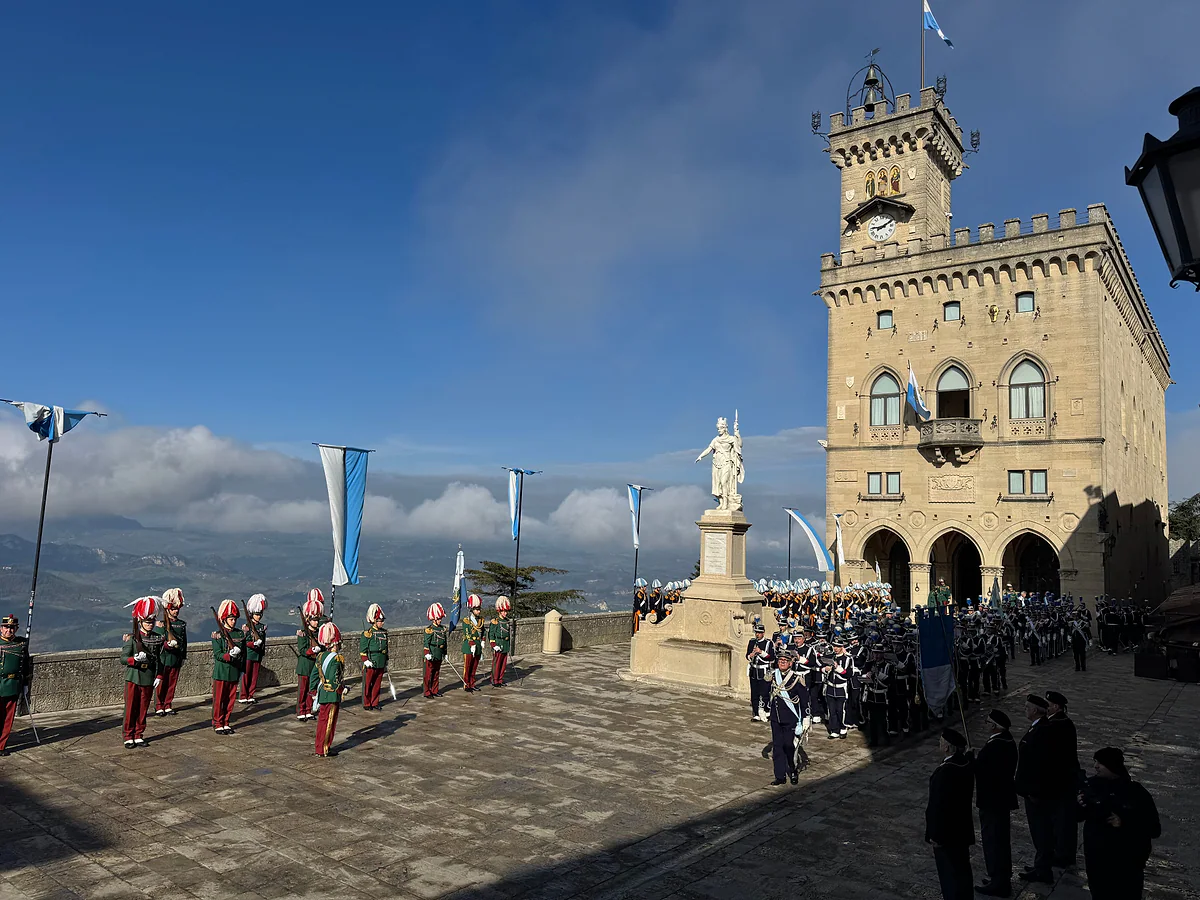
What I like most about San Marino's constitution is that you can visit it. There's no document behind glass, but the square where the regents are proclaimed, the palace where the Council sits and the church where the Arengo used to meet are all within five minutes' walk of each other.

Before you go
What I would keep in mind
-
01 My tip
The constitution isn't one document
The Regency's own website says as much. It's a set of rules spread over several texts, from the earliest statutes to the 1974 Charter of Rights.
history of San Marino -
02 Most beautiful
The Arengo is still alive twice a year
On the first Sunday after each investiture, at midday, citizens hand in petitions of public interest in the council chamber. It's what remains of the medieval assembly.
Captains Regent of San Marino -
03 To save money
The regents' square is free
Piazza della Libertà, where the regents are proclaimed and the Council's palace stands, is free to see at any hour.
Piazza della Libertà in San Marino -
04 My tip
Even the flag is constitutional
Since 2011 the flag and coat of arms have been set out in Article 2 bis of the Declaration of Rights, added by a constitutional law.
San Marino flag
What I would book
If you go looking for San Marino’s constitution expecting a signed and dated document, you’re in for a surprise. There isn’t one. The Regency explains on its own website that the constitution isn’t a single text but is spread over several laws that have piled up across the centuries. To me, building a state in layers like that is about as San Marino as it gets.
Does San Marino have a constitution?
Yes, just not the way France or Italy have one, and a British reader will find the idea familiar, since the UK doesn’t keep its constitution in a single document either. Rules of constitutional weight already appear in the earliest local statutes that survive, are amended, extended or confirmed down the centuries and run right up to the Charter of Rights of 8 July 1974, revised by Law 36 of 2002. It’s a system that grew from the days of the medieval commune, which is why it still keeps institutions like the Regency.
For the full backstory, from the legend of AD 301 to the vote of 1906, see my history of San Marino. Here I’m sticking to the texts.
The statutes, from 1295 to the seventeenth century
The earliest statutes we know of date from between 1295 and 1302, and in them the two consuls who ran the community become known as Captain and Defender. The ones that really shaped the country came later. The Consiglio Grande e Generale calls them the statutes «del ’600» and says they were drafted between the late sixteenth and early seventeenth centuries.
Those statutes stripped the Arengo, the assembly of heads of household, of its power without quite abolishing it. They called the Council of Sixty the supreme, absolute and sole prince of the community, gave it the power of life and death, and laid down that 40 councillors should come from the Terra, the Città and the Borgo, and 20 from the Ville, the rest of the territory. From then on the Council renewed itself by co-option, and over time it fell into the hands of a few families.
Is it really from 1600?
That’s what you’ll read in plenty of places, and I can see where it comes from, since the «’600» statutes tend to get pinned to that round number. But the official websites I’ve checked give no exact year, only the span between the two centuries, so I’d rather not treat it as settled.
What is true, and I find more interesting, is that they’re still cited. The Regency’s website notes that the review of the regents at the end of their term, the Sindacato della Reggenza, comes from rubric XIX of Book One of the Statutes. A modern court handles it now, but the rule it rests on is the same.
The 1974 Declaration of Rights
The modern cornerstone is Law 59 of 8 July 1974, the Declaration of Citizens’ Rights and of the Fundamental Principles of San Marino’s legal order. Its original preamble spoke of repudiating fascism and every totalitarian conception of the state, and since 2002 it mentions only every totalitarian conception.
Its content reads much like any European constitution. Sovereignty lies with the people, the state rejects war and recognises the European Convention on Human Rights, everyone is equal before the law, suffrage is universal, secret and direct, and the Republic protects its historic heritage and landscape. The office of head of state is held jointly by two Captains Regent, as the supreme guarantors of the constitutional order.
The 2002 reform created the Collegio Garante della costituzionalità delle norme, with three full members and three substitutes elected by two thirds of the Council, which reviews laws and sits in judgement on outgoing regents. And in 2011 a constitutional law added the article on San Marino’s flag and its coat of arms.
The Arengo, from assembly to citizens’ petition
The Arengo is the country’s oldest institution. It brought the heads of household together outside the Pieve when the bell rang, and records show it meeting at least until 9 January 1571. After the seventeenth-century statutes it didn’t meet again until 25 March 1906, when the Sammarinese decided to elect their Council by vote.
Today it lives on in another form. The 1974 Declaration says the Arengo is to be governed by law, and a law of 1995 turned it into a right of petition. On the first Sunday after each investiture, at midday, any adult citizen of San Marino can present istanze d’Arengo in the council chamber, and the Regency decides by 30 April or 30 October whether they’re of public interest.
What you can see that’s connected
There’s no display case with the constitution in it, but there are the places where it works. Piazza della Libertà is where the regents are proclaimed and where the Palazzo Pubblico in San Marino stands, with the Great and General Council chamber where the Arengo petitions are handed in, closed for works until 31 October 2026. A step away, the basilica occupies the site of the old Pieve where the assembly used to gather.
If the subject grabs you and the palace is still shut, I’d call in at the State Museum, which is on the €11 pass and traces the country’s story through archaeology, art and coins. And if you happen to be there on 1 April or 1 October, you’ll see the most visible part of the whole system out in the square.
The building blocks of San Marino's constitution
| Text | Date | What it adds |
|---|---|---|
| Earliest known statutes | 1295-1302 | The two consuls become Captain and Defender |
| The «'600» statutes | Late 16th to early 17th century | The Council of Sixty as supreme power; 40 councillors from the Terra, 20 from the Ville |
| The Arengo of 1906 | 25 March 1906 | The Council to be elected by vote instead of co-option |
| Declaration of Rights (Law 59) | 8 July 1974 | Citizens' rights and the principles of the state |
| Reform (Law 36) | 26 February 2002 | Collegio Garante, categories of law and a new article on the Regency |
| Constitutional law on the flag | 22 July 2011 | Article 2 bis with the flag and coat of arms |
Sources: the Regency's website, the Consiglio Grande e Generale and the consolidated text of the Declaration (updated to 4 June 2019), checked on 29 September 2026.
Test yourself
True or false?
0/4 Pick before you peek.
-
San Marino has a constitution written as a single document dating from 1600.
See the answer
False. The Regency's website explains that San Marino's constitution isn't a single text but is spread over several laws, from the earliest statutes to the 1974 Charter of Rights.
-
Citizens of San Marino can petition the regents twice a year.
See the answer
True. These are the istanze d'Arengo. They're presented at midday on the first Sunday after each investiture, in the chamber of the Great and General Council, and must concern the public interest.
-
The original 1974 preamble explicitly rejected fascism.
See the answer
True. The 1974 text spoke of repudiating fascism and every totalitarian conception of the state. Since the 2002 reform it mentions only every totalitarian conception.
-
In San Marino, custom can serve as a source of law.
See the answer
True. Article 3 bis of the Declaration says custom and common law fill the gaps where there are no legislative provisions.
Map
Where Constitution is
Every number opens its guide. The towers sit on the ridge, the city beside them and Borgo Maggiore below, linked by the cable car.
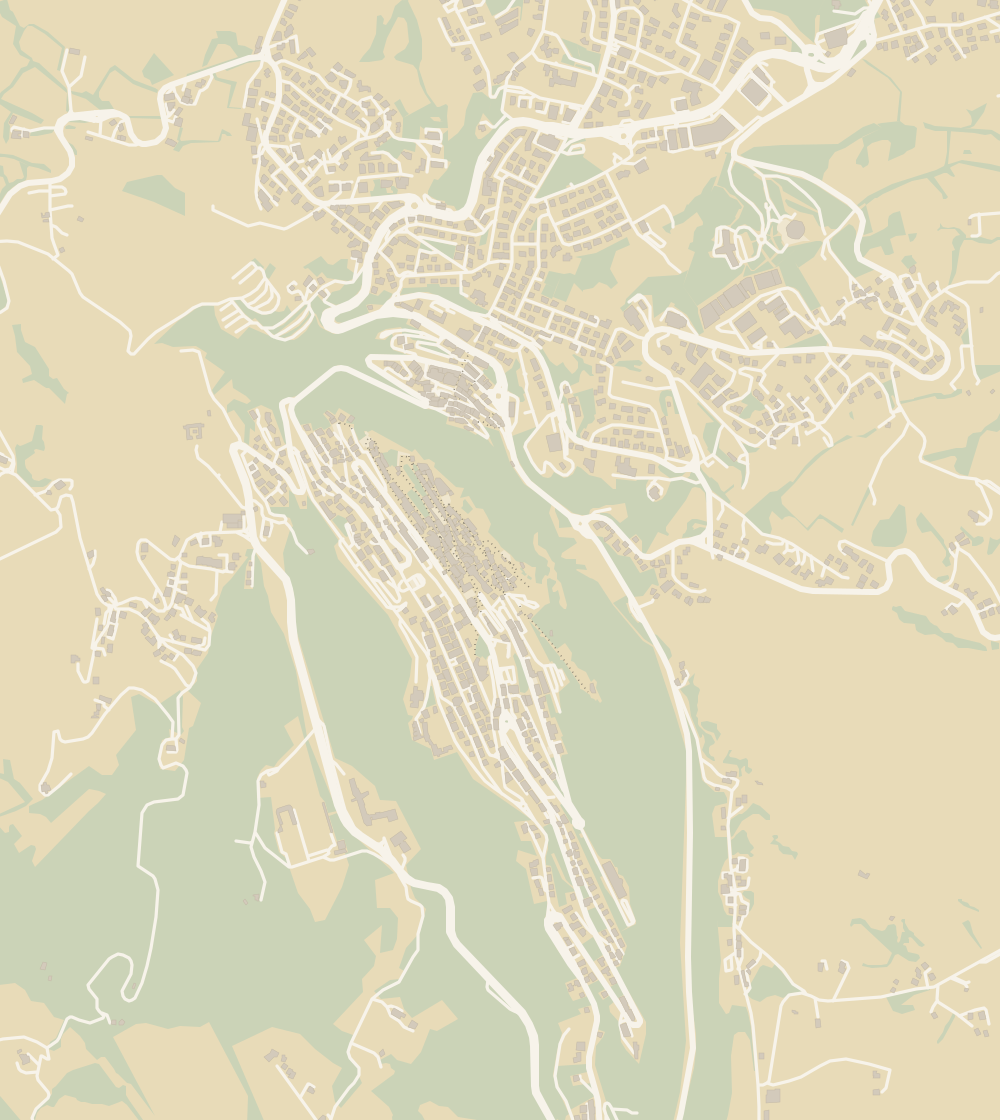 1The Three Towers 2Guaita Tower 3Cesta Tower and Arms Museum 4City of San Marino 5Montale Tower 6Borgo Maggiore 7Witches' Passage 8Palazzo Pubblico 9Changing of the guard 10Basilica of Saint Marinus 11Mount Titano 12Museums 13State Museum 14San Francesco Art Gallery 15Torture Museum 16Cable car (funivia) 17Quirky museums 18Stamp and Coin Museum 19National Gallery 20Valdragone 21San Giovanni sotto le Penne 22Medieval Days 23Christmas 24Hotel Titano 25Grand Hotel San Marino 26Hotel Rosa 27Hotel Crocenzi 28Hotel La Rocca 29Porta San Francesco 30Cava dei Balestrieri 31Map 32Teatro Titano 33Church of San Quirino 34Trenino Bianco Azzurro 35Consolazione Sanctuary 36University 37Prison 38Piazza della Libertà
 Map data © OpenStreetMap contributors (ODbL)
- 1The Three TowersTwo open inside, the third only from outside
- 2Guaita TowerAn 11th-century fortress that was a jail until 1970
- 3Cesta Tower and Arms MuseumThe top of Mount Titano, at 755 metres
- 4City of San MarinoWorld Heritage since 2008
- 5Montale TowerNo ticket, no hours, no pass
- 6Borgo MaggioreA cable car to the capital every 15 minutes
- 7Witches' PassageAbout 200 metres of battlements, no ticket
- 8Palazzo PubblicoClosed for restoration in 2026
- 9Changing of the guardNo timetable in any reliable source
- 10Basilica of Saint MarinusNeoclassical, begun in 1826, free to enter
- 11Mount Titano755 metres at the top of the Cesta
- 12MuseumsOne €11 ticket, seven venues
- 13State MuseumOpen to the public since 1899
- 14San Francesco Art GalleryIn the Franciscan cloister since 1966
- 15Torture MuseumMore than 100 original instruments
- 16Cable car (funivia)Closed from 21 to 23 October 2026
- 17Quirky museumsThree private museums with their own websites
- 18Stamp and Coin MuseumStamps since 1877, on the €11 pass
- 19National GalleryOpened on 7 July 2018
- 20ValdragoneA curazia of Borgo Maggiore
- 21San Giovanni sotto le PenneA curazia of Borgo Maggiore, below the towers
- 22Medieval DaysJuly, the old town and free entry
- 23Christmas28 November to 6 January, with a caveat
- 24Hotel TitanoOpen since 30 September 1894
- 25Grand Hotel San MarinoA hot tub on the third-floor terrace
- 26Hotel RosaFamily-run and open all year since 1965
- 27Hotel Crocenzi1 km from the cable car, 3 km from the old town
- 28Hotel La RoccaNot the Rocca, but on the road up to it
- 29Porta San FrancescoA guard post since 1361
- 30Cava dei BalestrieriThe crossbowmen's range since 1965
- 31MapNine castelli in 61 km²
- 32Teatro Titano2026-27 season from 22 October
- 33Church of San QuirinoOn the 5-cent coin
- 34Trenino Bianco AzzurroRimini to the City, 1932 to 1944
- 35Consolazione SanctuaryConsecrated on 11 June 1967
- 36UniversityCreated by law on 31 October 1985
- 37PrisonEmpty on the day the European inspectors arrived
- 38Piazza della LibertàIt used to be called the Pianello
0 of 108 San Marino guides
Your next stamp
- History
- Facts
- University
- Flag
- Is it a country?
- Captains Regent
- City of San Marino
- Things to do
- One day
- Two days
- The Three Towers
- Guaita Tower
- Cesta Tower and Arms Museum
- The 9 castelli
- Montale Tower
- Borgo Maggiore
- Witches' Passage
- Palazzo Pubblico
- Serravalle
- Changing of the guard
- Dogana
- Acquaviva
- Basilica of Saint Marinus
- Mount Titano
- Chiesanuova
- Domagnano
- Faetano
- Fiorentino
- Montegiardino
- Museums
- State Museum
- San Francesco Art Gallery
- Torture Museum
- Cable car (funivia)
- Quirky museums
- Viewpoints
- Murata
- Stamp and Coin Museum
- Walking trails
- Cailungo
- National Gallery
- Valdragone
- Best time to visit
- Getting there
- Ventoso
- Rimini to San Marino
- San Giovanni sotto le Penne
- Weather
- Getting around
- In winter
- With kids
- In summer
- Parking
- Passport stamp
- Rainy day
- Nightlife
- Phone and roaming
- Casino
- Gualdicciolo
- Money
- Coins and stamps
- Torraccia
- Falciano
- Shopping and tax-free
- Rovereta
- Lake Faetano
- Events
- Beaches
- Medieval Days
- Christmas
- MotoGP
- Where to stay
- Hotel Titano
- Where to eat
- Food
- Grand Hotel San Marino
- Luxury hotels
- Free and cheap
- Hotel iDesign
- Day trips
- Hotel Rosa
- Safety and rules
- Hotel Crocenzi
- Language
- Entry requirements
- Hotel La Rocca
- Healthcare and emergencies
- Plugs and voltage
- Opening hours
- Porta San Francesco
- Tap water
- Cava dei Balestrieri
- Map
- Post office
- Cost of a trip
- Teatro Titano
- Accessibility
- Church of San Quirino
- Trenino Bianco Azzurro
- With a dog
- Consolazione Sanctuary
- Weddings
- Wine
- Prison
- Camping
- Piazza della Libertà
- Is it worth visiting?
Frequently asked questions
Does San Marino have a constitution?
Yes, but not in a single text. According to the Regency's website, its constitutional rules are spread across several laws, from the earliest statutes to the 1974 Declaration of Citizens' Rights, revised by Law 36 of 2002.
Is San Marino's constitution the oldest in the world?
That's the claim you'll often read, based on the seventeenth-century statutes still cited today. The official websites I checked don't use that phrase, so I'd say San Marino has very old constitutional rules rather than the world's oldest written constitution.
Is the San Marino constitution from 1600?
The date comes from the «'600» statutes. The Consiglio Grande e Generale says they were drafted between the late sixteenth and early seventeenth centuries, without giving an exact year. They're still cited, for instance rubric XIX of Book One, which governs the review of outgoing regents.
What does the 1974 Declaration of Rights say?
That sovereignty lies with the people, that the state rejects war and recognises the European Convention on Human Rights, that everyone is equal before the law and that suffrage is universal, secret and direct. It also covers the Regency, the Council, the government and the judiciary.
Who makes sure the constitution is respected?
The Collegio Garante della costituzionalità delle norme, created in the 2002 reform. It has three full members and three substitutes elected by two thirds of the Council, and it also reviews the Captains Regent when their term ends.
What is the Arengo of San Marino?
The ancient assembly of heads of household, which met outside the Pieve when the bell rang. The seventeenth-century statutes stripped it of power, it met again on 25 March 1906, and today it survives as the istanze d'Arengo, petitions citizens present after each investiture.
By
Tourism graduate with a master’s in Tourism Management and Planning from the University of Málaga, who has travelled across Europe. He writes every guide from official sources and his own judgement.
Published on . Facts checked on .
Sources
Photos: Hayden Soloviev (CC BY 4.0), via Wikimedia Commons.