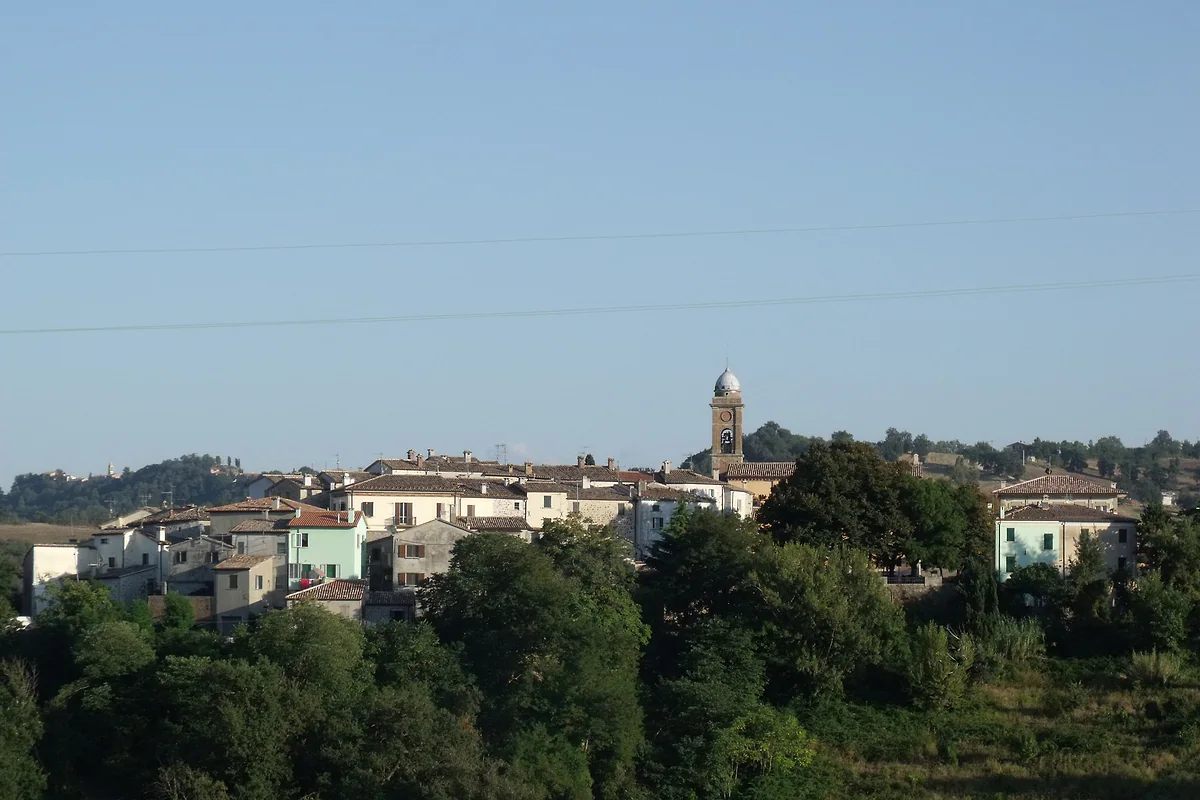
986 residents in 3.31 km²
Montegiardino, the smallest castello and the best preserved
Montegiardino is San Marino's smallest castello, with 986 residents on 30 June 2026 and 3.31 km². The government calls it the smallest and most intact of the nine, a maze of very narrow lanes with a town wall, an old tower and a gate that looks like a drawbridge. It joined San Marino in 1463 and its fortress was turned into homes.
In 30 seconds
Full read: 3 min
- Montegiardino is San Marino's smallest castello, with 986 residents and 3.31 km².
- The government calls it the smallest and most intact of the nine.
- It has very narrow lanes, a town wall with a tower and a gate like a drawbridge.
- It belonged to the Carpegna and the Malatesta until 1463, when the fortress became homes.
If you only have time to leave Mount Titano for one castello, make it this one. It's tiny, you'll see it in half an hour, and it's the closest thing in the sources to San Marino before the 20th-century restorations.

Before you go
What I would keep in mind
-
01 Most beautiful
A centre you can see in half an hour
A maze of very narrow lanes and little houses leaning on each other, inside the town wall with its old tower. The castello gate looks like a proper drawbridge.
-
02 My tip
Look for the young tree in the square
The great old elm that shaded the square has gone. In its place is a young nettle tree, from the same family, planted in memory of the village's symbol.
-
03 Getting there
Circular lines 3D and 3S stop here
They leave car park P2 in the City and loop through Borgo Maggiore, Faetano, Ca' Chiavello, Montegiardino and Fiorentino on weekdays. Otherwise there's the SMUVI on-demand bus.
getting around San Marino
Montegiardino is San Marino’s smallest castello and, to my mind, the best reason to leave Mount Titano even for an hour. It had 986 residents on 30 June 2026 over 3.31 km², the lowest figures of the nine. In the government’s words it’s the smallest and the most intact, and once you read what its centre is like you see why.
A maze inside a town wall
The official page opens with a very precise picture, a maze of extremely narrow lanes and a cluster of little houses propped against one another. That’s the historic centre, which recalls a village of Lombard origin, ringed by the wall with its old tower. The castello gate, the government says, looks like a real drawbridge.
The square once had a great centuries-old elm for shade, and it’s gone. In its memory there’s now a young nettle tree, from the same family. Small gestures like that tell me more about a village than any plaque. The old village has been carefully restored in recent years, respecting its architecture, and has barely changed. If the capital’s centre is a medieval stage set rebuilt in the 20th century, here the scale is the original one.
From the Carpegna to students
Montegiardino long belonged to the Counts of Carpegna and, in the early 15th century, passed to the Malatesta of Rimini. The new lords enlarged and strengthened the fort, and the castello became a threat to the Republic. In 1463, when it became Sammarinese territory, the stronghold was dismantled and converted into houses. It was one of the five gains of 1463, and the whole story is in San Marino’s castelli.
What’s curious is its life now. The small restored flats in the centre are set aside for students of the University of San Marino, whose Department of Economics and Technology is based here. The old Filippi house, fully restored, is home to the university’s technology studies institute. What it teaches and where its other buildings are is in my guide to the University of San Marino.
Villa Filippi and the park
The village’s other point of pride is Villa Filippi, which the government holds up as an example of an early 20th-century gentleman’s country house. No opening times are published, so plan on admiring it from the road. Next to the school is Le Stradelle park, a green space with play equipment meant for locals, handy if you have children with you. The rest of my family ideas are in San Marino with children.
The economy is tiny, with 59 businesses, seven of them farms, which is notable for such a small castello. Don’t expect restaurants or souvenir shops. I’d visit mid-morning, when the centre is quiet, and carry on to Faetano or Fiorentino next door.
Festivals
The government’s most recent festival list, from 2024, includes a castello festival with local produce from 10 to 12 May, St Lawrence on 10 August, «Artisti in Casa» on 14 and 15 September and a living nativity on 26 December and 6 January. With nothing published for 2026 yet, I’d phone the council before planning around it. Everything else in the year is on the events page.
Getting there
Without a car, use the two southern loop buses, 3D and 3S, which start from P2 in the capital and circle Borgo, Faetano, Ca’ Chiavello, Montegiardino, Cerbaiola and Fiorentino each weekday. If the times don’t suit, book a SMUVI. Driving, it’s a few minutes down the south side of Mount Titano; it’s all explained in getting around San Marino.
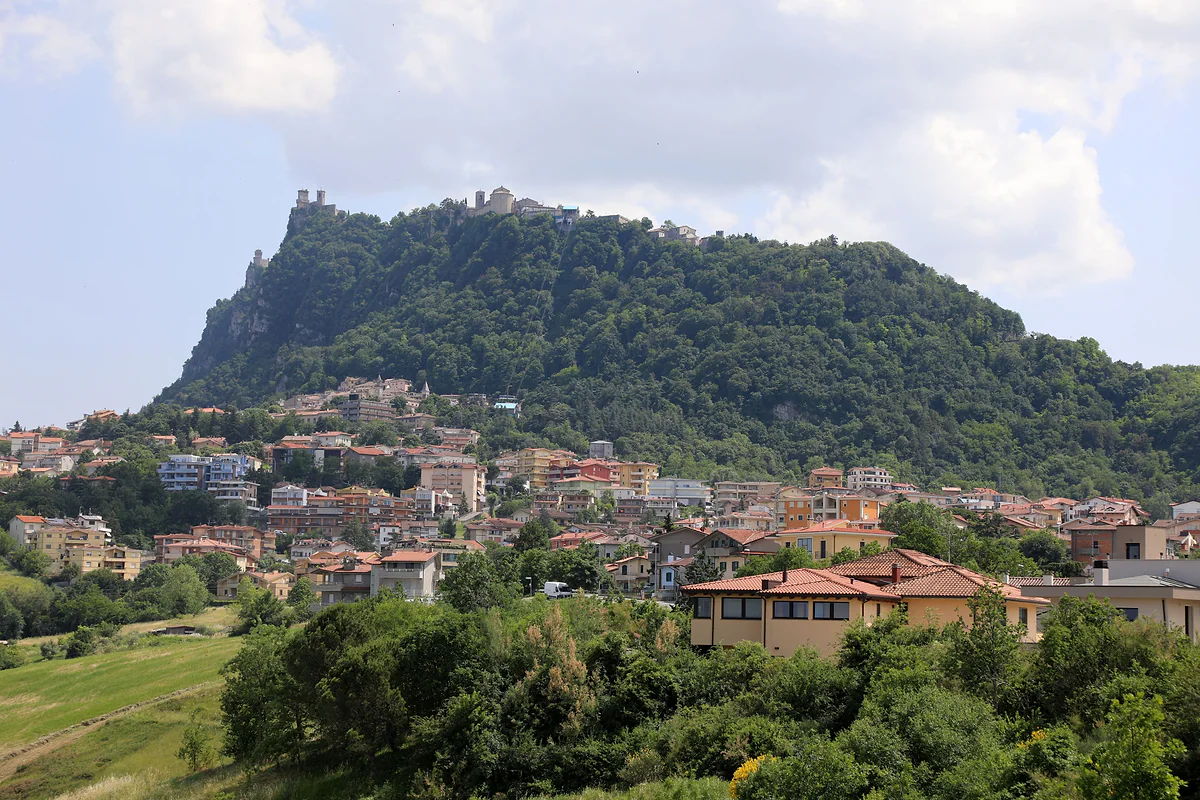
Monte Titano seen from the valley, with its wooded slope, the towers and the town along the ridge and Borgo Maggiore at its foot.
Montegiardino at a glance
| Fact | Figure | Source |
|---|---|---|
| Residents on 30 June 2026 | 986 | Statistics Bulletin |
| Area | 3.31 km² | Government of San Marino |
| Businesses | 59, seven of them farms | Government of San Marino |
| Joined San Marino | 1463 | Government of San Marino |
| Village within the castello | Cerbaiola | Wikipedia |
The official 2024 calendar lists the castello festival (10-12 May), St Lawrence (10 August), «Artisti in Casa» (14-15 September) and a living nativity (26 December and 6 January). No 2026 calendar has been published.
Test yourself
True or false?
0/3 Pick before you peek.
-
Montegiardino is San Marino's least populated castello.
See the answer
True. It had 986 residents on 30 June 2026, fewer than any other, and also the smallest area, 3.31 km².
-
Montegiardino's fortress stayed a military stronghold after it joined San Marino.
See the answer
False. According to the government, when it became Sammarinese in 1463 the stronghold was dismantled and turned into houses.
-
The great elm in Montegiardino's square is still standing.
See the answer
False. It was lost. A young nettle tree, from the elm family, was planted in its memory.
- Residents, the fewest of the nine castelli
- 986
- The smallest area in the country
- 3.31 km²
- Year it joined San Marino
- 1463
- Businesses in the castello
- 59
Map
Where Montegiardino is
Every number opens its guide. The towers sit on the ridge, the city beside them and Borgo Maggiore below, linked by the cable car.
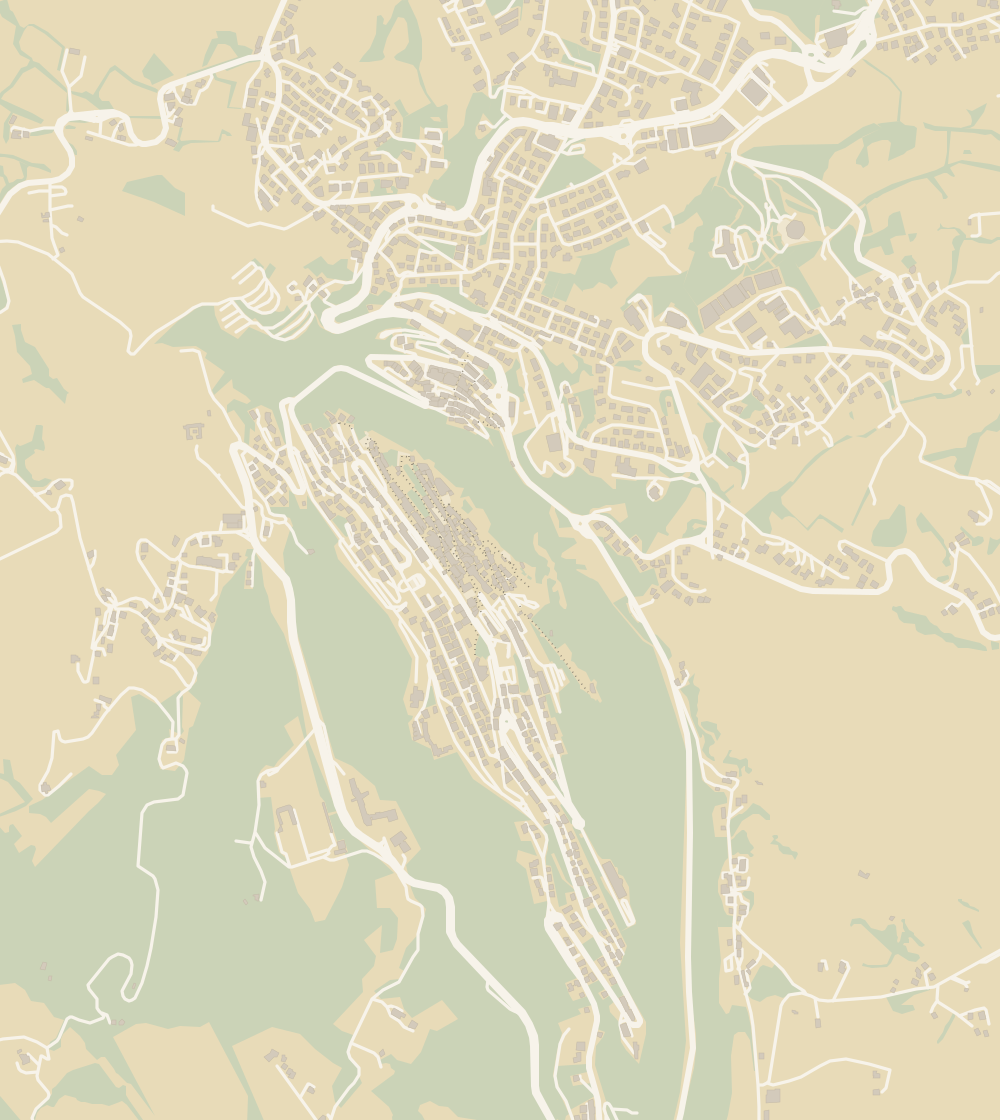 1The Three Towers 2Guaita Tower 3Cesta Tower and Arms Museum 4City of San Marino 5Montale Tower 6Borgo Maggiore 7Witches' Passage 8Palazzo Pubblico 9Changing of the guard 10Basilica of Saint Marinus 11Mount Titano 12Museums 13State Museum 14San Francesco Art Gallery 15Torture Museum 16Cable car (funivia) 17Quirky museums 18Stamp and Coin Museum 19National Gallery 20Valdragone 21San Giovanni sotto le Penne 22Medieval Days 23Christmas 24Hotel Titano 25Grand Hotel San Marino 26Hotel Rosa 27Hotel Crocenzi 28Hotel La Rocca 29Porta San Francesco 30Cava dei Balestrieri 31Map 32Teatro Titano 33Church of San Quirino 34Trenino Bianco Azzurro 35Consolazione Sanctuary 36University 37Prison 38Piazza della Libertà
 Map data © OpenStreetMap contributors (ODbL)
- 1The Three TowersTwo open inside, the third only from outside
- 2Guaita TowerAn 11th-century fortress that was a jail until 1970
- 3Cesta Tower and Arms MuseumThe top of Mount Titano, at 755 metres
- 4City of San MarinoWorld Heritage since 2008
- 5Montale TowerNo ticket, no hours, no pass
- 6Borgo MaggioreA cable car to the capital every 15 minutes
- 7Witches' PassageAbout 200 metres of battlements, no ticket
- 8Palazzo PubblicoClosed for restoration in 2026
- 9Changing of the guardNo timetable in any reliable source
- 10Basilica of Saint MarinusNeoclassical, begun in 1826, free to enter
- 11Mount Titano755 metres at the top of the Cesta
- 12MuseumsOne €11 ticket, seven venues
- 13State MuseumOpen to the public since 1899
- 14San Francesco Art GalleryIn the Franciscan cloister since 1966
- 15Torture MuseumMore than 100 original instruments
- 16Cable car (funivia)Closed from 21 to 23 October 2026
- 17Quirky museumsThree private museums with their own websites
- 18Stamp and Coin MuseumStamps since 1877, on the €11 pass
- 19National GalleryOpened on 7 July 2018
- 20ValdragoneA curazia of Borgo Maggiore
- 21San Giovanni sotto le PenneA curazia of Borgo Maggiore, below the towers
- 22Medieval DaysJuly, the old town and free entry
- 23Christmas28 November to 6 January, with a caveat
- 24Hotel TitanoOpen since 30 September 1894
- 25Grand Hotel San MarinoA hot tub on the third-floor terrace
- 26Hotel RosaFamily-run and open all year since 1965
- 27Hotel Crocenzi1 km from the cable car, 3 km from the old town
- 28Hotel La RoccaNot the Rocca, but on the road up to it
- 29Porta San FrancescoA guard post since 1361
- 30Cava dei BalestrieriThe crossbowmen's range since 1965
- 31MapNine castelli in 61 km²
- 32Teatro Titano2026-27 season from 22 October
- 33Church of San QuirinoOn the 5-cent coin
- 34Trenino Bianco AzzurroRimini to the City, 1932 to 1944
- 35Consolazione SanctuaryConsecrated on 11 June 1967
- 36UniversityCreated by law on 31 October 1985
- 37PrisonEmpty on the day the European inspectors arrived
- 38Piazza della LibertàIt used to be called the Pianello
0 of 108 San Marino guides
Your next stamp
- The 9 castelli
- Mount Titano
- Serravalle
- Walking trails
- City of San Marino
- The Three Towers
- Map
- Things to do
- One day
- Two days
- Guaita Tower
- Cesta Tower and Arms Museum
- Montale Tower
- Borgo Maggiore
- Witches' Passage
- Palazzo Pubblico
- Changing of the guard
- Dogana
- Acquaviva
- Basilica of Saint Marinus
- Chiesanuova
- Domagnano
- Faetano
- Fiorentino
- Museums
- State Museum
- San Francesco Art Gallery
- Torture Museum
- Cable car (funivia)
- Quirky museums
- Viewpoints
- Murata
- Stamp and Coin Museum
- Cailungo
- National Gallery
- Valdragone
- Best time to visit
- Getting there
- Ventoso
- Rimini to San Marino
- San Giovanni sotto le Penne
- Weather
- Getting around
- In winter
- With kids
- In summer
- Parking
- Passport stamp
- Rainy day
- Nightlife
- Phone and roaming
- Casino
- Gualdicciolo
- Money
- Coins and stamps
- Torraccia
- Falciano
- Shopping and tax-free
- Rovereta
- Lake Faetano
- Events
- Beaches
- Medieval Days
- Christmas
- MotoGP
- Where to stay
- Hotel Titano
- Where to eat
- Food
- Grand Hotel San Marino
- Luxury hotels
- Free and cheap
- Hotel iDesign
- Day trips
- Hotel Rosa
- Safety and rules
- Hotel Crocenzi
- Language
- Entry requirements
- Hotel La Rocca
- Healthcare and emergencies
- Plugs and voltage
- Is it a country?
- Opening hours
- Porta San Francesco
- Tap water
- Cava dei Balestrieri
- Post office
- Cost of a trip
- Flag
- Teatro Titano
- Accessibility
- Church of San Quirino
- History
- Captains Regent
- Trenino Bianco Azzurro
- With a dog
- Consolazione Sanctuary
- Facts
- University
- Weddings
- Wine
- Prison
- Camping
- Piazza della Libertà
- Is it worth visiting?
- Constitution
Frequently asked questions
What is the smallest castello in San Marino?
Montegiardino, with 3.31 km² and 986 residents on 30 June 2026. It's the smallest by both area and population.
What is there to see in Montegiardino?
The walled historic centre with its very narrow lanes, the old tower and the drawbridge-like gate, plus Villa Filippi, an early 20th-century country house.
Where is Montegiardino?
In the south of San Marino, between Fiorentino and Faetano, bordering the Italian municipalities of Sassofeltrio and Monte Grimano Terme.
How do I get to Montegiardino?
On the circular AASS lines 3D and 3S from car park P2 in the City on weekdays, or with the SMUVI on-demand bus. By car, head south off Mount Titano via Fiorentino.
Is there a university in Montegiardino?
Yes. The University of San Marino's Department of Economics and Technology is based here, and restored flats in the historic centre house students.
By
Tourism graduate with a master’s in Tourism Management and Planning from the University of Málaga, who has travelled across Europe. He writes every guide from official sources and his own judgement.
Published on . Facts checked on .
Sources
Photos: LigaDue (CC BY 3.0); Francesco Bini (CC BY-SA 4.0), via Wikimedia Commons.