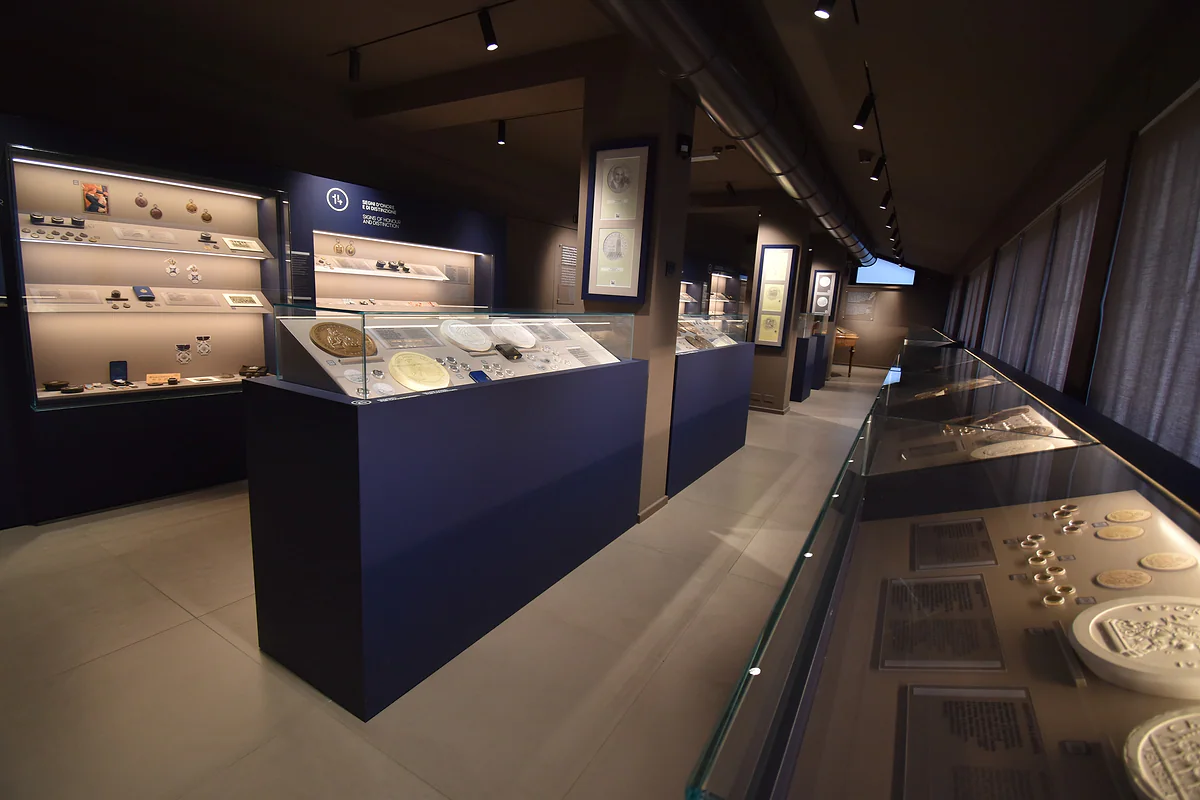
Stamps since 1877, on the €11 pass
The Stamp and Coin Museum, San Marino's story in your pocket
The Museo del Francobollo e della Moneta is the stamp and coin museum of San Marino's State Museums. It covers 700 m² over two floors of the former Philatelic and Numismatic Office on Piazza Garibaldi, from the late 19th century to today. It's included in the €11 pass and from 27 September 2026 opens 09:00 to 16:50.
In 30 seconds
Full read: 3 min
- The Museo del Francobollo e della Moneta is the State Museums' stamp and coin museum in San Marino.
- It covers 700 m² over two floors of the former Philatelic and Numismatic Office on Piazza Garibaldi.
- It's on the €11 pass; from 16:00 there's a €5 ticket at the box office.
- From 27 September 2026 it opens 09:00 to 16:50.
It's the least visited museum on the pass and, if you like small objects with a story, the one most likely to surprise you. I'd see it calmly in the last hour with the €5 afternoon ticket, which gives you plenty of time for it.

Before you go
What I would keep in mind
-
01 To save money
Same pass as the towers
There's no separate ticket. The €11 State Museums pass (€8 reduced) also covers the Guaita, the Cesta, the State Museum, the art gallery and the National Gallery. Under-18s go free.
museums in San Marino -
02 Most beautiful
The gold scudo, San Marino's home-grown coin
The coin section has a space for the gold scudo, which the State Museums call the only currency «born in San Marino», alongside the lire of 1972 to 2001 and the euros.
-
03 My tip
Last hour for €5
From 16:00 the museum ticket offices sell a €5 ticket valid at every venue until closing. On winter hours that gives you 50 minutes, enough for this museum.
For such a small country, San Marino has told a great deal about itself through stamps and coins. The Museo del Francobollo e della Moneta, the Stamp and Coin Museum, gathers that story in a building that was once the state’s own philatelic and numismatic office. It’s the museum on the pass that fewest people visit, and in my view it’s one of the most rewarding.
Where it is and what it is
It occupies what used to be the state’s Philatelic and Numismatic Office, at number 5 on Piazza Garibaldi, according to the State Museums. It’s 700 m² over two floors, with thousands of pieces spanning the late 1800s to the present. There’s no separate ticket; you use the same State Museums pass that gets you into the towers. How the venues fit together and how to make the most of the pass is in San Marino’s museums.
The stamp floor
The philatelic section displays the stamps issued by the Sammarinese post office from 1877 to the Second World War. Alongside them are the documents I find most interesting, the postal agreements with the Kingdom of Italy, the first letters with the first postmarks, hand stamps, post boxes, original preparatory drawings and printing plates. The modern part shows stamps with the original sketches and paintings by artists such as Corrado Mezzana, Roberto Franzoni, Renato Guttuso, Emilio Greco and Aligi Sassu. Seeing a Guttuso drawing next to the stamp it became is the sort of thing you’ll only find here.
The coin floor
The numismatic route starts with the very rare first Sammarinese coins of the 19th and early 20th centuries and moves on to the state’s commemorative medals. Then come the lire San Marino issued from 1972 to 2001, signed by artists such as Bino Bini, Guido Veroi, Angelo Grilli and Laura Cretara. There’s a space for the gold scudo, which the museum calls the only currency «born in San Marino», and another for circulating and commemorative euros, with their models, dies and punches. If you want to know what a Sammarinese euro is worth today or where to buy one, see my page on San Marino’s coins and stamps.
Hours and admission
Winter opening applies from 27 September 2026, with doors open 09:00 to 16:50 and last admission at 16:30. It shuts on New Year’s Day and Christmas Day, and on the afternoon of 2 November. The pass costs €11, or €8 reduced for over-65s, university students and large groups, and under-18s go free. From 16:00, at the ticket office only, there’s a €5 ticket valid at every venue until closing. That 27 September is also a free-entry day.
My advice is not to leave it until last if you’ve bought the full pass, because the towers and the State Museum take most of the time. But if you arrive late with only 50 minutes left, this museum is the best use of the €5 ticket.
Fitting it in
Piazza Garibaldi is a few steps from the State Museum and Piazza della Libertà, so it slots in between them. With the Palazzo Pubblico closed for restoration in 2026, this museum is also a good way to fill the gap it leaves in the pass. If you’d like to carry on with art, the National Gallery is on the same ticket. And if you leave wanting to use a stamp rather than just look at one, Poste San Marino’s philatelic shop is on the same square, as I explain in how to send a postcard from San Marino.
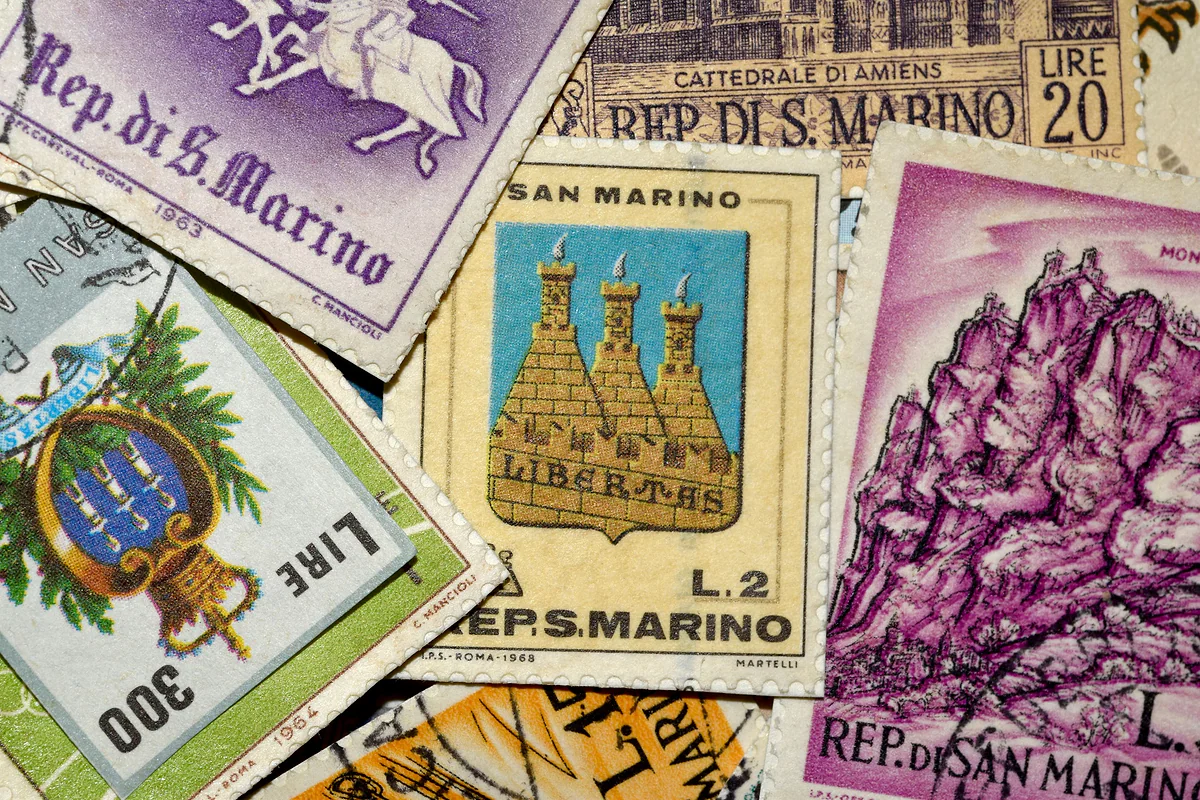
A pile of vintage San Marino stamps showing the three towers, the coat of arms and Monte Titano.
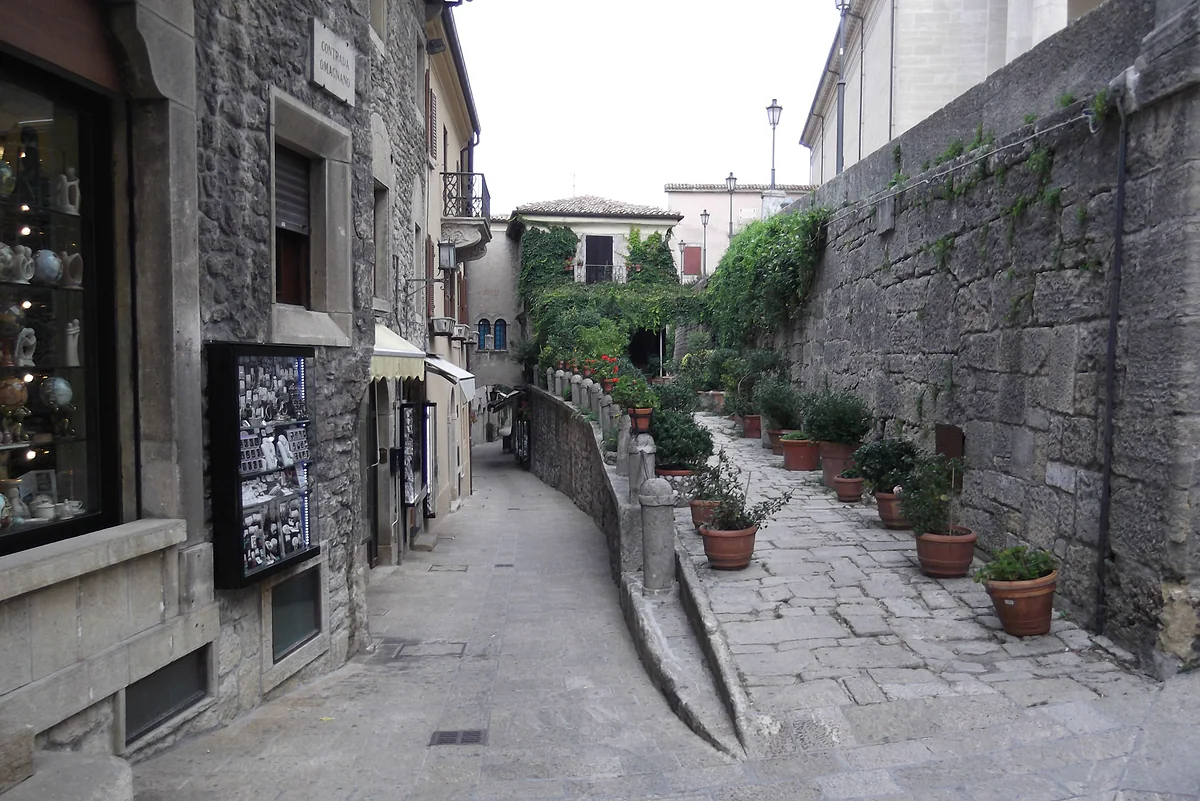
A cobbled street in the old town slopes down between stone facades, shops and flower pots along the wall.
State Museums opening hours, 2026
| Season | Hours | Last entry |
|---|---|---|
| Winter, 27 Sep to 31 Dec (and 2 Jan to 28 Mar) | 09:00-16:50 | 16:30 |
| Spring, 29 Mar to 27 Jun | 10:00-17:50 | 17:30 |
| Summer, 28 Jun to 5 Sep | 08:30-19:45 | 19:15 |
| Autumn, 6 Sep to 26 Sep | 10:00-17:50 | 17:30 |
Closed on 1 January, the afternoon of 2 November and 25 December. The State Museums warn that hours may change without notice.
Pass prices (2026)
| Ticket | Price | Who for |
|---|---|---|
| Pass | €11 | Every State Museums venue |
| Reduced pass | €8 | Over-65s, university students and groups over 25 |
| Ultima Fascia | €5 | From 16:00, ticket office only |
| Free | €0 | Under-18s and free-entry days |
Test yourself
True or false?
0/3 Pick before you peek.
-
The Stamp and Coin Museum has its own separate ticket.
See the answer
False. The online ticket office has no single-venue ticket. You enter with the €11 State Museums pass, valid at all its venues.
-
San Marino minted its own lire before the euro.
See the answer
True. The museum shows the lire issued from 1972 to 2001, signed by artists including Bino Bini, Guido Veroi, Angelo Grilli and Laura Cretara.
-
The museum is in the old state philatelic office on Piazza Garibaldi.
See the answer
True. It occupies the former Philatelic and Numismatic Office on Piazza Garibaldi, according to the State Museums.
- Of displays over two floors
- 700 m²
- Year of the earliest stamps on show
- 1877
- State Museums pass
- €11
- Years of the Sammarinese lire on show
- 1972-2001
Map
Where Stamp and Coin Museum is
Every number opens its guide. The towers sit on the ridge, the city beside them and Borgo Maggiore below, linked by the cable car.
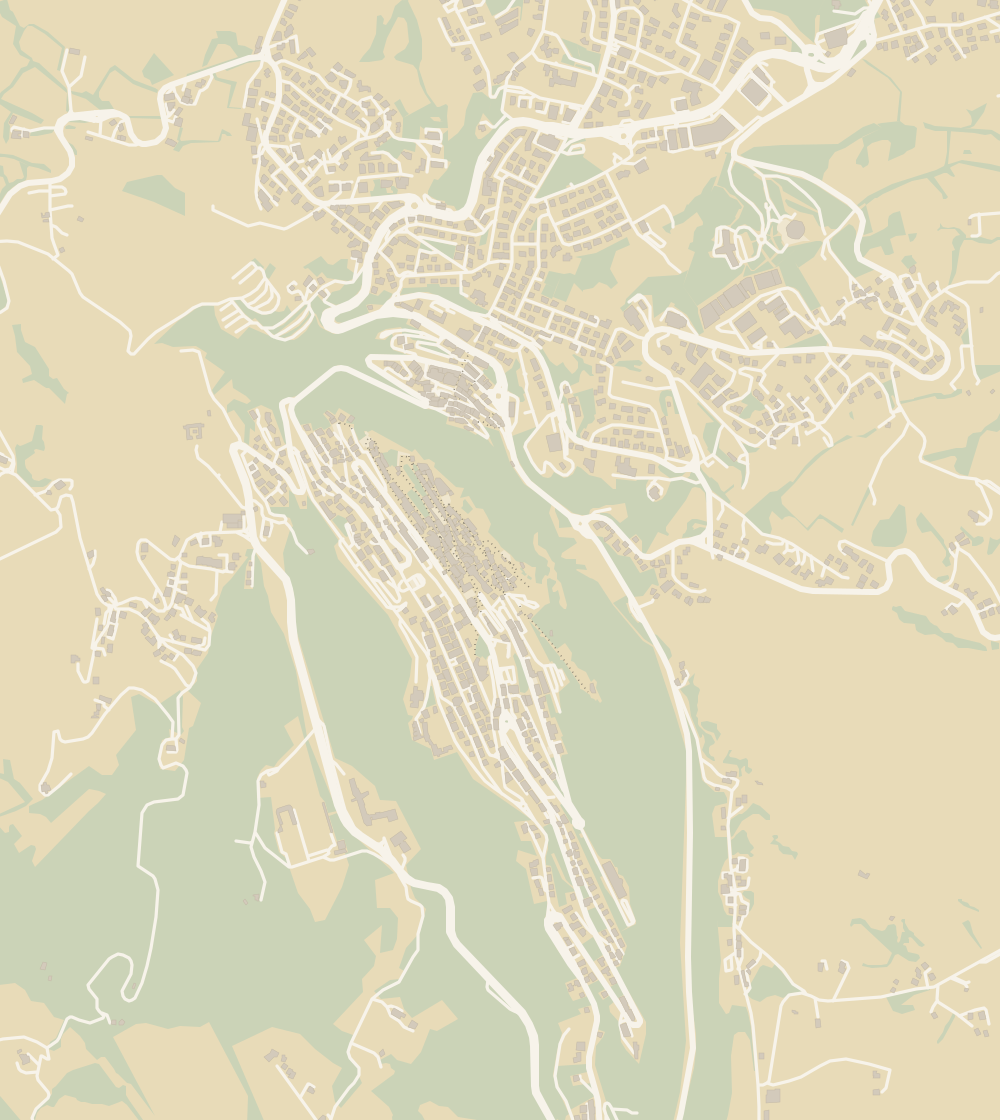 1The Three Towers 2Guaita Tower 3Cesta Tower and Arms Museum 4City of San Marino 5Montale Tower 6Borgo Maggiore 7Witches' Passage 8Palazzo Pubblico 9Changing of the guard 10Basilica of Saint Marinus 11Mount Titano 12Museums 13State Museum 14San Francesco Art Gallery 15Torture Museum 16Cable car (funivia) 17Quirky museums 18Stamp and Coin Museum 19National Gallery 20Valdragone 21San Giovanni sotto le Penne 22Medieval Days 23Christmas 24Hotel Titano 25Grand Hotel San Marino 26Hotel Rosa 27Hotel Crocenzi 28Hotel La Rocca 29Porta San Francesco 30Cava dei Balestrieri 31Map 32Teatro Titano 33Church of San Quirino 34Trenino Bianco Azzurro 35Consolazione Sanctuary 36University 37Prison 38Piazza della Libertà
 Map data © OpenStreetMap contributors (ODbL)
- 1The Three TowersTwo open inside, the third only from outside
- 2Guaita TowerAn 11th-century fortress that was a jail until 1970
- 3Cesta Tower and Arms MuseumThe top of Mount Titano, at 755 metres
- 4City of San MarinoWorld Heritage since 2008
- 5Montale TowerNo ticket, no hours, no pass
- 6Borgo MaggioreA cable car to the capital every 15 minutes
- 7Witches' PassageAbout 200 metres of battlements, no ticket
- 8Palazzo PubblicoClosed for restoration in 2026
- 9Changing of the guardNo timetable in any reliable source
- 10Basilica of Saint MarinusNeoclassical, begun in 1826, free to enter
- 11Mount Titano755 metres at the top of the Cesta
- 12MuseumsOne €11 ticket, seven venues
- 13State MuseumOpen to the public since 1899
- 14San Francesco Art GalleryIn the Franciscan cloister since 1966
- 15Torture MuseumMore than 100 original instruments
- 16Cable car (funivia)Closed from 21 to 23 October 2026
- 17Quirky museumsThree private museums with their own websites
- 18Stamp and Coin MuseumStamps since 1877, on the €11 pass
- 19National GalleryOpened on 7 July 2018
- 20ValdragoneA curazia of Borgo Maggiore
- 21San Giovanni sotto le PenneA curazia of Borgo Maggiore, below the towers
- 22Medieval DaysJuly, the old town and free entry
- 23Christmas28 November to 6 January, with a caveat
- 24Hotel TitanoOpen since 30 September 1894
- 25Grand Hotel San MarinoA hot tub on the third-floor terrace
- 26Hotel RosaFamily-run and open all year since 1965
- 27Hotel Crocenzi1 km from the cable car, 3 km from the old town
- 28Hotel La RoccaNot the Rocca, but on the road up to it
- 29Porta San FrancescoA guard post since 1361
- 30Cava dei BalestrieriThe crossbowmen's range since 1965
- 31MapNine castelli in 61 km²
- 32Teatro Titano2026-27 season from 22 October
- 33Church of San QuirinoOn the 5-cent coin
- 34Trenino Bianco AzzurroRimini to the City, 1932 to 1944
- 35Consolazione SanctuaryConsecrated on 11 June 1967
- 36UniversityCreated by law on 31 October 1985
- 37PrisonEmpty on the day the European inspectors arrived
- 38Piazza della LibertàIt used to be called the Pianello
0 of 108 San Marino guides
Your next stamp
- Coins and stamps
- State Museum
- Museums
- Rainy day
- Torture Museum
- Opening hours
- National Gallery
- Things to do
- One day
- Two days
- The Three Towers
- Guaita Tower
- Cesta Tower and Arms Museum
- The 9 castelli
- City of San Marino
- Montale Tower
- Borgo Maggiore
- Witches' Passage
- Palazzo Pubblico
- Serravalle
- Changing of the guard
- Dogana
- Acquaviva
- Basilica of Saint Marinus
- Mount Titano
- Chiesanuova
- Domagnano
- Faetano
- Fiorentino
- Montegiardino
- San Francesco Art Gallery
- Cable car (funivia)
- Quirky museums
- Viewpoints
- Murata
- Walking trails
- Cailungo
- Valdragone
- Best time to visit
- Getting there
- Ventoso
- Rimini to San Marino
- San Giovanni sotto le Penne
- Weather
- Getting around
- In winter
- With kids
- In summer
- Parking
- Passport stamp
- Nightlife
- Phone and roaming
- Casino
- Gualdicciolo
- Money
- Torraccia
- Falciano
- Shopping and tax-free
- Rovereta
- Lake Faetano
- Events
- Beaches
- Medieval Days
- Christmas
- MotoGP
- Where to stay
- Hotel Titano
- Where to eat
- Food
- Grand Hotel San Marino
- Luxury hotels
- Free and cheap
- Hotel iDesign
- Day trips
- Hotel Rosa
- Safety and rules
- Hotel Crocenzi
- Language
- Entry requirements
- Hotel La Rocca
- Healthcare and emergencies
- Plugs and voltage
- Is it a country?
- Porta San Francesco
- Tap water
- Cava dei Balestrieri
- Map
- Post office
- Cost of a trip
- Flag
- Teatro Titano
- Accessibility
- Church of San Quirino
- History
- Captains Regent
- Trenino Bianco Azzurro
- With a dog
- Consolazione Sanctuary
- Facts
- University
- Weddings
- Wine
- Prison
- Camping
- Piazza della Libertà
- Is it worth visiting?
- Constitution
Frequently asked questions
Where is the San Marino Stamp and Coin Museum?
At Piazza Garibaldi 5 in the historic centre, in the former Philatelic and Numismatic Office building. Phone 0549 888236.
How much does the Stamp and Coin Museum cost?
There's no single ticket. You get in with the State Museums pass, €11 (€8 reduced), valid at all its venues. From 16:00 there's a €5 ticket at the box office.
What's in the Stamp and Coin Museum?
Sammarinese stamps from 1877 to the Second World War, postal agreements with the Kingdom of Italy, post boxes, printing plates and sketches by artists such as Renato Guttuso and Emilio Greco. The coin side has the first 19th-century coins, the lire of 1972 to 2001, the gold scudo and the euros.
What are the opening hours?
From 27 September 2026 winter hours apply, 09:00 to 16:50, with the ticket office open until 16:30. It closes on 1 January, the afternoon of 2 November and 25 December.
Can I buy San Marino stamps or coins at the museum?
The museum displays them; collectors' stamps and coins are sold by Poste San Marino's Philatelic and Numismatic Division, which has an online shop. I cover it on the coins and stamps page.
How long do I need?
It's 700 m² over two floors, so an hour is plenty, and the 50 minutes on the last-hour ticket cover the essentials.
By
Tourism graduate with a master’s in Tourism Management and Planning from the University of Málaga, who has travelled across Europe. He writes every guide from official sources and his own judgement.
Published on . Facts checked on .
Sources
Photos: Fred Cherrygarden (CC BY-SA 4.0); Fred Cherrygarden (CC BY-SA 4.0); karel291 (CC BY 3.0), via Wikimedia Commons.