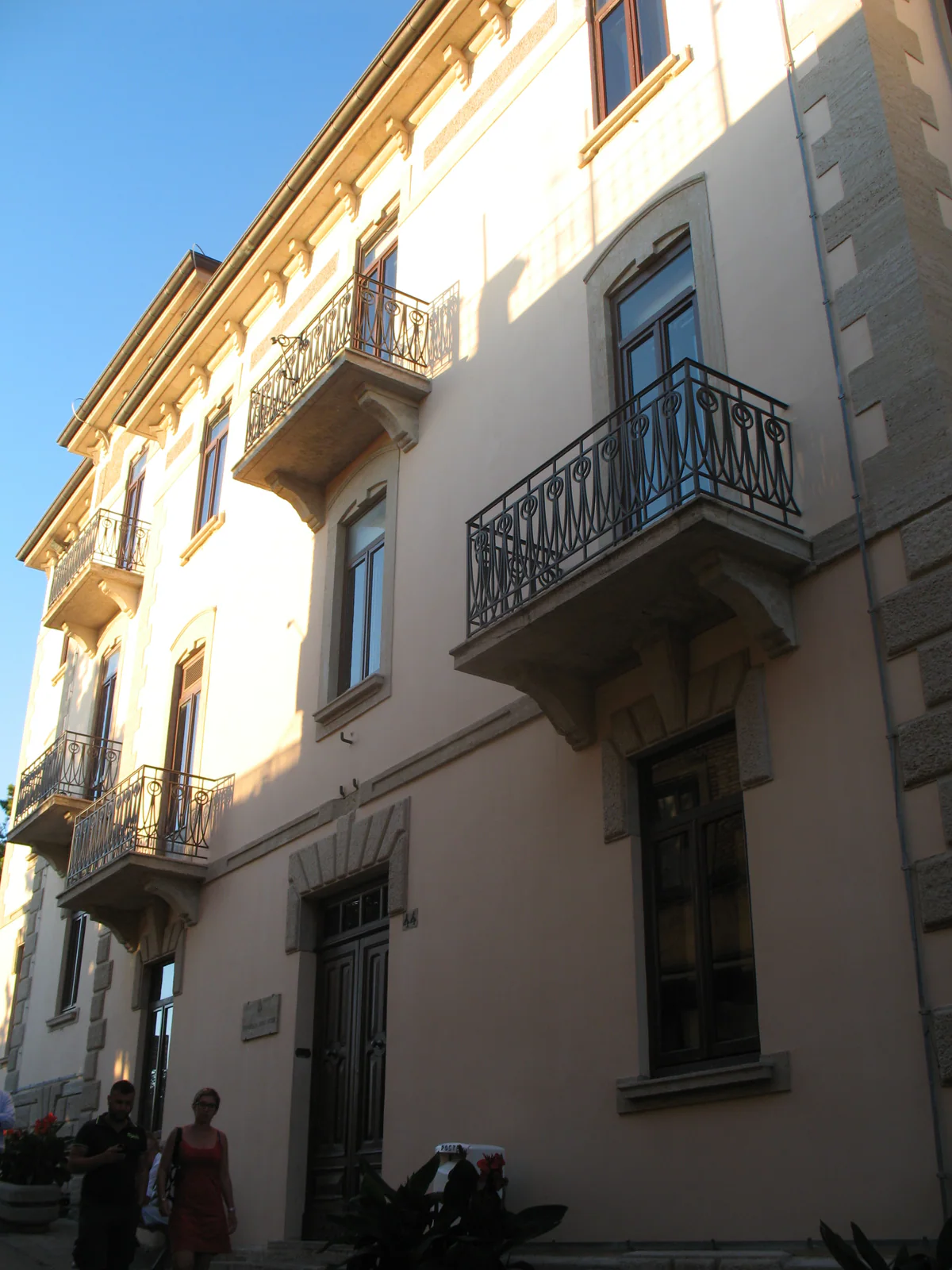
Created by law on 31 October 1985
The University of San Marino, in a former Poor Clares convent
The University of the Republic of San Marino (UNIRSM) was created by law on 31 October 1985 and opened in 1988 with a school of historical studies. It now has three departments and degrees mainly in design and engineering. Its main site is the former Convent of Santa Chiara in the old town, where the library is open to the public on weekday mornings.
In 30 seconds
Full read: 4 min
- The University of San Marino was created by law on 31 October 1985 and started teaching in 1988.
- Its main site is the former Convent of Santa Chiara on Contrada Omerelli, in the old town.
- It mostly teaches design and engineering, jointly with Italian universities.
- The university library is open to the public Monday to Friday from 8:30 to 14:00.
- It has taken part in Erasmus+ since 2024.
I wouldn't plan a trip around the university, but I'd happily make a five-minute detour along Contrada Omerelli to see the convent where design students now have their lectures. On a weekday morning the library, which is open to the public, is your way into an old-town interior that hardly any visitor sees.

Before you go
What I would keep in mind
-
01 Most beautiful
Lectures where the nuns once slept
The university's own magazine says the old dormitory of Santa Chiara is now a teaching room, the great hall used to be a church and the vegetable garden is a lawn where students take a break.
-
02 To save money
Student card? Museums for €8
The State Museums pass costs €11, but university students with a card pay the €8 reduced rate. Bring yours even if you study back home.
museums in San Marino -
03 My tip
The library opens in the morning
The university library, inside the convent on Contrada Omerelli, is open to the public Monday to Friday from 8:30 to 14:00. Don't count on getting in during the afternoon or at weekends.
-
04 Most beautiful
Montegiardino, the students' village
In the smallest of the nine castelli, restored flats in the walled centre house students, and the old Filippi house has been a university building. It's the rural side of the university.
Montegiardino, the smallest castello
A country of 61 km² with its own university sounds like vanity. I read it the other way round. San Marino waited until 1985 to create one, and when it did, it put it in one of the most atmospheric buildings in the old town. If you’re curious about how such a small state actually works, this is a piece of it almost nobody looks at.
A university from 1985 for a very old republic
The University of the Republic of San Marino was created by Law no. 127 of 31 October 1985, signed by the Captains Regent Ubaldo Biordi and Pier Paolo Gasperoni. Teaching really began in 1988, with the founding of the School of Advanced Historical Studies. Starting with history makes sense to me in a country that lives off telling its own story, and that section still keeps a library of around a hundred thousand volumes.
Since then the focus has turned practical. There are three departments (Economics, Science, Engineering and Design; Human Sciences; and History and Law) and three-year degrees in Design, earthquake-focused Civil Engineering, Management Engineering and Construction and Land Management. Nearly all of them are run jointly with Italian universities, mainly Modena and Reggio Emilia and Parma. I think that’s simply realistic, because a republic of roughly 34,000 people couldn’t staff an engineering faculty on its own.
The convent where design is taught
The main site is the former Convent of Santa Chiara on Contrada Omerelli, inside the old town protected by UNESCO. The university’s own magazine tells its story plainly. Work started in the 16th century, cutting into the rock of Mount Titano, and it opened in 1609 with twelve women ready to take their vows. More than two hundred enclosed nuns lived there over the centuries, the last of them until about fifty years ago.
What I like most is how every room has found a new job. The great hall, where Design students now defend their dissertations, was the church. Lectures are held in the old dormitory, the vegetable garden has become a lawn and the area around the bread oven is where internships and research projects get discussed. It tells you more about the town than plenty of plaques. To place it on a map, see my guide to the capital, the City of San Marino.
Can you go inside?
Let me be straight about this. It’s a working university, not a museum, and I couldn’t find any visiting hours for the convent. What is open to the public is the university library, housed in the convent itself, Monday to Friday from 8:30 to 14:00. It has sections on design, engineering, law and human sciences, plus one devoted to Sammarinese emigration, linked to the Emigrant Museum.
So here’s how I’d play it. If you’re on Contrada Omerelli on a weekday morning, the street and the façade are worth the detour on their own, and the library is your reason to step inside. The Emigrant Museum sits alongside the others in the museums of San Marino. And if the cloister catches your eye for another reason, the government lists it among the venues for civil weddings in San Marino.
The other sites, from the Rocca to Dogana
The History and Law Department sits on Salita alla Rocca, the lane climbing towards the Guaita, and Human Sciences is on Via Onofri, where the student office is too. All of that is a few minutes’ walk apart.
Engineering, on the other hand, is down on Via Consiglio dei Sessanta in Dogana, the gateway from Italy. And there’s one site I find the most appealing on paper. The official page for the castello of Montegiardino says the restored old Filippi house hosts a university institute of technological studies, and that the renovated flats of the walled centre are let to students. A tiny fortified village turned into student housing is an idea I’d like to see copied across Europe.
Erasmus and international students
Despite sitting outside the EU, San Marino has taken part in Erasmus+ since 2024, thanks to an agreement between its government and Italy’s. That year the university gained the European Commission’s ECHE charter and signed an agreement with INDIRE, the Italian agency that runs the programme. It also belongs to the network of universities of small states and to the European University Association.
For exchange students, the university asks for B1 English or Italian and, once here, a study residence permit from the Gendarmerie, with private health insurance covering at least €30,000 a year. It’s not complicated, but worth knowing before you arrive, because any long stay in San Marino goes through that office. One small perk for students on a budget is that a UNIRSM card gets you the reduced fare on the cable car between Borgo Maggiore and the old town.
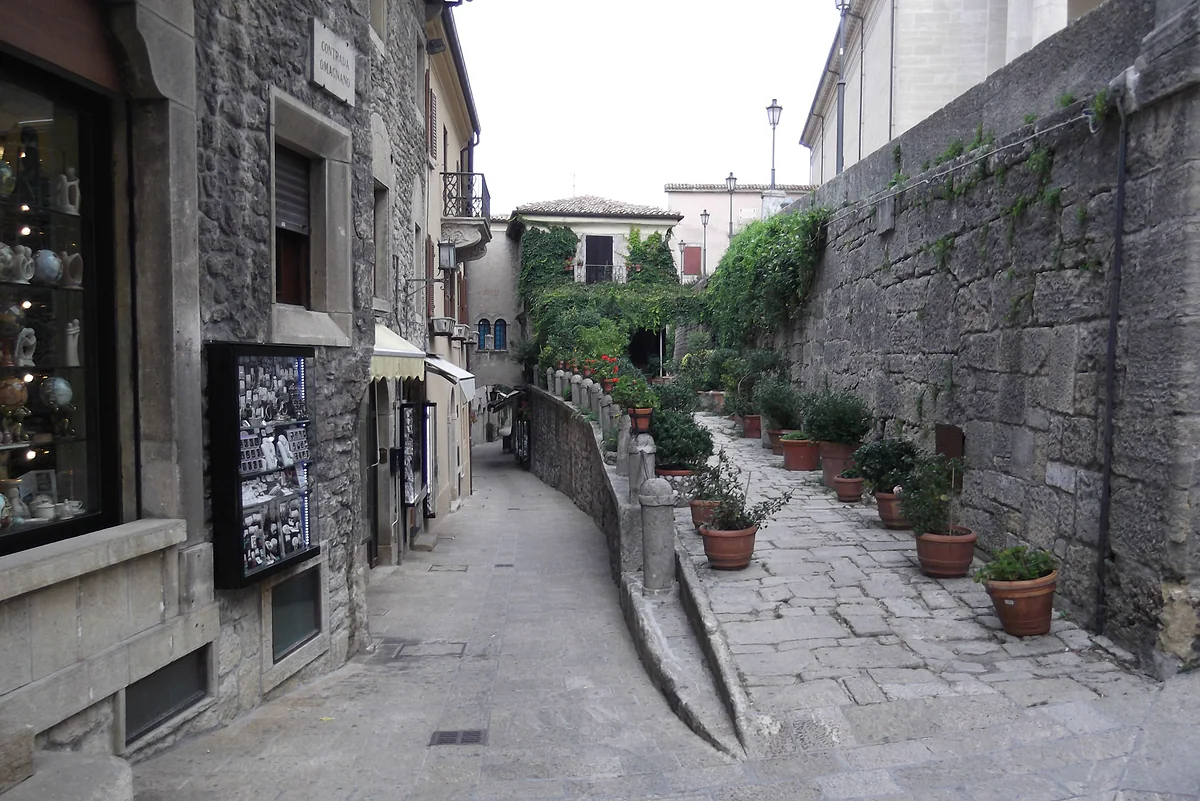
A cobbled street in the old town slopes down between stone facades, shops and flower pots along the wall.
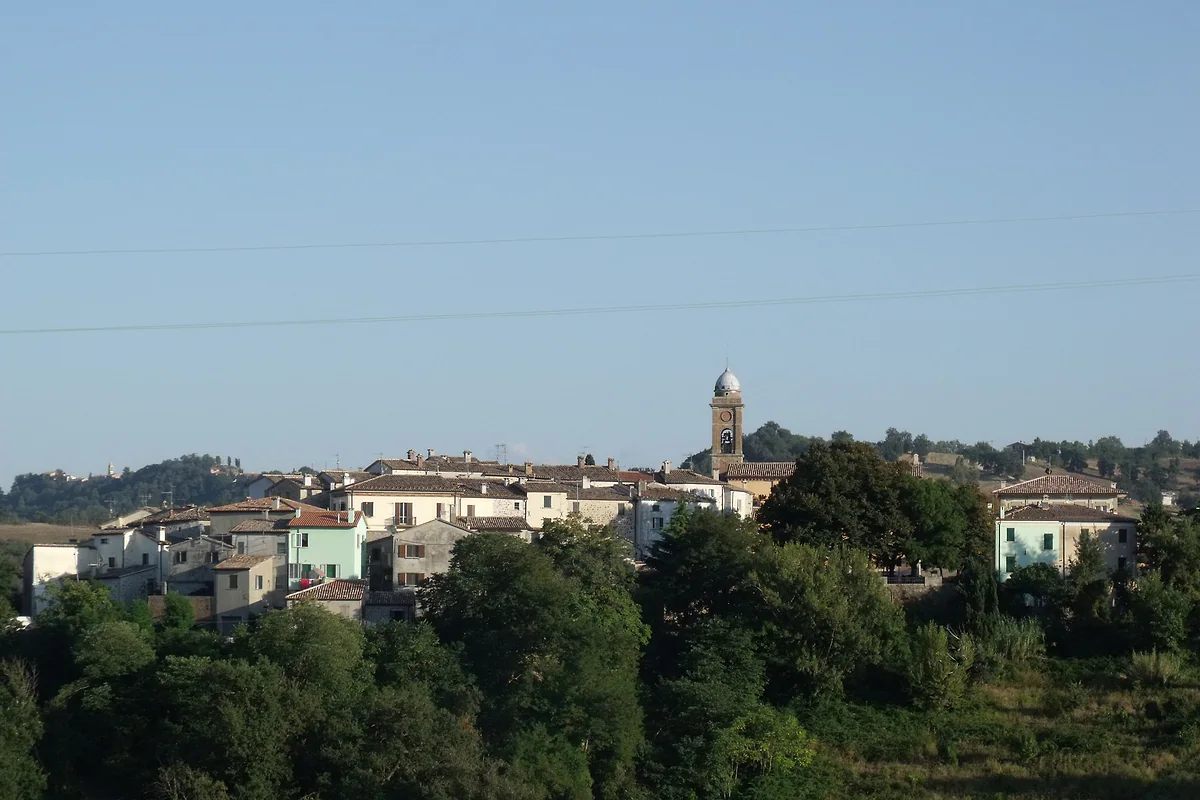
Montegiardino on its hill, the houses of the old village clustered round the bell tower, with woodland below.
Where each site is
| Site | Address | What's there |
|---|---|---|
| Former Convent of Santa Chiara | Contrada Omerelli 20, old town | Rector's office, Design and the library |
| History and Law Department | Salita alla Rocca 44, old town | Historical and legal studies |
| Human Sciences Department | Via A. Onofri 87, old town | Human sciences and the student office |
| Economics, Science, Engineering and Design Department | Via Consiglio dei Sessanta 99, Dogana | Engineering |
Addresses from unirsm.sm, checked on 27 September 2026. The official Montegiardino page places a university institute of technological studies in the old Filippi house.
Undergraduate and master's degrees
| Course | Length | Entry |
|---|---|---|
| Design | 3 years | Admission test |
| Civil Engineering IASA (earthquake engineering) | 3 years | Open |
| Management Engineering | 3 years | Open |
| Construction and Land Management | 3 years | Open |
| Interaction & Experience Design (master's) | 2 years | Admission test |
Degrees are taught with Italian universities (Modena and Reggio Emilia, Parma). There are also engineering master's degrees, a PhD and advanced training courses.
Test yourself
True or false?
0/4 Pick before you peek.
-
The University of San Marino dates back to the Middle Ages, like Italy's oldest universities.
See the answer
False. It's very young. Law no. 127 of 31 October 1985 created it, and it opened in 1988 with the School of Advanced Historical Studies.
-
The university's main site used to be a convent of enclosed nuns.
See the answer
True. The Convent of Santa Chiara opened in 1609 and Poor Clares lived there until about fifty years ago, according to the university's own magazine.
-
Every university building is inside the old town.
See the answer
False. The Economics, Science, Engineering and Design Department is in Dogana, next to the Italian border.
-
San Marino takes part in Erasmus+ even though it isn't in the EU.
See the answer
True. It joined in 2024 through an agreement between the San Marino and Italian governments, and the university gained the ECHE charter that year.
- Year of the law that created the university
- 1985
- Year the Convent of Santa Chiara opened
- 1609
- Departments
- 3
- Volumes in the Historical Studies library
- 100,000
Map
Where University is
Every number opens its guide. The towers sit on the ridge, the city beside them and Borgo Maggiore below, linked by the cable car.
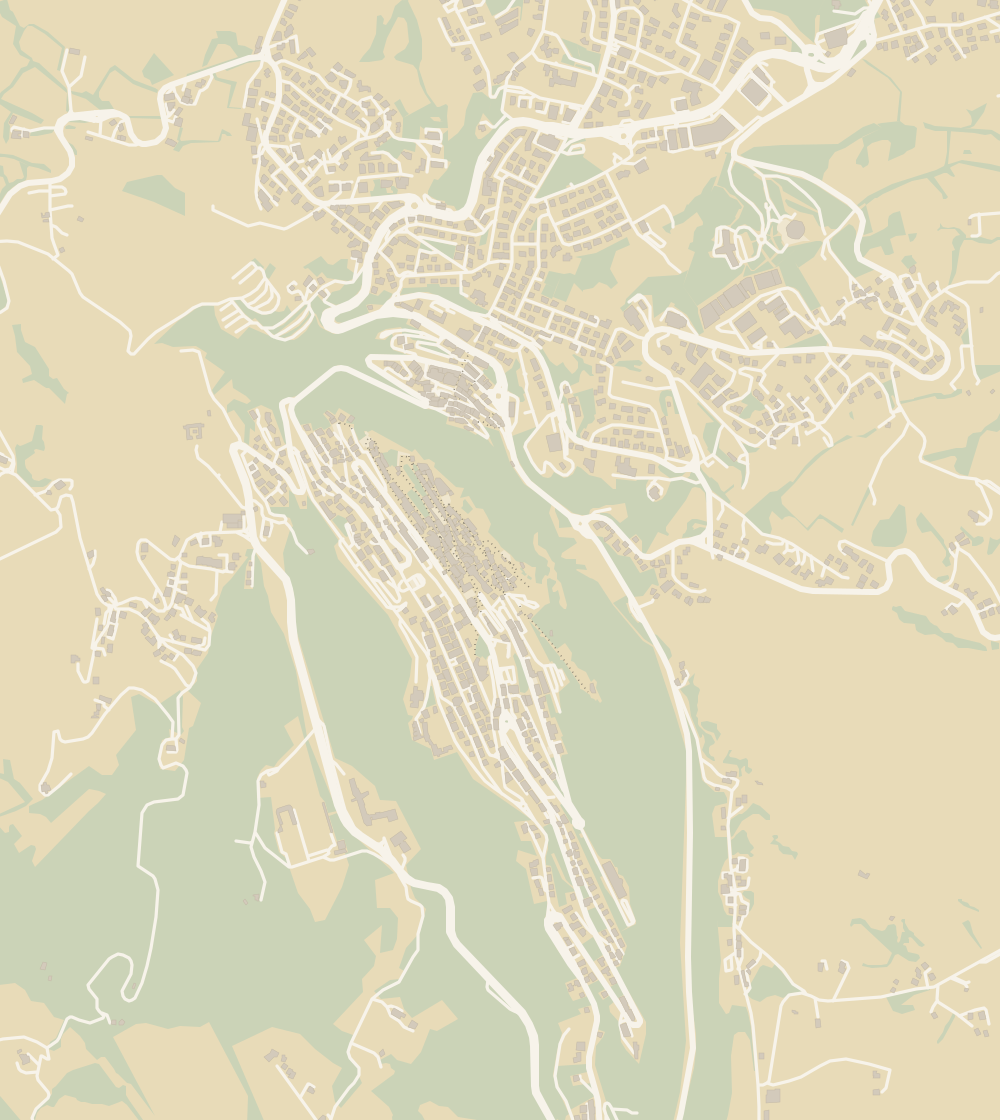 1The Three Towers 2Guaita Tower 3Cesta Tower and Arms Museum 4City of San Marino 5Montale Tower 6Borgo Maggiore 7Witches' Passage 8Palazzo Pubblico 9Changing of the guard 10Basilica of Saint Marinus 11Mount Titano 12Museums 13State Museum 14San Francesco Art Gallery 15Torture Museum 16Cable car (funivia) 17Quirky museums 18Stamp and Coin Museum 19National Gallery 20Valdragone 21San Giovanni sotto le Penne 22Medieval Days 23Christmas 24Hotel Titano 25Grand Hotel San Marino 26Hotel Rosa 27Hotel Crocenzi 28Hotel La Rocca 29Porta San Francesco 30Cava dei Balestrieri 31Map 32Teatro Titano 33Church of San Quirino 34Trenino Bianco Azzurro 35Consolazione Sanctuary 36University 37Prison 38Piazza della Libertà
 Map data © OpenStreetMap contributors (ODbL)
- 1The Three TowersTwo open inside, the third only from outside
- 2Guaita TowerAn 11th-century fortress that was a jail until 1970
- 3Cesta Tower and Arms MuseumThe top of Mount Titano, at 755 metres
- 4City of San MarinoWorld Heritage since 2008
- 5Montale TowerNo ticket, no hours, no pass
- 6Borgo MaggioreA cable car to the capital every 15 minutes
- 7Witches' PassageAbout 200 metres of battlements, no ticket
- 8Palazzo PubblicoClosed for restoration in 2026
- 9Changing of the guardNo timetable in any reliable source
- 10Basilica of Saint MarinusNeoclassical, begun in 1826, free to enter
- 11Mount Titano755 metres at the top of the Cesta
- 12MuseumsOne €11 ticket, seven venues
- 13State MuseumOpen to the public since 1899
- 14San Francesco Art GalleryIn the Franciscan cloister since 1966
- 15Torture MuseumMore than 100 original instruments
- 16Cable car (funivia)Closed from 21 to 23 October 2026
- 17Quirky museumsThree private museums with their own websites
- 18Stamp and Coin MuseumStamps since 1877, on the €11 pass
- 19National GalleryOpened on 7 July 2018
- 20ValdragoneA curazia of Borgo Maggiore
- 21San Giovanni sotto le PenneA curazia of Borgo Maggiore, below the towers
- 22Medieval DaysJuly, the old town and free entry
- 23Christmas28 November to 6 January, with a caveat
- 24Hotel TitanoOpen since 30 September 1894
- 25Grand Hotel San MarinoA hot tub on the third-floor terrace
- 26Hotel RosaFamily-run and open all year since 1965
- 27Hotel Crocenzi1 km from the cable car, 3 km from the old town
- 28Hotel La RoccaNot the Rocca, but on the road up to it
- 29Porta San FrancescoA guard post since 1361
- 30Cava dei BalestrieriThe crossbowmen's range since 1965
- 31MapNine castelli in 61 km²
- 32Teatro Titano2026-27 season from 22 October
- 33Church of San QuirinoOn the 5-cent coin
- 34Trenino Bianco AzzurroRimini to the City, 1932 to 1944
- 35Consolazione SanctuaryConsecrated on 11 June 1967
- 36UniversityCreated by law on 31 October 1985
- 37PrisonEmpty on the day the European inspectors arrived
- 38Piazza della LibertàIt used to be called the Pianello
0 of 108 San Marino guides
Your next stamp
- Basilica of Saint Marinus
- Constitution
- History
- City of San Marino
- State Museum
- Is it a country?
- Prison
- Things to do
- One day
- Two days
- The Three Towers
- Guaita Tower
- Cesta Tower and Arms Museum
- The 9 castelli
- Montale Tower
- Borgo Maggiore
- Witches' Passage
- Palazzo Pubblico
- Serravalle
- Changing of the guard
- Dogana
- Acquaviva
- Mount Titano
- Chiesanuova
- Domagnano
- Faetano
- Fiorentino
- Montegiardino
- Museums
- San Francesco Art Gallery
- Torture Museum
- Cable car (funivia)
- Quirky museums
- Viewpoints
- Murata
- Stamp and Coin Museum
- Walking trails
- Cailungo
- National Gallery
- Valdragone
- Best time to visit
- Getting there
- Ventoso
- Rimini to San Marino
- San Giovanni sotto le Penne
- Weather
- Getting around
- In winter
- With kids
- In summer
- Parking
- Passport stamp
- Rainy day
- Nightlife
- Phone and roaming
- Casino
- Gualdicciolo
- Money
- Coins and stamps
- Torraccia
- Falciano
- Shopping and tax-free
- Rovereta
- Lake Faetano
- Events
- Beaches
- Medieval Days
- Christmas
- MotoGP
- Where to stay
- Hotel Titano
- Where to eat
- Food
- Grand Hotel San Marino
- Luxury hotels
- Free and cheap
- Hotel iDesign
- Day trips
- Hotel Rosa
- Safety and rules
- Hotel Crocenzi
- Language
- Entry requirements
- Hotel La Rocca
- Healthcare and emergencies
- Plugs and voltage
- Opening hours
- Porta San Francesco
- Tap water
- Cava dei Balestrieri
- Map
- Post office
- Cost of a trip
- Flag
- Teatro Titano
- Accessibility
- Church of San Quirino
- Captains Regent
- Trenino Bianco Azzurro
- With a dog
- Consolazione Sanctuary
- Facts
- Weddings
- Wine
- Camping
- Piazza della Libertà
- Is it worth visiting?
Frequently asked questions
Does San Marino have a university?
Yes. The University of the Republic of San Marino was created by Law no. 127 of 31 October 1985 and began in 1988 with the School of Advanced Historical Studies. It now has three departments.
Where is the University of San Marino?
Its registered office and main site are in the old town, in the former Convent of Santa Chiara at Contrada Omerelli 20. Two more departments are in the old town, and engineering is down in Dogana, by the Italian border.
What can you study at the University of San Marino?
Mainly design and engineering. It offers degrees in Design, earthquake-focused Civil Engineering, Management Engineering and Construction and Land Management, master's degrees in design and engineering, and postgraduate work in history, law and communication.
Can you visit the Convent of Santa Chiara?
It's a working university building, not a museum. What is open to the public is the library inside it, Monday to Friday from 8:30 to 14:00. I couldn't find visiting hours for the rest of the convent.
Is there Erasmus at the University of San Marino?
Yes. San Marino joined Erasmus+ in 2024 through an agreement with Italy, and the university gained the European Commission's ECHE charter that year. Exchange students apply for a study residence permit at the Gendarmerie.
Is the University of San Marino Italian?
No, it belongs to the Sammarinese state. It works very closely with Italy, though, and several degrees are run jointly with the universities of Modena and Reggio Emilia or Parma.
By
Tourism graduate with a master’s in Tourism Management and Planning from the University of Málaga, who has travelled across Europe. He writes every guide from official sources and his own judgement.
Published on . Facts checked on .
Sources
Photos: Cats' photos (CC BY-SA 4.0); karel291 (CC BY 3.0); LigaDue (CC BY 3.0), via Wikimedia Commons.