The euro, without the EU
Money in San Marino, what to bring and how to pay
San Marino's currency is the euro. It isn't in the EU or a eurozone member, but a monetary agreement signed with the EU in 2012 lets it use the euro as its official currency and mint its own coins. For a UK visitor that means euros, exactly as in Italy. There's no VAT but a tax of its own, and no general source on card acceptance.
In 30 seconds
Full read: 3 min
- San Marino uses the euro as official currency under a 2012 agreement with the EU.
- It isn't in the EU or a eurozone member, but its own coins are valid across the eurozone.
- There's no VAT but a single-stage tax, and its rate isn't published in an official source.
- There's no general source on cards; bring one plus some euros in cash.
- The basics are affordable, with the bus at €7 and the museum pass at €11.
I'd travel with a card and some euros in cash, as I would in any Italian hill town, because I found no general source on where cards are taken. If a card machine offers to charge me in pounds, I'd choose euros every time and let my own bank do the conversion.

Before you go
What I would keep in mind
-
01 Money
The euro comes from a treaty, not EU membership
The EU-San Marino monetary agreement, signed on 27 March 2012, gives it the right to use the euro as its official currency. It replaced a 2000 agreement signed with Italy on behalf of the Community.
is San Marino a country? -
02 Most beautiful
Coins with the Three Towers and the Titano
The national side is San Marino's own. In the current series the €1 coin shows the Second Tower and the 20 cent the Titano with its three towers. They're valid across the eurozone, but people tend to keep them.
San Marino coins and stamps -
03 To save money
One €11 ticket for every state museum
The State Museums pass costs €11 (€8 reduced) and covers the two towers you can enter, the State Museum, the art gallery and the Stamp and Coin Museum. In winter there's a €5 ticket from 16:00, sold only at the ticket offices.
museums in San Marino -
04 My tip
No VAT here, but a single-stage tax
San Marino doesn't charge VAT but a tax of its own, collected when goods are imported. I couldn't find the rate from an official source, so be wary of anyone promising an exact percentage saving.
shopping and tax-free in San Marino
What I would book
Money in San Marino is simple for anyone who has been to Italy. You pay in euros, just as in Rimini, and there’s nothing new to learn at the till. Behind that normality, though, sit a couple of quirks worth knowing, because they explain why the change in your pocket looks different and why shops talk about a tax that isn’t VAT.
Why euros, if it isn’t in the EU?
San Marino isn’t a member of the European Union. Its own foreign ministry says so plainly, calling it legally a third state. Even so, the euro is its official currency. The reason is a monetary agreement signed in Brussels on 27 March 2012, in force from 1 September that year. Article 1 recognises San Marino’s right to have the euro as its official currency, with a duty to give legal tender status to euro notes and coins.
That agreement replaced an earlier one of 29 November 2000, which San Marino signed with Italy on behalf of the Community. The history goes further back. Poste San Marino dates the Republic’s first coin, a copper 5-cent piece, to 1864, struck at the Royal Mint in Milan, and from 1972 its coins had the same legal tender status as Italy’s under a new agreement. If you’re curious how the country fits with Europe, I explain it in is San Marino a country?
Coins with a face of their own
The same agreement lets San Marino mint its own euro coins. They weigh and spend like any other euro, with only the national side different. On today’s series, per the ECB, the €2 carries the saint as painted by Urbinelli, the €1 the Cesta and the 20 cent the Titano and its towers.
They’re worth exactly the same as any other euro, in San Marino, Italy or Spain. There just aren’t many in circulation, and plenty of people keep them. I think they’re the cheapest souvenir of the trip. There are collector coins too, and the gold ones in scudi aren’t legal tender in the EU. The whole world of coins and stamps is in San Marino coins and stamps.
Cards, cash and your pounds
I’ll be honest here. I found no general source, official or otherwise reliable, on card acceptance in San Marino. The only documented case is the San Marino Outlet, which has a cash machine and requires a credit card in the buyer’s name for tax-free shopping. I won’t tell you cards work everywhere, because I don’t know that.
So I’d do what I’d do in any Italian hill town. Use a card as the main method and carry some euros for a piadina, a coffee or the Thursday market in Borgo Maggiore. If you’re flying into Rimini, the airport lists a cash machine and an exchange desk at the ticket office, which it says charges no commission. And if a card terminal ever offers to charge you in pounds, I’d pick euros and let my own bank handle the conversion.
A tax that isn’t VAT
Shops here don’t add VAT. Instead there’s the imposta monofase, a tax of San Marino’s own that the tax office collects when products are imported. A private website reckons it generally undercuts Italian VAT, trimming the price of fashion, footwear, fragrances and gadgets. Its rate doesn’t appear in the official sources I’ve read, and there’s a much-quoted number I haven’t been able to check, so I’m keeping it to myself.
For a UK visitor there’s a better-documented saving, the outlet’s tax-free scheme for non-EU residents, which I set out with its conditions in how the outlet’s tax-free works.
Is San Marino expensive?
The basics aren’t. The bus from Rimini costs €7, the cable car €4 one way and the pass for every state museum €11, with the two towers you can enter, the State Museum and the art gallery included. What climbs is eating in the panoramic restaurants of the old town, which a private site puts at €35 to €70 a head, against €6 to €10 for a piadina. Those figures have no date or method, so treat them as a ballpark.
Where I’d spend is the museum pass, which I think is among the best value in the country, and it’s all in San Marino’s museums. Where I’d save is lunch. A piadina in the sun beats a table with a view at a view’s price, and there are more ideas in free and cheap San Marino. I add up a typical day, with bus, pass and lunch, in the cost of a trip to San Marino.
What everyday things cost (2026)
| What | Price | Source |
|---|---|---|
| Rimini to San Marino bus, single | €7 | Bonelli Bus (official) |
| Cable car, one way | €4 | AASS (official) |
| State Museums pass | €11 (€8 reduced) | State Museums (official) |
| Museum of Curiosities | €9 | Museum's website |
| Car park, full day | €8 | Private website, unconfirmed |
| Piadina at a piadineria | €6 to €10 | Private website, undated |
| Trattoria, per person | €20 to €30 | Private website, undated |
Official prices checked on 26 September 2026. Restaurant and parking figures come from sanmarinosite.com, a private site, and are only a rough guide.
San Marino's euro coins (current series)
| Coin | Design |
|---|---|
| €2 | Portrait of Saint Marinus by Giovan Battista Urbinelli |
| €1 | The Second Tower |
| 50 cent | Portrait of Saint Marinus by Emilio Retrosi |
| 20 cent | Mount Titano with the three towers |
| 10 cent | Church of Saint Francis |
| 5, 2 and 1 cent | Church of San Quirino, the City Gate and the coat of arms |
According to the European Central Bank.
Test yourself
True or false?
0/4 Pick before you peek.
-
San Marino uses the euro because it's an EU member.
See the answer
False. It isn't in the EU. It uses the euro under a monetary agreement signed with the EU on 27 March 2012, which replaced one from 2000.
-
San Marino's euro coins are valid throughout the eurozone.
See the answer
True. They match other euro coins in value, technical specification and common side; only the national side differs.
-
Shops in San Marino charge the same VAT as Italy.
See the answer
False. San Marino doesn't apply VAT but its own single-stage tax, the imposta monofase, collected when goods are imported.
-
San Marino's first coin was issued in the 1860s.
See the answer
True. A 5-cent copper coin with the Republic's arms, struck at the Royal Mint in Milan in 1864, according to Poste San Marino.
- Year of the monetary agreement with the EU
- 2012
- Pass for every state museum
- €11
- Bus from Rimini to San Marino
- €7
- Year of San Marino's first coin
- 1864
Map
Where Money is
Every number opens its guide. The towers sit on the ridge, the city beside them and Borgo Maggiore below, linked by the cable car.
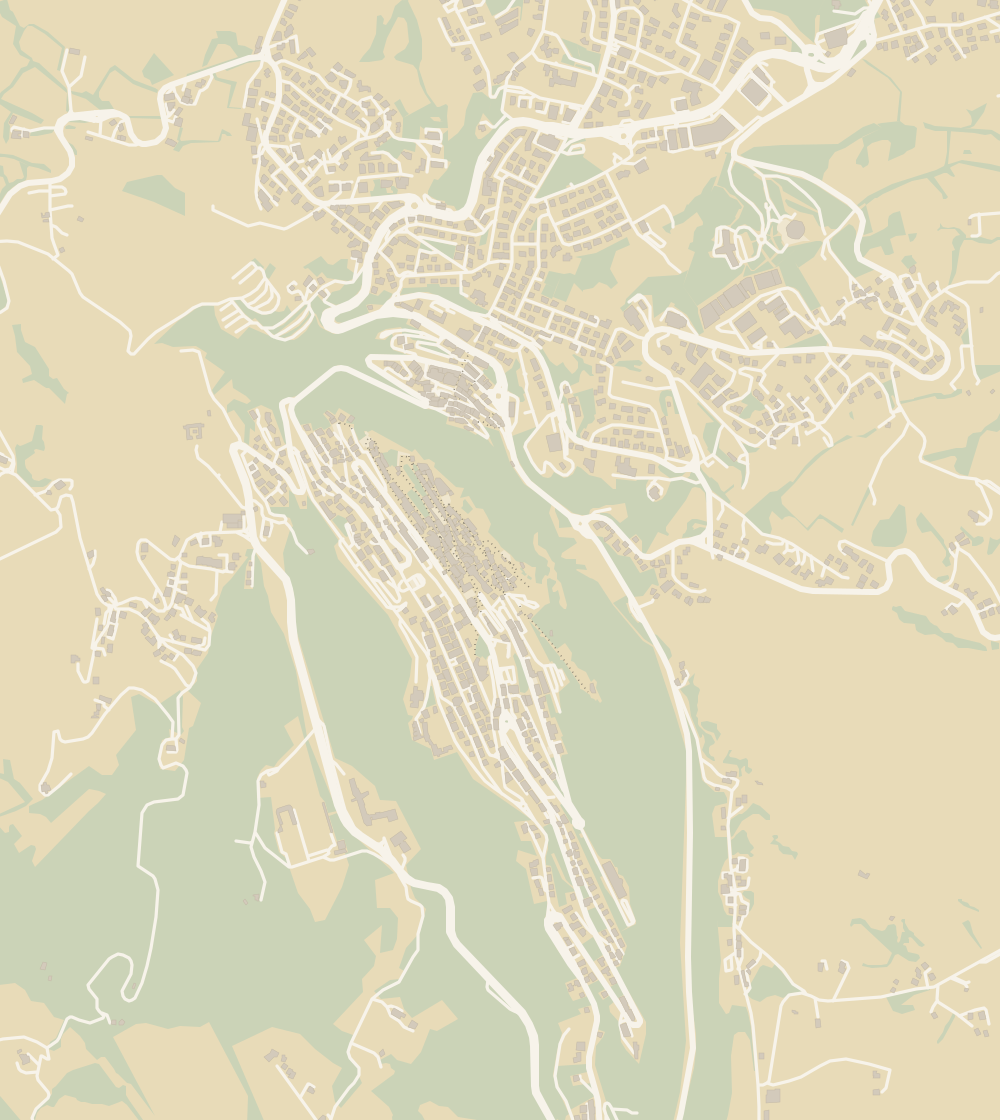 1The Three Towers 2Guaita Tower 3Cesta Tower and Arms Museum 4City of San Marino 5Montale Tower 6Borgo Maggiore 7Witches' Passage 8Palazzo Pubblico 9Changing of the guard 10Basilica of Saint Marinus 11Mount Titano 12Museums 13State Museum 14San Francesco Art Gallery 15Torture Museum 16Cable car (funivia) 17Quirky museums 18Stamp and Coin Museum 19National Gallery 20Valdragone 21San Giovanni sotto le Penne 22Medieval Days 23Christmas 24Hotel Titano 25Grand Hotel San Marino 26Hotel Rosa 27Hotel Crocenzi 28Hotel La Rocca 29Porta San Francesco 30Cava dei Balestrieri 31Map 32Teatro Titano 33Church of San Quirino 34Trenino Bianco Azzurro 35Consolazione Sanctuary 36University 37Prison 38Piazza della Libertà
 Map data © OpenStreetMap contributors (ODbL)
- 1The Three TowersTwo open inside, the third only from outside
- 2Guaita TowerAn 11th-century fortress that was a jail until 1970
- 3Cesta Tower and Arms MuseumThe top of Mount Titano, at 755 metres
- 4City of San MarinoWorld Heritage since 2008
- 5Montale TowerNo ticket, no hours, no pass
- 6Borgo MaggioreA cable car to the capital every 15 minutes
- 7Witches' PassageAbout 200 metres of battlements, no ticket
- 8Palazzo PubblicoClosed for restoration in 2026
- 9Changing of the guardNo timetable in any reliable source
- 10Basilica of Saint MarinusNeoclassical, begun in 1826, free to enter
- 11Mount Titano755 metres at the top of the Cesta
- 12MuseumsOne €11 ticket, seven venues
- 13State MuseumOpen to the public since 1899
- 14San Francesco Art GalleryIn the Franciscan cloister since 1966
- 15Torture MuseumMore than 100 original instruments
- 16Cable car (funivia)Closed from 21 to 23 October 2026
- 17Quirky museumsThree private museums with their own websites
- 18Stamp and Coin MuseumStamps since 1877, on the €11 pass
- 19National GalleryOpened on 7 July 2018
- 20ValdragoneA curazia of Borgo Maggiore
- 21San Giovanni sotto le PenneA curazia of Borgo Maggiore, below the towers
- 22Medieval DaysJuly, the old town and free entry
- 23Christmas28 November to 6 January, with a caveat
- 24Hotel TitanoOpen since 30 September 1894
- 25Grand Hotel San MarinoA hot tub on the third-floor terrace
- 26Hotel RosaFamily-run and open all year since 1965
- 27Hotel Crocenzi1 km from the cable car, 3 km from the old town
- 28Hotel La RoccaNot the Rocca, but on the road up to it
- 29Porta San FrancescoA guard post since 1361
- 30Cava dei BalestrieriThe crossbowmen's range since 1965
- 31MapNine castelli in 61 km²
- 32Teatro Titano2026-27 season from 22 October
- 33Church of San QuirinoOn the 5-cent coin
- 34Trenino Bianco AzzurroRimini to the City, 1932 to 1944
- 35Consolazione SanctuaryConsecrated on 11 June 1967
- 36UniversityCreated by law on 31 October 1985
- 37PrisonEmpty on the day the European inspectors arrived
- 38Piazza della LibertàIt used to be called the Pianello
0 of 108 San Marino guides
Your next stamp
- Phone and roaming
- Shopping and tax-free
- Cost of a trip
- Coins and stamps
- Passport stamp
- Post office
- Things to do
- One day
- Two days
- The Three Towers
- Guaita Tower
- Cesta Tower and Arms Museum
- The 9 castelli
- City of San Marino
- Montale Tower
- Borgo Maggiore
- Witches' Passage
- Palazzo Pubblico
- Serravalle
- Changing of the guard
- Dogana
- Acquaviva
- Basilica of Saint Marinus
- Mount Titano
- Chiesanuova
- Domagnano
- Faetano
- Fiorentino
- Montegiardino
- Museums
- State Museum
- San Francesco Art Gallery
- Torture Museum
- Cable car (funivia)
- Quirky museums
- Viewpoints
- Murata
- Stamp and Coin Museum
- Walking trails
- Cailungo
- National Gallery
- Valdragone
- Best time to visit
- Getting there
- Ventoso
- Rimini to San Marino
- San Giovanni sotto le Penne
- Weather
- Getting around
- In winter
- With kids
- In summer
- Parking
- Rainy day
- Nightlife
- Casino
- Gualdicciolo
- Torraccia
- Falciano
- Rovereta
- Lake Faetano
- Events
- Beaches
- Medieval Days
- Christmas
- MotoGP
- Where to stay
- Hotel Titano
- Where to eat
- Food
- Grand Hotel San Marino
- Luxury hotels
- Free and cheap
- Hotel iDesign
- Day trips
- Hotel Rosa
- Safety and rules
- Hotel Crocenzi
- Language
- Entry requirements
- Hotel La Rocca
- Healthcare and emergencies
- Plugs and voltage
- Is it a country?
- Opening hours
- Porta San Francesco
- Tap water
- Cava dei Balestrieri
- Map
- Flag
- Teatro Titano
- Accessibility
- Church of San Quirino
- History
- Captains Regent
- Trenino Bianco Azzurro
- With a dog
- Consolazione Sanctuary
- Facts
- University
- Weddings
- Wine
- Prison
- Camping
- Piazza della Libertà
- Is it worth visiting?
- Constitution
Frequently asked questions
What currency does San Marino use?
The euro. San Marino isn't in the EU, but a monetary agreement signed with the EU on 27 March 2012 lets it use the euro as official currency and mint its own coins with a national side.
Does San Marino use the euro?
Yes, as its official currency, even though it isn't an EU member or formally part of the eurozone. You pay in euros exactly as you would in Rimini.
Can you use cards in San Marino?
I haven't found a general source on card acceptance. The only documented case is the San Marino Outlet, which has a cash machine and requires a credit card in the buyer's name for tax-free shopping. I'd bring a card and some cash.
What was San Marino's currency before the euro?
Under a series of monetary agreements with Italy, San Marino minted coins that had the same legal tender status as Italy's, starting with a copper coin in 1864 and again from 1972. The euro replaced that system under the 2000 agreement.
Are San Marino euro coins valid in the UK?
They aren't sterling, but they're valid euros anywhere in the eurozone, identical to other euro coins in value and technical specification. Gold coins in scudi are a different matter and aren't legal tender in the EU.
Is San Marino expensive?
The basics aren't. The bus from Rimini is €7, the cable car €4 and the pass for every state museum €11. Eating with a view is another story, with a private site putting panoramic restaurants at €35 to €70 a head.
By
Tourism graduate with a master’s in Tourism Management and Planning from the University of Málaga, who has travelled across Europe. He writes every guide from official sources and his own judgement.
Published on . Facts checked on .
Sources
Photos: Diego Delso (CC BY-SA 4.0), via Wikimedia Commons.