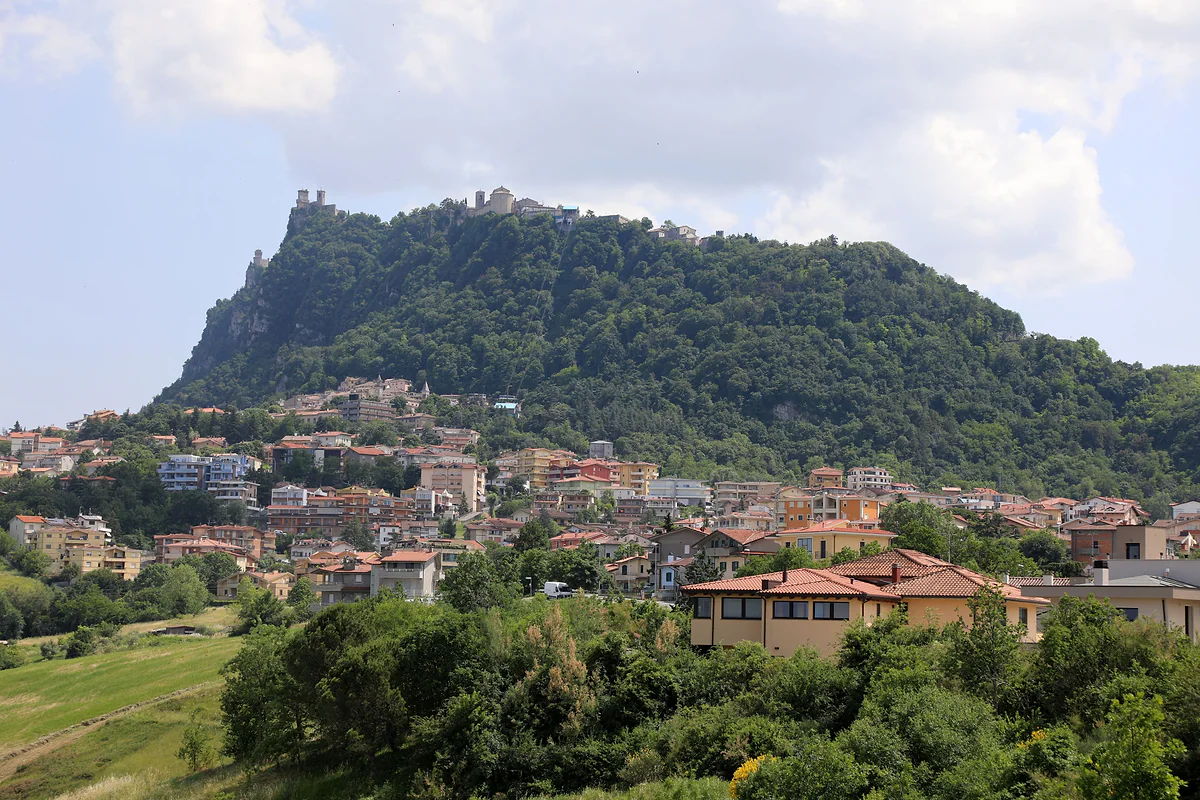
Snow on the summit most winters
San Marino's climate: temperatures, rain and snow on Mount Titano
San Marino has a humid temperate climate with warm summers and cool winters, and the top of Mount Titano sees snow in most winters. Averages run from 4.2 °C in January to 23.5 °C in July, it rains all year with no dry month, and November is the wettest at 99 mm. These are Arpae figures quoted by Wikipedia.
In 30 seconds
Full read: 3 min
- Humid temperate climate with warm summers and cool winters.
- Averages run from 4.2 °C in January to 23.5 °C in July.
- It rains all year; November is wettest, with 99 mm.
- The top of Mount Titano sees snow in most winters.
- The table comes from Wikipedia citing Arpae; there's no readable official San Marino table.
I'd never go up Mount Titano without an extra layer, not even in June. It's windy up there, the towers stand at over 700 metres and the path between them runs along the ridge. In winter, wear shoes with decent grip, because steep, wet cobbles are slippery.

Before you go
What I would keep in mind
-
01 My tip
Making the most of a wet day
November brings about ten rainy days. For those I have an hour-by-hour plan with four museums on the pass, the basilica and an outlet that lends umbrellas.
San Marino on a rainy day -
02 My tip
It's cooler up top than in Rimini
The Cesta, the second tower, stands at 755 metres on the summit of Mount Titano. The Rimini coast is at sea level, so expect it to be a little cooler and windier in the Città.
Mount Titano -
03 Most beautiful
Clear days to see the Adriatic
From the Penna tower in the Guaita you can see across the plain to the Adriatic beaches and, to the south, Monte Carpegna. In haze you see none of it, so I'd check the sky before paying for the towers.
the viewpoints of San Marino -
04 Getting there
When it rains, the cable car and the museums
If the day turns wet, go for things with a roof. The cable car climbs from Borgo Maggiore every quarter of an hour and the €11 pass opens all the State Museums.
San Marino cable car
What I would book
Before the table, a caveat I think is only fair. San Marino doesn’t publish a simple climate table on any official website I’ve been able to read. The one I use is from English Wikipedia, which cites Arpae, the environmental agency of Emilia-Romagna, with data from 2006 to 2023. I flag it as secondary and use it because it fits what you’d expect of a mountain twenty kilometres from the Adriatic.
A coastal climate, but at over 700 metres
The classification is humid temperate with continental influences. In practice that means warm summers, cool winters and rain spread across the year, with no truly dry month. The annual mean is around 12.9 °C, with roughly 750 mm of rain over about 86 days.
What changes the experience is altitude. The Cesta, the second tower, stands at 755 metres on the summit of Mount Titano, and the old town lives along the ridge. Rimini, spread out below you on clear days, is at sea level. So I always expect it to be a bit cooler and a good deal windier up top than on the beach, especially late in the day. For anyone used to British weather, the summer will feel properly warm and the winter damp rather than harsh.
Summer, low-mountain heat
July is the warmest month, with a 23.5 °C average and highs of 27.4 °C, and August is just behind. The series record is 36.1 °C, in August. Rain is light, around 40 mm a month, and these are the months with the fewest wet days.
It isn’t unbearable heat, but the hills make you notice it. I’d walk between the towers early in the morning or late in the afternoon, with water and a cap, and keep the middle of the day for the museums. In July and August the cable car runs until after midnight, so you can make the most of the evening, which is the nicest part of a Titano summer.
Winter, cold and sometimes snow
January is the coldest month, with a 4.2 °C average and average lows of 2.1 °C. The lowest reading in the series was −10.2 °C, in February. According to Wikipedia, snow falls in most winters above 400 to 500 metres, and the Città is higher than that, so a snowy old town isn’t unusual.
In winter I’d watch the ground. Steep cobbles and damp don’t mix, and shoes with a good sole do more for your trip than any coat. Watch the clock too, because from 27 September the State Museums close at 16:50 and the days are short. The cable car stops at 19:00 from October to March, so if you’re staying down in Borgo Maggiore, plan your last ride before dinner rather than after it.
Spring and autumn, the rainy seasons
November is the wettest month, with 99 mm and around ten days of rain. September and October are wet too, at 70-75 mm, and May reaches 70. Even so, May, June and September are the most pleasant months for me, with averages between 15 and 21 °C, just right for a place you explore on foot and uphill.
If you’re lucky enough to get a clear day, climb the Penna tower in the Guaita. From there you see the plain all the way to the Adriatic beaches and, to the south, Monte Carpegna. In haze the view stops at the valley, and you’d be paying the tower entry for fog. My best spots are in San Marino viewpoints.
Spring and autumn are also the best walking seasons, as long as you check the day’s forecast. The woodland paths on Mount Titano get muddy after rain and the stretch towards the Montale runs through trees on bare earth. For longer routes than the towers walk, see San Marino walking trails, and I’d save them for a dry morning.
Weather and choosing your month
Climate is half the decision. The other half is crowds, and there the official figures are very clear, with August the busiest month and February the emptiest. I combine the two in the best time to visit San Marino. And if you were planning a swim, remember San Marino has no coastline, so the options are in beaches near San Marino.
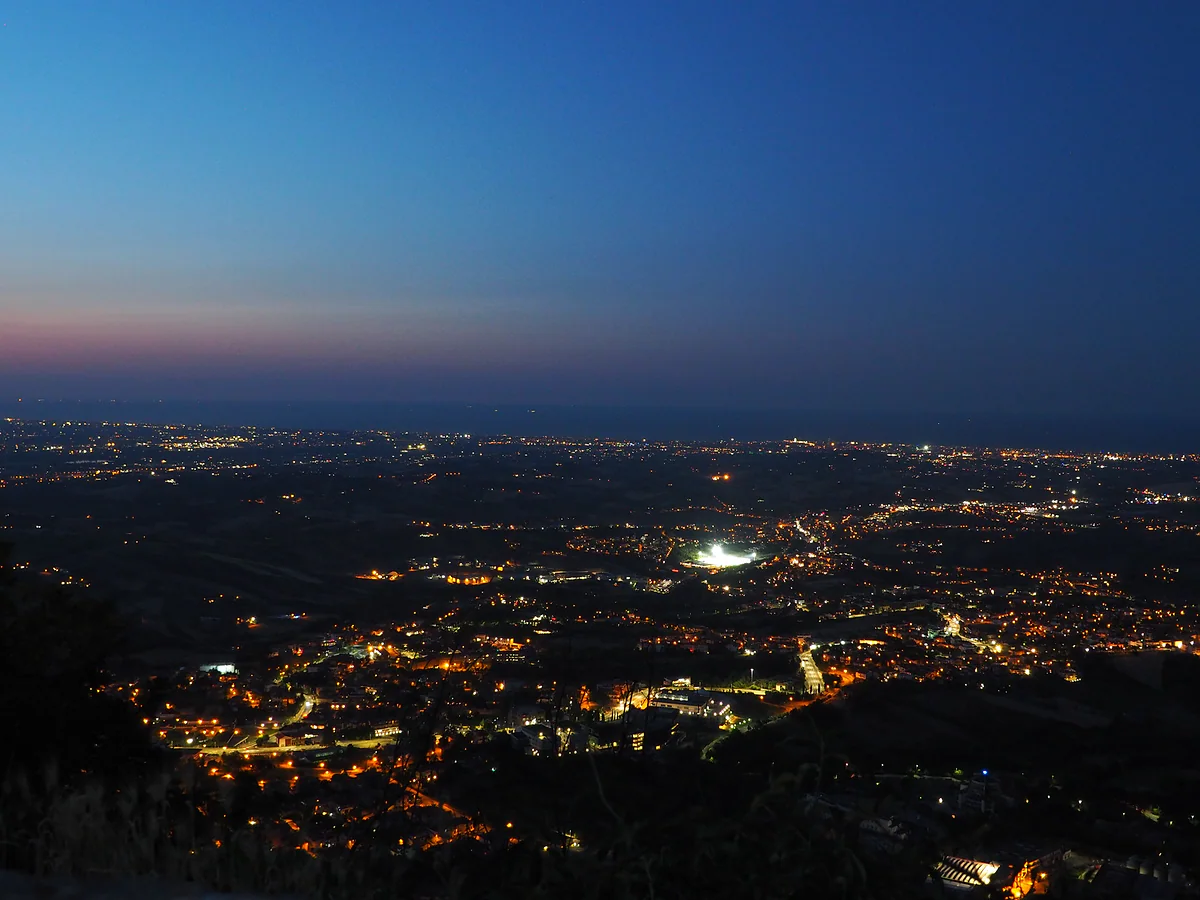
The lights of the plain and the Rimini coast seen at night from Monte Titano, with the last glow on the horizon.
San Marino climate by month (2006-2023)
| Month | Avg high | Mean | Avg low | Rain | Rainy days |
|---|---|---|---|---|---|
| January | 6.4 °C | 4.2 °C | 2.1 °C | 50 mm | 7 |
| February | 7.0 °C | 4.7 °C | 2.5 °C | 64 mm | 8 |
| March | 10.2 °C | 7.3 °C | 4.8 °C | 65 mm | 8 |
| April | 15.0 °C | 11.6 °C | 8.5 °C | 59 mm | 8 |
| May | 19.6 °C | 15.7 °C | 12.4 °C | 70 mm | 9 |
| June | 25.0 °C | 20.8 °C | 17.3 °C | 54 mm | 5 |
| July | 27.4 °C | 23.5 °C | 19.7 °C | 40 mm | 4 |
| August | 26.1 °C | 22.5 °C | 19.2 °C | 41 mm | 5 |
| September | 20.6 °C | 17.5 °C | 14.9 °C | 75 mm | 7 |
| October | 15.6 °C | 13.0 °C | 10.9 °C | 70 mm | 7 |
| November | 10.8 °C | 8.6 °C | 6.7 °C | 99 mm | 10 |
| December | 7.4 °C | 5.2 °C | 3.2 °C | 61 mm | 8 |
Secondary source. The «Climate data for San Marino (2006-2023)» table on English Wikipedia, which cites Arpae Emilia-Romagna. I couldn't find a readable official San Marino table. Rainfall and rainy days (1 mm or more) rounded.
What to pack for San Marino
| Season | What I'd put in the bag |
|---|---|
| December to February | Warm coat, hat and shoes that grip wet stone |
| March, April, October and November | Waterproof jacket and a warm layer |
| May, June and September | T-shirts and something for the evening on the ridge |
| July and August | Light clothes, a cap, water and sun cream |
My own suggestions based on the temperature and rainfall table.
Test yourself
True or false?
0/3 Pick before you peek.
-
San Marino has a dry summer month when it hardly rains.
See the answer
False. Rain is spread across the year with no dry month. July and August are the driest, with about 40 mm each.
-
The top of Mount Titano gets snow in most winters.
See the answer
True. According to Wikipedia, snow is frequent in most winters above 400 to 500 metres, and the Città is higher than that.
-
November is San Marino's wettest month.
See the answer
True. It averages 99 mm and about ten rainy days, according to the 2006-2023 Arpae table quoted by Wikipedia.
- Average temperature in July
- 23.5 °C
- Average temperature in January
- 4.2 °C
- Rainfall in November, the wettest month
- 99 mm
- Height of the Cesta, Mount Titano's summit
- 755 m
Map
Where Weather is
Every number opens its guide. The towers sit on the ridge, the city beside them and Borgo Maggiore below, linked by the cable car.
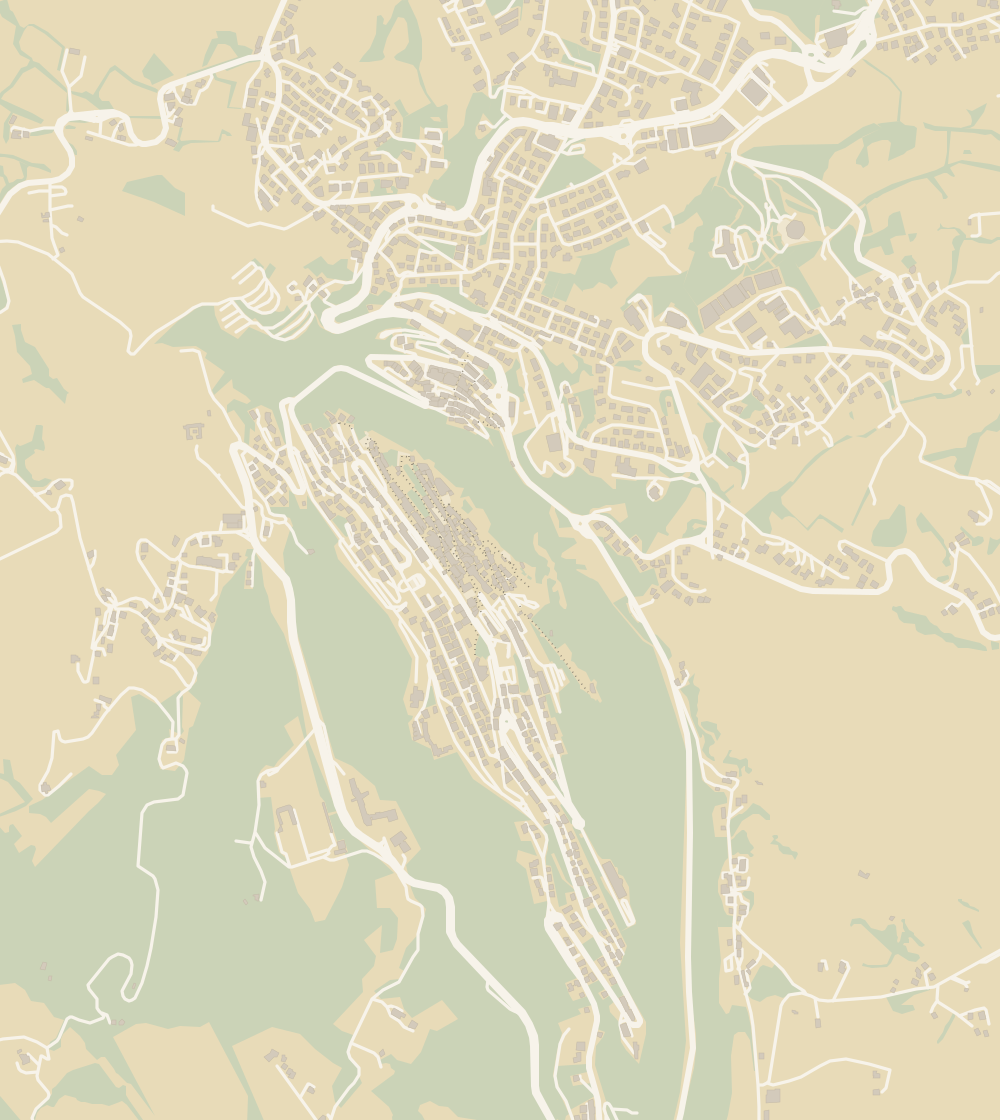 1The Three Towers 2Guaita Tower 3Cesta Tower and Arms Museum 4City of San Marino 5Montale Tower 6Borgo Maggiore 7Witches' Passage 8Palazzo Pubblico 9Changing of the guard 10Basilica of Saint Marinus 11Mount Titano 12Museums 13State Museum 14San Francesco Art Gallery 15Torture Museum 16Cable car (funivia) 17Quirky museums 18Stamp and Coin Museum 19National Gallery 20Valdragone 21San Giovanni sotto le Penne 22Medieval Days 23Christmas 24Hotel Titano 25Grand Hotel San Marino 26Hotel Rosa 27Hotel Crocenzi 28Hotel La Rocca 29Porta San Francesco 30Cava dei Balestrieri 31Map 32Teatro Titano 33Church of San Quirino 34Trenino Bianco Azzurro 35Consolazione Sanctuary 36University 37Prison 38Piazza della Libertà
 Map data © OpenStreetMap contributors (ODbL)
- 1The Three TowersTwo open inside, the third only from outside
- 2Guaita TowerAn 11th-century fortress that was a jail until 1970
- 3Cesta Tower and Arms MuseumThe top of Mount Titano, at 755 metres
- 4City of San MarinoWorld Heritage since 2008
- 5Montale TowerNo ticket, no hours, no pass
- 6Borgo MaggioreA cable car to the capital every 15 minutes
- 7Witches' PassageAbout 200 metres of battlements, no ticket
- 8Palazzo PubblicoClosed for restoration in 2026
- 9Changing of the guardNo timetable in any reliable source
- 10Basilica of Saint MarinusNeoclassical, begun in 1826, free to enter
- 11Mount Titano755 metres at the top of the Cesta
- 12MuseumsOne €11 ticket, seven venues
- 13State MuseumOpen to the public since 1899
- 14San Francesco Art GalleryIn the Franciscan cloister since 1966
- 15Torture MuseumMore than 100 original instruments
- 16Cable car (funivia)Closed from 21 to 23 October 2026
- 17Quirky museumsThree private museums with their own websites
- 18Stamp and Coin MuseumStamps since 1877, on the €11 pass
- 19National GalleryOpened on 7 July 2018
- 20ValdragoneA curazia of Borgo Maggiore
- 21San Giovanni sotto le PenneA curazia of Borgo Maggiore, below the towers
- 22Medieval DaysJuly, the old town and free entry
- 23Christmas28 November to 6 January, with a caveat
- 24Hotel TitanoOpen since 30 September 1894
- 25Grand Hotel San MarinoA hot tub on the third-floor terrace
- 26Hotel RosaFamily-run and open all year since 1965
- 27Hotel Crocenzi1 km from the cable car, 3 km from the old town
- 28Hotel La RoccaNot the Rocca, but on the road up to it
- 29Porta San FrancescoA guard post since 1361
- 30Cava dei BalestrieriThe crossbowmen's range since 1965
- 31MapNine castelli in 61 km²
- 32Teatro Titano2026-27 season from 22 October
- 33Church of San QuirinoOn the 5-cent coin
- 34Trenino Bianco AzzurroRimini to the City, 1932 to 1944
- 35Consolazione SanctuaryConsecrated on 11 June 1967
- 36UniversityCreated by law on 31 October 1985
- 37PrisonEmpty on the day the European inspectors arrived
- 38Piazza della LibertàIt used to be called the Pianello
0 of 108 San Marino guides
Your next stamp
- In winter
- Best time to visit
- In summer
- Events
- Christmas
- Things to do
- One day
- Two days
- The Three Towers
- Guaita Tower
- Cesta Tower and Arms Museum
- The 9 castelli
- City of San Marino
- Montale Tower
- Borgo Maggiore
- Witches' Passage
- Palazzo Pubblico
- Serravalle
- Changing of the guard
- Dogana
- Acquaviva
- Basilica of Saint Marinus
- Mount Titano
- Chiesanuova
- Domagnano
- Faetano
- Fiorentino
- Montegiardino
- Museums
- State Museum
- San Francesco Art Gallery
- Torture Museum
- Cable car (funivia)
- Quirky museums
- Viewpoints
- Murata
- Stamp and Coin Museum
- Walking trails
- Cailungo
- National Gallery
- Valdragone
- Getting there
- Ventoso
- Rimini to San Marino
- San Giovanni sotto le Penne
- Getting around
- With kids
- Parking
- Passport stamp
- Rainy day
- Nightlife
- Phone and roaming
- Casino
- Gualdicciolo
- Money
- Coins and stamps
- Torraccia
- Falciano
- Shopping and tax-free
- Rovereta
- Lake Faetano
- Beaches
- Medieval Days
- MotoGP
- Where to stay
- Hotel Titano
- Where to eat
- Food
- Grand Hotel San Marino
- Luxury hotels
- Free and cheap
- Hotel iDesign
- Day trips
- Hotel Rosa
- Safety and rules
- Hotel Crocenzi
- Language
- Entry requirements
- Hotel La Rocca
- Healthcare and emergencies
- Plugs and voltage
- Is it a country?
- Opening hours
- Porta San Francesco
- Tap water
- Cava dei Balestrieri
- Map
- Post office
- Cost of a trip
- Flag
- Teatro Titano
- Accessibility
- Church of San Quirino
- History
- Captains Regent
- Trenino Bianco Azzurro
- With a dog
- Consolazione Sanctuary
- Facts
- University
- Weddings
- Wine
- Prison
- Camping
- Piazza della Libertà
- Is it worth visiting?
- Constitution
Frequently asked questions
What is the weather like in San Marino?
Warm summers, averaging 23.5 °C in July, and cool winters, averaging 4.2 °C in January. It rains all year with no dry month, and the top of Mount Titano gets snow in most winters. Arpae figures for 2006-2023 quoted by Wikipedia.
Does it snow in San Marino?
Yes, in most winters above 400 to 500 metres, according to Wikipedia. The Città and the towers are higher than that, so snow in the old town in January or February is quite possible.
What is the wettest month in San Marino?
November, with 99 mm and about ten rainy days on average. July and August are the driest, at around 40 mm each.
Is San Marino cold in winter?
Yes. January averages 4.2 °C with average lows of 2.1 °C, and the lowest reading in the 2006-2023 series was −10.2 °C in February. It's windier up top than on the coast.
How hot does San Marino get in summer?
July has an average high of 27.4 °C and the series record is 36.1 °C, in August. It's low-mountain heat, easier than full sun on Rimini beach, but the hills make you feel it.
When is the best weather to visit San Marino?
May, June and September, with averages of 15-21 °C. If you also want fewer people, September, which had half August's visitors.
By
Tourism graduate with a master’s in Tourism Management and Planning from the University of Málaga, who has travelled across Europe. He writes every guide from official sources and his own judgement.
Published on . Facts checked on .
Sources
Photos: Francesco Bini (CC BY-SA 4.0); Walmaul (CC BY-SA 4.0), via Wikimedia Commons.