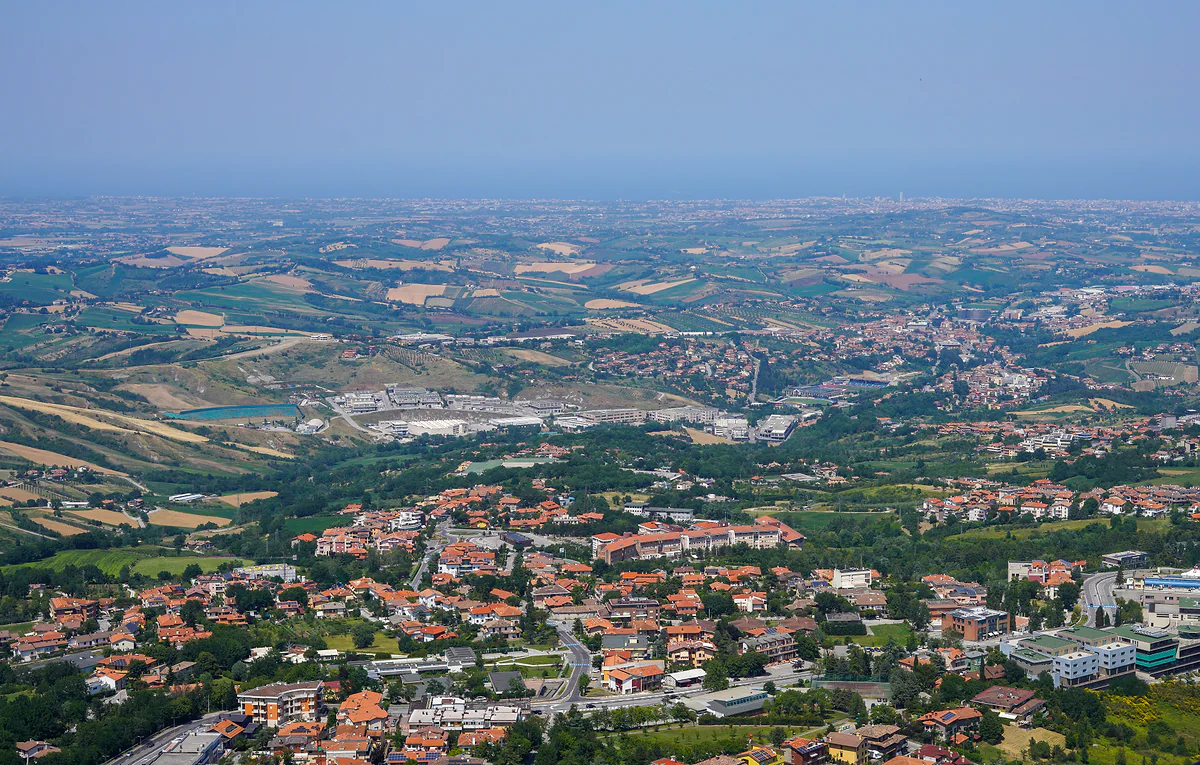
Drinkable, with the lab results online
Tap water in San Marino, and what the test results say
Yes, tap water in San Marino is safe to drink. It's supplied by AASS, the state utility, which publishes lab results for each castello every six months. In the first half of 2026 the water in the City of San Marino met every limit in the EU drinking water directive, with no E. coli detected. It's fairly hard water, though.
In 30 seconds
Full read: 3 min
- Tap water in San Marino is safe to drink.
- AASS publishes public health lab results for each castello every six months.
- In the first half of 2026 the City of San Marino met every EU limit, with no E. coli.
- It's hard water, at 28 French degrees in the Città.
I'd drink from the tap without a second thought and fill a bottle at the hotel before heading up to the towers. The results are public, recent and good, and paying for bottled water in a country you can walk across strikes me as money down the drain.

Before you go
What I would keep in mind
-
01 To save money
Fill up before you climb
With tap water that meets EU limits, a refillable bottle filled at your hotel saves buying water at every café on the way up the hill.
San Marino free and cheap -
02 My tip
Cloudy water means old pipes, not a bad supply
AASS guarantees the water up to the building. It warns that worn or damaged plumbing inside can make it discoloured or dirty, so if that happens where you're staying, tell reception.
-
03 Most beautiful
A country without big rivers, drinking from the Marecchia
San Marino has no large rivers of its own. Much of its water comes from the Marecchia, treated at the Galavotto plant, and from the Ridracoli reservoir in the Apennines.
-
04 My tip
Hard water, if you notice these things
At 28 French degrees in the Città it's hard water, though within the recommended range. It's no health issue, but you may taste the difference if you're from a soft-water area.
It’s a fair question for any small hilltop country, and more so for one with no big rivers or lakes in sight. The answer is yes, you can drink the tap water in San Marino, and I’m not saying that on a hunch. The country publishes its own test results, and I’ve summarised them so you can judge for yourself.
Is San Marino’s tap water safe?
Yes. The water in your tap is supplied by AASS, the Azienda Autonoma di Stato per i Servizi Pubblici, the state utility that also runs electricity, gas and the buses. It describes it simply as drinking water, and what I like is that it doesn’t stop at the claim. Castello by castello, it publishes average results from samples taken by the state health service’s public health laboratory, set against the limits in the EU’s 2020 drinking water directive.
That’s the most useful thing on this page for me. I don’t have to take a brochure’s word for it, I can read the numbers. And the numbers are good.
What the 2026 results show
I’ve looked at the City of San Marino, which is where you’ll almost certainly be, fed by the Rocca, Fossi, Pianello, Teatro and Montalbo reservoirs. In the first half of 2026, E. coli came in at under 1 per 100 millilitres, which the table itself says counts as zero. Nitrate was 8 mg/L against a limit of 50. Lead and arsenic were below what the method can measure. The pH sat at 7.8, well inside the permitted range. Serravalle, the other large castello, showed very similar figures. That matters if you’re staying lower down to save money, because Serravalle’s reservoirs, from Cailungo and Galazzano to Torraccia and Falciano, cover a big slice of the country, including the area around Dogana where many visitors arrive. The results aren’t a one-off either. The same page publishes every half-year back to 2022, and the Città’s figures barely move from one period to the next.
The one thing out of the ordinary is hardness, 28 French degrees in the Città and 27 in Serravalle. That’s inside the range AASS gives as recommended, 15 to 50, so it’s not a health matter. It’s water with plenty of limescale, and if you’re from a soft-water part of the UK you might notice the taste, and the kettle.
Where it comes from
AASS feeds around 10 million litres of drinking water into the network each day. Between 60 and 70% comes from the Galavotto treatment plant, which mainly draws on the Marecchia, the river that runs down the valley towards Rimini. The rest is bought in, roughly 30% from Romagna Acque, which manages the Ridracoli reservoir in the Apennines, and 5 to 10% from Hera.
At Galavotto the water is oxidised, filtered through sand and activated carbon, and disinfected with chlorine dioxide, with daily checks by AASS and the state health service. It’s then pumped to the Ca’ Moraccino station and shared out through 32 local reservoirs. AASS reckons its network loses about 16% of the water, against an Italian average it puts at around 40%. To me that says the pipes are looked after, which is exactly what you want to know before drinking from them.
The one caveat, the building’s own plumbing
AASS is refreshingly frank here. It guarantees water quality up to the point it enters a building, but warns that if the plumbing inside is old or damaged, water can come out discoloured or dirty. That’s down to each property, not the public supply. If the water in your room runs cloudy or coloured, I wouldn’t drink it and I’d mention it at reception, as I would anywhere.
What I’d do
Drink from the tap and carry a refillable bottle. There’s no health reason to buy bottled water, and no budget reason either. On a hot day climbing up to the towers you’ll get through a lot, and paying for every bottle at old town cafés adds up. It’s the kind of small saving that fits everything in San Marino for free and on the cheap.
While you’re sorting the practicalities, sockets and adapters are covered in San Marino plug type and voltage, and the hospital and pharmacies in San Marino hospital and emergencies.
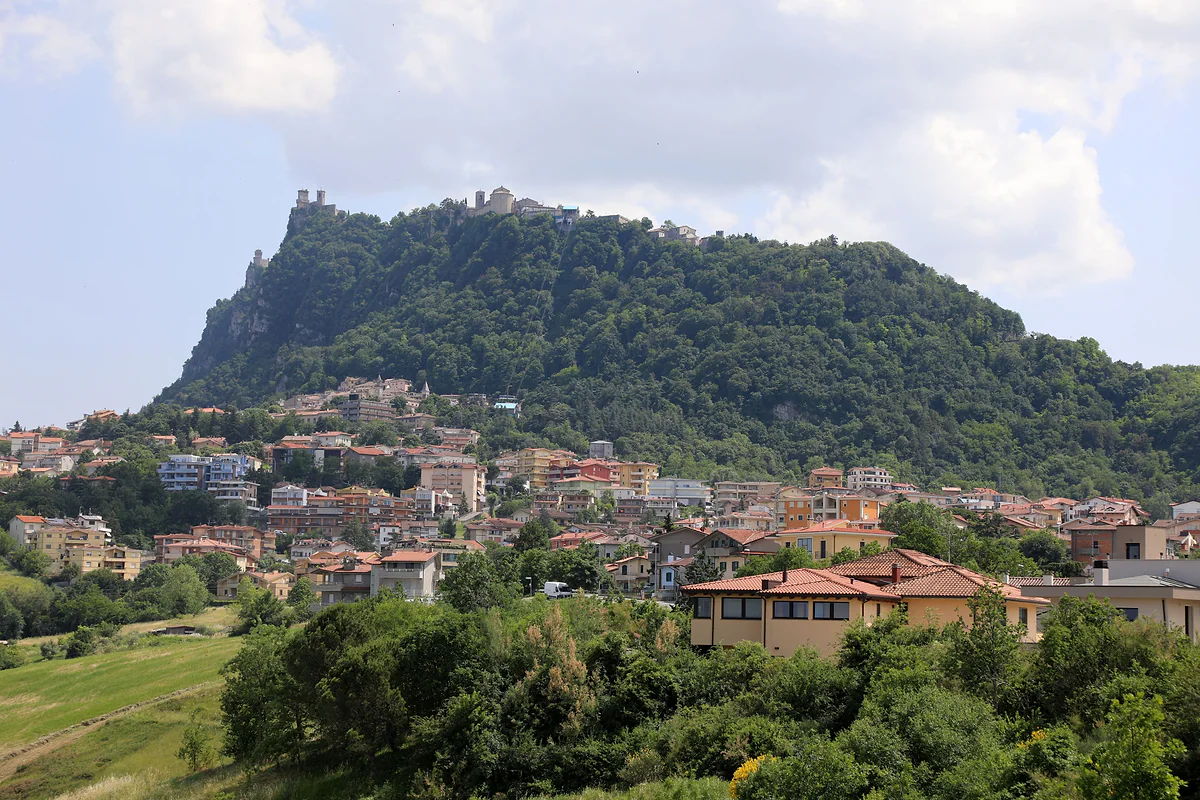
Monte Titano seen from the valley, with its wooded slope, the towers and the town along the ridge and Borgo Maggiore at its foot.
City of San Marino water test results, first half of 2026
| Parameter | Average | EU directive limit |
|---|---|---|
| E. coli | Under 1 per 100 mL (counted as 0) | 0 |
| Nitrate | 8 mg/L | 50 mg/L |
| Lead | Under 0.5 µg/L | 10 µg/L |
| Arsenic | Under 1 µg/L | 10 µg/L |
| pH | 7.8 | Between 6.5 and 9.5 |
| Total hardness | 28 °F | 15-50 °F recommended |
| Sulphate | 81 mg/L | 250 mg/L |
AASS, «Qualità dell'acqua nei Castelli», Rocca, Fossi, Pianello, Teatro and Montalbo reservoirs; samples by the ISS public health laboratory. Limits from Directive (EU) 2020/2184.
Where San Marino's water comes from
| Source | Share |
|---|---|
| Galavotto treatment plant (mostly Marecchia river water) | 60-70% |
| Romagna Acque (Ridracoli reservoir) | About 30% |
| Hera | 5-10% |
AASS, «Dalle fonti al rubinetto di casa». Around 10,000 m³ of drinking water a day.
Test yourself
True or false?
0/3 Pick before you peek.
-
Visitors to San Marino should stick to bottled water.
See the answer
False. The tap water is drinkable, and the 2026 lab results for the Città met the EU drinking water directive's limits.
-
Most of San Marino's water comes from the Marecchia river.
See the answer
True. Between 60 and 70% comes from the Galavotto plant, which mainly treats Marecchia water, according to AASS.
-
San Marino publishes water test results for each of its castelli.
See the answer
True. AASS posts six-monthly averages from the state public health laboratory's samples for all nine castelli.
- Litres of drinking water supplied a day
- 10 million
- Nitrate in the Città, EU limit 50
- 8 mg/L
- Local reservoirs feeding the network
- 32
- Network leakage, according to AASS
- 16%
Map
Where Tap water is
Every number opens its guide. The towers sit on the ridge, the city beside them and Borgo Maggiore below, linked by the cable car.
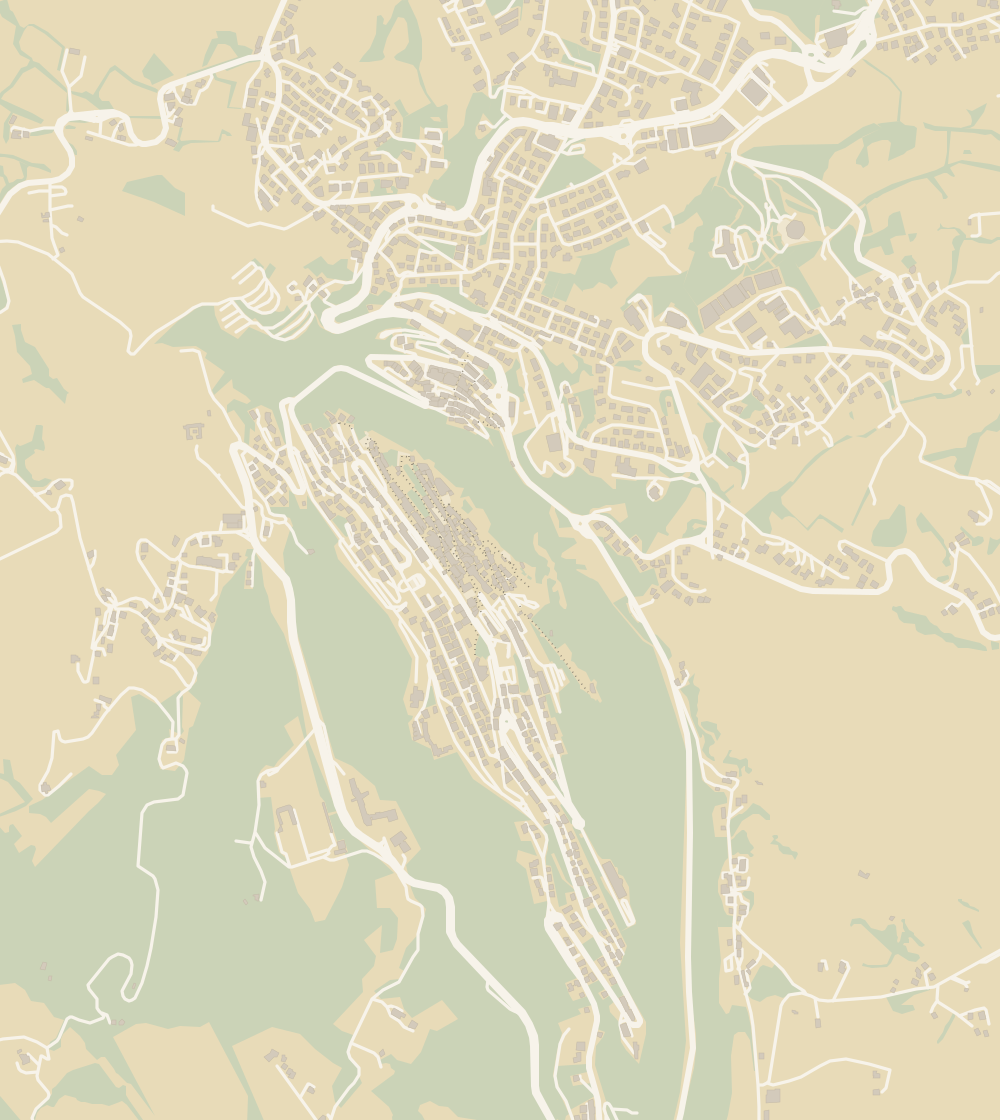 1The Three Towers 2Guaita Tower 3Cesta Tower and Arms Museum 4City of San Marino 5Montale Tower 6Borgo Maggiore 7Witches' Passage 8Palazzo Pubblico 9Changing of the guard 10Basilica of Saint Marinus 11Mount Titano 12Museums 13State Museum 14San Francesco Art Gallery 15Torture Museum 16Cable car (funivia) 17Quirky museums 18Stamp and Coin Museum 19National Gallery 20Valdragone 21San Giovanni sotto le Penne 22Medieval Days 23Christmas 24Hotel Titano 25Grand Hotel San Marino 26Hotel Rosa 27Hotel Crocenzi 28Hotel La Rocca 29Porta San Francesco 30Cava dei Balestrieri 31Map 32Teatro Titano 33Church of San Quirino 34Trenino Bianco Azzurro 35Consolazione Sanctuary 36University 37Prison 38Piazza della Libertà
 Map data © OpenStreetMap contributors (ODbL)
- 1The Three TowersTwo open inside, the third only from outside
- 2Guaita TowerAn 11th-century fortress that was a jail until 1970
- 3Cesta Tower and Arms MuseumThe top of Mount Titano, at 755 metres
- 4City of San MarinoWorld Heritage since 2008
- 5Montale TowerNo ticket, no hours, no pass
- 6Borgo MaggioreA cable car to the capital every 15 minutes
- 7Witches' PassageAbout 200 metres of battlements, no ticket
- 8Palazzo PubblicoClosed for restoration in 2026
- 9Changing of the guardNo timetable in any reliable source
- 10Basilica of Saint MarinusNeoclassical, begun in 1826, free to enter
- 11Mount Titano755 metres at the top of the Cesta
- 12MuseumsOne €11 ticket, seven venues
- 13State MuseumOpen to the public since 1899
- 14San Francesco Art GalleryIn the Franciscan cloister since 1966
- 15Torture MuseumMore than 100 original instruments
- 16Cable car (funivia)Closed from 21 to 23 October 2026
- 17Quirky museumsThree private museums with their own websites
- 18Stamp and Coin MuseumStamps since 1877, on the €11 pass
- 19National GalleryOpened on 7 July 2018
- 20ValdragoneA curazia of Borgo Maggiore
- 21San Giovanni sotto le PenneA curazia of Borgo Maggiore, below the towers
- 22Medieval DaysJuly, the old town and free entry
- 23Christmas28 November to 6 January, with a caveat
- 24Hotel TitanoOpen since 30 September 1894
- 25Grand Hotel San MarinoA hot tub on the third-floor terrace
- 26Hotel RosaFamily-run and open all year since 1965
- 27Hotel Crocenzi1 km from the cable car, 3 km from the old town
- 28Hotel La RoccaNot the Rocca, but on the road up to it
- 29Porta San FrancescoA guard post since 1361
- 30Cava dei BalestrieriThe crossbowmen's range since 1965
- 31MapNine castelli in 61 km²
- 32Teatro Titano2026-27 season from 22 October
- 33Church of San QuirinoOn the 5-cent coin
- 34Trenino Bianco AzzurroRimini to the City, 1932 to 1944
- 35Consolazione SanctuaryConsecrated on 11 June 1967
- 36UniversityCreated by law on 31 October 1985
- 37PrisonEmpty on the day the European inspectors arrived
- 38Piazza della LibertàIt used to be called the Pianello
0 of 108 San Marino guides
Your next stamp
- Safety and rules
- Is it worth visiting?
- Things to do
- Money
- Facts
- One day
- Two days
- The Three Towers
- Guaita Tower
- Cesta Tower and Arms Museum
- The 9 castelli
- City of San Marino
- Montale Tower
- Borgo Maggiore
- Witches' Passage
- Palazzo Pubblico
- Serravalle
- Changing of the guard
- Dogana
- Acquaviva
- Basilica of Saint Marinus
- Mount Titano
- Chiesanuova
- Domagnano
- Faetano
- Fiorentino
- Montegiardino
- Museums
- State Museum
- San Francesco Art Gallery
- Torture Museum
- Cable car (funivia)
- Quirky museums
- Viewpoints
- Murata
- Stamp and Coin Museum
- Walking trails
- Cailungo
- National Gallery
- Valdragone
- Best time to visit
- Getting there
- Ventoso
- Rimini to San Marino
- San Giovanni sotto le Penne
- Weather
- Getting around
- In winter
- With kids
- In summer
- Parking
- Passport stamp
- Rainy day
- Nightlife
- Phone and roaming
- Casino
- Gualdicciolo
- Coins and stamps
- Torraccia
- Falciano
- Shopping and tax-free
- Rovereta
- Lake Faetano
- Events
- Beaches
- Medieval Days
- Christmas
- MotoGP
- Where to stay
- Hotel Titano
- Where to eat
- Food
- Grand Hotel San Marino
- Luxury hotels
- Free and cheap
- Hotel iDesign
- Day trips
- Hotel Rosa
- Hotel Crocenzi
- Language
- Entry requirements
- Hotel La Rocca
- Healthcare and emergencies
- Plugs and voltage
- Is it a country?
- Opening hours
- Porta San Francesco
- Cava dei Balestrieri
- Map
- Post office
- Cost of a trip
- Flag
- Teatro Titano
- Accessibility
- Church of San Quirino
- History
- Captains Regent
- Trenino Bianco Azzurro
- With a dog
- Consolazione Sanctuary
- University
- Weddings
- Wine
- Prison
- Camping
- Piazza della Libertà
- Constitution
Frequently asked questions
Is tap water safe to drink in San Marino?
Yes. AASS supplies drinking water across the country and publishes results from the state public health laboratory for each castello. In the first half of 2026 they met the EU drinking water directive's limits.
Where does San Marino get its water from?
Between 60 and 70% comes from the Galavotto treatment plant, which mainly takes water from the Marecchia river. The rest is bought from Romagna Acque, which runs the Ridracoli reservoir, and from Hera.
How is San Marino's water treated?
At Galavotto it's oxidised, filtered through silica sand and granular activated carbon, and disinfected with chlorine dioxide. AASS and the state health service check it daily and with regular lab tests.
Is San Marino's water hard?
Yes, averaging 28 French degrees in the City of San Marino and 27 in Serravalle in the first half of 2026. That's inside the 15-50 range AASS gives as recommended.
Should I buy bottled water in San Marino?
There's no health reason to. If you don't like the taste of hard water, that's a matter of preference, but the tap water meets the limits.
By
Tourism graduate with a master’s in Tourism Management and Planning from the University of Málaga, who has travelled across Europe. He writes every guide from official sources and his own judgement.
Published on . Facts checked on .
Sources
Photos: Messapi (CC BY 4.0); Francesco Bini (CC BY-SA 4.0), via Wikimedia Commons.