Luxembourgish cooking
What to eat in Luxembourg, from bean soup to fried Moselle fish

- The dish to order first
- Judd mat Gaardebounen
- Soup
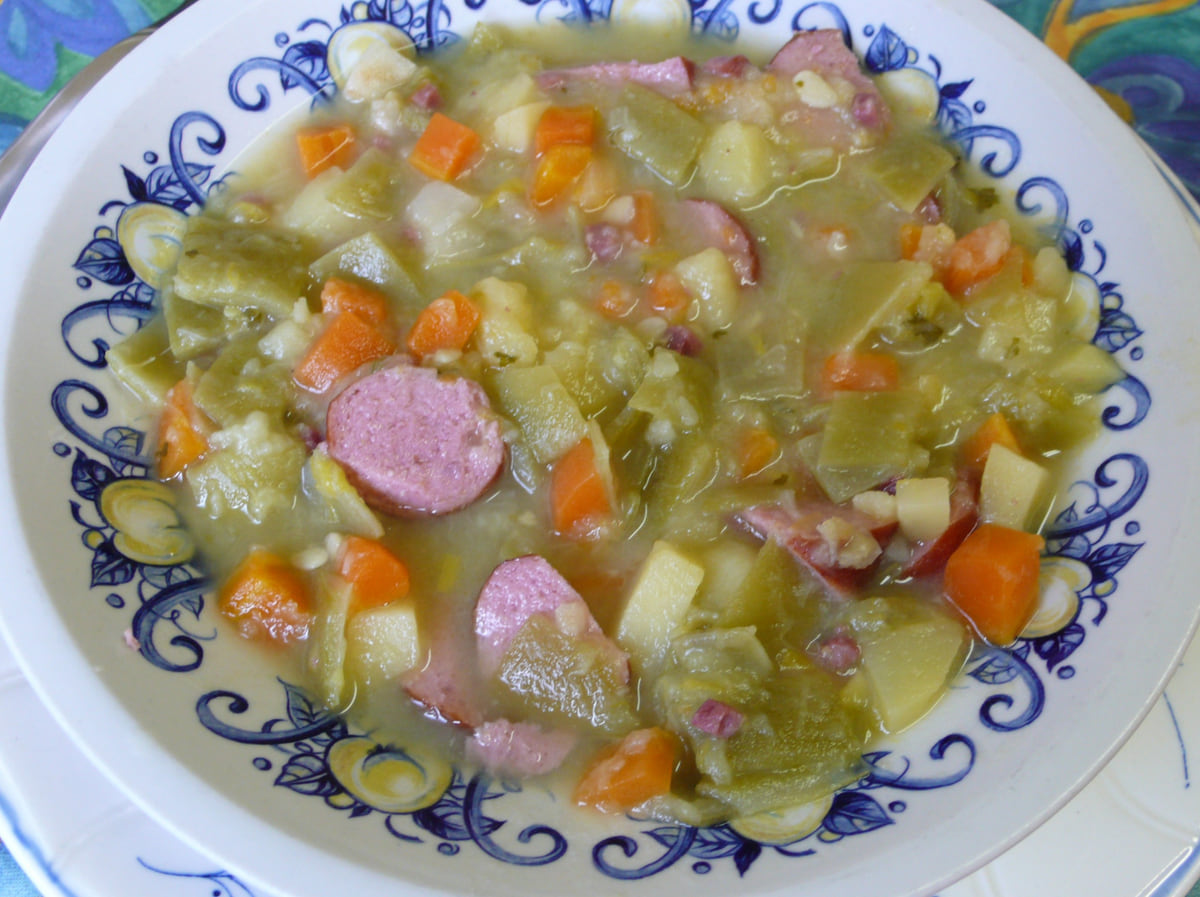
- Bouneschlupp
- Snacks
- Gromperekichelcher, Rieslingspaschtéit
Traditional Luxembourg food is country cooking built on potatoes, smoked pork, pulses and river fish. The dishes you'll meet on menus are Judd mat Gaardebounen (smoked pork collar with broad beans), Bouneschlupp (green bean soup), Kniddelen, Gromperekichelcher, Rieslingspaschtéit and fried Moselle fish, washed down with local wine, crémant or beer.
My ranking, scored
The dishes I'd try first
My own scores out of 10, weighing how distinctively Luxembourgish each dish is, how easy it is to find and how much it tells you about the country. Opinion, based on what luxembourg.public.lu and visitluxembourg describe.
0 of 6 seen
-
Judd mat Gaardebounen
Smoked pork collar with broad beans, usually with potatoes. The dish most closely tied to the country, and the one I'd order at my first proper lunch.
9.3 out of 10
-
Rieslingspaschtéit
A marinated veal pie set with Riesling jelly, which the national portal calls the queen of pies and says you'll find in every bakery.
9.0 out of 10
-
Gromperekichelcher
Grated potato fritters with salt and apple sauce. The food of every funfair and market, and the cheapest hot meal you'll eat.
8.8 out of 10
-
Bouneschlupp
Green bean soup with potato and smoked bacon. A winter dish that's also ladled out at the Buergbrennen bonfires.
8.4 out of 10
-
Kniddelen
Boiled flour dumplings with Gréiwen, little cubes of bacon. Plain winter food that feels more like a family kitchen than a restaurant.
8.0 out of 10
-
Quetschentaart
A plum tart for late summer and autumn. I'd have it with an afternoon coffee in a patisserie.
7.8 out of 10
I'd order Judd mat Gaardebounen in an old-fashioned bistro rather than a tourist-menu restaurant, and keep an afternoon for a patisserie with Bamkuch. On the Moselle, I'd have fried river fish with a Riesling from the same bank, which is when this cooking makes most sense.
My verdict
Yes
Yes, even if it isn't a famous cuisine. It's hearty country food with dishes you won't find elsewhere, and it's best in a neighbourhood bistro or on the Moselle rather than in the old town.
Who I would recommend it to
Yes, if…
- Anyone who enjoys hearty, meaty country cooking
- Wine lovers heading for the Moselle
Better not, if…
- Vegetarians, as the classics lean heavily on pork
- Anyone after light or spicy food
Luxembourg food: the quick answer
Full read: 3 min
- Luxembourg's traditional food is country cooking with potatoes, smoked pork, pulses and river fish.
- The dish most tied to the country is Judd mat Gaardebounen, smoked pork collar with broad beans.
- Gromperekichelcher, potato fritters, are the food of fairs, markets and Christmas.
- To drink, Moselle white wine, crémant since 1991 and local beer.
What I would book ahead
Notebook
What the official sites leave out
-
01 Most beautiful
Food that comes straight from the land
The government's portal calls it simple cooking shaped by what the fields, forests and rivers provide, with the potato at its heart, sautéed, fried or mashed.
-
02 My tip
Some of the best of it is street food
Potato fritters are fried at the Octave, on the eve of National Day, at the Schueberfouer funfair and at the Christmas markets. If your dates match one, skip the restaurant.
Gromperekichelcher -
03 Worth the splurge
Friture with a Moselle white
Little fried Moselle fish eaten with your fingers. The tourist board pairs them with a local wine, and for me it's the dish that best suits an afternoon by the river.
Luxembourg wine -
04 Money
Service is already in the price
Bars and restaurants must show prices including service, inside and outside. What you read on the menu by the door is what you pay, which helps if you're used to a service charge being added.
tipping in Luxembourg
What is traditional Luxembourg food?
The government’s portal sums it up neatly. This is simple cooking with a strong link to local produce, built on potatoes, fruit, vegetables, meat and fish from the country’s fields, forests and rivers, which fed a mostly rural population for centuries. That’s where the rich, filling dishes come from, and why the potato turns up as a side, a main course or a snack, sautéed, fried or mashed.
What has changed is the attitude. The same portal notes that new takes on old recipes are catching on at home and in serious restaurants alike, and that local wine and beer are enjoying a revival, with microbreweries and winemakers producing sparkling wines of real class. If you arrive expecting a country that only eats expensive French food, you’re in for a surprise.
Traditional dishes to look for
The benchmark is Judd mat Gaardebounen, smoked pork collar with broad beans, nearly always with potatoes. For cold days there’s Bouneschlupp, a green bean soup with smoked bacon, and Kniddelen, boiled flour dumplings with Gréiwen, which are small cubes of bacon. The official list is rounded off by Träipen, black pudding with apple sauce or mash, and Stäerzelen, a buckwheat flour dish with bacon.
From the river comes friture, little fried Moselle fish you eat with your fingers, a cousin of whitebait. From the street come Gromperekichelcher, grated potato fritters fried at every local festival and eaten with salt and apple sauce. And for the aperitif there’s Rieslingspaschtéit, a veal pie set with Riesling jelly that the national portal crowns the queen of pies.
What to drink with it
Moselle white wine, above all. Riesling, Auxerrois, Pinot Gris, Pinot Blanc and Rivaner share the vineyards, and crémant has had its own name since 1991. I go into it properly in Luxembourg wine. The beer is local too, with Bofferding and Battin brewed in Bascharage and Diekirch still brewed in the town that gives it its name. The tourist board adds ciders, perries and local spirits.
To sleep close to everything, search places to stay in Luxembourg on Expedia and filter by area before price.
Where to eat Luxembourg food
For me there are three settings for Luxembourgish food. Traditional bistros, for Judd or Bouneschlupp. Bakeries and delicatessens, which sell Rieslingspaschtéit to take away. And festivals, where Gromperekichelcher are fried in front of you. Areas and types of restaurant are in where to eat in Luxembourg. On a tight budget, the bakeries and the fairs are your friends, because that’s where hot, local food costs least.
One practical point that saves awkward moments at the end of a meal. By law, bars and restaurants display prices with service included, inside and outside, so what you read on the menu by the door is what you pay.
Cakes, bakeries and Bamkuch
The sweet side deserves an afternoon of its own. The tourist board singles out Bamkuch, a tree cake turned slowly over a flame while layer after layer of batter is added, and at the Namur patisserie, open since 1863, a single spit produces twelve cakes. Autumn belongs to Quetschentaart, the plum tart, and carnival to Verwurrelter and Nonnefäscht, dusted with icing sugar. For spreading, there’s Kachkéis, a cooked cheese not unlike French cancoillotte.
If you still need a way in, check train and coach tickets to Luxembourg from where you are.
The Italian and Portuguese influence
This is where people go wrong if they picture Luxembourg as a small corner of Germany. The portal points out that foreign rule from the 15th to the 19th century, then waves of immigration from the 19th century onwards, all left their mark on Luxembourg’s cooking pots. The clearest example is Pastaschutta, the pasta asciutta brought by Italians who came to work in the steelworks, which Luxembourgers made their own with mince, tomato, garlic and onion. With 46.6% of residents holding a foreign passport, according to STATEC, a closed kitchen would be the odd thing. Expect menus written in French first, too, since that is the working language of restaurants.
If you are short on time, see the best tours in Luxembourg and pick one that fits your day.
Where the bus does not go, a car does: compare car hire in Luxembourg before you arrive rather than at the desk.
To sleep close to everything, search places to stay in Luxembourg on Booking.com and filter by area before price.
Dishes you'll see on menus
| Dish | What it is | When I'd look for it |
|---|---|---|
| Judd mat Gaardebounen | Smoked pork collar with broad beans, often with potatoes | All year, in bistros |
| Bouneschlupp | Green bean soup with potato, vegetables and smoked bacon | Winter |
| Kniddelen | Boiled flour dumplings with Gréiwen (bacon) | Winter |
| Träipen | Black pudding with apple sauce or mash | Winter |
| Stäerzelen | Buckwheat flour dish with smoked bacon | Winter |
| Friture | Small fried Moselle fish, eaten by hand | By the Moselle |
| Gromperekichelcher | Fried potato fritters with salt and apple sauce | Fairs, markets, Christmas |
| Rieslingspaschtéit | Veal pie with Riesling jelly, served cold | Aperitif, all year |
luxembourg.public.lu (cuisine, Christmas, Gromperekichelcher and Rieslingspaschtéit pages) and visitluxembourg, checked on 29-09-2026.
Sweets and drinks
| Name | What it is |
|---|---|
| Bamkuch | Layered tree cake baked on a spit |
| Verwurrelter and Nonnefäscht | Carnival knots and fritters dusted with icing sugar |
| Kachkéis | Cooked spreading cheese, close to French cancoillotte |
| Crémant de Luxembourg | Sparkling wine from the Moselle luxembourgeoise PDO, since 1991 |
| Beer | Bofferding, Battin and Diekirch, plus microbreweries |
visitluxembourg (flavours and patisserie pages) and luxembourg.public.lu (carnival and PDO pages).
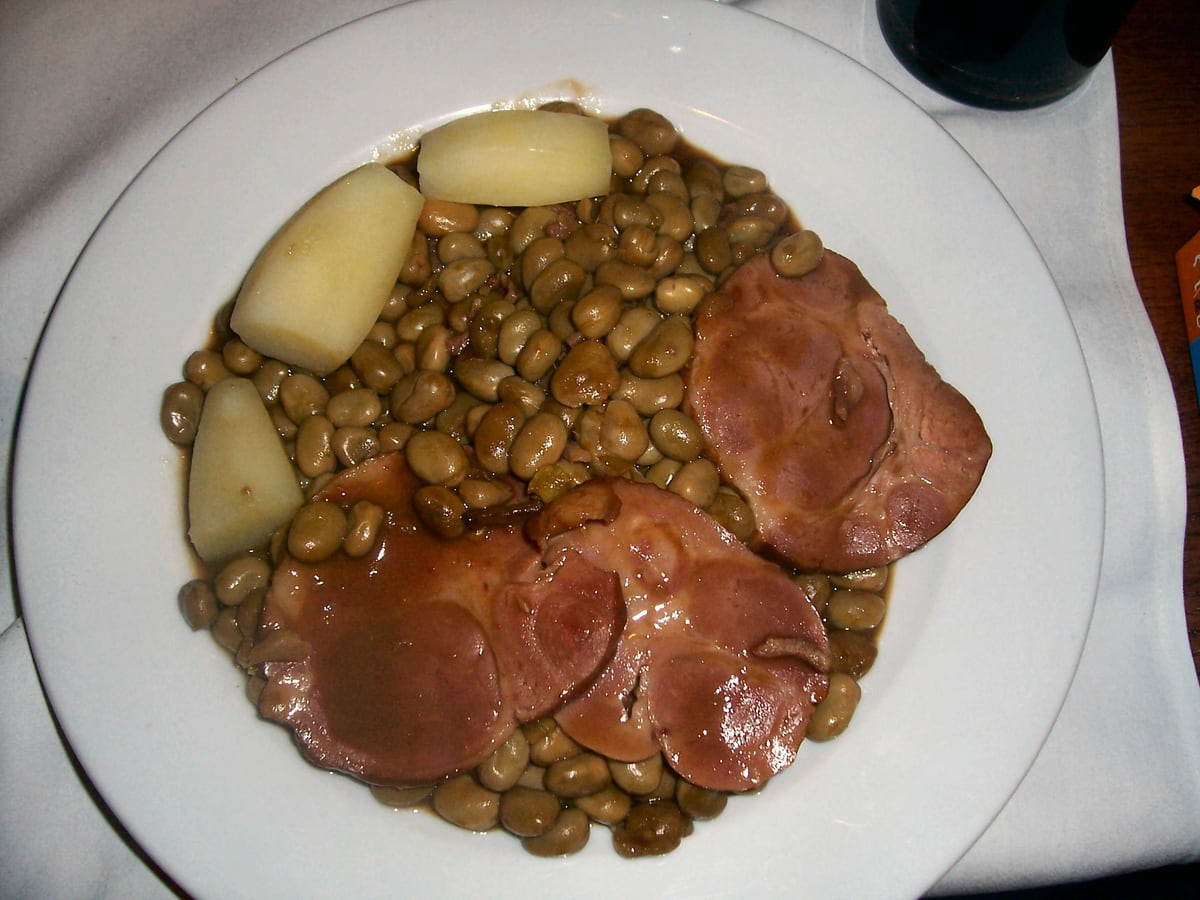
A plate of Judd mat Gaardebounen, sliced smoked pork collar with broad beans in sauce and boiled potatoes
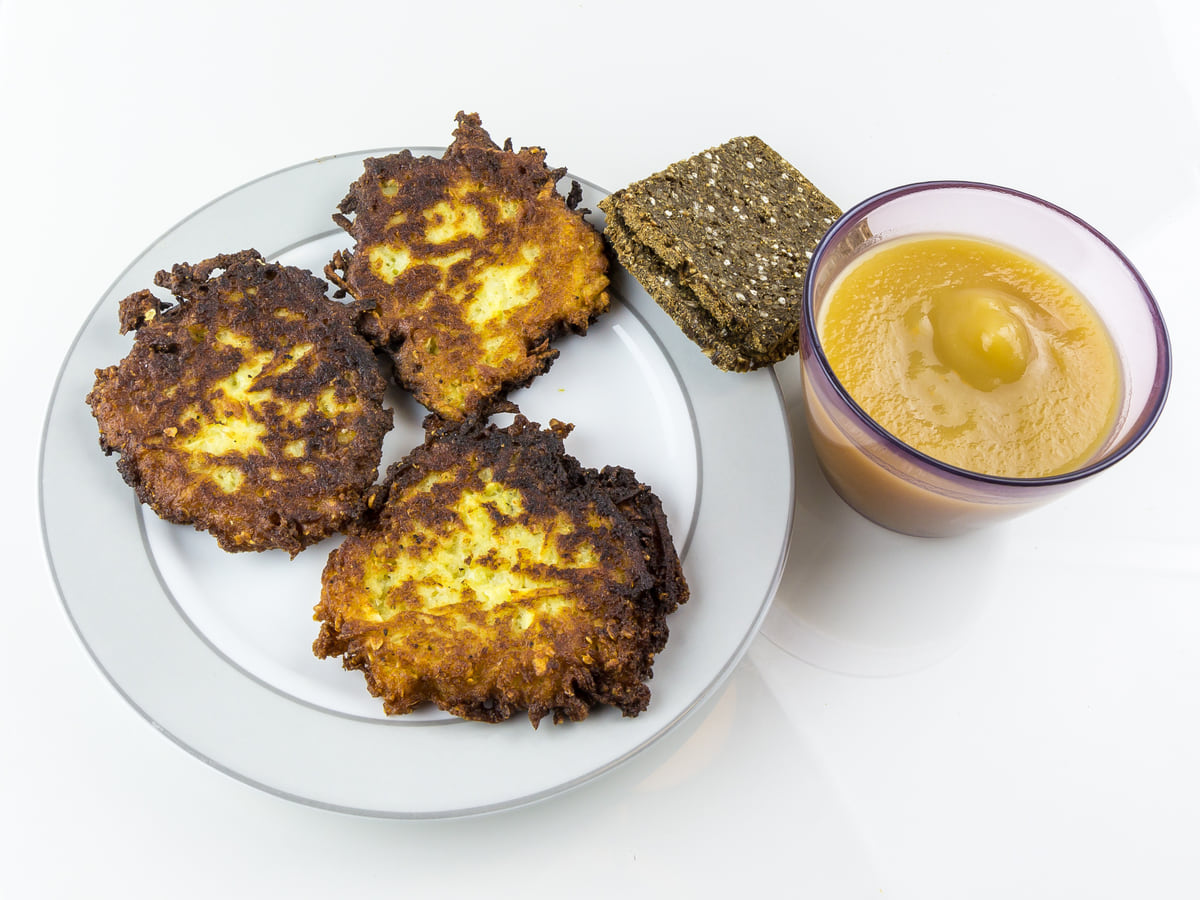
Fried grated potato pancakes, like Luxembourg's Gromperekichelcher, with apple sauce and dark rye bread
Test yourself
True or false?
0/3 Pick before you peek.
-
Bouneschlupp is a green bean soup.
See the answer
True. The national portal describes it as green bean soup, to which carrots, onions, leeks, celery, potatoes, milk or cream and smoked bacon can be added.
-
Friture is a fried meat dish from the north of the country.
See the answer
False. It's small fried fish from the Luxembourg stretch of the Moselle, eaten with your fingers.
-
Pastaschutta arrived in Luxembourg with Italian immigrants.
See the answer
True. The national portal says Italians who came to work in the steelworks in the 19th and 20th centuries brought pasta asciutta, which was renamed locally.
0 of 425 Luxembourg guides
Your next stamp
- Where to eat
- Judd mat Gaardebounen
- Kniddelen
- Gromperekichelcher
- Bouneschlupp
- Cheap eats
- What to buy
- A Possen Museum
- American Cemetery
- Ansembourg
- Ansembourg Castles
- Asselborn
- Bascharage
- Beaufort castles
- Belval
- Belval blast furnaces
- Berg Castle
- Bernard-Massard cellars
- Bourglinster Castle
- Bourscheid Castle
- Brandenbourg
- Brandenbourg Castle
- Caves St Martin
- Christmas
- Clervaux Castle
- Echternach
- Echternach Abbey
- Ehnen
- Ehnen Wine Museum
- Esch-sur-Alzette
- Esch-sur-Sûre Castle
- European Museum Schengen
- Fond-de-Gras
- General Patton Museum
- German war cemetery
- Haff Réimech
- Hohllay
- Hollenfels Castle
- Hosingen
- Kautenbach
- Kneiff
- Koerich Castle
- Larochette Castle
- Lasauvage
- Mersch Castle
- Military History Museum
- Moersdorf
- Mondorf Domaine Thermal
- Munsbach Castle
- National Mining Museum
- Parc Merveilleux
- Park Sënnesräich
- Places to visit
- Remich
- Rindschleiden
- Schiessentümpel
- Septfontaines Castle
- Slate Museum
- Stolzembourg
- Tudor Museum
- Useldange Castle
- Valley of the Seven Castles
- Vianden
- Vianden Castle
- Ville Haute
- Wasserbillig Aquarium
- Weiswampach lakes
- Wiltz Castle
- Ahn
- Berdorf
- Bourscheid-Plage
- Butterfly garden
- Clervaux
- Differdange
- Echternach lake
- Grevenmacher
- Heringer Millen
- Hollenfels
- Luxembourg City
- Luxembourg Science Center
- Meysembourg Castle
- Mullerthal
- National Day
- National Resistance Museum
- Perekop
- Remerschen
- Schoenfels Castle
- The Family of Man
- Things to do
- Upper Sûre Lake
- Vianden chairlift
- Wasserbillig
- Clervaux Abbey
- Echternach Roman villa
- Éislek
- Insenborn
- Kallektuffquell
- Machtum
- Most beautiful places
- Our Nature Park
- Pétange
- Pettingen Castle
- Schueberfouer
- Schwebsingen
- Victor Hugo House
- Waldbillig
- Dudelange
- Kuelscheier
- Lultzhausen
- Moselle Valley
- Octave
- Prettiest villages
- Sanem
- Schengen
- Wellenstein
- Wiltz
- Wolfsschlucht
- Beaufort
- Bech-Kleinmacher
- Éimaischen
- Gaalgebierg
- Guttland
- Marnach
- Mondorf-les-Bains
- Putscheid
- Schifflange
- UNESCO World Heritage
- Carnival
- Consdorf
- Ellergronn
- Käerjeng
- Kayl
- Map
- Minett
- Munshausen
- Tandel
- Bech
- Buergbrennen
- Esch-sur-Sûre
- Rumelange
- Where is Luxembourg
- Is it a country?
- Lac de la Haute-Sûre (commune)
- Rosport-Mompach
- Wormeldange
- Larochette
- Mondercange
- Regions
- Bettembourg
- Bock Casemates
- Cantons
- Dancing procession
- Diekirch
- Fischbach
- Garnich
- Mersch
- Moselle wine route
- Ettelbruck
- Grund
- Heffingen
- Kehlen
- Lintgen
- Moselle river cruises
- Pétrusse Casemates
- Towns and villages
- Chemin de la Corniche
- Erpeldange-sur-Sûre
- Junglinster
- Kopstal
- Lorentzweiler
- Nommern
- Pfaffenthal
- Population
- Bissen
- Clausen
- Grand Ducal Palace
- Koerich
- Schieren
- Size
- Vallée de l'Ernz
- Feulen
- Kirchberg
- Languages
- Notre-Dame Cathedral
- Reisdorf
- Steinfort
- Bettendorf
- Habscht
- St Michael's Church
- Helperknapp
- Luxembourgish
- Place Guillaume II
- Name
- Place d'Armes
- History
- Place de la Constitution
- Grand Duke
- Colmar-Berg
- Flaxweiler
- Gare
- Hamm
- Kirchberg funicular
- Luxembourg fortress
- Mamer
- Mertert
- Minett Trail
- Mullerthal Trail
- Neumünster Abbey
- Parc Hosingen
- Pfaffenthal lift
- Political system
- Redange
- The Passerelle
- Wine festivals
- Winseler
- Beckerich
- Biwer
- EU institutions
- Goesdorf
- Limpertsberg
- Mudam
- Natur Musée
- Pulvermühl
- Stadtbredimus
- Troisvierges
- Wenzel walk
- Bonnevoie
- Bous-Waldbredimus
- Ell
- Flag
- Kiischpelt
- Manternach
- Philharmonie
- Vauban circuit
- Weiswampach
- Betzdorf
- Boulaide
- Dräi Eechelen Museum
- Facts
- Hollerich
- Lenningen
- Useldange
- Wincrange
- Bourscheid
- Dalheim
- Gasperich
- Public holidays
- Red Bridge
- Saeul
- Belair
- Second World War
- Vichten
- Battle of the Bulge
- Merl
- Préizerdaul
- Cents
- EU and Schengen
- Groussbus-Wal
- Entry requirements
- Neudorf
- Rambrouch
- Currency and payments
- Mertzig
- Weimerskirch
- Adolphe Bridge
- Beggen
- Escapardenne
- How to get there
- International March of Diekirch
- MNHA (National Museum)
- Rock climbing
- Sandweiler
- Bridges
- Eich
- Flights
- Golf
- Hesperange
- Lëtzebuerg City Museum
- Canoeing and kayaking
- Dommeldange
- Luxembourg airport
- Strassen
- Villa Vauban
- Airport to city centre
- Bertrange
- Casino Luxembourg
- Mühlenbach
- Swimming pools
- From Brussels
- Pétrusse Valley
- Rollingergrund
- Walferdange
- Cessange
- Day trip from Brussels
- Municipal Park
- Steinsel
- Free walking tours
- From Paris
- Niederanven
- From Frankfurt
- Schuttrange
- Sightseeing train and bus
- By train
- Contern
- By coach
- Weiler-la-Tour
- Driving
- Luxembourg in one day
- Pretzel Sunday
- Rham Plateau
- Tour de Luxembourg
- Candlemas (Liichtmëssdag)
- Car hire
- Luxembourg in two days
- Saint-Esprit Plateau
- Luxembourg in three days
- Melusina statue
- Parking
- St Nicholas Day (Kleeschen)
- Fête de la Musique
- Luxembourg in four days
- Museums in Luxembourg
- Petrol
- Place de Clairefontaine
- A week in Luxembourg
- Getting around
- Luxembourg Marathon
- Tram and Bus Museum
- Free public transport
- Parks in Luxembourg City
- Road trip
- Belgium and Luxembourg
- Tram
- Buses
- Viewpoints
- Trains
- Luxembourg station
- Cycling
- LuxembourgPass
- Prices and budget
- On a budget
- Free things to do
- Mobile and roaming
- Healthcare
- Safety
- Scams
- Tourist information
- Packing list
- Swimming lakes
- With a dog
- Markets
- Tipping
- Shopping
- Shopping centres
- With kids
- For couples
- Playgrounds
- Adventure parks
- Nightlife
- Castles
- Theatres and concert venues
- Leudelange
- Nature parks
- Where to stay
- City-centre hotels
- Hiking
- Nature reserves
- Reckange-sur-Mess
- Hotels near the station
- Roeser
- Frisange
- Hotels in Kirchberg
- Airport hotels
- Dippach
- Hotels in Vianden
- Hotels in Echternach
- Hotels in Clervaux
- Hotels in Mondorf-les-Bains
- Hotels in Esch-sur-Alzette
- Hotels on the Moselle
- Mullerthal hotels
- Upper Sûre lake hotels
- Hotels in Diekirch and Ettelbruck
- Cheap hotels
- Luxury hotels
- Boutique hotels
- Spa hotels
- Family hotels
- Apartments
- Weather
- Youth hostels
- Best time to visit
- Campsites
- Holiday cottages
- In winter
- Castle hotels
- In spring
- Day trips
- In summer
- Around Luxembourg
- In autumn
- Ice skating
- Trier day trip
- Metz day trip
- Arlon day trip
- In January
- In February
- In March
- In April
- In May
- In June
- In July
- In August
- In September
- In October
- In November
- In December
- Michelin restaurants
- Quetschentaart
- Rieslingspaschtéit
- Events
- Wine
- Crémant
- Beer
Luxembourg food: questions and answers
What is Luxembourg's national dish?
Judd mat Gaardebounen, smoked pork collar with broad beans, is the one most people name. The government portal lists it among the typical dishes you'll see on menus, usually served with potatoes.
What food is Luxembourg known for?
Hearty country cooking with potatoes, smoked pork and pulses, fried fish from the Moselle, potato fritters at every funfair and a Riesling pie. Alongside that, fine dining and a strong Italian influence from the immigrants who worked in the steel industry.
What should I eat in Luxembourg City?
Judd mat Gaardebounen or Bouneschlupp in a bistro, a slice of Rieslingspaschtéit from a bakery, and Gromperekichelcher if there's a fair or Christmas market on. My guide to where to eat covers areas and types of restaurant.
What sweets and cakes are typical in Luxembourg?
Bamkuch, a tree cake built up layer by layer on a spit; Quetschentaart, the autumn plum tart; and Verwurrelter and Nonnefäscht at carnival. The tourist board also mentions seasonal treats such as the Boxemännchen and the Bretzel.
What do people drink in Luxembourg?
Moselle white wine, especially Riesling, Auxerrois, Pinot Gris and Pinot Blanc, crémant de Luxembourg and local beer, with Bofferding, Battin and Diekirch the big names. The tourist board also mentions local ciders, perries and spirits.
Is Luxembourgish food like German food?
Some country dishes will feel familiar if you know the Rhineland, but the national portal stresses the mix. Centuries of foreign rule and waves of immigration left their mark, most famously Pastaschutta, pasta with mince and tomato brought by Italian workers.

Questions about Luxembourg? Write to me
If your question is not answered here, write to me and I will look it up in the official sources.
My email sergiolepone@gmail.com
By
Tourism graduate with a master’s in Tourism Management and Planning from the University of Málaga, who has travelled across Europe. He writes every guide from official sources and his own judgement.
Published on . Updated on . Facts checked on .
Sources
Some links in this guide are affiliate links: if you book through them, the site earns a commission at no extra cost to you. Affiliate disclosure
Photos: SITCK (CC BY-SA 3.0); UnorthodoxY (CC BY-SA 2.0); Raimond Spekking (CC BY-SA 4.0), via Wikimedia Commons.