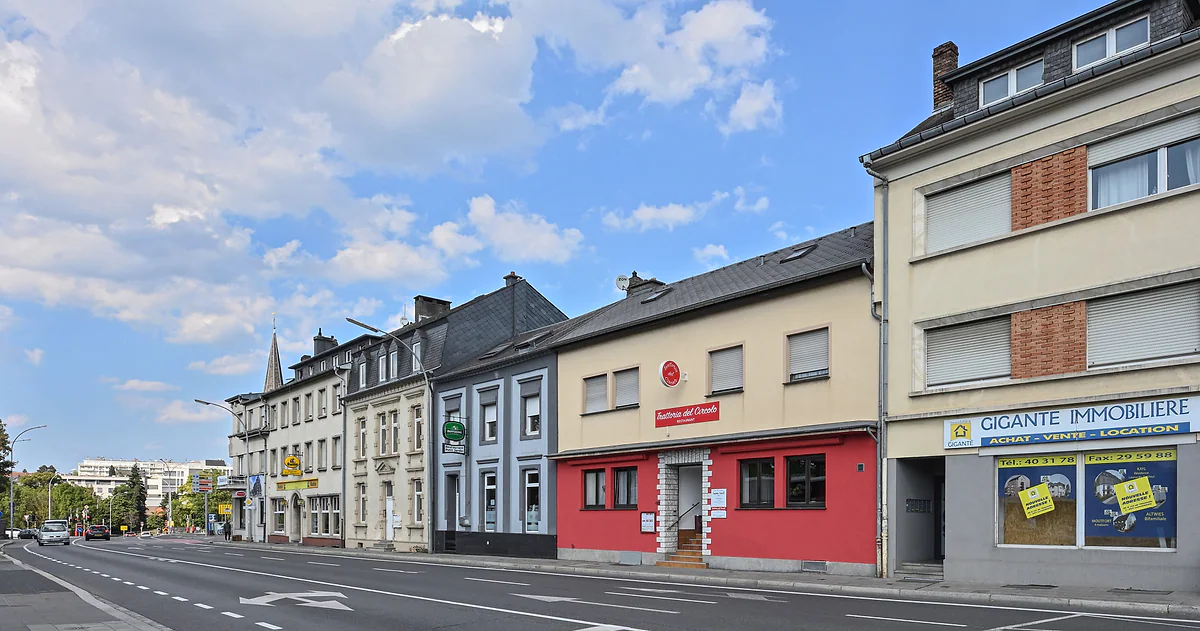
Museum in Hollerich
The Tram and Bus Museum, Luxembourg City's transport story
Luxembourg City's Tram and Bus Museum, the Tramsmusée, is at 63 rue de Bouillon in Hollerich, next to the city bus department. It opens only on Thursdays from 13:30 to 17:30 and on Saturdays, Sundays and public holidays from 10:00 to 18:00, and admission is free. Inside are working electric trams, a horse-drawn tram replica, old buses and precise scale models.
In 30 seconds
Full read: 2 min
- The Tram and Bus Museum is at 63 rue de Bouillon in Hollerich, Luxembourg City.
- It opens Thursdays 13:30-17:30 and Saturdays, Sundays and public holidays 10:00-18:00.
- Admission is free, and so is the bus there.
- It tells the story of the city's transport, from horse-drawn trams in 1875 to buses.
It's a small, enthusiast-run sort of museum and best enjoyed as that. For children who love anything with wheels, or anyone curious about the city before the car took over, I think it's a cracking free Saturday morning, bus ride included. Just don't turn up on a Wednesday, because it's shut.

Before you go
What I would keep in mind
-
01 To save money
Free museum, free bus
Admission costs nothing and neither does the bus to the door, since public transport has been free across Luxembourg since 1 March 2020.
Luxembourg free public transport -
02 My tip
Three days a week only
Thursdays 13:30-17:30 plus Saturdays, Sundays and public holidays 10:00-18:00. Closed on 1 November. Guided tours are by appointment.
-
03 Getting there
Old trams, then the new one
Afterwards, ride today's T1 tram, which crosses the city from Stadion to the airport in 16 km and 24 stops. It's the natural way to round off the visit.
Luxembourg tram -
04 Most beautiful
One-eighth-scale models
For the city's millennium in 1963 and the last electric tram run in 1964, the municipal workshops built strikingly accurate 1:8 models of the trams.
museums in Luxembourg
If you arrive in Luxembourg on the tram from Findel, you might assume trams are a new idea here. They aren’t. For the best part of a century, horse-drawn and then electric trams ran through the capital, until buses took over in 1964. The Tram and Bus Museum, known locally as the Tramsmusée, keeps what survived in a shed in Hollerich. It’s free, charming and open for very few hours a week.
A century of trams, in three dates
The City of Luxembourg sums it up neatly. From 1875 to 1908 the capital had a horse-drawn tram network of about 3 km. In August 1908 an electric network opened and replaced the old infrastructure entirely. On 5 September 1964 the electric trams gave way to buses.
That’s when the collection began. In the early 1960s, with the end of the trams in sight, the city transport department started holding on to vehicles. For the millennium celebrations in 1963 and the final electric run in 1964, its workshops built remarkably accurate models of the trams at one-eighth scale, and more models of trams and buses followed. The museum opened to the public in Hollerich in 1991.
What’s inside
According to the City, you’ll find two working electric trams, a full-size replica of a horse-drawn tram, vintage buses and a Ford wagon once used to maintain the overhead lines. Around them are conductors’ uniforms, tickets, ticket punches, maps and plans, plus several thousand documents and photos charting how the city has moved since 1875. The City’s page also lists technical details of buses such as a 1957 Büssing and a 1959 AEC.
I like it because nothing hides behind glass. The museum’s guides can show you an engine running up close and how a tram actually travels along its tracks, and there are plenty of technical drawings for anyone who wants the nuts and bolts. It’s small, and you can tell it sits right next to the city’s working bus depot.
Once your dates are set, check which hotels are still free in Luxemburgo before prices climb.
When can you actually get in?
This is the catch. Opening is limited to Thursday afternoons, 13:30 to 17:30, plus weekends and bank holidays, 10:00 to 18:00. On 1 November it stays shut, and guided tours are by appointment over the phone. Admission is free. visitluxembourg warns that hours can change, so I’d check before setting off, especially on a short city break where a wasted trip hurts.
Getting to Hollerich
The museum is at 63 rue de Bouillon, beside the offices of the city’s bus department in Hollerich. The City lists bus lines 10, 22 and 24 to the P+R Bouillon Quai 1 stop, and the ride costs nothing thanks to free public transport in Luxembourg. No ticket machines, no contactless, no fuss.
I’d make a day of it. Museum in the morning, then the modern Luxembourg tram in the afternoon, which covers 16 km and 24 stops between Stadion and the airport and first crossed the Red Bridge in 2018. With children, I’d add it to the list of ideas in Luxembourg with kids, and if you’re hungry for more, my guide to museums in Luxembourg ranks the rest of the capital.
Once your dates are set, check which hotels are still free in Luxemburgo before prices climb.
If you would rather have a local show you round, book a guided tour in Tram and Bus Museum and choose by the reviews.
A car frees you from timetables: search car hire in Luxembourg on DiscoverCars and compare companies.
So you do not pay over the odds, look at trains, coaches and flights to Luxembourg on Omio and pick the one that suits you.
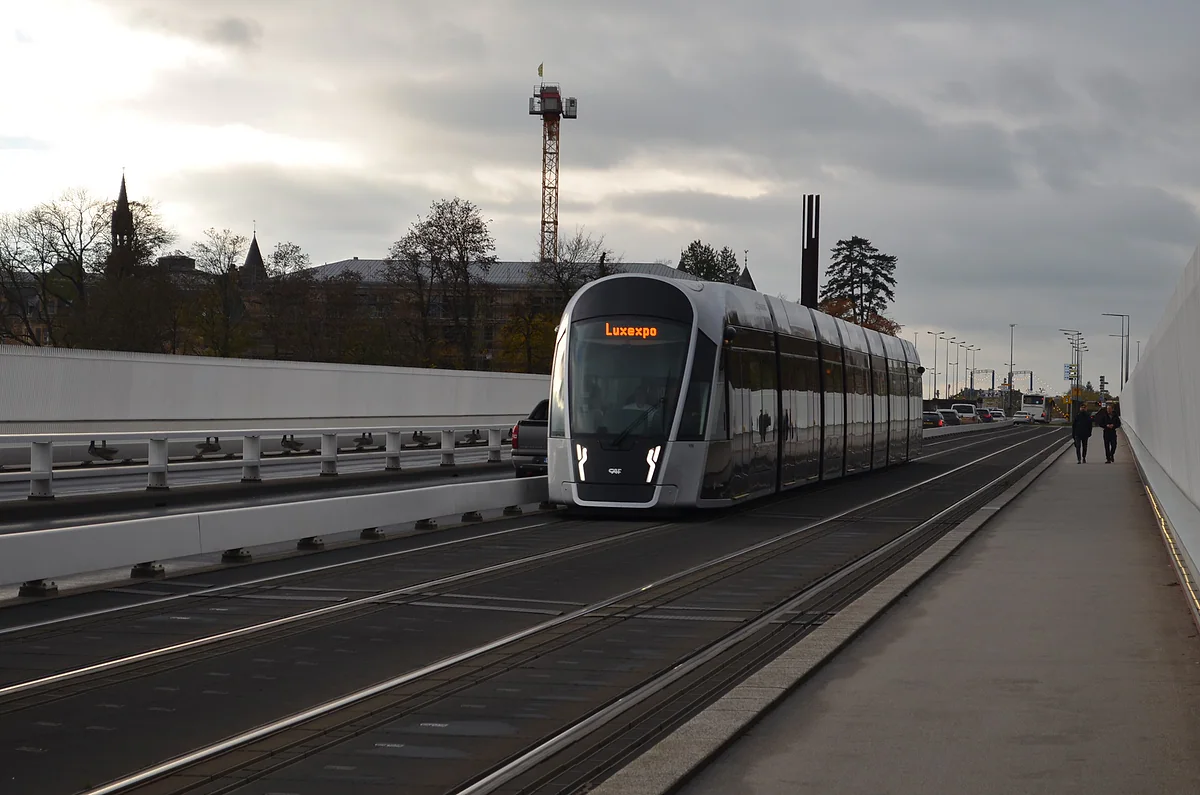
A line T1 tram bound for Luxexpo crossing the Grand Duchess Charlotte Bridge under a grey sky
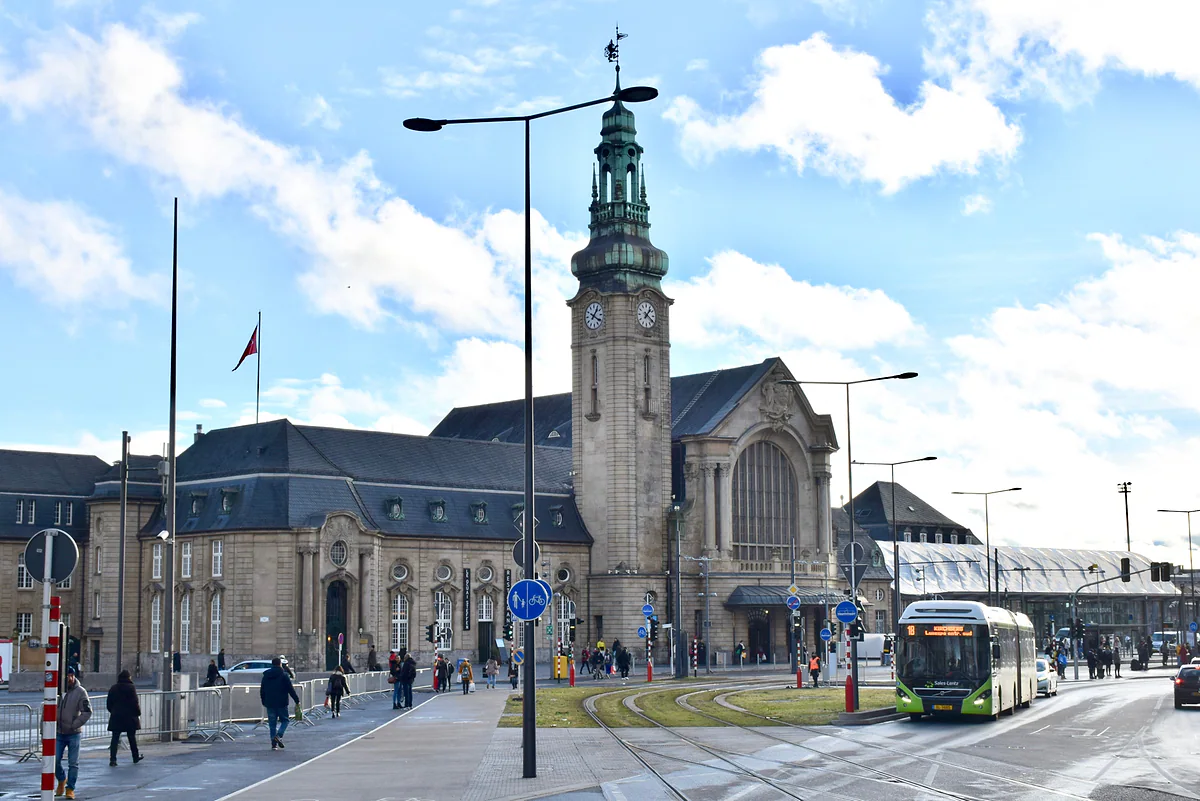
Luxembourg central station with its clock tower, Place de la Gare and the tram stop in front
Hours, admission and access
| What | Detail |
|---|---|
| Address | 63 rue de Bouillon, L-1248 Luxembourg (Hollerich) |
| Thursday | 13:30-17:30 |
| Saturday, Sunday and public holidays | 10:00-18:00 |
| Monday, Tuesday, Wednesday and Friday | Closed |
| Annual closure | 1 November |
| Admission | Free |
| Guided tours | By appointment, tel. +352 4796-2385 |
| Bus | Lines 10, 22 and 24, P+R Bouillon Quai 1 stop |
vdl.lu, LCTO and visitluxembourg (week of 1 to 4 October 2026), checked on 30-09-2026. visitluxembourg notes that hours can change.
Test yourself
True or false?
0/3 Pick before you peek.
-
Luxembourg City lost its trams in 1964.
See the answer
True. On 5 September 1964 buses replaced the electric trams, which had run since August 1908.
-
The tram museum is open every day of the week.
See the answer
False. Only Thursday afternoons plus Saturdays, Sundays and public holidays. Monday to Wednesday and Friday it's closed.
-
The museum's scale models were built for the city's millennium.
See the answer
True. The municipal workshops made them at 1:8 scale for the 1963 millennium celebrations and the last electric tram run in 1964.
- Admission
- €0
- First horse-drawn tram
- 1875
- Last electric tram
- 1964
- Scale of the models
- 1:8
Map
Where Tram and Bus Museum is
The thick dashed line is the border with Belgium, France and Germany, and the fine ones divide the twelve cantons. The Éislek lies to the north and the Moselle to the east. Every number opens its guide.
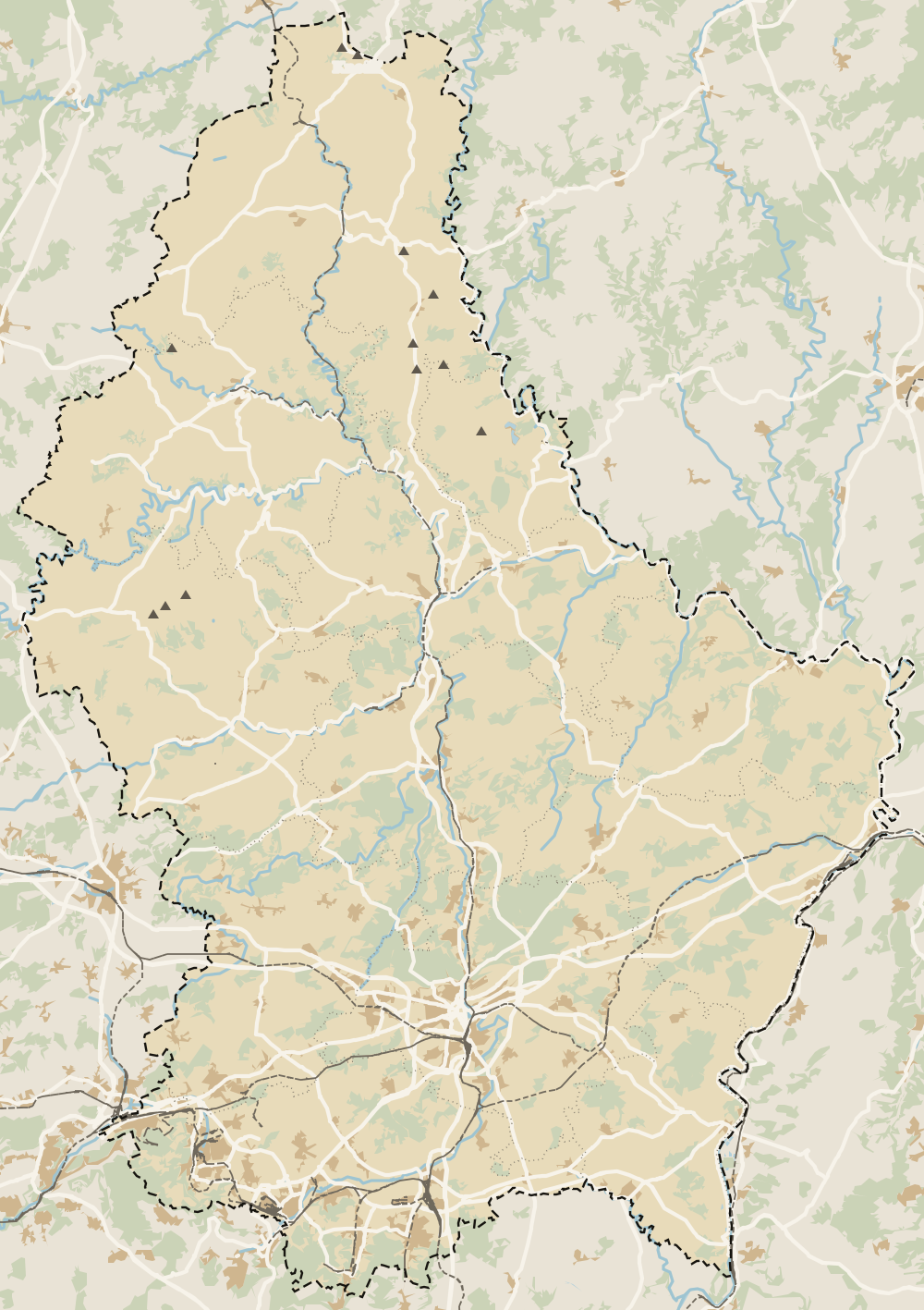 1Ville Haute 2Luxembourg City 3Grund 4Pfaffenthal 5Clausen 6Kirchberg 7Gare 8Hamm 9Luxembourg fortress 10Limpertsberg 11Pulvermühl 12Bonnevoie 13Hollerich 14Gasperich 15Belair 16Merl 17Cents 18Neudorf 19Weimerskirch 20Beggen 21Eich 22Dommeldange 23Mühlenbach 24Pétrusse Valley 25Rollingergrund 26Cessange 27Rham Plateau 28Tram and Bus Museum
 Map data © OpenStreetMap contributors (ODbL)
- 1Ville HauteA district of Luxembourg City
- 2Luxembourg CityCapital of the Grand Duchy
- 3GrundLuxembourg City district on the Alzette
- 4PfaffenthalLuxembourg City district in the Alzette valley
- 5ClausenLuxembourg City district in the Alzette valley
- 6KirchbergLuxembourg City's European and business district
- 7GareLuxembourg City district south of the Pétrusse
- 8HammDistrict on the eastern side of Luxembourg City
- 9Luxembourg fortressUNESCO World Heritage since 1994
- 10LimpertsbergLuxembourg City district north of the Ville Haute
- 11PulvermühlLuxembourg City's smallest district
- 12BonnevoieBonnevoie-Nord / Verlorenkost and Bonnevoie-Sud
- 13HollerichLuxembourg City district west of the Gare
- 14GasperichDistrict in the south of Luxembourg City
- 15BelairResidential district west of the Ville Haute
- 16MerlResidential district on the capital's west side
- 17CentsResidential district east of the city centre
- 18NeudorfAlzette valley district below Kirchberg
- 19WeimerskirchNorthern district on the Alzette valley slope
- 20BeggenDistrict at the northern tip of the capital
- 21EichNorthern district in the Alzette valley
- 22DommeldangeNorthern district with a village centre
- 23MühlenbachNorthern district on the edge of the Bambësch
- 24Pétrusse ValleyPark and walk between the old town and the Gare
- 25RollingergrundNorth-west district, including Belair-Nord
- 26CessangeSouth-west district of the capital
- 27Rham PlateauLuxembourg City fortifications
- 28Tram and Bus MuseumMuseum in Hollerich
0 of 425 Luxembourg guides
Your next stamp
- Hollerich
- Lëtzebuerg City Museum
- Getting around
- Airport to city centre
- Museums in Luxembourg
- Tram
- Buses
- Natur Musée
- A Possen Museum
- American Cemetery
- Ansembourg
- Ansembourg Castles
- Asselborn
- Bascharage
- Beaufort castles
- Belval
- Belval blast furnaces
- Berg Castle
- Bernard-Massard cellars
- Bourglinster Castle
- Bourscheid Castle
- Brandenbourg
- Brandenbourg Castle
- Caves St Martin
- Christmas
- Clervaux Castle
- Echternach
- Echternach Abbey
- Ehnen
- Ehnen Wine Museum
- Esch-sur-Alzette
- Esch-sur-Sûre Castle
- European Museum Schengen
- Fond-de-Gras
- General Patton Museum
- German war cemetery
- Haff Réimech
- Hohllay
- Hollenfels Castle
- Hosingen
- Kautenbach
- Kneiff
- Koerich Castle
- Larochette Castle
- Lasauvage
- Mersch Castle
- Military History Museum
- Moersdorf
- Mondorf Domaine Thermal
- Munsbach Castle
- National Mining Museum
- Parc Merveilleux
- Park Sënnesräich
- Places to visit
- Remich
- Rindschleiden
- Schiessentümpel
- Septfontaines Castle
- Slate Museum
- Stolzembourg
- Tudor Museum
- Useldange Castle
- Valley of the Seven Castles
- Vianden
- Vianden Castle
- Ville Haute
- Wasserbillig Aquarium
- Weiswampach lakes
- Wiltz Castle
- Ahn
- Berdorf
- Bourscheid-Plage
- Butterfly garden
- Clervaux
- Differdange
- Echternach lake
- Grevenmacher
- Heringer Millen
- Hollenfels
- Luxembourg City
- Luxembourg Science Center
- Meysembourg Castle
- Mullerthal
- National Day
- National Resistance Museum
- Perekop
- Remerschen
- Schoenfels Castle
- The Family of Man
- Things to do
- Upper Sûre Lake
- Vianden chairlift
- Wasserbillig
- Clervaux Abbey
- Echternach Roman villa
- Éislek
- Insenborn
- Kallektuffquell
- Machtum
- Most beautiful places
- Our Nature Park
- Pétange
- Pettingen Castle
- Schueberfouer
- Schwebsingen
- Victor Hugo House
- Waldbillig
- Dudelange
- Kuelscheier
- Lultzhausen
- Moselle Valley
- Octave
- Prettiest villages
- Sanem
- Schengen
- Wellenstein
- Wiltz
- Wolfsschlucht
- Beaufort
- Bech-Kleinmacher
- Éimaischen
- Gaalgebierg
- Guttland
- Marnach
- Mondorf-les-Bains
- Putscheid
- Schifflange
- UNESCO World Heritage
- Carnival
- Consdorf
- Ellergronn
- Käerjeng
- Kayl
- Map
- Minett
- Munshausen
- Tandel
- Bech
- Buergbrennen
- Esch-sur-Sûre
- Rumelange
- Where is Luxembourg
- Is it a country?
- Lac de la Haute-Sûre (commune)
- Rosport-Mompach
- Wormeldange
- Larochette
- Mondercange
- Regions
- Bettembourg
- Bock Casemates
- Cantons
- Dancing procession
- Diekirch
- Fischbach
- Garnich
- Mersch
- Moselle wine route
- Ettelbruck
- Grund
- Heffingen
- Kehlen
- Lintgen
- Moselle river cruises
- Pétrusse Casemates
- Towns and villages
- Chemin de la Corniche
- Erpeldange-sur-Sûre
- Junglinster
- Kopstal
- Lorentzweiler
- Nommern
- Pfaffenthal
- Population
- Bissen
- Clausen
- Grand Ducal Palace
- Koerich
- Schieren
- Size
- Vallée de l'Ernz
- Feulen
- Kirchberg
- Languages
- Notre-Dame Cathedral
- Reisdorf
- Steinfort
- Bettendorf
- Habscht
- St Michael's Church
- Helperknapp
- Luxembourgish
- Place Guillaume II
- Name
- Place d'Armes
- History
- Place de la Constitution
- Grand Duke
- Colmar-Berg
- Flaxweiler
- Gare
- Hamm
- Kirchberg funicular
- Luxembourg fortress
- Mamer
- Mertert
- Minett Trail
- Mullerthal Trail
- Neumünster Abbey
- Parc Hosingen
- Pfaffenthal lift
- Political system
- Redange
- The Passerelle
- Wine festivals
- Winseler
- Beckerich
- Biwer
- EU institutions
- Goesdorf
- Limpertsberg
- Mudam
- Pulvermühl
- Stadtbredimus
- Troisvierges
- Wenzel walk
- Bonnevoie
- Bous-Waldbredimus
- Ell
- Flag
- Kiischpelt
- Manternach
- Philharmonie
- Vauban circuit
- Weiswampach
- Betzdorf
- Boulaide
- Dräi Eechelen Museum
- Facts
- Lenningen
- Useldange
- Wincrange
- Bourscheid
- Dalheim
- Gasperich
- Public holidays
- Red Bridge
- Saeul
- Belair
- Second World War
- Vichten
- Battle of the Bulge
- Merl
- Préizerdaul
- Cents
- EU and Schengen
- Groussbus-Wal
- Entry requirements
- Neudorf
- Rambrouch
- Currency and payments
- Mertzig
- Weimerskirch
- Adolphe Bridge
- Beggen
- Escapardenne
- How to get there
- International March of Diekirch
- MNHA (National Museum)
- Rock climbing
- Sandweiler
- Bridges
- Eich
- Flights
- Golf
- Hesperange
- Canoeing and kayaking
- Dommeldange
- Luxembourg airport
- Strassen
- Villa Vauban
- Bertrange
- Casino Luxembourg
- Mühlenbach
- Swimming pools
- From Brussels
- Pétrusse Valley
- Rollingergrund
- Walferdange
- Cessange
- Day trip from Brussels
- Municipal Park
- Steinsel
- Free walking tours
- From Paris
- Niederanven
- From Frankfurt
- Schuttrange
- Sightseeing train and bus
- By train
- Contern
- By coach
- Weiler-la-Tour
- Driving
- Luxembourg in one day
- Pretzel Sunday
- Rham Plateau
- Tour de Luxembourg
- Candlemas (Liichtmëssdag)
- Car hire
- Luxembourg in two days
- Saint-Esprit Plateau
- Luxembourg in three days
- Melusina statue
- Parking
- St Nicholas Day (Kleeschen)
- Fête de la Musique
- Luxembourg in four days
- Petrol
- Place de Clairefontaine
- A week in Luxembourg
- Luxembourg Marathon
- Free public transport
- Parks in Luxembourg City
- Road trip
- Belgium and Luxembourg
- Viewpoints
- Trains
- Luxembourg station
- Cycling
- LuxembourgPass
- Prices and budget
- On a budget
- Free things to do
- Mobile and roaming
- Healthcare
- Safety
- Scams
- Tourist information
- Packing list
- Swimming lakes
- With a dog
- Markets
- Tipping
- Shopping
- What to buy
- Shopping centres
- With kids
- For couples
- Playgrounds
- Adventure parks
- Nightlife
- Castles
- Theatres and concert venues
- Leudelange
- Nature parks
- Where to stay
- City-centre hotels
- Hiking
- Nature reserves
- Reckange-sur-Mess
- Hotels near the station
- Roeser
- Frisange
- Hotels in Kirchberg
- Airport hotels
- Dippach
- Hotels in Vianden
- Hotels in Echternach
- Hotels in Clervaux
- Hotels in Mondorf-les-Bains
- Hotels in Esch-sur-Alzette
- Hotels on the Moselle
- Mullerthal hotels
- Upper Sûre lake hotels
- Hotels in Diekirch and Ettelbruck
- Cheap hotels
- Luxury hotels
- Boutique hotels
- Spa hotels
- Family hotels
- Apartments
- Weather
- Youth hostels
- Best time to visit
- Campsites
- Holiday cottages
- In winter
- Castle hotels
- In spring
- Day trips
- In summer
- Around Luxembourg
- In autumn
- Ice skating
- Trier day trip
- Metz day trip
- Arlon day trip
- In January
- In February
- In March
- In April
- In May
- In June
- In July
- In August
- In September
- Food
- In October
- In November
- Where to eat
- In December
- Michelin restaurants
- Cheap eats
- Judd mat Gaardebounen
- Bouneschlupp
- Gromperekichelcher
- Kniddelen
- Quetschentaart
- Rieslingspaschtéit
- Events
- Wine
- Crémant
- Beer
Frequently asked questions
When is the Luxembourg tram museum open?
Thursdays from 13:30 to 17:30, and Saturdays, Sundays and public holidays from 10:00 to 18:00. It's closed on other days and on 1 November. Guided tours can be arranged by appointment.
How much does the Tram and Bus Museum cost?
Nothing. The City of Luxembourg, the LCTO and visitluxembourg all list admission as free.
How do I get to the Tram and Bus Museum?
It's at 63 rue de Bouillon in Hollerich. The City lists bus lines 10, 22 and 24 to the P+R Bouillon Quai 1 stop, and buses are free throughout Luxembourg.
What is there to see at the tram museum?
Two working electric trams, a full-size replica of a horse-drawn tram, vintage buses, a Ford wagon used to maintain the overhead lines, scale models, uniforms, tickets and thousands of documents.
Is the Tram and Bus Museum good for kids?
For children who like vehicles, yes. It's free, doesn't take long and the museum's guides can show an engine running and how a tram moves along its tracks.
When did Luxembourg City have trams before?
Horse-drawn trams ran from 1875 to 1908 on about 3 km of track. Electric trams arrived in August 1908 and were replaced by buses on 5 September 1964.
By
Tourism graduate with a master’s in Tourism Management and Planning from the University of Málaga, who has travelled across Europe. He writes every guide from official sources and his own judgement.
Published on . Updated on . Facts checked on .
Sources
Some links in this guide are affiliate links: if you book through them, the site earns a commission at no extra cost to you. Affiliate disclosure
Photos: Cayambe (CC BY-SA 4.0); Procrastineur49 (CC0); Zinneke (CC BY-SA 3.0), via Wikimedia Commons.