EU, euro and the Schengen area
Is Luxembourg in the EU? Yes, since day one
Yes, Luxembourg is in the European Union, and has been from the start. It's been a member since 1 January 1958 as one of the six founders, has used the euro since 1 January 1999 and joined the Schengen area on 26 March 1995. For British visitors that means Schengen rules apply, including the 90-day limit and the new EES border checks.
For a British visitor, the Schengen side matters more than the EU side. I'd count your days if you're combining Luxembourg with other Schengen countries, check your passport's issue date and allow extra time at the border while the EES beds in.

Before you go
What I would keep in mind
-
01 Most beautiful
The village that named Schengen
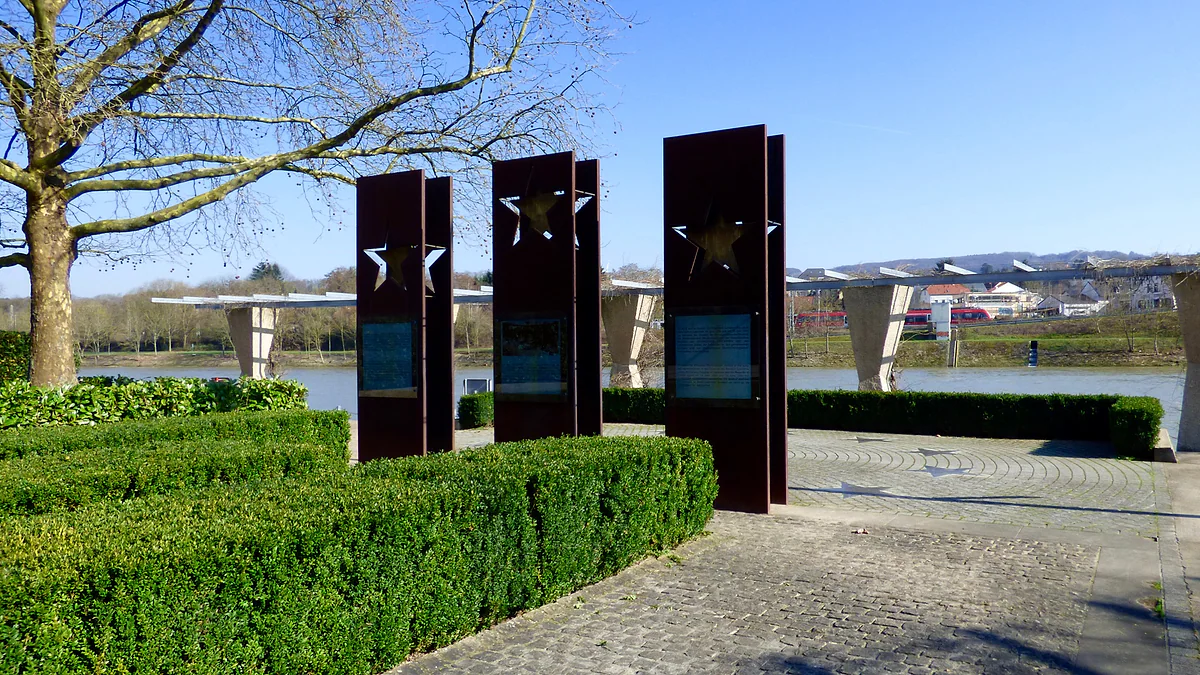
The agreement was signed on 14 June 1985 aboard the Princesse Marie-Astrid, moored at Schengen, where Luxembourg, Germany and France meet. The site has held the European Heritage Label since 2017.
Schengen village -
02 Getting there
Schengen rules for UK passports
gov.uk says your passport must have been issued less than 10 years before you arrive and be valid for at least 3 months after you leave the Schengen area. You can stay 90 days in any 180 without a visa.
Luxembourg entry requirements -
03 Money
Euros, not pounds
Luxembourg has used the euro since 1999. If a card machine offers to charge you in pounds, I'd always choose euros and let your own bank do the conversion.
Luxembourg currency -
04 My tip
Luxembourgish isn't an EU language
The country has three languages, but only two count as EU official languages, French and German. Luxembourgish, the national language, isn't one of them.
Luxembourgish language
The short answer is yes, and from day one. Luxembourg is one of the six countries that founded what is now the European Union, its capital shares EU seat status with Brussels and Strasbourg, and one of its villages gave its name to the borderless Schengen area. For a British traveller the more useful half of that sentence is the Schengen part, because it decides how long you can stay and what happens at the border. Here’s the detail.
A founder of the EU, the euro and Schengen
According to the EU’s own website, Luxembourg has been a member state since 1 January 1958, in the eurozone since 1 January 1999 and in the Schengen area since 26 March 1995. Before that it had signed the Treaties of Rome in 1957 alongside France, Germany, Italy, Belgium and the Netherlands, and in 1952 it took in the High Authority of the ECSC, forerunner of today’s EU.
Its institutional weight is huge for its size. The capital hosts EU institutions alongside Brussels and Strasbourg, and the country elects 6 MEPs. Christophe Hansen, in charge of Agriculture and Food, is the commissioner it nominated. It has held the Council presidency twelve times since 1960, most recently from July to December 2015, and the official calendar has the next one from January to June 2029. Which institutions are there and which you can visit is covered in EU institutions in Luxembourg.
Schengen is a village before it’s a rulebook
I love this detail. Schengen isn’t a bit of Brussels jargon; it’s a wine village on the Moselle where Luxembourg, Germany and France meet. The agreement was signed there on 14 June 1985 aboard the Princesse Marie-Astrid, moored on the river. The implementing convention followed on 19 June 1990 and came into force in 1995, and the site has carried the European Heritage Label since 2017. The village has its own page, Schengen village, and the museum and monument have theirs in European Museum Schengen.
Once your dates are set, check which hotels are still free in Luxembourg before prices climb.
Benelux, Europe before Europe
Before the EU there was Benelux. The customs convention between Belgium, the Netherlands and Luxembourg was signed in 1944, while the governments were in exile in London, and came into force on 1 January 1948. The Benelux Economic Union followed in 1958, and since a treaty of 17 June 2008 it has been the Benelux Union. Luxembourg already had its own economic union with Belgium from 1921.
A language quirk few people know
The country has three administrative languages but uses only two with the EU. The EU official languages that correspond to Luxembourg are French and German. Luxembourgish, which the constitution names as the language of the country, isn’t among them. What it sounds like, and a few words to try, is in Luxembourgish language.
Once your dates are set, check which hotels are still free in Luxembourg before prices climb.
What it means if you’re travelling from the UK
Since Brexit, the rules that matter are Schengen’s. gov.uk sets two passport tests, an issue date no more than 10 years old on arrival and at least 3 months of validity left after your planned exit from Schengen. Passports renewed before 1 October 2018 can fall foul of the first rule even if they haven’t expired. The visa-free limit is 90 days in every 180, and time in France, Germany or any other Schengen country counts towards the same total. Officers may also want to see where you are staying, your travel insurance, a ticket home and proof you can pay for the trip. The full checklist is in Luxembourg entry requirements.
At the border you’ll meet the EES, the EU’s Entry/Exit System, which gov.uk says is now being implemented across Schengen. Your first crossing may involve giving fingerprints and a photo; there’s no charge, the registration covers you for three years, and children aged 11 or younger skip the fingerprints. If you travel by Eurostar from St Pancras, the checks happen before you leave London.
The rest is practical. You’ll pay in euros. UK mobile networks no longer have to offer free roaming in the EU, so check your provider’s policy before you go. And for healthcare you’ll need a GHIC or EHIC plus travel insurance, since gov.uk is clear the card is no substitute for it. How the card works on the ground is explained in GHIC Luxembourg. One more thing, gov.uk mentions temporary border controls on entry into Germany, worth knowing if you plan a day trip to Trier.
If you would rather have a local show you round, book a guided tour in Luxembourg and choose by the reviews.
A car frees you from timetables: search car hire in Luxembourg on DiscoverCars and compare companies.
So you do not pay over the odds, look at trains, coaches and flights to Luxembourg on Omio and pick the one that suits you.
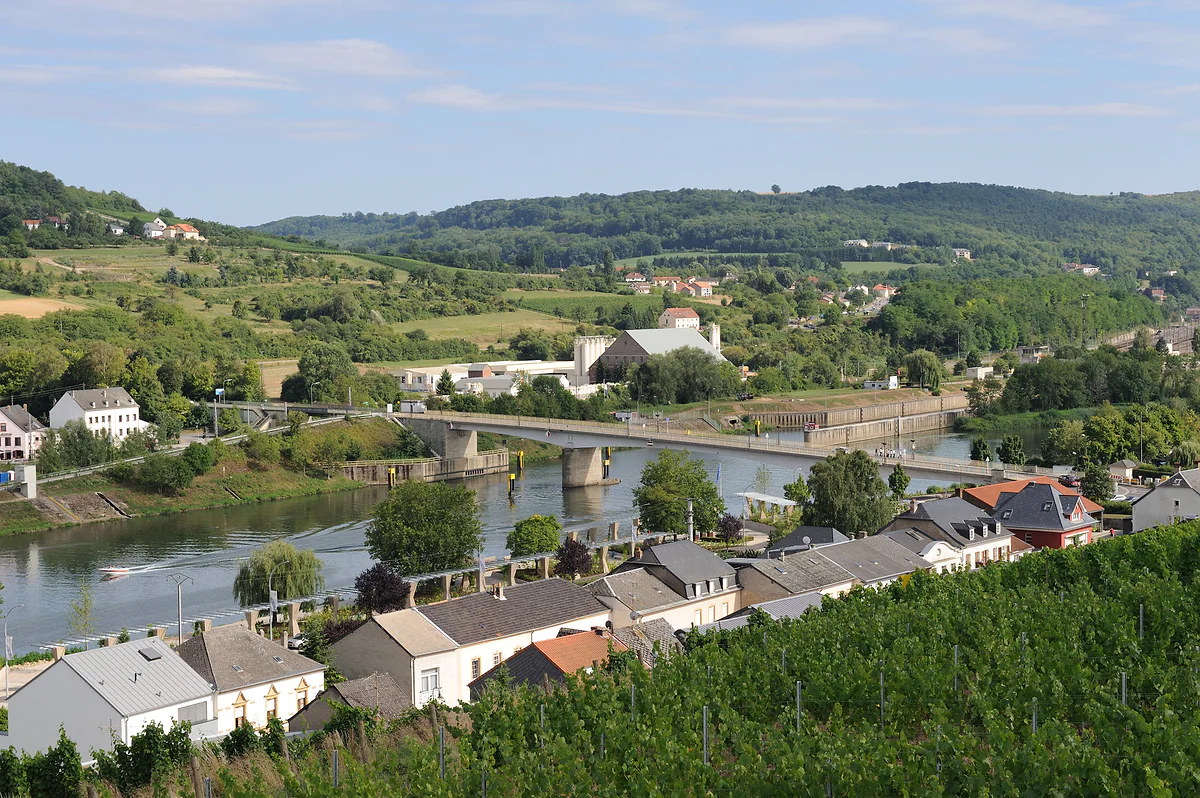
Schengen and the Moselle seen from the Markusberg, with the bridge to Germany and France beyond among vineyards
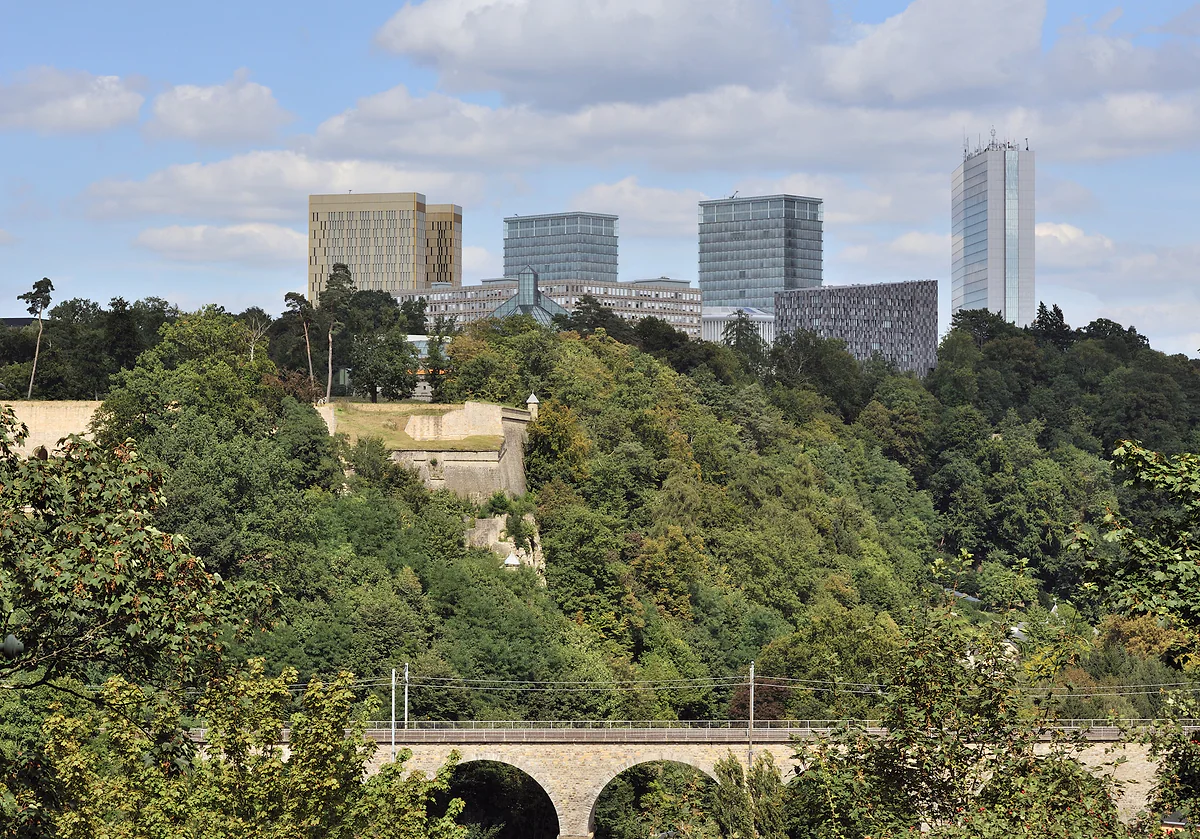
The office towers of Kirchberg above a wooded slope, with a stone railway viaduct in the foreground
Luxembourg in the European Union
| Fact | Detail |
|---|---|
| EU member | Since 1-1-1958, a founder |
| Euro | Since 1-1-1999 |
| Schengen area | Since 26-3-1995 |
| EU official languages it uses | French and German |
| MEPs | 6, single national constituency |
| European Commissioner | Christophe Hansen, Agriculture and Food |
| Seat of EU institutions | One of three, with Brussels and Strasbourg |
| Council presidencies | 12 since 1960; next from January to June 2029 |
From european-union.europa.eu and luxembourg.public.lu, checked on 29-09-2026.
What it means for a British visitor
| Topic | What applies |
|---|---|
| Passport | Issued under 10 years before arrival; valid 3 months after leaving Schengen |
| Visa-free stay | Up to 90 days in any 180-day period, across all Schengen countries |
| Border checks | EES biometric registration; free, record valid 3 years |
| Currency | Euro |
| Mobile roaming | Not guaranteed free; depends on your UK network |
| Healthcare | GHIC or EHIC for necessary state care, plus travel insurance |
| Cash | Declare €10,000 or more |
UK rules from gov.uk (Luxembourg travel advice, updated 11-08-2026, and roaming guidance).
Test yourself
True or false?
0/4 Pick before you peek.
-
Luxembourg joined the EU in the 1990s.
See the answer
False. It's a founding member, in since 1 January 1958. What came in the 1990s was Schengen, in 1995, and the euro, in 1999.
-
Luxembourgish is one of the EU's official languages.
See the answer
False. Luxembourg uses French and German at EU level. Luxembourgish is its national language but not an official EU language.
-
The Schengen Agreement was signed on a boat.
See the answer
True. It was signed on 14 June 1985 aboard the Princesse Marie-Astrid, moored at Schengen on the Moselle.
-
Days spent in France or Germany count towards your 90 days in Luxembourg.
See the answer
True. gov.uk says the 90-day limit covers your whole visit to the Schengen area, including time in other Schengen countries in the previous 180 days.
0 of 425 Luxembourg guides
Your next stamp
- Entry requirements
- Schengen
- Where is Luxembourg
- Is it a country?
- History
- Currency and payments
- Luxembourg fortress
- A Possen Museum
- American Cemetery
- Ansembourg
- Ansembourg Castles
- Asselborn
- Bascharage
- Beaufort castles
- Belval
- Belval blast furnaces
- Berg Castle
- Bernard-Massard cellars
- Bourglinster Castle
- Bourscheid Castle
- Brandenbourg
- Brandenbourg Castle
- Caves St Martin
- Christmas
- Clervaux Castle
- Echternach
- Echternach Abbey
- Ehnen
- Ehnen Wine Museum
- Esch-sur-Alzette
- Esch-sur-Sûre Castle
- European Museum Schengen
- Fond-de-Gras
- General Patton Museum
- German war cemetery
- Haff Réimech
- Hohllay
- Hollenfels Castle
- Hosingen
- Kautenbach
- Kneiff
- Koerich Castle
- Larochette Castle
- Lasauvage
- Mersch Castle
- Military History Museum
- Moersdorf
- Mondorf Domaine Thermal
- Munsbach Castle
- National Mining Museum
- Parc Merveilleux
- Park Sënnesräich
- Places to visit
- Remich
- Rindschleiden
- Schiessentümpel
- Septfontaines Castle
- Slate Museum
- Stolzembourg
- Tudor Museum
- Useldange Castle
- Valley of the Seven Castles
- Vianden
- Vianden Castle
- Ville Haute
- Wasserbillig Aquarium
- Weiswampach lakes
- Wiltz Castle
- Ahn
- Berdorf
- Bourscheid-Plage
- Butterfly garden
- Clervaux
- Differdange
- Echternach lake
- Grevenmacher
- Heringer Millen
- Hollenfels
- Luxembourg City
- Luxembourg Science Center
- Meysembourg Castle
- Mullerthal
- National Day
- National Resistance Museum
- Perekop
- Remerschen
- Schoenfels Castle
- The Family of Man
- Things to do
- Upper Sûre Lake
- Vianden chairlift
- Wasserbillig
- Clervaux Abbey
- Echternach Roman villa
- Éislek
- Insenborn
- Kallektuffquell
- Machtum
- Most beautiful places
- Our Nature Park
- Pétange
- Pettingen Castle
- Schueberfouer
- Schwebsingen
- Victor Hugo House
- Waldbillig
- Dudelange
- Kuelscheier
- Lultzhausen
- Moselle Valley
- Octave
- Prettiest villages
- Sanem
- Wellenstein
- Wiltz
- Wolfsschlucht
- Beaufort
- Bech-Kleinmacher
- Éimaischen
- Gaalgebierg
- Guttland
- Marnach
- Mondorf-les-Bains
- Putscheid
- Schifflange
- UNESCO World Heritage
- Carnival
- Consdorf
- Ellergronn
- Käerjeng
- Kayl
- Map
- Minett
- Munshausen
- Tandel
- Bech
- Buergbrennen
- Esch-sur-Sûre
- Rumelange
- Lac de la Haute-Sûre (commune)
- Rosport-Mompach
- Wormeldange
- Larochette
- Mondercange
- Regions
- Bettembourg
- Bock Casemates
- Cantons
- Dancing procession
- Diekirch
- Fischbach
- Garnich
- Mersch
- Moselle wine route
- Ettelbruck
- Grund
- Heffingen
- Kehlen
- Lintgen
- Moselle river cruises
- Pétrusse Casemates
- Towns and villages
- Chemin de la Corniche
- Erpeldange-sur-Sûre
- Junglinster
- Kopstal
- Lorentzweiler
- Nommern
- Pfaffenthal
- Population
- Bissen
- Clausen
- Grand Ducal Palace
- Koerich
- Schieren
- Size
- Vallée de l'Ernz
- Feulen
- Kirchberg
- Languages
- Notre-Dame Cathedral
- Reisdorf
- Steinfort
- Bettendorf
- Habscht
- St Michael's Church
- Helperknapp
- Luxembourgish
- Place Guillaume II
- Name
- Place d'Armes
- Place de la Constitution
- Grand Duke
- Colmar-Berg
- Flaxweiler
- Gare
- Hamm
- Kirchberg funicular
- Mamer
- Mertert
- Minett Trail
- Mullerthal Trail
- Neumünster Abbey
- Parc Hosingen
- Pfaffenthal lift
- Political system
- Redange
- The Passerelle
- Wine festivals
- Winseler
- Beckerich
- Biwer
- EU institutions
- Goesdorf
- Limpertsberg
- Mudam
- Natur Musée
- Pulvermühl
- Stadtbredimus
- Troisvierges
- Wenzel walk
- Bonnevoie
- Bous-Waldbredimus
- Ell
- Flag
- Kiischpelt
- Manternach
- Philharmonie
- Vauban circuit
- Weiswampach
- Betzdorf
- Boulaide
- Dräi Eechelen Museum
- Facts
- Hollerich
- Lenningen
- Useldange
- Wincrange
- Bourscheid
- Dalheim
- Gasperich
- Public holidays
- Red Bridge
- Saeul
- Belair
- Second World War
- Vichten
- Battle of the Bulge
- Merl
- Préizerdaul
- Cents
- Groussbus-Wal
- Neudorf
- Rambrouch
- Mertzig
- Weimerskirch
- Adolphe Bridge
- Beggen
- Escapardenne
- How to get there
- International March of Diekirch
- MNHA (National Museum)
- Rock climbing
- Sandweiler
- Bridges
- Eich
- Flights
- Golf
- Hesperange
- Lëtzebuerg City Museum
- Canoeing and kayaking
- Dommeldange
- Luxembourg airport
- Strassen
- Villa Vauban
- Airport to city centre
- Bertrange
- Casino Luxembourg
- Mühlenbach
- Swimming pools
- From Brussels
- Pétrusse Valley
- Rollingergrund
- Walferdange
- Cessange
- Day trip from Brussels
- Municipal Park
- Steinsel
- Free walking tours
- From Paris
- Niederanven
- From Frankfurt
- Schuttrange
- Sightseeing train and bus
- By train
- Contern
- By coach
- Weiler-la-Tour
- Driving
- Luxembourg in one day
- Pretzel Sunday
- Rham Plateau
- Tour de Luxembourg
- Candlemas (Liichtmëssdag)
- Car hire
- Luxembourg in two days
- Saint-Esprit Plateau
- Luxembourg in three days
- Melusina statue
- Parking
- St Nicholas Day (Kleeschen)
- Fête de la Musique
- Luxembourg in four days
- Museums in Luxembourg
- Petrol
- Place de Clairefontaine
- A week in Luxembourg
- Getting around
- Luxembourg Marathon
- Tram and Bus Museum
- Free public transport
- Parks in Luxembourg City
- Road trip
- Belgium and Luxembourg
- Tram
- Buses
- Viewpoints
- Trains
- Luxembourg station
- Cycling
- LuxembourgPass
- Prices and budget
- On a budget
- Free things to do
- Mobile and roaming
- Healthcare
- Safety
- Scams
- Tourist information
- Packing list
- Swimming lakes
- With a dog
- Markets
- Tipping
- Shopping
- What to buy
- Shopping centres
- With kids
- For couples
- Playgrounds
- Adventure parks
- Nightlife
- Castles
- Theatres and concert venues
- Leudelange
- Nature parks
- Where to stay
- City-centre hotels
- Hiking
- Nature reserves
- Reckange-sur-Mess
- Hotels near the station
- Roeser
- Frisange
- Hotels in Kirchberg
- Airport hotels
- Dippach
- Hotels in Vianden
- Hotels in Echternach
- Hotels in Clervaux
- Hotels in Mondorf-les-Bains
- Hotels in Esch-sur-Alzette
- Hotels on the Moselle
- Mullerthal hotels
- Upper Sûre lake hotels
- Hotels in Diekirch and Ettelbruck
- Cheap hotels
- Luxury hotels
- Boutique hotels
- Spa hotels
- Family hotels
- Apartments
- Weather
- Youth hostels
- Best time to visit
- Campsites
- Holiday cottages
- In winter
- Castle hotels
- In spring
- Day trips
- In summer
- Around Luxembourg
- In autumn
- Ice skating
- Trier day trip
- Metz day trip
- Arlon day trip
- In January
- In February
- In March
- In April
- In May
- In June
- In July
- In August
- In September
- Food
- In October
- In November
- Where to eat
- In December
- Michelin restaurants
- Cheap eats
- Judd mat Gaardebounen
- Bouneschlupp
- Gromperekichelcher
- Kniddelen
- Quetschentaart
- Rieslingspaschtéit
- Events
- Wine
- Crémant
- Beer
Frequently asked questions
Is Luxembourg in the EU?
Yes. It's one of the six founding members and has been in the EU since 1 January 1958. Its capital is also one of the EU's three seats, with Brussels and Strasbourg.
Is Luxembourg in the Schengen area?
Yes, since 26 March 1995. The agreement itself is named after Schengen, a Luxembourg village on the Moselle where it was signed on 14 June 1985.
Does Luxembourg use the euro?
Yes, since 1 January 1999. You'll need euros rather than pounds, and cards are the easiest way to pay.
Do UK citizens need a visa for Luxembourg?
Not for short stays. gov.uk says you can visit the Schengen area, which includes Luxembourg, for up to 90 days in any 180-day period without a visa, as a tourist or for business meetings or events.
Does the EES apply when I go to Luxembourg?
Yes. gov.uk says the EU's Entry/Exit System is being implemented across Schengen, so on your first entry you may register fingerprints and a photo. It's free and the record lasts three years.
Is Luxembourg part of Benelux?
Yes. The customs convention with Belgium and the Netherlands was signed in 1944, with the governments in exile in London, and came into force on 1 January 1948. It has been the Benelux Union since 2008.
By
Tourism graduate with a master’s in Tourism Management and Planning from the University of Málaga, who has travelled across Europe. He writes every guide from official sources and his own judgement.
Published on . Facts checked on .
Sources
Some links in this guide are affiliate links: if you book through them, the site earns a commission at no extra cost to you. Affiliate disclosure
Photos: Denise Hastert (CC BY-SA 4.0); Cayambe (CC BY-SA 3.0); Cayambe (CC BY-SA 3.0), via Wikimedia Commons.