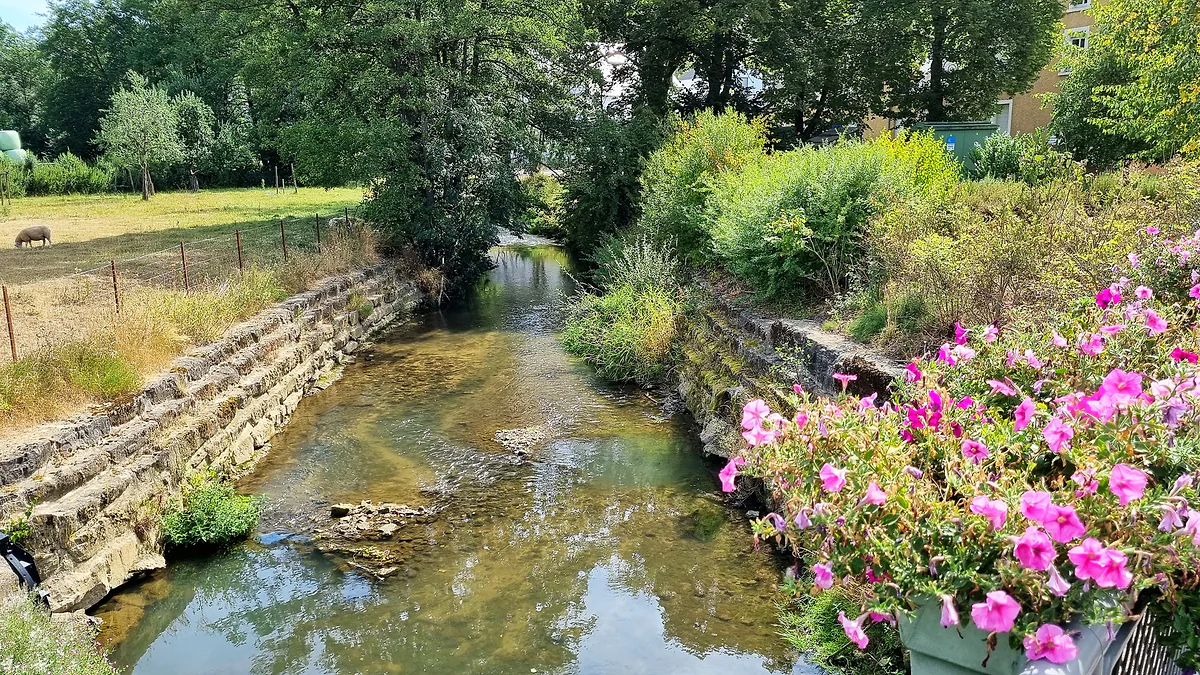
Canton of Capellen, Eisch valley
Habscht, the young commune of the upper Eisch valley
Habscht is a commune in the canton of Capellen, created on 1 January 2018 when Hobscheid and Septfontaines (Simmern) merged. It had 5,337 residents on 1 January 2026 across eight villages, including Eischen, Hobscheid and Septfontaines. It holds the private Septfontaines Castle, one of the Valley of the Seven Castles, and a cycle path along the old Attert railway line.
In 30 seconds
Full read: 3 min
- Habscht was formed in 2018 from Hobscheid and Septfontaines.
- It has 5,337 residents and eight villages in the Eisch valley.
- Septfontaines Castle is private; you see it from outside.
- A cycle path follows the old Attert railway line.
Habscht suits people exploring the Eisch valley by bike or on foot. Septfontaines Castle takes ten minutes from the outside, so I'd combine it with a ride along the old railway path, or with the village treasure hunt if you've children in tow.

Before you go
What I would keep in mind
-
01 Most beautiful
A Renaissance tower over the village
Septfontaines Castle keeps the tower Christophe de Criechingen added in 1600. It's private and can't be visited, but you get a good view from the village and the drive's viewpoints.
Septfontaines Castle -
02 Getting there
Cycle the old Attert line
A cycle path along the Attert railway, closed in 1969, opened on 12 May 1989, according to the commune. It's my favourite way to see the valley.
cycling in Luxembourg -
03 My tip
A knight's test for children
visitluxembourg sets families six puzzles around Septfontaines village, starting at the church, to pass a knight's test. The sheet is a free PDF.
Luxembourg with kids
Habscht is a new name for an old landscape. The commune has only existed since 1 January 2018, when Hobscheid and Septfontaines, Simmern in Luxembourgish, merged after residents voted yes in a November 2014 referendum with 59.73%. It now has 5,337 residents, according to STATEC, across eight villages in the upper Eisch valley, in the canton of Capellen.
Ermesinde and the abbey that ended up in Belgium
The timeline the commune publishes begins in the 13th century with Countess Ermesinde, who granted charters of freedom to Eischen and Hobscheid, releasing villagers from feudal labour, and founded the Cistercian abbey of Clairefontaine nearby, where she was buried in 1246. That’s why her crown and the springs feature on the old commune’s coat of arms. French revolutionary soldiers set the abbey alight in 1794, and at the third partition of the country, on 19 August 1839, Clairefontaine went to Belgium. Eischen suddenly found itself a border village.
There had been other borders before that one. Under French rule the duchy was annexed as the Département des Forêts, and in 1795 Hobscheid belonged to the canton of Arlon. On 16 October 1830, in the heat of the Belgian revolution, tempers in the Hobscheid section ran so high that the houses of the mayor and several councillors were wrecked, and the council shared out the commune’s cash among the villagers. In 1841 it moved to the canton of Capellen, where it remains.
For me, this chronicle is the most interesting thing about Habscht, more than any single monument, because in a few lines it shows how Luxembourg’s western border was drawn.
The railway that turned farmers into workers
The Attert line reached Eischen in 1874, the 690 m Uechtlach tunnel was finished in 1879, and the Pétange to Ettelbruck railway opened on 17 April 1880. The commune describes it as the end of the valley’s isolation, turning a farming population into a working-class one within a few decades, with a glove factory in Eischen from 1888 employing up to 75 people. The line closed in 1969, and on 12 May 1989 a cycle path opened along its route. That’s how I’d see the valley, and there are more routes in cycling in Luxembourg.
To sleep close to everything, search places to stay in Luxembourg on Booking.com and filter by area before price.
Septfontaines Castle
The commune’s big monument is Septfontaines Castle, one of the seven stops in the valley of the seven castles. Its first known lord, Tidier, turns up in a document of 1192, and in 1600 Christophe de Criechingen gave it the heavy Renaissance tower that still guards its northern gate. It’s private and can’t be visited, but you get a good look from the village. The full story is under Septfontaines Castle.
With children, visitluxembourg’s knight’s test is fun, six puzzles around the village starting from the church, downloadable as a PDF.
Hobscheid, Eischen and their past
Hobscheid’s 29 m bell tower dates from 1775, though the church itself was rebuilt in 1979 after a fire on 30 December 1976. The commune also remembers St Roch’s chapel, built in 1867 after the cholera of 1866 killed 70 people in Hobscheid, and the toll of the German occupation, when 42 of those deported from Eischen and Hobscheid died or went missing.
The setting is wooded. The forest owned by the commune alone covers 770.63 hectares, and the commune website links to a network of circular walks.
To sleep close to everything, search places to stay in Luxembourg on Expedia and filter by area before price.
Is Habscht worth a stop?
As a destination in itself, probably not on a first visit. As part of the Eisch valley, yes. I’d come for three things, the Septfontaines tower seen from the village, a stretch of the old railway path by bike, and the story of a border that kept moving, which you can piece together from the commune’s own timeline. Families get a bonus in the knight’s test, which turns a castle you can’t enter into a game.
Staying and getting there
With just two hotels and a campsite in 2025, by STATEC’s count, it’s not much of a base. I’d stay in Luxembourg City and come out by car along the valley drive, or by bike on the old railway path. Buses are free too; check times on mobiliteit.lu. If you’re arriving from Koerich, the Septfontaines to Koerich leg of Visit Guttland’s route is 5.7 km.
If you are short on time, see the best tours in Luxembourg and pick one that fits your day.
Where the bus does not go, a car does: compare car hire in Luxembourg before you arrive rather than at the desk.
If you still need a way in, check the best ticket deals to Luxembourg from where you are.
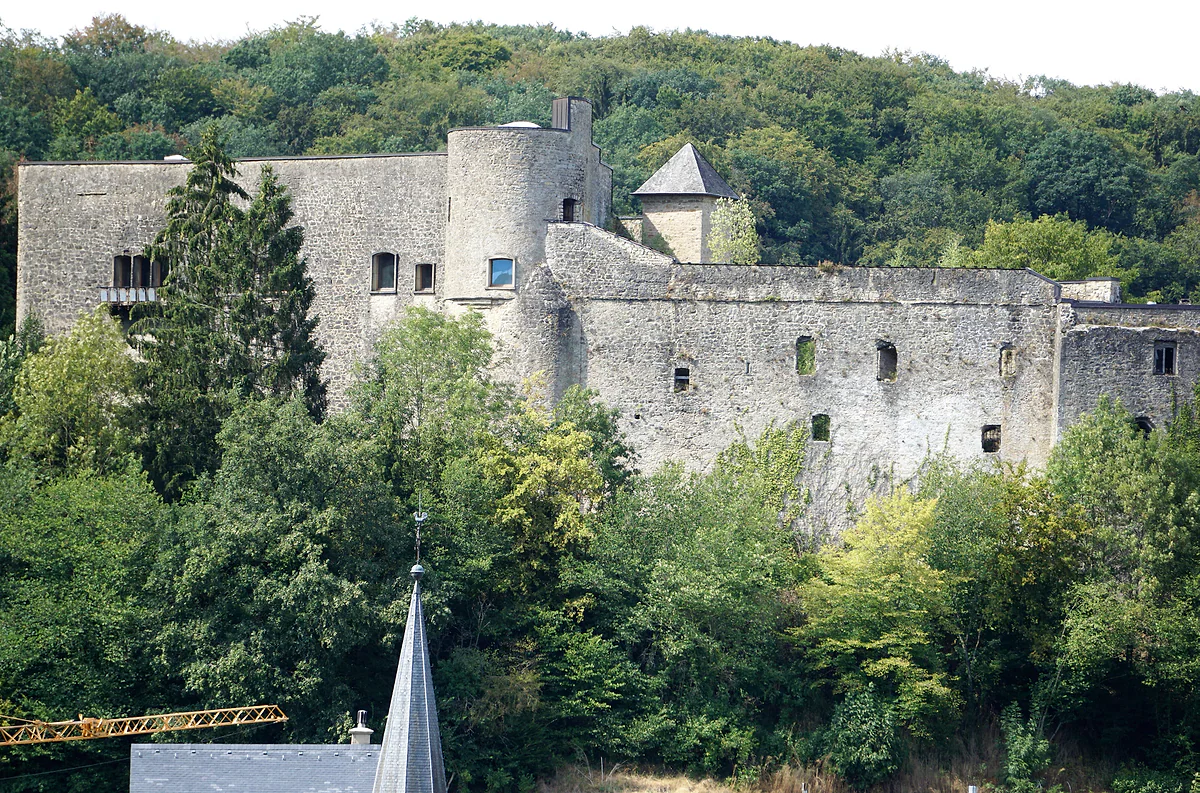
Septfontaines Castle with its walls and round towers above the Eisch valley, surrounded by woodland
Habscht in numbers
| Item | Figure | Source |
|---|---|---|
| Residents, 1 Jan 2026 | 5,337 | STATEC |
| Residents, 1 Jan 2025 | 5,260 | STATEC |
| Official villages | 8 | CACLR |
| Hotels and campsites in 2025 | 2 and 1 | STATEC |
| Commune-owned woodland | 770.63 ha | Habscht commune |
The eight villages are Eischen, Greisch, Hobscheid, Leesbach, Roodt-sur-Eisch, Septfontaines, Simmerfarm and Simmerschmelz.
Key dates in Habscht's history
| Year | What happened |
|---|---|
| 1246 | Countess Ermesinde is buried in Clairefontaine Abbey, which she founded |
| 1775 | Hobscheid's 29 m bell tower goes up |
| 1839 | Third partition; Clairefontaine goes to Belgium and Eischen becomes a border village |
| 1880 | The Pétange to Ettelbruck railway opens through the valley |
| 1989 | Cycle path opens on the line closed in 1969 |
| 2018 | Hobscheid and Septfontaines merge as Habscht |
Timeline from the Habscht commune website, checked on 30 September 2026.
Test yourself
True or false?
0/3 Pick before you peek.
-
Clairefontaine Abbey, founded by Countess Ermesinde, is now in Belgium.
See the answer
True. After the third partition in 1839, Clairefontaine went to Belgium and Eischen became a border village, says the commune.
-
Habscht is one of Luxembourg's oldest communes.
See the answer
False. It dates from 2018, when Hobscheid and Septfontaines merged.
-
Passenger trains still stop at Eischen.
See the answer
False. The old Attert line closed in 1969, and a cycle path opened along its route in 1989.
- Residents on 1 January 2026
- 5,337
- Year of the merger
- 2018
- Yes vote in the 2014 referendum
- 59.73%
- Uechtlach railway tunnel
- 690 m
Map
Where Habscht is
The thick dashed line is the border with Belgium, France and Germany, and the fine ones divide the twelve cantons. The Éislek lies to the north and the Moselle to the east. Every number opens its guide.
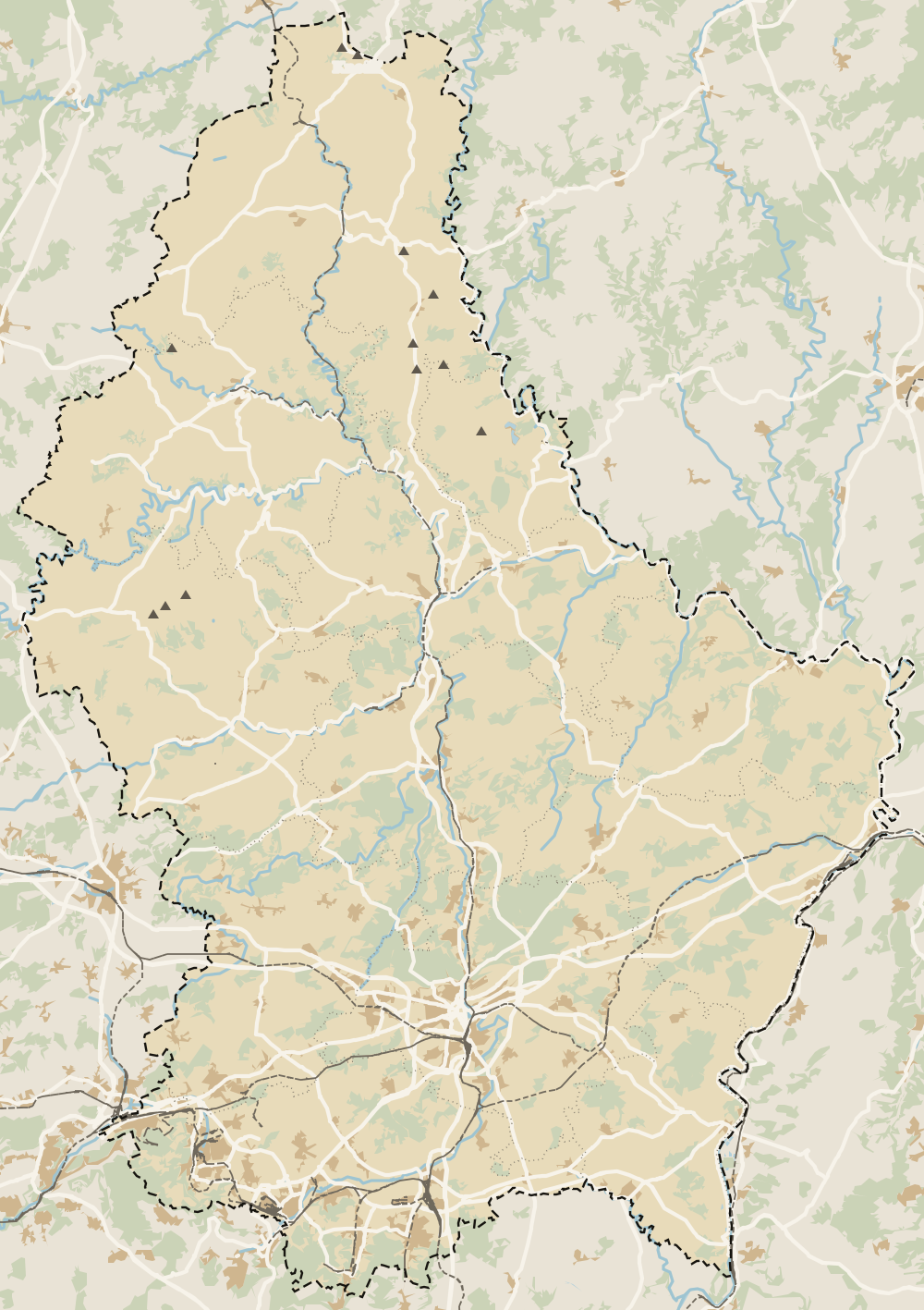 1Valley of the Seven Castles 2Guttland 3Garnich 4Mersch 5Kehlen 6Lintgen 7Kopstal 8Lorentzweiler 9Bissen 10Koerich 11Steinfort 12Habscht 13Helperknapp 14Mamer 15Redange 16Beckerich 17Ell 18Useldange 19Saeul 20Vichten 21Préizerdaul 22Groussbus-Wal 23Rambrouch 24Mertzig 25Sandweiler 26Walferdange 27Steinsel 28Niederanven 29Schuttrange 30Contern 31Weiler-la-Tour
 Map data © OpenStreetMap contributors (ODbL)
- 1Valley of the Seven CastlesEisch valley, Mersch to Koerich
- 2GuttlandTourist region of the centre and west
- 3GarnichCanton of Capellen, Guttland region
- 4MerschCanton of Mersch, Guttland
- 5KehlenCanton of Capellen, Guttland region
- 6LintgenCanton of Mersch, 3 localities
- 7KopstalCanton of Capellen, Guttland region
- 8LorentzweilerCanton of Mersch, 7 localities
- 9BissenCanton of Mersch, 2 localities
- 10KoerichCanton of Capellen, Guttland region
- 11SteinfortCanton of Capellen, Guttland region
- 12HabschtCanton of Capellen, Eisch valley
- 13HelperknappCanton of Mersch, Guttland region
- 14MamerCommune in the canton of Capellen, Guttland region
- 15RedangeMain town of the canton of Redange
- 16BeckerichCanton of Redange, 8 localities
- 17EllCanton of Redange, 5 localities
- 18UseldangeCanton of Redange, 4 localities
- 19SaeulCanton of Redange, 5 localities
- 20VichtenCanton of Redange, 2 localities
- 21PréizerdaulCanton of Redange, 4 localities
- 22Groussbus-WalCanton of Redange, merged in 2023
- 23RambrouchCanton of Redange, 17 localities
- 24MertzigCanton of Diekirch, a commune since 1875
- 25SandweilerMunicipality in the canton of Luxembourg, Guttland
- 26WalferdangeMunicipality in the canton of Luxembourg, Guttland
- 27SteinselMunicipality in the canton of Luxembourg, Guttland
- 28NiederanvenMunicipality in the canton of Luxembourg, Guttland
- 29SchuttrangeMunicipality in the canton of Luxembourg, Guttland
- 30ConternMunicipality in the canton of Luxembourg, Guttland
- 31Weiler-la-TourMunicipality in the canton of Luxembourg, Guttland
What to see
What to see in Habscht
0 of 425 Luxembourg guides
Your next stamp
- Septfontaines Castle
- Rollingergrund
- Pfaffenthal
- Kehlen
- Koerich
- Garnich
- Kiischpelt
- Fischbach
- A Possen Museum
- American Cemetery
- Ansembourg
- Ansembourg Castles
- Asselborn
- Bascharage
- Beaufort castles
- Belval
- Belval blast furnaces
- Berg Castle
- Bernard-Massard cellars
- Bourglinster Castle
- Bourscheid Castle
- Brandenbourg
- Brandenbourg Castle
- Caves St Martin
- Christmas
- Clervaux Castle
- Echternach
- Echternach Abbey
- Ehnen
- Ehnen Wine Museum
- Esch-sur-Alzette
- Esch-sur-Sûre Castle
- European Museum Schengen
- Fond-de-Gras
- General Patton Museum
- German war cemetery
- Haff Réimech
- Hohllay
- Hollenfels Castle
- Hosingen
- Kautenbach
- Kneiff
- Koerich Castle
- Larochette Castle
- Lasauvage
- Mersch Castle
- Military History Museum
- Moersdorf
- Mondorf Domaine Thermal
- Munsbach Castle
- National Mining Museum
- Parc Merveilleux
- Park Sënnesräich
- Places to visit
- Remich
- Rindschleiden
- Schiessentümpel
- Slate Museum
- Stolzembourg
- Tudor Museum
- Useldange Castle
- Valley of the Seven Castles
- Vianden
- Vianden Castle
- Ville Haute
- Wasserbillig Aquarium
- Weiswampach lakes
- Wiltz Castle
- Ahn
- Berdorf
- Bourscheid-Plage
- Butterfly garden
- Clervaux
- Differdange
- Echternach lake
- Grevenmacher
- Heringer Millen
- Hollenfels
- Luxembourg City
- Luxembourg Science Center
- Meysembourg Castle
- Mullerthal
- National Day
- National Resistance Museum
- Perekop
- Remerschen
- Schoenfels Castle
- The Family of Man
- Things to do
- Upper Sûre Lake
- Vianden chairlift
- Wasserbillig
- Clervaux Abbey
- Echternach Roman villa
- Éislek
- Insenborn
- Kallektuffquell
- Machtum
- Most beautiful places
- Our Nature Park
- Pétange
- Pettingen Castle
- Schueberfouer
- Schwebsingen
- Victor Hugo House
- Waldbillig
- Dudelange
- Kuelscheier
- Lultzhausen
- Moselle Valley
- Octave
- Prettiest villages
- Sanem
- Schengen
- Wellenstein
- Wiltz
- Wolfsschlucht
- Beaufort
- Bech-Kleinmacher
- Éimaischen
- Gaalgebierg
- Guttland
- Marnach
- Mondorf-les-Bains
- Putscheid
- Schifflange
- UNESCO World Heritage
- Carnival
- Consdorf
- Ellergronn
- Käerjeng
- Kayl
- Map
- Minett
- Munshausen
- Tandel
- Bech
- Buergbrennen
- Esch-sur-Sûre
- Rumelange
- Where is Luxembourg
- Is it a country?
- Lac de la Haute-Sûre (commune)
- Rosport-Mompach
- Wormeldange
- Larochette
- Mondercange
- Regions
- Bettembourg
- Bock Casemates
- Cantons
- Dancing procession
- Diekirch
- Mersch
- Moselle wine route
- Ettelbruck
- Grund
- Heffingen
- Lintgen
- Moselle river cruises
- Pétrusse Casemates
- Towns and villages
- Chemin de la Corniche
- Erpeldange-sur-Sûre
- Junglinster
- Kopstal
- Lorentzweiler
- Nommern
- Population
- Bissen
- Clausen
- Grand Ducal Palace
- Schieren
- Size
- Vallée de l'Ernz
- Feulen
- Kirchberg
- Languages
- Notre-Dame Cathedral
- Reisdorf
- Steinfort
- Bettendorf
- St Michael's Church
- Helperknapp
- Luxembourgish
- Place Guillaume II
- Name
- Place d'Armes
- History
- Place de la Constitution
- Grand Duke
- Colmar-Berg
- Flaxweiler
- Gare
- Hamm
- Kirchberg funicular
- Luxembourg fortress
- Mamer
- Mertert
- Minett Trail
- Mullerthal Trail
- Neumünster Abbey
- Parc Hosingen
- Pfaffenthal lift
- Political system
- Redange
- The Passerelle
- Wine festivals
- Winseler
- Beckerich
- Biwer
- EU institutions
- Goesdorf
- Limpertsberg
- Mudam
- Natur Musée
- Pulvermühl
- Stadtbredimus
- Troisvierges
- Wenzel walk
- Bonnevoie
- Bous-Waldbredimus
- Ell
- Flag
- Manternach
- Philharmonie
- Vauban circuit
- Weiswampach
- Betzdorf
- Boulaide
- Dräi Eechelen Museum
- Facts
- Hollerich
- Lenningen
- Useldange
- Wincrange
- Bourscheid
- Dalheim
- Gasperich
- Public holidays
- Red Bridge
- Saeul
- Belair
- Second World War
- Vichten
- Battle of the Bulge
- Merl
- Préizerdaul
- Cents
- EU and Schengen
- Groussbus-Wal
- Entry requirements
- Neudorf
- Rambrouch
- Currency and payments
- Mertzig
- Weimerskirch
- Adolphe Bridge
- Beggen
- Escapardenne
- How to get there
- International March of Diekirch
- MNHA (National Museum)
- Rock climbing
- Sandweiler
- Bridges
- Eich
- Flights
- Golf
- Hesperange
- Lëtzebuerg City Museum
- Canoeing and kayaking
- Dommeldange
- Luxembourg airport
- Strassen
- Villa Vauban
- Airport to city centre
- Bertrange
- Casino Luxembourg
- Mühlenbach
- Swimming pools
- From Brussels
- Pétrusse Valley
- Walferdange
- Cessange
- Day trip from Brussels
- Municipal Park
- Steinsel
- Free walking tours
- From Paris
- Niederanven
- From Frankfurt
- Schuttrange
- Sightseeing train and bus
- By train
- Contern
- By coach
- Weiler-la-Tour
- Driving
- Luxembourg in one day
- Pretzel Sunday
- Rham Plateau
- Tour de Luxembourg
- Candlemas (Liichtmëssdag)
- Car hire
- Luxembourg in two days
- Saint-Esprit Plateau
- Luxembourg in three days
- Melusina statue
- Parking
- St Nicholas Day (Kleeschen)
- Fête de la Musique
- Luxembourg in four days
- Museums in Luxembourg
- Petrol
- Place de Clairefontaine
- A week in Luxembourg
- Getting around
- Luxembourg Marathon
- Tram and Bus Museum
- Free public transport
- Parks in Luxembourg City
- Road trip
- Belgium and Luxembourg
- Tram
- Buses
- Viewpoints
- Trains
- Luxembourg station
- Cycling
- LuxembourgPass
- Prices and budget
- On a budget
- Free things to do
- Mobile and roaming
- Healthcare
- Safety
- Scams
- Tourist information
- Packing list
- Swimming lakes
- With a dog
- Markets
- Tipping
- Shopping
- What to buy
- Shopping centres
- With kids
- For couples
- Playgrounds
- Adventure parks
- Nightlife
- Castles
- Theatres and concert venues
- Leudelange
- Nature parks
- Where to stay
- City-centre hotels
- Hiking
- Nature reserves
- Reckange-sur-Mess
- Hotels near the station
- Roeser
- Frisange
- Hotels in Kirchberg
- Airport hotels
- Dippach
- Hotels in Vianden
- Hotels in Echternach
- Hotels in Clervaux
- Hotels in Mondorf-les-Bains
- Hotels in Esch-sur-Alzette
- Hotels on the Moselle
- Mullerthal hotels
- Upper Sûre lake hotels
- Hotels in Diekirch and Ettelbruck
- Cheap hotels
- Luxury hotels
- Boutique hotels
- Spa hotels
- Family hotels
- Apartments
- Weather
- Youth hostels
- Best time to visit
- Campsites
- Holiday cottages
- In winter
- Castle hotels
- In spring
- Day trips
- In summer
- Around Luxembourg
- In autumn
- Ice skating
- Trier day trip
- Metz day trip
- Arlon day trip
- In January
- In February
- In March
- In April
- In May
- In June
- In July
- In August
- In September
- Food
- In October
- In November
- Where to eat
- In December
- Michelin restaurants
- Cheap eats
- Judd mat Gaardebounen
- Bouneschlupp
- Gromperekichelcher
- Kniddelen
- Quetschentaart
- Rieslingspaschtéit
- Events
- Wine
- Crémant
- Beer
Frequently asked questions
What is Habscht?
A commune in the canton of Capellen, created on 1 January 2018 by merging Hobscheid and Septfontaines, which residents approved in a 2014 referendum with 59.73%. It has 5,337 residents.
What is there to see in Habscht?
Septfontaines Castle from the outside, with its 1600 Renaissance tower; Septfontaines village and its family trail; the river Eisch at Hobscheid; and the cycle path on the old Attert railway.
Can you visit Septfontaines Castle?
Not inside. visitluxembourg says it's private property and not open to visitors. You see it from the village and from the viewpoints on the Valley of the Seven Castles drive.
Which villages make up Habscht?
The national register lists eight, Eischen, Greisch, Hobscheid, Leesbach, Roodt-sur-Eisch, Septfontaines, Simmerfarm and Simmerschmelz.
Where can I stay in Habscht?
STATEC counted two hotels or similar establishments and one campsite in 2025. That's thin, so for more choice stay in Luxembourg City.
By
Tourism graduate with a master’s in Tourism Management and Planning from the University of Málaga, who has travelled across Europe. He writes every guide from official sources and his own judgement.
Published on . Facts checked on .
Sources
Some links in this guide are affiliate links: if you book through them, the site earns a commission at no extra cost to you. Affiliate disclosure
Photos: GilPe (CC BY-SA 4.0); GilPe (CC BY-SA 4.0), via Wikimedia Commons.