Luxembourgish food
Rieslingspaschtéit, the meat pie set with Riesling jelly
Rieslingspaschtéit is a long pastry pie with a hole on top and a pastry crown, filled with marinated veal and jelly made from Luxembourg Riesling. The official portal calls it the queen of pies and says you'll find it in every bakery in the country. It's eaten cold, ideally with a glass of Riesling.
In 30 seconds
Full read: 3 min
- Rieslingspaschtéit is a pie of marinated veal set with Riesling jelly.
- The official portal calls it the queen of pies; it's eaten cold.
- It's sold in every bakery in the country.
- The Kaempff-Kohler house says Pierre Kaempff invented it in 1928.
It's what I'd buy on day one, from any bakery, to understand the country in a single bite. A cold slice and a glass of Moselle Riesling is the most Luxembourgish aperitif I know, and it's cheap too.

Before you go
What I would keep in mind
-
01 Most beautiful
The queen of pies
The official portal describes a pie shaped like a log, with a hole on top and a pastry crown, filled with marinated veal and Riesling jelly.
Luxembourg food -
02 To save money
In every bakery
According to the English version of the same portal, you'll find it in every bakery across the country. With bread and fruit it makes a cheap, very local lunch.
cheap eats in Luxembourg -
03 Worth the splurge
With a Moselle Riesling
The official portal recommends a glass of Riesling with it, which is only natural for a pie made with jelly from that very wine.
Luxembourg wine -
04 My tip
It has a Pinot Noir sister
The Kaempff-Kohler house tells the tourist board that the Rieslingspaschtéit now has a little sister, the Tourte au Pinot Noir, made with Luxembourg red grapes.
What I would book
If I had to choose one product to explain Luxembourg at the table, I’d hesitate between crémant and this pie. Rieslingspaschtéit brings together two things that define the country in a single mouthful, the craft of its delicatessens and the white wine of the Moselle. And it has one huge advantage for travellers, because you’ll find it in any bakery.
What is Rieslingspaschtéit?
The country’s official portal calls it the queen of pies, a culinary tradition and heritage of its own. It describes a pie with wine jelly, long like a log, with a hole on top and a pastry crown for decoration. Cut a slice and you find a filling of marinated veal with jelly made from Luxembourg Riesling. It adds that making one takes time, patience and discipline, and, in the English version, that you’ll find them in every bakery across the country, to be enjoyed cold.
The tourist board lists it among the country’s specialities alongside Bamkuch and Kachkéis, and calls it pâté au Riesling, which is how you’ll often see it written in French. British readers might think of a pork pie, though the jelly here is made with wine, which is my comparison, not the portal’s.
A 1928 story, according to its inventors
On the tourist board’s page about patisseries and delicatessens, Christian Kaempff, who runs the Kaempff-Kohler house with his brother, tells the story. His grandfather Pierre invented it in 1928. He was in a café with friends, there was Riesling and they were peckish, but something was missing to go with the wine, so he came up with a meat pie in pastry with Riesling and jelly. He tells it with a wink, saying it means wine drinkers have something to eat, stay longer and drink more.
That’s the company’s version rather than an independent historical record, and that’s how I’m passing it on. Christian also claims it only exists in the Grand Duchy. What is a fact, according to the same page, is that other fine delis now make it, that Kaempff-Kohler, Oberweis and Namur all hold the court supplier label, and that it now has a little sister, the Tourte au Pinot Noir, made with Luxembourg red grapes.
Once your dates are set, check which hotels are still free in Remich before prices climb.
How to eat it
Cold, with a glass of Riesling, as the official portal recommends. I’d have it as an aperitif before a meal or as a light lunch with bread, which is where it shines. If someone offers it to you hot, be wary, because the jelly is part of the point.
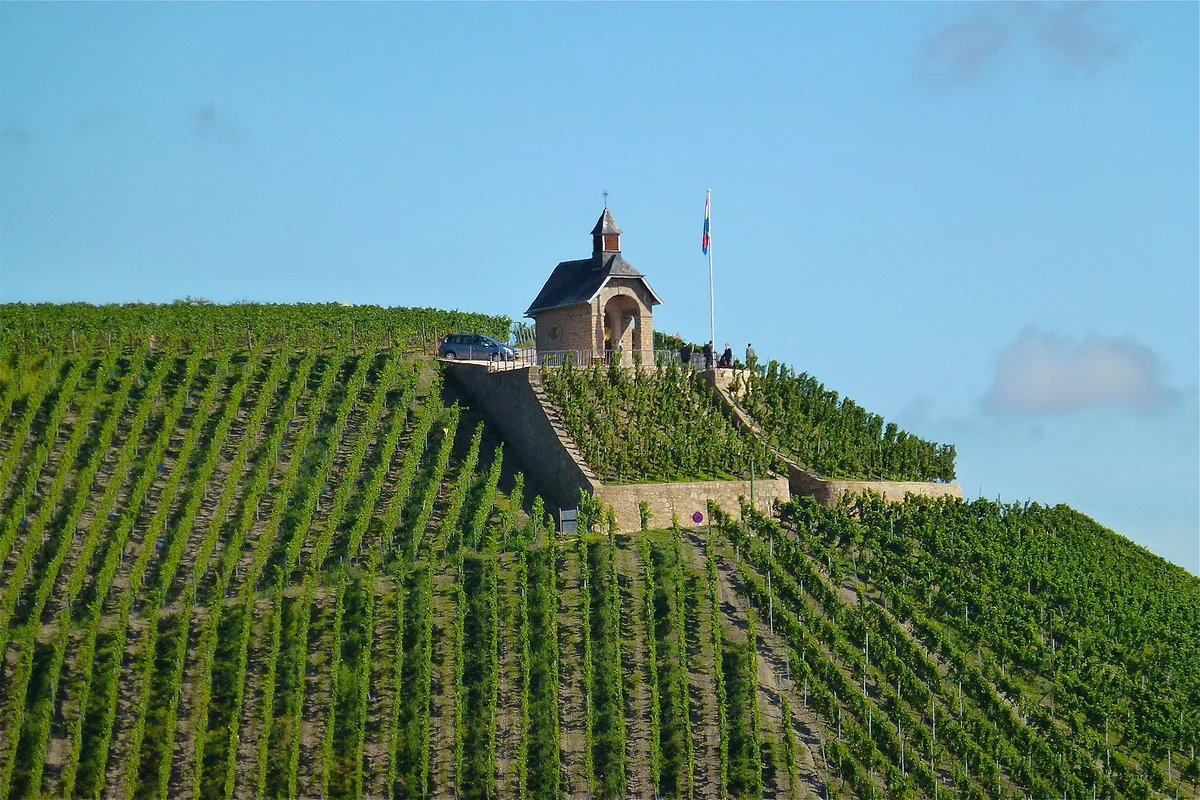
Of the vines in production across the Grand Duchy, 13.1% are Riesling, some 153 hectares, and Wormeldange likes to call itself its capital. It holds a three-day festival devoted to the grape on the third weekend of September, across the villages of the commune. On the grapes and choosing a bottle, see Luxembourg wine; on the village, Wormeldange.
A proper Luxembourg aperitif
If you want to do it the local way, I’d put the Rieslingspaschtéit in the middle and add some Kachkéis, the cooked spreading cheese the tourist board likens to cancoillotte, bakery bread and a glass of Riesling or crémant. You can buy the lot in a morning between a bakery, a deli and the Place Guillaume II market, held on Wednesdays and Saturdays. It’s a half-hour job that tells you more about the country than plenty of guided tours, and it costs far less than lunch in a city-centre restaurant.
Once your dates are set, check which hotels are still free in Remich before prices climb.
Where to buy it
In any bakery or delicatessen in the country, which is the most useful thing I can tell you. If you want the one from the house that says it invented it, Kaempff-Kohler is the name the tourist board gives. For anyone on a tight budget it’s also the best cheap meal in the country, as I explain in cheap eats in Luxembourg.
Can you take it home?
I wouldn’t count on it. Great Britain has strict rules on bringing in meat and dairy products, so check the latest gov.uk guidance before packing one. My advice is to enjoy it there and bring home a bottle of Riesling or crémant instead, which sits within the personal allowances and keeps far better in a suitcase. The rest of the country’s food is in Luxembourg food.
If you would rather have a local show you round, book a guided tour in Remich and choose by the reviews.
A car frees you from timetables: search car hire in Luxembourg on DiscoverCars and compare companies.
So you do not pay over the odds, look at trains, coaches and flights to Luxembourg on Omio and pick the one that suits you.
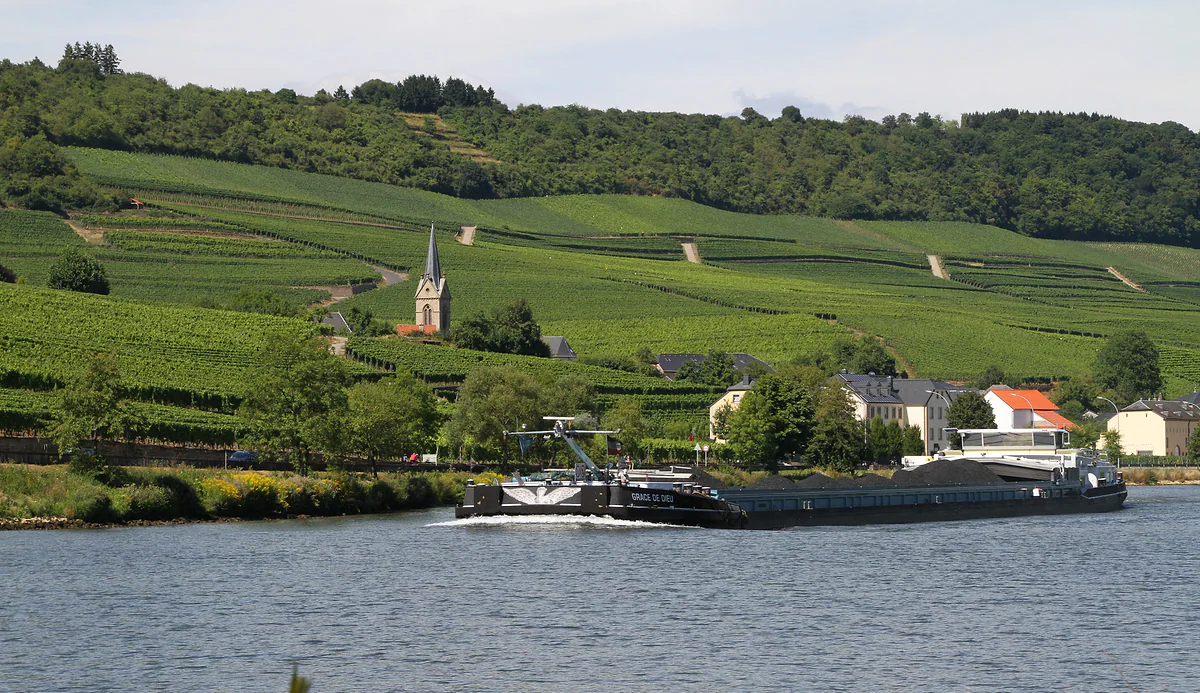
The village of Ahn with its spired church below vineyard slopes, seen from the opposite bank of the Moselle
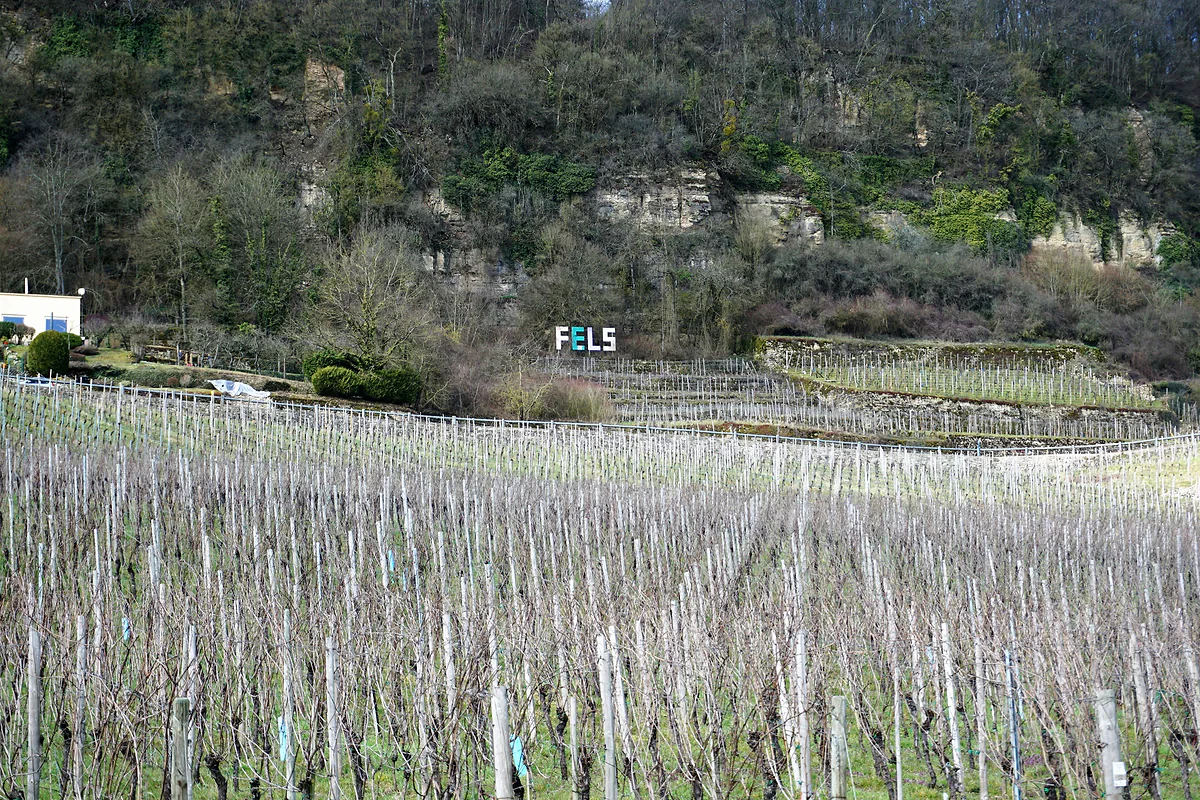
Rows of pruned vines in the vineyards at Wormeldange, with a rock face and woodland on the slope behind
Rieslingspaschtéit at a glance
| Aspect | What the sources say |
|---|---|
| Shape | Long like a log, with a hole on top and a pastry crown |
| Filling | Marinated veal and Luxembourg Riesling jelly |
| Served | Cold |
| To drink | A glass of Riesling |
| Where it's sold | In every bakery in the country |
| Origin, per Kaempff-Kohler | Invented in 1928 by Pierre Kaempff |
luxembourg.public.lu (Emoxies, French and English) and visitluxembourg (patisserie page), checked on 29-09-2026. The origin is the company's own account, not an independent official record.
Test yourself
True or false?
0/3 Pick before you peek.
-
Rieslingspaschtéit is served hot, like a stew.
See the answer
False. The official portal says it's eaten cold, ideally with a glass of Riesling.
-
The filling is marinated veal.
See the answer
True. The official portal describes a marinated veal filling with Luxembourg Riesling jelly.
-
It's only sold in one shop in the capital.
See the answer
False. The English version of the official portal says you'll find it in every bakery across the country.
0 of 425 Luxembourg guides
Your next stamp
- Food
- Crémant
- What to buy
- Judd mat Gaardebounen
- Wine
- Wine festivals
- Beer
- Kniddelen
- A Possen Museum
- American Cemetery
- Ansembourg
- Ansembourg Castles
- Asselborn
- Bascharage
- Beaufort castles
- Belval
- Belval blast furnaces
- Berg Castle
- Bernard-Massard cellars
- Bourglinster Castle
- Bourscheid Castle
- Brandenbourg
- Brandenbourg Castle
- Caves St Martin
- Christmas
- Clervaux Castle
- Echternach
- Echternach Abbey
- Ehnen
- Ehnen Wine Museum
- Esch-sur-Alzette
- Esch-sur-Sûre Castle
- European Museum Schengen
- Fond-de-Gras
- General Patton Museum
- German war cemetery
- Haff Réimech
- Hohllay
- Hollenfels Castle
- Hosingen
- Kautenbach
- Kneiff
- Koerich Castle
- Larochette Castle
- Lasauvage
- Mersch Castle
- Military History Museum
- Moersdorf
- Mondorf Domaine Thermal
- Munsbach Castle
- National Mining Museum
- Parc Merveilleux
- Park Sënnesräich
- Places to visit
- Remich
- Rindschleiden
- Schiessentümpel
- Septfontaines Castle
- Slate Museum
- Stolzembourg
- Tudor Museum
- Useldange Castle
- Valley of the Seven Castles
- Vianden
- Vianden Castle
- Ville Haute
- Wasserbillig Aquarium
- Weiswampach lakes
- Wiltz Castle
- Ahn
- Berdorf
- Bourscheid-Plage
- Butterfly garden
- Clervaux
- Differdange
- Echternach lake
- Grevenmacher
- Heringer Millen
- Hollenfels
- Luxembourg City
- Luxembourg Science Center
- Meysembourg Castle
- Mullerthal
- National Day
- National Resistance Museum
- Perekop
- Remerschen
- Schoenfels Castle
- The Family of Man
- Things to do
- Upper Sûre Lake
- Vianden chairlift
- Wasserbillig
- Clervaux Abbey
- Echternach Roman villa
- Éislek
- Insenborn
- Kallektuffquell
- Machtum
- Most beautiful places
- Our Nature Park
- Pétange
- Pettingen Castle
- Schueberfouer
- Schwebsingen
- Victor Hugo House
- Waldbillig
- Dudelange
- Kuelscheier
- Lultzhausen
- Moselle Valley
- Octave
- Prettiest villages
- Sanem
- Schengen
- Wellenstein
- Wiltz
- Wolfsschlucht
- Beaufort
- Bech-Kleinmacher
- Éimaischen
- Gaalgebierg
- Guttland
- Marnach
- Mondorf-les-Bains
- Putscheid
- Schifflange
- UNESCO World Heritage
- Carnival
- Consdorf
- Ellergronn
- Käerjeng
- Kayl
- Map
- Minett
- Munshausen
- Tandel
- Bech
- Buergbrennen
- Esch-sur-Sûre
- Rumelange
- Where is Luxembourg
- Is it a country?
- Lac de la Haute-Sûre (commune)
- Rosport-Mompach
- Wormeldange
- Larochette
- Mondercange
- Regions
- Bettembourg
- Bock Casemates
- Cantons
- Dancing procession
- Diekirch
- Fischbach
- Garnich
- Mersch
- Moselle wine route
- Ettelbruck
- Grund
- Heffingen
- Kehlen
- Lintgen
- Moselle river cruises
- Pétrusse Casemates
- Towns and villages
- Chemin de la Corniche
- Erpeldange-sur-Sûre
- Junglinster
- Kopstal
- Lorentzweiler
- Nommern
- Pfaffenthal
- Population
- Bissen
- Clausen
- Grand Ducal Palace
- Koerich
- Schieren
- Size
- Vallée de l'Ernz
- Feulen
- Kirchberg
- Languages
- Notre-Dame Cathedral
- Reisdorf
- Steinfort
- Bettendorf
- Habscht
- St Michael's Church
- Helperknapp
- Luxembourgish
- Place Guillaume II
- Name
- Place d'Armes
- History
- Place de la Constitution
- Grand Duke
- Colmar-Berg
- Flaxweiler
- Gare
- Hamm
- Kirchberg funicular
- Luxembourg fortress
- Mamer
- Mertert
- Minett Trail
- Mullerthal Trail
- Neumünster Abbey
- Parc Hosingen
- Pfaffenthal lift
- Political system
- Redange
- The Passerelle
- Winseler
- Beckerich
- Biwer
- EU institutions
- Goesdorf
- Limpertsberg
- Mudam
- Natur Musée
- Pulvermühl
- Stadtbredimus
- Troisvierges
- Wenzel walk
- Bonnevoie
- Bous-Waldbredimus
- Ell
- Flag
- Kiischpelt
- Manternach
- Philharmonie
- Vauban circuit
- Weiswampach
- Betzdorf
- Boulaide
- Dräi Eechelen Museum
- Facts
- Hollerich
- Lenningen
- Useldange
- Wincrange
- Bourscheid
- Dalheim
- Gasperich
- Public holidays
- Red Bridge
- Saeul
- Belair
- Second World War
- Vichten
- Battle of the Bulge
- Merl
- Préizerdaul
- Cents
- EU and Schengen
- Groussbus-Wal
- Entry requirements
- Neudorf
- Rambrouch
- Currency and payments
- Mertzig
- Weimerskirch
- Adolphe Bridge
- Beggen
- Escapardenne
- How to get there
- International March of Diekirch
- MNHA (National Museum)
- Rock climbing
- Sandweiler
- Bridges
- Eich
- Flights
- Golf
- Hesperange
- Lëtzebuerg City Museum
- Canoeing and kayaking
- Dommeldange
- Luxembourg airport
- Strassen
- Villa Vauban
- Airport to city centre
- Bertrange
- Casino Luxembourg
- Mühlenbach
- Swimming pools
- From Brussels
- Pétrusse Valley
- Rollingergrund
- Walferdange
- Cessange
- Day trip from Brussels
- Municipal Park
- Steinsel
- Free walking tours
- From Paris
- Niederanven
- From Frankfurt
- Schuttrange
- Sightseeing train and bus
- By train
- Contern
- By coach
- Weiler-la-Tour
- Driving
- Luxembourg in one day
- Pretzel Sunday
- Rham Plateau
- Tour de Luxembourg
- Candlemas (Liichtmëssdag)
- Car hire
- Luxembourg in two days
- Saint-Esprit Plateau
- Luxembourg in three days
- Melusina statue
- Parking
- St Nicholas Day (Kleeschen)
- Fête de la Musique
- Luxembourg in four days
- Museums in Luxembourg
- Petrol
- Place de Clairefontaine
- A week in Luxembourg
- Getting around
- Luxembourg Marathon
- Tram and Bus Museum
- Free public transport
- Parks in Luxembourg City
- Road trip
- Belgium and Luxembourg
- Tram
- Buses
- Viewpoints
- Trains
- Luxembourg station
- Cycling
- LuxembourgPass
- Prices and budget
- On a budget
- Free things to do
- Mobile and roaming
- Healthcare
- Safety
- Scams
- Tourist information
- Packing list
- Swimming lakes
- With a dog
- Markets
- Tipping
- Shopping
- Shopping centres
- With kids
- For couples
- Playgrounds
- Adventure parks
- Nightlife
- Castles
- Theatres and concert venues
- Leudelange
- Nature parks
- Where to stay
- City-centre hotels
- Hiking
- Nature reserves
- Reckange-sur-Mess
- Hotels near the station
- Roeser
- Frisange
- Hotels in Kirchberg
- Airport hotels
- Dippach
- Hotels in Vianden
- Hotels in Echternach
- Hotels in Clervaux
- Hotels in Mondorf-les-Bains
- Hotels in Esch-sur-Alzette
- Hotels on the Moselle
- Mullerthal hotels
- Upper Sûre lake hotels
- Hotels in Diekirch and Ettelbruck
- Cheap hotels
- Luxury hotels
- Boutique hotels
- Spa hotels
- Family hotels
- Apartments
- Weather
- Youth hostels
- Best time to visit
- Campsites
- Holiday cottages
- In winter
- Castle hotels
- In spring
- Day trips
- In summer
- Around Luxembourg
- In autumn
- Ice skating
- Trier day trip
- Metz day trip
- Arlon day trip
- In January
- In February
- In March
- In April
- In May
- In June
- In July
- In August
- In September
- In October
- In November
- Where to eat
- In December
- Michelin restaurants
- Cheap eats
- Bouneschlupp
- Gromperekichelcher
- Quetschentaart
- Events
Frequently asked questions
What is Rieslingspaschtéit?
A long pastry pie filled with marinated veal and jelly made from Luxembourg Riesling. The official portal calls it the queen of pies, and it's eaten cold.
Where can I buy Rieslingspaschtéit in Luxembourg?
In any bakery or delicatessen, according to the official portal. The tourist board features Kaempff-Kohler, which says it invented the pie, and notes that other fine delis now make it too.
Who invented Rieslingspaschtéit?
Christian Kaempff tells the tourist board that his grandfather Pierre invented it in 1928, looking for something to eat with Riesling among friends. It's the family's account; there's no other official record of its origin.
Is Rieslingspaschtéit eaten hot or cold?
Cold. The official portal says it's enjoyed cold, with a glass of Riesling.
Can I bring Rieslingspaschtéit back to the UK?
Rules on bringing meat products into Great Britain are strict, so check gov.uk before packing one. I'd simply enjoy it in Luxembourg and bring home a bottle of Riesling or crémant instead.
Is it only made in Luxembourg?
Christian Kaempff claims it only exists in the Grand Duchy. That's his statement, and it fits a pie built around Riesling from the Luxembourg Moselle.
By
Tourism graduate with a master’s in Tourism Management and Planning from the University of Málaga, who has travelled across Europe. He writes every guide from official sources and his own judgement.
Published on . Facts checked on .
Sources
Some links in this guide are affiliate links: if you book through them, the site earns a commission at no extra cost to you. Affiliate disclosure
Photos: Denise Hastert (CC BY-SA 4.0); Gerd Eichmann (CC BY 4.0); GilPe (CC BY-SA 3.0), via Wikimedia Commons.