Canton of Wiltz, population 1,682
Goesdorf, the Ardennes village named after its smelters
Goesdorf is a rural commune in the canton of Wiltz, up on the plateau above the Sûre valley, with 1,682 residents on 1 January 2026. Its name comes from Gießdorf, the smelters' village, after the antimony mine worked from 1354 to 1938, which you can now explore on a heritage trail.
In 30 seconds
Full read: 2 min
- Goesdorf has 1,682 residents across eleven localities in the canton of Wiltz.
- Its antimony mine ran from 1354 to 1938 and has had a heritage trail since 1998.
- The 6.87 km Auto-Pédestre loop passes a viewpoint over the Sûre.
- Stay in neighbouring Esch-sur-Sûre.
Goesdorf is for people who already know the lake and want a different afternoon in Éislek. I'd walk the Auto-Pédestre loop to the viewpoint over the Sûre meanders and stop at the mine trail, which tells a mining story hardly anyone links with the Ardennes.

Before you go
What I would keep in mind
-
01 Most beautiful
A viewpoint over the Sûre meanders
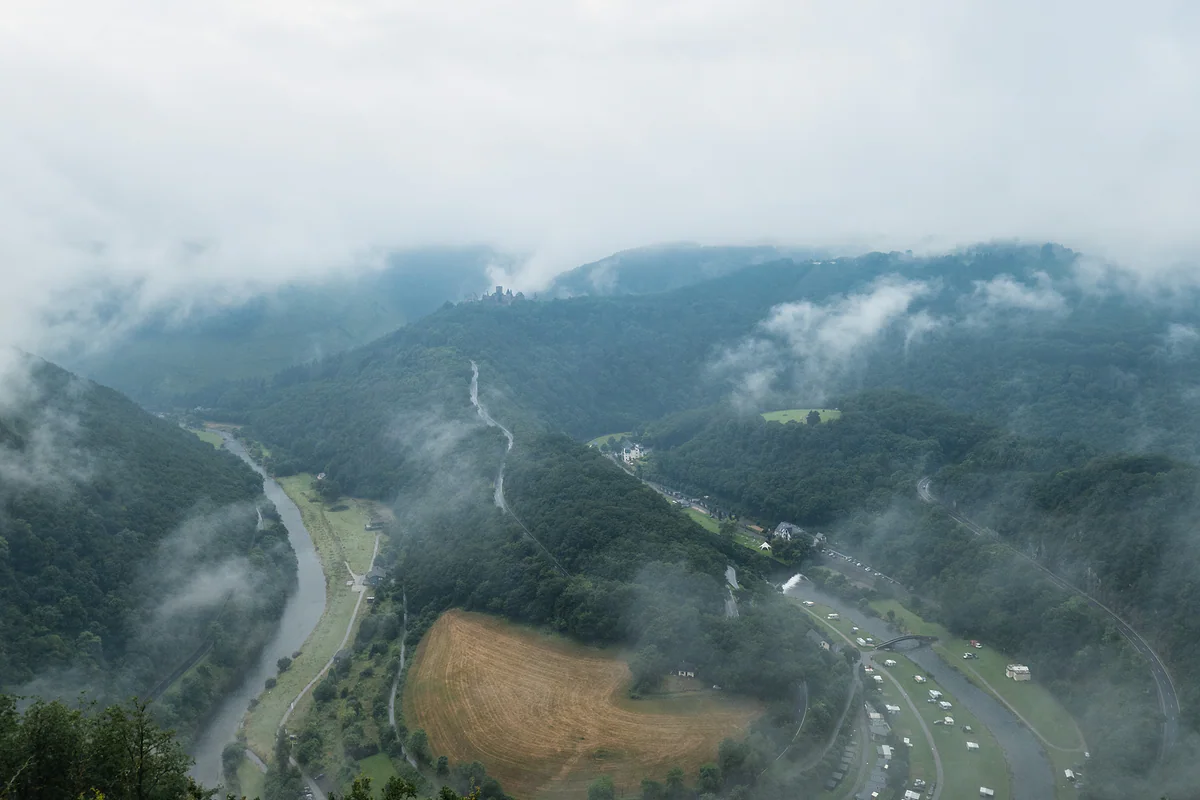
The Auto-Pédestre Goesdorf drops into the Sûre valley and, just before it crosses the Beetebach, reaches a viewpoint over the river's bends. It's 6.87 km with 210 m of climbing.
-
02 My tip
The mine trail, open since 1998
The antimony mine closed in 1938, but since 1998 a heritage trail has explained its shafts and galleries. The commune says it reached 72 metres deep with 800 metres of galleries.
-
03 Most beautiful
A picnic at the Teifelslee
Between Goesdorf and Tadler, visitluxembourg lists the Teifelslee viewpoint, wrapped in legend and a good spot for a picnic.
Goesdorf sits on the plateau overlooking the Sûre valley, in the same canton as Wiltz and right next to the commune of Esch-sur-Sûre. It has 1,682 residents spread over eleven localities, from Nocher to Dahl and Buederscheid. There’s no castle or museum. What it has is a mining history that’s rare for the Ardennes and two or three walks with river views that justify an afternoon. For a bed, I’d look at the hotels in Esch-sur-Sûre, with the lake close by.
The smelters’ village
The commune explains the name with a story I love. Goesdorf used to be Gießdorf, the village where antimony from the neighbouring mines was smelted and cast. When someone rendered it into German they got it wrong and it became Goesdorf, but in Luxembourgish it’s still Géisdoerf.
Antimony is a soft metal the Egyptians already used as make-up and which later went into top-quality printing type. At Goesdorf the first concession dates from 1354, although the commune reckons the Romans were digging for it earlier. In 1935 a 52-kilo block unusually rich in antimony turned up, and for years it was considered the largest in the world. The mine shut in 1938.
What’s left of the mine
Since 1998 a heritage trail has taken in what little you can still see. The panels point out the spoil heap behind the house that stands where the old forge was, the shafts that have since been filled in, and a metal plate set at the angle of the ore vein, about 75 degrees. In its second phase an inclined shaft went down to 72 metres and the galleries added up to about 800. It’s a short, well-explained stop, perfect if you’re travelling with someone curious.
Once your dates are set, check which hotels are still free in Esch-sur-Sûre before prices climb.
Across the plateau and down to the river
visitluxembourg suggests the Auto-Pédestre Goesdorf, 6.87 km and roughly 2 hours 10 minutes, starting near the town hall. It drops into the Sûre valley and, just before crossing the Beetebach, gives you a viewpoint over the river’s meanders before climbing back up. Between Goesdorf and Tadler there’s also the Teifelslee viewpoint, with its own legend and room for a picnic. With 210 m of ascent, it’s a proper walk rather than a stroll, so I’d wear boots.
Church, Roman villa and villages
The commune considers this one of the earliest settled parts of the Ösling, and believes a Roman villa stood at a spot called op Mecher. The Holy Cross church was consecrated on 28 July 1873, and the village fair falls on 14 September. Nocher, with its chapel of St Lucy first recorded in 1444, is the largest locality. In the Middle Ages these lands belonged to the counts of Esch, the lords of Esch-sur-Sûre Castle.
Once your dates are set, check which hotels are still free in Esch-sur-Sûre before prices climb.
Where to stay
In 2025 STATEC recorded a single hotel and no campsites in Goesdorf. I’d base myself in Esch-sur-Sûre, which has more choice and the lake on its doorstep.
If you would rather have a local show you round, book a guided tour in Esch-sur-Sûre and choose by the reviews.
A car frees you from timetables: search car hire in Luxembourg on DiscoverCars and compare companies.
So you do not pay over the odds, look at trains, coaches and flights to Luxembourg on Omio and pick the one that suits you.
Goesdorf in figures
| Figure | Value | Source |
|---|---|---|
| Residents on 1 Jan 2026 | 1,682 | STATEC |
| Area | 29.41 km² | STATEC |
| Localities | Bockholtz, Buederscheid, Dahl, Dirbach, Goebelsmuehle, Goesdorf, Heiderscheidergrund, Masseler, Nocher, Nocher-Route and Tadler | CACLR |
| Hotels in 2025 | 1 | STATEC |
| Campsites in 2025 | 0 | STATEC |
The antimony mine, according to the commune
| Fact | Figure |
|---|---|
| First concession | 1354 |
| Ore block found in 1935 | 52 kg |
| Deepest point of the inclined shaft | 72 m |
| Total galleries | About 800 m |
| Final closure | 1938 |
Test yourself
True or false?
0/3 Pick before you peek.
-
Antimony was mined at Goesdorf.
See the answer
True. The first concession dates from 1354 and the mine closed in 1938. The commune believes the Romans were already prospecting there.
-
Goesdorf's Luxembourgish name is Géisdoerf.
See the answer
True. The commune explains that the correct German form would have been Giessdorf, that Goesdorf came from a translation error, and that Luxembourgish kept Géisdoerf.
-
Goesdorf is a full member of the Upper Sûre nature park.
See the answer
False. The park has five member communes. It has worked with Goesdorf since January 2020 towards a future integration, according to the government's portal.
- Residents on 1 January 2026
- 1,682
- First mining concession
- 1354
- Antimony block found in 1935
- 52 kg
- Auto-Pédestre Goesdorf loop
- 6.87 km
Map
Where Goesdorf is
The thick dashed line is the border with Belgium, France and Germany, and the fine ones divide the twelve cantons. The Éislek lies to the north and the Moselle to the east. Every number opens its guide.
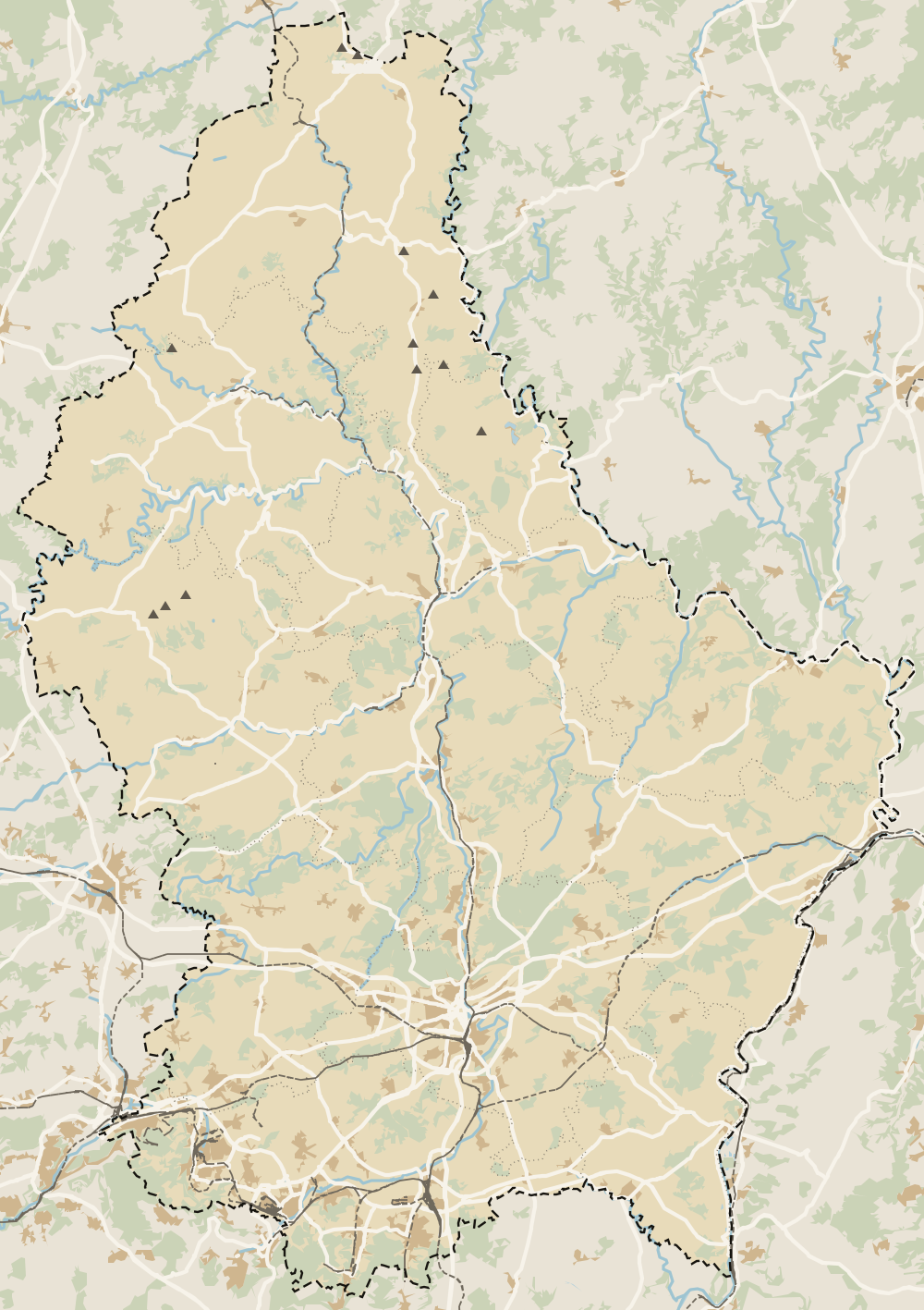 1Vianden 2Clervaux 3Wiltz 4Putscheid 5Tandel 6Esch-sur-Sûre 7Lac de la Haute-Sûre (commune) 8Diekirch 9Ettelbruck 10Erpeldange-sur-Sûre 11Schieren 12Feulen 13Bettendorf 14Colmar-Berg 15Parc Hosingen 16Winseler 17Goesdorf 18Troisvierges 19Kiischpelt 20Weiswampach 21Boulaide 22Wincrange 23Bourscheid
 Map data © OpenStreetMap contributors (ODbL)
- 1ViandenCanton of Vianden, on the River Our
- 2ClervauxCommune of 6,327 people, canton of Clervaux
- 3WiltzCanton of Wiltz, population 8,538
- 4PutscheidCanton of Vianden, 27.13 km²
- 5TandelCanton of Vianden, 11 localities
- 6Esch-sur-SûreCanton of Wiltz, commune population 3,373
- 7Lac de la Haute-Sûre (commune)Canton of Wiltz, population 2,320
- 8DiekirchCanton of Diekirch, the Nordstad
- 9EttelbruckCanton of Diekirch, heart of the Nordstad
- 10Erpeldange-sur-SûreCanton of Diekirch, next to Ettelbruck
- 11SchierenCanton of Diekirch, 3 localities
- 12FeulenCanton of Diekirch, Niederfeulen and Oberfeulen
- 13BettendorfCanton of Diekirch, Bettendorf, Gilsdorf and Moestroff
- 14Colmar-BergCanton of Mersch, 2 localities
- 15Parc HosingenCanton of Clervaux, 272 to 517 m
- 16WinselerCanton of Wiltz, population 1,590
- 17GoesdorfCanton of Wiltz, population 1,682
- 18TroisviergesCanton of Clervaux, the country's far north
- 19KiischpeltCanton of Wiltz, population 1,309
- 20WeiswampachCanton of Clervaux, on the Belgian border
- 21BoulaideCanton of Wiltz, population 1,579
- 22WincrangeCanton of Clervaux, 113.36 km²
- 23BourscheidCanton of Diekirch, 206 to 513 m
0 of 425 Luxembourg guides
Your next stamp
- Esch-sur-Sûre
- Reisdorf
- Bettendorf
- Minett
- Upper Sûre lake hotels
- Esch-sur-Sûre Castle
- Lac de la Haute-Sûre (commune)
- Ville Haute
- A Possen Museum
- American Cemetery
- Ansembourg
- Ansembourg Castles
- Asselborn
- Bascharage
- Beaufort castles
- Belval
- Belval blast furnaces
- Berg Castle
- Bernard-Massard cellars
- Bourglinster Castle
- Bourscheid Castle
- Brandenbourg
- Brandenbourg Castle
- Caves St Martin
- Christmas
- Clervaux Castle
- Echternach
- Echternach Abbey
- Ehnen
- Ehnen Wine Museum
- Esch-sur-Alzette
- European Museum Schengen
- Fond-de-Gras
- General Patton Museum
- German war cemetery
- Haff Réimech
- Hohllay
- Hollenfels Castle
- Hosingen
- Kautenbach
- Kneiff
- Koerich Castle
- Larochette Castle
- Lasauvage
- Mersch Castle
- Military History Museum
- Moersdorf
- Mondorf Domaine Thermal
- Munsbach Castle
- National Mining Museum
- Parc Merveilleux
- Park Sënnesräich
- Places to visit
- Remich
- Rindschleiden
- Schiessentümpel
- Septfontaines Castle
- Slate Museum
- Stolzembourg
- Tudor Museum
- Useldange Castle
- Valley of the Seven Castles
- Vianden
- Vianden Castle
- Wasserbillig Aquarium
- Weiswampach lakes
- Wiltz Castle
- Ahn
- Berdorf
- Bourscheid-Plage
- Butterfly garden
- Clervaux
- Differdange
- Echternach lake
- Grevenmacher
- Heringer Millen
- Hollenfels
- Luxembourg City
- Luxembourg Science Center
- Meysembourg Castle
- Mullerthal
- National Day
- National Resistance Museum
- Perekop
- Remerschen
- Schoenfels Castle
- The Family of Man
- Things to do
- Upper Sûre Lake
- Vianden chairlift
- Wasserbillig
- Clervaux Abbey
- Echternach Roman villa
- Éislek
- Insenborn
- Kallektuffquell
- Machtum
- Most beautiful places
- Our Nature Park
- Pétange
- Pettingen Castle
- Schueberfouer
- Schwebsingen
- Victor Hugo House
- Waldbillig
- Dudelange
- Kuelscheier
- Lultzhausen
- Moselle Valley
- Octave
- Prettiest villages
- Sanem
- Schengen
- Wellenstein
- Wiltz
- Wolfsschlucht
- Beaufort
- Bech-Kleinmacher
- Éimaischen
- Gaalgebierg
- Guttland
- Marnach
- Mondorf-les-Bains
- Putscheid
- Schifflange
- UNESCO World Heritage
- Carnival
- Consdorf
- Ellergronn
- Käerjeng
- Kayl
- Map
- Munshausen
- Tandel
- Bech
- Buergbrennen
- Rumelange
- Where is Luxembourg
- Is it a country?
- Rosport-Mompach
- Wormeldange
- Larochette
- Mondercange
- Regions
- Bettembourg
- Bock Casemates
- Cantons
- Dancing procession
- Diekirch
- Fischbach
- Garnich
- Mersch
- Moselle wine route
- Ettelbruck
- Grund
- Heffingen
- Kehlen
- Lintgen
- Moselle river cruises
- Pétrusse Casemates
- Towns and villages
- Chemin de la Corniche
- Erpeldange-sur-Sûre
- Junglinster
- Kopstal
- Lorentzweiler
- Nommern
- Pfaffenthal
- Population
- Bissen
- Clausen
- Grand Ducal Palace
- Koerich
- Schieren
- Size
- Vallée de l'Ernz
- Feulen
- Kirchberg
- Languages
- Notre-Dame Cathedral
- Steinfort
- Habscht
- St Michael's Church
- Helperknapp
- Luxembourgish
- Place Guillaume II
- Name
- Place d'Armes
- History
- Place de la Constitution
- Grand Duke
- Colmar-Berg
- Flaxweiler
- Gare
- Hamm
- Kirchberg funicular
- Luxembourg fortress
- Mamer
- Mertert
- Minett Trail
- Mullerthal Trail
- Neumünster Abbey
- Parc Hosingen
- Pfaffenthal lift
- Political system
- Redange
- The Passerelle
- Wine festivals
- Winseler
- Beckerich
- Biwer
- EU institutions
- Limpertsberg
- Mudam
- Natur Musée
- Pulvermühl
- Stadtbredimus
- Troisvierges
- Wenzel walk
- Bonnevoie
- Bous-Waldbredimus
- Ell
- Flag
- Kiischpelt
- Manternach
- Philharmonie
- Vauban circuit
- Weiswampach
- Betzdorf
- Boulaide
- Dräi Eechelen Museum
- Facts
- Hollerich
- Lenningen
- Useldange
- Wincrange
- Bourscheid
- Dalheim
- Gasperich
- Public holidays
- Red Bridge
- Saeul
- Belair
- Second World War
- Vichten
- Battle of the Bulge
- Merl
- Préizerdaul
- Cents
- EU and Schengen
- Groussbus-Wal
- Entry requirements
- Neudorf
- Rambrouch
- Currency and payments
- Mertzig
- Weimerskirch
- Adolphe Bridge
- Beggen
- Escapardenne
- How to get there
- International March of Diekirch
- MNHA (National Museum)
- Rock climbing
- Sandweiler
- Bridges
- Eich
- Flights
- Golf
- Hesperange
- Lëtzebuerg City Museum
- Canoeing and kayaking
- Dommeldange
- Luxembourg airport
- Strassen
- Villa Vauban
- Airport to city centre
- Bertrange
- Casino Luxembourg
- Mühlenbach
- Swimming pools
- From Brussels
- Pétrusse Valley
- Rollingergrund
- Walferdange
- Cessange
- Day trip from Brussels
- Municipal Park
- Steinsel
- Free walking tours
- From Paris
- Niederanven
- From Frankfurt
- Schuttrange
- Sightseeing train and bus
- By train
- Contern
- By coach
- Weiler-la-Tour
- Driving
- Luxembourg in one day
- Pretzel Sunday
- Rham Plateau
- Tour de Luxembourg
- Candlemas (Liichtmëssdag)
- Car hire
- Luxembourg in two days
- Saint-Esprit Plateau
- Luxembourg in three days
- Melusina statue
- Parking
- St Nicholas Day (Kleeschen)
- Fête de la Musique
- Luxembourg in four days
- Museums in Luxembourg
- Petrol
- Place de Clairefontaine
- A week in Luxembourg
- Getting around
- Luxembourg Marathon
- Tram and Bus Museum
- Free public transport
- Parks in Luxembourg City
- Road trip
- Belgium and Luxembourg
- Tram
- Buses
- Viewpoints
- Trains
- Luxembourg station
- Cycling
- LuxembourgPass
- Prices and budget
- On a budget
- Free things to do
- Mobile and roaming
- Healthcare
- Safety
- Scams
- Tourist information
- Packing list
- Swimming lakes
- With a dog
- Markets
- Tipping
- Shopping
- What to buy
- Shopping centres
- With kids
- For couples
- Playgrounds
- Adventure parks
- Nightlife
- Castles
- Theatres and concert venues
- Leudelange
- Nature parks
- Where to stay
- City-centre hotels
- Hiking
- Nature reserves
- Reckange-sur-Mess
- Hotels near the station
- Roeser
- Frisange
- Hotels in Kirchberg
- Airport hotels
- Dippach
- Hotels in Vianden
- Hotels in Echternach
- Hotels in Clervaux
- Hotels in Mondorf-les-Bains
- Hotels in Esch-sur-Alzette
- Hotels on the Moselle
- Mullerthal hotels
- Hotels in Diekirch and Ettelbruck
- Cheap hotels
- Luxury hotels
- Boutique hotels
- Spa hotels
- Family hotels
- Apartments
- Weather
- Youth hostels
- Best time to visit
- Campsites
- Holiday cottages
- In winter
- Castle hotels
- In spring
- Day trips
- In summer
- Around Luxembourg
- In autumn
- Ice skating
- Trier day trip
- Metz day trip
- Arlon day trip
- In January
- In February
- In March
- In April
- In May
- In June
- In July
- In August
- In September
- Food
- In October
- In November
- Where to eat
- In December
- Michelin restaurants
- Cheap eats
- Judd mat Gaardebounen
- Bouneschlupp
- Gromperekichelcher
- Kniddelen
- Quetschentaart
- Rieslingspaschtéit
- Events
- Wine
- Crémant
- Beer
Frequently asked questions
Where is Goesdorf?
In the canton of Wiltz in northern Luxembourg, on the plateau above the Sûre valley. It borders the commune of Esch-sur-Sûre and has worked with the Upper Sûre nature park since January 2020 with a view to joining it.
What is there to see in Goesdorf?
The heritage trail at the old antimony mine, the viewpoint over the Sûre meanders on the Auto-Pédestre loop, the Teifelslee viewpoint between Goesdorf and Tadler, and the Holy Cross church, consecrated in 1873.
Why is it called Goesdorf?
According to the commune, it comes from Gießdorf, the village where antimony was smelted. Luxembourgish kept the form Géisdoerf; the German name came from a translation slip.
What is antimony used for?
The commune notes that the Egyptians used it as eye make-up, that it later had medicinal uses, and that more recently it was added to lead and tin to make high-quality printing type.
Where can I stay near Goesdorf?
STATEC counted one hotel and no campsites in the commune in 2025. The practical base is Esch-sur-Sûre, on the river, with hotels, holiday flats, guesthouses and campsites.
By
Tourism graduate with a master’s in Tourism Management and Planning from the University of Málaga, who has travelled across Europe. He writes every guide from official sources and his own judgement.
Published on . Facts checked on .
Sources
Some links in this guide are affiliate links: if you book through them, the site earns a commission at no extra cost to you. Affiliate disclosure
Photos: Tristan Schmurr from Luxembourg, Luxembourg (CC BY 2.0), via Wikimedia Commons.