Commune of 6,327 people, canton of Clervaux
Clervaux, castle, abbey and photography in an Ardennes valley
Clervaux (Klierf) is the chief town of the canton of the same name, in the north of the Éislek. The commune had 6,327 residents on 1 January 2026 across 25 localities. In the centre, a 12th-century castle houses The Family of Man, on UNESCO's Memory of the World register, and above the valley stands the Benedictine abbey of Saint-Maurice. It has a station on railway line 10.
In 30 seconds
Full read: 4 min
- Clervaux is the chief town of its canton, with 6,327 people in the commune.
- Its 12th-century castle holds The Family of Man, on UNESCO's Memory of the World register since 2003.
- The abbey of Saint-Maurice celebrates Mass with Gregorian chant every day at 10am.
- It's on railway line 10, with replacement buses on two October 2026 weekends.
Clervaux is the northern town that works best without a car. I'd arrive by train mid-morning, or earlier to catch the 10am Mass at the abbey, see The Family of Man after lunch and finish with the street photography trail, which costs nothing.

Before you go
What I would keep in mind
-
01 Getting there
Direct train from the capital
Clervaux is on CFL line 10, free in second class within Luxembourg. Note that on the weekends of 10-11 and 17-18 October 2026 a replacement bus runs between Ettelbruck and Gouvy.
hotels in Clervaux -
02 To save money
Seven free exhibitions in the streets
Clervaux, Cité de l'Image puts contemporary photography on walls, in gardens and down alleys, free and open 24 hours. The circuit takes under an hour.
-
03 Most beautiful
Gregorian chant at 10am
The abbey of Saint-Maurice celebrates Mass daily at 10am with Gregorian chant, open to visitors. It's the way to see inside the abbey church.
Clervaux Abbey -
04 To save money
Free with the LuxembourgPass
The Family of Man and the castle's battle and models museum cost nothing with the pass. Without it, €6 and €5 per adult.
LuxembourgPass
What I would book
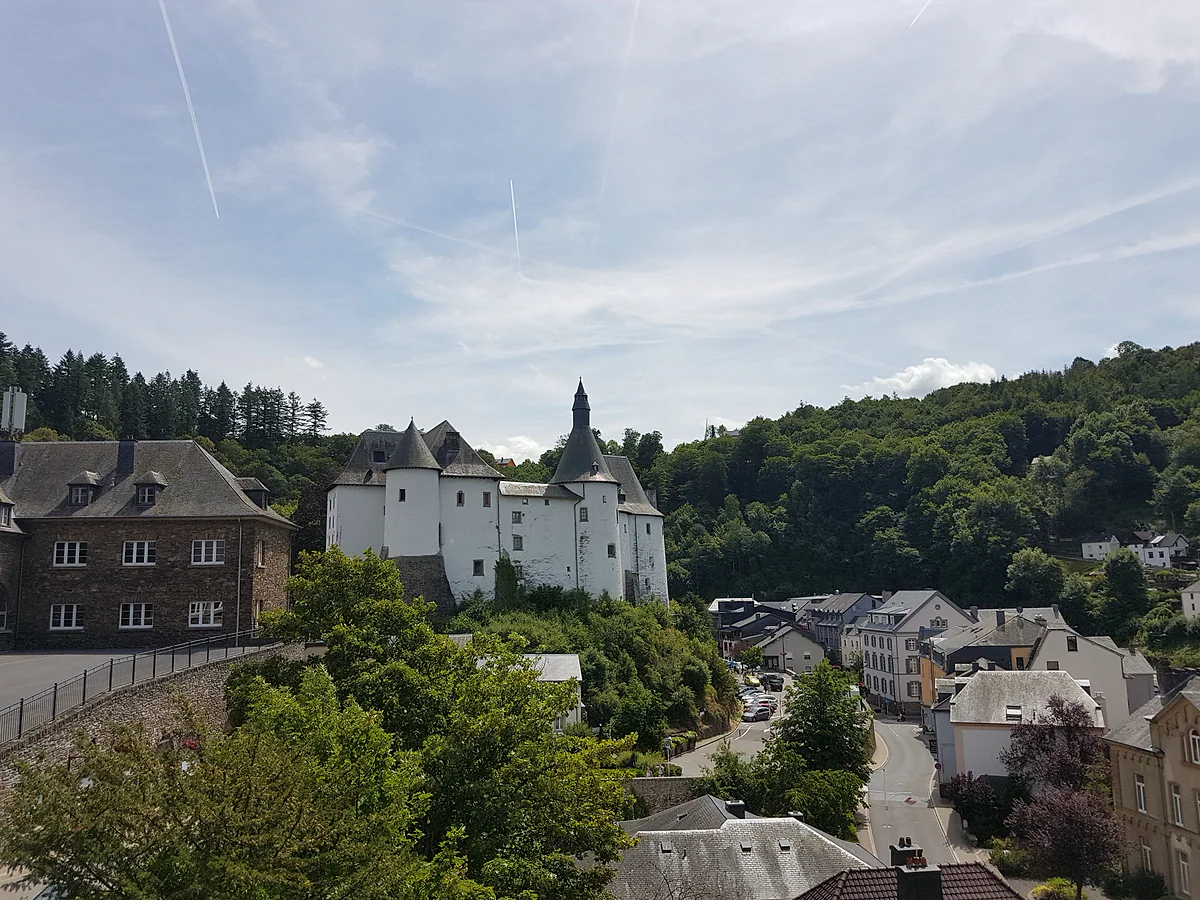
Clervaux looks as if it was laid out for an Ardennes postcard. A narrow valley, a white castle in the middle of town and, above it, an abbey with red roofs. What sets it apart from every other pretty village in the north, though, is that inside that castle hangs one of the most famous photography exhibitions in the world. For me it’s the best visit in northern Luxembourg if you’re travelling by train.
A large commune with a small town at its heart
STATEC counted 6,327 people in the commune of Clervaux on 1 January 2026, spread across 25 official localities, among them Marnach, Munshausen, Reuler and Drauffelt. It’s the seat of the canton that shares its name. visitluxembourg places it in the heart of the Éislek, with pedestrian streets, a busy cultural programme and cycling and walking routes all around.
The castle and what it holds
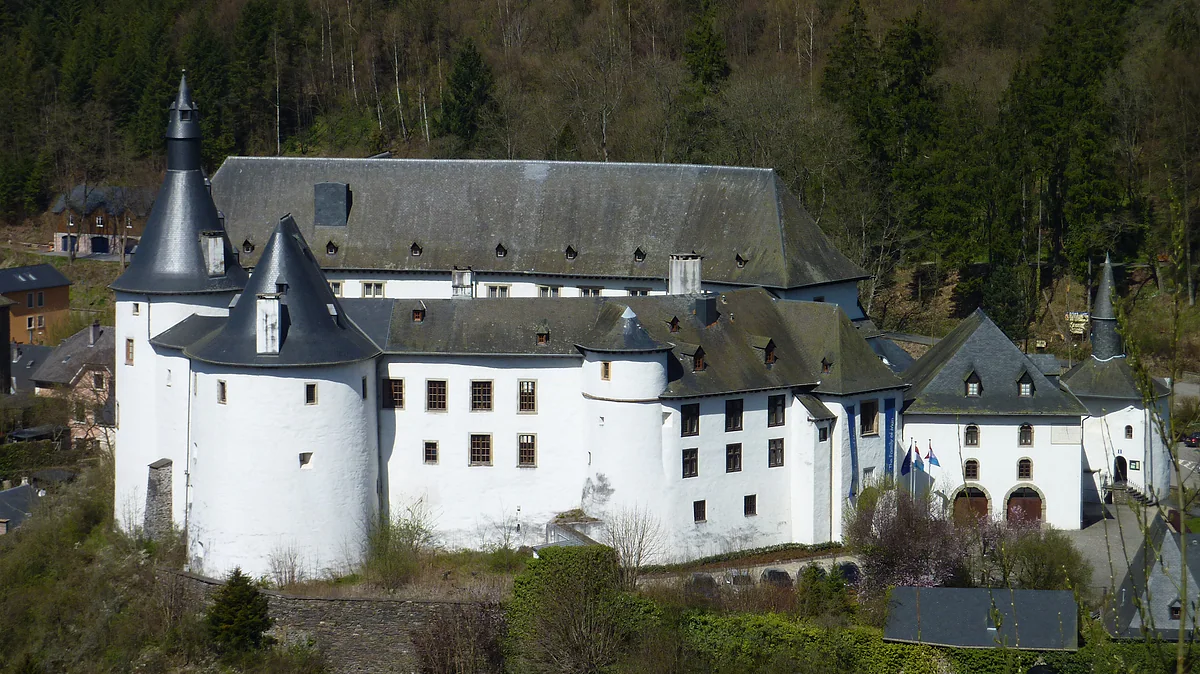
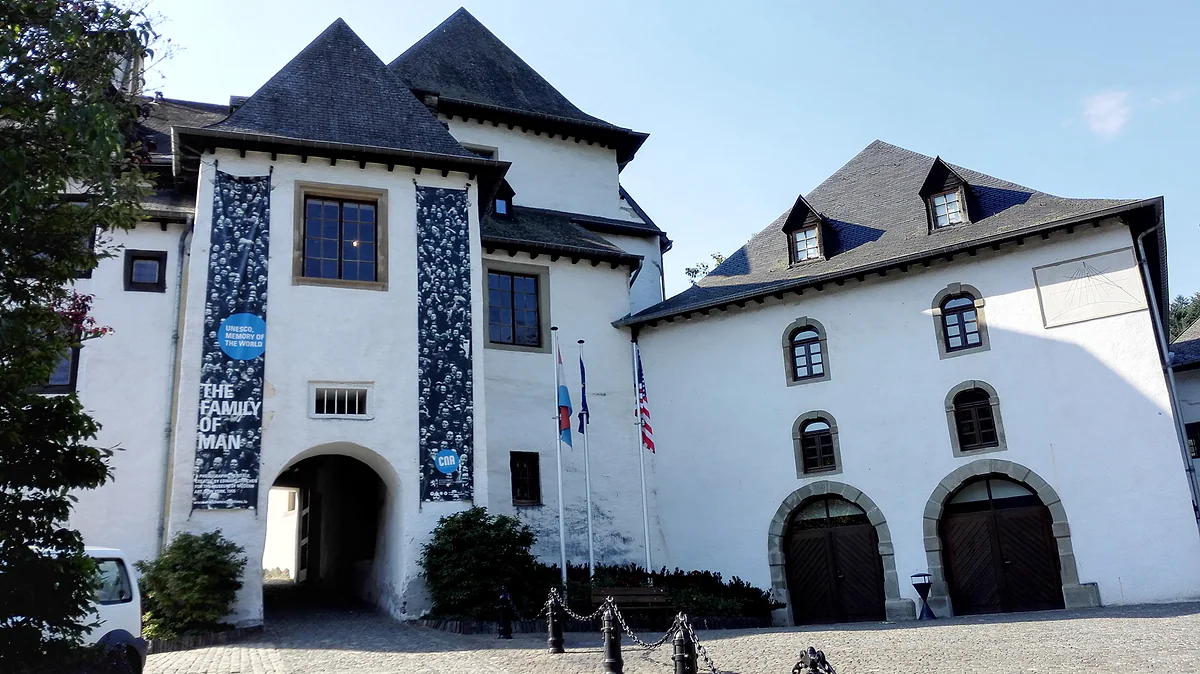
Clervaux Castle dates from the 12th century and sits on the flank of a rock above the town. It was reduced to ruins on 17 December 1944 in the Battle of the Bulge, and the state bought it and restored it in full. Since the 1970s it has housed museums. The best known is The Family of Man, the exhibition Edward Steichen put together for MoMA in New York, featuring 273 photographers from 68 countries; it came to Clervaux in 1994 and UNESCO inscribed it in 2003.
The same castle holds the Battle and Castles museum, with the Battle of the Bulge in one part and 1-to-100 scale models of 22 Luxembourg castles in the other. It closes on Wednesdays and costs €5.
If you are staying the night, see the best hotel deals in Clervaux for your dates: the well-placed rooms go fast.
The abbey and the churches
Above the valley, the Benedictine abbey of Saint-Maurice was built in 1909 and 1910 in neo-Romanesque style by monks from the French abbey of Saint-Maur de Glanfeuil. Clervaux Abbey isn’t open for general visits. You get in at the daily 10am Mass, with Gregorian chant, and on the first Monday of the month there’s a booked tour with a monk.
Down in town, the church of Sts Cosmas and Damian stands out from afar with its twin towers. It was built between 1901 and 1911 in neo-Rhenish style and has works by Lambert Piedboeuf, including the choir mosaic, and stained glass that Gustav Zanter recreated after the wartime fighting. It’s open daily. The baroque Loretto chapel, to the east opposite the station, only opens for organised visits.
With a car, the church I’d make a detour for is Holy Cross at Lieler, one of the villages in the same commune, further north. visitluxembourg highlights its 14th-century Gothic choir tower and frescoes whose oldest paintings date from around 1500; the whole building was renovated in 1953 and 1954. In 2026 it opens daily from 8am to 6pm, at 56 Hauptstrooss. It’s a short stop, and to my mind those early frescoes make it worth the drive.
A town marked by 1944
The local tourist office sums up the war in three dates. Occupation from 10 May 1940, liberation on 10 September 1944 and, on 16 December that year at 5.30am, the German attack along the Our that opened the Battle of the Bulge in Luxembourg, until the Allied counter-offensive of 3 January 1945. To go beyond the museum, historian Tom Scholtes runs private tours, including one by minibus to memorial sites in the Our valley, lasting 4 to 5 hours, at €80 for a group of up to eight.
If you are staying the night, see the best hotel deals in Clervaux for your dates: the well-placed rooms go fast.
Street photography and walks
What I like most about Clervaux, after The Family of Man, is that photography spills out of the museum. Clervaux, Cité de l’Image puts up work by contemporary photographers each year on walls, in gardens and down alleys. At the moment there are seven exhibitions, free and open 24 hours, and the circuit takes under an hour.
For walking, visitluxembourg recommends the Éislek Pad Clervaux, about 13 km past the town’s main sights and viewpoints, and a circuit of about 3 km through the old 17th-century game park of the counts of Clervaux. The town is also a stage end and start on the Éislek Trail, the Luxembourg section of the Escapardenne trail.
For golfers, the Golf de Clervaux is 3 km away at Eselborn, at 22 Mecherwee. According to visitluxembourg the main course runs to 18 holes and 6,129 metres, there are three short par-10 holes for practice, and the clubhouse has a hotel, restaurant and terrace. Its published rates are among the clearest in the country, €55 for 9 holes and €85 for 18 on weekdays, and €65 and €95 at weekends and on public holidays. The other courses are weighed up in my guide to golf in Luxembourg.
Getting there and where to stay
Trains on line 10 connect the capital with Troisvierges and Gouvy, and second class is free inside Luxembourg. Watch out for 10-11 and 17-18 October 2026, when buses replace trains between Ettelbruck and Gouvy for engineering work. By car it’s about 60 km and an hour on the A7, and the station has 164 free parking spaces. Coming overland from Britain via Belgium, the tourist office notes you can also arrive by train through Liège.
The commune had seven hotels and five campsites in 2025. The details are in hotels in Clervaux, and the rest of the north in the guide to the Luxembourg Ardennes.
So you do not lose the morning at the ticket office, browse tickets and tours in Clervaux on GetYourGuide.
If you would rather go at your own pace, see the car hire deals in Luxembourg: the earlier you book, the more cars are left to choose from.
Before you fix your dates, compare tickets to Luxembourg: the same journey can cost very different amounts from one day to the next.
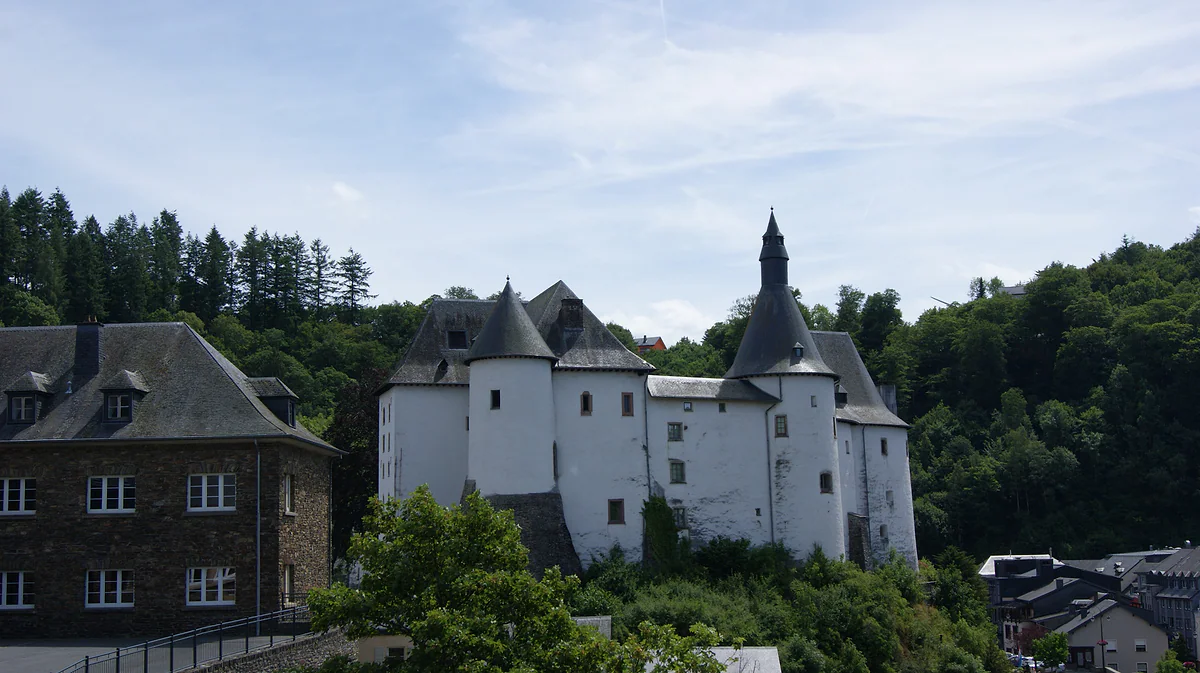
The white castle of Clervaux, home of The Family of Man exhibition, among village houses and wooded hills
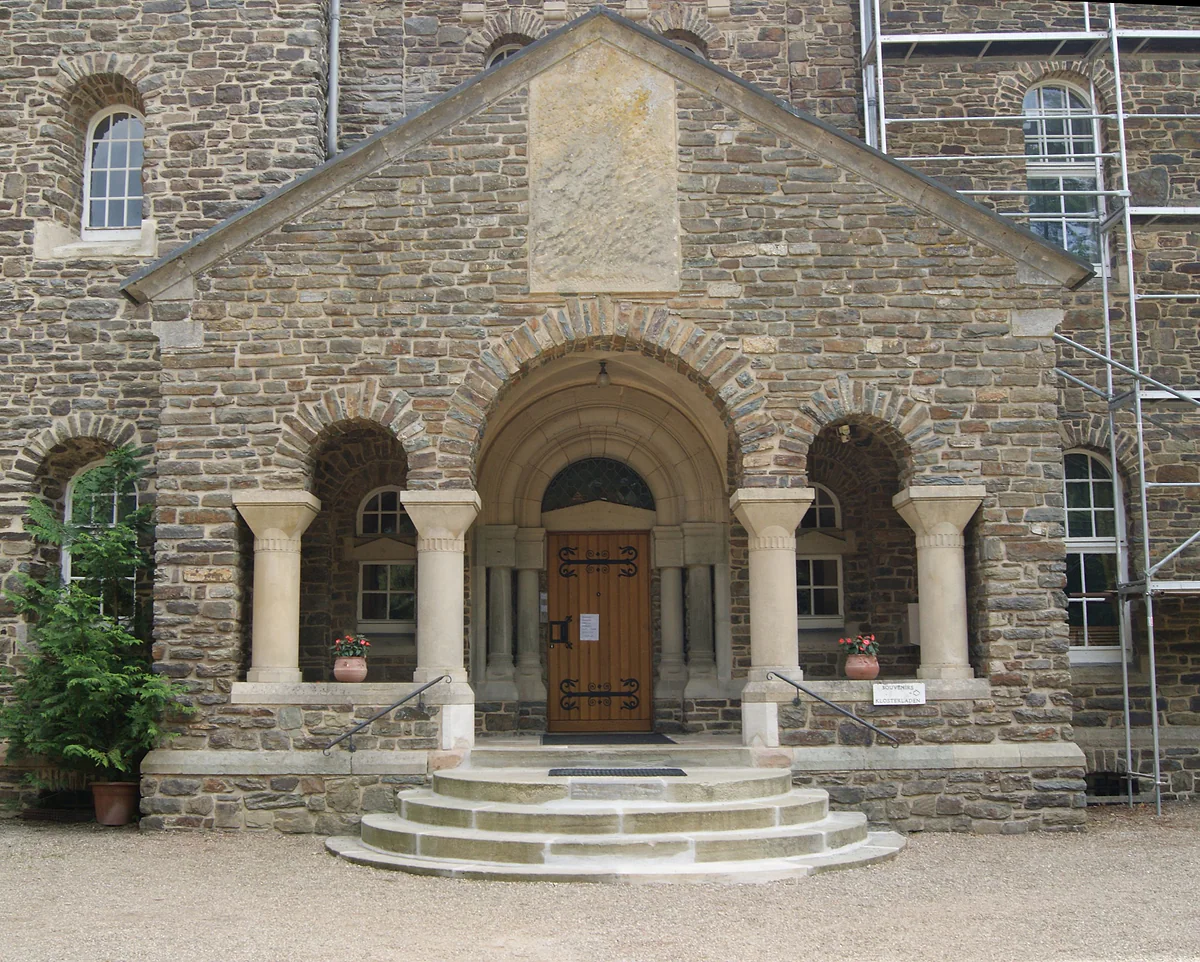
The Romanesque portico of the Abbey of Saint-Maurice in Clervaux, with arches on columns and stone walls
What you can visit in Clervaux (September 2026)
| Visit | Opening | Adult |
|---|---|---|
| The Family of Man | Wednesday to Sunday, 12pm-6pm, until 1 Jan 2027 | €6; free up to 21 |
| Battle and Castles museum | Thursday to Tuesday, 10am-5pm; closed Wednesday | €5; free up to 21 |
| Saint-Maurice abbey | Daily Mass at 10am | Free |
| Church of Sts Cosmas and Damian | Open daily | Free |
| Cité de l'Image | 24 hours, all year | Free |
steichencollections-cna.lu, visit-clervaux.lu and visitluxembourg. The museum has exceptions over Christmas and New Year.
Clervaux in figures
| Figure | Value | Source |
|---|---|---|
| Commune residents, 1 Jan 2026 | 6,327 | STATEC |
| Official localities | 25 | CACLR |
| Hotels and campsites in 2025 | 7 and 5 | STATEC |
| Free parking spaces at the station | 164 | CFL |
The commune includes villages such as Marnach, Munshausen, Reuler and Drauffelt.
Test yourself
True or false?
0/3 Pick before you peek.
-
Clervaux Castle is original and unrestored.
See the answer
False. It was left in ruins on 17 December 1944, during the Battle of the Bulge. The state bought it and restored it completely.
-
You can reach Clervaux by train from Luxembourg City.
See the answer
True. It's on CFL line 10, which runs north to Troisvierges and Gouvy in Belgium.
-
The street photography in Clervaux has an entry charge.
See the answer
False. Clervaux, Cité de l'Image is free and open 24 hours a day, all year round.
- Commune residents on 1 Jan 2026
- 6,327
- Photographs in The Family of Man
- 503
- Foundation of Clervaux Abbey
- 1910
- Éislek Pad Clervaux, roughly
- 13 km
Map
Where Clervaux is
The thick dashed line is the border with Belgium, France and Germany, and the fine ones divide the twelve cantons. The Éislek lies to the north and the Moselle to the east. Every number opens its guide.
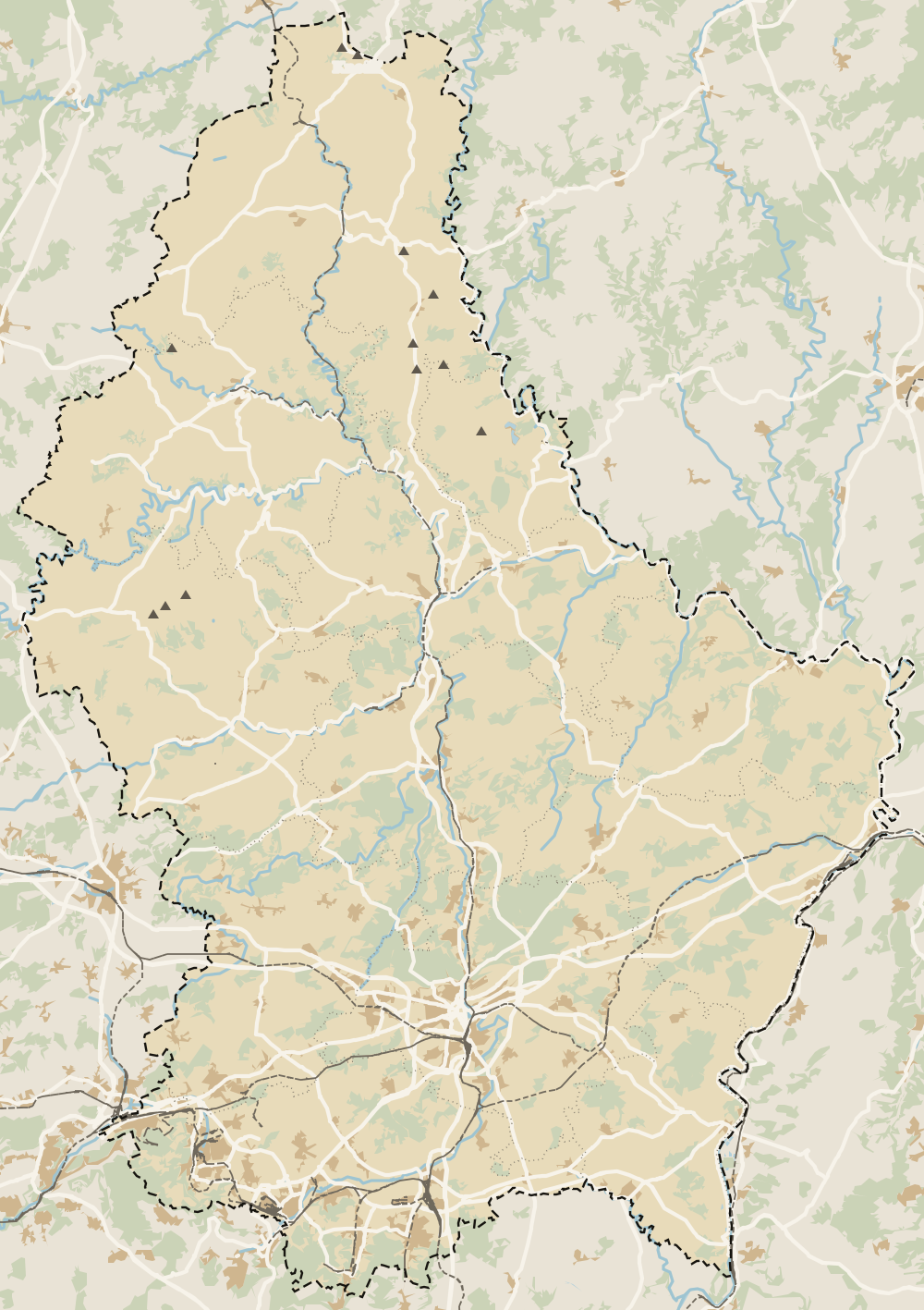 1Vianden 2Clervaux 3Wiltz 4Putscheid 5Tandel 6Esch-sur-Sûre 7Lac de la Haute-Sûre (commune) 8Diekirch 9Ettelbruck 10Erpeldange-sur-Sûre 11Schieren 12Feulen 13Bettendorf 14Colmar-Berg 15Parc Hosingen 16Winseler 17Goesdorf 18Troisvierges 19Kiischpelt 20Weiswampach 21Boulaide 22Wincrange 23Bourscheid
 Map data © OpenStreetMap contributors (ODbL)
- 1ViandenCanton of Vianden, on the River Our
- 2ClervauxCommune of 6,327 people, canton of Clervaux
- 3WiltzCanton of Wiltz, population 8,538
- 4PutscheidCanton of Vianden, 27.13 km²
- 5TandelCanton of Vianden, 11 localities
- 6Esch-sur-SûreCanton of Wiltz, commune population 3,373
- 7Lac de la Haute-Sûre (commune)Canton of Wiltz, population 2,320
- 8DiekirchCanton of Diekirch, the Nordstad
- 9EttelbruckCanton of Diekirch, heart of the Nordstad
- 10Erpeldange-sur-SûreCanton of Diekirch, next to Ettelbruck
- 11SchierenCanton of Diekirch, 3 localities
- 12FeulenCanton of Diekirch, Niederfeulen and Oberfeulen
- 13BettendorfCanton of Diekirch, Bettendorf, Gilsdorf and Moestroff
- 14Colmar-BergCanton of Mersch, 2 localities
- 15Parc HosingenCanton of Clervaux, 272 to 517 m
- 16WinselerCanton of Wiltz, population 1,590
- 17GoesdorfCanton of Wiltz, population 1,682
- 18TroisviergesCanton of Clervaux, the country's far north
- 19KiischpeltCanton of Wiltz, population 1,309
- 20WeiswampachCanton of Clervaux, on the Belgian border
- 21BoulaideCanton of Wiltz, population 1,579
- 22WincrangeCanton of Clervaux, 113.36 km²
- 23BourscheidCanton of Diekirch, 206 to 513 m
What to see
What to see in Clervaux
0 of 425 Luxembourg guides
Your next stamp
- Clervaux Castle
- Hotels in Clervaux
- The Family of Man
- Clervaux Abbey
- Museums in Luxembourg
- Marnach
- Éislek
- Day trips
- A Possen Museum
- American Cemetery
- Ansembourg
- Ansembourg Castles
- Asselborn
- Bascharage
- Beaufort castles
- Belval
- Belval blast furnaces
- Berg Castle
- Bernard-Massard cellars
- Bourglinster Castle
- Bourscheid Castle
- Brandenbourg
- Brandenbourg Castle
- Caves St Martin
- Christmas
- Echternach
- Echternach Abbey
- Ehnen
- Ehnen Wine Museum
- Esch-sur-Alzette
- Esch-sur-Sûre Castle
- European Museum Schengen
- Fond-de-Gras
- General Patton Museum
- German war cemetery
- Haff Réimech
- Hohllay
- Hollenfels Castle
- Hosingen
- Kautenbach
- Kneiff
- Koerich Castle
- Larochette Castle
- Lasauvage
- Mersch Castle
- Military History Museum
- Moersdorf
- Mondorf Domaine Thermal
- Munsbach Castle
- National Mining Museum
- Parc Merveilleux
- Park Sënnesräich
- Places to visit
- Remich
- Rindschleiden
- Schiessentümpel
- Septfontaines Castle
- Slate Museum
- Stolzembourg
- Tudor Museum
- Useldange Castle
- Valley of the Seven Castles
- Vianden
- Vianden Castle
- Ville Haute
- Wasserbillig Aquarium
- Weiswampach lakes
- Wiltz Castle
- Ahn
- Berdorf
- Bourscheid-Plage
- Butterfly garden
- Differdange
- Echternach lake
- Grevenmacher
- Heringer Millen
- Hollenfels
- Luxembourg City
- Luxembourg Science Center
- Meysembourg Castle
- Mullerthal
- National Day
- National Resistance Museum
- Perekop
- Remerschen
- Schoenfels Castle
- Things to do
- Upper Sûre Lake
- Vianden chairlift
- Wasserbillig
- Echternach Roman villa
- Insenborn
- Kallektuffquell
- Machtum
- Most beautiful places
- Our Nature Park
- Pétange
- Pettingen Castle
- Schueberfouer
- Schwebsingen
- Victor Hugo House
- Waldbillig
- Dudelange
- Kuelscheier
- Lultzhausen
- Moselle Valley
- Octave
- Prettiest villages
- Sanem
- Schengen
- Wellenstein
- Wiltz
- Wolfsschlucht
- Beaufort
- Bech-Kleinmacher
- Éimaischen
- Gaalgebierg
- Guttland
- Mondorf-les-Bains
- Putscheid
- Schifflange
- UNESCO World Heritage
- Carnival
- Consdorf
- Ellergronn
- Käerjeng
- Kayl
- Map
- Minett
- Munshausen
- Tandel
- Bech
- Buergbrennen
- Esch-sur-Sûre
- Rumelange
- Where is Luxembourg
- Is it a country?
- Lac de la Haute-Sûre (commune)
- Rosport-Mompach
- Wormeldange
- Larochette
- Mondercange
- Regions
- Bettembourg
- Bock Casemates
- Cantons
- Dancing procession
- Diekirch
- Fischbach
- Garnich
- Mersch
- Moselle wine route
- Ettelbruck
- Grund
- Heffingen
- Kehlen
- Lintgen
- Moselle river cruises
- Pétrusse Casemates
- Towns and villages
- Chemin de la Corniche
- Erpeldange-sur-Sûre
- Junglinster
- Kopstal
- Lorentzweiler
- Nommern
- Pfaffenthal
- Population
- Bissen
- Clausen
- Grand Ducal Palace
- Koerich
- Schieren
- Size
- Vallée de l'Ernz
- Feulen
- Kirchberg
- Languages
- Notre-Dame Cathedral
- Reisdorf
- Steinfort
- Bettendorf
- Habscht
- St Michael's Church
- Helperknapp
- Luxembourgish
- Place Guillaume II
- Name
- Place d'Armes
- History
- Place de la Constitution
- Grand Duke
- Colmar-Berg
- Flaxweiler
- Gare
- Hamm
- Kirchberg funicular
- Luxembourg fortress
- Mamer
- Mertert
- Minett Trail
- Mullerthal Trail
- Neumünster Abbey
- Parc Hosingen
- Pfaffenthal lift
- Political system
- Redange
- The Passerelle
- Wine festivals
- Winseler
- Beckerich
- Biwer
- EU institutions
- Goesdorf
- Limpertsberg
- Mudam
- Natur Musée
- Pulvermühl
- Stadtbredimus
- Troisvierges
- Wenzel walk
- Bonnevoie
- Bous-Waldbredimus
- Ell
- Flag
- Kiischpelt
- Manternach
- Philharmonie
- Vauban circuit
- Weiswampach
- Betzdorf
- Boulaide
- Dräi Eechelen Museum
- Facts
- Hollerich
- Lenningen
- Useldange
- Wincrange
- Bourscheid
- Dalheim
- Gasperich
- Public holidays
- Red Bridge
- Saeul
- Belair
- Second World War
- Vichten
- Battle of the Bulge
- Merl
- Préizerdaul
- Cents
- EU and Schengen
- Groussbus-Wal
- Entry requirements
- Neudorf
- Rambrouch
- Currency and payments
- Mertzig
- Weimerskirch
- Adolphe Bridge
- Beggen
- Escapardenne
- How to get there
- International March of Diekirch
- MNHA (National Museum)
- Rock climbing
- Sandweiler
- Bridges
- Eich
- Flights
- Golf
- Hesperange
- Lëtzebuerg City Museum
- Canoeing and kayaking
- Dommeldange
- Luxembourg airport
- Strassen
- Villa Vauban
- Airport to city centre
- Bertrange
- Casino Luxembourg
- Mühlenbach
- Swimming pools
- From Brussels
- Pétrusse Valley
- Rollingergrund
- Walferdange
- Cessange
- Day trip from Brussels
- Municipal Park
- Steinsel
- Free walking tours
- From Paris
- Niederanven
- From Frankfurt
- Schuttrange
- Sightseeing train and bus
- By train
- Contern
- By coach
- Weiler-la-Tour
- Driving
- Luxembourg in one day
- Pretzel Sunday
- Rham Plateau
- Tour de Luxembourg
- Candlemas (Liichtmëssdag)
- Car hire
- Luxembourg in two days
- Saint-Esprit Plateau
- Luxembourg in three days
- Melusina statue
- Parking
- St Nicholas Day (Kleeschen)
- Fête de la Musique
- Luxembourg in four days
- Petrol
- Place de Clairefontaine
- A week in Luxembourg
- Getting around
- Luxembourg Marathon
- Tram and Bus Museum
- Free public transport
- Parks in Luxembourg City
- Road trip
- Belgium and Luxembourg
- Tram
- Buses
- Viewpoints
- Trains
- Luxembourg station
- Cycling
- LuxembourgPass
- Prices and budget
- On a budget
- Free things to do
- Mobile and roaming
- Healthcare
- Safety
- Scams
- Tourist information
- Packing list
- Swimming lakes
- With a dog
- Markets
- Tipping
- Shopping
- What to buy
- Shopping centres
- With kids
- For couples
- Playgrounds
- Adventure parks
- Nightlife
- Castles
- Theatres and concert venues
- Leudelange
- Nature parks
- Where to stay
- City-centre hotels
- Hiking
- Nature reserves
- Reckange-sur-Mess
- Hotels near the station
- Roeser
- Frisange
- Hotels in Kirchberg
- Airport hotels
- Dippach
- Hotels in Vianden
- Hotels in Echternach
- Hotels in Mondorf-les-Bains
- Hotels in Esch-sur-Alzette
- Hotels on the Moselle
- Mullerthal hotels
- Upper Sûre lake hotels
- Hotels in Diekirch and Ettelbruck
- Cheap hotels
- Luxury hotels
- Boutique hotels
- Spa hotels
- Family hotels
- Apartments
- Weather
- Youth hostels
- Best time to visit
- Campsites
- Holiday cottages
- In winter
- Castle hotels
- In spring
- In summer
- Around Luxembourg
- In autumn
- Ice skating
- Trier day trip
- Metz day trip
- Arlon day trip
- In January
- In February
- In March
- In April
- In May
- In June
- In July
- In August
- In September
- Food
- In October
- In November
- Where to eat
- In December
- Michelin restaurants
- Cheap eats
- Judd mat Gaardebounen
- Bouneschlupp
- Gromperekichelcher
- Kniddelen
- Quetschentaart
- Rieslingspaschtéit
- Events
- Wine
- Crémant
- Beer
Frequently asked questions
What is there to see in Clervaux?
The castle with The Family of Man and its battle and castle-models museum, the abbey of Saint-Maurice, the church of Sts Cosmas and Damian, the Loretto chapel and the open-air photography exhibitions.
How do I get to Clervaux from Luxembourg City?
By train on CFL line 10, free in second class within Luxembourg. By car it's about 60 km, roughly an hour via the A7. There are also daily buses from Prüm to Marnach and Clervaux.
Is Clervaux worth visiting?
Yes, especially if photography interests you. The Family of Man is one of a kind, and the town is easily seen on foot in a day with the abbey and the street exhibitions.
How much is The Family of Man?
€6 standard and €4 reduced, free up to age 21. It opens Wednesday to Sunday, 12pm to 6pm, from 18 March 2026 to 1 January 2027.
What happened in Clervaux in the Second World War?
It was occupied from 10 May 1940 and liberated on 10 September 1944. In the Battle of the Bulge, on 17 December 1944, the castle was left in ruins; the state bought and restored it.
Do people speak English in Clervaux?
The local tourist office says Luxembourgish, French and German are spoken there, and usually English and Dutch as well.
Where is the Clervaux golf course?
At Eselborn, 3 km from town, at 22 Mecherwee. It's 18 holes and 6,129 metres, plus three short holes, and the clubhouse has a hotel. In October 2026 an 18-hole green fee cost €85 on weekdays and €95 at weekends, according to visitluxembourg.
By
Tourism graduate with a master’s in Tourism Management and Planning from the University of Málaga, who has travelled across Europe. He writes every guide from official sources and his own judgement.
Published on . Updated on . Facts checked on .
Sources
Some links in this guide are affiliate links: if you book through them, the site earns a commission at no extra cost to you. Affiliate disclosure
Photos: Rikki Mitterer (CC BY-SA 4.0); Asurnipal (CC BY-SA 4.0); Asurnipal (CC BY-SA 4.0), via Wikimedia Commons.