Open two Sundays a month, April to October
The Biedermann House, a 1518 farmhouse that moved four times
The Bäuerliches WohnMuseum, Schellenberg's farmhouse museum, occupies the Biedermann House, a log building of 1518 at Dorf 62. It shows how a farming family lived around 1900. It opens from April to October on the first and last Sunday of each month, 14:00 to 17:00, and entry is free. In 2026 the remaining dates are 4 and 25 October.
In 30 seconds
Full read: 3 min
- The Bäuerliches WohnMuseum is Schellenberg's farmhouse museum, in the Biedermann House of 1518.
- It opens from April to October on the first and last Sunday of the month, 14:00 to 17:00.
- Entry is free; the remaining 2026 dates are 4 and 25 October.
- The house was taken apart and rebuilt several times, most recently in 1992-93.
It's one of the most genuine places in the country and hardly anyone sets foot in it, but you have to get the date right. I'd make it a spring or autumn Sunday, with the Schellenberg castle ruins in the morning and the house in the afternoon, once it opens.

On the calendar
The dates at a glance
-
Bäuerliches WohnMuseum, open Sunday
Bäuerliches WohnMuseum
-
Bäuerliches WohnMuseum, last Sunday of the season
Bäuerliches WohnMuseum
Before you go
What I would keep in mind
-
01 My tip
Open on roughly fourteen afternoons a year
From April to October, on the first and last Sunday of each month, 14:00 to 17:00. In 2026 there are two dates left, 4 and 25 October; then nothing until April 2027.
-
02 To save money
It costs nothing
Entry is free. It's run by the LandesMuseum in Vaduz, which does charge on the Städtle, but this house is free to visit.
the Liechtenstein National Museum (LandesMuseum) -
03 Most beautiful
A house that travelled with its owner
It counted as the tenant farmer's movable property. It could be taken apart and rebuilt wherever he went, and it was moved in 1687, 1793-94 and 1992-93.
-
04 Getting there
Stage 5 of the Liechtenstein Trail passes the door
The last stage of the trail across the country, Ruggell to Schaanwald, takes in the Riet, the Schellenberg ruins and this museum.
stage 5 of the Liechtenstein Trail, Ruggell to Schaanwald
My ranking, scored
Why it's worth the detour
My marks out of 10 for what this visit gives you compared with the big museums in Vaduz, for someone who has already done the Städtle.
0 of 4 seen
-
The house itself
A log house of 1518, one of the few of its type left in the Alps, with a kitchen once open to the roof, a parlour and bedrooms above.
9.2 out of 10
-
Life around 1900
The interior shows how a family lived before the great economic change after 1945, when many people still emigrated or worked abroad by the season.
8.4 out of 10
-
The Eschnerberg setting
It sits on the Schellenberg hill, with the ruins of the two castles close by and the Riet below.
7.8 out of 10
-
Sunday extras
Some Sundays bring something extra, such as the «RebelSunntig», devoted to Ribel, the region's cornmeal dish.
7.0 out of 10
This is the Liechtenstein museum the fewest people see, and not because it doesn’t deserve visitors. It opens on very few afternoons a year and sits in the country’s smallest municipality, well away from the coach routes. If the date works for you, it ranks, for me, among the most genuine sights in the country.
A house from 1518 that came apart
The Biedermann House was built of logs in 1518, as houses then were across much of the Alps. What makes it extraordinary is its history. Under the law of the day, a house like this didn’t belong to whoever owned the land but to the farmer who leased it, as if it were furniture. When he took on a new lease, he dismantled it piece by piece and rebuilt it on the new plot.
So it moved in 1687 and in 1793-94, and for the last time in 1992-93, beam by beam, to stop it being demolished. It has been a listed building since 1993. The LandesMuseum explains that this very method, designed for moving house, is why the type almost vanished, and that this is one of the few survivors anywhere in the Alps.
Below is a stone cellar, and above it the living block. There was a kitchen open right up to the roof, a parlour and a smaller side room, and on the second floor two bedrooms. The original shallow roof was replaced in 1793-94 with a steeper one.
What’s inside?
The interior is arranged as a Liechtenstein family lived around 1900. It isn’t a palace or a wealthy home, and that’s exactly what I like. Until the mid-20th century many people here depended on seasonal work abroad or emigrated altogether, and the big economic change only came after 1945. This house shows you what came before.
The museum also traces the first signs of change. In the later 19th century, taming the Rhine cut flood damage and freed more fertile land for farming, and from 1860 factories began to open, giving many families a steady wage for the first time. Grasping that here, in a log house, works far better for me than reading it on a panel on the Städtle.
The name comes from the Biedermann family, the last private owners, who lived in it for more than 150 years. The Historisches Lexikon specifies that the same branch of the family lived there from 1814 to 1964. Since 1994 it has been the rural life museum of the LandesMuseum, which also runs the Liechtenstein National Museum in Vaduz.
Opening times, and the catch
Here’s the snag. The house only takes visitors between April and October, and only on two Sundays a month, the first and the last, in the afternoon from 14:00 to 17:00. Entry is free. In 2026 there are two afternoons left, 4 and 25 October, and after that it stays shut until April 2027.
Some Sundays bring something extra. On 27 September 2026, for example, the museum announced a «RebelSunntig», a Sunday devoted to Ribel, the cornmeal dish that was once the country’s staple food. Check the LandesMuseum website before you go in case there’s something similar on.
If you’re travelling as a group and no Sunday fits, ask the LandesMuseum, which runs the house from Vaduz and takes group enquiries for its four venues through the contact details on its website. I haven’t seen visits advertised outside those afternoons, so I can’t promise anything.
How do you get there, and what else is in Schellenberg?
The house is at Dorf 62, on the Schellenberg hill in the Unterland. LIEmobil routes 32 and 33 reach the municipality from Eschen and Mauren. On foot, stage 5 of the Liechtenstein Trail, from Ruggell to Schaanwald, passes the museum after the Ruggeller Riet and the ruins, and I’d walk it on an opening Sunday to stop here. It’s all on my page about stage 5 of the Liechtenstein Trail.
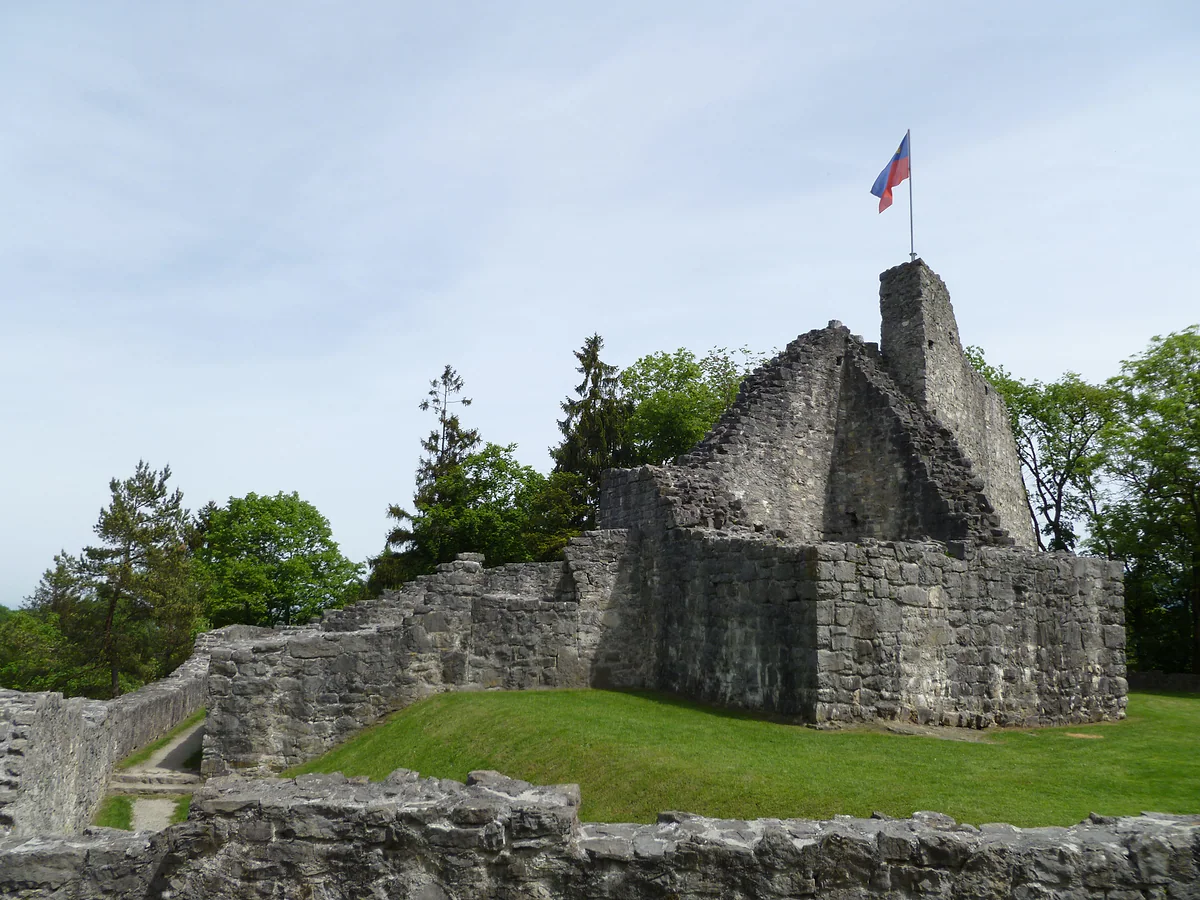
Nearby are the ruins of the Schellenberg castles, upper and lower, open at any time and the other good reason to come up. My plan would be ruins in the morning, lunch in the village and the house at 14:00. The rest of the municipality is covered in my guide to Schellenberg.
For how this one sits alongside the country’s other collections, read the Liechtenstein museums overview.
Visiting the Bäuerliches WohnMuseum
| Item | Detail |
|---|---|
| Address | Dorf 62, 9488 Schellenberg |
| Season | April to October |
| Days | First and last Sunday of each month |
| Hours | 14:00-17:00 |
| Entry | Free |
| Dates left in 2026 | 4 and 25 October |
Hours according to the LandesMuseum, which runs the house. For other days, ask the LandesMuseum about group visits.
Test yourself
True or false?
0/4 Pick before you peek.
-
The Biedermann House has stood on the same spot since 1518.
See the answer
False. It was taken down and put up again in 1687, 1793-94 and 1992-93. It was the farmer's movable property, and he took it with him when he changed lease.
-
The museum opens every weekend in summer.
See the answer
False. It only opens from April to October, on the first and last Sunday of each month, 14:00 to 17:00.
-
The Biedermann family lived in the house for over a century.
See the answer
True. They lived there more than 150 years. The Lexikon places the same branch of the family there from 1814 to 1964.
-
Entry to the farmhouse museum is free.
See the answer
True. According to the LandesMuseum, which runs it, admission costs nothing.
- Year the house was built
- 1518
- Year it opened as a museum
- 1994
- Recorded moves of the house
- 3
- Entry
- CHF 0
Map
Where Schellenberg Farmhouse Museum is
The dashed line is the border: Switzerland across the Rhine, Austria to the north and east. Every number opens its guide.
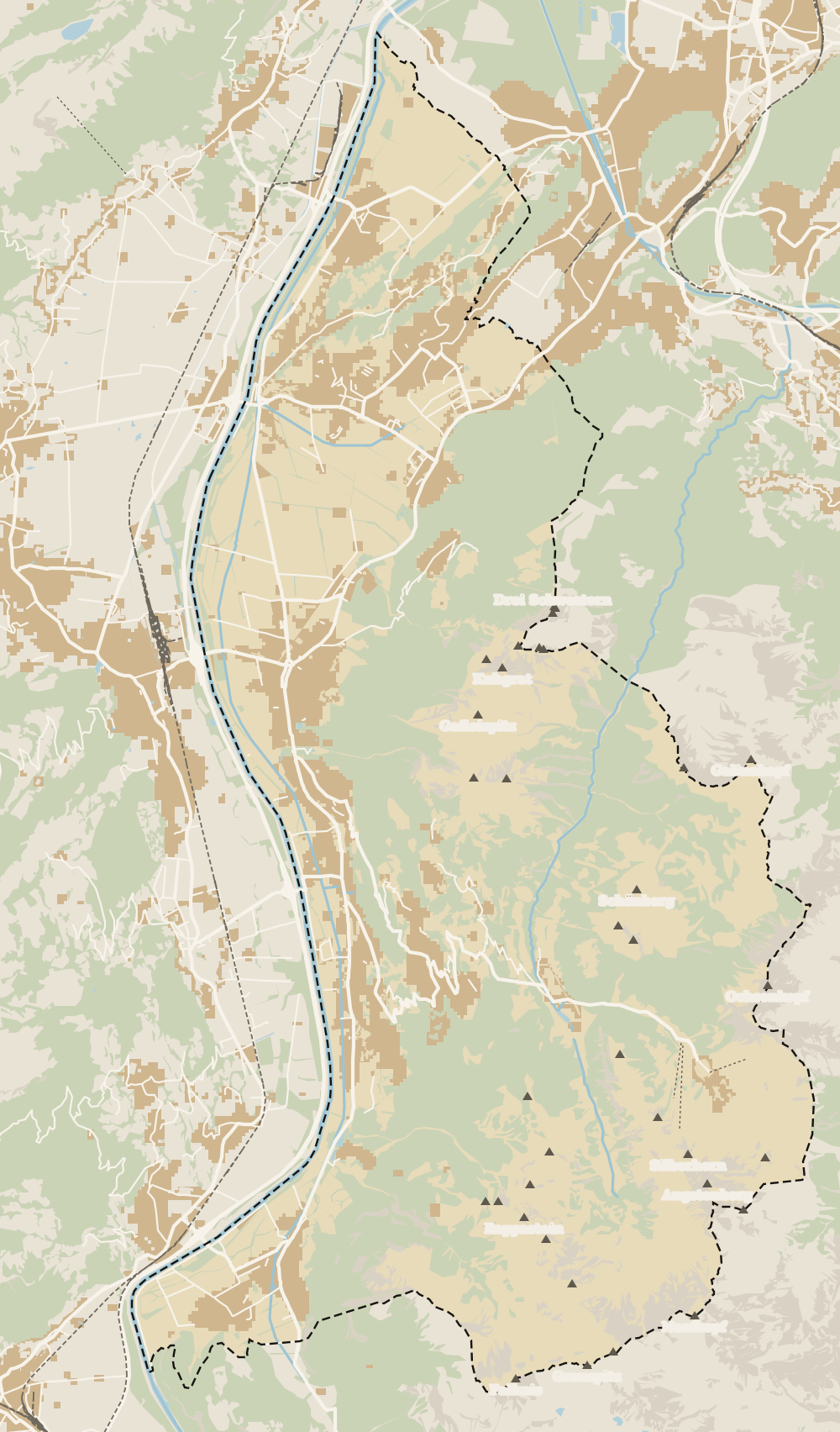 1Schellenberg Farmhouse Museum 2Schellenberg 3Hinterschellenberg 4Schellenberg castles
 Map data © OpenStreetMap contributors (ODbL)
0 of 168 Liechtenstein guides
Your next stamp
- Schellenberg
- Postage Stamp Museum
- Opening hours
- Küefer-Martis-Huus
- DoMuS
- National Museum
- Eschen
- Stage 5: Ruggell - Schaanwald
- Things to do
- One day
- Two days
- Municipalities
- Oberland
- Unterland
- Map
- Vaduz
- Städtle
- Mitteldorf
- Vaduz Castle
- Vaduz Cathedral
- Parliament
- Government Building
- Vaduz Town Hall
- Red House
- Prince's Winery
- Old Rhine Bridge
- Schaan
- Schalun Castle Ruin
- Balzers
- Citytrain
- Triesen
- Triesenberg
- Walser Museum
- Planken
- Gutenberg Castle
- The Rhine
- Schaan Roman fort
- Dux
- St Mamertus chapel
- Lawena valley
- Mäls
- TAK Theatre
- Castles
- Churches and chapels
- Viewpoints
- Mountains
- Museums
- Kunstmuseum
- Mountain huts
- Hilti Art Foundation
- Pfälzerhütte
- Gafadura hut
- Treasure Chamber
- Kunstraum Engländerbau
- Masescha
- Gaflei
- Nendeln
- Mauren
- Silum
- Rotenboden
- Schaanwald
- Gamprin
- Wangerberg
- Bendern
- Steg
- Ruggell
- Samina valley
- Cross-country skiing at Steg
- Ruggeller Riet
- Hinterschellenberg
- Fürstensteig
- Is it a country?
- Liechtenstein Trail
- Malbun
- Schellenberg castles
- Eschnerberg
- Malbun in summer
- Population
- Stage 1: Balzers - Triesenberg
- Lakes
- Sareis
- Size
- Stage 2: Triesenberg - Vaduz
- Malbun Peace Chapel
- Political system
- Stage 3: Vaduz - Nendeln
- Swimming pools
- Language
- Skiing in Malbun
- Stage 4: Nendeln - Ruggell
- Dialect
- Malbun ski pass
- Hotels in Malbun
- Stamps
- Princess Gina Trail
- Hut-to-hut Route 66
- Hiking
- Getting there
- In winter
- Weather
- Airport
- Best time to visit
- In summer
- Events
- With kids
- Zurich to Liechtenstein
- National day
- Sargans to Vaduz
- Christmas
- Feldkirch to Vaduz
- By train
- Traditions
- Carnival
- Getting around
- Buses
- Funken Sunday
- Alpine cattle drive
- Driving and vignette
- Parking
- Bike hire
- Cycling
- EU and Schengen
- Entry requirements
- Borders and customs
- The prince
- The princely house
- The flag
- The coat of arms
- The national anthem
- History
- Second World War
- No army
- Facts
- Why so rich?
- Banks and tax haven
- Where to stay
- Hilti
- Hotels in Vaduz
- False teeth
- Hostel and camping
- Rent the country?
- Where to eat
- Restaurants in Vaduz
- Swiss invasions
- Bars and nightlife
- Food
- Käsknöpfle
- Wine
- Casinos
- Adventure Pass
- Rainy days
- Guided tours
- Tourist office
- Day trips
- Passport stamp
- Music festivals
- Phone and roaming
- Currency and payments
- Prices and budget
- Tipping
- Plugs and sockets
- Tap water
- Public holidays
- Safety
- Accessibility
- With a dog
- Shopping and souvenirs
Frequently asked questions
When is the Schellenberg farmhouse museum open?
From April to October, on the first and last Sunday of each month, 14:00 to 17:00. In 2026 it has two afternoons left, 4 and 25 October.
How much does it cost?
Nothing. Entry to the Bäuerliches WohnMuseum is free.
What is the Biedermann House?
A log farmhouse built in 1518 and named after the Biedermann family, who lived in it for more than 150 years. Since 1994 it has been the LandesMuseum's rural life museum.
Why do people say the house has moved?
Because under the law of the time the house was the movable property of the tenant farmer. When he took on a new lease, he dismantled it and rebuilt it on the new plot. It was moved in 1687, in 1793-94 and last in 1992-93, to save it from demolition.
What is there to see inside?
How a Liechtenstein family lived around 1900, with the kitchen, the parlour, a smaller side room and the bedrooms upstairs. The structure itself shows how people built and farmed in the late Middle Ages.
How do I get there?
It's in Schellenberg, in the Unterland. LIEmobil routes 32 and 33 reach the municipality, and stage 5 of the Liechtenstein Trail passes the museum.
By
Tourism graduate with a master’s in Tourism Management and Planning from the University of Málaga, who has travelled across Europe. He writes every guide from official sources and his own judgement.
Published on . Facts checked on .
Sources
Photos: SchuetzeZH (CC BY-SA 4.0), via Wikimedia Commons.