Twelve checked facts
Fun facts about Liechtenstein that I can actually back up
Liechtenstein has more jobs than residents, has had no army since 1868, sings its anthem to the tune of 'God Save the King' and added a crown to its flag because it matched Haiti's. Under the constitution, every municipality has the right to leave the country. And women only got the vote in 1984. Here they are, ranked and sourced.
In 30 seconds
Full read: 4 min
- Liechtenstein has more jobs than residents because more than half its workers commute in from abroad every day.
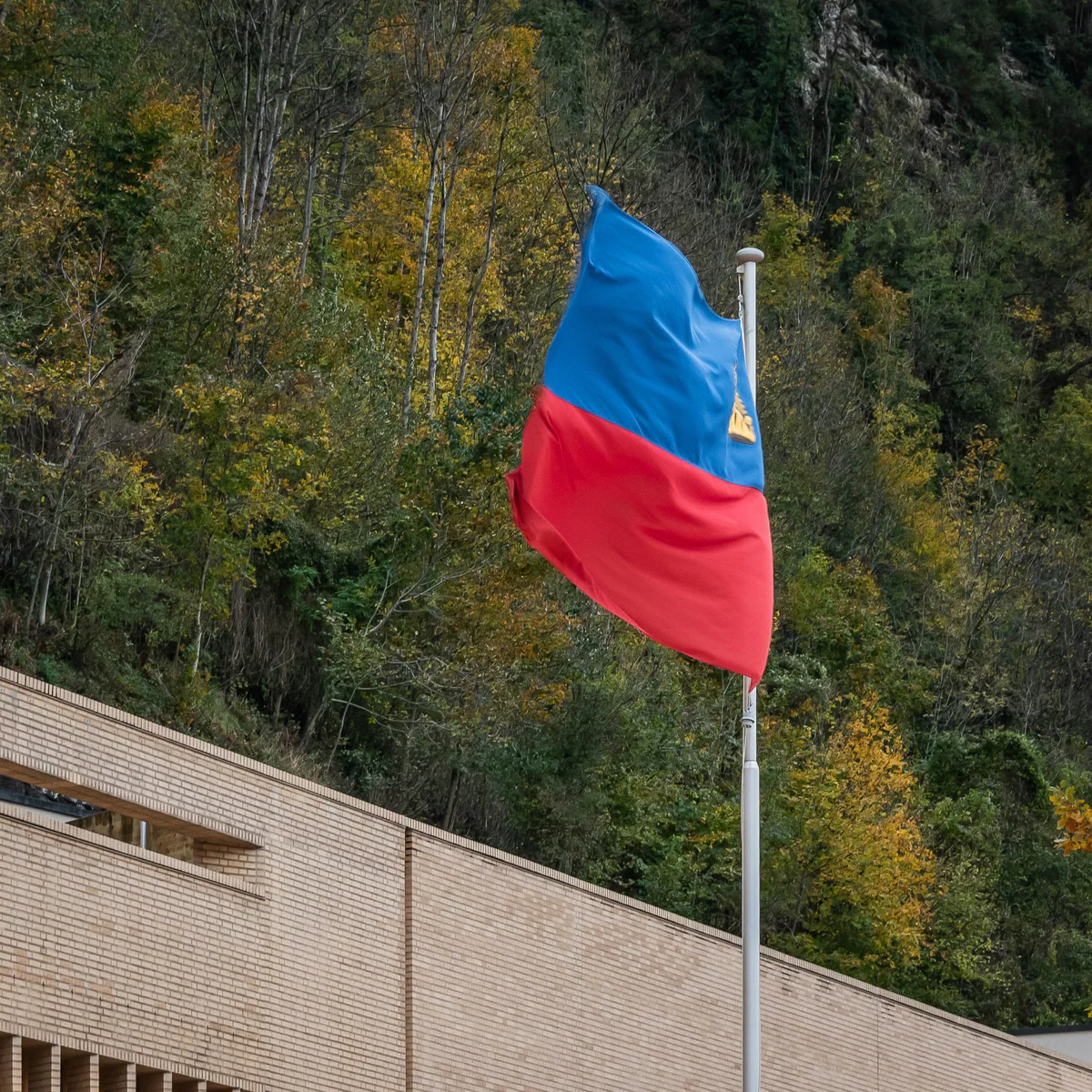
- Its flag has carried a crown since 1937 because it was identical to Haiti's.
- It has had no army since 1868, and its anthem uses the tune of 'God Save the King'.
- Each municipality has a constitutional right to secede, and women have voted only since 1984.
Be wary of the fact lists doing the rounds online. Plenty of them repeat stories with no source behind them, like the 80 soldiers who came home as 81. I've only included what I could check on official websites or in the Historisches Lexikon.

Before you go
What I would keep in mind
-
01 My tip
A railway station named after a company
The railway through the country is 9 km long, run by Austrian Federal Railways, with three stops. One of them is called Forst Hilti, after the multinational based in Schaan.
Hilti in Liechtenstein -
02 Money
You pay in Swiss francs
The currency has been the Swiss franc since 1924. The official tourist board says euros are accepted in most places, but don't count on it everywhere.
Liechtenstein's currency -
03 Most beautiful
The smallest German-speaking country
The country's official portal calls it the smallest state in the German-speaking world, and it's the fourth smallest in Europe at 160 km², roughly 62 square miles.
how big Liechtenstein is
What I would book
My ranking, scored
My favourite Liechtenstein facts
My score out of 10 reflects how surprising the fact is and how much it helps you understand the country when you visit. It's a personal opinion; the facts come from official sources or the Historisches Lexikon.
0 of 8 seen
-
The flag's crown is Haiti's doing
The blue-and-red flag matched Haiti's, so in 1937, after the Berlin Olympics, the princely crown was added to tell them apart.
9.6 out of 10
-
Every municipality can leave the country
Article 4 of the constitution gives each of the eleven municipalities the right to leave the state if a majority of its voters decide to.
9.4 out of 10
-
There are more jobs than people
At the end of 2024, 43,441 people worked in the country and 24,943 of them commuted in from abroad. A year later there were 41,228 residents.
9.2 out of 10
-
The anthem sounds like ours
'Oben am jungen Rhein' is sung to the tune of 'God Save the King', and people raise a hand at the line cheering the prince.
9.0 out of 10
-
No army since 1868
On 12 February 1868 Prince Johann II disbanded a contingent of 82 men that was no longer needed once the German Confederation had gone.
8.8 out of 10
-
Switzerland has shelled it by mistake
In 1968 the Swiss army accidentally fired five shells into Malbun, according to the Historisches Lexikon, and its exercises set fire to Balzers forest more than once.
8.5 out of 10
-
Women have voted only since 1984
Men approved women's suffrage in a 1984 referendum by 2,370 votes to 2,251, a margin of just 119.
8.2 out of 10
-
A porcelain teeth factory in Schaan
Ivoclar moved to Schaan in 1933 as a false-teeth factory, with five years tax-free, and today sells dental products in around 130 countries.
7.9 out of 10
Most lists of Liechtenstein facts copy the same ten items from each other, and a few of them have nothing behind them. I’ve done the opposite. I’ve looked up each fact in the official statistics, the constitution, the princely house’s website or the Historisches Lexikon, and anything I couldn’t verify I’ve either left out or flagged clearly as unconfirmed.
A tiny country with outsized numbers
At 160 km², about 62 square miles, Liechtenstein ranks fourth among Europe’s smallest countries and sixth worldwide, according to the Office of Statistics. The official portal adds that it’s the smallest state in the German-speaking world, a point I pick up in the language of Liechtenstein. But the surprise isn’t the size so much as what fits into it.
By the close of 2024 there were 43,441 people working in Liechtenstein, outnumbering its 41,228 residents. The explanation is that 24,943 of them lived abroad and crossed the border every day. There’s one company for every eight residents, says the official portal, and the Office of Statistics counts about 780 cars per 1,000 people, which it calls a European high. The reasons for all that prosperity are unpacked in why Liechtenstein is so rich, and the label that still follows the money around gets its own page, is Liechtenstein a tax haven?
Another fact that throws visitors is that the capital isn’t the biggest municipality. Schaan has 6,294 residents and Vaduz 6,108. And here’s one for map lovers. Liechtenstein is surrounded only by landlocked countries, Switzerland and Austria, so, like Uzbekistan, it’s doubly landlocked, and those two are the only such cases on Earth. To reach the sea from Vaduz you have to cross at least two borders.
Symbols with odd back stories
The flag has carried a crown since 1937 because, plain blue and red, it was identical to Haiti’s, a clash the Historisches Lexikon places straight after the 1936 Berlin Olympics. The whole tale is on my page about the Liechtenstein flag.
The anthem, ‘Oben am jungen Rhein’, is sung to exactly the same tune as ‘God Save the King’. In the 19th century more than 30 countries used the melody and Switzerland only dropped it in 1961. Liechtenstein has kept it, and at the line cheering the prince people raise a hand. The story of the words is on the Liechtenstein national anthem page.
Then there are the stamps. The country has issued its own since 1 February 1912, even though Switzerland has handled its post since 1921, and the Postage Stamp Museum in Vaduz holds every stamp printed since.
A state that works differently
It has had no army since 12 February 1868, when Prince Johann II disbanded a contingent of 82 men, and the details are on Liechtenstein without an army. There’s no airport either, and the railway through the country is 9 km of track run by Austrian Federal Railways, with three stops. One of them is called Forst Hilti, after the multinational based in Schaan.
The constitution holds a surprise in Article 4. Any of the eleven municipalities can break away if most of its voters say so. And the prince, who must assent to every law, may not hold another nationality, and nor may the next in line. Another oddity is that for over a century the princes never set foot in the place. The first to visit was Alois II, in 1842, and the first to live there was Franz Joseph II, in 1938.
The ones few people mention
Women’s suffrage at national level dates only from 1984, when men approved it in a referendum by 2,370 votes to 2,251. And Switzerland, its closest partner, has given it more than one fright. According to the Historisches Lexikon, in 1968 the Swiss army fired five shells into Malbun by mistake, and its exercises near the border repeatedly set fire to Balzers forest. Those incidents are gathered under Swiss invasions of Liechtenstein.
The fact I don’t believe
The one that circulates most in English is the tale of the 80 soldiers who went to war in 1866 and came home as 81. No official website carries it, and the Historisches Lexikon, which gives the army a long article, doesn’t mention it. What’s documented is a contingent of 82 men who stood guard on an Alpine pass and never saw combat. I find the truth more interesting than the punchline, which is why it isn’t on my list. The same goes for the story that you can hire the whole country for a party, which I checked in renting Liechtenstein and found no source for.
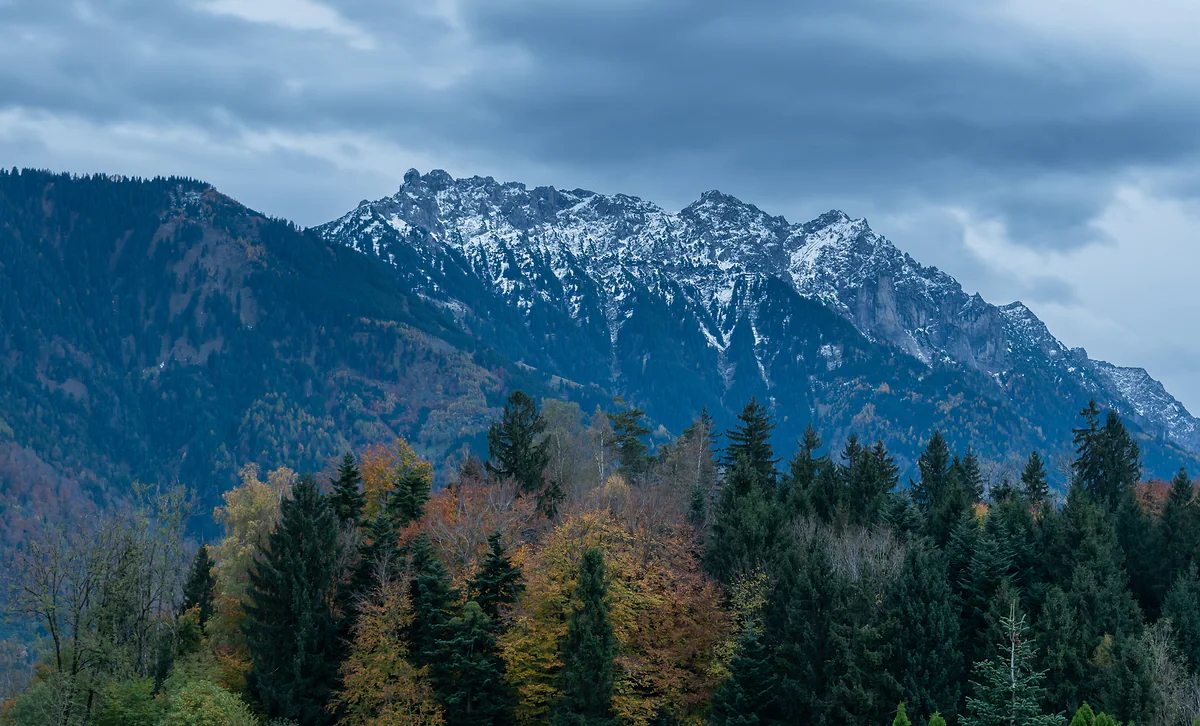
The Three Sisters, rocky snow-dusted peaks above the autumn forest, under grey clouds.
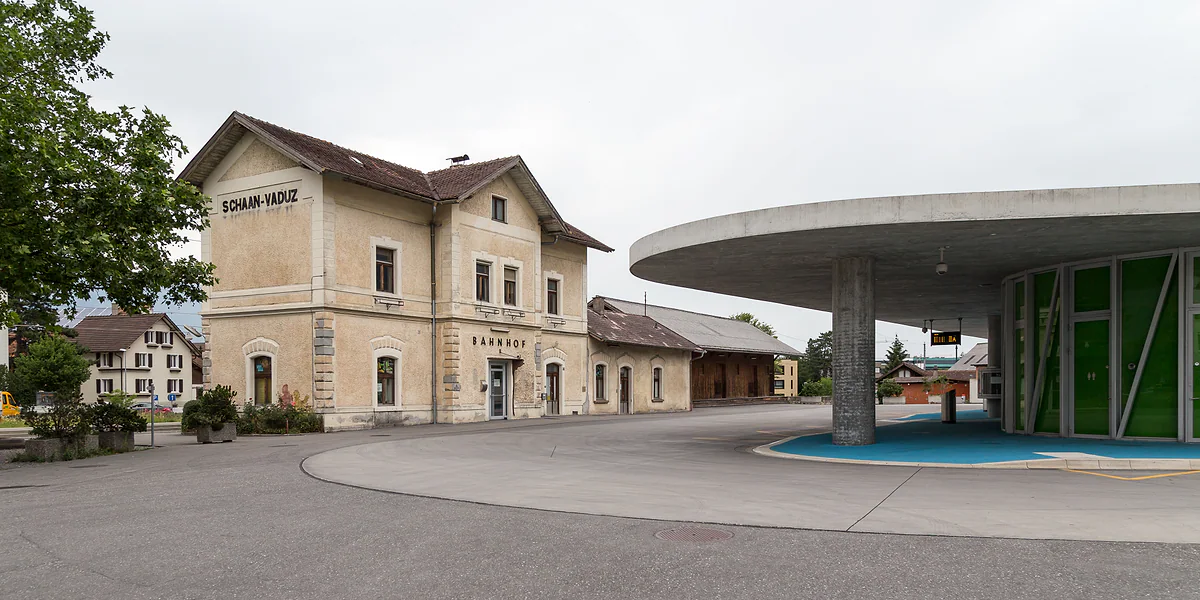
The Schaan-Vaduz railway station, in pale stone, with the round canopy of the bus station beside it.
Liechtenstein in curious numbers
| Fact | Figure |
|---|---|
| Area | 160 km², Europe's fourth smallest country |
| Most populous municipality | Schaan (6,294), ahead of the capital, Vaduz (6,108) |
| Companies | One for every eight residents |
| Cars | About 780 cars per 1,000 residents |
| Railway | 9 km of track, run by Austrian Federal Railways, with three stops |
| Highest and lowest points | Grauspitz (about 2,600 m) and Ruggeller Riet (430 m) |
| Own stamps | Since 1 February 1912 |
Sources: Office of Statistics (Liechtenstein in Zahlen 2026 and population at 31 December 2025), liechtenstein.li and the Historisches Lexikon.
Test yourself
True or false?
0/4 Pick before you peek.
-
Vaduz is Liechtenstein's most populous municipality.
See the answer
False. It's the capital, but Schaan has more people, 6,294 residents against 6,108 at the end of 2025, according to the Office of Statistics.
-
Liechtenstein has more jobs than residents.
See the answer
True. At the end of 2024, 43,441 people worked in the country, while the resident population at the end of 2025 was 41,228.
-
Liechtenstein has its own railway network covering the whole country.
See the answer
False. There are just 9 km of track with three stops, between Feldkirch and Buchs, and the line is run by Austrian Federal Railways.
-
Liechtenstein has more cars per head than Switzerland and Austria.
See the answer
True. The Office of Statistics puts it at about 780 cars per 1,000 residents, against roughly 540 in Switzerland and 570 in Austria.
- Jobs at the end of 2024
- 43,441
- One company for every eight residents
- 1 in 8
- Cars per 1,000 residents
- 780
- Railway track inside the country
- 9 km
0 of 168 Liechtenstein guides
Your next stamp
- History
- Political system
- No army
- Is it a country?
- Rent the country?
- Hilti
- Banks and tax haven
- Second World War
- Things to do
- One day
- Two days
- Municipalities
- Oberland
- Unterland
- Map
- Vaduz
- Städtle
- Mitteldorf
- Vaduz Castle
- Vaduz Cathedral
- Parliament
- Government Building
- Vaduz Town Hall
- Red House
- Prince's Winery
- Old Rhine Bridge
- Schaan
- Schalun Castle Ruin
- Balzers
- Citytrain
- Triesen
- Triesenberg
- Walser Museum
- Planken
- Gutenberg Castle
- The Rhine
- Schaan Roman fort
- Dux
- St Mamertus chapel
- Lawena valley
- Mäls
- DoMuS
- TAK Theatre
- Castles
- Churches and chapels
- Viewpoints
- Mountains
- Museums
- Kunstmuseum
- Mountain huts
- Hilti Art Foundation
- Pfälzerhütte
- Gafadura hut
- National Museum
- Treasure Chamber
- Postage Stamp Museum
- Kunstraum Engländerbau
- Eschen
- Masescha
- Gaflei
- Nendeln
- Mauren
- Silum
- Rotenboden
- Schaanwald
- Gamprin
- Wangerberg
- Bendern
- Steg
- Ruggell
- Samina valley
- Schellenberg Farmhouse Museum
- Cross-country skiing at Steg
- Küefer-Martis-Huus
- Ruggeller Riet
- Schellenberg
- Hinterschellenberg
- Fürstensteig
- Liechtenstein Trail
- Malbun
- Schellenberg castles
- Eschnerberg
- Malbun in summer
- Population
- Stage 1: Balzers - Triesenberg
- Lakes
- Sareis
- Size
- Stage 2: Triesenberg - Vaduz
- Malbun Peace Chapel
- Stage 3: Vaduz - Nendeln
- Swimming pools
- Language
- Skiing in Malbun
- Stage 4: Nendeln - Ruggell
- Dialect
- Malbun ski pass
- Stage 5: Ruggell - Schaanwald
- Hotels in Malbun
- Stamps
- Princess Gina Trail
- Hut-to-hut Route 66
- Hiking
- Getting there
- In winter
- Weather
- Airport
- Best time to visit
- In summer
- Events
- With kids
- Zurich to Liechtenstein
- National day
- Sargans to Vaduz
- Christmas
- Feldkirch to Vaduz
- By train
- Traditions
- Carnival
- Getting around
- Buses
- Funken Sunday
- Alpine cattle drive
- Driving and vignette
- Parking
- Bike hire
- Cycling
- EU and Schengen
- Entry requirements
- Borders and customs
- The prince
- The princely house
- The flag
- The coat of arms
- The national anthem
- Why so rich?
- Where to stay
- Hotels in Vaduz
- False teeth
- Hostel and camping
- Where to eat
- Restaurants in Vaduz
- Swiss invasions
- Bars and nightlife
- Food
- Käsknöpfle
- Wine
- Casinos
- Adventure Pass
- Rainy days
- Guided tours
- Tourist office
- Day trips
- Passport stamp
- Music festivals
- Phone and roaming
- Currency and payments
- Prices and budget
- Tipping
- Plugs and sockets
- Tap water
- Opening hours
- Public holidays
- Safety
- Accessibility
- With a dog
- Shopping and souvenirs
Frequently asked questions
What is Liechtenstein famous for?
For being tiny and wealthy, for its prince, for having no army since 1868 and for industrial firms such as Hilti. Its anthem, sung to the tune of 'God Save the King', usually surprises British visitors.
Is Liechtenstein the smallest country in Europe?
No. At 160 km² it's the fourth smallest in Europe and the sixth smallest in the world, according to the Office of Statistics. Vatican City, Monaco and San Marino are smaller.
Why does Liechtenstein have more workers than residents?
Because 24,943 of the 43,441 people working in the country at the end of 2024 lived abroad and crossed the border every day, mostly from Switzerland and Austria.
Does Liechtenstein have an airport?
No. The main airport for getting there is Zurich, about 115 km away, from where you continue by train and bus or by car. Altenrhein and Friedrichshafen are closer.
Is Liechtenstein one of only two doubly landlocked countries?
Yes. It's surrounded only by landlocked countries, Switzerland and Austria, and the only other case in the world is Uzbekistan.
Which Liechtenstein fact is widely repeated but unproven?
The story of 80 soldiers who went to war in 1866 and came back as 81. It isn't in any official source or in the Historisches Lexikon, which does record a contingent of 82 men that never saw combat.
By
Tourism graduate with a master’s in Tourism Management and Planning from the University of Málaga, who has travelled across Europe. He writes every guide from official sources and his own judgement.
Published on . Facts checked on .
Sources
Photos: Tournasol7 (CC BY 4.0); Tournasol7 (CC BY 4.0); JoachimKohlerBremen (CC BY-SA 4.0), via Wikimedia Commons.