Vaduz, a pocket-sized capital you can walk in a morning
Vaduz is the capital of Liechtenstein and seat of the government, the parliament and the Prince's residence, with 6,108 residents at the end of 2025. You can walk it in a morning, from the government quarter to the town hall along the pedestrianised Städtle, past six museums within a few hundred metres, with the castle 120 m above, closed to visitors.
In 30 seconds
Full read: 4 min
Vaduz is Liechtenstein's capital, with 6,108 residents at the end of 2025; Schaan, with 6,294, is larger.
The centre is the pedestrianised Städtle, with six museums within a few hundred metres and the government quarter at its southern end.
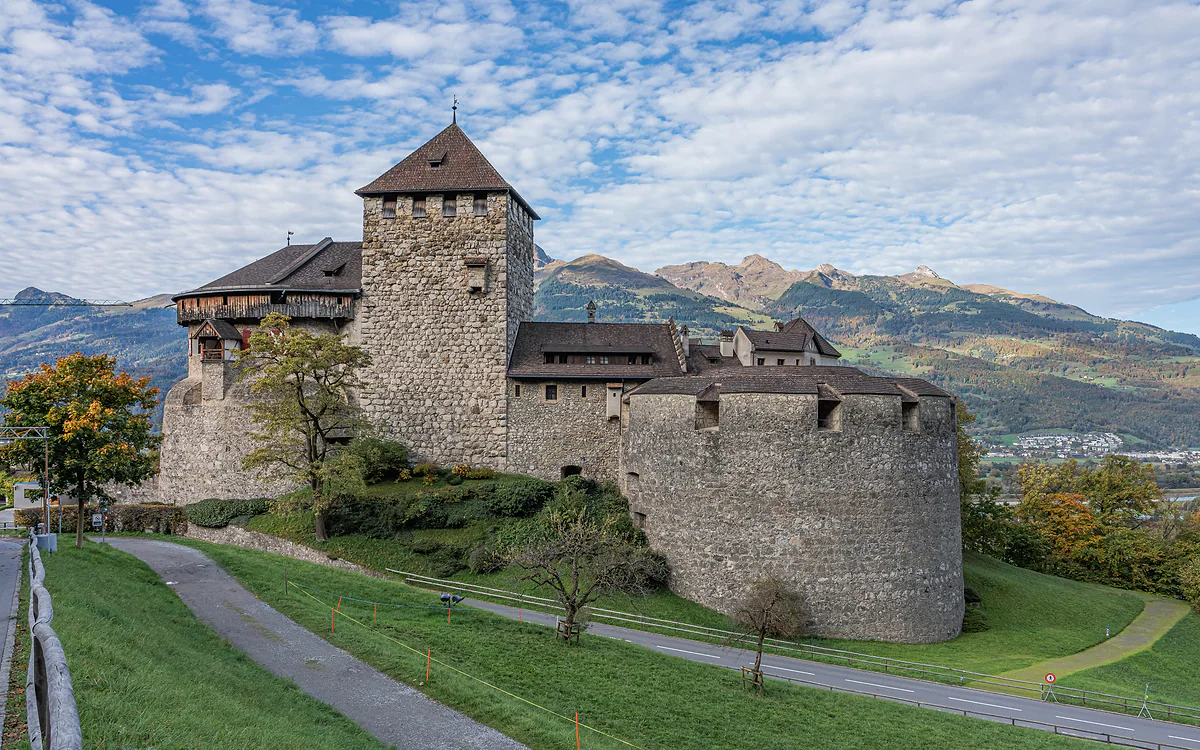
The castle is the Prince's home and can't be visited; you see it from below, from its path and from the Red House.
From Zurich it's a train to Sargans and bus 12E, 1 h 40 min to 2 h from the airport.
I'd reach Vaduz before 10:00, when the museums open, and keep the afternoon for walking up into the Mitteldorf vineyards. I'd look at the castle from below and from the Red House, because you can't go in, and the film at the Altes Kino is as close as you'll get.
Sergio LeponeMy advice
On the calendar
The dates at a glance
2Oct2026
Vaduz Fair (Jahrmarkt)
Vaduz
3Oct2026
Lange Nacht der Museen
Museums in Vaduz
Before you go
What I would keep in mind
01 Most beautiful
The Red House with the castle behind it
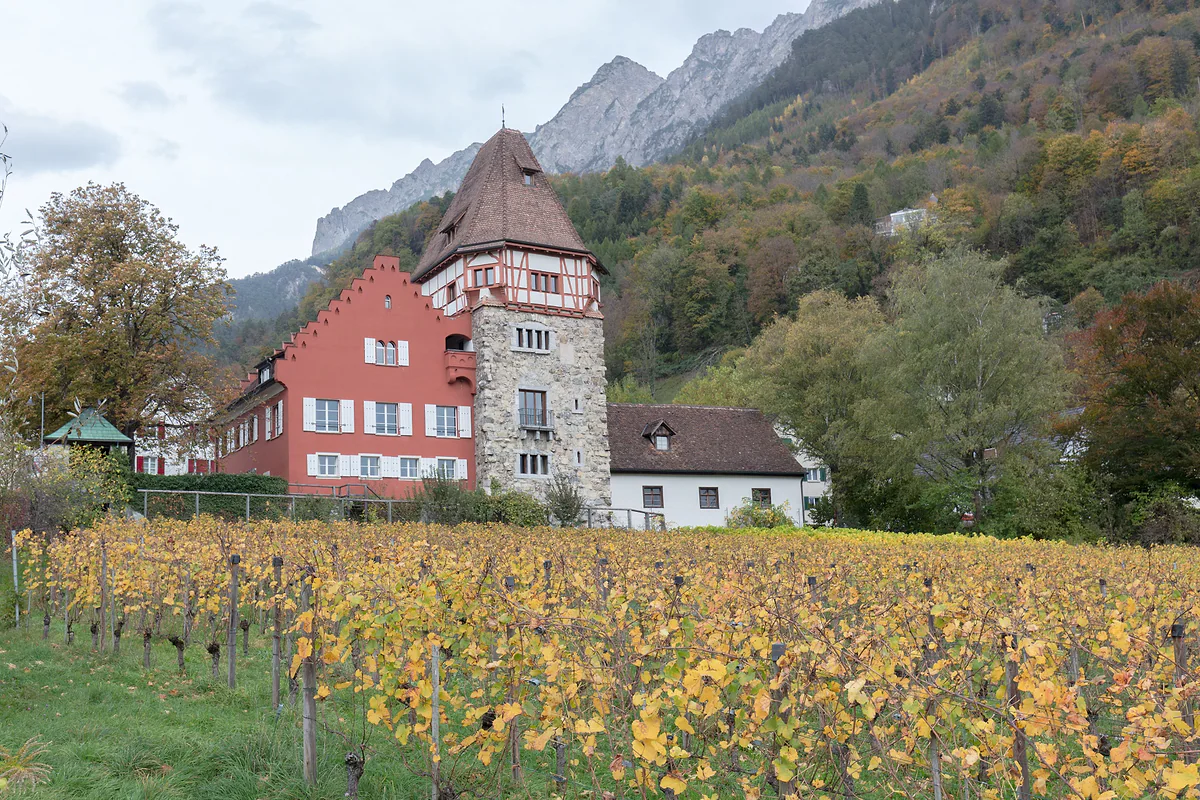
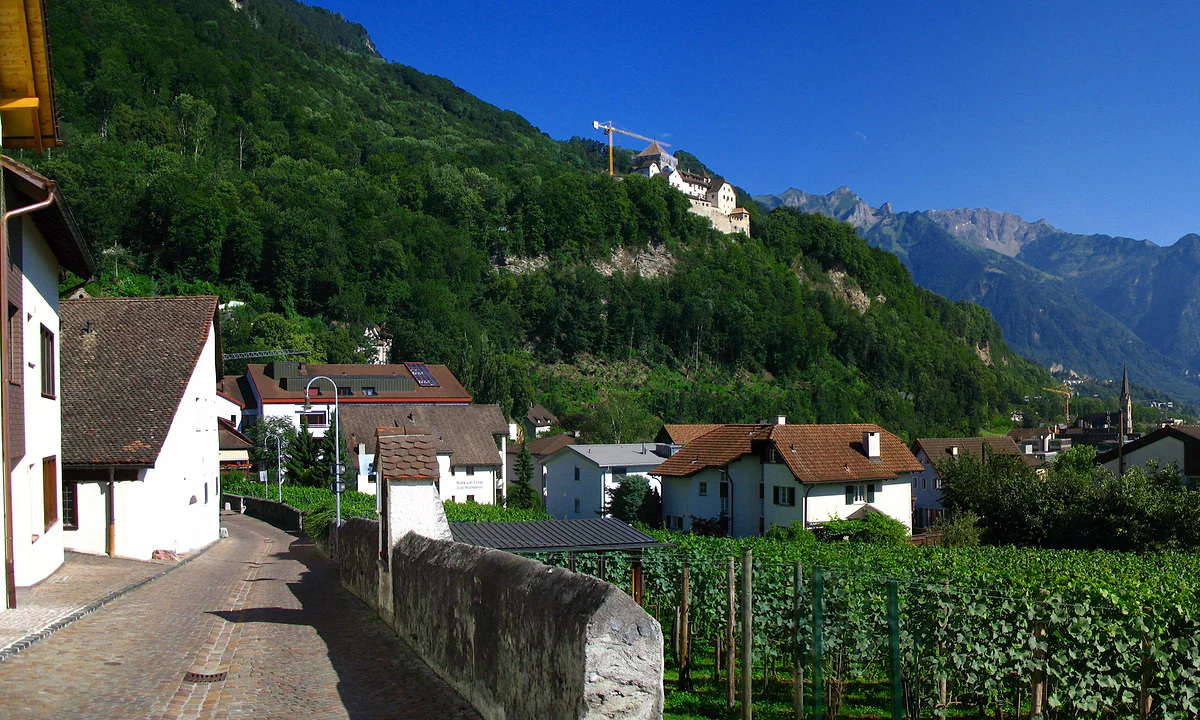
For me the picture of Vaduz isn't on the Städtle but a little further north, among the vines, with the Red House in front and the castle clinging to the rock behind. The Citytrain stops there for exactly that shot.
The Kunstmuseum and the Hilti Art Foundation share one CHF 15 ticket, but on Wednesdays entry is free. If your day in Vaduz can fall on a Wednesday, I'd shift it.
Central car parks charge CHF 1.50 an hour with the first hour free, paid up front at the meter in cash or through the parkingpay app. Carry some Swiss coins or install the app before you arrive.
Liechtenstein has no mainline station. From Sargans, LIEmobil bus 12E reaches Vaduz, Post in 23 minutes, and the 11 in 32. I'd check the day's timetable before leaving Zurich.
The currency is the Swiss franc. The official tourist board says euros are accepted in most places, but LIEmobil buses take no cash in any currency, only cards or the app.
The Hofkellerei runs a tasting with a guided visit of about 90 minutes from Monday to Saturday for CHF 19, with no booking needed for six people or fewer. It's the Vaduz splurge I'd make.
My own scores out of 10. I weigh what each place tells you about the country, what you can actually see (the castle is closed to visitors) and what it costs in time and money. Everything is under half an hour's walk from the Städtle.
Modern and contemporary art in two linked buildings on one CHF 15 ticket. It's the paid visit in Vaduz I think is best value, and it's free on Wednesdays.
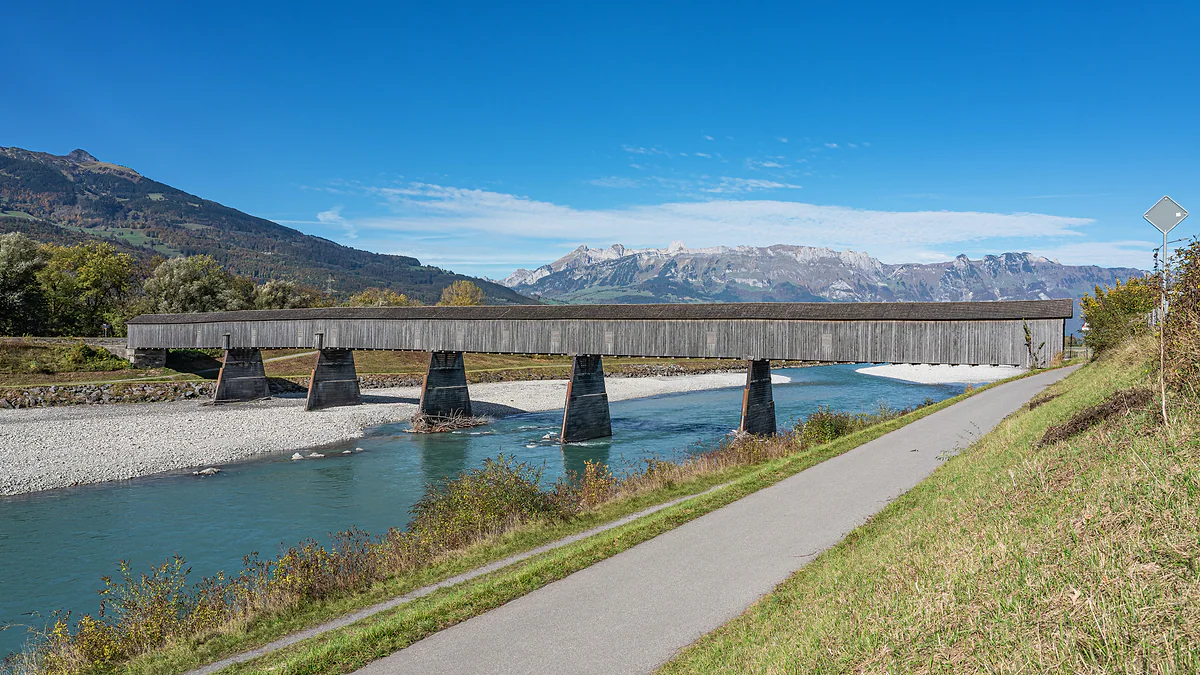
The last covered wooden bridge across the Rhine, 135 m to Switzerland on foot or by bike. It's on the edge of town, on the bank of the Rhine.
7.0 out of 10
Vaduz is one of those capitals that throws you on arrival. It has the seat of government, a 25-member parliament, the Prince’s residence and a cathedral, yet it fits into a morning on foot and isn’t even the country’s most populous municipality. I think that’s its charm, as long as you turn up knowing what’s there and what isn’t.
Why is Vaduz the capital if it isn’t the biggest town?
Because the constitution says so, naming it the Hauptort and seat of the parliament and government. On headcount it loses to Schaan, its neighbour to the north, which had 6,294 residents at the end of 2025 against Vaduz’s 6,108. The capital status is historical. The old court district of Vaduz became a county in 1342, covering most of today’s country, and Prince Johann Adam bought it in 1712. Seven years later Emperor Charles VI joined it to the lordship of Schellenberg and raised the lot to a principality.
The municipality dates the first written record to 1150 and the market rights to 1592, granted by Rudolf II. The farming village once known for its wine has become a small capital of banks, shops and offices. You can still see both sides of it, a short walk apart.
What I’d see, south to north along the Städtle
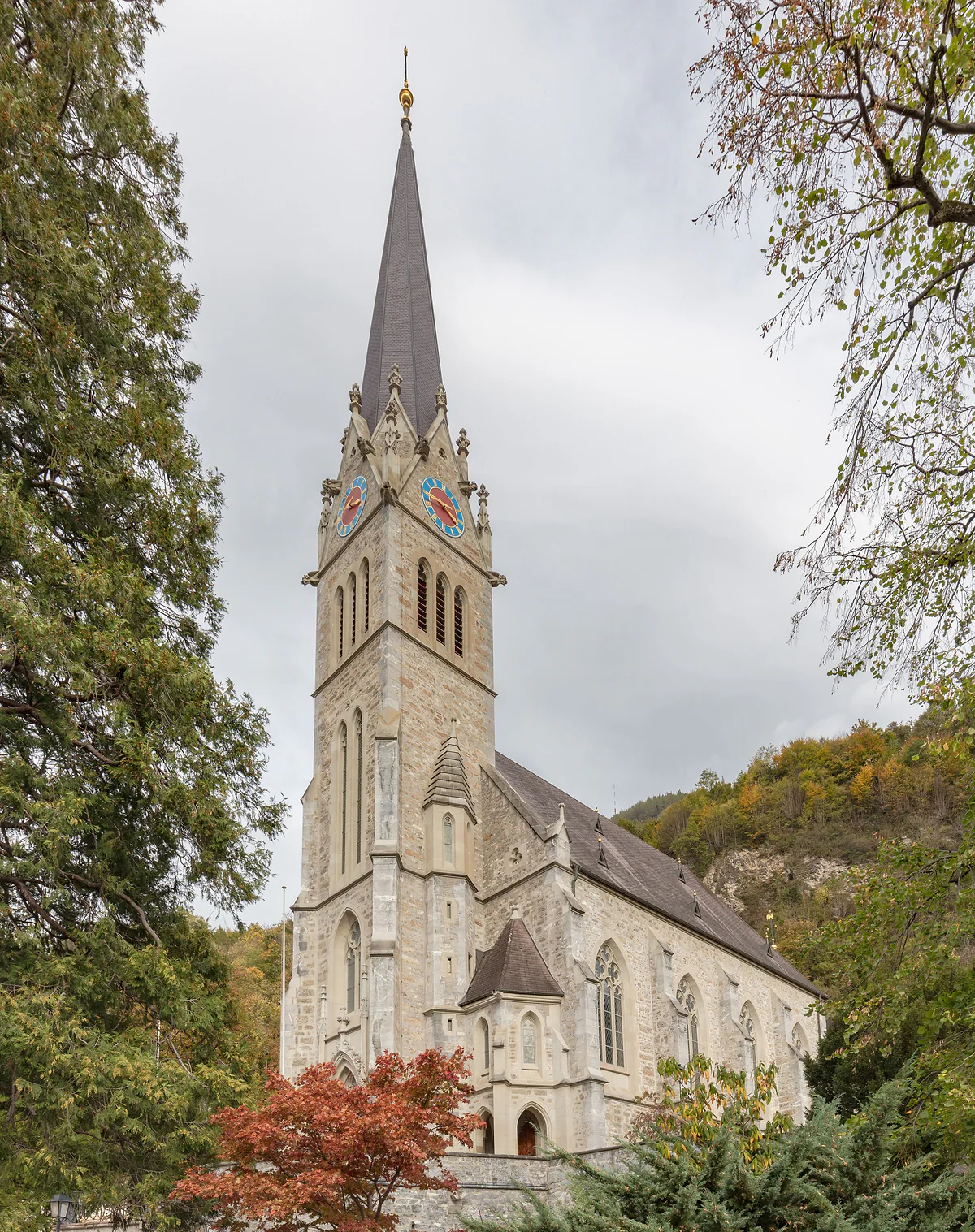
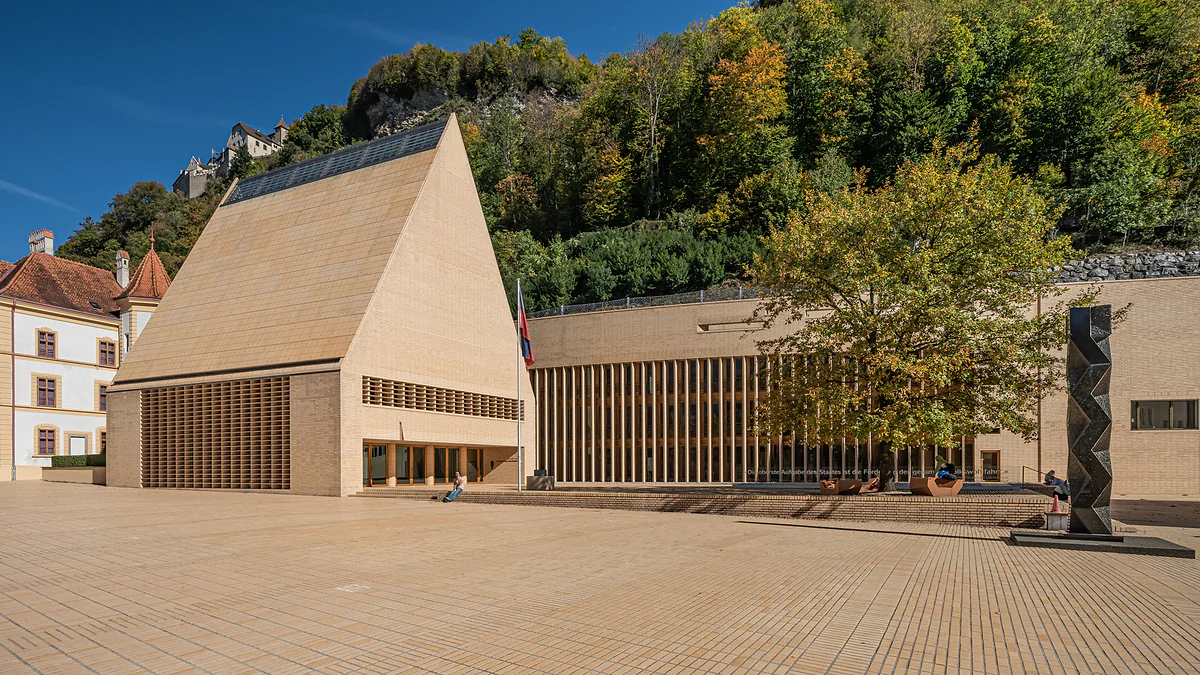
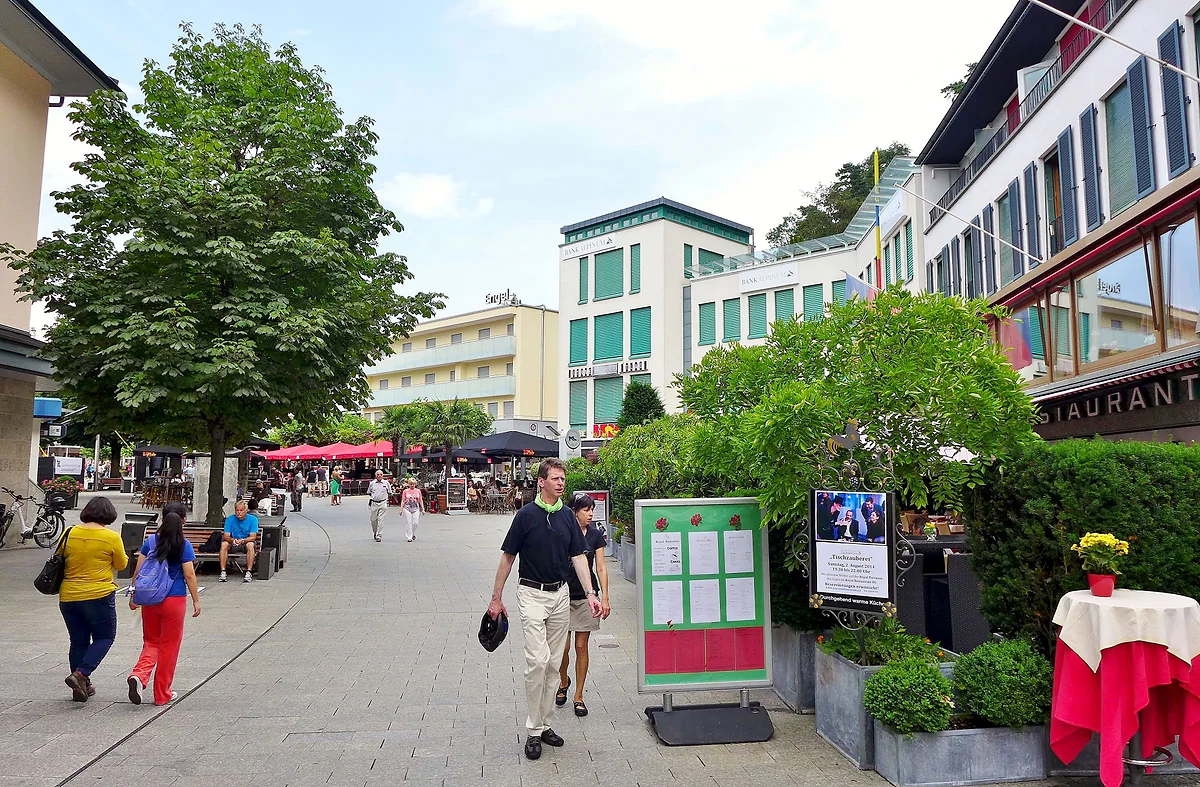
I’d start in the south, on Peter-Kaiser-Platz, where the 1905 government building and the Parliament of Liechtenstein, finished in 2008, make up the official quarter. St Florin’s Cathedral stands beside them. From there you walk up the Städtle, the pedestrian heart of Vaduz, which runs to Vaduz Town Hall and holds nearly everything worth visiting.
The tourist board counts six museums along that stretch, within a few hundred metres. My pick would be the Kunstmuseum with the Hilti Art Foundation, two buildings on a single CHF 15 ticket, free on Wednesdays. The LandesMuseum tells the country’s story and the Treasure Chamber, with Fabergé eggs and moon rock, comes on a CHF 13 combined ticket. The PostMuseum and the Kunstraum Engländerbau are free. The full line-up, with opening times, is in my guide to Liechtenstein’s museums.
Along the street there are sculptures by international artists, an open-air gallery in the tourist board’s words, and at the Liechtenstein Center they’ll put the souvenir stamp in your passport for CHF 3. In summer the Museumsplatz becomes a stage too, and in 2026 VaduzSoundz filled it from 22 to 25 July, one of the music festivals in Liechtenstein.
The castle is best admired from a distance
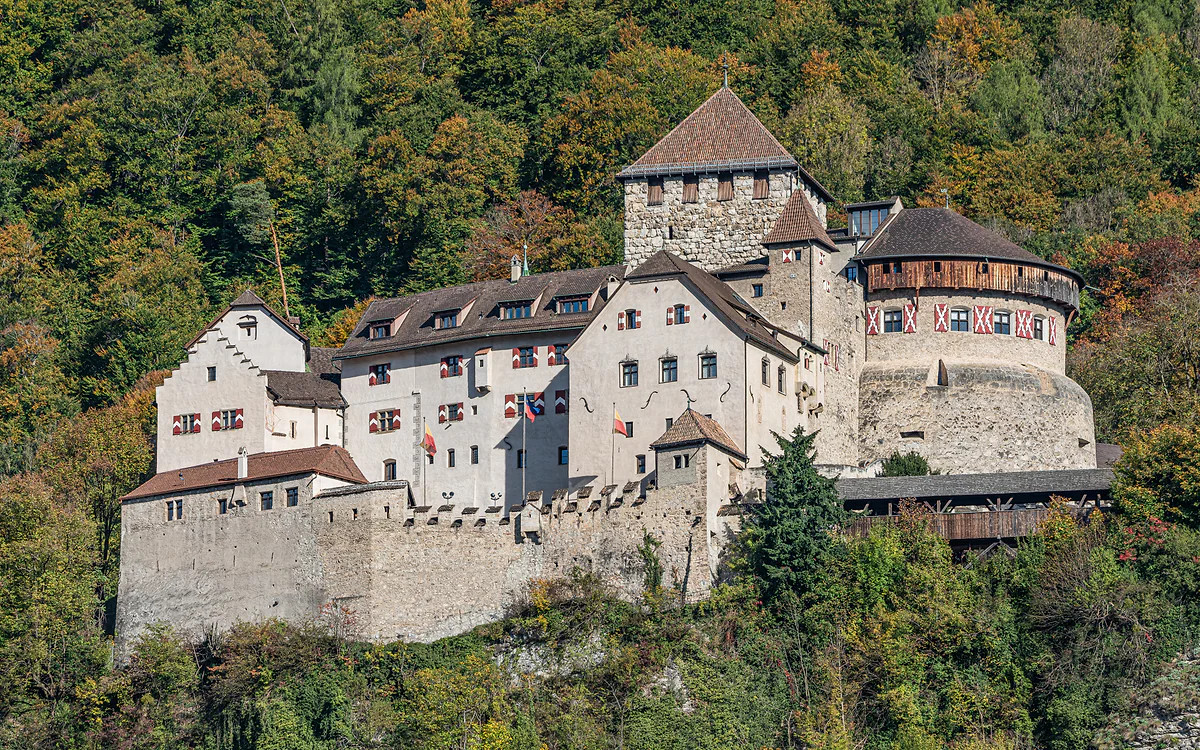
The castle sits about 120 m above the centre, on a rocky spur at 570 m. It’s the princely family’s home, so it can’t be visited. I’d still walk up the path from town, because the view over the Rhine valley from beneath its walls makes the climb worthwhile. The nearest you’ll get to going inside is the 20-minute film shown every day at 14:00 in the Altes Kino. I cover the rest in my guide to Vaduz Castle.
Up into the Mitteldorf vineyards
This is where plenty of people leave without seeing the best bit. North of the Städtle the old quarter climbs through protected vineyards, and in the middle stands the Red House, which the Historical Lexicon calls the town’s second landmark after the castle. From the lane below you get the picture of the house with the castle behind. A little further on is the Hofkellerei, the Prince’s winery, with tastings from Monday to Saturday and no booking needed for small groups.
If you’d rather not walk, the Citytrain covers the loop in 35 minutes from 1 April to 31 October, leaving at 13:00 and 16:30. To go at my own pace, I’d do it on foot.
Arriving without a car and getting about
The country has no airport and no mainline station. The usual route is a train to Sargans, Buchs or Feldkirch and then a LIEmobil bus. From Sargans the 12E takes 23 minutes, and the whole journey from Zurich airport runs to 1 h 40 min to 2 h with two changes. Once you’re in Vaduz, the centre is all walkable. Drivers should know the Städtle is pedestrianised and the town’s car parks cost CHF 1.50 per hour, first hour free, paid in advance and in cash.
Where to spend and where to save in Vaduz
A lot is free. The street, the sculptures, the government quarter, the cathedral from outside, the vineyards, the castle path and two museums. What I’d happily pay for is the Kunstmuseum and, if you like wine, the Hofkellerei tasting. Doing several things in one day, look at the ALL INCLUSIVE Adventure Pass, which for CHF 25 covers buses, museums, the Citytrain, the castle film and two wines at the winery. If you’re staying overnight, ask your hotel about the WELCOME pass, which is free. My shortlist is in hotels in Vaduz.
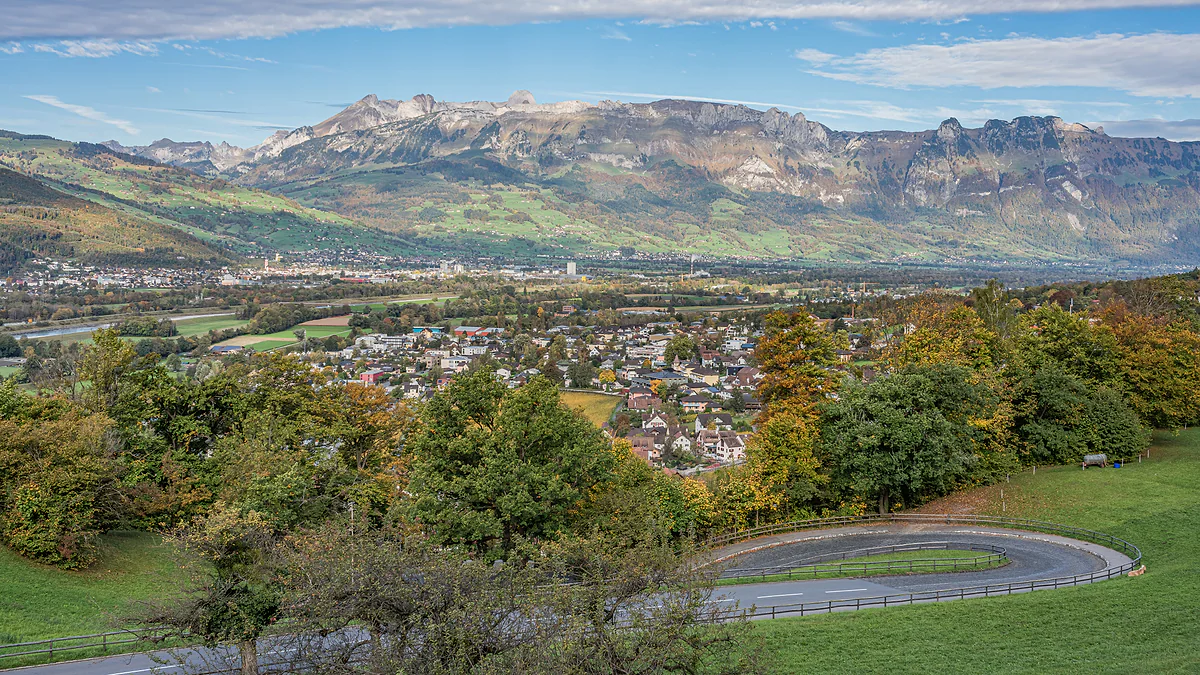
The Rhine valley seen from Vaduz Castle, with the town among autumn trees and the Swiss mountains on the horizon.
The pedestrian Städtle in Vaduz with strollers, trees, terraces and modern buildings at the foot of the slope.
Museums and visits in central Vaduz (2026)
Visit
Hours
Entry
Kunstmuseum and Hilti Art Foundation
Tuesday to Sunday 10:00-17:00, Thursday until 20:00, closed Monday
CHF 15, concession CHF 10, free on Wednesdays
LandesMuseum
Tuesday to Sunday 10:00-17:00, Wednesday until 20:00, closed Monday
CHF 10, concession CHF 7
Treasure Chamber (SchatzKammer)
Daily 10:00-17:00
Only with the LandesMuseum, CHF 13
PostMuseum
Daily 10:00-17:00
Free
Kunstraum Engländerbau
Daily 13:00-17:00
Free
Hofkellerei tasting
Monday to Friday 15:00, Saturday 14:00
CHF 19
Citytrain
1 April to 31 October, 13:00 and 16:30
CHF 12, children CHF 5
Under-16s go free at the Kunstmuseum and the LandesMuseum. On 15 August the Städtle museums open 10:00 to 20:00 without charge.
Vaduz in figures
Fact
Figure
Source
Residents at 31 Dec 2025
6,108
Office of Statistics
Area
17.3 km²
Liechtenstein in Figures 2026
Altitude
460 m
Liechtenstein in Figures 2026
First written record
1150
Municipality of Vaduz
Market rights
1592, from Emperor Rudolf II
Municipality of Vaduz
Test yourself
True or false?
0/4Pick before you peek.
Vaduz is the most populous municipality in Liechtenstein.
See the answer
False. It's the capital, but Schaan is bigger. At 31 December 2025 Schaan had 6,294 residents and Vaduz 6,108, according to the Office of Statistics.
You can buy a ticket to tour the inside of Vaduz Castle.
See the answer
False. The princely house says the castle is the home of the Prince and the Hereditary Prince and Princess and isn't open to the public, except for tours on exceptional occasions.
Vaduz was granted market rights by a Holy Roman Emperor.
See the answer
True. According to the municipality, Emperor Rudolf II granted Vaduz its market rights in 1592.
The pedestrianised Städtle is more than a century old.
See the answer
False. The plan to make the centre car-free was carried out from 1998, and the new pedestrian zone opened on 28 June 2004.
Residents at 31 December 2025
6,108
Year Rudolf II granted market rights
1592
How far the castle rises above the capital
120 m
Museums on the Städtle, a few hundred metres apart
6
Map
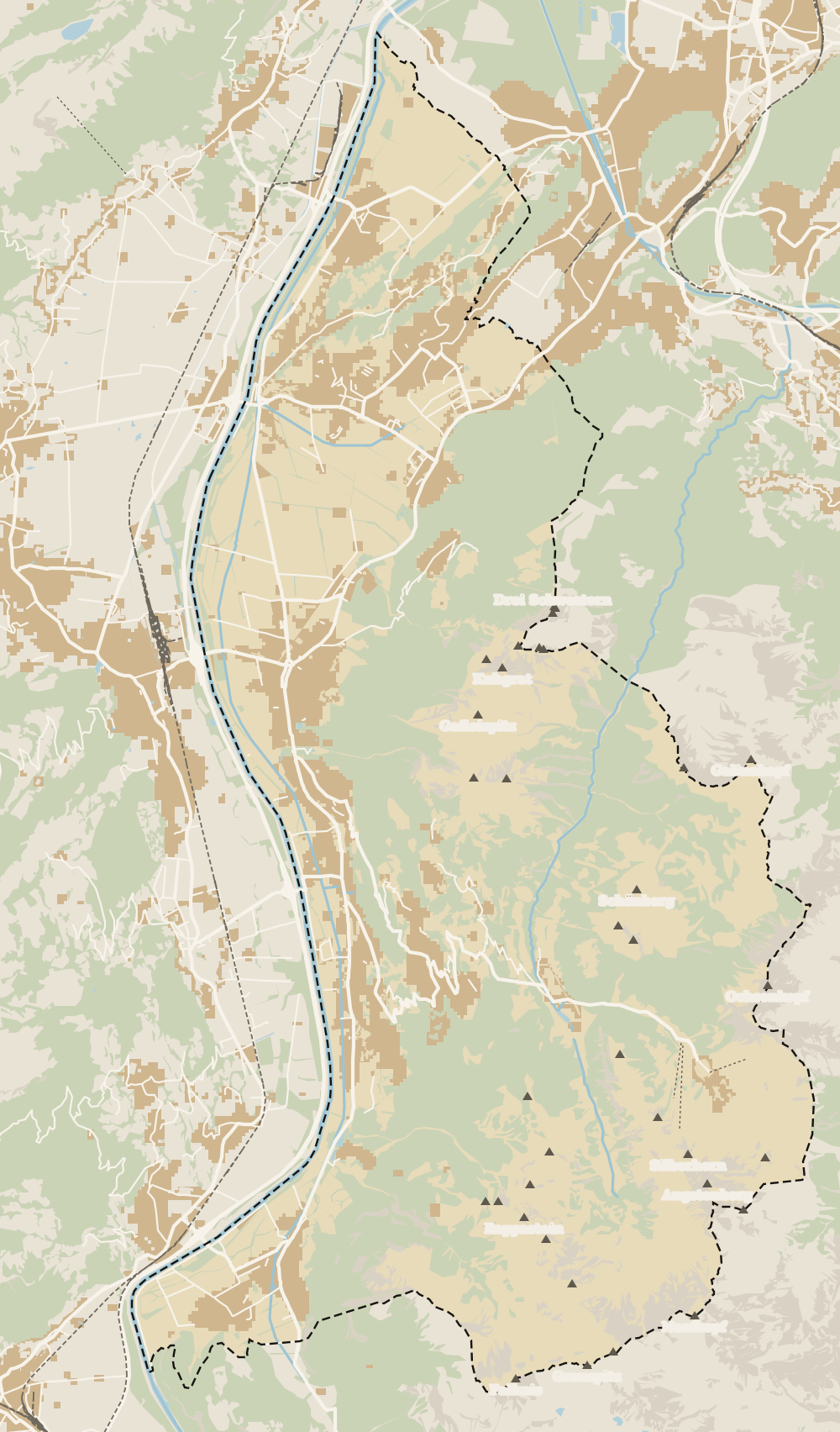
Where Vaduz is
The dashed line is the border: Switzerland across the Rhine, Austria to the north and east. Every number opens its guide.
Walk the pedestrianised Städtle with the Kunstmuseum, Hilti Art Foundation, LandesMuseum, Treasure Chamber and PostMuseum, then the government quarter with the parliament and St Florin's Cathedral. Beyond the centre, the Red House among the vines, the path up to the castle (outside only) and the wooden bridge over the Rhine.
Vaduz is the capital of which country?
Liechtenstein. Its constitution names Vaduz as the Hauptort and seat of the parliament and government. It isn't the largest municipality, though, as Schaan had 6,294 residents at the end of 2025 to Vaduz's 6,108.
Where is Vaduz?
In the Rhine valley, on the right bank, opposite the Swiss village of Sevelen and at the foot of the Drei Schwestern slopes. It sits in the Oberland, the southern half of the country, between Schaan to the north and Triesen to the south.
Is Vaduz worth visiting?
For half a day or a full day, yes. I wouldn't expect a grand monumental city, but the museums are good, the castle on its rock is striking from below and the Mitteldorf vineyards are the loveliest part of town. For mountains you'll need to head up to Triesenberg or Malbun.
Who lives in Vaduz Castle?
The reigning Prince and the Hereditary Prince and Princess, according to the princely house itself. That's why it isn't open to the public, apart from tours on exceptional occasions.
What can you do in Vaduz in one day?
Museums on the Städtle and the government quarter in the morning. After lunch, the climb to the castle and the walk down through the vines to the Red House. With time left, the 15:00 tasting at the Hofkellerei or the 16:30 Citytrain.
Is Vaduz expensive?
Prices are in Swiss francs and at Swiss levels. As a guide, the Kunstmuseum costs CHF 15, the LandesMuseum CHF 10, a one-zone bus ticket CHF 3 and an hour's parking CHF 1.50. The PostMuseum and the Kunstraum are free.
Tourism graduate with a master’s in Tourism Management and Planning from the University of Málaga, who has travelled across Europe. He writes every guide from official sources and his own judgement.

 1Vaduz 2Städtle 3Mitteldorf 4Vaduz Castle 5Vaduz Cathedral 6Parliament 7Government Building 8Vaduz Town Hall 9Prince's Winery 10Old Rhine Bridge 11Schalun Castle Ruin 12Citytrain