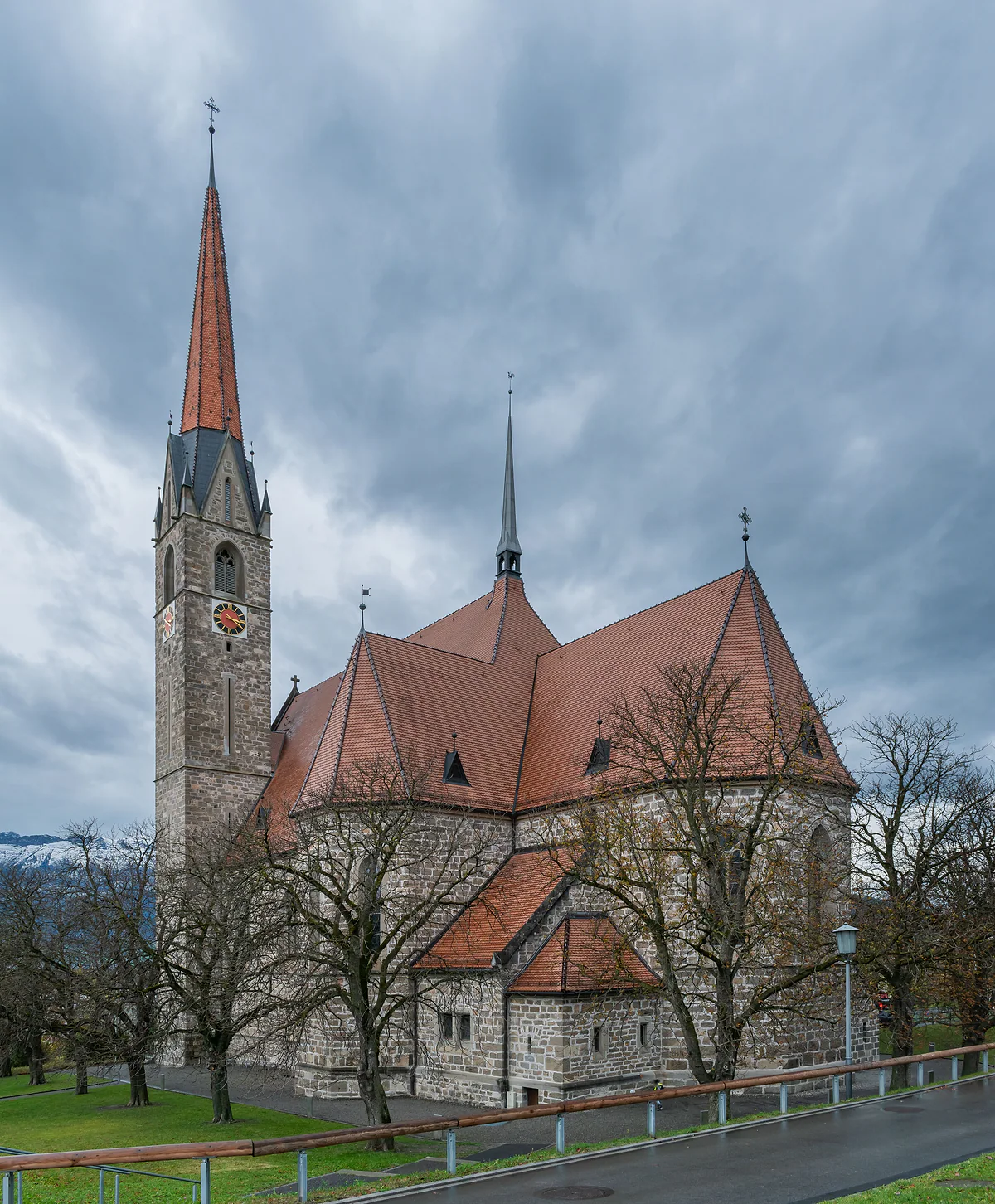
It starts on 11 November at 11:11
The Fasnacht, Liechtenstein's noisy carnival
Liechtenstein's carnival, the Fasnacht, officially opens on 11 November at 11:11 and erupts in February with parades, masked balls and concerts by Guggamusik bands, which play out of tune on purpose. Schaan is its capital and hosts the international parade. In 2026 the parades ran from 7 to 17 February; the 2027 dates haven't been published yet.
In 30 seconds
Full read: 3 min
- The Fasnacht opens on 11 November at 11:11 and the parades arrive in February.
- Schaan is the carnival capital, with the international parade.
- Guggamusik bands play out of tune on purpose and gather for Monsterkonzerte.
- In 2026 the parades ran from 7 to 17 February; 2027 has no dates yet.
I'd go to the international parade in Schaan on carnival Sunday and turn up the night before for the big Guggamusik concert. And I'd try the carnival doughnuts, Fasnachtsküachle, at the first stall I passed.

Before you go
What I would keep in mind
-
01 Most beautiful
The international parade in Schaan
It's the country's big parade, with walking groups, Guggamusik bands and floats from Liechtenstein and its neighbours. In 2026 it was on Sunday 15 February at 14:00.
Schaan, Liechtenstein's biggest town -
02 My tip
Learn the local cry
Everyone knows Alaaf or Helau, but the tourist board reckons you need to be a seasoned fool to shout Schaan's own Allwäg kwösso.
Liechtenstein traditions and customs -
03 Watch out
Carnival Tuesday isn't a holiday
It's on the tourist board calendar, but with an asterisk making clear it isn't a legal public holiday. Shops and services may run as normal.
Liechtenstein's public holidays -
04 Getting there
After carnival, the bonfires
The weekend after carnival Tuesday brings the Funken Sunday bonfires. If you can, combine both festivals in one trip.
the Funken Sunday bonfires in Liechtenstein
What I would book
If you assume carnival in such an orderly country must be a genteel affair, the Fasnacht will put you right. It’s loud, with brass bands playing out of tune on purpose, fancy dress everywhere and parades working their way round the villages for a week. For me it’s the most entertaining side of Liechtenstein, and the least known abroad. Most visitors pass through in summer and never see the villages like this.
A season that starts in November
The season kicks off every year at the eleventh minute of the eleventh hour of the eleventh day of the eleventh month, but for weeks it ticks along quietly, with masked balls in village halls and the odd concert. In the 2026 season, for instance, there were balls in Schaan, Triesen, Gamprin, Triesenberg, Eschen, Vaduz, Mauren and Balzers, plus children’s balls in nearly every village.
The parades come right at the end, in the last week before Ash Wednesday. In 2026 they began on Saturday 7 February in Vaduz, moved on to Malbun in the snow on Saturday 14 and Schaan on Sunday 15, passed through Mauren on Monday 16 and finished in Triesenberg on Tuesday 17, with a closing bash in the Dorfsaal known as the Finale Furioso.
Why is Schaan the carnival capital?
The Historisches Lexikon puts it plainly, Schaan is the centre of the country’s Fasnacht. Its first parade set off in 1952, the Narrenzunft, the village fools’ guild, has run it since 1965, and the first Monsterkonzert took place there in 1976. Today the parade in Schaan is international, with walking groups, Guggamusik bands and floats from Liechtenstein and neighbouring countries, and the tourist board calls it a riot of colour with some rather spooky costumes.
If you only go to one event, make it this. I’d add the night before, as the biggest Guggamusik concert in the country takes place on carnival Saturday in Schaan.
Guggas, monsters and blackened faces
The Fasnacht has its own vocabulary, and the tourist board explains it with a smile. Guggamusik are brass bands with lots of rhythm that play in their own way, deliberately wrong, and almost every municipality has one. When several play back to back in the same spot, that’s a Monster or Mönsterle. The Fasnachtsbuzi are the people in costume, and on the Thursday before carnival comes Ruassla, when children blacken each other’s faces with a burnt cork, as they once did with soot.
There’s a local cry too. Everyone knows Alaaf or Helau, but Schaan’s Allwäg kwösso, says the official site, is only for seasoned fools. In Triesenberg, meanwhile, they’ve paraded since the late 1960s and have had their own band, the Wildmandli Guggamusig, since 1980.
Is it worth it with children?
Very much so, and it’s one of the things I like most about it. Nearly every municipality holds a Kindermaskenball, a children’s fancy-dress ball, and in 2026 there were ones in Eschen, Vaduz, Gamprin, Triesenberg, Schaan, Triesen, Balzers, Mauren and Ruggell, spread between the last Saturday of January and carnival Tuesday. Triesenberg’s carries the name of its band, Wildmandli. The parades are daytime affairs too, setting off between half past one and half past two in the afternoon, so you can watch with children without a late night.
Food and practicalities
The treat of the season is Fasnachtsküachle, carnival doughnuts, whose recipe the tourist board includes among the country’s traditional dishes. You’ll find them at stalls and bakeries. For a Brit used to Shrove Tuesday pancakes, it’s the same idea on a bigger scale, a last indulgence before Lent, just with more brass bands and a lot more noise.
One practical note. Carnival Tuesday appears on the tourist board calendar, but flagged as a day that isn’t a legal holiday under employment law, so shops and services can run as normal.
How to plan it
There’s no 2027 programme yet. I’d keep an eye on the tourist board and municipal websites from January and book a room in Schaan or Vaduz for the big weekend. And if it fits, I’d stay a few more days, because the Funken Sunday bonfires follow straight after carnival. Together, the two make what I think is the best winter week for understanding the country. The rest of the calendar is in Liechtenstein traditions and my events calendar.
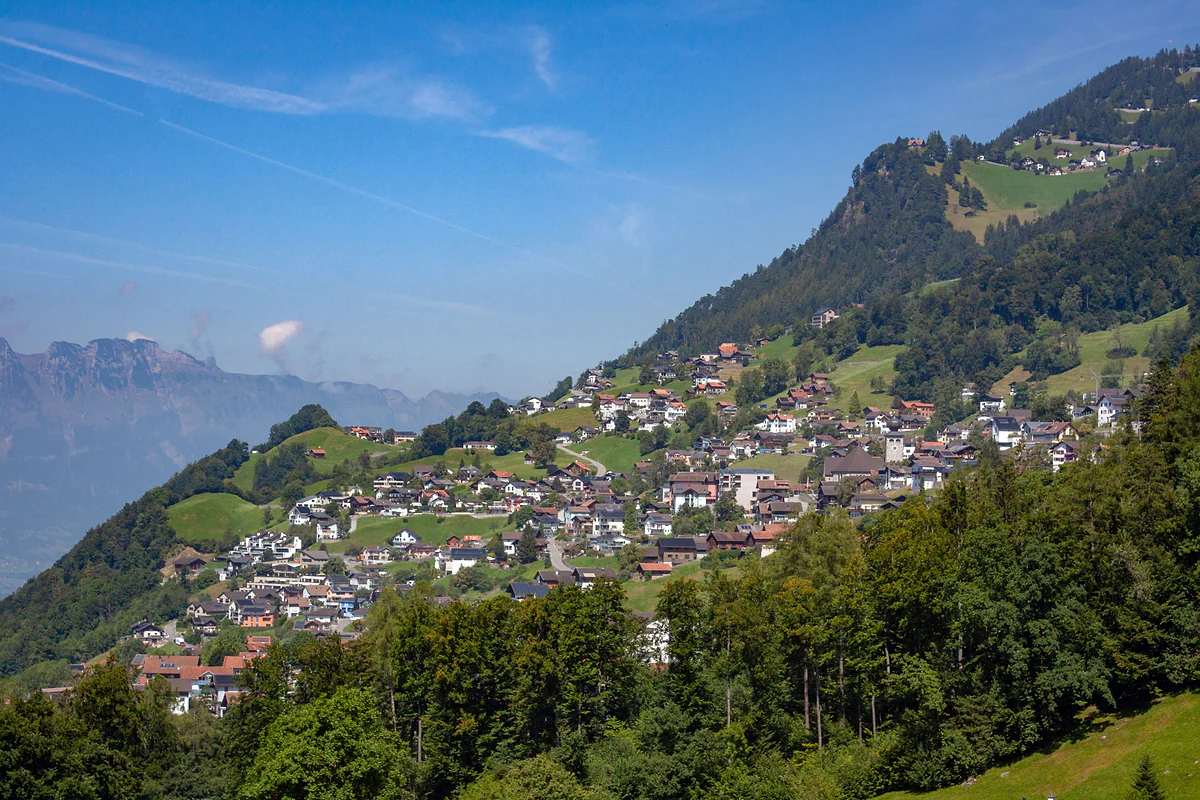
The houses of Triesenberg scattered across the green hillside above the Rhine valley, under a blue sky.
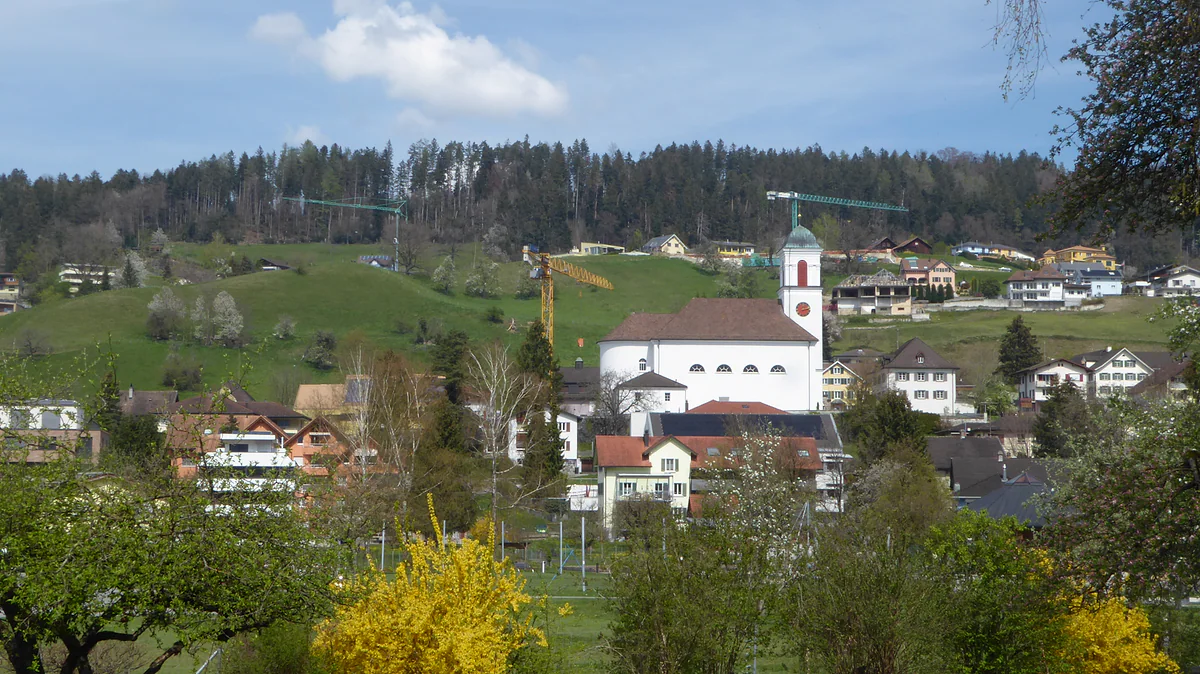
Mauren seen from the south, with the white church on the hill, the houses among the trees and the forest behind.
The 2026 carnival parades
| Day | Parade | Time |
|---|---|---|
| Saturday 7 February | Vaduz parade | 14:30 |
| Saturday 14 February | Malbun parade and street carnival | 13:30 |
| Sunday 15 February | International parade, central Schaan | 14:00 |
| Monday 16 February | Mauren parade and street carnival | 14:14 |
| Tuesday 17 February | Triesenberg parade, with the Finale Furioso in the Dorfsaal | 13:30 |
Tourist board (archive.org copy, 10-05-2026). The 2027 dates haven't been published.
A pocket Fasnacht glossary
| Word | What it means |
|---|---|
| Guggamusik | A rhythmic brass band that plays deliberately out of tune |
| Monster or Mönsterle | A concert of several Guggamusik bands in a row; the biggest is on carnival Saturday in Schaan |
| Fasnachtsbuzi | People in fancy dress, at balls and in the street |
| Ruassla | On the Thursday before carnival, children blacken each other's faces with burnt cork |
| Allwäg kwösso | Schaan's carnival cry |
Test yourself
True or false?
0/3 Pick before you peek.
-
Carnival in Liechtenstein officially starts in November.
See the answer
True. The season opens on 11 November at 11:11, although the parades are concentrated in February.
-
Guggamusik bands try to play as tunefully as possible.
See the answer
False. The tourist board describes them as playing in their own way, deliberately wrong, with plenty of rhythm.
-
Schaan's first carnival parade was in 1952.
See the answer
True. So says the Historisches Lexikon, and since 1965 it has been organised by Schaan's Narrenzunft, the fools' guild.
- Opening time, every 11 November
- 11:11
- Schaan's first carnival parade
- 1952
- Parades in 2026
- 5
0 of 168 Liechtenstein guides
Your next stamp
- Events
- Traditions
- Schaan
- Vaduz
- Churches and chapels
- Music festivals
- Hostel and camping
- Funken Sunday
- Things to do
- One day
- Two days
- Municipalities
- Oberland
- Unterland
- Map
- Städtle
- Mitteldorf
- Vaduz Castle
- Vaduz Cathedral
- Parliament
- Government Building
- Vaduz Town Hall
- Red House
- Prince's Winery
- Old Rhine Bridge
- Schalun Castle Ruin
- Balzers
- Citytrain
- Triesen
- Triesenberg
- Walser Museum
- Planken
- Gutenberg Castle
- The Rhine
- Schaan Roman fort
- Dux
- St Mamertus chapel
- Lawena valley
- Mäls
- DoMuS
- TAK Theatre
- Castles
- Viewpoints
- Mountains
- Museums
- Kunstmuseum
- Mountain huts
- Hilti Art Foundation
- Pfälzerhütte
- Gafadura hut
- National Museum
- Treasure Chamber
- Postage Stamp Museum
- Kunstraum Engländerbau
- Eschen
- Masescha
- Gaflei
- Nendeln
- Mauren
- Silum
- Rotenboden
- Schaanwald
- Gamprin
- Wangerberg
- Bendern
- Steg
- Ruggell
- Samina valley
- Schellenberg Farmhouse Museum
- Cross-country skiing at Steg
- Küefer-Martis-Huus
- Ruggeller Riet
- Schellenberg
- Hinterschellenberg
- Fürstensteig
- Is it a country?
- Liechtenstein Trail
- Malbun
- Schellenberg castles
- Eschnerberg
- Malbun in summer
- Population
- Stage 1: Balzers - Triesenberg
- Lakes
- Sareis
- Size
- Stage 2: Triesenberg - Vaduz
- Malbun Peace Chapel
- Political system
- Stage 3: Vaduz - Nendeln
- Swimming pools
- Language
- Skiing in Malbun
- Stage 4: Nendeln - Ruggell
- Dialect
- Malbun ski pass
- Stage 5: Ruggell - Schaanwald
- Hotels in Malbun
- Stamps
- Princess Gina Trail
- Hut-to-hut Route 66
- Hiking
- Getting there
- In winter
- Weather
- Airport
- Best time to visit
- In summer
- With kids
- Zurich to Liechtenstein
- National day
- Sargans to Vaduz
- Christmas
- Feldkirch to Vaduz
- By train
- Getting around
- Buses
- Alpine cattle drive
- Driving and vignette
- Parking
- Bike hire
- Cycling
- EU and Schengen
- Entry requirements
- Borders and customs
- The prince
- The princely house
- The flag
- The coat of arms
- The national anthem
- History
- Second World War
- No army
- Facts
- Why so rich?
- Banks and tax haven
- Where to stay
- Hilti
- Hotels in Vaduz
- False teeth
- Rent the country?
- Where to eat
- Restaurants in Vaduz
- Swiss invasions
- Bars and nightlife
- Food
- Käsknöpfle
- Wine
- Casinos
- Adventure Pass
- Rainy days
- Guided tours
- Tourist office
- Day trips
- Passport stamp
- Phone and roaming
- Currency and payments
- Prices and budget
- Tipping
- Plugs and sockets
- Tap water
- Opening hours
- Public holidays
- Safety
- Accessibility
- With a dog
- Shopping and souvenirs
Frequently asked questions
When is carnival in Liechtenstein?
The season opens on 11 November at 11:11 and the parades are packed into the last week before Ash Wednesday. In 2026 they ran from 7 to 17 February; the 2027 dates haven't been published.
Where is carnival celebrated in Liechtenstein?
In nearly every municipality, but Schaan is its centre, with the international parade and the biggest Guggamusik concert. In 2026 there were also parades in Vaduz, Malbun, Mauren and Triesenberg.
What is Guggamusik?
A brass and percussion band that plays with plenty of rhythm and deliberately off-key, as the tourist board puts it. Almost every municipality has its own.
What is a Monsterkonzert?
A concert where lots of Guggamusik bands play one after another. In Liechtenstein it's called a Monster or Mönsterle, and the biggest is on carnival Saturday in Schaan.
Is carnival Tuesday a holiday in Liechtenstein?
No. It appears on the tourist board calendar, but flagged as a day that isn't a legal holiday under employment law.
What do people eat at carnival?
Fasnachtsküachle, carnival doughnuts, whose recipe the tourist board publishes among the country's traditional dishes.
By
Tourism graduate with a master’s in Tourism Management and Planning from the University of Málaga, who has travelled across Europe. He writes every guide from official sources and his own judgement.
Published on . Facts checked on .
Sources
Photos: Tournasol7 (CC BY 4.0); Lucas Kendall (CC BY-SA 4.0); Plutowiki (CC0), via Wikimedia Commons.