Three ways of speaking in 160 km²
The Liechtenstein dialect, village by village
Liechtenstein's dialect is Alemannic, from the same family as Swiss German, but with features of its own and variations within the country. The Oberland and the Unterland say basic words like stone or prince differently, Balzers has its own accent and Triesenberg keeps the speech of the Walser, settlers from the Valais who arrived around 1280.
In 30 seconds
Full read: 3 min
- Liechtenstein's dialect is Alemannic, from the Swiss German family but with its own features.
- The Oberland and Unterland pronounce basic words differently, such as stone (Stää and Stoo).
- Triesenberg keeps Walser, the speech of settlers from the Valais who arrived around 1280.
- The Walser Museum in Triesenberg, opened in 1961, is the best place to make sense of it.
For me the dialect is the best proof that Liechtenstein isn't a slice of Switzerland. In a country you can cross in half an hour, north and south say the word for prince differently, and up on the Triesenberg slope people talk as they would in a Valais valley. To hear it in context, I'd head to the Walser Museum.

Before you go
What I would keep in mind
-
01 Most beautiful
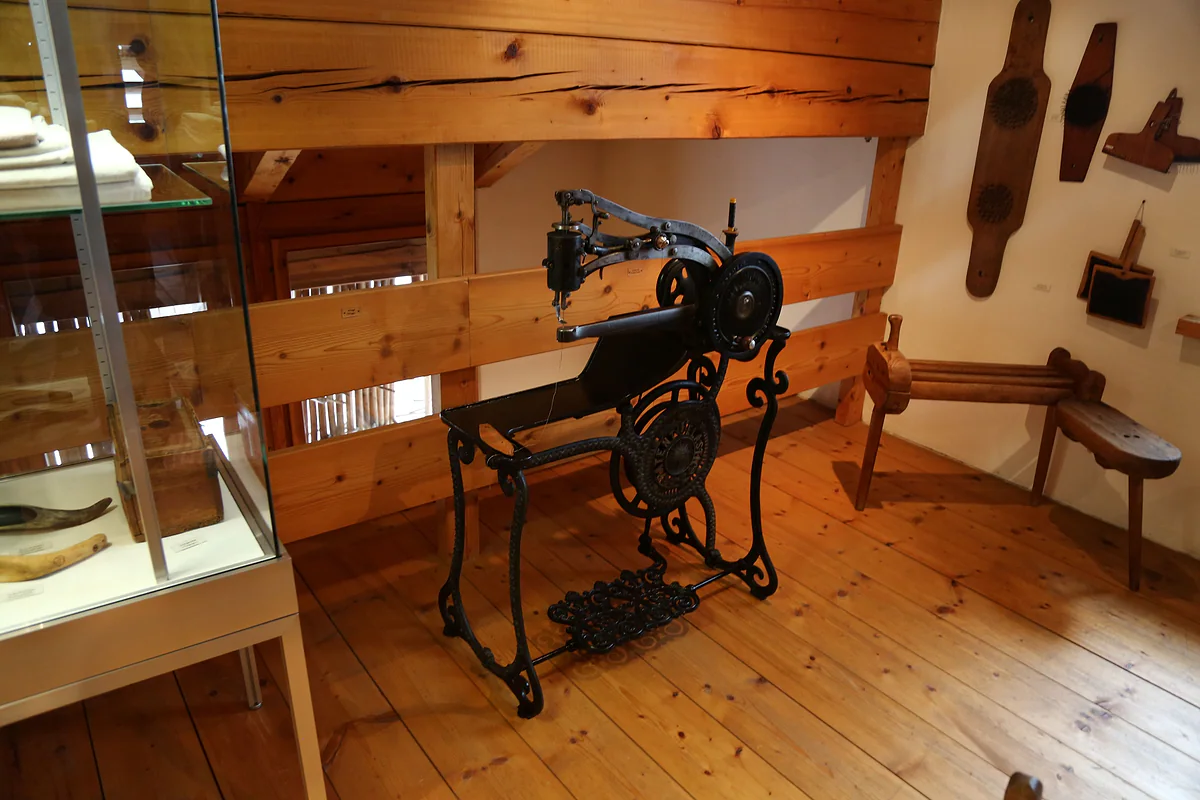
Walser speech, in its own museum
The Walser Museum in Triesenberg tells the story of the settlers from the Valais, with an old Walser house and a trail of folk legends. It opens on weekdays and Saturday mornings, for CHF 5.
the Walser Museum in Triesenberg -
02 My tip
The map uses one spelling, the locals another
Official maps write Rotenboden and Wangerberg, but the Historisches Lexikon records the dialect forms, Rotaboda and Wangerbärg. In this guide both appear the first time.
Rotenboden, the hamlet on the Gaflei road -
03 My tip
The dialect border runs through Schaan
Schaan's northern boundary separates the Oberland from the Unterland and is, according to the Historisches Lexikon, a dialect border within the country too.
Schaan, Liechtenstein's biggest town -
04 Getting there
Bus 21 to Triesenberg
Bus 21 climbs from Vaduz to Triesenberg on its way to Malbun. The village church stands at 886 m, and the Walser Museum is at Schlossstrasse 5.
Triesenberg, the Walser mountain village
What I would book
If I had to pick one detail to show how peculiar Liechtenstein is, I’d pick its dialect. Three quite distinct ways of speaking fit into 160 km², and the differences aren’t in obscure vocabulary but in the most basic words, like stone, flower or prince. What follows comes from the language article in the Historisches Lexikon, the country’s standard reference work, and I’ve only added the order and the opinions.
Alemannic, but not Swiss
Liechtenstein’s speech belongs to Alemannic, the family of southern German dialects that includes Swiss German. The Lexikon, though, puts it in a different branch, Low Alemannic, because of one specific feature. At the start of a word the k is aspirated, «Kind», whereas Swiss German turns it into a throaty sound, «Chind». On that point the Liechtenstein valley sides with Austria’s Vorarlberg and with the German of Chur and Basel.
Another feature links the valley villages with the Swiss side of the river and with Vorarlberg, while setting them apart from the rest of Alemannic. Where standard German has diphthongs, here you hear a single long vowel, «blääch» for pale, «Oog» for eye or «Höö» for hay. The Rhine is a political border today, and the Lexikon says it has gradually divided the speech of its two banks, though without erasing what they share.
Why do north and south speak differently?
History weighs heavily. The Oberland was the county of Vaduz and the Unterland the lordship of Schellenberg, and you can still hear that split. In the south, stone is «Stää», flower «Bluema» and prince «Förscht». In the north they’re «Stoo», «Blooma» and «Füerscht». The Unterland also lengthens vowels in open syllables, «Booda» for ground where the south says «Boda». The full list is in the table on this page, and each half’s story is on the Unterland of Liechtenstein.
Each half has its own shadings as well. In the south, Balzers has an accent of its own, related to the neighbouring Swiss valleys, which turns e into ä, «Hämp» for shirt where others say «Hemp». In the north, the old parish divisions can still be heard, because Eschen and Mauren say «Taal» for part while Gamprin, Schellenberg and Ruggell say «Tool». The Lexikon also places a speech boundary along Schaan’s northern edge.
The Walser of Triesenberg
The big exception is up the mountain. Around 1280 the Walser, settlers from the Valais, arrived in Triesenberg and brought an Alpine Alemannic speech that has survived to this day, quite unlike the valley’s. It has a «sch» sound the rest of the country doesn’t use, «böösch» for bad, and a diminutive in -elti, «Öpfelti» for little apple. Nor does it lower its i and u the way the valley does, so it says «Milch» and «Suppa» where down below you’d hear «Melch» and «Soppa».
What I like best is the grammar. Walser makes the adjective agree even after the verb, «der Ofa ischd chaalta», the stove is cold, something standard German never does. The Lexikon warns that it has lately been adapting to the neighbours’ speech, so I’d listen while you still can. The place to get to grips with it is the Walser Museum in Triesenberg, opened in 1961.
Dialect names on the map
Dialect seeps into place names as well. The Walser hamlets of Triesenberg have dialect forms in the Lexikon, such as Rotaboda, Wangerbärg and Steinord, while official maps write Rotenboden, Wangerberg and Steinort. In this guide I use the map form and add the dialect one in brackets the first time. A few, like Fromahus, Üenaboda and Litzi, exist only in dialect.
What to expect as a visitor
You don’t need any of this to get by. Everything written is in standard German, and in museums and hotels people will speak standard German or English with you without fuss. Dialect is what locals use with each other, and you’ll hear it at a café counter or in the bus queue. My advice is simply to listen, because there are few places in Europe where you can hear so clearly how a territory’s history sticks to the way people talk. The official side, with which language to use where, is on the language of Liechtenstein.
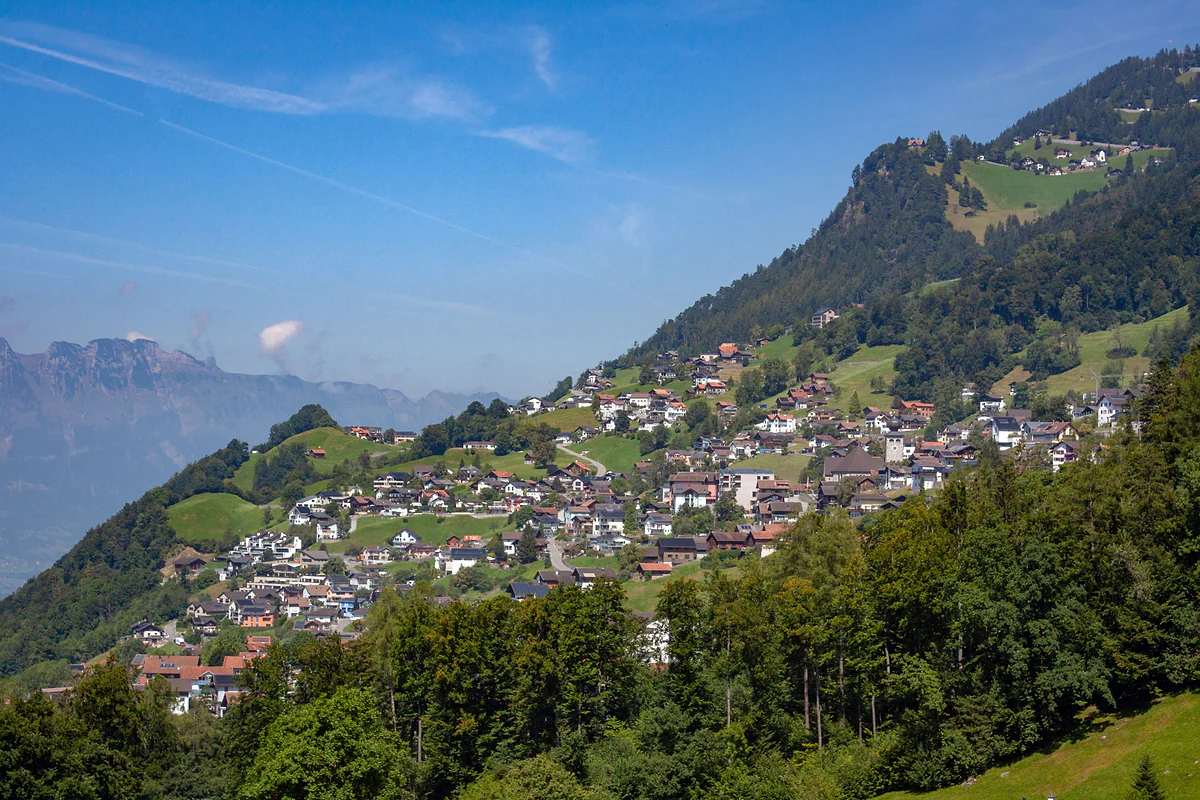
The houses of Triesenberg scattered across the green hillside above the Rhine valley, under a blue sky.
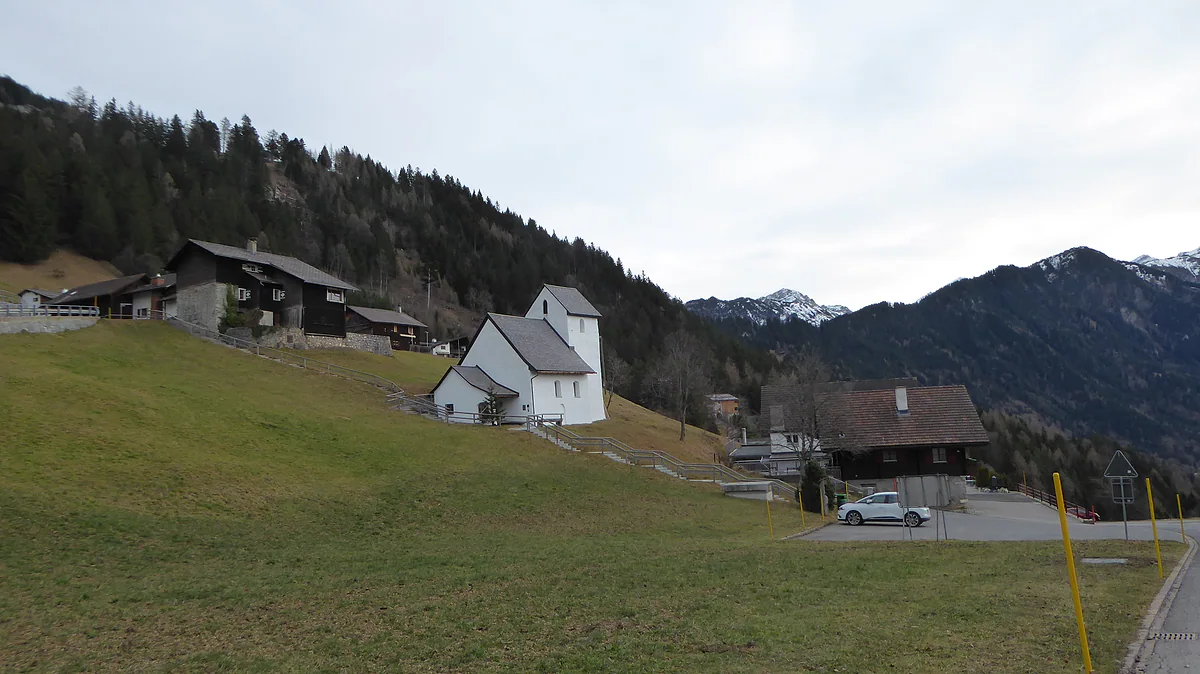
The white chapel of St Theodul in Masescha, on the sloping meadow, next to the mountain inn and the forest.
The same words in the Oberland and the Unterland
| Meaning | Oberland | Unterland |
|---|---|---|
| Stone | Stää | Stoo |
| Flower | Bluema | Blooma |
| Green | grüe | gröö |
| Prince | Förscht | Füerscht |
| Thirst | Dorscht | Duerscht |
| Ground | Boda | Booda |
| Nowhere | niena | neena |
Examples from the Historisches Lexikon, article «Sprache» (as of 31-12-2011).
Features of Triesenberg Walser
| Feature | Example | Meaning |
|---|---|---|
| «Sch» sound | böösch | bad |
| Diminutive in -elti | Öpfelti | little apple |
| No vowel lowering | Milch, Suppa, Luft | milk, soup, air (valley forms Melch, Soppa, Loft) |
| Agreeing adjective | der Ofa ischd chaalta | the stove is cold |
| Umlaut in the adjective | d Meiti sin chrängi | the girls are ill |
Historisches Lexikon, article «Sprache». The Lexikon adds that Walser has recently begun adapting to the neighbours' speech.
Test yourself
True or false?
0/4 Pick before you peek.
-
All eleven municipalities of Liechtenstein speak exactly the same dialect.
See the answer
False. The Oberland and Unterland differ clearly, Balzers has features of its own and Triesenberg speaks Walser.
-
In Triesenberg Walser, «Öpfelti» means little apple.
See the answer
True. It's the -elti diminutive typical of Walser, which the Historisches Lexikon gives as an example.
-
Liechtenstein's valley dialect says «Chind» for child, like Swiss German.
See the answer
False. It says «Kind», with an aspirated k. That feature is what, according to the Historisches Lexikon, sets it apart from Swiss German.
-
Schaan's northern boundary is also a dialect border.
See the answer
True. The Historisches Lexikon says that boundary, which separates the Oberland from the Unterland, is also a speech border within the country.
- Approximate arrival of the Walser in Triesenberg
- 1280
- Main varieties, Oberland, Unterland and Walser
- 3
- Year the Walser Museum opened
- 1961
- Walser Museum entry
- CHF 5
0 of 168 Liechtenstein guides
Your next stamp
- Language
- Triesenberg
- The national anthem
- Is it a country?
- Stage 1: Balzers - Triesenberg
- Two days
- Balzers
- Things to do
- One day
- Municipalities
- Oberland
- Unterland
- Map
- Vaduz
- Städtle
- Mitteldorf
- Vaduz Castle
- Vaduz Cathedral
- Parliament
- Government Building
- Vaduz Town Hall
- Red House
- Prince's Winery
- Old Rhine Bridge
- Schaan
- Schalun Castle Ruin
- Citytrain
- Triesen
- Walser Museum
- Planken
- Gutenberg Castle
- The Rhine
- Schaan Roman fort
- Dux
- St Mamertus chapel
- Lawena valley
- Mäls
- DoMuS
- TAK Theatre
- Castles
- Churches and chapels
- Viewpoints
- Mountains
- Museums
- Kunstmuseum
- Mountain huts
- Hilti Art Foundation
- Pfälzerhütte
- Gafadura hut
- National Museum
- Treasure Chamber
- Postage Stamp Museum
- Kunstraum Engländerbau
- Eschen
- Masescha
- Gaflei
- Nendeln
- Mauren
- Silum
- Rotenboden
- Schaanwald
- Gamprin
- Wangerberg
- Bendern
- Steg
- Ruggell
- Samina valley
- Schellenberg Farmhouse Museum
- Cross-country skiing at Steg
- Küefer-Martis-Huus
- Ruggeller Riet
- Schellenberg
- Hinterschellenberg
- Fürstensteig
- Liechtenstein Trail
- Malbun
- Schellenberg castles
- Eschnerberg
- Malbun in summer
- Population
- Lakes
- Sareis
- Size
- Stage 2: Triesenberg - Vaduz
- Malbun Peace Chapel
- Political system
- Stage 3: Vaduz - Nendeln
- Swimming pools
- Skiing in Malbun
- Stage 4: Nendeln - Ruggell
- Malbun ski pass
- Stage 5: Ruggell - Schaanwald
- Hotels in Malbun
- Stamps
- Princess Gina Trail
- Hut-to-hut Route 66
- Hiking
- Getting there
- In winter
- Weather
- Airport
- Best time to visit
- In summer
- Events
- With kids
- Zurich to Liechtenstein
- National day
- Sargans to Vaduz
- Christmas
- Feldkirch to Vaduz
- By train
- Traditions
- Carnival
- Getting around
- Buses
- Funken Sunday
- Alpine cattle drive
- Driving and vignette
- Parking
- Bike hire
- Cycling
- EU and Schengen
- Entry requirements
- Borders and customs
- The prince
- The princely house
- The flag
- The coat of arms
- History
- Second World War
- No army
- Facts
- Why so rich?
- Banks and tax haven
- Where to stay
- Hilti
- Hotels in Vaduz
- False teeth
- Hostel and camping
- Rent the country?
- Where to eat
- Restaurants in Vaduz
- Swiss invasions
- Bars and nightlife
- Food
- Käsknöpfle
- Wine
- Casinos
- Adventure Pass
- Rainy days
- Guided tours
- Tourist office
- Day trips
- Passport stamp
- Music festivals
- Phone and roaming
- Currency and payments
- Prices and budget
- Tipping
- Plugs and sockets
- Tap water
- Opening hours
- Public holidays
- Safety
- Accessibility
- With a dog
- Shopping and souvenirs
Frequently asked questions
What dialect is spoken in Liechtenstein?
An Alemannic dialect. The Historisches Lexikon classes it as Low Alemannic because of the aspirated initial k, with the exception of Triesenberg, where people speak Walser, an Alpine variety.
Is the Liechtenstein dialect Swiss German?
It's from the same family but not the same. Where Swiss German says «Chind», with a throaty sound, Liechtenstein says «Kind», with an aspirated k, like Vorarlberg and the German of Chur and Basel.
What is Triesenberg Walser?
The speech of the Walser, settlers from the Valais who made Triesenberg their home around 1280. It's an Alpine Alemannic variety that stands apart from the rest of the country with features such as the «sch» sound and the -elti diminutive.
Do the north and south of Liechtenstein speak the same way?
No. The Oberland says «Stää» for stone and «Förscht» for prince, the Unterland «Stoo» and «Füerscht». Even within the Unterland, Eschen and Mauren say «Taal» for part while Gamprin, Schellenberg and Ruggell say «Tool».
Will I understand the dialect if I speak German?
It'll be hard going at first. Everything written is in standard German, and staff in museums or hotels will switch without a second thought. Dialect is what locals use with each other.
Where can I learn about Walser?
At the Walser Museum in Triesenberg, opened in 1961 as the country's first local museum. It has an old Walser house, a multimedia show and the WalserSagenWeg legends trail.
By
Tourism graduate with a master’s in Tourism Management and Planning from the University of Málaga, who has travelled across Europe. He writes every guide from official sources and his own judgement.
Published on . Facts checked on .
Sources
Photos: Wikiolo (CC BY-SA 3.0); Lucas Kendall (CC BY-SA 4.0); Plutowiki (CC0), via Wikimedia Commons.