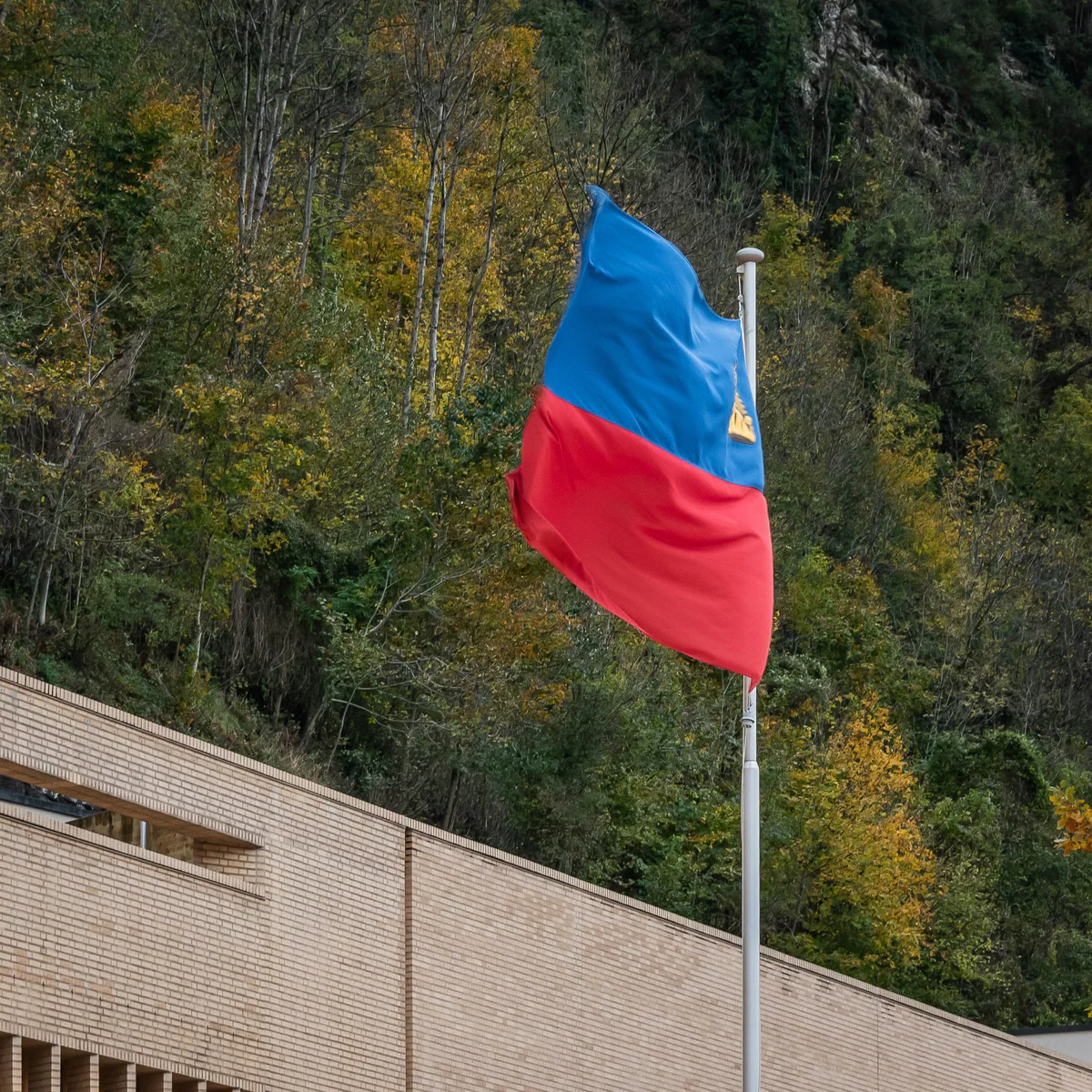
A principality since 1719, sovereign since 1806
Is Liechtenstein a country or part of Switzerland?
Yes, Liechtenstein is a country. It's a sovereign principality with its own 1921 constitution, a UN member since 1990 and part of the European Economic Area since 1995. It belongs to neither Switzerland nor Austria, although it has shared the franc and a customs union with Switzerland since 1924. It exists because an Austrian noble family bought two lordships to win a vote in the Holy Roman Empire.
In 30 seconds
Full read: 4 min
- Liechtenstein is a sovereign country, a principality with a 1921 constitution and a UN member since 1990.
- It isn't part of Switzerland; it has shared the franc and a customs union with it since 1924.
- It was born in 1719, when the emperor joined Vaduz and Schellenberg, and its sovereignty dates from 1806.
- It's been in the EEA since 1995 and Schengen since 2011, but not the European Union.
I find it more useful to think of Liechtenstein as Switzerland's partner than as a slice of it. It pays in francs and there's no customs post on the Rhine, but it has its own prince, parliament, laws and its own relationship with Europe, which isn't the Swiss one.

Before you go
What I would keep in mind
-
01 Money
The Swiss franc by treaty, not by belonging
Liechtenstein adopted the Swiss franc as its official currency with the 1924 customs treaty and signed a currency treaty with Switzerland in 1980. It has no currency of its own, but it does issue its own stamps.
Liechtenstein's currency -
02 Getting there
No customs border with Switzerland since 1924
The Rhine separates the two countries, but since the customs union there's been no customs frontier between them. Austria is a different story, covered on its own page.
Liechtenstein borders and customs -
03 My tip
In the EEA, not the EU
It joined the European Economic Area in 1995, something Switzerland had rejected in 1992, and has applied Schengen since 19 December 2011. It isn't a member of the European Union.
Liechtenstein, the EU and Schengen -
04 Most beautiful
The hill where the country began
On the church hill at Bendern, allegiance was sworn to the Prince on 16 March 1699. The tourist board says the spot symbolises the start of modern Liechtenstein.
Bendern and its 1699 oath hill
What I would book
It’s a fair question. Liechtenstein pays in Swiss francs, has no customs post with Switzerland, speaks German and fits inside a single valley, so plenty of people assume it’s a canton or a corner of Austria. It isn’t. It’s a sovereign state with a prince, a parliament, a constitution and a seat at the UN, and the reason it exists at all strikes me as one of the oddest stories in Europe. Its size also feeds the myth that you can book it like a cottage, which I look into in renting Liechtenstein.
A country bought for a vote
The Liechtensteins were an Austrian noble family, named after a castle south of Vienna, but they owned no land held directly from the emperor. That kept them off the princes’ bench of the Reichstag, the Imperial Diet, and out of the top tier of the Empire’s aristocracy. The Princely House tells the story in just those terms on its own website.
The answer was to go shopping. Prince Johann Adam Andreas bought the lordship of Schellenberg in 1699 and the county of Vaduz in 1712, two small territories answerable only to the emperor. In 1719 Charles VI merged them and raised them to an imperial principality bearing the family name. That’s why the country is named after an Austrian castle rather than anywhere within its own borders. The rest of the timeline is in the history of Liechtenstein.
Sovereignty came later, almost by accident. In 1806 Napoleon brought the principality into the Confederation of the Rhine, which the Princely House treats as the cornerstone of its independence. The German Confederation followed in 1815, and in the 20th century came the 1921 constitution that is still in force. How all of that translates into a trip, with the villages, the mountains and the castles, is in my Liechtenstein travel guide.
Is Liechtenstein part of Switzerland?
No. What it shares with Switzerland is a customs union and a currency. The treaty was signed on 29 March 1923 and took effect on 1 January 1924, bringing the Swiss franc with it as the official currency. It replaced the customs union Liechtenstein had had with Austria since 1852, which it ended in 1919 after the First World War. A currency treaty followed in 1980.
In practice you cross the Rhine without seeing a customs officer and pay the same prices on both banks. But Switzerland is about 260 times bigger, and the two have separate governments, separate laws and separate relationships with Europe. The clearest example is the European Economic Area. Switzerland voted it down in 1992, while Liechtenstein joined in 1995 after a second referendum with 55.9% in favour. I cover that on Liechtenstein, the EU and Schengen.
Austria, Germany and the confusion over neighbours
Liechtenstein has just two neighbours. Switzerland lies to the west and south, with 41.3 km of border, and Austria to the north and east, with 36.6 km. It doesn’t touch Germany, even though German is the official language and it belonged to the Confederation of the Rhine and the German Confederation in the 19th century. Its exact position, with a plan of the country, is on the map of Liechtenstein.
The ties with Austria were very close until 1919, with a shared customs area from 1852. No reigning prince lived in the country until 1938, when Franz Josef II moved into Vaduz Castle. Today the Austrian border is the one with customs, because of the union with Switzerland, even though all three countries are in Schengen.
What makes it a state today
It has a head of state, Prince Hans-Adam II, with his son Alois acting as regent since 2004. It has a 25-seat parliament, a five-member government and its own courts in Vaduz. It joined the Council of Europe in 1978, the UN in 1990 and the International Monetary Fund in 2024. How power is shared between the Prince and the people is explained on Liechtenstein’s political system.
What it doesn’t have is an army, gone since 1868, an airport or a currency of its own. None of that diminishes it in my eyes. It’s simply how a country of 41,228 people has found a way to work without duplicating what its neighbour already offers.
My favourite constitutional quirk
Article 4 of the constitution gives each of the eleven municipalities the right to leave the state if a majority of its voters so decide. I can’t think of another European country that puts that in writing. I mention it not because it’s likely to happen, but because it says a lot about how Liechtenstein sees itself, as a union of villages rather than a state built from the top down. It’s also why it sits on my list of Liechtenstein facts.
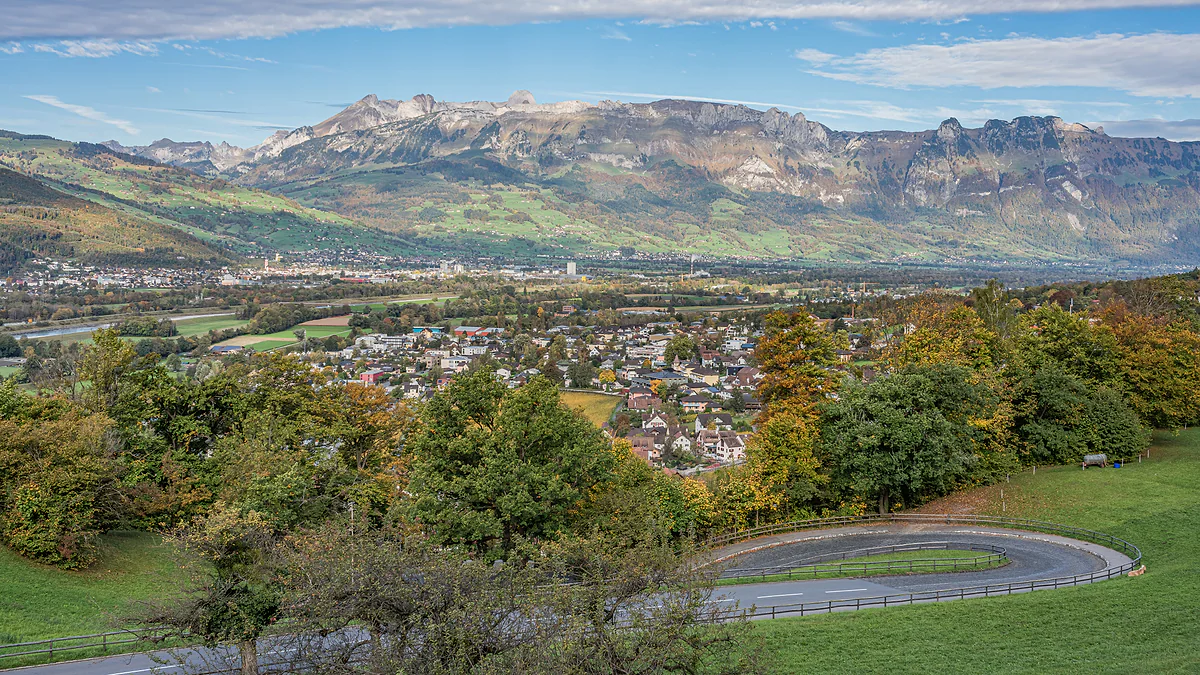
The Rhine valley seen from Vaduz Castle, with the town among autumn trees and the Swiss mountains on the horizon.
The dates that made Liechtenstein a country
| Year | What happened |
|---|---|
| 1699 | Prince Johann Adam Andreas buys the lordship of Schellenberg |
| 1712 | The same family buys the county of Vaduz |
| 1719 | Charles VI unites them and raises them to the imperial principality of Liechtenstein |
| 1806 | Joins Napoleon's Confederation of the Rhine, the basis of its sovereignty |
| 1815 | Joins the German Confederation |
| 1921 | Current constitution, dated 5 October |
| 1924 | Customs treaty with Switzerland and the Swiss franc as official currency |
| 1990 | Joins the United Nations |
| 1995 | Joins the European Economic Area |
| 2011 | Schengen, from 19 December |
Sources: Office of Statistics (Liechtenstein in Zahlen 2026), the Princely House and EUR-Lex.
Test yourself
True or false?
0/4 Pick before you peek.
-
Liechtenstein borders Germany.
See the answer
False. It only has two neighbours, Switzerland (41.3 km of border) and Austria (36.6 km), according to the Office of Statistics.
-
Liechtenstein was created so its princes could sit in the Holy Roman Empire's Diet.
See the answer
True. The Princely House explains they wanted land held directly from the emperor to gain a seat and a vote on the princes' bench of the Reichstag.
-
There are customs checks between Switzerland and Liechtenstein.
See the answer
False. Since the customs treaty took effect on 1 January 1924 there's been no customs border between the two countries.
-
Every municipality in Liechtenstein has a constitutional right to leave the state.
See the answer
True. Article 4 of the constitution gives each of the eleven municipalities the right to leave the state by a majority of its voters.
- Year the imperial principality was created
- 1719
- Entry into the Confederation of the Rhine
- 1806
- Customs union and Swiss franc
- 1924
- Its number as a new UN member state in 1990
- 160
0 of 168 Liechtenstein guides
Your next stamp
- History
- Currency and payments
- Banks and tax haven
- Facts
- Borders and customs
- Political system
- Rent the country?
- Things to do
- One day
- Two days
- Municipalities
- Oberland
- Unterland
- Map
- Vaduz
- Städtle
- Mitteldorf
- Vaduz Castle
- Vaduz Cathedral
- Parliament
- Government Building
- Vaduz Town Hall
- Red House
- Prince's Winery
- Old Rhine Bridge
- Schaan
- Schalun Castle Ruin
- Balzers
- Citytrain
- Triesen
- Triesenberg
- Walser Museum
- Planken
- Gutenberg Castle
- The Rhine
- Schaan Roman fort
- Dux
- St Mamertus chapel
- Lawena valley
- Mäls
- DoMuS
- TAK Theatre
- Castles
- Churches and chapels
- Viewpoints
- Mountains
- Museums
- Kunstmuseum
- Mountain huts
- Hilti Art Foundation
- Pfälzerhütte
- Gafadura hut
- National Museum
- Treasure Chamber
- Postage Stamp Museum
- Kunstraum Engländerbau
- Eschen
- Masescha
- Gaflei
- Nendeln
- Mauren
- Silum
- Rotenboden
- Schaanwald
- Gamprin
- Wangerberg
- Bendern
- Steg
- Ruggell
- Samina valley
- Schellenberg Farmhouse Museum
- Cross-country skiing at Steg
- Küefer-Martis-Huus
- Ruggeller Riet
- Schellenberg
- Hinterschellenberg
- Fürstensteig
- Liechtenstein Trail
- Malbun
- Schellenberg castles
- Eschnerberg
- Malbun in summer
- Population
- Stage 1: Balzers - Triesenberg
- Lakes
- Sareis
- Size
- Stage 2: Triesenberg - Vaduz
- Malbun Peace Chapel
- Stage 3: Vaduz - Nendeln
- Swimming pools
- Language
- Skiing in Malbun
- Stage 4: Nendeln - Ruggell
- Dialect
- Malbun ski pass
- Stage 5: Ruggell - Schaanwald
- Hotels in Malbun
- Stamps
- Princess Gina Trail
- Hut-to-hut Route 66
- Hiking
- Getting there
- In winter
- Weather
- Airport
- Best time to visit
- In summer
- Events
- With kids
- Zurich to Liechtenstein
- National day
- Sargans to Vaduz
- Christmas
- Feldkirch to Vaduz
- By train
- Traditions
- Carnival
- Getting around
- Buses
- Funken Sunday
- Alpine cattle drive
- Driving and vignette
- Parking
- Bike hire
- Cycling
- EU and Schengen
- Entry requirements
- The prince
- The princely house
- The flag
- The coat of arms
- The national anthem
- Second World War
- No army
- Why so rich?
- Where to stay
- Hilti
- Hotels in Vaduz
- False teeth
- Hostel and camping
- Where to eat
- Restaurants in Vaduz
- Swiss invasions
- Bars and nightlife
- Food
- Käsknöpfle
- Wine
- Casinos
- Adventure Pass
- Rainy days
- Guided tours
- Tourist office
- Day trips
- Passport stamp
- Music festivals
- Phone and roaming
- Prices and budget
- Tipping
- Plugs and sockets
- Tap water
- Opening hours
- Public holidays
- Safety
- Accessibility
- With a dog
- Shopping and souvenirs
Frequently asked questions
Is Liechtenstein part of Switzerland?
No. It has its own 1921 constitution and has been a UN member since 1990. What it shares with Switzerland is the franc and the customs area, under the treaty that took effect on 1 January 1924.
Why does Liechtenstein exist?
Because the Princes of Liechtenstein, an Austrian noble family, needed land held directly from the emperor to gain a seat in the Imperial Diet. They bought Schellenberg in 1699 and Vaduz in 1712, and the principality was born in 1719.
Is Liechtenstein in Germany?
No, and it doesn't even border Germany. Its only neighbours are Switzerland, to the west and south, and Austria, to the north and east. The official language is German, though.
Is Liechtenstein a city state?
No, it's a country of eleven municipalities. Vaduz is the capital, Schaan the most populous with 6,294 residents at the end of 2025, and the whole country has 41,228 people across 160 km².
How long has Liechtenstein been a country?
It became an imperial principality in 1719 within the Holy Roman Empire. According to the Princely House, its sovereignty dates from 1806, when Napoleon brought it into the Confederation of the Rhine.
Is Liechtenstein a real country or a principality?
Both. It's a hereditary constitutional monarchy headed by a prince, which is what principality means, and a fully sovereign state with its own government, parliament and courts.
By
Tourism graduate with a master’s in Tourism Management and Planning from the University of Málaga, who has travelled across Europe. He writes every guide from official sources and his own judgement.
Published on . Facts checked on .
Sources
Photos: Tournasol7 (CC BY 4.0); A.Savin (FAL), via Wikimedia Commons.