Two standing, four in ruins
Castles in Liechtenstein, from the Prince's home to ruins in the woods
Liechtenstein has two standing castles and four medieval ruins. Vaduz Castle is the Prince's residence and isn't open to visitors, while Gutenberg in Balzers opens by booking from May to October. The ruins at Schellenberg, Schalun and Grafenberg are free to wander, and the castle that gave the family its name is in Austria, south of Vienna.
In 30 seconds
Full read: 3 min
- Liechtenstein has two standing castles, Vaduz and Gutenberg, and four medieval ruins.
- Vaduz Castle is the Prince's residence and isn't open to visitors.
- Gutenberg in Balzers opens by booking from May to October, and its outer bailey is free all year.
- The ruins at Schellenberg, Schalun and Grafenberg are free to wander.
- The castle that gave the family its name is in Austria, south of Vienna.
If you only have time for one, I'd go to Gutenberg on a Sunday in season. I'd see Vaduz Castle from outside on the way to Schalun through the woods, and save the Schellenberg ruins for the day I explore the Unterland.

Before you go
What I would keep in mind
-
01 Watch out
Nobody can sell you a ticket into Vaduz Castle
The Princely House says the castle is the home of the Prince and the Hereditary Prince and Princess and isn't open to the public except on rare occasions. Be wary of any tour that promises a look inside.
Vaduz Castle -
02 Most beautiful
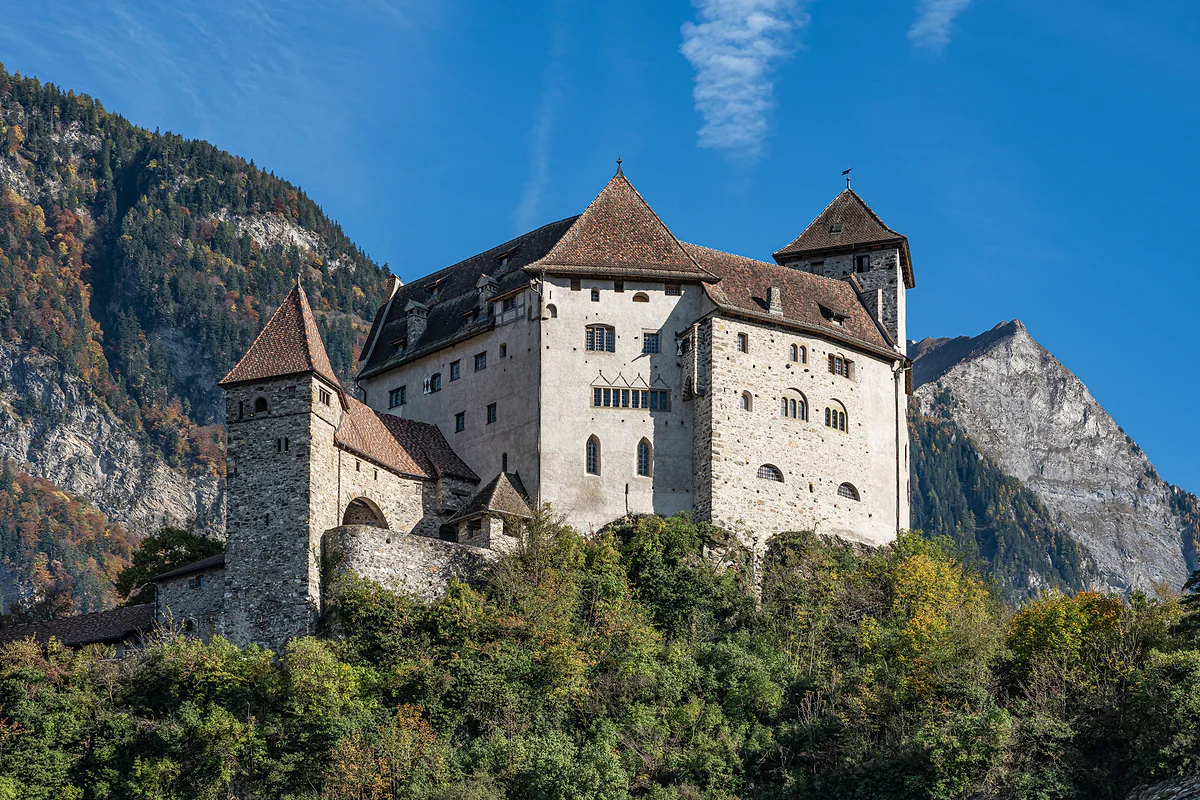
Gutenberg, the storybook castle you can walk into
White, turreted, on a vine-covered rock in Balzers. The outer bailey is free all year and the chapel and rose garden open on Sundays from May to October.
Gutenberg Castle in Balzers -
03 To save money
The ruins are free
The Obere Burg at Schellenberg is a short walk away, says the tourist board, and Schalun lies on stage 2 of the Liechtenstein Trail. No official source gives them opening hours or prices.
the Schellenberg castle ruins -
04 My tip
Liechtenstein Castle is in Austria
The family name appears around 1136. Hugo of Liechtenstein probably took it from Liechtenstein Castle south of Vienna, according to the Princely House.
Liechtenstein royal family
My ranking, scored
Liechtenstein's castles, ranked by me
My own scores out of 10. They weigh what you can actually see, what impresses in person and what each tells you about the country's history. A spectacular castle you can't enter loses marks to a ruin you can wander round.
0 of 6 seen
-
Gutenberg Castle (Balzers)
The only standing castle you can tour inside, by booking from May to October. The outer bailey is open all year and the hill has been lived on for at least 6,500 years.
9.1 out of 10
-
Vaduz Castle
The image of the country, about 120 m above the capital, with a 12th-century keep. It only loses marks because you can't go in.
8.6 out of 10
-
Obere Burg, Schellenberg
A 12th-century ruin at 668 m, excavated in 1960 to 1964, with remains of the keep, the great hall and the cistern. The tourist board calls it a much-loved outing.
8.3 out of 10
-
Schalun ruin
A 12th-century castle on a ridge at 862 m between Schaan and Vaduz, abandoned in the 14th century. It has the charm of something you stumble on in the woods.
7.9 out of 10
-
Untere Burg, Schellenberg
Lower down at 595 m, with its curtain wall, part of the tower and a rebuilt oven. A good companion to the Obere Burg.
7.4 out of 10
-
Grafenberg ruin
Sparse remains of a 13th-century castle on the Fläscherberg, on Swiss soil but owned by Balzers. For completists only.
6.6 out of 10
Plenty of people come to Liechtenstein with castles in mind and find that the most famous one is off limits. That’s not the country being awkward; the Prince lives there. Happily there are others, and I think Liechtenstein’s castles are one of the best ways into its history. Here’s what there is, what you can set foot in and the order I’d take them in.
Two standing, four in ruins
Two are still standing, Vaduz Castle above the capital and Gutenberg Castle in Balzers. There are four ruins, two at Schellenberg in the Unterland, Schalun in the woods between Schaan and Vaduz, and Grafenberg, which belongs to Balzers even though it’s on Swiss soil.
Most of them share a story. They date from the 12th and 13th centuries, and according to the Historisches Lexikon Gutenberg and the Schellenberg castles guarded the route from southern Germany to Italy over the Alpine passes. Most ended up as ruins once they were no longer needed. Only Vaduz stayed lived in, and Gutenberg was rebuilt in the early 20th century.
Can you visit Vaduz Castle?
No, and it’s worth knowing before you climb the hill. The Princely House says so in its FAQ. The reigning Prince and the heir and his wife live there, and visits are kept for very special occasions. One thing that confuses people is the flags on top, which don’t signal that the Prince is at home, since the family raises them daily unless it’s blowing hard.
I’d still put it on the list. Its core, the great tower, goes back to the 12th century, the round bastions were added in the 16th, and documents first mention it in 1322. The family has owned it since 1712 and it has been the princely residence since 1938. You can see it close up from outside and, better still, from the valley, where the tourist board puts it about 120 metres above the town.
Gutenberg, the one you can walk into
If you’re only going inside one castle, this is it. Built around 1200, it spent five centuries in Austrian hands, was abandoned in the mid-18th century and rescued from ruin by Egon Rheinberger in the early 20th. Today it’s state property. During the May to October season you go in with a guide by booking, on Sundays in that season the chapel and rose garden open free, and the outer bailey is open all year. I go into detail on its own page and, with the village, in my guide to Balzers.
The ruins, for people who like a walk in the woods
The two at Schellenberg get the most visitors. The lords of Schellenberg built them from the late 12th century, the House of Liechtenstein bought them with the lordship in 1699, and since 1956 they’ve belonged to the Historical Society. The Obere Burg, at 668 m, keeps remains of the keep, the great hall and the cistern, and the tourist board describes it as a much-loved outing reached by a short walk. The Untere Burg, at 595 m, has its curtain wall, part of the tower and a rebuilt oven. One detail I love is that in the 18th century the names old and new got swapped, and it took archaeology to sort it out. More in Schellenberg castles.
The Schalun castle ruin, also called the Wildschloss, stands on a ridge at 862 m. Building began in the 12th century, and it was cleared out in the 14th before burning down. Grafenberg, the last, is little more than a scatter of stones on the slopes of the Fläscherberg, the remains of a castle lived in during the 13th century.
Liechtenstein Castle isn’t in Liechtenstein
This is the fact that surprises people most. According to the Princely House, the name Liechtenstein first appears around 1136, and Hugo of Liechtenstein probably took it from Liechtenstein Castle, south of Vienna. The family bought Schellenberg in 1699 and Vaduz in 1712, and the country took their name, not the other way round.
The order I’d see them in
On a summer Sunday I’d start at Gutenberg, head up to Vaduz to see the castle from outside and carry on through the woods to Schalun, which is on stage 2 of the Liechtenstein Trail. I’d save the Schellenberg ruins for my Unterland day, since stage 5 goes right past them.
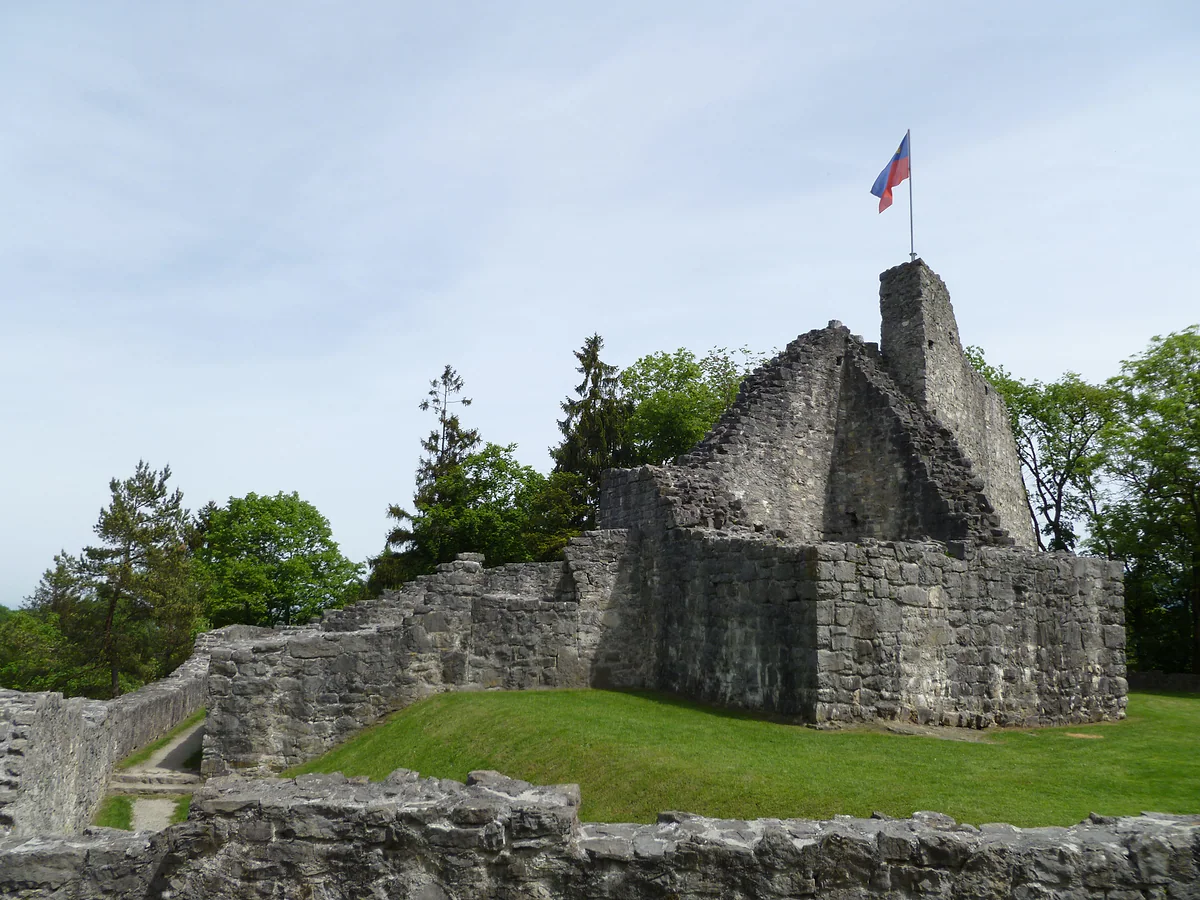
The stone ruins of the upper castle of Schellenberg, with the Liechtenstein flag on top of the tower.
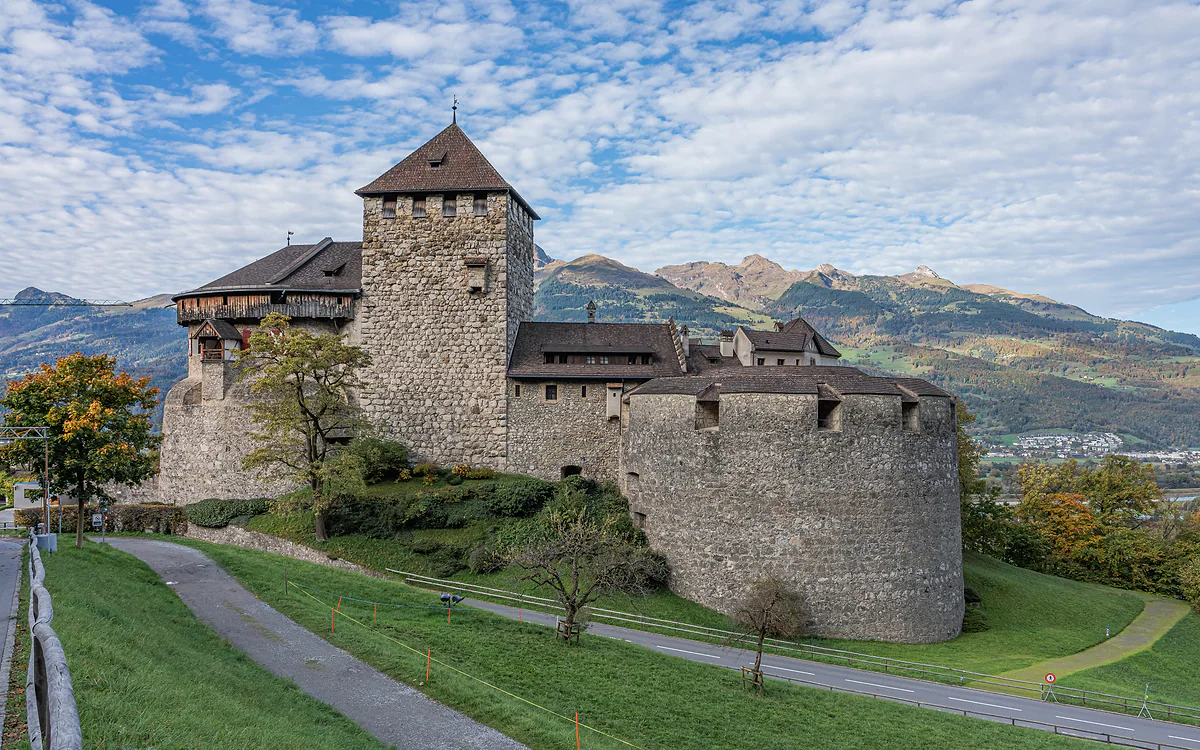
Vaduz Castle, with its stone keep and round bastions, above the meadow and the path, with the Swiss mountains behind.
The castles at a glance
| Castle | Municipality | Date | Can you visit? |
|---|---|---|---|
| Vaduz | Vaduz | 12th-century keep; first recorded 1322 | No, the Prince's residence |
| Gutenberg | Balzers | Around 1200; rebuilt 1905 to 1910 | Outer bailey open; interior by booking May to October |
| Obere Burg | Schellenberg | Late 12th century; recorded 1348 | Ruin, open access |
| Untere Burg | Schellenberg | Second half of the 13th century; recorded 1364 | Ruin, open access |
| Schalun (Wildschloss) | Vaduz | 12th century; abandoned in the 14th | Ruin, open access |
| Grafenberg (Mörderburg) | Fläsch (Switzerland), owned by Balzers | Lived in during the 13th century | Ruin, open access |
From the Princely House, Balzers council, the Burg Gutenberg association, the tourist board and the Historisches Lexikon. The ruins have no hours or prices in the official sources I've read.
Test yourself
True or false?
0/4 Pick before you peek.
-
The castle that gave the Liechtenstein family its name is in the principality.
See the answer
False. It's in Austria, south of Vienna. The family took its name from it around 1136 and only bought Schellenberg and Vaduz centuries later, in 1699 and 1712.
-
You can buy a ticket to tour Vaduz Castle.
See the answer
False. It's the home of the Prince and the Hereditary Prince and Princess. The Princely House says visits happen only on exceptional occasions.
-
One of Liechtenstein's castle ruins stands on Swiss soil.
See the answer
True. Grafenberg, or the Mörderburg, lies in the municipality of Fläsch in Graubünden but belongs to Balzers.
-
The names of the two Schellenberg ruins were once swapped by mistake.
See the answer
True. In the 18th century the labels old and new got crossed, and archaeology put it right. That's why they're now called the Obere and Untere Burg.
- Standing castles
- 2
- Medieval ruins
- 4
- First record of Vaduz Castle
- 1322
- Altitude of the Schalun ruin
- 862 m
0 of 168 Liechtenstein guides
Your next stamp
- Things to do
- Vaduz Castle
- Vaduz
- Gutenberg Castle
- Museums
- Stage 2: Triesenberg - Vaduz
- Where to stay
- Parliament
- One day
- Two days
- Municipalities
- Oberland
- Unterland
- Map
- Städtle
- Mitteldorf
- Vaduz Cathedral
- Government Building
- Vaduz Town Hall
- Red House
- Prince's Winery
- Old Rhine Bridge
- Schaan
- Schalun Castle Ruin
- Balzers
- Citytrain
- Triesen
- Triesenberg
- Walser Museum
- Planken
- The Rhine
- Schaan Roman fort
- Dux
- St Mamertus chapel
- Lawena valley
- Mäls
- DoMuS
- TAK Theatre
- Churches and chapels
- Viewpoints
- Mountains
- Kunstmuseum
- Mountain huts
- Hilti Art Foundation
- Pfälzerhütte
- Gafadura hut
- National Museum
- Treasure Chamber
- Postage Stamp Museum
- Kunstraum Engländerbau
- Eschen
- Masescha
- Gaflei
- Nendeln
- Mauren
- Silum
- Rotenboden
- Schaanwald
- Gamprin
- Wangerberg
- Bendern
- Steg
- Ruggell
- Samina valley
- Schellenberg Farmhouse Museum
- Cross-country skiing at Steg
- Küefer-Martis-Huus
- Ruggeller Riet
- Schellenberg
- Hinterschellenberg
- Fürstensteig
- Is it a country?
- Liechtenstein Trail
- Malbun
- Schellenberg castles
- Eschnerberg
- Malbun in summer
- Population
- Stage 1: Balzers - Triesenberg
- Lakes
- Sareis
- Size
- Malbun Peace Chapel
- Political system
- Stage 3: Vaduz - Nendeln
- Swimming pools
- Language
- Skiing in Malbun
- Stage 4: Nendeln - Ruggell
- Dialect
- Malbun ski pass
- Stage 5: Ruggell - Schaanwald
- Hotels in Malbun
- Stamps
- Princess Gina Trail
- Hut-to-hut Route 66
- Hiking
- Getting there
- In winter
- Weather
- Airport
- Best time to visit
- In summer
- Events
- With kids
- Zurich to Liechtenstein
- National day
- Sargans to Vaduz
- Christmas
- Feldkirch to Vaduz
- By train
- Traditions
- Carnival
- Getting around
- Buses
- Funken Sunday
- Alpine cattle drive
- Driving and vignette
- Parking
- Bike hire
- Cycling
- EU and Schengen
- Entry requirements
- Borders and customs
- The prince
- The princely house
- The flag
- The coat of arms
- The national anthem
- History
- Second World War
- No army
- Facts
- Why so rich?
- Banks and tax haven
- Hilti
- Hotels in Vaduz
- False teeth
- Hostel and camping
- Rent the country?
- Where to eat
- Restaurants in Vaduz
- Swiss invasions
- Bars and nightlife
- Food
- Käsknöpfle
- Wine
- Casinos
- Adventure Pass
- Rainy days
- Guided tours
- Tourist office
- Day trips
- Passport stamp
- Music festivals
- Phone and roaming
- Currency and payments
- Prices and budget
- Tipping
- Plugs and sockets
- Tap water
- Opening hours
- Public holidays
- Safety
- Accessibility
- With a dog
- Shopping and souvenirs
Frequently asked questions
How many castles are there in Liechtenstein?
Two standing ones, Vaduz and Gutenberg in Balzers, and four medieval ruins: the Obere and Untere Burg at Schellenberg, Schalun between Schaan and Vaduz, and Grafenberg, which belongs to Balzers though it sits on Swiss soil.
Can you visit Vaduz Castle?
No. The Princely House explains that it's the home of the Prince and the Hereditary Prince and Princess, with visits only on exceptional occasions. You can see it from outside and from the valley.
Which castle in Liechtenstein can you go inside?
Gutenberg in Balzers, on a guided tour booked between 1 May and 31 October. On Sundays in that season the chapel and rose garden open free from 10:00 to 17:00.
Where is the Liechtenstein Castle that gave the country its name?
In Austria, south of Vienna. According to the Princely House, the name first appears around 1136, and Hugo of Liechtenstein probably took it from that castle. It isn't in the principality.
What is the most famous castle in Liechtenstein?
Vaduz Castle, which sits above the capital and appears on almost every picture of the country. It's the Prince's residence, though, so the castle you can actually visit is Gutenberg.
Which castles can you see on foot?
Stage 1 of the Liechtenstein Trail sets off from Gutenberg, stage 2 passes Schalun and Vaduz Castle, and stage 5 goes by the Schellenberg ruins.
By
Tourism graduate with a master’s in Tourism Management and Planning from the University of Málaga, who has travelled across Europe. He writes every guide from official sources and his own judgement.
Published on . Facts checked on .
Sources
Photos: A.Savin (FAL); SchuetzeZH (CC BY-SA 4.0); A.Savin (FAL), via Wikimedia Commons.