Schellenberg's hamlet on the Austrian border
Hinterschellenberg, the hamlet where a Russian army crossed
Hinterschellenberg is one of the five hamlets of Schellenberg, in Liechtenstein's Unterland, on the border with Feldkirch. On the night of 2 to 3 May 1945 the 494 men, women and children left of Holmston's Russian army crossed here, and Liechtenstein later refused to hand over those who didn't want to return to the USSR. A 1980 stele marks the event.
In 30 seconds
Full read: 3 min
- Hinterschellenberg is a hamlet of Schellenberg on the border with Feldkirch.
- On the night of 2 to 3 May 1945 the 494 members of Holmston's Russian army crossed here.
- A 1980 stele commemorates the crossing.
- It has St George's chapel and an inn recorded since 1847, the Löwen.
I'd come to Hinterschellenberg for the 1945 story, one of the best the country has, and stay for lunch at the Löwen if it's between Monday and Thursday. Do read up first, though, because the hamlet is quiet and there's no museum to tell you the tale.
Before you go
What I would keep in mind
-
01 Most beautiful
The story the country tells with pride
In 1945 Liechtenstein interned a small Russian army that had fought alongside the Wehrmacht and didn't hand those who refused to go home to the USSR. The Lexikon adds nuance to the myth that grew up afterwards.
Liechtenstein in World War 2 -
02 My tip
The Löwen is shut Friday to Sunday
The Wirtschaft zum Löwen, at Winkel 5, opens Monday to Thursday from 10:00 to 23:00, with the kitchen serving from 11:30 to 20:30. The tourist board lists it among places to eat Käsknöpfle.
Käsknöpfle, Liechtenstein's national dish -
03 Getting there
Route 35 comes all the way up
Route 35 starts in Nendeln and runs via Bendern and Gamprin to Hinterschellenberg. The border crossing into Austria has been unstaffed since 1987.
Liechtenstein's buses -
04 To save money
Two ruins a stroll away
The Schellenberg castles are a kilometre away on the same hill. They're open-air ruins and pair nicely with a visit to the hamlet.
the Schellenberg castle ruins
What I would book
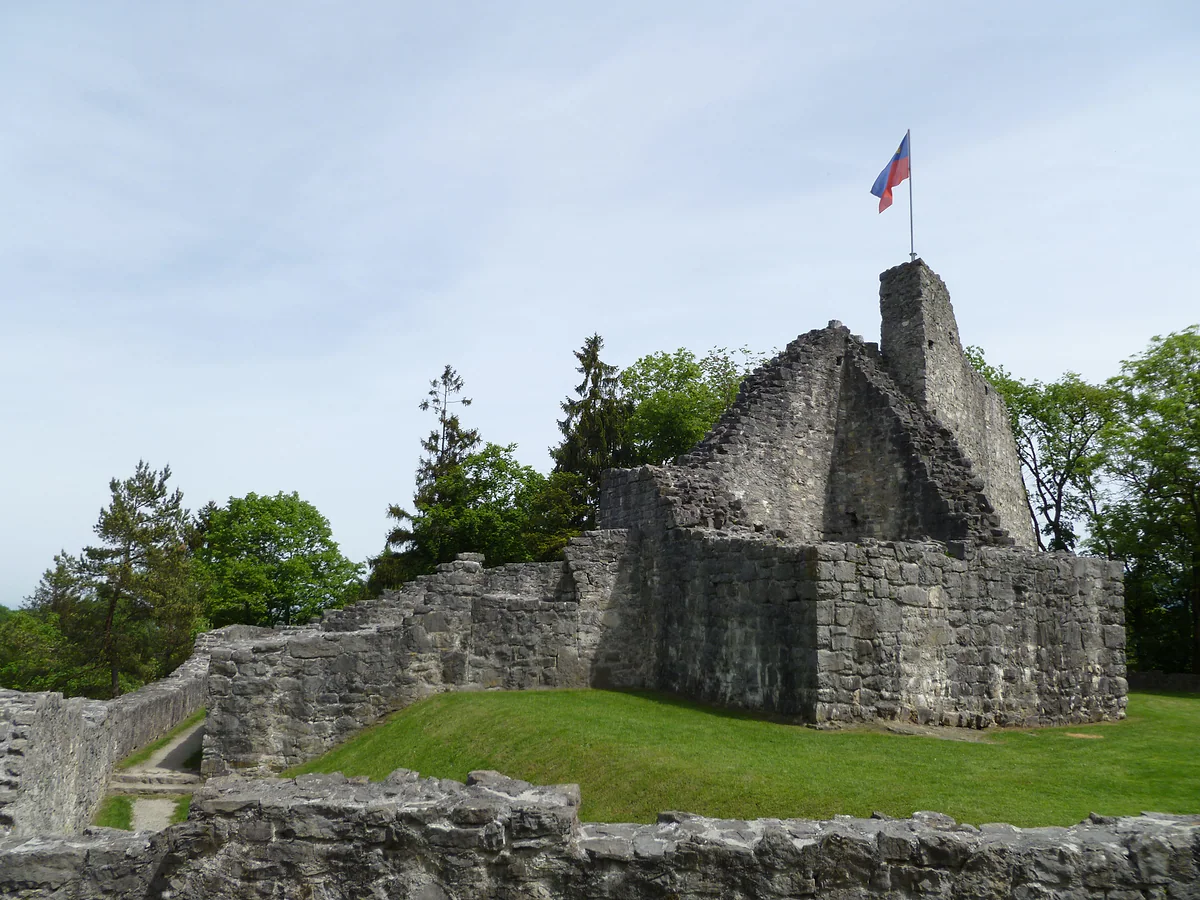
Hinterschellenberg is a handful of houses, a chapel and an inn at the far end of the Eschnerberg, right up against Austria. Nothing about it hints that one of the most talked-about episodes in Liechtenstein’s history began here, and that’s exactly why I like it. It’s a place to visit with the story already in your head.
A hamlet at the end of the hill
Hinterschellenberg is one of the five hamlets from which the village of Schellenberg grew. In the 19th century it vied with Mittel-Schellenberg to be the heart of the municipality, and lost once the church and convent went up in the other hamlet. Even so, it had a grocery shop from 1900 to 1975, and its inn, the Löwen, appears as a licensed house in 1847, although the Lexikon says drink was being served unofficially before that.
This is also where the border crossing into Austria lies, towards Nofels and Feldkirch, unstaffed since 1987. And one curious detail to round off the picture, the treatment works at Bendern handles waste water from the whole of Liechtenstein except Hinterschellenberg.
What happened in May 1945?
During the Second World War, the Russian count Boris Smyslovsky, who went by the name Arthur Holmston, raised a force for the Wehrmacht made up of Russian émigrés, Soviet prisoners and deserters, at one point up to 6,000 strong. From 4 April 1945 it was called the First Russian National Army. On 18 April, with Germany collapsing, Holmston ordered a retreat south to try to reach safety in Switzerland.
During the night that joined 2 and 3 May, what was left of it crossed from Nofels into Liechtenstein at Hinterschellenberg. There were 494 people, including 33 women and two children, and 23 of them weren’t Russian. Liechtenstein disarmed and interned them, first in the schools at Schellenberg and Ruggell. The Lexikon’s entry on the municipality gives a different count, about 440 soldiers and 50 civilians, and I go with the entry devoted to the army itself, which is more detailed.
The myth and what really happened
The Prince and the government wanted the matter off their hands as soon as possible. By the end of July 1945 half the internees had left for Vorarlberg to be repatriated, and that summer another 104 followed a Soviet commission. Just over 130 Russians, around 20 of them women, refused to go back, and the government refused to hand them over. By 1948 they had emigrated to Western countries, mainly Argentina. Holmston and his wife later came back to live in Liechtenstein.
The Lexikon says those repatriated weren’t shot en masse, as people in the country soon came to believe, although the majority ended up suffering in Stalin’s labour camps. And it’s honest about memory, noting that an unnuanced myth grew up that Liechtenstein was the only country to stand up to Stalin. I think it’s a cracking story precisely because it doesn’t need exaggerating. The wider context is on Liechtenstein in the Second World War.
The 1980 stele
The hamlet gained a memorial stele in 1980, which the Lexikon credits to Schellenberg municipality, and in 1995 a Russian Orthodox service was held there in memory of the crossing. The story reached the cinema too, with the French film «Vent d’Est» in 1992 and the documentary «Fluchtburg Liechtenstein» in 1995. I haven’t found any official information on access to the stele, so all I’ll say is that it’s in the hamlet.
St George’s and the Löwen
St George’s chapel, at 623 metres, began as a private initiative around the turn of the 18th century and was enlarged in the mid-19th. It was restored in 1944-45 and again in 1980-81. Inside there’s a baroque altar from 1659 with an early 17th-century crucifix, a 17th-century oil painting of St George and a mid-17th-century tabernacle.
For lunch, the Wirtschaft zum Löwen opens Monday to Thursday, 10:00 to 23:00, with the kitchen serving from 11:30 to 20:30, and it’s shut Friday to Sunday. The tourist board includes it among the places to try Käsknöpfle, the national dish. A kilometre away on the same hill stand the two ruins of the Schellenberg castles.
To get here, LIEmobil route 35 starts in Nendeln and climbs via Bendern and Gamprin.
The 1945 crossing in figures
| Fact | Figure |
|---|---|
| Night of the crossing | 2 to 3 May 1945 |
| People who crossed | 494, including 33 women and 2 children |
| Non-Russians among them | 23 |
| Left for repatriation by end of July 1945 | About half |
| Followed the Soviet commission in summer | 104 |
| Refused to return | Just over 130 |
| Stele in Hinterschellenberg | 1980 |
Historisches Lexikon, entry «Russische Nationalarmee». The entry «Schellenberg (Gemeinde)» gives around 440 soldiers and 50 civilians.
Wirtschaft zum Löwen
| What | Details |
|---|---|
| Address | Winkel 5, 9488 Schellenberg |
| Monday to Thursday | 10:00-23:00 |
| Kitchen | 11:30-20:30 |
| Friday to Sunday | Closed |
Restaurant website, checked on 27-09-2026. It closed for holidays from 7 to 24 September 2026.
Test yourself
True or false?
0/3 Pick before you peek.
-
The Russians who crossed in 1945 were Red Army soldiers.
See the answer
False. They belonged to the First Russian National Army, a force of émigrés, Soviet prisoners and deserters that had fought on the German side against the Red Army.
-
Liechtenstein was the only country to stand up to Stalin.
See the answer
False. The Historisches Lexikon calls that idea an unnuanced myth. Liechtenstein didn't hand over those who refused, but half had left before August 1945.
-
Hinterschellenberg's waste water isn't treated at Bendern.
See the answer
True. The Lexikon says the Bendern plant treats the whole country's waste water except Hinterschellenberg's.
- People who crossed in May 1945
- 494
- Russians who refused to return, just over
- 130
- Memorial stele
- 1980
- First record of the Löwen
- 1847
Map
Where Hinterschellenberg is
The dashed line is the border: Switzerland across the Rhine, Austria to the north and east. Every number opens its guide.
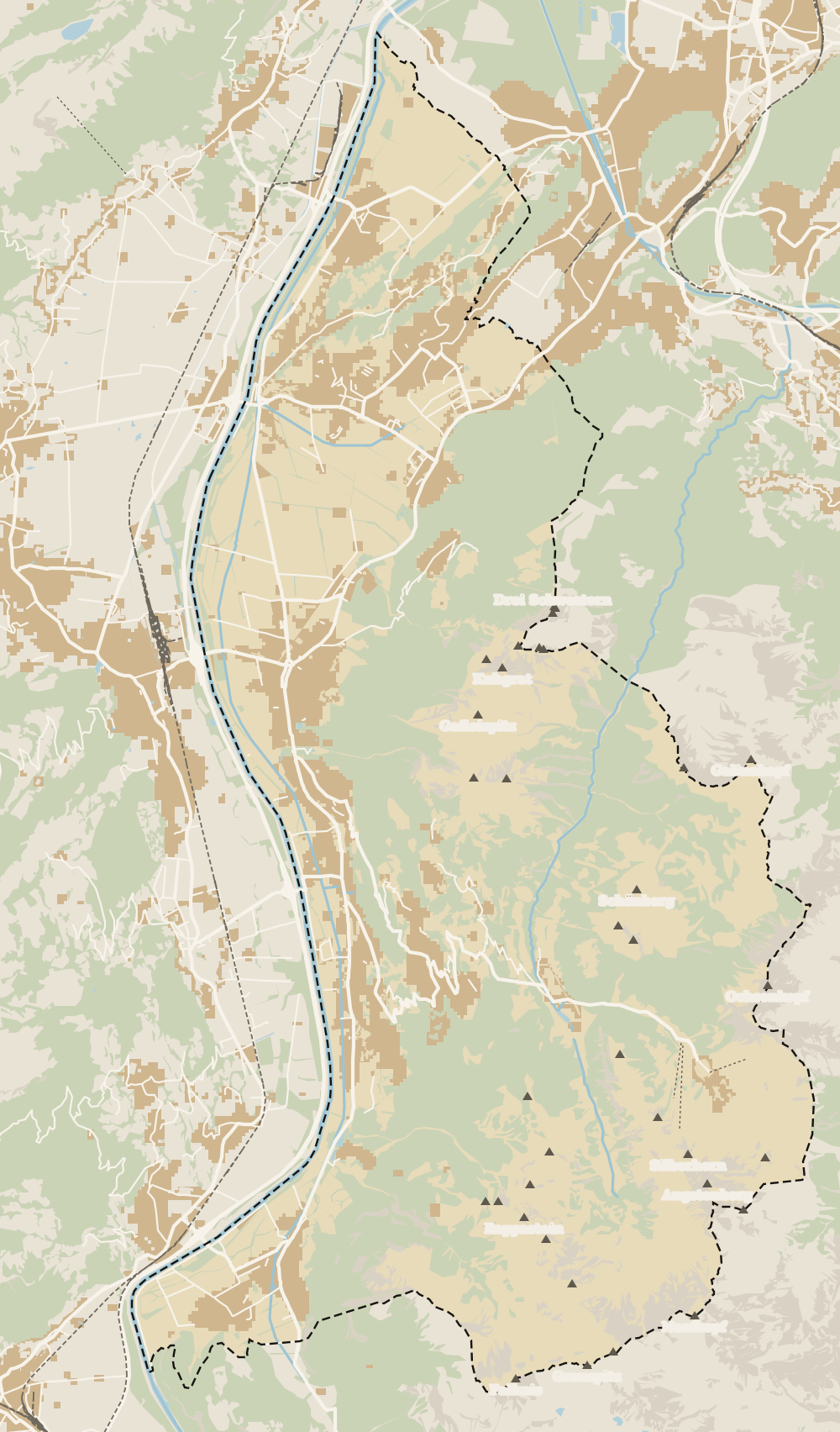 1Schellenberg Farmhouse Museum 2Schellenberg 3Hinterschellenberg 4Schellenberg castles
 Map data © OpenStreetMap contributors (ODbL)
0 of 168 Liechtenstein guides
Your next stamp
- Schellenberg
- Second World War
- Schellenberg Farmhouse Museum
- Schaanwald
- Masescha
- Nendeln
- No army
- Steg
- Things to do
- One day
- Two days
- Municipalities
- Oberland
- Unterland
- Map
- Vaduz
- Städtle
- Mitteldorf
- Vaduz Castle
- Vaduz Cathedral
- Parliament
- Government Building
- Vaduz Town Hall
- Red House
- Prince's Winery
- Old Rhine Bridge
- Schaan
- Schalun Castle Ruin
- Balzers
- Citytrain
- Triesen
- Triesenberg
- Walser Museum
- Planken
- Gutenberg Castle
- The Rhine
- Schaan Roman fort
- Dux
- St Mamertus chapel
- Lawena valley
- Mäls
- DoMuS
- TAK Theatre
- Castles
- Churches and chapels
- Viewpoints
- Mountains
- Museums
- Kunstmuseum
- Mountain huts
- Hilti Art Foundation
- Pfälzerhütte
- Gafadura hut
- National Museum
- Treasure Chamber
- Postage Stamp Museum
- Kunstraum Engländerbau
- Eschen
- Gaflei
- Mauren
- Silum
- Rotenboden
- Gamprin
- Wangerberg
- Bendern
- Ruggell
- Samina valley
- Cross-country skiing at Steg
- Küefer-Martis-Huus
- Ruggeller Riet
- Fürstensteig
- Is it a country?
- Liechtenstein Trail
- Malbun
- Schellenberg castles
- Eschnerberg
- Malbun in summer
- Population
- Stage 1: Balzers - Triesenberg
- Lakes
- Sareis
- Size
- Stage 2: Triesenberg - Vaduz
- Malbun Peace Chapel
- Political system
- Stage 3: Vaduz - Nendeln
- Swimming pools
- Language
- Skiing in Malbun
- Stage 4: Nendeln - Ruggell
- Dialect
- Malbun ski pass
- Stage 5: Ruggell - Schaanwald
- Hotels in Malbun
- Stamps
- Princess Gina Trail
- Hut-to-hut Route 66
- Hiking
- Getting there
- In winter
- Weather
- Airport
- Best time to visit
- In summer
- Events
- With kids
- Zurich to Liechtenstein
- National day
- Sargans to Vaduz
- Christmas
- Feldkirch to Vaduz
- By train
- Traditions
- Carnival
- Getting around
- Buses
- Funken Sunday
- Alpine cattle drive
- Driving and vignette
- Parking
- Bike hire
- Cycling
- EU and Schengen
- Entry requirements
- Borders and customs
- The prince
- The princely house
- The flag
- The coat of arms
- The national anthem
- History
- Facts
- Why so rich?
- Banks and tax haven
- Where to stay
- Hilti
- Hotels in Vaduz
- False teeth
- Hostel and camping
- Rent the country?
- Where to eat
- Restaurants in Vaduz
- Swiss invasions
- Bars and nightlife
- Food
- Käsknöpfle
- Wine
- Casinos
- Adventure Pass
- Rainy days
- Guided tours
- Tourist office
- Day trips
- Passport stamp
- Music festivals
- Phone and roaming
- Currency and payments
- Prices and budget
- Tipping
- Plugs and sockets
- Tap water
- Opening hours
- Public holidays
- Safety
- Accessibility
- With a dog
- Shopping and souvenirs
Frequently asked questions
What happened at Hinterschellenberg in 1945?
On the night of 2 to 3 May, the 494 people left of the First Russian National Army, General Holmston's force that had fought with the Wehrmacht, crossed the border from Nofels. Liechtenstein interned them.
Did Liechtenstein hand the Russians over to Stalin?
Not those who refused to go. Just over 130 said no, the government declined to extradite them, and by 1948 they had emigrated, mostly to Argentina. Many others did return, on their own or with a Soviet commission.
Is there a Russian memorial at Hinterschellenberg?
Yes. The Historisches Lexikon records that a memorial stele was put up in Hinterschellenberg in 1980 and that a Russian Orthodox memorial service was held there in 1995.
Where can you eat in Hinterschellenberg?
At the Wirtschaft zum Löwen, an inn the Lexikon places in Hinterschellenberg since 1847. It opens Monday to Thursday and the tourist board lists it among the places to eat Käsknöpfle.
How do you get to Hinterschellenberg?
On LIEmobil route 35, which starts in Nendeln and runs via Bendern and Gamprin. By car, it's up the Eschnerberg through Schellenberg.
By
Tourism graduate with a master’s in Tourism Management and Planning from the University of Málaga, who has travelled across Europe. He writes every guide from official sources and his own judgement.
Published on . Facts checked on .
Sources
Photos: SchuetzeZH (CC BY-SA 4.0), via Wikimedia Commons.