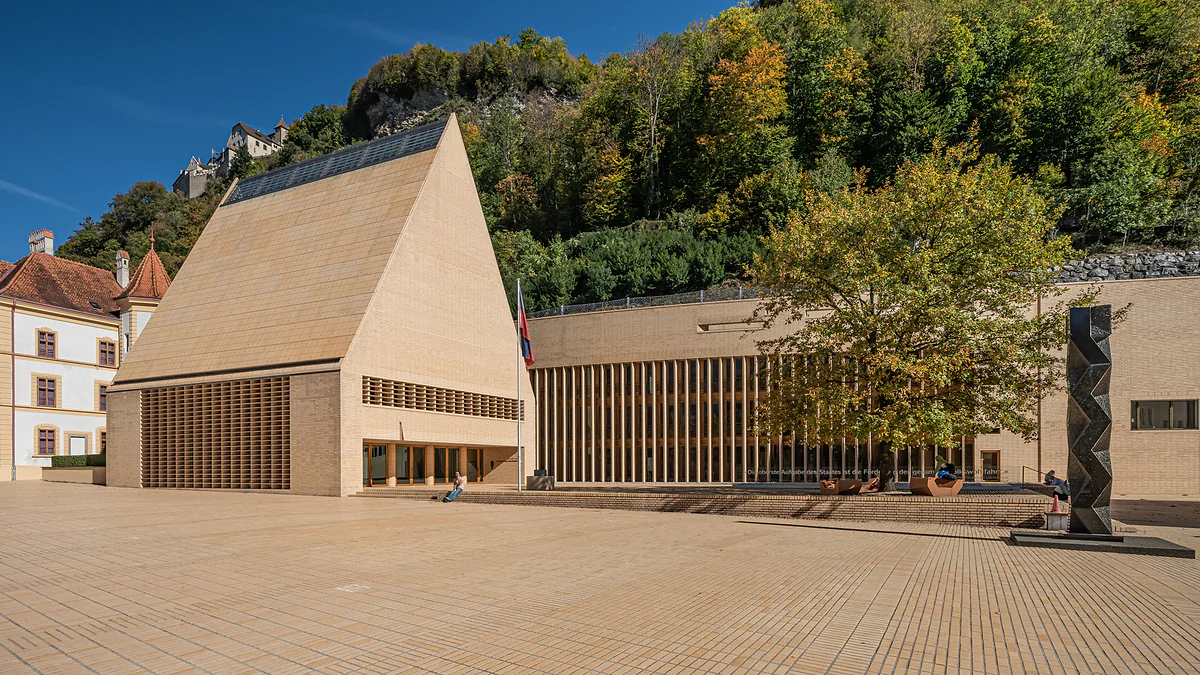
A monarchy with direct democracy
How Liechtenstein is governed, between the Prince and the ballot box
Liechtenstein is a hereditary constitutional monarchy on a democratic and parliamentary basis, and its constitution says state power rests with both the Prince and the people. Hans-Adam II reigns, with his son Alois acting as regent since 2004. There's a 25-seat parliament, a five-member government and referendums triggered by 1,000 signatures.
In 30 seconds
Full read: 3 min
- Liechtenstein is a hereditary constitutional monarchy in which power rests with both the Prince and the people.
- The Prince must sanction every law; if he doesn't within six months, the law is deemed refused.
- The people elect 25 MPs and can trigger initiatives and referendums with 1,000 signatures.
- Since 2003, 1,500 citizens can table a motion of no confidence in the Prince or a vote to abolish the monarchy.
What strikes me most isn't that there's a prince with real power, though there is, but that the people can vote to remove him or abolish the monarchy altogether, and that this has been written into the constitution since 2003. Few monarchies put that question into their own founding law.

On the calendar
The dates at a glance
-
Sitting of the Liechtenstein Landtag
Landtag, Vaduz
-
Sitting of the Liechtenstein Landtag
Landtag, Vaduz
-
Sitting of the Liechtenstein Landtag
Landtag, Vaduz
Before you go
What I would keep in mind
-
01 My tip
Watch the Landtag from the public gallery
Public sittings of parliament can be followed from the gallery of the building in Vaduz. Outside sessions there are guided tours if you ask by email, but none during sittings.
the Parliament of Liechtenstein (Landtag) -
02 Most beautiful
The government building of 1905
The seat of government, the «Grosses Haus» on Peter-Kaiser-Platz, was built between 1903 and 1905 by a Viennese court architect and has been protected since 1992. You'll pass it on any walk through Vaduz.
the government building in Vaduz -
03 My tip
The heir has been in charge since 2004
Hans-Adam II is still the reigning Prince, but since 15 August 2004 his son Alois has carried out the duties of head of state as his representative, under Article 13bis of the constitution.
Prince of Liechtenstein -
04 My tip
Women only got the vote in 1984
Women won the national vote in 1984, after a men-only referendum carried by 2,370 votes to 2,251, according to the Historisches Lexikon.
history of Liechtenstein
What I would book
Liechtenstein’s political system is easy to misread from abroad because it doesn’t resemble anything nearby. It isn’t a ceremonial monarchy like Britain’s, and it isn’t a country run by a prince on a whim either. It’s a balance, sometimes a tense one, between a sovereign with genuine powers and a people who vote directly on a great deal. This is how I’d explain it to a visitor wondering who really calls the shots up at the castle.
A prince with real power
The 1921 constitution, in Article 2, defines the country as a hereditary constitutional monarchy on a democratic and parliamentary basis, and says state power rests with the Prince and the people. Both at once, and that’s the key.
The Prince is no figurehead. No law is valid without his sanction, under Article 9, and if he hasn’t given it within six months it counts as refused. He can convene, close or dissolve the Landtag, appoints the judges and holds the right of pardon. Article 7 also places him beyond the reach of the courts. Hans-Adam II has reigned since 13 November 1989, but since 15 August 2004 his son, Hereditary Prince Alois, has exercised those powers as his representative. I introduce them both on the Prince of Liechtenstein.
So who actually governs?
Day-to-day business falls to a five-member collegiate government, appointed by the Prince in agreement with the Landtag and on its proposal. The constitution requires each region to supply at least two of them. Since the 2025 election the coalition has been formed by the Patriotic Union (VU) and the Progressive Citizens’ Party (FBP), with Brigitte Haas as head of government since 10 April 2025 and Sabine Monauni as her deputy. It meets in the government building in Vaduz, dating from 1905.
The Landtag’s 25 seats are filled by list-based proportional voting every four years, with 15 allocated to the Oberland and 10 to the Unterland. A list needs more than 8% of the national vote to win any, and voters last went to the polls on 9 February 2025.
The people have their say too
This is where Liechtenstein looks Swiss. With 1,000 signatures or the backing of three municipalities, citizens can propose a law or demand a referendum on any law the Landtag passes, unless it’s declared urgent, and on large spending decisions from CHF 500,000 upwards. Changing the constitution takes 1,500 signatures or four municipalities.
It isn’t just theory. The Historisches Lexikon counts 58 referendum votes between 1919 and March 2009, and 32 popular initiatives voted on between 1921 and 2009, just under 44% of which succeeded. One date still strikes me as remarkably late, women’s national suffrage, which only arrived in 1984, through a men-only referendum won by 119 votes.
The checks added in 2003
The 2003 constitutional reform rewrote several articles on the Prince and added two that I think are the most original part of the system. Article 13ter lets 1,500 citizens table a motion of no confidence in the Prince, which then goes to a referendum. And Article 113 lets another 1,500 call for the monarchy to be abolished. If the people agree, the Landtag drafts a republican constitution, and the Prince may put forward his own for the same vote.
Add Article 4, which gives each municipality the right to leave the state by a majority of its voters. And within the family, on 15 August 2026 the Princely House adopted absolute primogeniture, but only for those born from now on to Alois’s children. I go into that on the Princely House of Liechtenstein.
Why it matters to a visitor
You’ll feel the system more than you’d expect. The castle above Vaduz isn’t a museum but the home of a head of state with real powers, which is why it stays closed. The parliament and the government building stand a few steps apart below it, and on 15 August the national holiday brings Prince and people together in the castle meadow. For me, that closeness between ruler and ruled is the thread running through the whole country.
How to see it for yourself
Anyone can watch the Landtag at work from the public gallery in Vaduz. The three sessions left in 2026 open on 30 September, 4 November and 2 December, each running for three days. When parliament isn’t sitting, the Landtag offers guided tours of the building on request by email, but not during sittings. The practical details are on the Liechtenstein parliament.
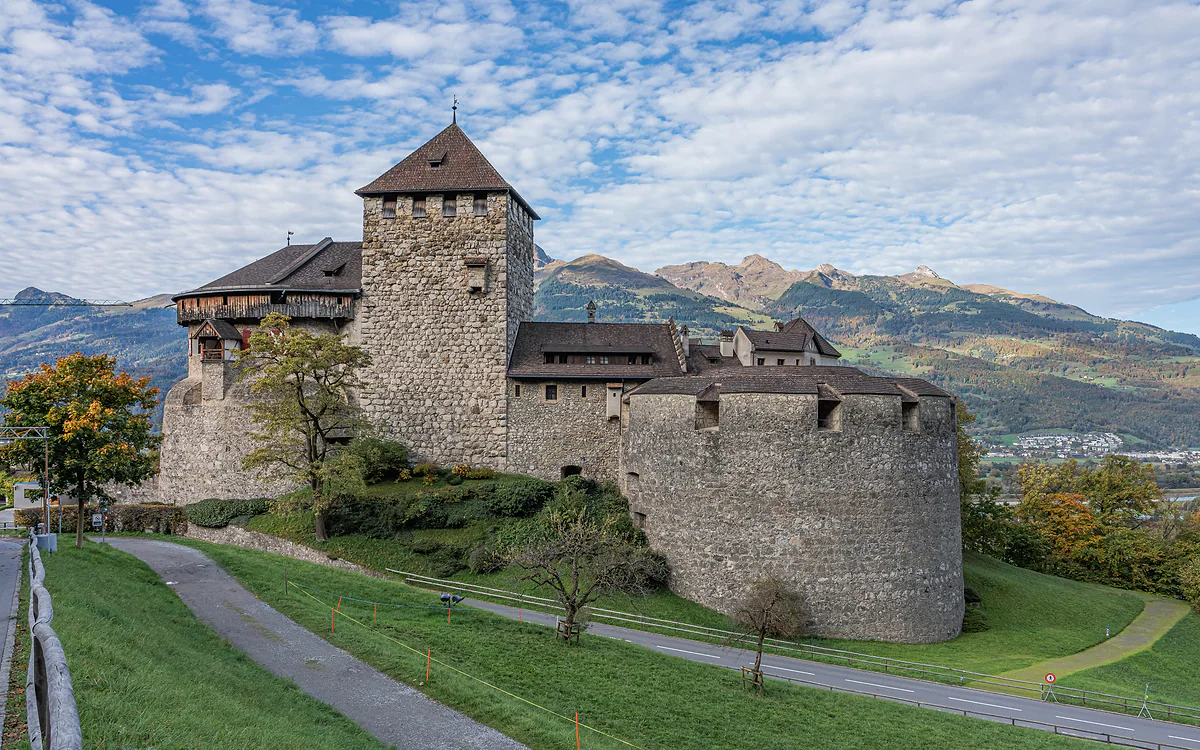
Vaduz Castle, with its stone keep and round bastions, above the meadow and the path, with the Swiss mountains behind.
Who's who in 2026
| Role | Person or make-up | Since |
|---|---|---|
| Reigning Prince | Hans-Adam II | 13-11-1989 |
| Regent (acting head of state) | Hereditary Prince Alois | 15-08-2004 |
| Head of government | Brigitte Haas (VU) | 10-04-2025 |
| Deputy head of government | Sabine Monauni (FBP) | 2025-2029 term |
| Ministers | Daniel Oehry (FBP), Hubert Büchel (VU), Emanuel Schädler (VU) | 2025-2029 term |
| Landtag | 25 MPs, 15 from the Oberland and 10 from the Unterland | Election of 09-02-2025 |
Sources: the Princely House, the Government of Liechtenstein and the Office of Statistics.
What the people can demand
| Right | What it takes | Article |
|---|---|---|
| Legislative initiative | 1,000 signatures or 3 municipalities | Art. 64 |
| Referendum on a law or spending | 1,000 signatures or 3 municipalities within 30 days | Art. 66 |
| Referendum on the constitution | 1,500 signatures or 4 municipalities | Art. 66 |
| Convening the Landtag | 1,000 signatures or 3 municipalities | Art. 48 |
| Motion of no confidence in the Prince | 1,500 signatures and a referendum | Art. 13ter |
| Abolishing the monarchy | Initiative of 1,500 signatures and two votes | Art. 113 |
Constitution of Liechtenstein, consolidated to 01-01-2026 (gesetze.li). Spending subject to referendum means at least CHF 500,000 one-off or CHF 250,000 a year.
Test yourself
True or false?
0/4 Pick before you peek.
-
A law can come into force in Liechtenstein without the Prince's approval.
See the answer
False. Article 9 of the constitution requires the Prince's sanction for every law, and Article 65 says that if it hasn't come within six months it counts as refused.
-
Citizens can put the abolition of the monarchy to a vote.
See the answer
True. Article 113 lets 1,500 citizens launch an initiative to abolish it; if it passes, the Landtag drafts a republican constitution that is then put to a vote.
-
Liechtenstein's government has one minister per municipality.
See the answer
False. It has five members for eleven municipalities, and the rule works by region, with at least two from the Oberland and two from the Unterland.
-
Women in Liechtenstein have voted in national elections since 1984.
See the answer
True. Men approved women's suffrage in the 1984 referendum by 2,370 votes to 2,251, according to the Historisches Lexikon.
- Members of the Landtag
- 25
- Members of the government
- 5
- Signatures for an initiative or referendum
- 1,000
- Year women gained the national vote
- 1984
0 of 168 Liechtenstein guides
Your next stamp
- Facts
- The princely house
- Is it a country?
- Rent the country?
- History
- Borders and customs
- Hilti
- Parliament
- Things to do
- One day
- Two days
- Municipalities
- Oberland
- Unterland
- Map
- Vaduz
- Städtle
- Mitteldorf
- Vaduz Castle
- Vaduz Cathedral
- Government Building
- Vaduz Town Hall
- Red House
- Prince's Winery
- Old Rhine Bridge
- Schaan
- Schalun Castle Ruin
- Balzers
- Citytrain
- Triesen
- Triesenberg
- Walser Museum
- Planken
- Gutenberg Castle
- The Rhine
- Schaan Roman fort
- Dux
- St Mamertus chapel
- Lawena valley
- Mäls
- DoMuS
- TAK Theatre
- Castles
- Churches and chapels
- Viewpoints
- Mountains
- Museums
- Kunstmuseum
- Mountain huts
- Hilti Art Foundation
- Pfälzerhütte
- Gafadura hut
- National Museum
- Treasure Chamber
- Postage Stamp Museum
- Kunstraum Engländerbau
- Eschen
- Masescha
- Gaflei
- Nendeln
- Mauren
- Silum
- Rotenboden
- Schaanwald
- Gamprin
- Wangerberg
- Bendern
- Steg
- Ruggell
- Samina valley
- Schellenberg Farmhouse Museum
- Cross-country skiing at Steg
- Küefer-Martis-Huus
- Ruggeller Riet
- Schellenberg
- Hinterschellenberg
- Fürstensteig
- Liechtenstein Trail
- Malbun
- Schellenberg castles
- Eschnerberg
- Malbun in summer
- Population
- Stage 1: Balzers - Triesenberg
- Lakes
- Sareis
- Size
- Stage 2: Triesenberg - Vaduz
- Malbun Peace Chapel
- Stage 3: Vaduz - Nendeln
- Swimming pools
- Language
- Skiing in Malbun
- Stage 4: Nendeln - Ruggell
- Dialect
- Malbun ski pass
- Stage 5: Ruggell - Schaanwald
- Hotels in Malbun
- Stamps
- Princess Gina Trail
- Hut-to-hut Route 66
- Hiking
- Getting there
- In winter
- Weather
- Airport
- Best time to visit
- In summer
- Events
- With kids
- Zurich to Liechtenstein
- National day
- Sargans to Vaduz
- Christmas
- Feldkirch to Vaduz
- By train
- Traditions
- Carnival
- Getting around
- Buses
- Funken Sunday
- Alpine cattle drive
- Driving and vignette
- Parking
- Bike hire
- Cycling
- EU and Schengen
- Entry requirements
- The prince
- The flag
- The coat of arms
- The national anthem
- Second World War
- No army
- Why so rich?
- Banks and tax haven
- Where to stay
- Hotels in Vaduz
- False teeth
- Hostel and camping
- Where to eat
- Restaurants in Vaduz
- Swiss invasions
- Bars and nightlife
- Food
- Käsknöpfle
- Wine
- Casinos
- Adventure Pass
- Rainy days
- Guided tours
- Tourist office
- Day trips
- Passport stamp
- Music festivals
- Phone and roaming
- Currency and payments
- Prices and budget
- Tipping
- Plugs and sockets
- Tap water
- Opening hours
- Public holidays
- Safety
- Accessibility
- With a dog
- Shopping and souvenirs
Frequently asked questions
What type of government does Liechtenstein have?
A hereditary constitutional monarchy on a democratic and parliamentary basis, under Article 2 of the constitution. State power rests with both the Prince and the people, who have the right of initiative and referendum.
Is Liechtenstein a democracy?
Yes, with a great deal of direct democracy. The people elect a 25-seat parliament and can force referendums with 1,000 signatures. At the same time the Prince holds real powers, such as approving or withholding every law.
Is Liechtenstein a kingdom or a republic?
Neither. It's a principality, a monarchy whose head of state is a prince rather than a king. The constitution even lets citizens put abolition of the monarchy to a vote with an initiative of 1,500 signatures.
Who runs Liechtenstein?
A five-member collegiate government, headed since 10 April 2025 by Brigitte Haas, in a coalition of the Patriotic Union and the Progressive Citizens' Party. The head of state is Prince Hans-Adam II, with Alois as regent.
Can the Prince veto laws?
Yes. Article 9 of the constitution says every law needs his sanction to be valid, and Article 65 adds that if he doesn't give it within six months it counts as refused.
Can you visit Liechtenstein's parliament?
Yes. Public sittings can be followed from the gallery, and outside sessions there are guided tours on request by email. The remaining 2026 sessions run 30 September to 2 October, 4 to 6 November and 2 to 4 December.
By
Tourism graduate with a master’s in Tourism Management and Planning from the University of Málaga, who has travelled across Europe. He writes every guide from official sources and his own judgement.
Published on . Facts checked on .
Sources
Photos: A.Savin (FAL); A.Savin (FAL), via Wikimedia Commons.