Final figure released on 25-09-2026
Liechtenstein's population, and who actually lives there
Liechtenstein had 41,228 permanent residents on 31 December 2025, according to the Office of Statistics, which published the final figure on 25 September 2026. Foreign nationals make up 35.3%, mostly Swiss, Austrian and German. The most populous municipality is Schaan, with 6,294 people, ahead of the capital, Vaduz, with 6,108.
In 30 seconds
Full read: 3 min
- Liechtenstein had 41,228 permanent residents on 31 December 2025, 0.84% more than a year earlier.
- Foreign nationals make up 35.3%, mostly Swiss, Austrian and German.
- Schaan (6,294) is bigger than the capital, Vaduz (6,108), and Planken (499) is the smallest.
- More people work in the country than live in it, 43,441 at the end of 2024.
The number that makes the country click for me isn't residents, it's workers. At the end of 2024, 43,441 people worked in Liechtenstein, more than live there, and 24,943 crossed the border every day. That's why the valley feels far busier on a weekday morning than the figures suggest.

Before you go
What I would keep in mind
-
01 My tip
The capital isn't the biggest town
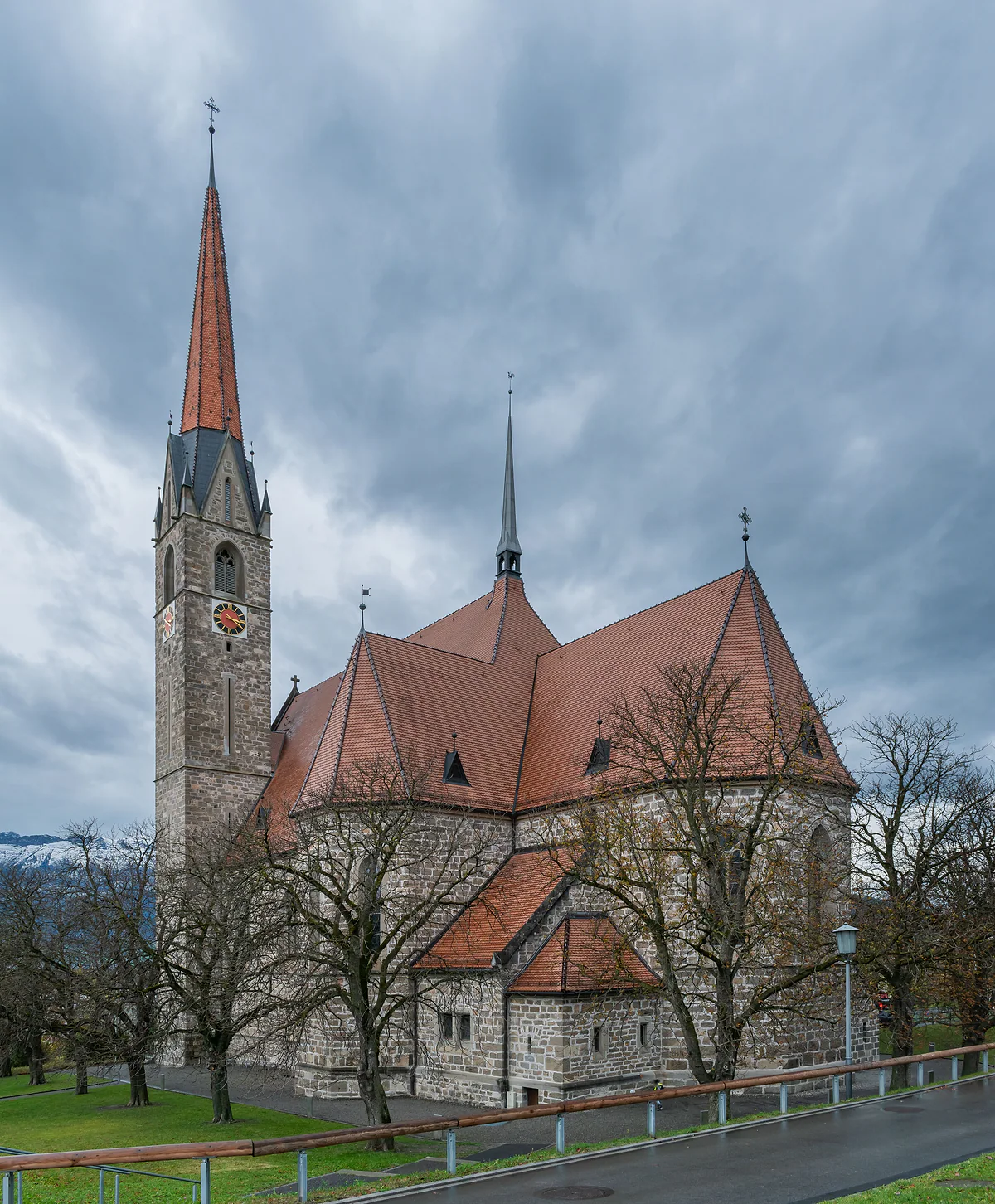
Schaan, with 6,294 residents, has more people than Vaduz, with 6,108. It has been the most populous municipality since 1989, according to the Historisches Lexikon, and it has the country's railway station.
Schaan, Liechtenstein's biggest town -
02 Most beautiful
The smallest village would fit on a few buses
Planken, on a terrace at 786 m below the Drei Schwestern, had 499 residents at the end of 2025. It's the least populated of the eleven and grew the fastest in 2025, by 1.6%.
Planken, below the Three Sisters -
03 Getting there
Almost 25,000 people cross in every day
Of the 43,441 people working in the country at the end of 2024, 24,943 arrived from abroad each day. At rush hour, the buses from Sargans, Buchs and Feldkirch feel it.
Liechtenstein's buses -
04 Money
Why GDP per head is misleading here
The Office of Statistics warns that GDP per head gives misleading results, because cross-border workers make up 58% of the workforce and produce output without counting as residents.
why Liechtenstein is so rich
What I would book
Liechtenstein is one of those countries where the statistics fit in the palm of your hand and still manage to surprise. It has roughly the population of a mid-sized town, yet more jobs than residents, over a third of its population from abroad and a capital that isn’t even its biggest town. Here are the final figures the Office of Statistics published on 25 September 2026, the day before I wrote this.
How many people live in Liechtenstein?
On 31 December 2025 there were 41,228 permanent residents, 20,828 women and 20,400 men. A year earlier there had been 40,886, so the population grew by 0.84%. The Office of Statistics sets that pace against the rest of Europe, where it comes out ahead of Switzerland (0.81%) and behind Spain (0.94%).
If you add the 484 people living in the country on stays of under twelve months, the total population at the end of 2025 was 41,712. I’d always quote the first figure, 41,228, because it’s the one the official statistics treat as the reference number.
Seen over the long run, the growth is striking. In 1911 there were 8,693 inhabitants, and in 1950 the country still hadn’t reached 14,000. It went from 25,215 in 1980 to 32,863 in 2000, and by 2020 it had 39,055. In a little over a century the population has multiplied almost fivefold on exactly the same land.
Eleven very unequal municipalities
The capital, Vaduz, has 6,108 residents, but the most populous municipality is Schaan, just to the north, with 6,294. Triesen, Balzers, Eschen and Mauren follow, all between 4,600 and 5,800. At the other end sit Schellenberg, with 1,180, and Planken, with 499, the smallest by population. The full list, with altitude and what each one offers, is on the municipalities of Liechtenstein.
The regional split tells its own story. The Oberland in the south holds 26,263 people across 125.5 km², and the Unterland in the north 14,965 across 35 km². The Unterland is far smaller but a good deal more crowded, and Mauren, with 618 people per km², is the most densely populated municipality in the country. On provisional 2025 figures the fastest growers were Planken, Triesen, Triesenberg and Vaduz, and the only one to shrink was Gamprin.
What you won’t find is a head count for each village. The Office of Statistics doesn’t publish figures by locality, so for Malbun, Nendeln or Schaanwald there are only old numbers from the Historisches Lexikon, dating from 2008 and 2011, which I wouldn’t pass off as current. Malbun, for instance, had 65 residents in April 2008, and in the ski season visitors outnumber them many times over. The same goes for the tiny Walser hamlets above Triesenberg, which appear on maps but never in the official tables.
More than a third from abroad
Of the 41,228 residents, 26,672 are Liechtenstein nationals and 14,556 are foreign, 35.3%. On provisional end-2025 figures, the Swiss form the largest foreign group (26.8%), followed by Austrians (16.4%) and Germans (13.8%), and just over half, 50.8%, hold the nationality of a European Economic Area country. Everyday life among them runs in German and the local dialect, as I explain in the language of Liechtenstein.
The average age is 44.3, a little lower among Liechtensteiners (43.1) than among foreign residents (46.5). It isn’t a particularly young country, which to me fits the quiet-village feel of the valley.
The figure that explains the country
Resident numbers only tell half the story. At the end of 2024, 43,441 people worked in Liechtenstein, more than lived there, and 24,943 of them came in from abroad every day. That’s why the Office of Statistics itself warns that GDP per head produces misleading results, and why the buses from Sargans and Feldkirch are packed at rush hour. I dig into it on why Liechtenstein is so rich.
Religion, as of the last census
The 2020 census was the last to ask about religion. Back then 69.6% of residents described themselves as Roman Catholic, 8.1% as Protestant and 18.4% as belonging to another faith or none, with the rest not answering. Vaduz has been an archdiocese since 1997, and its Cathedral of St Florin is the church I’d visit to get a feel for that Catholic weight, with the princely crypt beside it. It’s covered on Vaduz Cathedral.
To put all this on the ground, with how big the country is and how its 160 km² are divided, carry on to how big Liechtenstein is.
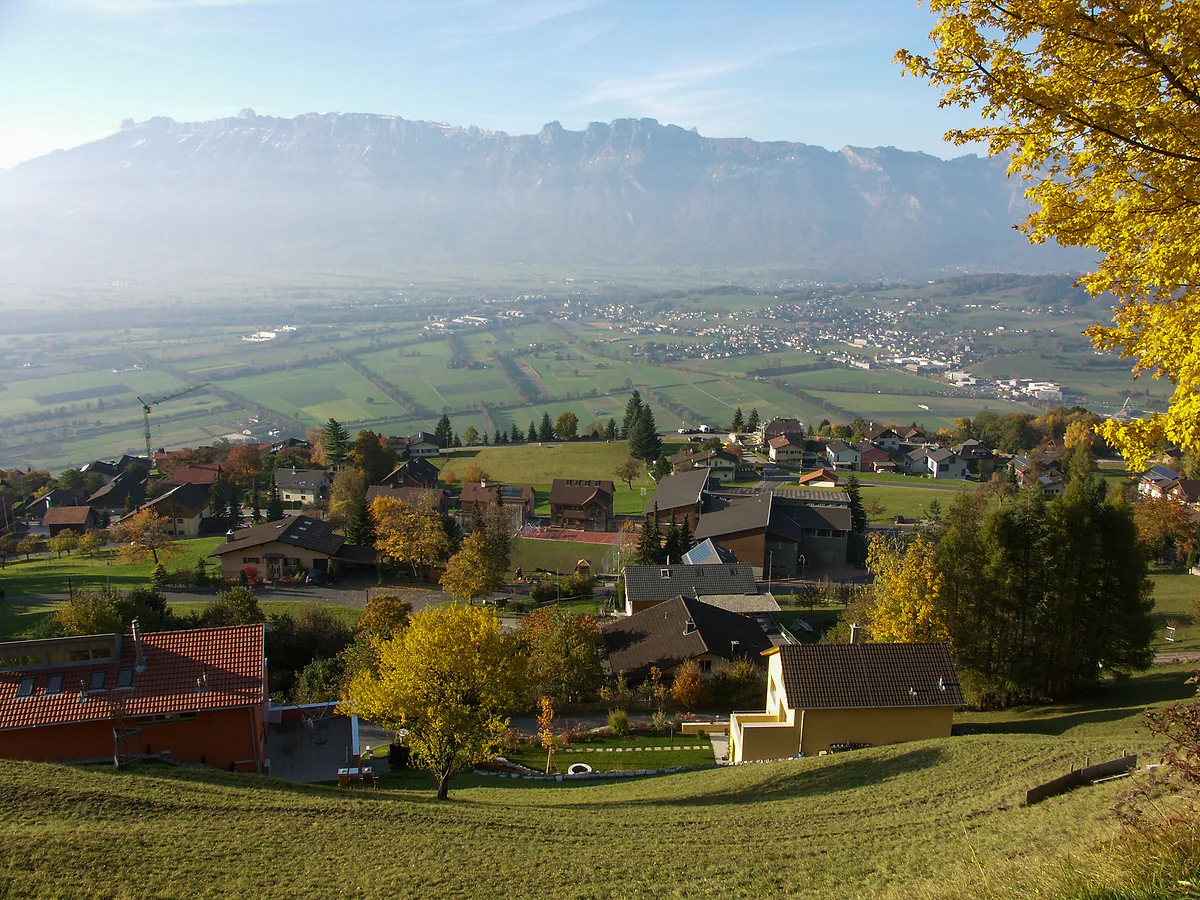
The houses of Planken on the hillside in autumn, with the Rhine valley below and the Swiss mountains on the horizon.
Population by municipality (31-12-2025)
| Municipality | Region | Residents | Area |
|---|---|---|---|
| Schaan | Oberland | 6,294 | 26.9 km² |
| Vaduz (capital) | Oberland | 6,108 | 17.3 km² |
| Triesen | Oberland | 5,785 | 26.5 km² |
| Balzers | Oberland | 4,835 | 19.7 km² |
| Eschen | Unterland | 4,781 | 10.4 km² |
| Mauren | Unterland | 4,663 | 7.5 km² |
| Triesenberg | Oberland | 2,742 | 29.7 km² |
| Ruggell | Unterland | 2,568 | 7.4 km² |
| Gamprin | Unterland | 1,773 | 6.2 km² |
| Schellenberg | Unterland | 1,180 | 3.6 km² |
| Planken | Oberland | 499 | 5.3 km² |
Permanent resident population from the Office of Statistics (table 2.1.1, final). Areas from Liechtenstein in Zahlen 2026. Oberland 26,263 residents; Unterland 14,965 (my own totals).
How the population has grown
| Year | Residents |
|---|---|
| 1911 | 8,693 |
| 1950 | 13,757 |
| 1980 | 25,215 |
| 2000 | 32,863 |
| 2020 | 39,055 |
| 2025 | 41,228 |
Office of Statistics, Liechtenstein in Zahlen 2026 (p. 11) and the 2025 population tables.
Test yourself
True or false?
0/4 Pick before you peek.
-
Vaduz is the most populous municipality in Liechtenstein.
See the answer
False. It's Schaan, with 6,294 residents at the end of 2025, against 6,108 in Vaduz. Schaan has been the largest since 1989.
-
More than a third of Liechtenstein's residents are foreign nationals.
See the answer
True. They number 14,556 out of 41,228, or 35.3%. The largest groups are Swiss, Austrian and German.
-
More people work in Liechtenstein than live there.
See the answer
True. At the end of 2024, 43,441 people worked there, 24,943 of whom arrived from abroad every day.
-
Liechtenstein already had over 30,000 people in 1950.
See the answer
False. It had 13,757. It didn't pass 30,000 until the end of the 20th century; in 2000 the figure was 32,863.
- Permanent residents at 31-12-2025
- 41,228
- Share of residents who are foreign nationals
- 35.3%
- Average age in 2025, in years
- 44.3
- Workers arriving daily from abroad in 2024
- 24,943
0 of 168 Liechtenstein guides
Your next stamp
- Municipalities
- Vaduz
- Oberland
- Size
- Hilti
- Eschen
- Things to do
- One day
- Two days
- Unterland
- Map
- Städtle
- Mitteldorf
- Vaduz Castle
- Vaduz Cathedral
- Parliament
- Government Building
- Vaduz Town Hall
- Red House
- Prince's Winery
- Old Rhine Bridge
- Schaan
- Schalun Castle Ruin
- Balzers
- Citytrain
- Triesen
- Triesenberg
- Walser Museum
- Planken
- Gutenberg Castle
- The Rhine
- Schaan Roman fort
- Dux
- St Mamertus chapel
- Lawena valley
- Mäls
- DoMuS
- TAK Theatre
- Castles
- Churches and chapels
- Viewpoints
- Mountains
- Museums
- Kunstmuseum
- Mountain huts
- Hilti Art Foundation
- Pfälzerhütte
- Gafadura hut
- National Museum
- Treasure Chamber
- Postage Stamp Museum
- Kunstraum Engländerbau
- Masescha
- Gaflei
- Nendeln
- Mauren
- Silum
- Rotenboden
- Schaanwald
- Gamprin
- Wangerberg
- Bendern
- Steg
- Ruggell
- Samina valley
- Schellenberg Farmhouse Museum
- Cross-country skiing at Steg
- Küefer-Martis-Huus
- Ruggeller Riet
- Schellenberg
- Hinterschellenberg
- Fürstensteig
- Is it a country?
- Liechtenstein Trail
- Malbun
- Schellenberg castles
- Eschnerberg
- Malbun in summer
- Stage 1: Balzers - Triesenberg
- Lakes
- Sareis
- Stage 2: Triesenberg - Vaduz
- Malbun Peace Chapel
- Political system
- Stage 3: Vaduz - Nendeln
- Swimming pools
- Language
- Skiing in Malbun
- Stage 4: Nendeln - Ruggell
- Dialect
- Malbun ski pass
- Stage 5: Ruggell - Schaanwald
- Hotels in Malbun
- Stamps
- Princess Gina Trail
- Hut-to-hut Route 66
- Hiking
- Getting there
- In winter
- Weather
- Airport
- Best time to visit
- In summer
- Events
- With kids
- Zurich to Liechtenstein
- National day
- Sargans to Vaduz
- Christmas
- Feldkirch to Vaduz
- By train
- Traditions
- Carnival
- Getting around
- Buses
- Funken Sunday
- Alpine cattle drive
- Driving and vignette
- Parking
- Bike hire
- Cycling
- EU and Schengen
- Entry requirements
- Borders and customs
- The prince
- The princely house
- The flag
- The coat of arms
- The national anthem
- History
- Second World War
- No army
- Facts
- Why so rich?
- Banks and tax haven
- Where to stay
- Hotels in Vaduz
- False teeth
- Hostel and camping
- Rent the country?
- Where to eat
- Restaurants in Vaduz
- Swiss invasions
- Bars and nightlife
- Food
- Käsknöpfle
- Wine
- Casinos
- Adventure Pass
- Rainy days
- Guided tours
- Tourist office
- Day trips
- Passport stamp
- Music festivals
- Phone and roaming
- Currency and payments
- Prices and budget
- Tipping
- Plugs and sockets
- Tap water
- Opening hours
- Public holidays
- Safety
- Accessibility
- With a dog
- Shopping and souvenirs
Frequently asked questions
What is the population of Liechtenstein?
41,228 permanent residents on 31 December 2025, 20,828 women and 20,400 men. Add the 484 people staying less than a year and the total population comes to 41,712.
What is the population of Vaduz?
6,108 at the end of 2025. It's the capital but not the largest municipality, which is Schaan with 6,294. Vaduz was among the fastest-growing in 2025, up 1.3% on provisional figures.
What are people from Liechtenstein called?
In English, Liechtensteiners, the same word the country's own statistics use in German. Of the 41,228 residents, 26,672 hold Liechtenstein nationality.
What religion is Liechtenstein?
Mostly Catholic. In the 2020 census, the last to ask, 69.6% said they were Roman Catholic, 8.1% Protestant and 18.4% another faith or none. The census doesn't break that last group down further. Vaduz has been an archdiocese since 1997.
How many foreigners live in Liechtenstein?
14,556, or 35.3% of permanent residents. On provisional 2025 figures, 26.8% of them are Swiss, 16.4% Austrian and 13.8% German, and 50.8% hold the nationality of an EEA country.
What is the population density of Liechtenstein?
About 258 people per km² on 2025 figures, by my own calculation from 41,228 residents and 160 km². The Office of Statistics gives 255 using the 2024 population. Mauren, at 618, is the most densely populated municipality.
By
Tourism graduate with a master’s in Tourism Management and Planning from the University of Málaga, who has travelled across Europe. He writes every guide from official sources and his own judgement.
Published on . Facts checked on .
Sources
Photos: Tournasol7 (CC BY 4.0); Shesmax (CC BY-SA 4.0), via Wikimedia Commons.