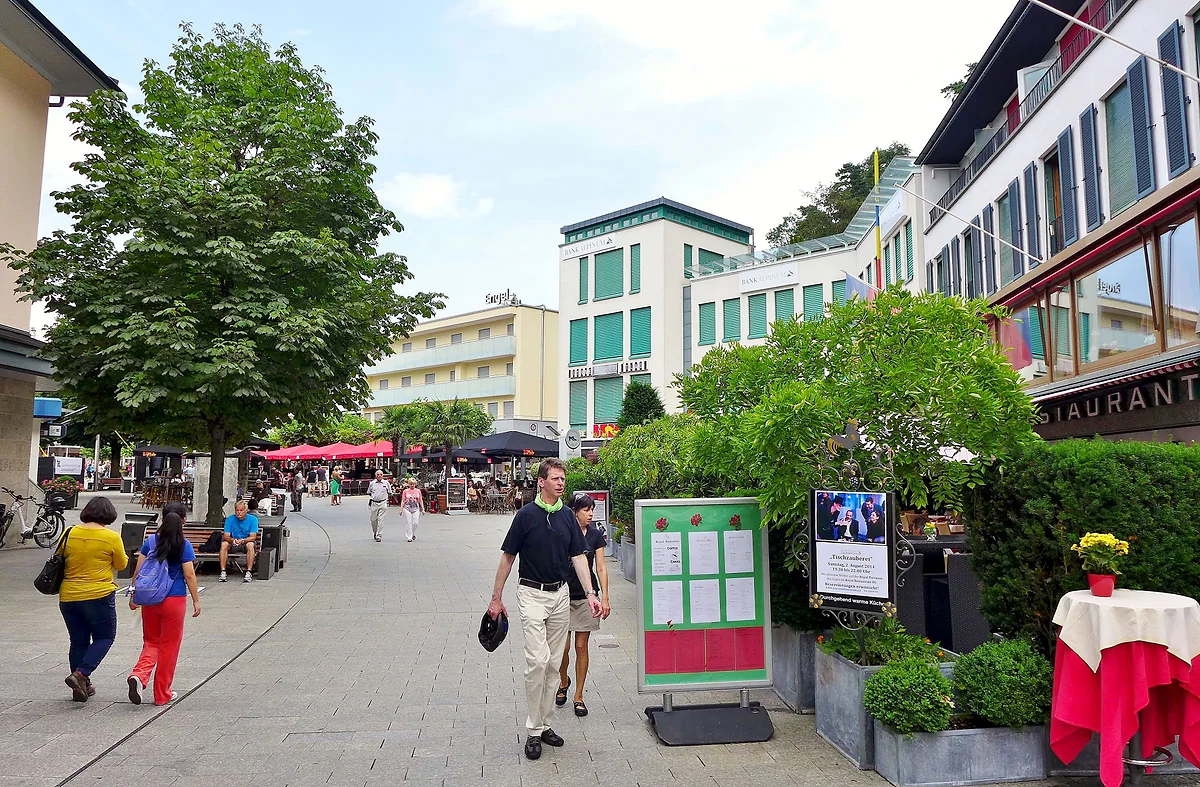
Industry makes 40% of the economy
Why is Liechtenstein so rich? It isn't the answer you'd expect
Liechtenstein is rich above all because it's a heavily industrial country. Industry and manufacturing produce 40% of its gross value added and 32% of its jobs, a share the Office of Statistics calls exceptionally high for Europe. Banking matters, but less, at about 10%. Add the union with Switzerland, access to the European market and 24,943 people commuting in every day.
In 30 seconds
Full read: 3 min
- Liechtenstein is rich first and foremost because of industry, which makes 40% of value added and provides 32% of jobs.
- Banking and insurance weigh far less, at 10.1% of value added.
- There are more jobs than residents; 58% of workers live abroad.
- GDP per head is misleading, as the Office of Statistics itself says.
For visitors the wealth has a very practical consequence, as everything costs Swiss prices, in Swiss francs. I'd make the most of the upside, with first-rate museums such as the Kunstmuseum and the Hilti Art Foundation, and budget carefully for the rest.

Before you go
What I would keep in mind
-
01 Money
Rich-country prices, in francs
The currency is the Swiss franc and prices match the standard of living. Check what things cost before you go so there are no nasty surprises.
Liechtenstein prices and budget -
02 Most beautiful
Wealth turned into a museum
The Hilti family, owners of the country's biggest company, opened their foundation's museum in Vaduz in 2015, with more than 500 works, next to the Kunstmuseum and sharing its entrance.
the Hilti Art Foundation in Vaduz -
03 My tip
GDP per head is misleading
The Office of Statistics warns that comparing Liechtenstein's GDP per head gives misleading results, because 58% of the people who work in the country live elsewhere.
What I would book
Ask almost anyone why Liechtenstein is so rich and you’ll hear “banks”. It’s a convenient answer and a fairly incomplete one. The figures from the country’s Office of Statistics tell a different story, about a place with far more industry than you’d guess and an economy that looks more like an industrial corner of Switzerland than an offshore financial centre.
A country of factories
Industry and manufacturing generate 40.4% of Liechtenstein’s gross value added, and the Office of Statistics points out that 32% of all jobs are in that sector, which it calls exceptionally high by European standards. There are 644 industrial firms, many of them with fewer than 50 staff, spread across very different niches. The biggest branches are machinery, equipment, dental products, vehicles, food and construction. It shows in the public accounts too. The state and the municipalities together took in about CHF 1,086 million in tax in 2024, and the Office of Statistics notes that the state’s own share of the economy is comparatively small.
With a tiny home market, the larger firms sell almost everything abroad. Their main markets are Switzerland, Germany and the United States, and direct goods exports to countries other than Switzerland alone came to CHF 3,210 million in 2024. Two names explain a great deal. One is Hilti, founded in Schaan in 1941 and now employing more than 34,000 people worldwide, covered on its own page, Hilti in Liechtenstein. The other is Ivoclar, which arrived in 1933 as a false-teeth factory and is now a global dental group, as explained on Liechtenstein and false teeth.
What about the banks?
They matter, but less than the cliché suggests. Financial services and insurance account for 10.1% of value added. In 2024 there were 10 banks in the country, employing 2,985 people and managing CHF 217.3 billion in assets. Add the legal and tax advisers and trust companies, which the Historisches Lexikon traces back to the 1920s, when the government set out to attract foreign capital with low taxes and very liberal company law. If you’re curious about the tax haven label and what changed after 2008, it’s on my page about banks and the tax haven reputation.
The pieces that make it work
There are several, and I don’t think any one of them would be enough alone. The first is Switzerland. Since 1924 Liechtenstein has shared customs and currency with it, which opened up a large market and gave it the Swiss franc. The second is Europe. Since 1995 it has been in the European Economic Area, which Switzerland turned down, giving it access to the EU single market without being a member.
The third is people from elsewhere. In late 2024 the country had 43,441 jobs filled against a population of 41,228, and 24,943 of those workers commuted across the border daily. Without them the factories wouldn’t run. The make-up of the resident population is set out in Liechtenstein’s population. The fourth is a long habit of courting business. In the depths of the 1930s slump, the government offered the Ramco false-teeth factory, the future Ivoclar, cheap land and five tax-free years to set up in Schaan. Today the official portal boasts of one company for every eight residents and a AAA credit rating.
GDP per head is misleading
Here’s the nuance hardly anyone mentions. Plenty of people measure Liechtenstein’s wealth by GDP per head, which comes out sky-high, but the Office of Statistics itself warns that this comparison gives misleading results. Some 58% of the people producing that wealth live abroad and don’t count as residents, so the ratio balloons. For a fair comparison, the office says, only GDP per worker will do. I find it refreshingly honest that the official statisticians spell that out so plainly.
What it means for your trip
You’ll feel it in the prices, which are Swiss and in francs, so I’d check what things cost beforehand on my page about prices and budget in Liechtenstein. But you’ll feel the upside too. The country’s wealth has left Vaduz with a Museumsmeile that includes the Kunstmuseum and the Hilti Art Foundation, and a valley where factories sit alongside vineyards and villages. Even the railway reflects it, since one of its three stops in the country is called Forst Hilti, after the Schaan company. Seeing the place with these figures in mind changes the visit quite a bit.
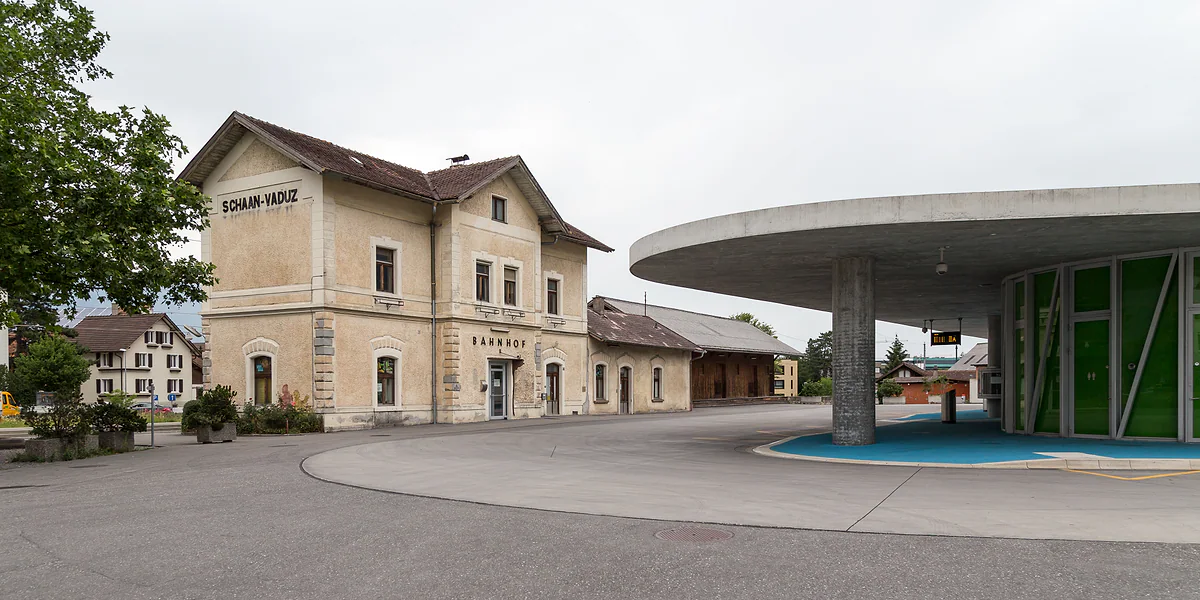
The Schaan-Vaduz railway station, in pale stone, with the round canopy of the bus station beside it.
Where the wealth comes from (2023)
| Sector | Share of gross value added |
|---|---|
| Industry and manufacturing | 40.4% |
| Services | 59.4% |
| Of which financial services and insurance | 10.1% |
| Agriculture | 0.2% |
Source: Office of Statistics, Liechtenstein in Zahlen 2026 (total gross value added CHF 7.2 billion).
Jobs in numbers
| Item | Figure |
|---|---|
| Jobs (end of 2024) | 43,441 |
| Workers living abroad | 24,943 (58%) |
| Jobs in industry | 14,500 |
| Industrial companies | 644, many with fewer than 50 staff |
| Direct goods exports excluding Switzerland (2024) | CHF 3,210 million |
Source: Office of Statistics, Liechtenstein in Zahlen 2026.
Test yourself
True or false?
0/4 Pick before you peek.
-
Most of Liechtenstein's wealth comes from its banks.
See the answer
False. Industry contributes 40.4% of value added and financial services and insurance 10.1%, according to the Office of Statistics.
-
More than half the people who work in Liechtenstein live in another country.
See the answer
True. At the end of 2024, 24,943 of the 43,441 people employed there lived abroad, which is 58%.
-
Dental products are one of Liechtenstein's key industries.
See the answer
True. The Office of Statistics lists dental products among the main branches, alongside machinery, equipment and vehicles.
-
GDP per head is the best way to measure Liechtenstein's wealth.
See the answer
False. The Office of Statistics says it gives misleading results because so many workers live abroad, and that only GDP per worker should be compared.
- Industry's share of value added (2023)
- 40.4%
- Jobs in industry and manufacturing
- 32%
- Workers who live outside the country
- 58%
- Credit rating highlighted by the official portal
- AAA
0 of 168 Liechtenstein guides
Your next stamp
- Political system
- Casinos
- Prices and budget
- Hilti
- Currency and payments
- Facts
- Banks and tax haven
- Things to do
- One day
- Two days
- Municipalities
- Oberland
- Unterland
- Map
- Vaduz
- Städtle
- Mitteldorf
- Vaduz Castle
- Vaduz Cathedral
- Parliament
- Government Building
- Vaduz Town Hall
- Red House
- Prince's Winery
- Old Rhine Bridge
- Schaan
- Schalun Castle Ruin
- Balzers
- Citytrain
- Triesen
- Triesenberg
- Walser Museum
- Planken
- Gutenberg Castle
- The Rhine
- Schaan Roman fort
- Dux
- St Mamertus chapel
- Lawena valley
- Mäls
- DoMuS
- TAK Theatre
- Castles
- Churches and chapels
- Viewpoints
- Mountains
- Museums
- Kunstmuseum
- Mountain huts
- Hilti Art Foundation
- Pfälzerhütte
- Gafadura hut
- National Museum
- Treasure Chamber
- Postage Stamp Museum
- Kunstraum Engländerbau
- Eschen
- Masescha
- Gaflei
- Nendeln
- Mauren
- Silum
- Rotenboden
- Schaanwald
- Gamprin
- Wangerberg
- Bendern
- Steg
- Ruggell
- Samina valley
- Schellenberg Farmhouse Museum
- Cross-country skiing at Steg
- Küefer-Martis-Huus
- Ruggeller Riet
- Schellenberg
- Hinterschellenberg
- Fürstensteig
- Is it a country?
- Liechtenstein Trail
- Malbun
- Schellenberg castles
- Eschnerberg
- Malbun in summer
- Population
- Stage 1: Balzers - Triesenberg
- Lakes
- Sareis
- Size
- Stage 2: Triesenberg - Vaduz
- Malbun Peace Chapel
- Stage 3: Vaduz - Nendeln
- Swimming pools
- Language
- Skiing in Malbun
- Stage 4: Nendeln - Ruggell
- Dialect
- Malbun ski pass
- Stage 5: Ruggell - Schaanwald
- Hotels in Malbun
- Stamps
- Princess Gina Trail
- Hut-to-hut Route 66
- Hiking
- Getting there
- In winter
- Weather
- Airport
- Best time to visit
- In summer
- Events
- With kids
- Zurich to Liechtenstein
- National day
- Sargans to Vaduz
- Christmas
- Feldkirch to Vaduz
- By train
- Traditions
- Carnival
- Getting around
- Buses
- Funken Sunday
- Alpine cattle drive
- Driving and vignette
- Parking
- Bike hire
- Cycling
- EU and Schengen
- Entry requirements
- Borders and customs
- The prince
- The princely house
- The flag
- The coat of arms
- The national anthem
- History
- Second World War
- No army
- Where to stay
- Hotels in Vaduz
- False teeth
- Hostel and camping
- Rent the country?
- Where to eat
- Restaurants in Vaduz
- Swiss invasions
- Bars and nightlife
- Food
- Käsknöpfle
- Wine
- Adventure Pass
- Rainy days
- Guided tours
- Tourist office
- Day trips
- Passport stamp
- Music festivals
- Phone and roaming
- Tipping
- Plugs and sockets
- Tap water
- Opening hours
- Public holidays
- Safety
- Accessibility
- With a dog
- Shopping and souvenirs
Frequently asked questions
Why is Liechtenstein so rich?
Mainly because of its industry, which generates 40% of value added and 32% of jobs. On top of that come banking and financial services, the customs and currency union with Switzerland and access to the European market through the EEA.
Is Liechtenstein the richest country in the world?
It depends how you measure it. On GDP per head it comes out sky-high, but the Office of Statistics itself warns that the figure is misleading, since 58% of workers live abroad and don't count as residents. Only GDP per worker is a fair comparison.
What does Liechtenstein make?
Machinery, equipment, dental products, vehicles and food, among others, plus financial, legal and tax services. Its main export markets are Switzerland, Germany and the United States.
Is Liechtenstein rich because of its banks?
Less than people think. Financial services and insurance make up 10.1% of value added, against 40.4% for industry. In 2024 there were 10 banks employing 2,985 people in the country.
What famous companies are based in Liechtenstein?
The best known are Hilti, founded in Schaan in 1941 and employing more than 34,000 people worldwide, and Ivoclar, a dental specialist based in Schaan since 1933 with around 3,700 staff.
What is Liechtenstein's credit rating?
The country's official portal highlights its AAA rating, the top grade from the rating agencies, as a sign of its financial solidity.
By
Tourism graduate with a master’s in Tourism Management and Planning from the University of Málaga, who has travelled across Europe. He writes every guide from official sources and his own judgement.
Published on . Facts checked on .
Sources
Photos: Bahnfrend (CC BY-SA 4.0); JoachimKohlerBremen (CC BY-SA 4.0), via Wikimedia Commons.