No armed forces since 12 February 1868
Liechtenstein's 80 soldiers and the army it disbanded in 1868
Liechtenstein has had no army since 12 February 1868, when Prince Johann II disbanded it. It was a small contingent, 82 men from 1862, that the country owed to the German Confederation. Its last mission, in 1866, was guarding the Stelvio Pass for Austria, and it never saw combat. The famous tale of 80 men coming home as 81 isn't backed by any official source.
In 30 seconds
Full read: 3 min
- Liechtenstein has had no army since 12 February 1868.
- Its contingent existed for the German Confederation and numbered 82 men from 1862.
- In 1866 it guarded the Stelvio Pass for Austria and came home without having fought.
- The story of 80 men returning as 81 doesn't appear in any official source.
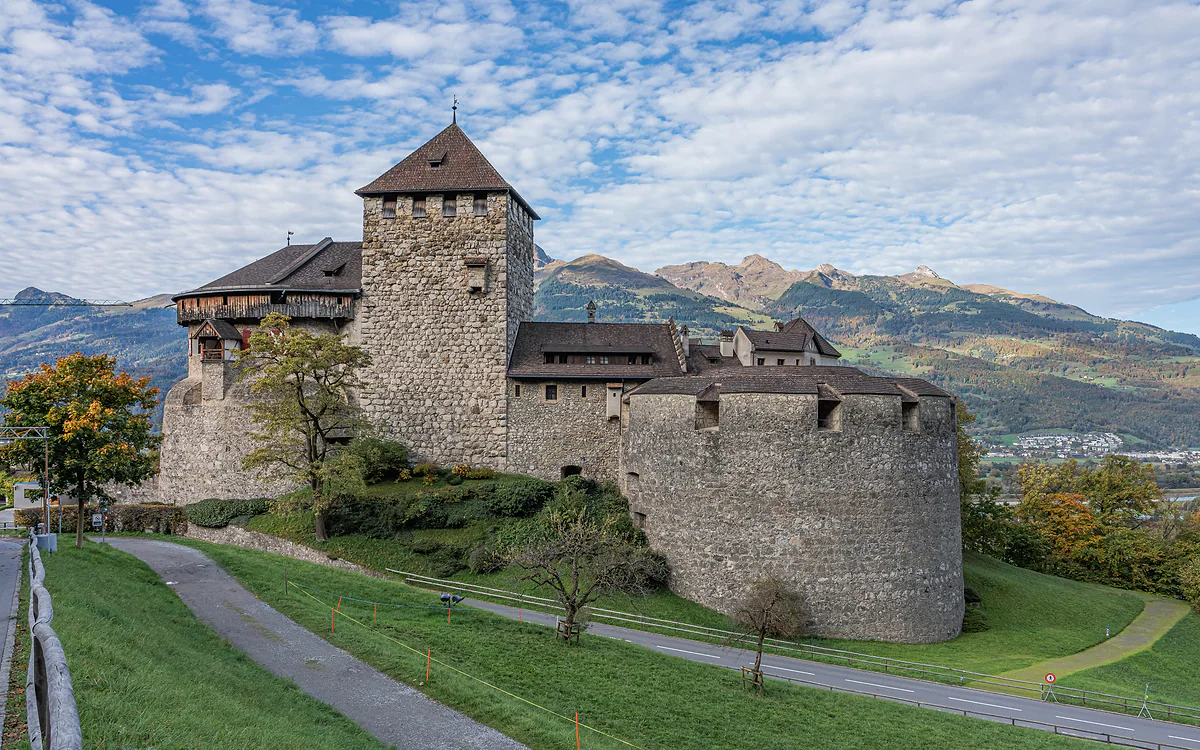
If you want a physical trace of that army, look up at Vaduz Castle, which served as its barracks. I haven't found a military museum or barracks you can visit, and to me that absence is the whole point of the story.

Before you go
What I would keep in mind
-
01 My tip
The prince's castle was once a barracks
While the army existed, Vaduz Castle housed the country's soldiers, according to the Historisches Lexikon. Today it's the prince's home and closed to visitors.
Vaduz Castle -
02 My tip
No army, but a duty to defend
Article 44 of the constitution obliges every citizen able to bear arms to defend the country if need be. A militia, the Landeswehr, was planned in the 1920s but never set up.
-
03 Most beautiful
Neutral through the Second World War
With no soldiers of its own, Liechtenstein declared neutrality on 30 August 1939 and came through the Second World War unoccupied, in Switzerland's shadow.
Liechtenstein in World War 2
What I would book
Liechtenstein has no army, and it hasn’t had one since 1868. What I like about the story is that it didn’t start as a pacifist gesture. It was far more down to earth than that. A small, costly and unpopular contingent that existed only because a confederation demanded it, and that lost its purpose the moment the confederation went.
An army kept out of obligation
For centuries the territory had local militias and supplied a handful of men to the armies of the Holy Roman Empire. In the 19th century, as a sovereign state, the scale changed. The Confederation of the Rhine asked for 40 men in wartime, and Liechtenstein met the obligation through treaties with the Duchy of Nassau. In the wars against Napoleon in 1814 and 1815 its troops marched as part of Baden’s forces and came home without having fought.
Under the German Confederation, from 1815, it had to maintain a contingent of 1% of the population plus a 0.5% reserve. The Historisches Lexikon has the numbers. It began with 55 line troops and 27 reservists, rose to 64 in 1855 and reached 82 men in 1862. The contingent wasn’t properly formed until 1836, when a joint battalion was agreed with the Hohenzollern principalities, and the first uniforms date from then. The barracks was Vaduz Castle, now the prince’s home.
1866, the last mission
In the Austro-Prussian War of 1866 Prince Johann II put the contingent at the Austrian emperor’s disposal to defend the frontier with Italy. Liechtenstein’s soldiers stood guard on the Stelvio Pass, in South Tyrol, from July to September. The Lexikon stresses that they never saw combat and that the mission went ahead against the people’s wishes, sparking a serious rift between prince and population.
The same war finished off the German Confederation, and with it the obligation to keep soldiers. Parliament stopped voting money for a contingent that weighed heavily on a poor country’s budget, and its foreign commanders struggled to win acceptance. On 12 February 1868 Johann II disbanded the army. Liechtenstein has had no armed forces since.
So what about the 80 who came back as 81?
It’s the story most people search for, and you’ll find it on every list of Liechtenstein facts. Honestly, no official website I’ve checked carries it, and the Historisches Lexikon article on the army, which goes through its history century by century, doesn’t mention it. So I’m not going to pass it off as fact.
What is documented is nearly as charming. The contingent numbered 82 men, its final mission was guarding a mountain pass, and it came home without having fought. In 1849 it had been involved in a skirmish at Oos, in Baden, also without losses. And the Lexikon adds a detail I find telling, that Liechtenstein’s army was never once used against its own people.
No soldiers, but not defenceless
Having no army doesn’t mean the idea of defence has gone. Article 44 of the constitution obliges every citizen able to bear arms to defend the country in case of need. In the 1920s a militia, the Landeswehr, was planned but never created. The last veteran of the old contingent, Andreas Kieber, died in 1939.
The real test came with the Second World War. With a police force of seven and a few dozen auxiliaries, Liechtenstein declared neutrality and came through unoccupied, sheltering behind Switzerland, which, incidentally, never guaranteed its defence. Swiss border guards policed its frontier with Germany under the customs treaty, but they had orders to pull back if an attack came. The wartime story is told in full in Liechtenstein in the Second World War. And in peacetime, the army that has crossed its border most often, by shell or on foot, has been the Swiss one on exercises; you’ll find those episodes under Swiss invasions of Liechtenstein.
My take
To me Liechtenstein punctures the romantic image of the pacifist state. It didn’t give up arms on principle; it gave them up because the army was useless and expensive. The outcome is the same, though, a country that has gone more than 150 years without soldiers and has learnt to lean on its neighbours. For how it all fits together, start with my history of Liechtenstein.
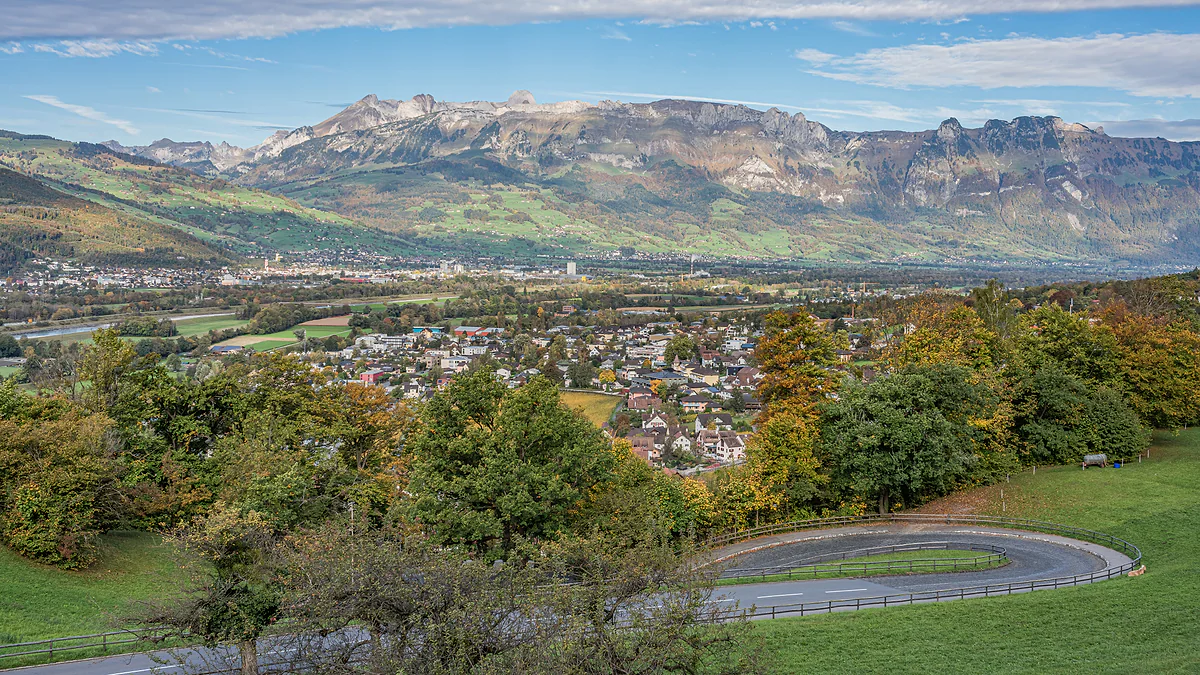
The Rhine valley seen from Vaduz Castle, with the town among autumn trees and the Swiss mountains on the horizon.
Liechtenstein's army, start to finish
| Year | What happened |
|---|---|
| 1806-1813 | The Confederation of the Rhine demands 40 men in wartime; the country settles it through treaties with Nassau |
| 1814-1815 | Its troops march with Baden against Napoleon without seeing action |
| 1836 | The German Confederation contingent is formed and the first uniforms appear |
| 1849 | Deployed in Baden, in the skirmish at Oos, with no losses |
| 1862 | The contingent reaches 82 men |
| July-September 1866 | Guard duty on the Stelvio Pass for Austria, no fighting |
| 12 February 1868 | Johann II disbands the army |
| 1939 | Death of Andreas Kieber, the last veteran |
Source: Historisches Lexikon, 'Militär' (text as of 2011).
Size of the contingent
| Period | Line troops | Reserve |
|---|---|---|
| From 1836 | 55 | 27 |
| From 1855 | 64 in total | Included |
| From 1862 | 82 in total | Included |
The German Confederation required 1% of the population plus a 0.5% reserve. Source: Historisches Lexikon.
Test yourself
True or false?
0/4 Pick before you peek.
-
Liechtenstein has never had an army.
See the answer
False. It had one until 1868, a small contingent of 82 men from 1862 that it had to supply to the German Confederation.
-
In 1866 Liechtenstein's soldiers fought against Italy.
See the answer
False. They stood guard on the Stelvio Pass from July to September 1866, but according to the Historisches Lexikon they never saw combat.
-
Vaduz Castle was used as a barracks.
See the answer
True. The Historisches Lexikon records that the castle housed the soldiers of Liechtenstein's 19th-century contingent.
-
The constitution obliges citizens to defend the country if needed.
See the answer
True. Article 44 obliges every citizen able to bear arms to defend the country in case of need, even though there's no army.
- Year the army was disbanded
- 1868
- Men in the contingent from 1862
- 82
- Last mission, on the Stelvio Pass
- 1866
- Battles fought on that last mission
- 0
0 of 168 Liechtenstein guides
Your next stamp
- Second World War
- Facts
- History
- Swiss invasions
- Borders and customs
- Hilti
- Rent the country?
- Traditions
- Things to do
- One day
- Two days
- Municipalities
- Oberland
- Unterland
- Map
- Vaduz
- Städtle
- Mitteldorf
- Vaduz Castle
- Vaduz Cathedral
- Parliament
- Government Building
- Vaduz Town Hall
- Red House
- Prince's Winery
- Old Rhine Bridge
- Schaan
- Schalun Castle Ruin
- Balzers
- Citytrain
- Triesen
- Triesenberg
- Walser Museum
- Planken
- Gutenberg Castle
- The Rhine
- Schaan Roman fort
- Dux
- St Mamertus chapel
- Lawena valley
- Mäls
- DoMuS
- TAK Theatre
- Castles
- Churches and chapels
- Viewpoints
- Mountains
- Museums
- Kunstmuseum
- Mountain huts
- Hilti Art Foundation
- Pfälzerhütte
- Gafadura hut
- National Museum
- Treasure Chamber
- Postage Stamp Museum
- Kunstraum Engländerbau
- Eschen
- Masescha
- Gaflei
- Nendeln
- Mauren
- Silum
- Rotenboden
- Schaanwald
- Gamprin
- Wangerberg
- Bendern
- Steg
- Ruggell
- Samina valley
- Schellenberg Farmhouse Museum
- Cross-country skiing at Steg
- Küefer-Martis-Huus
- Ruggeller Riet
- Schellenberg
- Hinterschellenberg
- Fürstensteig
- Is it a country?
- Liechtenstein Trail
- Malbun
- Schellenberg castles
- Eschnerberg
- Malbun in summer
- Population
- Stage 1: Balzers - Triesenberg
- Lakes
- Sareis
- Size
- Stage 2: Triesenberg - Vaduz
- Malbun Peace Chapel
- Political system
- Stage 3: Vaduz - Nendeln
- Swimming pools
- Language
- Skiing in Malbun
- Stage 4: Nendeln - Ruggell
- Dialect
- Malbun ski pass
- Stage 5: Ruggell - Schaanwald
- Hotels in Malbun
- Stamps
- Princess Gina Trail
- Hut-to-hut Route 66
- Hiking
- Getting there
- In winter
- Weather
- Airport
- Best time to visit
- In summer
- Events
- With kids
- Zurich to Liechtenstein
- National day
- Sargans to Vaduz
- Christmas
- Feldkirch to Vaduz
- By train
- Carnival
- Getting around
- Buses
- Funken Sunday
- Alpine cattle drive
- Driving and vignette
- Parking
- Bike hire
- Cycling
- EU and Schengen
- Entry requirements
- The prince
- The princely house
- The flag
- The coat of arms
- The national anthem
- Why so rich?
- Banks and tax haven
- Where to stay
- Hotels in Vaduz
- False teeth
- Hostel and camping
- Where to eat
- Restaurants in Vaduz
- Bars and nightlife
- Food
- Käsknöpfle
- Wine
- Casinos
- Adventure Pass
- Rainy days
- Guided tours
- Tourist office
- Day trips
- Passport stamp
- Music festivals
- Phone and roaming
- Currency and payments
- Prices and budget
- Tipping
- Plugs and sockets
- Tap water
- Opening hours
- Public holidays
- Safety
- Accessibility
- With a dog
- Shopping and souvenirs
Frequently asked questions
Is it true Liechtenstein sent 80 soldiers to war and 81 came back?
It's a much-repeated story, but I haven't found it in any official source and the Historisches Lexikon doesn't mention it. What is documented is that the contingent numbered 82 men and came home in 1866 without having fought.
Does Liechtenstein have an army?
No. Prince Johann II disbanded it on 12 February 1868, and the country has had no armed forces since. The constitution does oblige able citizens to defend it if necessary.
Why doesn't Liechtenstein have an army?
The contingent only existed to meet obligations to the German Confederation. When that was dissolved in 1866, parliament stopped funding a force that was unpopular and expensive for a poor country, and the prince abolished it in 1868.
What was Liechtenstein's last war?
The Austro-Prussian War of 1866. The prince placed his contingent at Austria's disposal to guard the frontier with Italy on the Stelvio Pass, from July to September. It never saw combat.
Who defends Liechtenstein?
It had no military protection treaty with any state, according to the Historisches Lexikon (text as of 2011). Internal security is in the hands of the national police, set up in 1933.
Does Liechtenstein have military service?
No. With no army there's no conscription. Article 44 of the constitution simply says that, if need be, every citizen able to bear arms must defend the country.
By
Tourism graduate with a master’s in Tourism Management and Planning from the University of Málaga, who has travelled across Europe. He writes every guide from official sources and his own judgement.
Published on . Facts checked on .
Sources
Photos: A.Savin (FAL); A.Savin (FAL), via Wikimedia Commons.