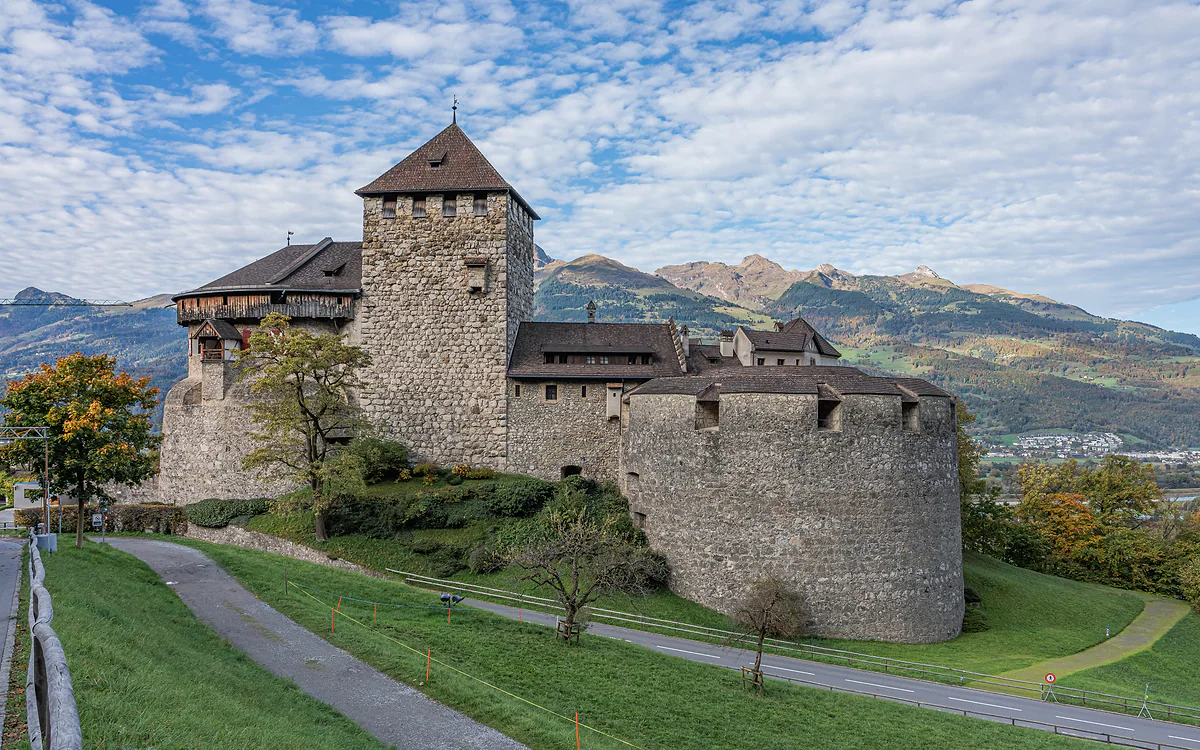
Reigning since 1989, regent since 2004
The Prince of Liechtenstein, who reigns and who actually does the job
Liechtenstein's reigning prince is Hans-Adam II, born in 1945 and on the throne since 13 November 1989. Since 15 August 2004 the duties of head of state have been carried out by his eldest son, Hereditary Prince Alois, acting as his representative under Article 13bis of the constitution. Both live in Vaduz Castle, which is closed to visitors.
In 30 seconds
Full read: 4 min
- The reigning prince is Hans-Adam II, on the throne since 13 November 1989.
- Since 15 August 2004 his son, Hereditary Prince Alois, has acted as head of state.
- No law is valid without the prince's assent, yet 1,500 citizens can force a referendum on abolishing the monarchy.
- They live in Vaduz Castle, which you can't visit; on 15 August the family hosts an aperitif in the garden.
If you want to see the prince, be at the national day ceremony by the castle on 15 August. Any other day, don't waste an afternoon walking up to a locked gate. Catch 'Fürstliche Momente' at the Altes Kino at 14:00, which shows you the inside.

Before you go
What I would keep in mind
-
01 My tip
Inside the castle, via a 20-minute film
The Altes Kino in Vaduz screens 'Fürstliche Momente' every day at 14:00, a 20-minute film with footage from inside the castle, which you can't visit. It's free with the ALL INCLUSIVE Erlebnispass.
Vaduz Castle -
02 Most beautiful
On 15 August the prince stands you a drink
After the state ceremony for the national day on the meadow below the castle, the princely family invites everyone present to an aperitif in the castle garden. It's the clearest chance you'll get to see them in person.
Liechtenstein National Day on 15 August -
03 My tip
The castle flags don't mean he's at home
Plenty of visitors check the flagpole to see if the prince is in residence. The princely house says otherwise, as the flags fly every day unless it's very windy.
-
04 My tip
The princely crypt opens on 1 November only
The crypt of the princes, next to Vaduz Cathedral, opens on a single day a year, 1 November, for anyone who wishes to remember the family's dead. Franz Joseph II and Princess Gina are buried there.
St Florin's Cathedral in Vaduz
What I would book
Most people assume Liechtenstein has one prince. In practice it has two at the top, and the difference matters. The head of state is Hans-Adam II, who has reigned since 1989. But the man who signs, receives ambassadors and speaks for the country has, since 15 August 2004, been his son, Hereditary Prince Alois, acting as regent. I think it’s a neat arrangement that hardly anyone outside the Alps understands, so let me take it step by step.
Hans-Adam II, the reigning prince
He was born on 14 February 1945 and is the fifteenth reigning prince of the House of Liechtenstein. The princely house likes to stress one detail, and I think it’s telling. He’s the first head of state to have grown up in Liechtenstein itself. He spent his childhood with his four siblings in Vaduz Castle, went to the village school and the Vaduz scouts, and then studied in Vienna, at Zuoz in Switzerland and at the University of St. Gallen, where he took a degree in business and economics.
His father, Franz Joseph II, put him in charge of reorganising the family fortune in 1972 and made him his permanent representative in 1984. He became prince on 13 November 1989, when his father died. Under him Liechtenstein joined the United Nations in 1990 and the European Economic Area in 1995, and the house sums him up as a champion of an independent foreign policy. In 2009 he set out his political views in a book, ‘Der Staat im dritten Jahrtausend’ (The State in the Third Millennium).
Alois, the regent who does the work
This is the bit most guides get muddled. On 15 August 2004 Hans-Adam II made his eldest son his representative under Article 13bis of the constitution, which lets the prince hand his powers to an adult heir to prepare him for the throne. Since then Alois has acted as head of state at home and abroad. His father keeps the title; the diary is the son’s.
British readers may find his CV familiar. Alois, born on 11 June 1968, trained as an officer at Sandhurst, served six months with the Coldstream Guards in Hong Kong and London, read law at Salzburg and worked for an audit firm in London before returning to the family’s affairs. He has been married since 1993 to Sophie, Duchess in Bavaria, and they have four children. The eldest, Joseph Wenzel, was born in 1995.
As for who comes next, the answer lies in the reform the house agreed on 15 August 2026. It switches the succession from male-preference to absolute primogeniture, but only for children born in future to Alois’s children. Anyone already born is unaffected, so after Alois the throne passes to his eldest son. I go into the family side in more detail on the princely house of Liechtenstein.
How much power does the prince really have?
Far more than a British monarch. Under the constitution, sovereignty is shared between prince and people, and no law is valid without his assent. Should six months pass without it, the law is treated as rejected. He can’t be brought before the courts either. The counterweight is that 1,500 citizens can table a motion of no confidence in him or an initiative to abolish the monarchy altogether. The full balance, with the government and parliament, is on the page about Liechtenstein’s political system.
Some powers people credit him with, he doesn’t have. The house points out that the prince doesn’t grant asylum or residence and work permits, which are matters for the government and the immigration office. He can confer noble titles, but only very rarely, and the last time was in 1979. His family’s arms double as the state’s, as I explain in Liechtenstein coat of arms. Neither he nor the next in line may hold a second nationality.
Where he lives and how to see him
The prince and the hereditary couple live in Vaduz Castle, which is why it’s closed to visitors apart from special occasions. One myth worth clearing up concerns the flags. Many people think they fly when the prince is at home, and the house flatly denies it. They go up daily and only come down in a gale.
If you want to see him in person, the date is 15 August. In the morning there’s a state ceremony on the meadow by the castle, and afterwards the family invites everyone there to an aperitif in the garden. In 2026 the speech was given by Alois. The programme, and what changed that year, is on the page for Liechtenstein National Day.
For the rest of the year I’d do something else. Every afternoon at 14:00 the Altes Kino in Vaduz screens ‘Fürstliche Momente’, twenty minutes of film shot inside the castle. It’s as close to the state rooms as you’ll get, and it’s free with the ALL INCLUSIVE Erlebnispass.
My take on the arrangement
What I like about it is how little theatre there is. A father who hands over the work but not the title, a son who spent years training for the job, and a house that publishes on its own website a list of things the prince can’t do. For a nation this size it strikes me as a sensible way to keep continuity without drama. It also clears up something that confuses visitors, because the prince who gave the national day speech on 15 August 2026 was the regent, not the reigning prince.
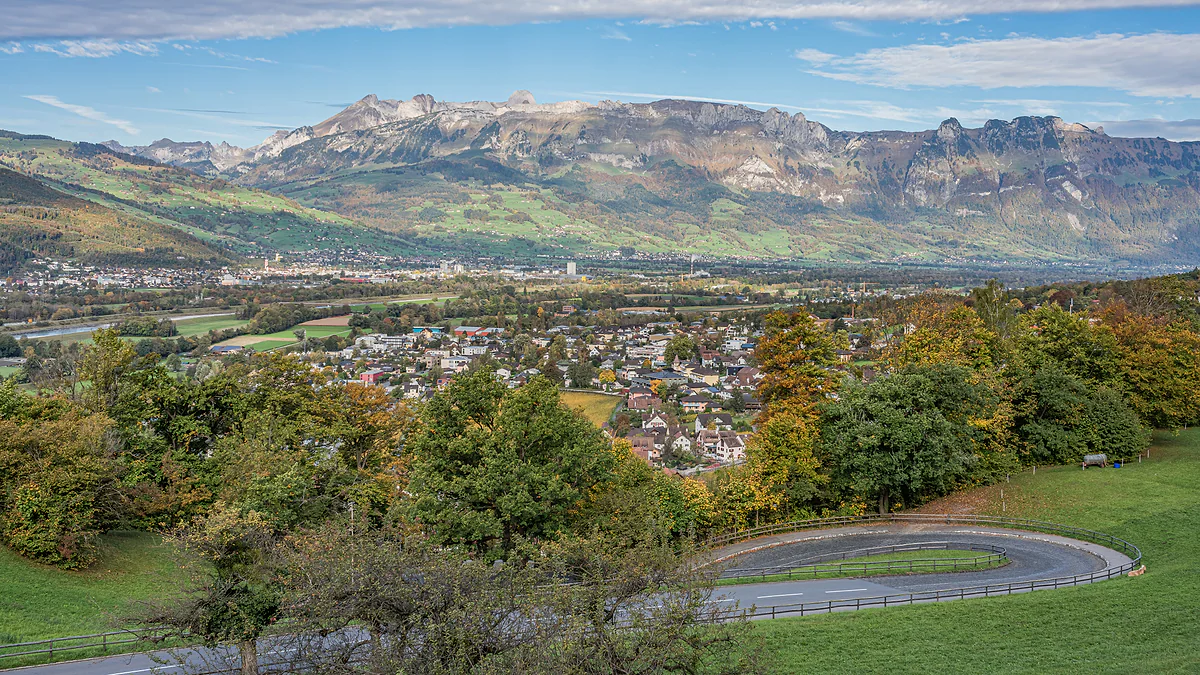
The Rhine valley seen from Vaduz Castle, with the town among autumn trees and the Swiss mountains on the horizon.
Who's who at the top
| Person | Born | Role |
|---|---|---|
| Hans-Adam II | 14 February 1945 | Reigning prince since 13 November 1989 |
| Alois | 11 June 1968 | Hereditary prince; head-of-state duties since 15 August 2004 |
| Sophie | Duchess in Bavaria | Hereditary princess, married to Alois since 3 July 1993 |
| Joseph Wenzel | 24 May 1995 | Alois's eldest son |
Source: the princely house (fuerstenhaus.li), biographies of Hans-Adam II and Alois.
What the prince does and doesn't do
| Matter | His job? |
|---|---|
| Assenting to laws | Yes; no law is valid without it, and silence for six months counts as a refusal |
| Appointing the government | Yes, in agreement with and on the proposal of parliament |
| Granting asylum or residence permits | No; that's for the government and the immigration office |
| Granting noble titles | He can, but almost never does; the last one was in 1979 |
| Holding a second nationality | No, and neither can the next in line |
Sources: the constitution (gesetze.li) and the princely house's FAQ.
Test yourself
True or false?
0/4 Pick before you peek.
-
Hans-Adam II is the prince who carries out the head-of-state role today.
See the answer
False. He's still the reigning prince, but since 15 August 2004 the duties of head of state have been carried out by his son Alois as his representative.
-
If the flags are flying over the castle, the prince is at home.
See the answer
False. The princely house denies it on its website. The flags go up every day, except when there's a strong wind.
-
The Prince of Liechtenstein can grant asylum.
See the answer
False. No. Asylum and residence or work permits are decided by the government and the immigration and passport office.
-
Hans-Adam II was the first head of state to grow up in Liechtenstein.
See the answer
True. The princely house makes a point of it. He grew up in Vaduz Castle, because his father was the first prince to settle in the country, in 1938.
- Hans-Adam II comes to the throne
- 1989
- Alois takes over as regent
- 2004
- Hans-Adam II is the house's 15th reigning prince
- 15
- Signatures needed for a vote on the monarchy
- 1,500
0 of 168 Liechtenstein guides
Your next stamp
- The princely house
- Political system
- Is it a country?
- Castles
- History
- Bendern
- Government Building
- Banks and tax haven
- Things to do
- One day
- Two days
- Municipalities
- Oberland
- Unterland
- Map
- Vaduz
- Städtle
- Mitteldorf
- Vaduz Castle
- Vaduz Cathedral
- Parliament
- Vaduz Town Hall
- Red House
- Prince's Winery
- Old Rhine Bridge
- Schaan
- Schalun Castle Ruin
- Balzers
- Citytrain
- Triesen
- Triesenberg
- Walser Museum
- Planken
- Gutenberg Castle
- The Rhine
- Schaan Roman fort
- Dux
- St Mamertus chapel
- Lawena valley
- Mäls
- DoMuS
- TAK Theatre
- Churches and chapels
- Viewpoints
- Mountains
- Museums
- Kunstmuseum
- Mountain huts
- Hilti Art Foundation
- Pfälzerhütte
- Gafadura hut
- National Museum
- Treasure Chamber
- Postage Stamp Museum
- Kunstraum Engländerbau
- Eschen
- Masescha
- Gaflei
- Nendeln
- Mauren
- Silum
- Rotenboden
- Schaanwald
- Gamprin
- Wangerberg
- Steg
- Ruggell
- Samina valley
- Schellenberg Farmhouse Museum
- Cross-country skiing at Steg
- Küefer-Martis-Huus
- Ruggeller Riet
- Schellenberg
- Hinterschellenberg
- Fürstensteig
- Liechtenstein Trail
- Malbun
- Schellenberg castles
- Eschnerberg
- Malbun in summer
- Population
- Stage 1: Balzers - Triesenberg
- Lakes
- Sareis
- Size
- Stage 2: Triesenberg - Vaduz
- Malbun Peace Chapel
- Stage 3: Vaduz - Nendeln
- Swimming pools
- Language
- Skiing in Malbun
- Stage 4: Nendeln - Ruggell
- Dialect
- Malbun ski pass
- Stage 5: Ruggell - Schaanwald
- Hotels in Malbun
- Stamps
- Princess Gina Trail
- Hut-to-hut Route 66
- Hiking
- Getting there
- In winter
- Weather
- Airport
- Best time to visit
- In summer
- Events
- With kids
- Zurich to Liechtenstein
- National day
- Sargans to Vaduz
- Christmas
- Feldkirch to Vaduz
- By train
- Traditions
- Carnival
- Getting around
- Buses
- Funken Sunday
- Alpine cattle drive
- Driving and vignette
- Parking
- Bike hire
- Cycling
- EU and Schengen
- Entry requirements
- Borders and customs
- The flag
- The coat of arms
- The national anthem
- Second World War
- No army
- Facts
- Why so rich?
- Where to stay
- Hilti
- Hotels in Vaduz
- False teeth
- Hostel and camping
- Rent the country?
- Where to eat
- Restaurants in Vaduz
- Swiss invasions
- Bars and nightlife
- Food
- Käsknöpfle
- Wine
- Casinos
- Adventure Pass
- Rainy days
- Guided tours
- Tourist office
- Day trips
- Passport stamp
- Music festivals
- Phone and roaming
- Currency and payments
- Prices and budget
- Tipping
- Plugs and sockets
- Tap water
- Opening hours
- Public holidays
- Safety
- Accessibility
- With a dog
- Shopping and souvenirs
Frequently asked questions
Who is the Prince of Liechtenstein?
The reigning prince is Hans-Adam II, born on 14 February 1945 and on the throne since 13 November 1989. Since 2004 his son Alois has carried out the duties of head of state as regent.
Does Liechtenstein have a royal family?
It has a princely family rather than a royal one. The House of Liechtenstein has provided the head of state since 1719, and in March 2021 it had 122 adult members, according to its own website.
Where does the Prince of Liechtenstein live?
In Vaduz Castle, above the capital, together with the hereditary prince and princess. That's why the castle is closed to the public except on special occasions. Franz Joseph II was the first prince to move in, in 1938.
How much power does the Prince of Liechtenstein have?
More than the British monarch. No law is valid without his assent, he appoints the government with parliament's agreement and he can't be tried in the courts. In return, 1,500 citizens can trigger a referendum to abolish the monarchy.
Who is next in line to the throne of Liechtenstein?
Alois, already regent, is the heir. After him comes his eldest son, Joseph Wenzel, because the absolute primogeniture agreed in 2026 applies only to children born in future to Alois's children.
Can a woman become ruler of Liechtenstein?
In future, yes. Under the house law reform of 15 August 2026, the first-born child, son or daughter, will inherit among the descendants still to be born to the children of Alois and Sophie.
By
Tourism graduate with a master’s in Tourism Management and Planning from the University of Málaga, who has travelled across Europe. He writes every guide from official sources and his own judgement.
Published on . Facts checked on .
Sources
Photos: A.Savin (FAL); A.Savin (FAL), via Wikimedia Commons.