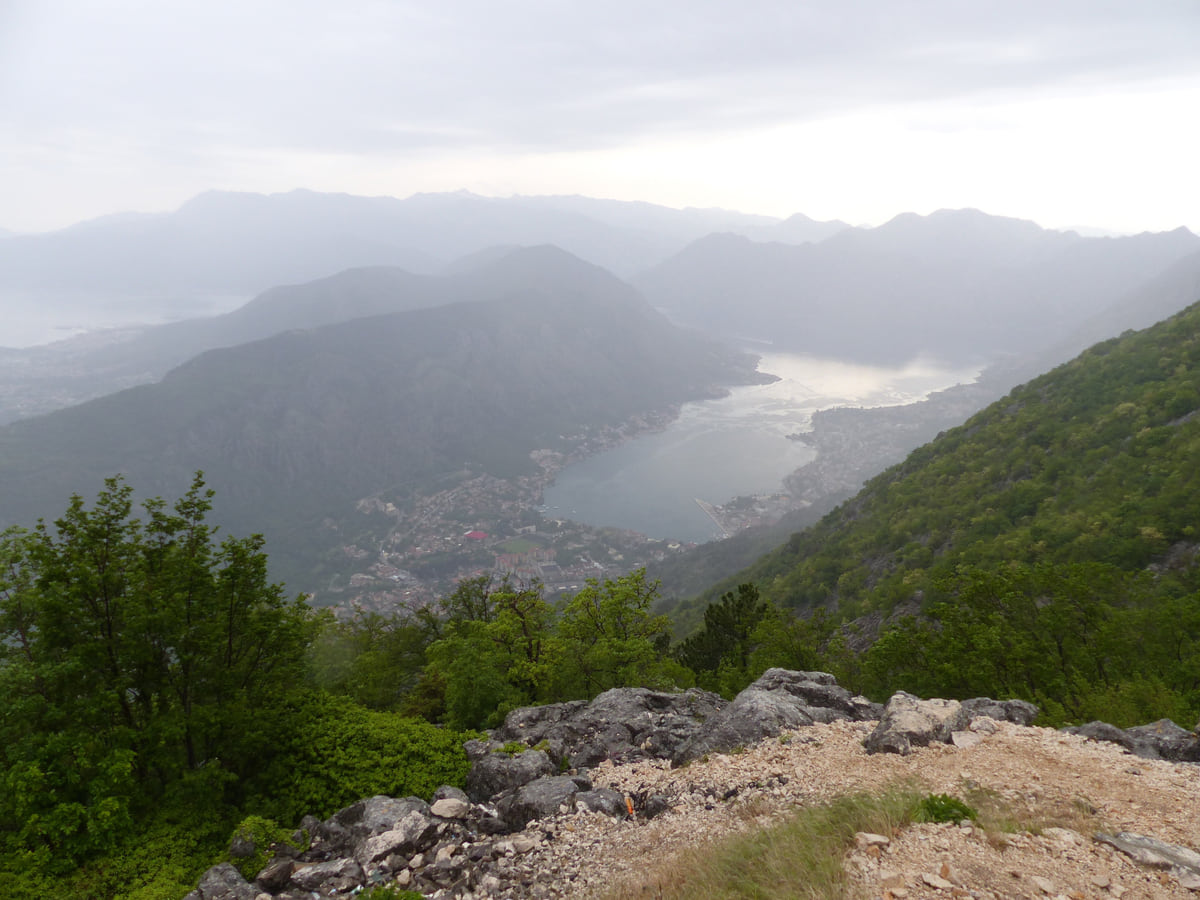
Weather and climate guide
Montenegro's climate, from the Adriatic to Durmitor
Montenegro has a Mediterranean climate on the coast, with long hot summers and mild, wet winters, and a mountain climate in the north. In Herceg Novi the 1961-1990 average runs from 8.2°C in January to 24.3°C in July, Podgorica's average July high tops 31°C, and Žabljak averages -4.5°C in January. Kotor, Budva and Tivat have no station of their own in those records.
In 30 seconds
Full read: 3 min
- Mediterranean climate on the coast, mountain climate in the north.
- Herceg Novi averages 8.2°C in January and 24.3°C in July (1961-1990).
- Podgorica is the hottest, reaching 41.1°C in 2024.
- November is the coast's wettest month and July the driest.
For me Montenegro's best weather comes in June and September. The coast is properly warm for the beach, the sea is lovely and the mountains are open, without Podgorica's July furnace or November's downpours.

Before you go
What I would keep in mind
-
01 My tip
Kotor has no weather station of its own
The official coastal records are for Herceg Novi, Bar and Ulcinj. For Kotor and Tivat, the closest guides are Herceg Novi and the Tivat airport climatography.
-
02 Most beautiful
Over 340 hours of sun in July
Herceg Novi averages 343 hours of sunshine in July and 2,418 a year, according to the Institute of Hydrometeorology's 1961-1990 normals.
Montenegro weather in July -
03 My tip
Podgorica's heat is serious
In 2024 Podgorica's station reached 41.1°C. On average it has 23 days of 30°C or more in July, compared with 13 in Herceg Novi.
-
04 Getting there
When to go, month by month
The weather shapes the trip. I've sorted it by beach, mountains, rafting and skiing in my best-time-to-visit guide.
the best time to visit Montenegro -
05 My tip
October, the last mild month
Herceg Novi averages 16.6°C in October, with highs of 21.8°C, but collects about 199 mm over 10 days. If you're heading for the coast, the first fortnight is the safer bet.
Montenegro weather in October -
06 Watch out
November, the wettest month
Herceg Novi collects about 256 mm over 14 days in November, its yearly peak, and Cetinje close to 500 mm, on the 1961-1990 normals. Always keep an indoor plan handy.
Montenegro weather in November
What I would book
Montenegro is small, yet in a single day you can go from a midday swim to a snowy mountain pass. That’s the key to its climate. The Mediterranean rules the coast, dry heat rules the Podgorica plain and the mountains rule the north. Before the figures, one point I think matters. Kotor, Budva and Tivat lack their own station in the official records, so for the coast I use Herceg Novi, Bar and Ulcinj, and for the Bay of Kotor the Tivat airport climatography as well.
Six climate regions
The Institute of Hydrometeorology and Seismology of Montenegro identifies six regions. The coast has long warm summers and mild winters with heavy rain. The Zeta and Bjelopavlići plain, home to Podgorica, has long, hot, dry summers and warm nights. Above the Bay of Kotor lies the wettest place in Europe. At Crkvice, 940 m up on the slopes of Orjen, an average of about 5,000 mm falls each year. The lower north, up to around 700 m, is the driest; above 1,000 m summers are short and winters long and harsh; and above 1,500 m it’s a climate of snow and forest. Gov.uk, for its part, warns of flooding after heavy rain and snowmelt in winter and spring, and of wildfires from April to October.
The coast, month by month
Herceg Novi’s 1961-1990 normals give the best picture of the mouth of the bay. The average runs from 8.2°C in January to 24.3°C in July, with average highs of 29.4°C in July and August and winter lows of around 5°C. Bar and Ulcinj are almost identical. What swings wildly through the year is the rain. Herceg Novi gets 1,937 mm annually, but November accounts for 256 mm and July only 47. Sunshine moves the other way, with 343 hours in July and just 102 in December. Further south, Ulcinj and Bar are the sunniest in the records, at about 2,530 hours a year.
For the inner bay, the Tivat airport climatography, based on 2013 to 2022, gives an average of 7.6°C in January and 25.9°C in August. Through the middle of the day in August, the average passes 31°C.
If you are staying the night, see the best hotel deals in Herceg Novi for your dates: the well-placed rooms go fast.
Wind
The Institute notes that the country’s prevailing winds blow from the north and north-east and from the south. On the coast the best-known local wind is the bura, and in summer a daily breeze blows in from the sea by day and off the land at night. I’d keep it in mind when planning a boat day, and in August you’ll be glad of that sea breeze on the shore.
Inland and in the mountains
Podgorica is the hottest. Its average July high is 31.8°C, with an average of 23 days of 30°C or more that month; in 2024 it reached 41.1°C. The contrast comes in the north. In Žabljak, below Durmitor, January averages -4.5°C and July 13.9°C, and Kolašin averages 129 days of frost a year. Žabljak is colder still, with 167 frosty days and 44 days a year when the thermometer never climbs above freezing, so pack for proper winter if you head up there between December and March. In 2024 snow lay on the ground in Kolašin on 71 days, up to 30 cm deep, and in Pljevlja on 43, while the coast and Podgorica saw none at all.
So you do not lose the morning at the ticket office, browse tickets and tours in Herceg Novi on GetYourGuide.
What it means for your trip
My reading of the figures is simple. From June to September the coast is beach territory, with July and August very hot and very dry; if you’re there then, the northern mountains are your escape. May and October are mild and good for walking, though October brings rain. I follow the shift from winter to spring month by month in Montenegro weather in March and Montenegro weather in April. From November to March the coast is mild but wet and the north has snow. I’ve sorted it by activity in the best time to visit Montenegro, and every month has its own page, such as Montenegro weather in July.
What about the sea temperature?
The Institute publishes the sea temperature every morning at 8:00 for Herceg Novi, Bar and Ulcinj. On 11 October 2026 it read 22°C in Herceg Novi and 21°C in Bar and Ulcinj. I haven’t found an official series of monthly averages, so I won’t give you a sea-temperature table I can’t back up.
If you are staying the night, see the best hotel deals in Herceg Novi for your dates: the well-placed rooms go fast.
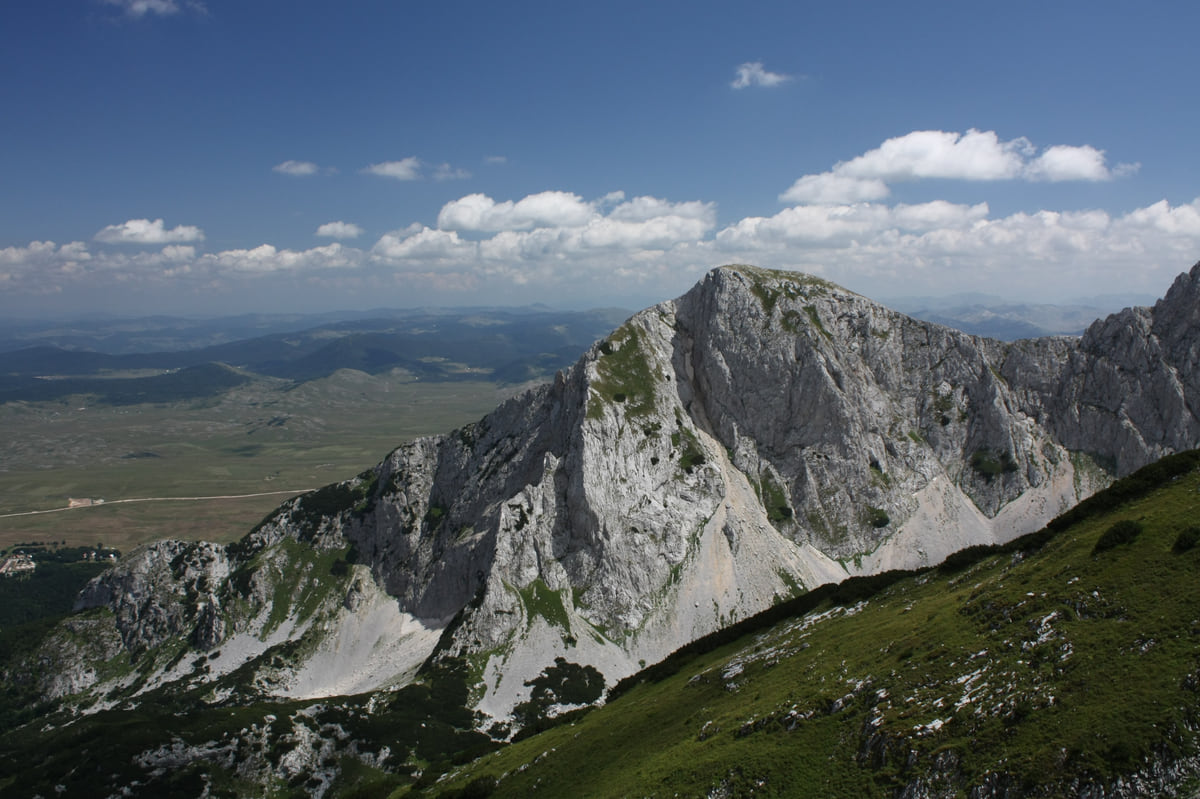
Savin Kuk in Durmitor, with its pale rock face and green meadows in the foreground under a cloudy sky
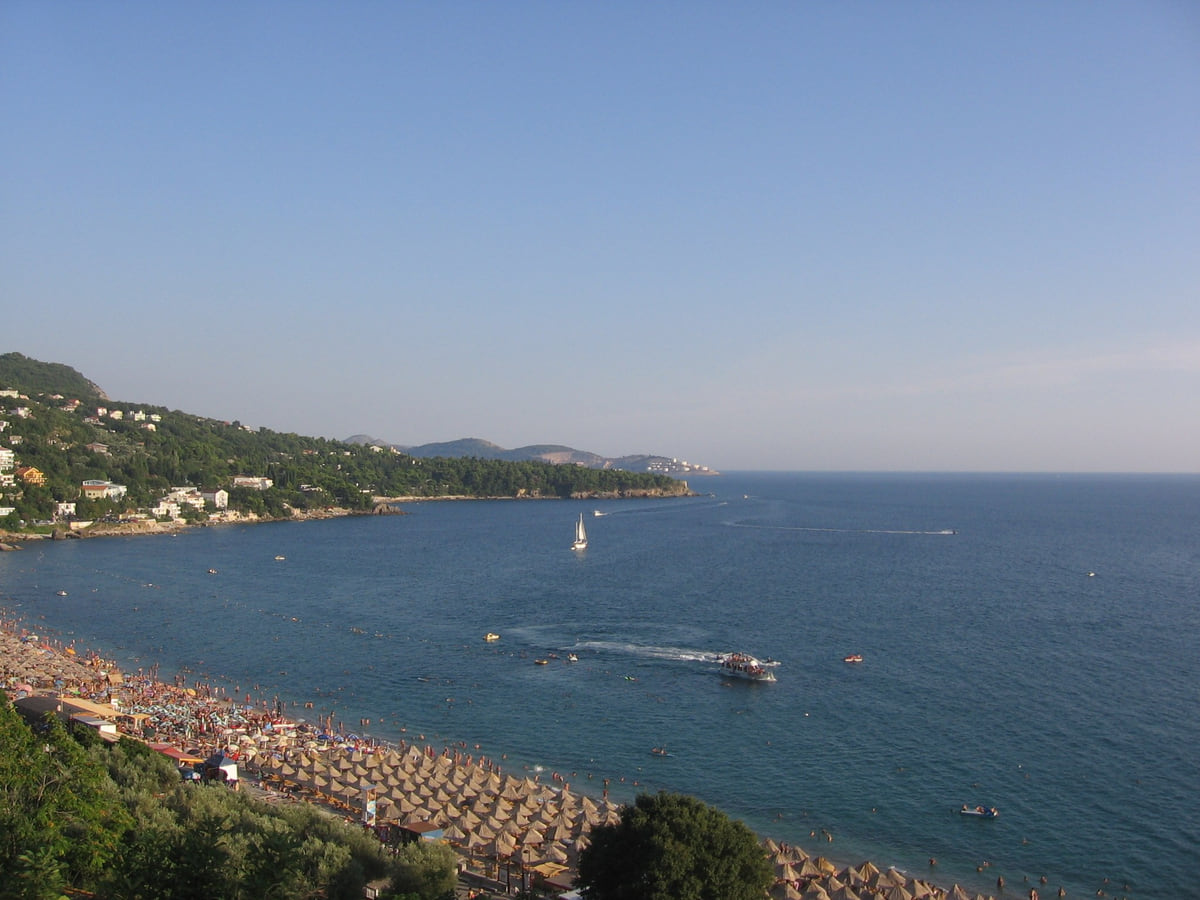
Sutomore beach from above, with its line of parasols, the calm sea and the coastline running on towards Bar
Average temperature by month, 1961-1990 (°C)
| Month | Herceg Novi | Bar | Podgorica | Žabljak |
|---|---|---|---|---|
| January | 8.2 | 8.3 | 5.0 | -4.5 |
| February | 8.7 | 8.9 | 6.8 | -3.8 |
| March | 10.6 | 10.6 | 10.0 | -1.0 |
| April | 13.7 | 13.6 | 13.9 | 3.0 |
| May | 18.0 | 17.7 | 19.0 | 8.4 |
| June | 21.6 | 21.2 | 22.8 | 11.9 |
| July | 24.3 | 23.4 | 26.0 | 13.9 |
| August | 23.9 | 23.1 | 25.6 | 13.5 |
| September | 20.7 | 20.4 | 21.4 | 10.1 |
| October | 16.6 | 16.8 | 15.9 | 5.6 |
| November | 12.7 | 13.1 | 10.5 | 1.2 |
| December | 9.6 | 9.8 | 6.5 | -2.6 |
Institute of Hydrometeorology and Seismology of Montenegro, 1961-1990 climate normals, checked on 11-10-2026.
Rain and sunshine in Herceg Novi, 1961-1990 averages
| Month | Rainfall (mm) | Rainy days | Hours of sun |
|---|---|---|---|
| January | 231.3 | 14 | 110.5 |
| April | 159.2 | 12 | 191.6 |
| July | 47.3 | 6 | 343.0 |
| October | 199.2 | 10 | 190.1 |
| November | 256.1 | 14 | 114.3 |
| Year | 1,937.3 | 129 | 2,418 |
Institute of Hydrometeorology and Seismology of Montenegro, 1961-1990 normals.
Test yourself
True or false?
0/3 Pick before you peek.
-
Kotor has its own station in the official climate normals.
See the answer
False. The 1961-1990 coastal normals are for Herceg Novi, Bar and Ulcinj; Kotor has no series of its own.
-
It snowed in Herceg Novi in 2024.
See the answer
False. According to MONSTAT, Herceg Novi, Bar and Podgorica had no days of snow in 2024.
-
Podgorica is hotter in summer than the coast.
See the answer
True. Its average July high is 31.8°C, against 29.4°C in Herceg Novi and 27.8°C in Bar (1961-1990).
- July average in Herceg Novi, 1961-1990
- 24.3°C
- Podgorica's highest in 2024
- 41.1°C
- Yearly sunshine in Herceg Novi
- 2,418 hrs
- Average yearly rainfall at Crkvice
- 5,000 mm
0 of 278 Montenegro guides
Your next stamp
- In summer
- In winter
- In January
- In July
- In June
- In November
- In September
- In December
- Aman Sveti Stefan
- Budva Old Town
- Haj-Nehaj
- Kotor
- Lučice Beach
- Montenegro's coast
- Peaks of the Balkans
- Porto Montenegro
- Sea Dance Festival
- Splendid Conference & Spa Resort
- Stari Bar
- Ulcinj Old Town
- Bay of Kotor
- Budva Riviera
- Heroj submarine
- Iberostar Bellevue
- Independence Day
- Old olive tree of Mirovica
- Tivat
- Velika plaža
- Ada Bojana
- Beaches in Budva
- Eurostars Queen of Montenegro
- Herceg Novi
- Kotor Old Town
- Mount Rumija
- Igalo
- Kotor city walls
- Mogren Beach
- Montenegro Beach Resort
- Svač
- Vrmac
- Hiking
- Jaz Beach
- Kanli kula
- Luštica peninsula
- St Tryphon Cathedral
- Ulcinj salt pans
- Forte Mare
- Gornja Lastva
- Maritime Museum, Kotor
- Slovenska Beach
- Drobni Pijesak Beach
- Kotor viewpoints
- Mamula
- Žanjic beach
- Kotor cruise port
- Orjen
- Plavi horizonti beach
- Sveti Nikola Island
- Blue Cave
- Restaurants in Budva
- Restaurants in Kotor
- Canyoning
- Hotels
- Perast
- Sutomore
- Sveti Stefan
- Čanj
- Luxury hotels
- Our Lady of the Rocks
- Pržno
- Things to do
- Activities
- All-inclusive hotels
- Bar Riviera
- Bečići
- Hotel Palma
- St George island
- Dobrota
- Hladna uvala
- Most beautiful places
- Petrovac
- Crvena stijena
- Prčanj
- Prettiest villages
- Cycling
- Risan
- UNESCO sites
- Heritage Grand Perast
- Map
- Hyatt Regency Kotor Bay
- Where is it?
- Regions
- Cities
- Beaches in Bar
- Budva
- Central Montenegro
- Hotels in Budva
- Hotels in Kotor
- Iberostar Waves Herceg Novi
- Kitesurfing
- The name
- Beaches in Ulcinj
- Flag
- Hotels in Perast
- Palmon Bay Hotel & Spa
- Podgorica
- Cathedral of the Resurrection
- One&Only Portonovi
- Population
- Sandy beaches
- Azul Beach Resort Montenegro
- Naturist beaches
- Size
- Stara Varoš
- Doclea
- Language
- Mimosa Festival
- Medun
- Religion
- Zipline
- Currency
- Museums in Podgorica
- Dajbabe Monastery
- EU membership
- History
- Restaurants in Podgorica
- Hotels in Podgorica
- Public holidays
- Avala Resort & Villas
- Bar
- Beaches in Kotor
- Birdwatching
- Hotels in Ulcinj
- Kotor carnival
- Time zone
- Tivat beaches
- Tuzi
- Boka Night
- Dukley Hotel & Resort
- Facts
- Hotels in Tivat
- Zeta
- Caves
- Herceg Novi beaches
- National parks
- Šipčanik
- Hotels in Herceg Novi
- Monasteries
- Fortresses
- Fly fishing
- Museums
- Canyons and waterfalls
- Lakes
- Mountains
- Montenegro and Croatia
- Beaches
- Boat trips
- Cetinje
- Montenegro and Albania
- Nightlife
- Ulcinj
- Best time to visit
- Cetinje Monastery
- Kayaking
- Montenegro and the Balkans
- How to get there
- King Nikola's Palace
- Sailing
- Biljarda
- Flights
- Airports
- Museums in Cetinje
- New Year's Eve
- Lovćen
- Paragliding
- Tivat Airport
- Njegoš Mausoleum
- Podgorica Airport
- Dubrovnik to Kotor
- Kotor serpentine
- Belgrade to Montenegro
- Njeguši
- Ferry to Italy
- Njeguši prosciutto
- Border crossings
- Lipa Cave
- Where to stay
- In February
- Kamenari-Lepetane ferry
- Pavlova strana
- Getting around
- In March
- Rijeka Crnojevića
- In April
- Trains
- Buses
- In May
- Car hire
- Driving
- In August
- Taxis
- Distances
- In October
- Road trip
- Food
- Lake Skadar
- Scenic drives
- Kotor cable car
- Virpazar
- Where to eat
- Budva to Kotor
- Godinje
- Wine
- Podgorica to Kotor
- Vranjina
- Besac fortress
- Prices and budget
- On a budget
- Žabljak Crnojevića
- Danilovgrad
- Entry requirements
- Ostrog Monastery
- Tourist registration
- Customs
- Nikšić
- Crvena Stijena cave
- Safety
- Events
- Healthcare
- Northern Montenegro
- Mobile and roaming
- Žabljak
- Durmitor
- Plugs
- Black Lake
- With kids
- Bobotov Kuk
- Holidays
- Day trips
- Stećci tombstones
- Hotels in Žabljak
- Three-day itinerary
- Five-day itinerary
- Skiing in Montenegro
- One-week itinerary
- Skiing in Žabljak
- Šavnik
- Ten-day itinerary
- Nevidio Canyon
- Tara Canyon
- Tara rafting
- Đurđevića Tara Bridge
- Plužine
- Lake Piva
- Piva Monastery
- Mojkovac
- Brskovo
- Pljevlja
- Husein Pasha Mosque
- Kolašin
- Hotels in Kolašin
- Skiing in Kolašin
- Biogradska Gora National Park
- Komovi
- Morača Monastery
- Morača Canyon
- Bijelo Polje
- Đalovića Cave
- Berane
- Andrijevica
- Petnjica
- Rožaje
- Plav
- Lake Plav
- Gusinje
- Vusanje
- Prokletije National Park
Frequently asked questions
What is the weather like in Montenegro?
On the coast, hot dry summers and mild but very wet winters; inland, more extreme; in the northern mountains, long snowy winters. Herceg Novi averages from 8.2°C in January to 24.3°C in July (1961-1990).
What is the hottest month in Montenegro?
July, neck and neck with August. Podgorica's average July high is 31.8°C and Herceg Novi's 29.4°C, according to the 1961-1990 normals.
What is the weather like in Kotor?
Kotor has no station in the official records. The Tivat airport climatography, on the same bay, gives averages of 7.6°C in January and 25.9°C in August for 2013-2022.
When is the rainy season in Montenegro?
Autumn and winter. In Herceg Novi November is the wettest month, averaging 256.1 mm, and July the driest at 47.3 mm.
Does it snow in Montenegro?
In the north, yes. In 2024 Kolašin had 71 days with at least 1 cm of snow on the ground and Pljevlja 43, while Podgorica, Bar and Herceg Novi had none.
What is Budva's weather like?
Budva has no official station of its own either. Bar, further down the same coast, averages 8.3°C in January and 23.4°C in July, with 2,524 hours of sun a year (1961-1990).
By
Tourism graduate with a master’s in Tourism Management and Planning from the University of Málaga, who has travelled across Europe. He writes every guide from official sources and his own judgement.
Published on . Facts checked on .
Sources
Some links in this guide are affiliate links: if you book through them, the site earns a commission at no extra cost to you. Affiliate disclosure
Photos: Wolfgang Sauber (CC BY-SA 4.0); Mercy (CC BY-SA 3.0); Horv.petya (CC BY-SA 3.0), via Wikimedia Commons.