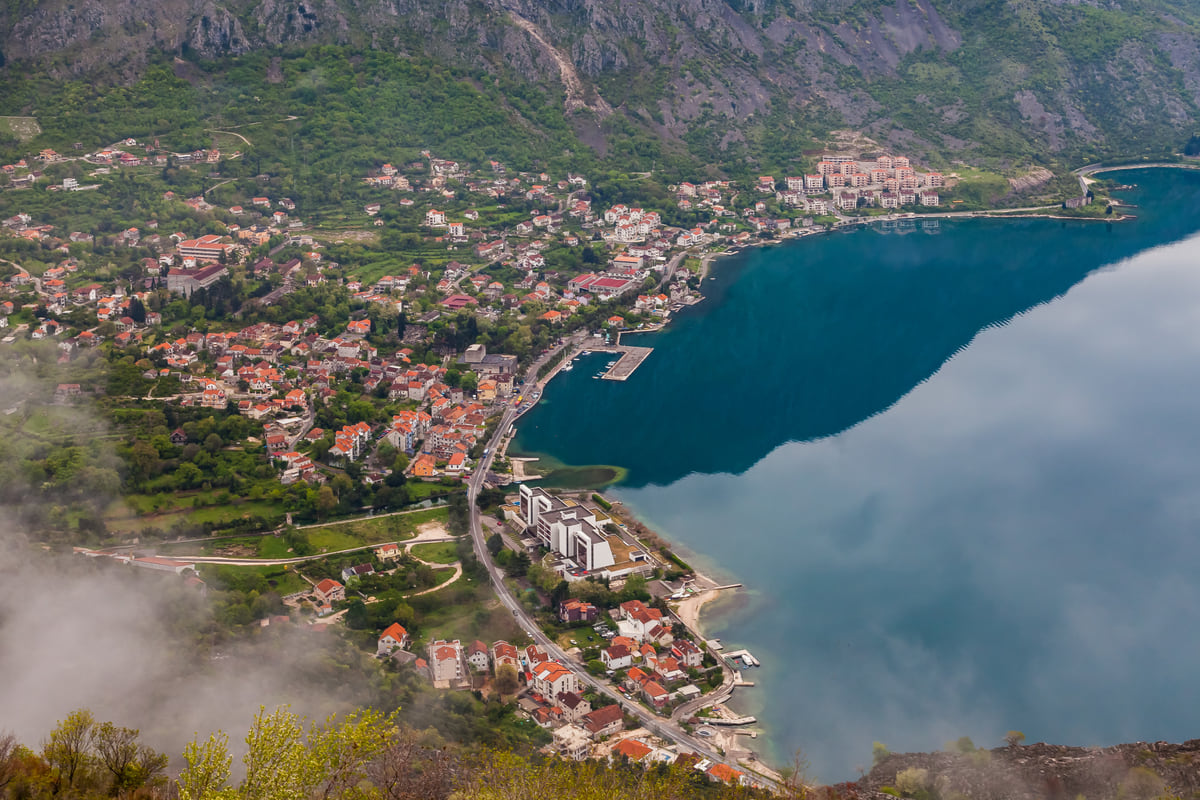
Kotor is the walled town tucked into the far end of the Bay of Kotor, on Montenegro's coast, and a UNESCO World Heritage Site since 1979. The old town takes a morning, the walls climb around 1,400 steps to St John's fortress, and the official city pass costs €19 or €30. Tivat airport is 8.3 km away.
In 30 seconds
Full read: 3 min
Walled town at the far end of the bay, on UNESCO's list since 1979.
4.5 km of walls and about 1,400 steps up to St John's fortress.
Official city pass: €19 for five sights or €30 for ten, valid a month.
8.3 km from Tivat airport and 12 km from Perast.
Kotor is at its best before nine in the morning and after six in the evening, once the cruise passengers have gone back aboard. I'd sleep in or right by the old town and climb to the fortress first thing.
Sergio LeponeMy advice
Before you go
What I would keep in mind
01 Most beautiful
The climb to St John's fortress
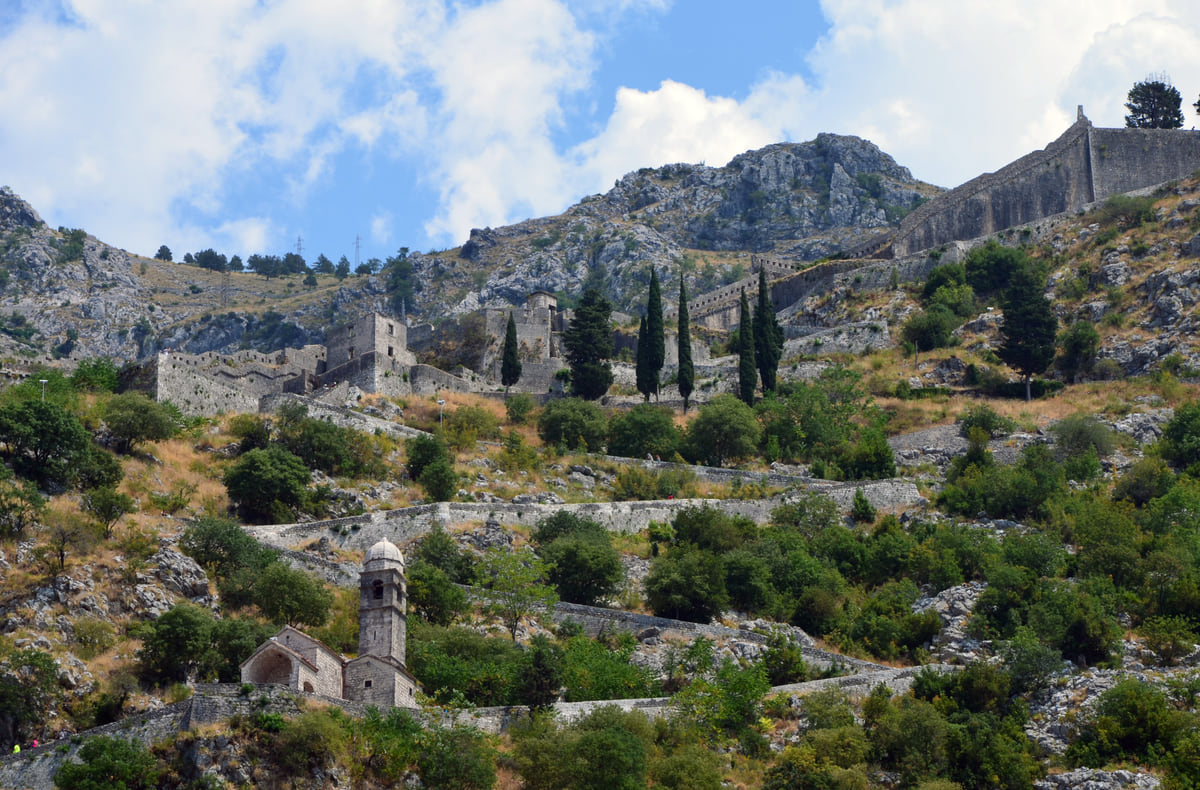
The walls zigzag 4.5 km up the mountainside to the fortress. From the top you see the whole old town, the harbour and the inner bay.
Pass S is €19 and covers the Maritime Museum, Boka Aquarium, the cathedral and two churches; Pass M, €30, adds Perast, Risan and three more. Both last a month.
Kotor's tourist board lists five radio taxi firms, including Red Taxi on 19719 and Euro Taxi on 19708, plus the Blue Line town bus.
05 My tip
Three days based in Kotor
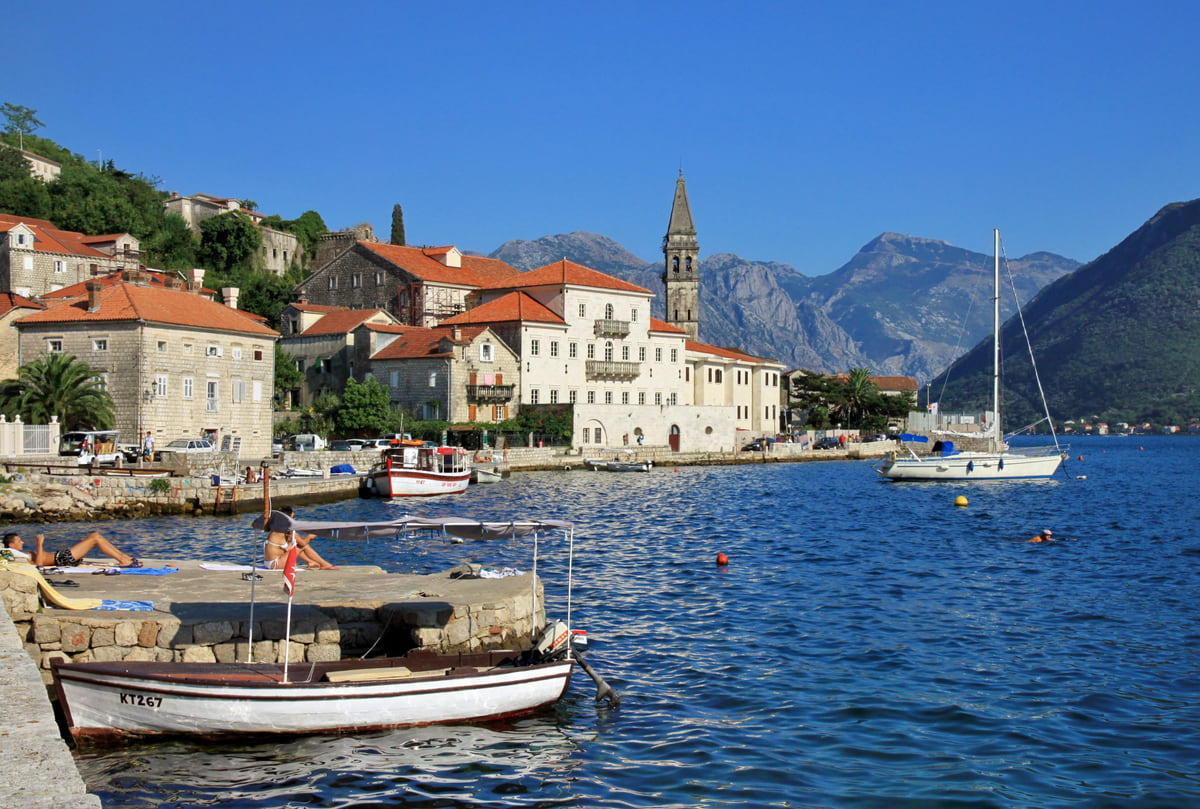
Three nights in Kotor cover the old town and walls, Perast about 14 km away and Budva about 22 km away without changing hotel. That's how I lay out my three-day plan.
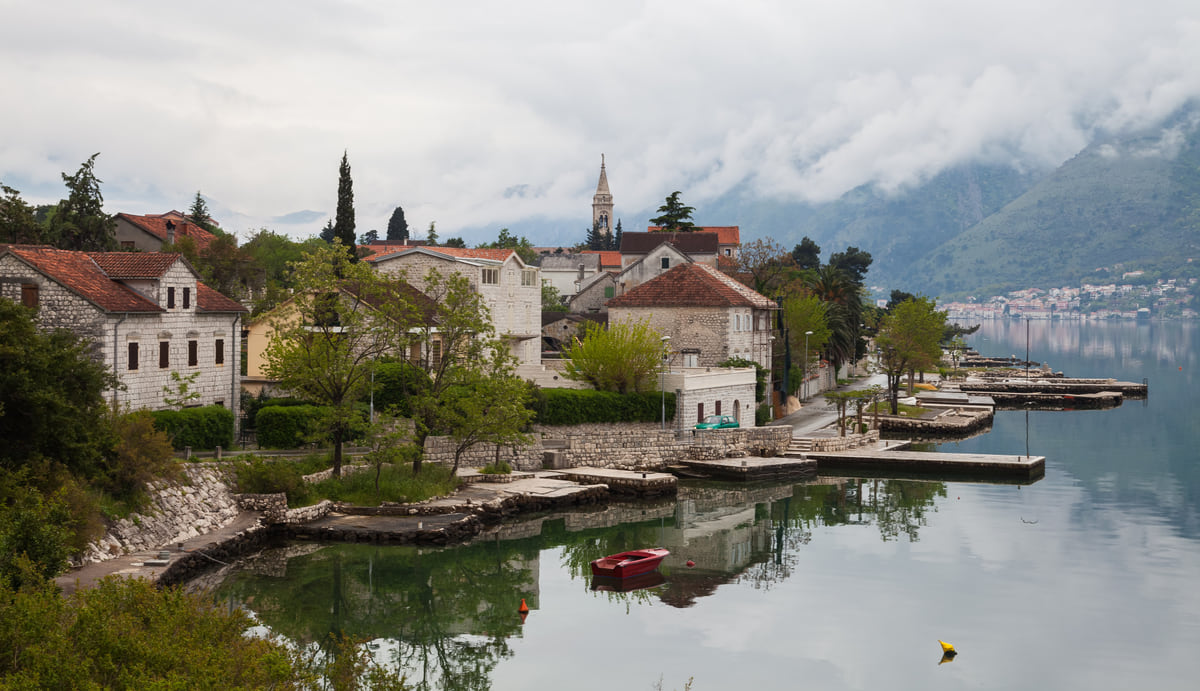
The bay's beaches are pebble or concrete, with jetties and calm water. The National Tourism Organisation singles out Bajova kula, between Kotor and Perast, as the most romantic.
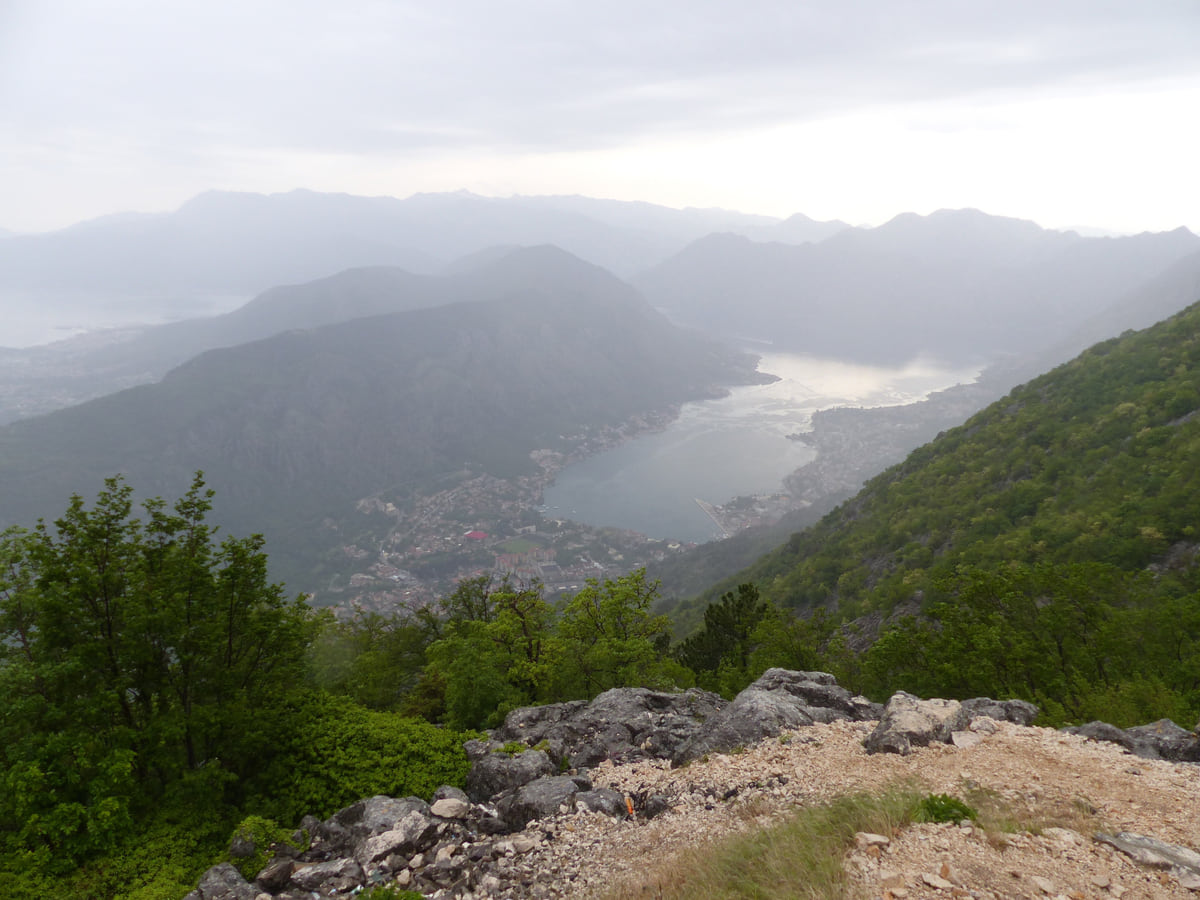
The serpentine road and the opposite slopes give you the picture-postcard view of the bay from outside.
Time: 1 h
8.0 out of 10
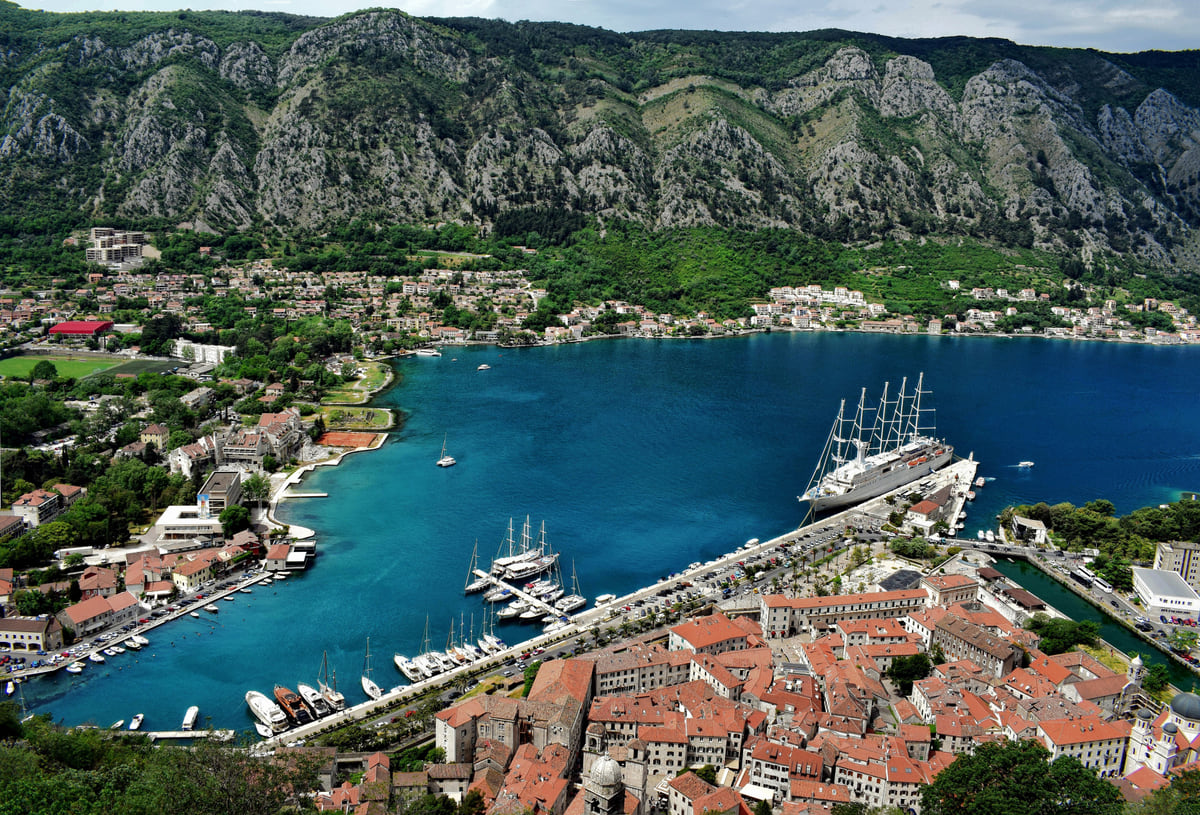
Kotor sits where the Bay of Kotor runs out of water, squeezed between the sea and a limestone wall that climbs towards Mount Lovćen. What sets it apart from other old towns on the Adriatic is that its walls don’t stop at sea level. They scramble straight up the mountain to a fortress. Here’s what to see, how long to give it and how to dodge the busiest hours.
Kotor at a glance
The municipality had 22,746 residents in the 2023 census, though the settlement of Kotor itself counted just 1,360 in the preliminary results; most people live in Dobrota, Škaljari and Muo. Kotor’s tourist board dates the earliest written records of the town to the 1st century AD, and the medieval layout grew without a plan, so the lanes have no proper names and the squares were called after what was sold in them, salad, flour, milk and arms among them.
UNESCO listed the Region of Kotor in 1979, the year a major earthquake damaged many of its monuments, and kept it on the In Danger list until 2003. Then in 2017 the walled town earned a second listing among the Venetian defences. I walk you through it lane by lane in Kotor old town.
The walls and the view
The official tourism body describes a 4.5 km ring of wall rising from the sea, zigzagging up to St John’s fortress and dropping back down. It reckons on around 1,400 steps and an hour; I’d allow two if you stop at every bend. Kotor’s tourist board doesn’t publish the entry price or opening hours for the walls, so I won’t quote a figure. Everything else about the climb is in the Kotor city walls.
Kotor is a big cruise stop. The port company talks of some 500 ships and around 500,000 passengers annually, with the quay right in front of the old town walls. Its 2026 schedule lists 523 calls, with August the heaviest month and two days with six ships. I’ve set out what to do with that in the Kotor cruise port guide. My own rule is simple, old town early or late, boat trip or beach in the middle of the day.
Museums, churches and cats
The official city pass is the tidy way to do it. For €19, valid a month, you get the Maritime Museum, the Boka Aquarium (the only public aquarium in Montenegro), St Tryphon Cathedral and the churches of St Nicholas and St Luke. The €30 version adds the Roman mosaics at Risan, the Perast Museum, St Paul’s Church, the Gallery of Solidarity and St Michael’s. The cats come free. The National Tourism Organisation even promotes Kotor as a city of cats, complete with a small Cats Museum.
It’s one of the commonest questions, and the numbers answer it. In 2024 Budva had 848,515 tourist arrivals and Kotor 277,063. Budva is beaches, bars and crowds; Kotor is stone, water and mountains, and a better base for Perast, twelve kilometres up the bay. I’d stay in Kotor and visit Budva, not the other way round.
A year of festivals
Kotor isn’t only a summer town. Its tourist board lists Savindan and the St Tryphon festivities on 27 January, the winter carnival (6 to 15 February in 2026), the Camellia Festival in April and Boka Night in August, a parade of lit and decorated boats held on the third Saturday of the month and protected as intangible heritage since 2012. The 2025-26 Kotor Winter Fest ran for 64 days, from 29 November to 31 January, with concerts on the waterfront and in the Clock Square.
Getting there and around
Tivat airport is 8.3 km away according to Kotor’s tourist board, Dubrovnik 71 km and Podgorica 79 km via Njeguši and Cetinje. From the UK, Tivat is the natural arrival point; if you come in through Dubrovnik, remember that Montenegro isn’t in Schengen and the border has passport checks both ways. Locally there’s the Blue Line town bus and five radio taxi firms. The tourist information centre is at the Sea Gate, the main entrance to the old town, and the tourist tax comes to €1 a night for adults, 50 cents for teenagers and nothing for under-12s. For beds, see hotels in Kotor.
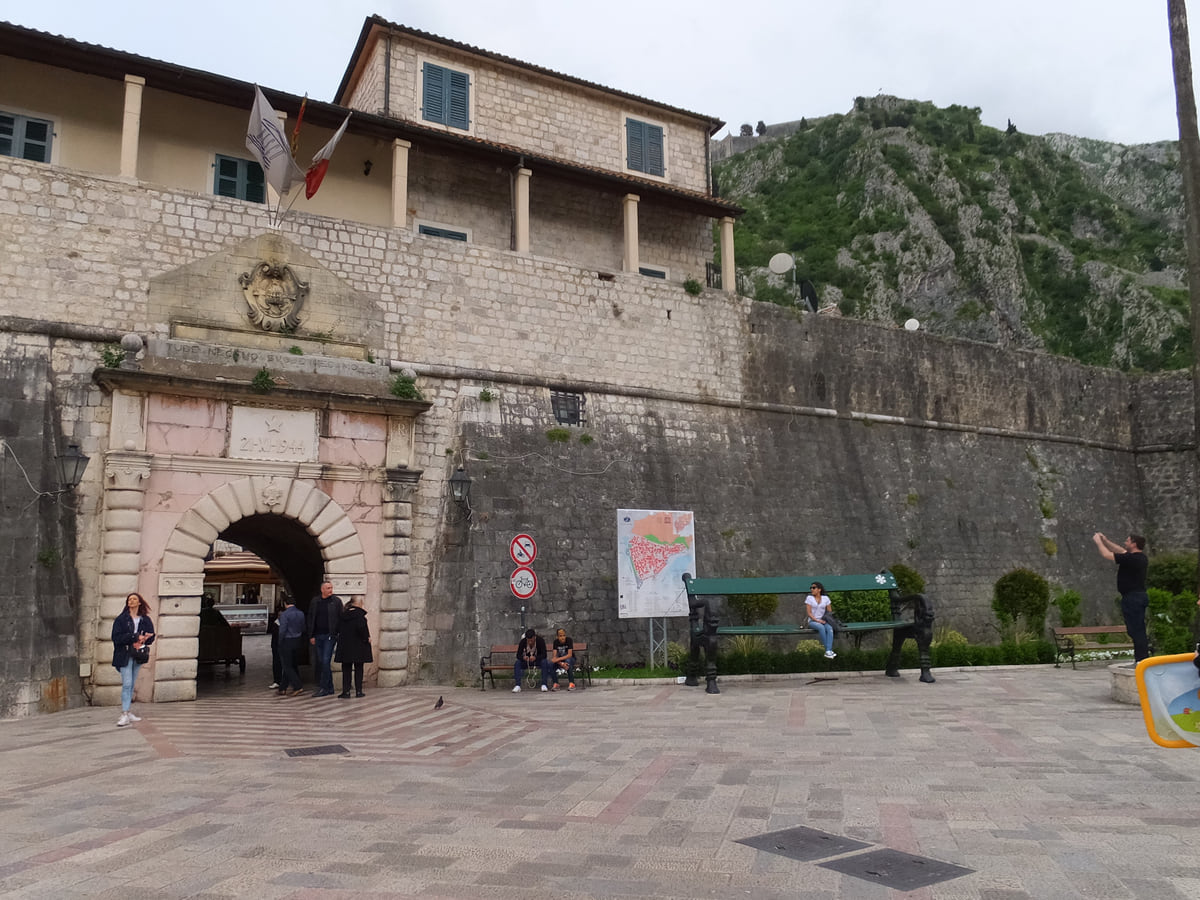
The Sea Gate, the main entrance to Kotor old town, set in the stone wall with the mountain rising behind it
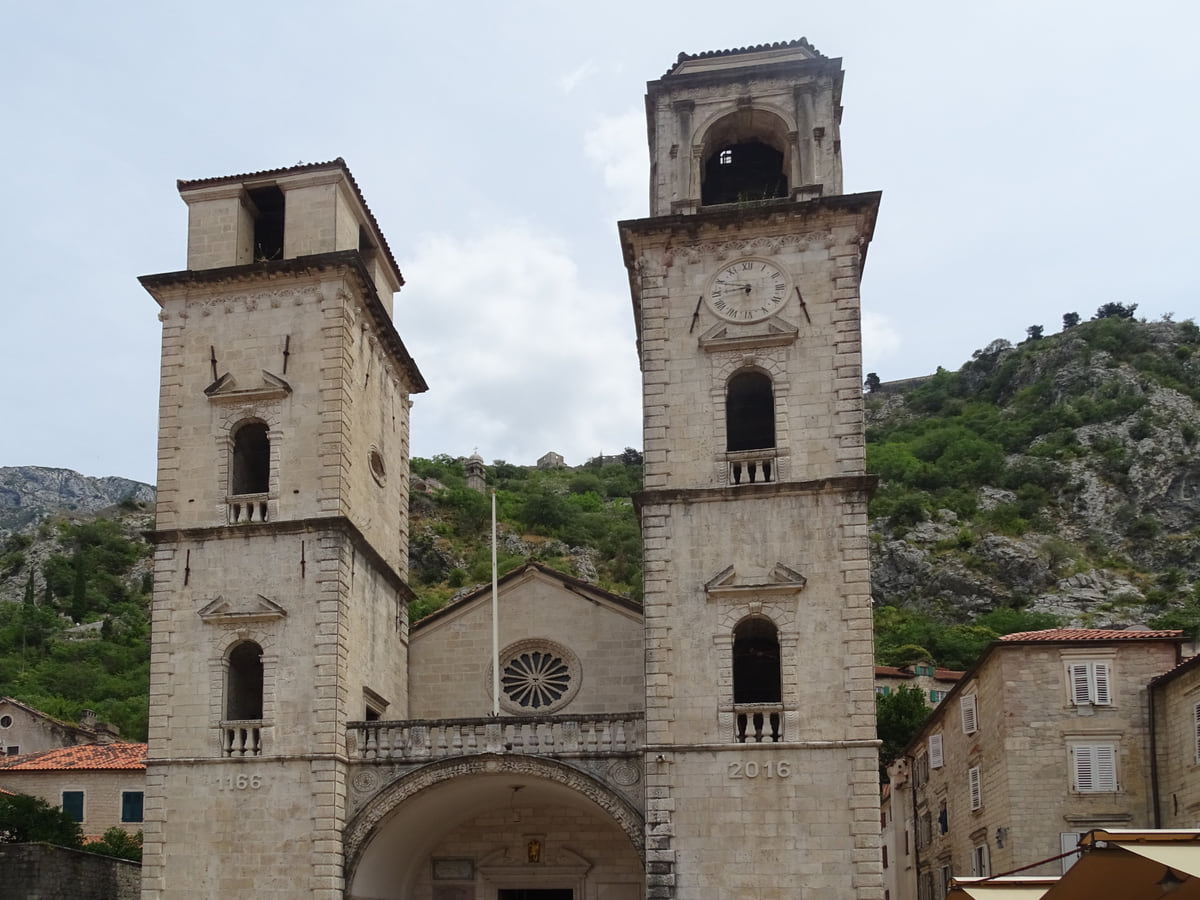
The front of St Tryphon's Cathedral in Kotor, with its two pale stone towers and rose window, below the mountains of the old town
The walls of Kotor zigzagging up the rocky hillside towards St John's Fortress, between cypress trees and scrub
Kotor City Pass (official)
Pass
Price
Valid
Includes
S
€19
1 month
Maritime Museum, Boka Aquarium, St Tryphon Cathedral, St Nicholas and St Luke
M
€30
1 month
Everything in S plus Risan mosaics, Perast Museum, St Paul's, Gallery of Solidarity and St Michael's
Kotor Tourism Organisation, kotor.travel/city-card, checked 10-10-2026. Churches can't be visited during services.
Kotor to the nearest airports
Airport
Distance
Tivat
8.3 km
Dubrovnik
71 km
Podgorica
79 km via Njeguši and Cetinje; 86-88 km via the coast
Kotor Tourism Organisation, visitor information.
Test yourself
True or false?
0/3Pick before you peek.
Kotor has been a UNESCO World Heritage Site since 1979.
See the answer
True. UNESCO inscribed the Region of Kotor that year, and added the fortified city to its Venetian defences listing in 2017.
Kotor's walls are under a kilometre long.
See the answer
False. The National Tourism Organisation gives 4.5 km, zigzagging up to the fortress and down again.
Kotor is closer to Tivat airport than to Dubrovnik airport.
See the answer
True. Tivat is 8.3 km away and Dubrovnik 71 km, according to Kotor's tourist board.
Year Kotor joined the UNESCO list
1979
Of town walls
4.5 km
Steps up to the fortress
1,400
Cruise calls announced for 2026
523
Map
Where Kotor is
The Adriatic coast runs from Herceg Novi to Ulcinj; the centre holds Podgorica, Cetinje and Lake Skadar, and the north, Durmitor and the Tara Canyon. Every number opens its guide.
Walk the old town, visit St Tryphon Cathedral and the Maritime Museum, and climb the walls to St John's fortress. With an extra day, take the road or a boat to Perast and its two islands.
Is Kotor worth visiting?
Yes, especially early or late in the day. It's a UNESCO-listed walled town with a setting few Adriatic towns can match, but cruise days get very busy, so plan around the port schedule.
Kotor or Budva, which is better?
Kotor for history, scenery and a base for the bay; Budva for beaches and nightlife. Budva had 848,515 tourist arrivals in 2024 against Kotor's 277,063, which tells you how different the atmosphere is.
How do I get from Tivat airport to Kotor?
It's 8.3 km, about 12 minutes by car according to the airport operator. Kotor's tourist board lists five radio taxi companies with short numbers.
How many days do you need in Kotor?
One full day covers the old town and the walls. Two lets you add Perast, the viewpoints or a boat trip round the bay.
Is Kotor in Croatia?
No, Kotor is in Montenegro, 71 km from Dubrovnik airport. Montenegro isn't in Schengen, so expect passport control at the border.
Tourism graduate with a master’s in Tourism Management and Planning from the University of Málaga, who has travelled across Europe. He writes every guide from official sources and his own judgement.