Round pins, 220 volts, adapter needed
Plugs, sockets and voltage in Montenegro
Montenegro uses type C, E and F plugs and sockets, with a 220V, 50Hz supply, according to the National Tourism Organisation, which advises bringing a suitable adapter. These are the round-pin plugs used across much of continental Europe, so your UK three-pin plugs won't fit without one. Most UK chargers handle the voltage fine.
In 30 seconds
Full read: 2 min
- Montenegro uses type C, E and F plugs.
- The supply is 220V and 50Hz.
- British three-pin plugs need an adapter.
- Most UK chargers work without a converter.
I'd pack two European adapters rather than one, plus a small extension lead with UK sockets, so one adapter can charge everything. Rooms often have fewer sockets than you have gadgets.

Before you go
What I would keep in mind
-
01 My tip
Round pins, so bring an adapter
Types C, E and F all use round pins. A British three-pin plug won't go in, which is why the National Tourism Organisation suggests a suitable adapter.
-
02 My tip
220V, no converter for most kit
The supply is 220V and 50Hz, says the National Tourism Organisation. Phone and laptop chargers made for the UK generally cope without a converter.
-
03 Getting there
Charging on the road
On a driving tour, bring a car charger, because in the mountains you'll spend hours between one place to stay and the next.
a Montenegro road trip
What I would book
It’s a small question, but one worth sorting before you pack. Coming from the UK you will need an adapter, because Montenegro uses the round-pin plugs of continental Europe. Here’s which types, what voltage, and what I’d take, based on what the National Tourism Organisation publishes.
Which plug types
In its guide to packing for the trip, the National Tourism Organisation says Montenegro’s sockets and plugs are types C, E and F, and recommends bringing a suitable adapter. All three use round pins. Type C is the slim two-pin plug found on many phone chargers; E and F are earthed, one with an earth pin in the wall socket and the other with side clips. A British three-pin plug won’t go into any of them, so pack an adapter for continental Europe.
Which voltage
The same organisation gives 220V and 50Hz in its country facts. That’s close to the UK supply, so phone and laptop chargers generally work without a converter. Do check the label on hairdryers, straighteners and shavers, because older or cheaper models may not accept the range, and the same goes for an electric toothbrush charger.
Once your dates are set, check which hotels are still free in Kotor before prices climb.
What I’d pack
Two European adapters rather than one, in case one goes missing, and a small extension lead with UK sockets, so a single adapter can charge everything at once. Rooms often have fewer sockets than you have gadgets. If you’re driving, bring a car charger, because on a Montenegro road trip you’ll spend hours in the mountains between overnight stops, and your phone is your map. Data and coverage are in mobile and roaming in Montenegro.
Buy it before you go
I’d buy adapters at home rather than hunting for one on arrival with a flat phone. The official sources don’t say where to buy them in Montenegro, so don’t count on finding one at the airport. If you’ve already got an adapter from a trip to Spain, France or Italy, the round-pin European type should do the job here too.
If you would rather have a local show you round, book a guided tour in Kotor and choose by the reviews.
The rest of the official packing list
The same National Tourism Organisation page that mentions the plugs has a sensible packing list around it. It suggests comfortable trainers for long walks round the old towns, waterproof boots in winter, protective shoes as well as sandals for rocky beaches, a beach towel and high-factor sun cream, which you may need in the mountains too. It also reminds you to check the weather forecast before you pack.
What I couldn’t confirm
The official sources I read say nothing about power cuts or the electricity supply in rural guesthouses and mountain huts. If you’re sleeping in a katun or a mountain refuge, ask beforehand whether there’s power and how, because no official source guarantees it. For the rest of your preparation, see Montenegro entry requirements.
Once your dates are set, check which hotels are still free in Kotor before prices climb.
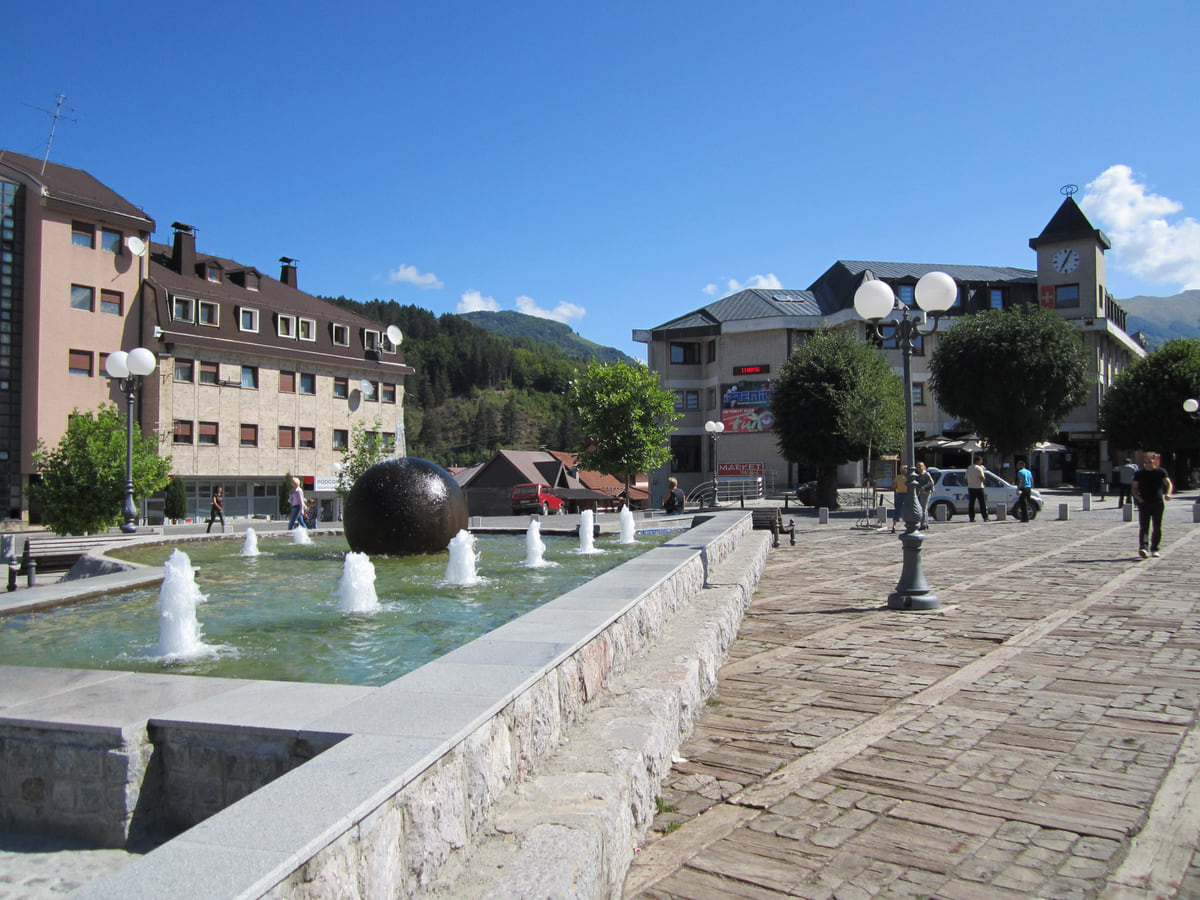
The main square in Kolašin with a fountain, a large stone sphere and mountain-style buildings under a clear sky
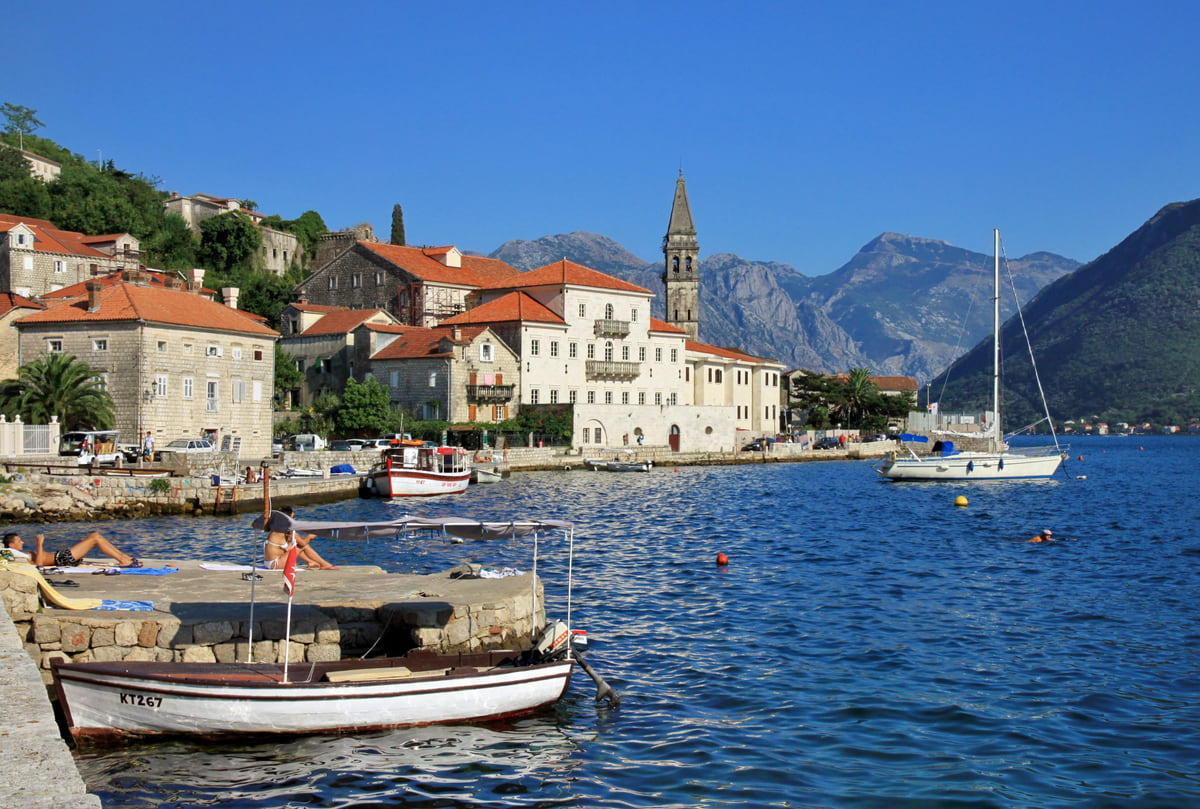
Perast's waterfront with wooden boats, stone houses and the bell tower of St Nicholas in front of the mountains of the bay
Electricity in Montenegro
| Detail | Value |
|---|---|
| Plug and socket types | C, E and F |
| Voltage | 220V |
| Frequency | 50Hz |
| UK plug (type G) | Needs an adapter |
National Tourism Organisation, «How will you pack» and «Facts about Montenegro», checked on 11-10-2026.
Test yourself
True or false?
0/3 Pick before you peek.
-
Montenegro uses type C, E and F plugs.
See the answer
True. So says the National Tourism Organisation, which recommends bringing a suitable adapter.
-
A UK three-pin plug fits Montenegrin sockets.
See the answer
False. Types C, E and F have round pins, so you need an adapter.
-
The voltage in Montenegro is 110V.
See the answer
False. It's 220V at 50Hz, according to the National Tourism Organisation.
- Voltage
- 220V
- Frequency
- 50Hz
- Plug types (C, E and F)
- 3
0 of 278 Montenegro guides
Your next stamp
- Getting around
- Driving
- How to get there
- Trains
- Aman Sveti Stefan
- Budva Old Town
- Haj-Nehaj
- Kotor
- Lučice Beach
- Montenegro's coast
- Peaks of the Balkans
- Porto Montenegro
- Sea Dance Festival
- Splendid Conference & Spa Resort
- Stari Bar
- Ulcinj Old Town
- Bay of Kotor
- Budva Riviera
- Heroj submarine
- Iberostar Bellevue
- Independence Day
- Old olive tree of Mirovica
- Tivat
- Velika plaža
- Ada Bojana
- Beaches in Budva
- Eurostars Queen of Montenegro
- Herceg Novi
- Kotor Old Town
- Mount Rumija
- Igalo
- Kotor city walls
- Mogren Beach
- Montenegro Beach Resort
- Svač
- Vrmac
- Hiking
- Jaz Beach
- Kanli kula
- Luštica peninsula
- St Tryphon Cathedral
- Ulcinj salt pans
- Forte Mare
- Gornja Lastva
- Maritime Museum, Kotor
- Slovenska Beach
- Drobni Pijesak Beach
- Kotor viewpoints
- Mamula
- Žanjic beach
- Kotor cruise port
- Orjen
- Plavi horizonti beach
- Sveti Nikola Island
- Blue Cave
- Restaurants in Budva
- Restaurants in Kotor
- Canyoning
- Hotels
- Perast
- Sutomore
- Sveti Stefan
- Čanj
- Luxury hotels
- Our Lady of the Rocks
- Pržno
- Things to do
- Activities
- All-inclusive hotels
- Bar Riviera
- Bečići
- Hotel Palma
- St George island
- Dobrota
- Hladna uvala
- Most beautiful places
- Petrovac
- Crvena stijena
- Prčanj
- Prettiest villages
- Cycling
- Risan
- UNESCO sites
- Heritage Grand Perast
- Map
- Hyatt Regency Kotor Bay
- Where is it?
- Regions
- Cities
- Beaches in Bar
- Budva
- Central Montenegro
- Hotels in Budva
- Hotels in Kotor
- Iberostar Waves Herceg Novi
- Kitesurfing
- The name
- Beaches in Ulcinj
- Flag
- Hotels in Perast
- Palmon Bay Hotel & Spa
- Podgorica
- Cathedral of the Resurrection
- One&Only Portonovi
- Population
- Sandy beaches
- Azul Beach Resort Montenegro
- Naturist beaches
- Size
- Stara Varoš
- Doclea
- Language
- Mimosa Festival
- Medun
- Religion
- Zipline
- Currency
- Museums in Podgorica
- Dajbabe Monastery
- EU membership
- History
- Restaurants in Podgorica
- Hotels in Podgorica
- Public holidays
- Avala Resort & Villas
- Bar
- Beaches in Kotor
- Birdwatching
- Hotels in Ulcinj
- Kotor carnival
- Time zone
- Tivat beaches
- Tuzi
- Boka Night
- Dukley Hotel & Resort
- Facts
- Hotels in Tivat
- Zeta
- Caves
- Herceg Novi beaches
- National parks
- Šipčanik
- Hotels in Herceg Novi
- Monasteries
- Fortresses
- Fly fishing
- Museums
- Canyons and waterfalls
- Lakes
- Mountains
- Montenegro and Croatia
- Beaches
- Boat trips
- Cetinje
- Montenegro and Albania
- Nightlife
- Ulcinj
- Weather
- Best time to visit
- Cetinje Monastery
- Kayaking
- Montenegro and the Balkans
- In summer
- King Nikola's Palace
- Sailing
- Biljarda
- Flights
- In winter
- Airports
- Museums in Cetinje
- New Year's Eve
- Lovćen
- Paragliding
- Tivat Airport
- Njegoš Mausoleum
- Podgorica Airport
- Dubrovnik to Kotor
- Kotor serpentine
- Belgrade to Montenegro
- Njeguši
- Ferry to Italy
- Njeguši prosciutto
- Border crossings
- In January
- Lipa Cave
- Where to stay
- In February
- Kamenari-Lepetane ferry
- Pavlova strana
- In March
- Rijeka Crnojevića
- In April
- Buses
- In May
- Car hire
- In June
- In July
- In August
- Taxis
- Distances
- In September
- In October
- Road trip
- Food
- In November
- Lake Skadar
- Scenic drives
- In December
- Kotor cable car
- Virpazar
- Where to eat
- Budva to Kotor
- Godinje
- Wine
- Podgorica to Kotor
- Vranjina
- Besac fortress
- Prices and budget
- On a budget
- Žabljak Crnojevića
- Danilovgrad
- Entry requirements
- Ostrog Monastery
- Tourist registration
- Customs
- Nikšić
- Crvena Stijena cave
- Safety
- Events
- Healthcare
- Northern Montenegro
- Mobile and roaming
- Žabljak
- Durmitor
- Black Lake
- With kids
- Bobotov Kuk
- Holidays
- Day trips
- Stećci tombstones
- Hotels in Žabljak
- Three-day itinerary
- Five-day itinerary
- Skiing in Montenegro
- One-week itinerary
- Skiing in Žabljak
- Šavnik
- Ten-day itinerary
- Nevidio Canyon
- Tara Canyon
- Tara rafting
- Đurđevića Tara Bridge
- Plužine
- Lake Piva
- Piva Monastery
- Mojkovac
- Brskovo
- Pljevlja
- Husein Pasha Mosque
- Kolašin
- Hotels in Kolašin
- Skiing in Kolašin
- Biogradska Gora National Park
- Komovi
- Morača Monastery
- Morača Canyon
- Bijelo Polje
- Đalovića Cave
- Berane
- Andrijevica
- Petnjica
- Rožaje
- Plav
- Lake Plav
- Gusinje
- Vusanje
- Prokletije National Park
Frequently asked questions
What plugs do they use in Montenegro?
Types C, E and F, according to the National Tourism Organisation. All three have round pins, so British visitors need an adapter.
Do I need an adapter for Montenegro from the UK?
Yes. UK three-pin plugs don't fit type C, E or F sockets. The National Tourism Organisation advises bringing a suitable adapter.
What voltage is Montenegro?
220V and 50Hz, says the National Tourism Organisation. Most UK phone and laptop chargers accept that range, but check hairdryers and straighteners.
Are Montenegro plugs the same as in Spain or Croatia?
They're the round-pin European types, so an adapter bought for a trip to most of continental Europe should work in Montenegro too.
Should I bring an extension lead?
I would. A small UK extension lead plugged into one European adapter lets you charge several devices at once, handy when rooms have few sockets.
By
Tourism graduate with a master’s in Tourism Management and Planning from the University of Málaga, who has travelled across Europe. He writes every guide from official sources and his own judgement.
Published on . Facts checked on .
Sources
Some links in this guide are affiliate links: if you book through them, the site earns a commission at no extra cost to you. Affiliate disclosure
Photos: MOs810 (CC BY 4.0); Pythonax (CC BY-SA 3.0); Marcin Konsek (CC BY-SA 4.0), via Wikimedia Commons.