Electricity in Malta
Malta plug type: three-pin, 230 V, and no adaptor needed from the UK
Malta uses UK-style three-pin square plugs, known as type G, on a 230 V, 50 Hz supply, according to the Government of Malta. If you're travelling from Britain, your chargers, hairdryer and laptop plug straight in with no adaptor. Only devices with European two-pin plugs need one.
In 30 seconds
Full read: 3 min
- Malta uses UK-style three-pin square plugs, known as type G.
- The supply is 230 V at 50 Hz, according to the Government of Malta.
- From the UK you don't need an adaptor or converter.
- Devices with European two-pin plugs need an adaptor, sold cheaply in Malta.
Pack exactly what you'd use at home and leave the travel adaptor in the drawer. The only thing I'd add is a USB plug with a couple of ports, because hotel rooms rarely have as many sockets as you have gadgets.

Before you go
What I would keep in mind
-
01 My tip
Your UK chargers just work
The Government of Malta describes its sockets as UK-style three-pin square plugs at 230 V and 50 Hz. Anything you'd plug in at home will fit.
-
02 My tip
European gadgets need an adaptor
If you've picked up a device with a European two-pin plug, you'll need an adaptor. Spain's Foreign Ministry notes they're easy and cheap to buy in Maltese shops.
-
03 Getting there
Charging at the airport
Malta International Airport lists charging points and free wifi in the terminal, handy if you land with a flat phone.
Malta airport -
04 My tip
No converter needed
With a 230 V supply, there's no need for a voltage converter. Spain's Foreign Ministry only ever mentions adaptors, and only for European plugs.
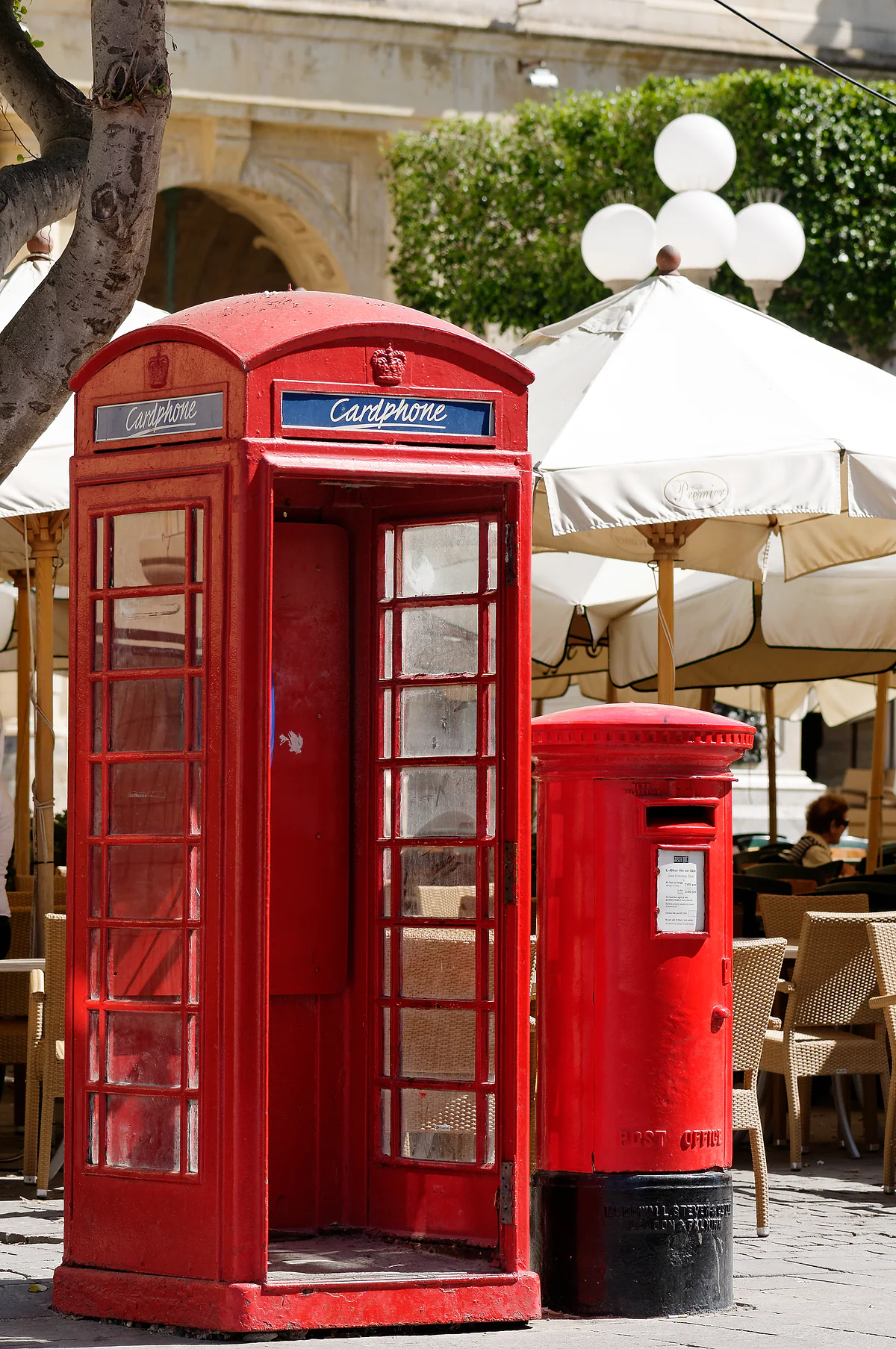
Here’s one of the pleasant surprises of Malta for a British traveller. The island is in the EU, pays in euros and follows Schengen rules, yet when you go to charge your phone the socket looks exactly like the one at home. Malta sticks with the three-pin design Britain uses, which means no adaptor to pack.
What plug does Malta use?
The UK-style three-pin plug with square pins. That’s how the Government of Malta describes it in its official profile of the islands, which also gives the mains supply as 230 V at 50 Hz. In shops and travel guides it’s usually called type G, the same name used for the British plug.
Spain’s Foreign Ministry says much the same in its advice for Spanish travellers, describing a 220 to 240 V, 50 Hz supply with a three-pin plug similar to the British system. The slight difference in the voltage range between the two sources makes no practical difference.
Do you need an adaptor from the UK?
No. Your phone charger, laptop, e-reader, electric toothbrush and hairdryer all plug straight in. That’s the whole answer for most British visitors, and it’s one fewer thing to remember at the airport.
You don’t need a voltage converter either. With a 230 V supply, UK appliances work as they do at home, and the Spanish Foreign Ministry, whose readers do need to adapt, only ever mentions adaptors, never converters.
When you would need an adaptor
The only time is with a device fitted with a European two-pin plug, perhaps something you bought on holiday elsewhere, or if you’re travelling with friends or family from mainland Europe. The Spanish Foreign Ministry recommends that its travellers bring adaptors from home but adds that they’re easy and cheap to find in Maltese shops, so if someone in your group forgets theirs, it isn’t a crisis.
The one extra I’d pack
A USB plug with two or three ports. Hotel rooms rarely have as many free sockets as you have things to charge, and one three-pin plug that charges a phone, a watch and a power bank at once solves that neatly. A power bank is worth having too on long days out, especially if you’re using maps and photos all day on Gozo or Comino. And if your room’s only free socket is behind the bed, a short UK extension lead from home saves a lot of crawling about.
Charging and wifi when you’re out
Beyond your room, official sources give you a few useful options. Malta International Airport lists charging points and free wifi in the terminal, so you can top up on arrival; more about the terminal in Malta airport. Malta Public Transport’s buses have free wifi on board, the Gozo HighSpeed fast ferry offers wifi according to the Ministry for Gozo, and there’s a wifi network across Valletta’s cruise terminal and waterfront. Wifi isn’t a socket, but it saves battery and data. I haven’t found any official mention of plug sockets on the buses themselves, so don’t count on charging on board, and plan to arrive at the ferry or the beach with a full battery. If you’re wondering about mobile data costs after Brexit, see Malta roaming.
Gozo and Comino too
The government’s description applies to the Maltese Islands as a whole, so the same three-pin sockets and 230 V supply apply on Gozo as on the main island. If you’re splitting your stay, as I suggest for anyone with five days or more, there’s nothing to change in your bag when you cross on the ferry. Comino is largely uninhabited, according to the same government profile, so if you’re only there for the day, charge everything the night before and bring a power bank.
Why Malta kept British plugs
It’s a direct legacy of history. Malta was under British rule until 1964, and several habits from that era are still part of daily life. English is an official language alongside Maltese, and traffic keeps to the left. The plug is simply another of them. I explain how that British past sits alongside the euro and Schengen in is Malta in the EU, and what driving on the left means for a hire car in driving in Malta.
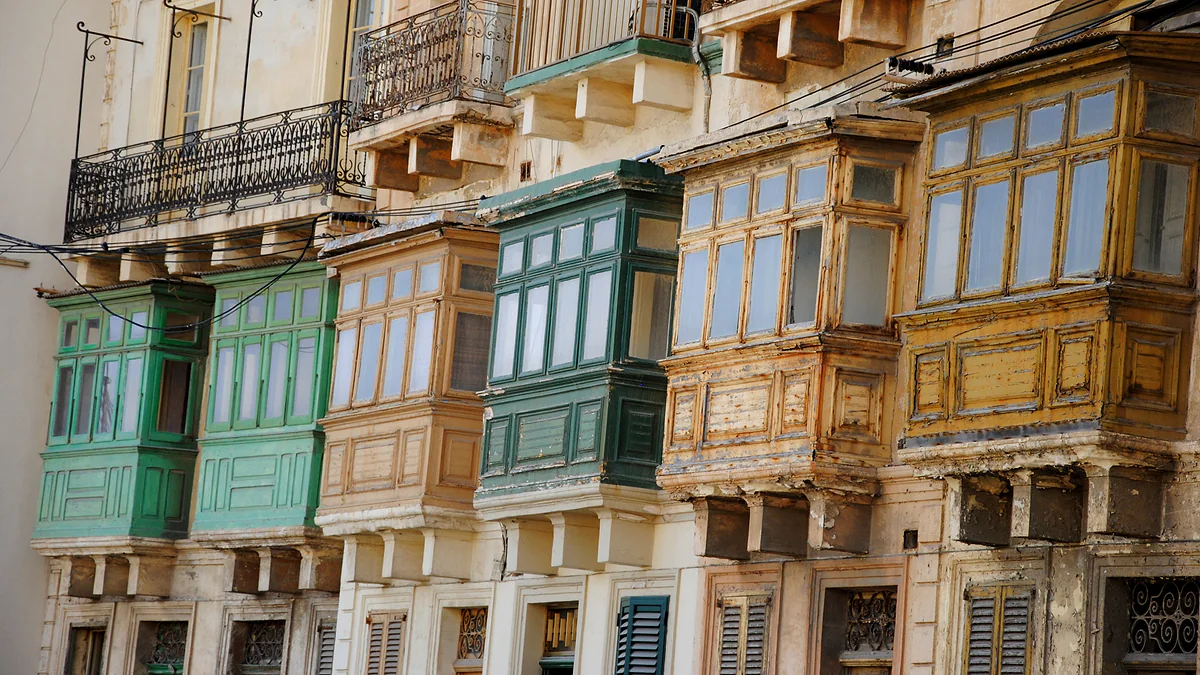
A row of enclosed wooden balconies in Valletta, painted green, ochre and cream, the classic feature of Maltese town houses.
Electricity in Malta at a glance
| What | Detail | Source |
|---|---|---|
| Plug | UK-style three-pin, square pins | Government of Malta |
| Usual name | Type G | Common designation |
| Voltage | 230 V (220/240 V per Spain's Foreign Ministry) | Government of Malta |
| Frequency | 50 Hz | Government of Malta |
| Adaptor from the UK | Not needed | Same plug as the UK |
| Charging at the airport | Charging points in the terminal | Malta International Airport |
'Type G' is the usual name for the British plug; Malta's government describes it as UK-style three-pin square plugs.
Test yourself
True or false?
0/3 Pick before you peek.
-
British travellers need a plug adaptor in Malta.
See the answer
False. Malta uses UK-style three-pin square plugs, so British chargers fit straight into the wall.
-
Malta's mains supply is 230 V at 50 Hz.
See the answer
True. That's the figure from the Government of Malta. Spain's Foreign Ministry gives a range of 220 to 240 V, which includes it.
-
Being in the EU, Malta uses European two-pin sockets.
See the answer
False. EU membership didn't change the plugs. Malta kept the British three-pin system from its time under British rule, which ended in 1964.
- Mains voltage
- 230 V
- Frequency
- 50 Hz
- Square pins on the plug
- 3
0 of 279 Malta guides
Your next stamp
- Mobile and roaming
- Time zone
- Money and payments
- Holiday packages
- Driving
- Is Malta a country?
- Things to do in Malta
- Gozo
- Most beautiful places
- Comino
- Prettiest villages
- UNESCO World Heritage Sites
- Where is Malta
- The Maltese islands
- Towns and villages
- Island of Malta
- Blue Lagoon
- Fort Rinella
- Fort St Angelo
- Gardjola Gardens
- Ħal Saflieni Hypogeum
- Popeye Village
- Tarxien Temples
- Things to do in Gozo
- Valletta
- Esplora
- Golden Bay
- Gozo day trip
- Inquisitor's Palace
- Population
- St John's Co-Cathedral
- St Mary's Tower
- Grandmaster's Palace
- How big is Malta
- Maritime Museum
- Mellieħa Bay
- Fort St Elmo
- Language
- Malta at War Museum
- Paradise Bay
- Barrakka Gardens
- Red Tower
- Religion
- Malta government
- Saluting Battery
- MUŻA
- National Museum of Archaeology
- Underground Valletta
- Lascaris War Rooms
- Casa Rocca Piccola
- Malta in one day
- Three Cities
- Victoria
- Birgu
- Manoel Theatre
- Weekend in Malta
- Xagħra
- City Gate and Parliament
- Malta in three days
- Nadur
- Senglea
- Cospicua
- Malta in four days
- Qala
- Valletta Waterfront
- Għajnsielem
- Kalkara
- Malta in five days
- Malta in a week
- Paola
- Xewkija
- Sannat
- Tarxien
- Munxar
- Żabbar
- Fgura
- Fontana
- Kerċem
- Luqa
- Floriana
- Marsa
- Mellieħa
- The Citadel, Gozo
- Żebbuġ (Gozo)
- Ġgantija Temples
- Marsalforn
- Santa Luċija
- Ramla Bay
- San Lawrenz
- Xgħajra
- Xwejni salt pans
- Calypso's Cave
- Għarb
- Żejtun
- Għasri
- Gudja
- San Blas Bay
- Għaxaq
- Ħondoq Bay
- Marsaxlokk
- Kirkop
- Marsaxlokk Fish Market
- Mqabba
- St Peter's Pool
- Marsaskala
- Qrendi
- Żurrieq
- Beaches
- Comino ferry
- EU, Schengen and the euro
- Ħaġar Qim and Mnajdra
- Mdina
- Mġarr (Gozo)
- Blue Grotto
- Diving
- Entry requirements
- Mdina Cathedral
- Xewkija Rotunda
- Birżebbuġa
- Palazzo Falson
- Safi
- Shipwrecks
- Ta' Ċenċ Cliffs
- Għar Dalam
- Mdina Dungeons
- Mġarr ix-Xini
- Prices and budget
- Snorkelling
- Boat trips
- Malta on a budget
- Playmobil FunPark
- Rabat (Malta)
- Xlendi
- Dwejra
- Gozo beaches
- History
- Siġġiewi
- St Paul's Catacombs
- Tipping
- Azure Window
- Domvs Romana
- Għar Lapsi
- Great Siege of 1565
- Limestone Heritage Park
- Second World War
- St Paul's Grotto
- Ta' Pinu Basilica
- Buskett Gardens
- Knights of Malta
- Wied il-Għasri
- Dingli
- Maltese cross
- Dingli Cliffs
- Flag
- Żebbuġ
- Coat of arms
- Mtarfa
- Balzan
- National anthem
- Lija
- Malta facts
- Game of Thrones
- Iklin
- Attard
- Film locations
- Forts and fortifications
- San Anton Gardens
- Ta' Qali Crafts Village
- Victoria Lines
- Megalithic temples
- Catacombs
- Museums
- Where to eat
- Where to stay
- Churches
- Hotels in Valletta
- Restaurants in Valletta
- Hotels in Sliema
- Maltese food
- Restaurants in Marsaxlokk
- Viewpoints
- Hotels in St Julian's
- Pastizzi
- Walking and hiking
- Hotels in Buġibba and Qawra
- Maltese rabbit stew
- Safety
- Hotels in Mellieħa
- Kinnie and Cisk
- Scams
- Gozo hotels
- Nightlife
- Tap water
- Boat parties
- Tourist tax
- All inclusive
- Gay Malta
- Sightseeing passes
- Apartments
- Malta with kids
- Public holidays
- How to get there
- Luxury
- Malta for couples
- Taxis and ride-hailing
- Weather
- Best time to visit
- Cycling
- English schools
- Flights
- Flights from Madrid
- Sea temperature
- Shopping and souvenirs
- Airport
- Free walking tours
- In winter
- Airport transfers
- Day trips and tours
- In summer
- Ferry from Sicily
- In January
- Cruise stop
- In February
- In March
- In April
- In May
- Getting around
- In June
- Buses
- July
- August
- Hop on hop off
- Gozo ferry
- September
- Gozo fast ferry
- October
- November
- Valletta ferries
- Car hire
- December
- Events
- St Paul's Bay
- Village feasts
- Buġibba
- Christmas
- Easter
- Qawra
- Carnival
- Xemxija
- Fireworks festival
- Malta National Aquarium
- Isle of MTV
- St Paul's Islands
- Mosta
- Mosta Rotunda
- Naxxar
- Palazzo Parisio
- Għargħur
- Mġarr (Malta)
- Sliema
- Ta' Ħaġrat and Skorba Temples
- Għajn Tuffieħa Bay
- Tigné Point
- Ġnejna Bay
- St Julian's
- Paceville
- St George's Bay
- Gżira
- Msida
- Ta' Xbiex
- Pietà
- Pembroke
- Swieqi
- San Ġwann
- Birkirkara
- Ħamrun
- Santa Venera
- Qormi
Frequently asked questions
What plug type is used in Malta?
The UK-style three-pin square plug, known as type G. The Government of Malta gives the supply as 230 V at 50 Hz.
Do I need an adaptor for Malta from the UK?
No. Malta's sockets are the same three-pin design as in Britain, so your UK plugs fit directly.
What voltage is used in Malta?
230 V at 50 Hz, according to the Government of Malta. Spain's Foreign Ministry quotes 220 to 240 V and never mentions converters, only adaptors.
Why does Malta have British plugs?
It's a legacy of British rule, which lasted until 1964. English is still an official language and traffic drives on the left too.
Can I buy a plug adaptor in Malta?
Yes. Spain's Foreign Ministry says adaptors are easy and cheap to buy in local shops, which is handy if you're travelling with someone from mainland Europe.
Is there anywhere to charge my phone at Malta airport?
Yes. The airport lists charging points and free wifi in the terminal.
By
Tourism graduate with a master’s in Tourism Management and Planning from the University of Málaga, who has travelled across Europe. He writes every guide from official sources and his own judgement.
Published on . Facts checked on .
Sources
Photos: Marie-Lan Nguyen (CC BY 2.5); Leandro Neumann Ciuffo (CC BY 2.0), via Wikimedia Commons.