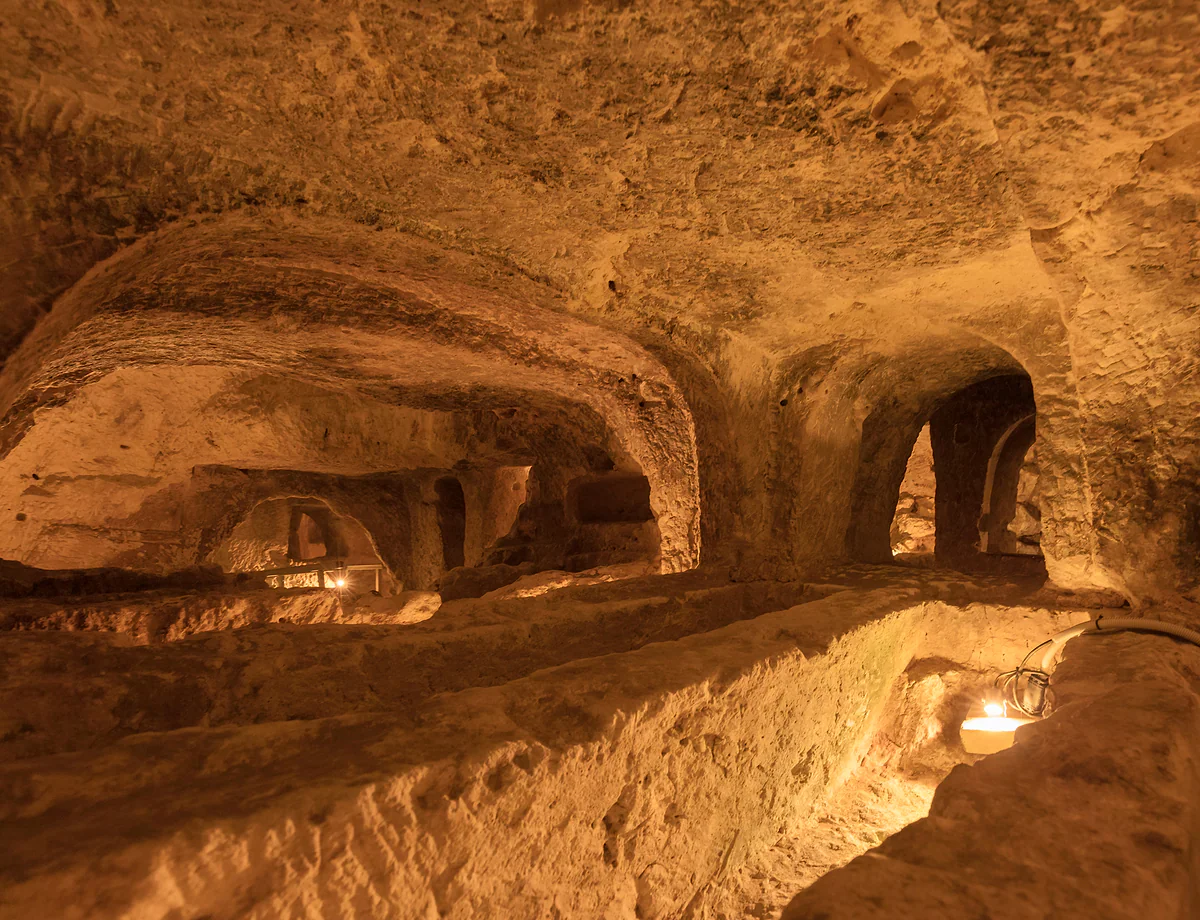
3rd to 7th century, under Rabat and in the countryside
The catacombs of Malta, the ones you can walk into and the ones that need booking
Malta has dozens of catacombs from the 3rd to the 7th century, most of them under Rabat, just outside Roman Melite. Two open on a timetable, St Paul's in Rabat (€6, daily) and Ta' Bistra in Mosta (€5, last Sunday of the month). Abbatija tad-Dejr, Salina and Ta' Mintna can only be visited by appointment with Heritage Malta.
In 30 seconds
Full read: 3 min
- Malta's catacombs date from the 3rd to the 7th century and are concentrated under Rabat.
- St Paul's opens daily for €6 and is the largest evidence of early Christianity in Malta.
- Ta' Bistra in Mosta opens on the last Sunday of each month for €5.
- Abbatija tad-Dejr, Salina and Ta' Mintna can only be visited by appointment with Heritage Malta.
If you only see one set of catacombs, make it St Paul's in Rabat, open every day and the first site in Malta to receive the European Heritage Label. I'd keep Ta' Bistra for anyone who happens to be around on the last Sunday of the month.

On the calendar
The date at a glance
-
Castra ad Catacumbas
St Paul's Catacombs, Rabat
Before you go
What I would keep in mind
-
01 Most beautiful
Stone tables for funeral feasts
St Paul's has two round tables carved out of the rock, like the triclinia of Roman houses. Heritage Malta believes they were used for meals in memory of the dead.
St Paul's Catacombs -
02 My tip
Ta' Bistra opens one Sunday a month
Ta' Bistra Catacombs in Mosta open from 10:00 to 16:00 on the last Sunday of each month. There's a children's area and plenty of parking, and entry is €5.
Mosta -
03 Worth the splurge
A night in the catacombs
Heritage Malta runs 'Castra ad Catacumbas', a sleepover at St Paul's Catacombs from 19:00 on 31 October 2026 to 08:30 on 1 November. It can't be booked on demand, only when tickets are released.
Rabat -
04 To save money
St Paul's is on the Multisite Pass
St Paul's Catacombs belong to Heritage Malta and are covered by its €60, 30-day pass, along with Rabat's Domvs Romana and the rest of its museums.
Heritage Malta Multisite Pass
What I would book
My ranking, scored
Malta's catacombs, in my order
My score out of 10 weighs how impressive each site is and how easy it is to get in. It's my opinion, using Heritage Malta's 2026 prices and conditions.
0 of 6 seen
-
St Paul's Catacombs, Rabat
Over 30 hypogea, the earliest and largest archaeological evidence of Christianity in Malta, with rock-cut triclinia. Open every day.
9.2 out of 10
-
Ta' Bistra Catacombs, Mosta
The largest group of tombs outside the ancient city, investigated in 1933. Open only on the last Sunday of each month.
7.8 out of 10
-
Ta' Mintna Catacombs, Mqabba
Three hypogea joined in modern times to serve as a well, with a beautifully preserved triclinium. Appointment only.
7.3 out of 10
-
St Augustine's Catacombs, Rabat
A few metres from St Paul's, with five baldacchino tombs and carvings left from its days as a wartime shelter. Heritage Malta publishes no separate opening hours.
7.0 out of 10
-
Abbatija tad-Dejr, Rabat
Four early Christian hypogea next to a 13th-century chapel. Appointment only, accompanied by Heritage Malta staff.
6.8 out of 10
-
Salina Catacombs, Naxxar
More than 15 hypogea beside the salt pans the Knights built in the 17th century. Appointment only.
6.5 out of 10
The catacombs are the part of Malta that most surprises people who arrive expecting beaches and knights. Under Rabat lies a city of the dead spanning five centuries, and out in the countryside there are smaller groups almost nobody visits. Here are all the ones you can see, on a timetable or by appointment, and the order I’d see them in.
Why there are so many catacombs under Rabat
The explanation is in the entry Malta submitted to UNESCO in 1998 to put its catacombs on the Tentative List. Most were dug on the outskirts of Melite, the Roman town that’s now Mdina and Rabat and was then the islands’ administrative capital, between the mid-3rd and early 7th centuries. They grew out of an older tradition, the rock-cut tombs of the Phoenician and Hellenistic periods.
What interests me most is another detail in that entry. In the Rabat catacombs Christian, pagan and Jewish rites sit side by side, something the nomination calls rare in the Mediterranean, and the burials are organised by family. The same entry ranks them as the fourth most important early Christian cluster in the Mediterranean, after Italy, Israel and the Maghreb, though that ranking is Malta’s own. It adds that some remained places of devotion until the 17th century, drawing popular pilgrimages from the 12th.
St Paul’s, the one to see
If you only see one set, make it St Paul’s Catacombs. For Heritage Malta they are the oldest and biggest archaeological proof of Christianity on the islands, with over 30 hypogea used until the 7th and 8th centuries. You go in through two large halls whose pillars imitate Doric columns, and two round tables carved from the rock, triclinia that were probably used for commemorative meals for the dead. Around the 13th century part of the site was reused as a Christian shrine with murals.
A. A. Caruana cleared and investigated them in 1894, and they were the first site in Malta to receive the European Heritage Label. Entry is €6, they’re open daily and a visit takes one to two hours. Everything else to see nearby is in Rabat.
St Augustine’s and Abbatija tad-Dejr, next door
St Augustine’s Catacombs lie just metres away from St Paul’s, with a very Maltese story. During the Second World War they became an air-raid shelter, and either side of the door you can still make out a British flag and a swastika, along with the date and time of an alert. Heritage Malta took over the site in 2008 and found it being used to store building materials and asbestos. Inside are five baldacchino tombs. I haven’t found separate opening hours published.
Abbatija tad-Dejr is a group of four early Christian hypogea next to a 13th-century chapel. Heritage Malta treats it as a closed site, visited only by emailed appointment and with its own staff.
Catacombs in the countryside
UNESCO’s entry notes small family catacombs outside Rabat, in the south and the north, that show how rural Malta lived in late Roman times. Three can be visited.
Ta’ Bistra, in Mosta, is the largest group of tombs outside the ancient city. It opens on the last Sunday of each month from 10:00 to 16:00, costs €5 and has a children’s area and parking. Ta’ Mintna, in Mqabba, is three hypogea joined in modern times to serve as a well, with a well-preserved triclinium and decorated tombs. And Salina, in Naxxar, has more than 15 hypogea beside the salt pans the Knights built. Those two are by appointment only.
What isn’t a catacomb
Plenty of people lump in the Ħal Saflieni Hypogeum, and it’s a different thing altogether. It’s a prehistoric underground burial site, in use from around 4000 BC, thousands of years before any Roman catacomb. It’s well worth seeing, but for other reasons. To place each period, the history of Malta will help.
One last note for October. Heritage Malta runs a night inside St Paul’s Catacombs, ‘Castra ad Catacumbas’, from 19:00 on 31 October 2026 to 08:30 on 1 November. With Halloween falling the same night, it’s hard to think of a more fitting way to spend it. For families, the same calendar lists ‘Trick or Treat! The Lost Pig of the Catacombs’ at St Paul’s at 17:00 on 1 November.
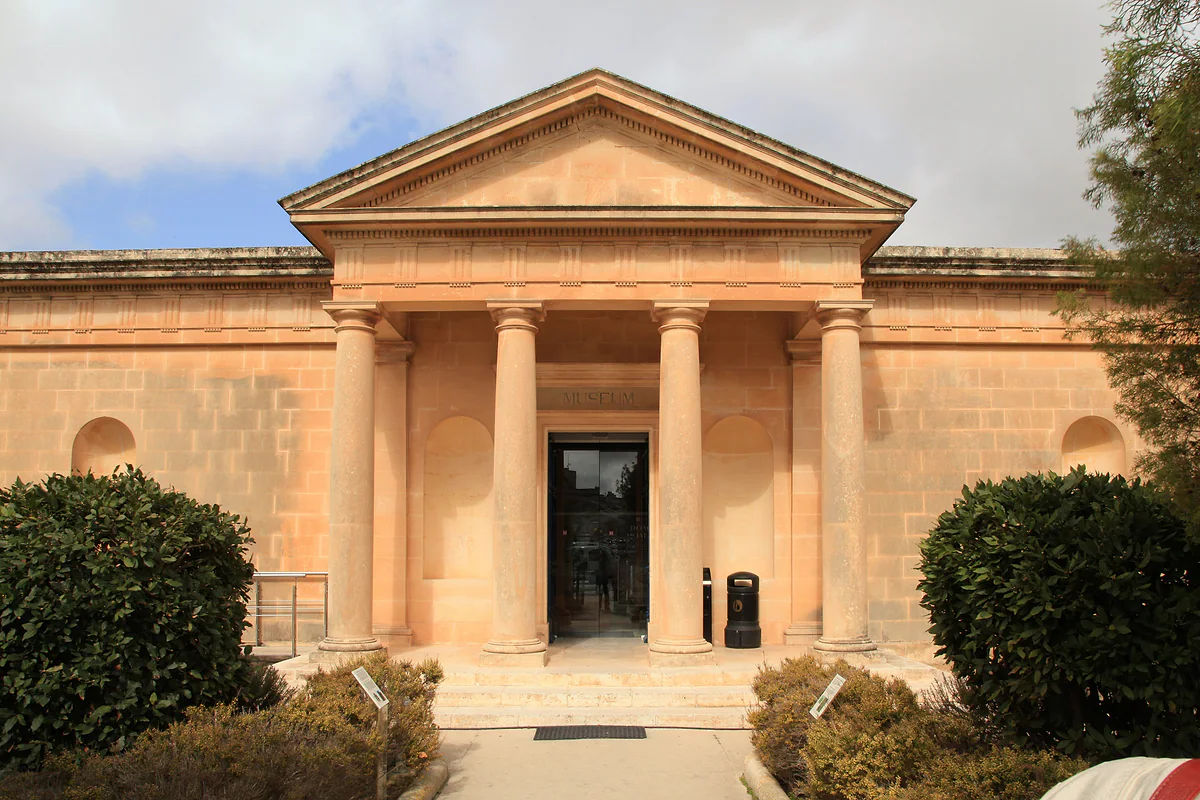
The neoclassical columned portico of the Domvs Romana museum in Rabat, between hedges, just outside the gates of Mdina.
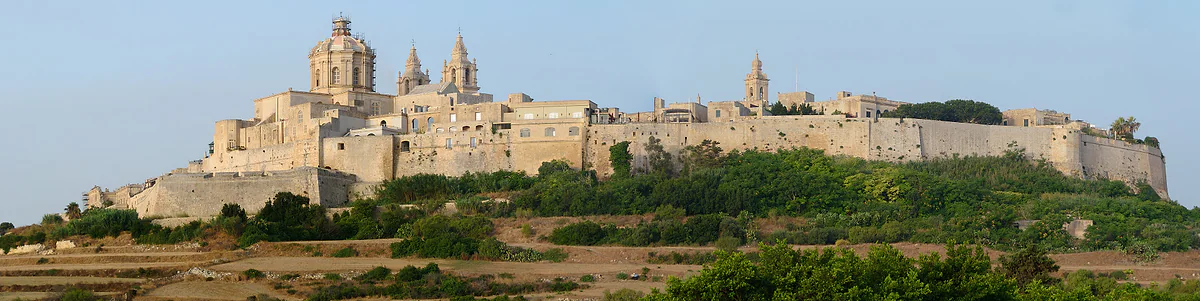
Walled Mdina on its hilltop, with the dome of St Paul's Cathedral rising above the ramparts and the Maltese fields below.
Malta's catacombs: how to visit each one
| Catacomb | Where | Access | Adult |
|---|---|---|---|
| St Paul's | Rabat | Daily; 09:00-19:00 until 31-10-2026 and 09:00-17:00 from 1-11 | €6 |
| Ta' Bistra | Mosta | Last Sunday of each month, 10:00-16:00 | €5 |
| St Augustine's | Rabat | No separate opening hours published | No data |
| Abbatija tad-Dejr | Rabat | By appointment, with Heritage Malta staff | Private tour for a fee |
| Salina | Naxxar | By appointment, with Heritage Malta staff | Private tour for a fee |
| Ta' Mintna | Mqabba | By appointment, with Heritage Malta staff | Private tour for a fee |
Hours from Heritage Malta's official opening-hours images and conditions from its site pages, checked on 28-09-2026.
Test yourself
True or false?
0/3 Pick before you peek.
-
Malta's catacombs date from the same period as the megalithic temples.
See the answer
False. The temples date from the fourth and third millennia BC. The catacombs are from the 3rd to 7th centuries AD, more than 3,000 years later.
-
Malta's catacombs contain Christian, pagan and Jewish burials.
See the answer
True. UNESCO's entry highlights that mix of rites in the Rabat catacombs, which it considers rare in the Mediterranean.
-
St Paul's Catacombs were the first site in Malta to get the European Heritage Label.
See the answer
True. Heritage Malta says so on its site page, presenting the label as a recognition no other Maltese site had received before.
- Minimum number of hypogea at St Paul's
- 30
- Year A. A. Caruana investigated St Paul's
- 1894
- St Paul's entry
- €6
- Added to the Tentative List
- 1998
0 of 279 Malta guides
Your next stamp
- St Paul's Catacombs
- Rabat (Malta)
- Mqabba
- Mosta
- Churches
- Weekend in Malta
- Naxxar
- Things to do in Malta
- Gozo
- Most beautiful places
- Comino
- Prettiest villages
- UNESCO World Heritage Sites
- Where is Malta
- The Maltese islands
- Towns and villages
- Island of Malta
- Blue Lagoon
- Fort Rinella
- Fort St Angelo
- Gardjola Gardens
- Ħal Saflieni Hypogeum
- Is Malta a country?
- Popeye Village
- Tarxien Temples
- Things to do in Gozo
- Valletta
- Esplora
- Golden Bay
- Gozo day trip
- Inquisitor's Palace
- Population
- St John's Co-Cathedral
- St Mary's Tower
- Grandmaster's Palace
- How big is Malta
- Maritime Museum
- Mellieħa Bay
- Fort St Elmo
- Language
- Malta at War Museum
- Paradise Bay
- Barrakka Gardens
- Red Tower
- Religion
- Malta government
- Saluting Battery
- MUŻA
- National Museum of Archaeology
- Underground Valletta
- Lascaris War Rooms
- Casa Rocca Piccola
- Malta in one day
- Three Cities
- Victoria
- Birgu
- Manoel Theatre
- Xagħra
- City Gate and Parliament
- Malta in three days
- Nadur
- Senglea
- Cospicua
- Malta in four days
- Qala
- Valletta Waterfront
- Għajnsielem
- Kalkara
- Malta in five days
- Malta in a week
- Paola
- Xewkija
- Sannat
- Tarxien
- Munxar
- Żabbar
- Fgura
- Fontana
- Kerċem
- Luqa
- Floriana
- Marsa
- Mellieħa
- The Citadel, Gozo
- Żebbuġ (Gozo)
- Ġgantija Temples
- Marsalforn
- Santa Luċija
- Ramla Bay
- San Lawrenz
- Xgħajra
- Xwejni salt pans
- Calypso's Cave
- Għarb
- Żejtun
- Għasri
- Gudja
- San Blas Bay
- Għaxaq
- Ħondoq Bay
- Marsaxlokk
- Kirkop
- Marsaxlokk Fish Market
- St Peter's Pool
- Marsaskala
- Qrendi
- Żurrieq
- Beaches
- Comino ferry
- EU, Schengen and the euro
- Ħaġar Qim and Mnajdra
- Mdina
- Mġarr (Gozo)
- Blue Grotto
- Diving
- Entry requirements
- Mdina Cathedral
- Xewkija Rotunda
- Birżebbuġa
- Money and payments
- Palazzo Falson
- Safi
- Shipwrecks
- Ta' Ċenċ Cliffs
- Għar Dalam
- Mdina Dungeons
- Mġarr ix-Xini
- Prices and budget
- Snorkelling
- Boat trips
- Malta on a budget
- Playmobil FunPark
- Xlendi
- Dwejra
- Gozo beaches
- History
- Siġġiewi
- Tipping
- Azure Window
- Domvs Romana
- Għar Lapsi
- Great Siege of 1565
- Plugs
- Limestone Heritage Park
- Second World War
- St Paul's Grotto
- Ta' Pinu Basilica
- Time zone
- Buskett Gardens
- Knights of Malta
- Mobile and roaming
- Wied il-Għasri
- Dingli
- Maltese cross
- Dingli Cliffs
- Flag
- Żebbuġ
- Coat of arms
- Mtarfa
- Balzan
- National anthem
- Lija
- Malta facts
- Game of Thrones
- Iklin
- Attard
- Film locations
- Forts and fortifications
- San Anton Gardens
- Ta' Qali Crafts Village
- Victoria Lines
- Megalithic temples
- Museums
- Where to eat
- Where to stay
- Hotels in Valletta
- Restaurants in Valletta
- Hotels in Sliema
- Maltese food
- Restaurants in Marsaxlokk
- Viewpoints
- Hotels in St Julian's
- Pastizzi
- Walking and hiking
- Hotels in Buġibba and Qawra
- Maltese rabbit stew
- Safety
- Hotels in Mellieħa
- Kinnie and Cisk
- Scams
- Gozo hotels
- Nightlife
- Tap water
- Boat parties
- Holiday packages
- Tourist tax
- All inclusive
- Gay Malta
- Sightseeing passes
- Apartments
- Malta with kids
- Public holidays
- How to get there
- Luxury
- Malta for couples
- Taxis and ride-hailing
- Weather
- Best time to visit
- Cycling
- English schools
- Flights
- Flights from Madrid
- Sea temperature
- Shopping and souvenirs
- Airport
- Free walking tours
- In winter
- Airport transfers
- Day trips and tours
- In summer
- Ferry from Sicily
- In January
- Cruise stop
- In February
- In March
- In April
- In May
- Getting around
- In June
- Buses
- July
- August
- Hop on hop off
- Gozo ferry
- September
- Gozo fast ferry
- October
- November
- Valletta ferries
- Car hire
- December
- Driving
- Events
- St Paul's Bay
- Village feasts
- Buġibba
- Christmas
- Easter
- Qawra
- Carnival
- Xemxija
- Fireworks festival
- Malta National Aquarium
- Isle of MTV
- St Paul's Islands
- Mosta Rotunda
- Palazzo Parisio
- Għargħur
- Mġarr (Malta)
- Sliema
- Ta' Ħaġrat and Skorba Temples
- Għajn Tuffieħa Bay
- Tigné Point
- Ġnejna Bay
- St Julian's
- Paceville
- St George's Bay
- Gżira
- Msida
- Ta' Xbiex
- Pietà
- Pembroke
- Swieqi
- San Ġwann
- Birkirkara
- Ħamrun
- Santa Venera
- Qormi
Frequently asked questions
Which catacombs can you visit in Malta?
On a timetable, St Paul's in Rabat, open daily, and Ta' Bistra in Mosta, on the last Sunday of each month. Abbatija tad-Dejr, Salina and Ta' Mintna by appointment with Heritage Malta only.
How much are St Paul's Catacombs?
€6 for adults, according to Heritage Malta. They're also on the €60 Multisite Pass, and a visit takes one to two hours.
How old are the catacombs in Malta?
UNESCO's entry dates them from the mid-3rd to the early 7th century, and explains that they grew out of the rock-cut tombs of the Phoenician and Hellenistic periods.
Why are there so many catacombs in Rabat?
Because most were dug on the outskirts of Melite, the Roman town that's now Mdina and Rabat and was then the islands' administrative capital, according to UNESCO. Five centuries of burials were packed into a small area.
Is the Hypogeum a catacomb?
No. The Ħal Saflieni Hypogeum is a prehistoric underground burial site, in use from around 4000 BC, thousands of years before any Roman or Byzantine catacomb.
Are Malta's catacombs a World Heritage Site?
No. The Maltese Catacomb Complexes have been on Malta's Tentative List since 1998, but UNESCO hasn't inscribed them.
By
Tourism graduate with a master’s in Tourism Management and Planning from the University of Málaga, who has travelled across Europe. He writes every guide from official sources and his own judgement.
Published on . Facts checked on .
Sources
Photos: Diego Delso (CC BY-SA 4.0); Frank Vincentz (CC BY-SA 3.0); Tranceliner (CC BY-SA 4.0), via Wikimedia Commons.