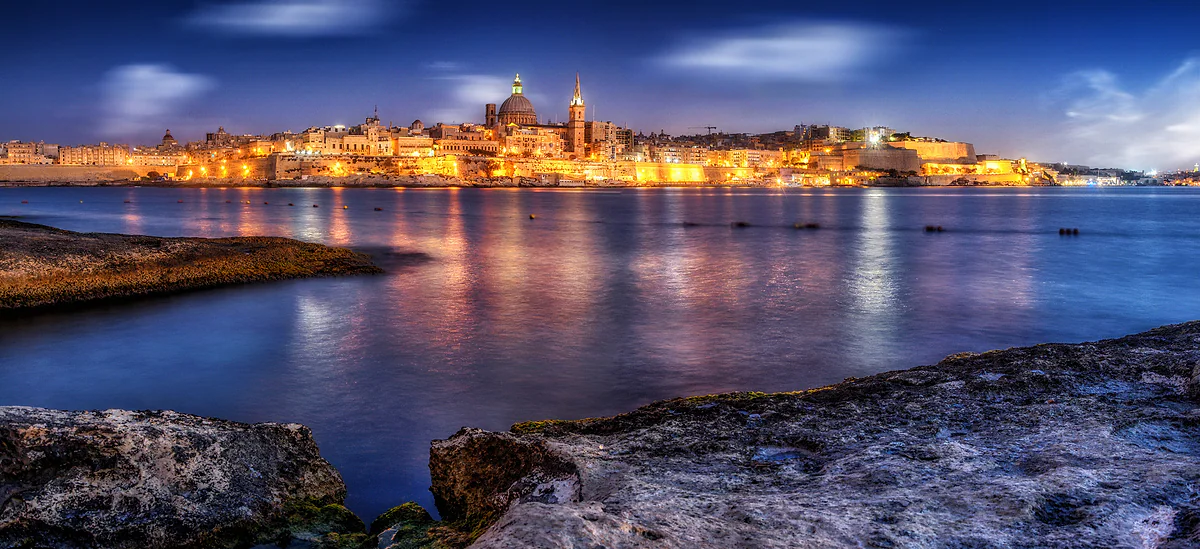
19 Baroque warehouses from 1752
Valletta Waterfront, Pinto's warehouses turned into a promenade
Valletta Waterfront is the Grand Harbour promenade below Valletta's bastions, right by the cruise port. It's made up of the 19 warehouses Grand Master Manuel Pinto da Fonseca had built in 1752 to designs by Andrea Belli, now home to restaurants, shops and leisure behind their coloured doors along roughly 275 metres.
In 30 seconds
Full read: 3 min
- Valletta Waterfront is the Grand Harbour promenade beside Valletta's cruise port.
- It's 19 Baroque warehouses of 1752, the Pinto Stores, designed by Andrea Belli.
- There's no admission; restaurants, shops and leisure line roughly 275 metres.
- Parking is on the quays, at Atrium, Wedge or MCP, and free on nearby streets.
I'd come at the end of the day for dinner or a drink with the Grand Harbour in front of me, rather than at midday. For a cruise stop it's handy, but I wouldn't mistake it for seeing Valletta, which is up the hill.

Before you go
What I would keep in mind
-
01 Most beautiful
Pinto's coloured doors
The Baroque warehouses with their painted doors are the Waterfront's calling card. For me the best thing is to walk them end to end without hurrying, looking at the façade rather than the menus.
-
02 Getting there
Right by the cruise port
The Waterfront sits next to the cruise terminal and draws ship passengers and island-based visitors alike. The sights that matter are up in Valletta itself.
Malta cruise port -
03 My tip
Free street parking nearby
The Waterfront's website points to parking on the quays, in the Atrium and Wedge car parks and at MCP, plus free on-street spaces in the surrounding area.
car hire in Malta -
04 Getting there
Shared e-bikes on the quay
Malta Public Transport has a tallinja Bike station at the Waterfront, handy for getting along the harbour front without tackling the hills.
cycling in Malta
What I would book
My ranking, scored
What I'd look at along the Waterfront
My own scores out of 10, on what each tells you about the harbour's past and how pleasant it is to see. Everything is free apart from eating and drinking.
0 of 4 seen
-
The Pinto Stores façade
Nineteen Baroque warehouses by Andrea Belli, with a bronze bust of the Grand Master above the central doorway.
8.6 out of 10
-
The Chapel of the Flight into Egypt
A small chapel of 1752, part of Belli's same design, built for the men who worked in the warehouses.
8.0 out of 10
-
The Child Migrants' Memorial
It remembers the 310 Maltese children who left for Australia between 1950 and 1965. Unveiled in 2008.
7.8 out of 10
-
The Magazino Hall
A 1727 store for street-lamp oil that later became part of the island's first power station.
7.0 out of 10
Valletta Waterfront is the part of Malta closest to hand if you arrive by cruise ship, since it sits right beside the port. It’s a row of Baroque warehouses with brightly painted doors along the Grand Harbour, with restaurants and shops inside. I like it, with one clear caveat. This isn’t Valletta. The city is up the hill behind the bastions, and so is the reason to come.
Grand Master Pinto’s warehouses
The Waterfront’s own website tells the story. In 1752 Grand Master Manuel Pinto da Fonseca had 19 spacious warehouses built, designed by Andrea Belli, to serve the busy harbour. The Knights and merchants used them for storage, and they’re still called the Pinto Stores. They sat alongside the older Forni Stores, among the earliest surviving harbour warehouses in Malta, with roots in the 17th and 18th centuries.
A large bronze bust of the Grand Master was placed above the central warehouse’s doorway. When it was unveiled on the evening of 10 August 1752, the whole quay was lit with torches for a water carnival, complete with a full orchestra on a barge. I love that detail; it says everything about Pinto’s taste for ceremony. For the wider background, see the Knights of Malta.
What’s worth a look
The Chapel of the Flight into Egypt went up in 1752 with the warehouses, to Belli’s same Baroque design, for the men who worked in the Pinto Stores. It’s small, with a narrow façade that still packs in every feature of a much grander church.
Below the bastions is the Magazino Hall, a store built in 1727 where oil for the street lamps was kept in vats. When gas lamps reached the harbour in the mid-19th century, the building became part of the island’s first power station.
And there’s one spot I find the most human on the whole promenade. The Child Migrants’ Memorial, unveiled in 2008, remembers the 310 Maltese children, mostly boys, who travelled to Australia between 1950 and 1965 in search of a better life.
On the water itself is Laguna Marina, a small boutique marina with floating pontoons for boats up to 15 metres, which claims to be the only one in Malta offering an all-inclusive berthing service. It’s not something most visitors will need, but if you see motor yachts tied up along the promenade, that’s where they belong.
Eating, strolling and parking
The Waterfront has Italian, Maltese, Asian and Japanese restaurants, one of them there since 2004. I won’t single one out, because I’ve no source to judge the cooking by, but I will vouch for the setting, which the site itself says has some of the islands’ most impressive views. My food picks for the capital are on the best restaurants in Valletta.
If you’re driving, the site lists parking on the quays, in the Atrium and Wedge car parks and at MCP, plus free on-street spaces nearby. Malta Public Transport also has a tallinja Bike station here, charging €3 for the opening half hour if you’ve no travel card.
Is it worth it on a cruise stop?
For a walk or a meal, yes, because it’s on your doorstep. But if you only have a few hours, I wouldn’t spend them here. I’d head up into the city for St John’s, the Grandmaster’s Palace and Upper Barrakka, and save the Waterfront for the way back, when there’s only time left for a bite. How to plan the stop is on Malta as a cruise stop, and the full day on Valletta, Malta’s capital.
If you’re staying on the island, my advice changes. Come late in the day and eat with the harbour spread out in front of you, which to my mind is when it’s at its very best.
It’s worth checking the listings before you go. The Waterfront’s website advertises free family activities on the promenade through the year, a jazz series, an Oktoberfest and Halloween and Christmas events. Not every date is published far in advance, so I’d look the same week. With children, one of those free afternoons can easily be the best part of the day, and the traffic-free promenade is easy going with a pushchair.
Valletta Waterfront through the years
| Year | What |
|---|---|
| 1727 | The street-lamp oil store, now the Magazino Hall, is built |
| 1752 | Grand Master Pinto has Andrea Belli's 19 warehouses built |
| 10 August 1752 | Pinto's bust is unveiled, with the quay lit by torches |
| 1752 | The Chapel of the Flight into Egypt is built |
| 2008 | The Child Migrants' Memorial is inaugurated |
From the Valletta Waterfront's own website. There's no admission charge; you pay only for what you eat, drink or buy.
Test yourself
True or false?
0/3 Pick before you peek.
-
The Waterfront warehouses were purpose-built for the cruise terminal.
See the answer
False. They date from 1752, commissioned by Grand Master Pinto and designed by Andrea Belli.
-
There's an 18th-century chapel on the Waterfront.
See the answer
True. The Chapel of the Flight into Egypt was built in 1752 alongside the warehouses, for their workers.
-
The Waterfront memorial honours children who emigrated to Australia.
See the answer
True. It remembers 310 Maltese children, mostly boys, who left between 1950 and 1965.
- Year the Pinto warehouses were built
- 1752
- Baroque warehouses along the promenade
- 19
- Length of the promenade
- 275 m
- Child migrants to Australia honoured by the memorial
- 310
Map
Where Valletta Waterfront is
Gozo lies to the north-west, across the channel the ferry crosses from Ċirkewwa, with Comino between the two islands. Every number opens its guide.
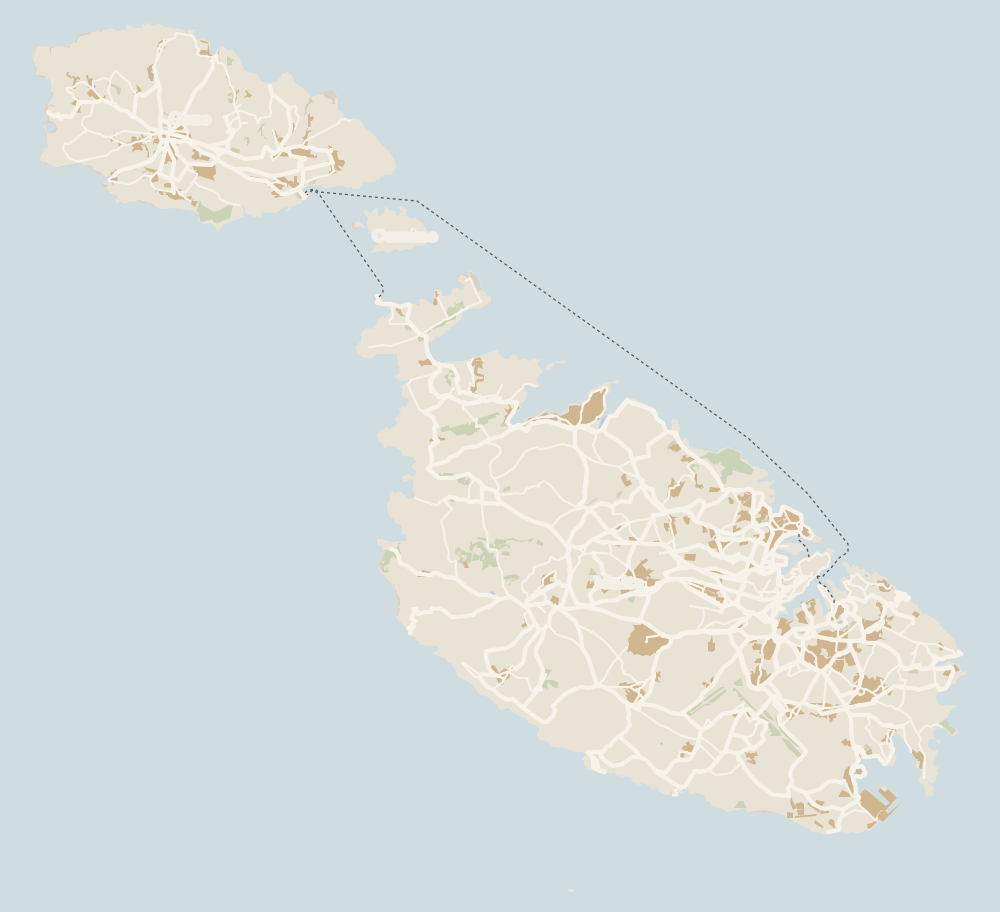 1Valletta 2St John's Co-Cathedral 3Grandmaster's Palace 4Fort St Elmo 5Barrakka Gardens 6Saluting Battery 7MUŻA 8National Museum of Archaeology 9Underground Valletta 10Lascaris War Rooms 11Casa Rocca Piccola 12Manoel Theatre 13City Gate and Parliament 14Valletta Waterfront
 Map data © OpenStreetMap contributors (ODbL)
- 1VallettaFounded 1566, on the UNESCO list since 1980
- 2St John's Co-CathedralFinished in 1577, closed on Sundays
- 3Grandmaster's PalaceHeritage Malta's most visited site
- 4Fort St ElmoFell on 23 June 1565
- 5Barrakka GardensGun salute at 12:00 and 16:00
- 6Saluting BatteryTwo firings a day, Monday to Saturday
- 7MUŻAOpened in late 2018
- 8National Museum of ArchaeologyNeolithic to Phoenician for €5
- 9Underground VallettaThree days a week, booking essential
- 10Lascaris War RoomsEisenhower's advance HQ in 1943
- 11Casa Rocca PiccolaGuided tours on the hour, 10:00 to 16:00
- 12Manoel TheatreOpened on 19 January 1732
- 13City Gate and ParliamentThe city's fifth gate, by Renzo Piano
- 14Valletta Waterfront19 Baroque warehouses from 1752
0 of 279 Malta guides
Your next stamp
- Cruise stop
- Barrakka Gardens
- Boat trips
- Three Cities
- City Gate and Parliament
- Gardjola Gardens
- Viewpoints
- MUŻA
- Things to do in Malta
- Gozo
- Most beautiful places
- Comino
- Prettiest villages
- UNESCO World Heritage Sites
- Where is Malta
- The Maltese islands
- Towns and villages
- Island of Malta
- Blue Lagoon
- Fort Rinella
- Fort St Angelo
- Ħal Saflieni Hypogeum
- Is Malta a country?
- Popeye Village
- Tarxien Temples
- Things to do in Gozo
- Valletta
- Esplora
- Golden Bay
- Gozo day trip
- Inquisitor's Palace
- Population
- St John's Co-Cathedral
- St Mary's Tower
- Grandmaster's Palace
- How big is Malta
- Maritime Museum
- Mellieħa Bay
- Fort St Elmo
- Language
- Malta at War Museum
- Paradise Bay
- Red Tower
- Religion
- Malta government
- Saluting Battery
- National Museum of Archaeology
- Underground Valletta
- Lascaris War Rooms
- Casa Rocca Piccola
- Malta in one day
- Victoria
- Birgu
- Manoel Theatre
- Weekend in Malta
- Xagħra
- Malta in three days
- Nadur
- Senglea
- Cospicua
- Malta in four days
- Qala
- Għajnsielem
- Kalkara
- Malta in five days
- Malta in a week
- Paola
- Xewkija
- Sannat
- Tarxien
- Munxar
- Żabbar
- Fgura
- Fontana
- Kerċem
- Luqa
- Floriana
- Marsa
- Mellieħa
- The Citadel, Gozo
- Żebbuġ (Gozo)
- Ġgantija Temples
- Marsalforn
- Santa Luċija
- Ramla Bay
- San Lawrenz
- Xgħajra
- Xwejni salt pans
- Calypso's Cave
- Għarb
- Żejtun
- Għasri
- Gudja
- San Blas Bay
- Għaxaq
- Ħondoq Bay
- Marsaxlokk
- Kirkop
- Marsaxlokk Fish Market
- Mqabba
- St Peter's Pool
- Marsaskala
- Qrendi
- Żurrieq
- Beaches
- Comino ferry
- EU, Schengen and the euro
- Ħaġar Qim and Mnajdra
- Mdina
- Mġarr (Gozo)
- Blue Grotto
- Diving
- Entry requirements
- Mdina Cathedral
- Xewkija Rotunda
- Birżebbuġa
- Money and payments
- Palazzo Falson
- Safi
- Shipwrecks
- Ta' Ċenċ Cliffs
- Għar Dalam
- Mdina Dungeons
- Mġarr ix-Xini
- Prices and budget
- Snorkelling
- Malta on a budget
- Playmobil FunPark
- Rabat (Malta)
- Xlendi
- Dwejra
- Gozo beaches
- History
- Siġġiewi
- St Paul's Catacombs
- Tipping
- Azure Window
- Domvs Romana
- Għar Lapsi
- Great Siege of 1565
- Plugs
- Limestone Heritage Park
- Second World War
- St Paul's Grotto
- Ta' Pinu Basilica
- Time zone
- Buskett Gardens
- Knights of Malta
- Mobile and roaming
- Wied il-Għasri
- Dingli
- Maltese cross
- Dingli Cliffs
- Flag
- Żebbuġ
- Coat of arms
- Mtarfa
- Balzan
- National anthem
- Lija
- Malta facts
- Game of Thrones
- Iklin
- Attard
- Film locations
- Forts and fortifications
- San Anton Gardens
- Ta' Qali Crafts Village
- Victoria Lines
- Megalithic temples
- Catacombs
- Museums
- Where to eat
- Where to stay
- Churches
- Hotels in Valletta
- Restaurants in Valletta
- Hotels in Sliema
- Maltese food
- Restaurants in Marsaxlokk
- Hotels in St Julian's
- Pastizzi
- Walking and hiking
- Hotels in Buġibba and Qawra
- Maltese rabbit stew
- Safety
- Hotels in Mellieħa
- Kinnie and Cisk
- Scams
- Gozo hotels
- Nightlife
- Tap water
- Boat parties
- Holiday packages
- Tourist tax
- All inclusive
- Gay Malta
- Sightseeing passes
- Apartments
- Malta with kids
- Public holidays
- How to get there
- Luxury
- Malta for couples
- Taxis and ride-hailing
- Weather
- Best time to visit
- Cycling
- English schools
- Flights
- Flights from Madrid
- Sea temperature
- Shopping and souvenirs
- Airport
- Free walking tours
- In winter
- Airport transfers
- Day trips and tours
- In summer
- Ferry from Sicily
- In January
- In February
- In March
- In April
- In May
- Getting around
- In June
- Buses
- July
- August
- Hop on hop off
- Gozo ferry
- September
- Gozo fast ferry
- October
- November
- Valletta ferries
- Car hire
- December
- Driving
- Events
- St Paul's Bay
- Village feasts
- Buġibba
- Christmas
- Easter
- Qawra
- Carnival
- Xemxija
- Fireworks festival
- Malta National Aquarium
- Isle of MTV
- St Paul's Islands
- Mosta
- Mosta Rotunda
- Naxxar
- Palazzo Parisio
- Għargħur
- Mġarr (Malta)
- Sliema
- Ta' Ħaġrat and Skorba Temples
- Għajn Tuffieħa Bay
- Tigné Point
- Ġnejna Bay
- St Julian's
- Paceville
- St George's Bay
- Gżira
- Msida
- Ta' Xbiex
- Pietà
- Pembroke
- Swieqi
- San Ġwann
- Birkirkara
- Ħamrun
- Santa Venera
- Qormi
Frequently asked questions
What is Valletta Waterfront?
The Grand Harbour promenade next to Valletta's cruise port, set in the 19 Baroque warehouses Grand Master Pinto had built in 1752. Today it gathers restaurants, shops and leisure activities.
Is Valletta Waterfront free?
Yes, there's no admission. It's an open promenade of about 275 metres; you only pay for food, drink or shopping.
Where can I park at Valletta Waterfront?
The site lists parking on the quays, in the Atrium and Wedge car parks and at the nearby MCP, plus free spaces on the surrounding streets.
Is Valletta Waterfront worth it on a cruise stop?
For a stroll or lunch, yes, because it's right by the ship. But what makes the stop worthwhile is up in Valletta, with St John's and the Grandmaster's Palace.
Who built the Valletta Waterfront warehouses?
Grand Master Manuel Pinto da Fonseca, in 1752, to designs by Andrea Belli. They're still known as the Pinto Stores and served as storehouses for the Knights and merchants.
By
Tourism graduate with a master’s in Tourism Management and Planning from the University of Málaga, who has travelled across Europe. He writes every guide from official sources and his own judgement.
Published on . Facts checked on .
Photos: Sgrixti (CC BY-SA 4.0), via Wikimedia Commons.