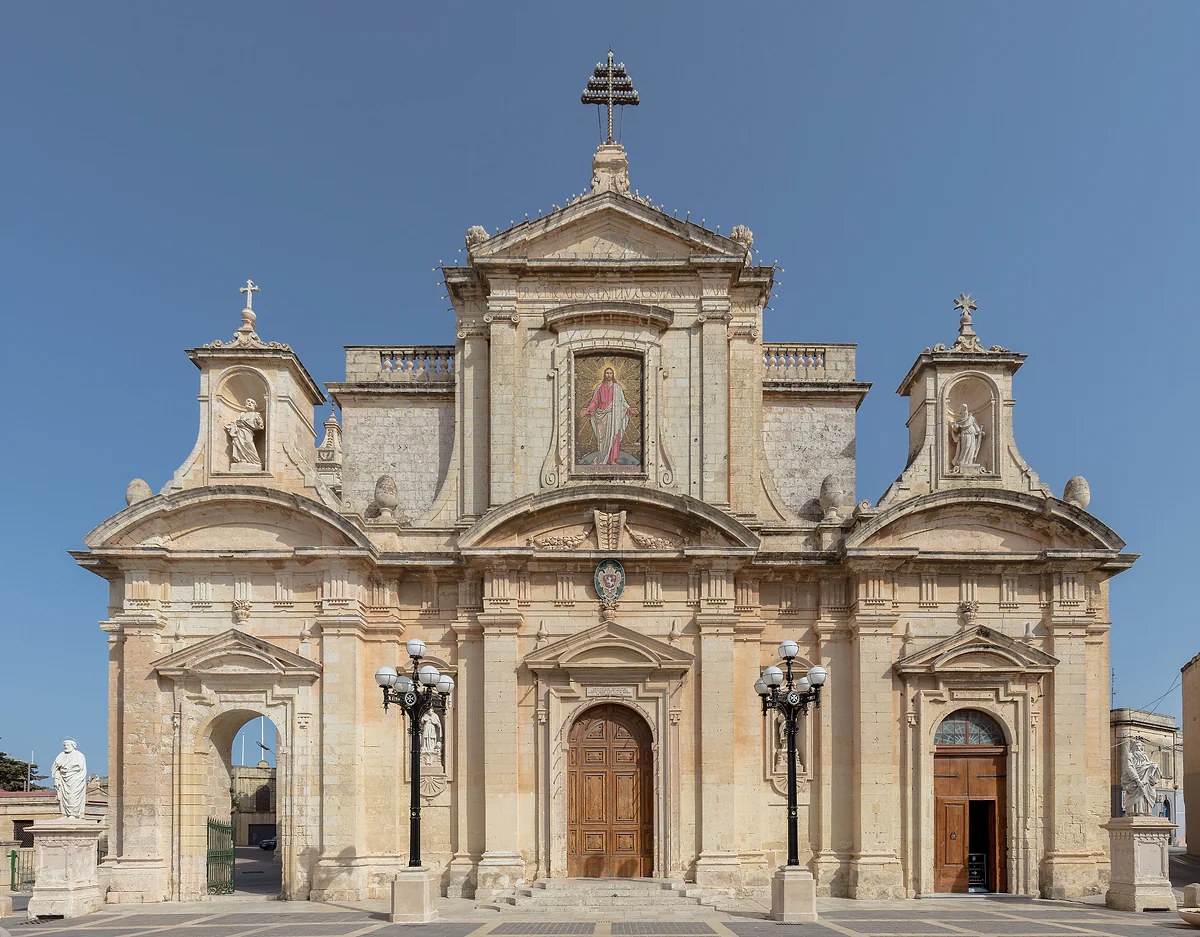
Rabat, island of Malta
St Paul's Grotto and the Wignacourt Museum, beneath Rabat's parish church
St Paul's Grotto in Rabat is the cave where, according to tradition, the apostle spent his three months on Malta after being shipwrecked in AD 60. You visit it with the Wignacourt Museum, once home to the Order's chaplains, which also has catacombs and Second World War shelters. Tickets are €6 and the museum opens daily, 09:30 to 17:00.
In 30 seconds
Full read: 3 min
- St Paul's Grotto is the Rabat cave where tradition says the apostle lived in AD 60.
- You visit it with the Wignacourt Museum, once the Order's chaplains' residence.
- The visit includes catacombs and Second World War shelters with around 50 rooms.
- Tickets €6; open daily 09:30 to 17:00, last entry 16:00.
On its own the grotto doesn't say much to me, it's a cave with a statue. What makes the €6 worthwhile is everything around it, the wartime shelters with their numbered rooms and the picture gallery upstairs, so I'd give it a good hour.

Before you go
What I would keep in mind
-
01 Most beautiful
The 1940s shelters
Beneath the museum are air-raid shelters with around 50 rooms, where about 350 people took cover. Each family paid to have its own room dug, and the numbers are still on the walls.
-
02 My tip
Last entry at 16:00
The museum closes at 17:00, but its website gives last admission at 16:00. If you're coming on from the catacombs in the afternoon, don't cut it fine.
-
03 To save money
Only pay for the audio guide if you'll use it
The audio guide is €2 extra. I'd take it for the shelters and the gallery; for the grotto itself, knowing the tradition is enough.
-
04 Getting there
Next door to the catacombs
Heritage Malta explains that St Paul's Catacombs and the grotto were part of the same cemetery outside Roman Melite. They fit easily into the same morning.
St Paul's Catacombs
What I would book
St Paul’s Grotto is where, by Maltese tradition, Christianity on the island begins. It’s a cave beneath Rabat’s parish church, visited through the Wignacourt Museum, which turns out to be far more interesting than its name suggests. I’d come for the grotto and stay for everything else.
The apostle’s cave
The Acts of the Apostles tell how St Paul was shipwrecked on Malta on his way to trial in Rome. The Wignacourt Museum records the tradition that, during his three months on the island in AD 60, he lived in this cave and preached from it. That made the grotto a place of worship and pilgrimage early on. The museum lists some of its better-known visitors, among them John Paul II, Benedict XVI, Fabio Chigi, later Pope Alexander VII, and Admiral Lord Nelson in 1800.
What you see today is a cave with a statue of St Paul donated by Grand Master Pinto in 1748 and a silver vessel made in 1960 for the 1,900th anniversary of the shipwreck. My honest view is that the grotto on its own says little unless you arrive with faith or with the story already read, which is why I’m telling you before you go down.
A Spanish hermit and the Knights
The grotto’s later history has a Spanish lead. According to the museum, the hermit Juan Benegas de Córdoba arrived in 1600, bought the land above it and used it as a base to spread devotion to the saint. In 1617 he handed it to the Order of St John, which saw in it both a religious and a political asset. Grand Master Alof de Wignacourt then founded a college of chaplains to look after the grotto day and night.
That same year, 1617, the Sanctuary of St Publius was added to St Paul’s Church, dedicated to the Roman governor who, by tradition, became Malta’s first bishop. The museum tells a story I love. The two churches share a façade, and Buonamici, its architect, made the two doorways equally grand to avoid stoking the rivalry between the Church and the Order, so most people assume it’s a single building.
The Wignacourt Museum, from the bottom up
The museum building, completed in 1749, was the residence of the Knights’ chaplains. It’s on three levels, and I’d work from the bottom up.
Underground is a warren of Punic, Roman and Christian hypogea, part of the same cemetery as St Paul’s Catacombs, and a set of Second World War shelters with around fifty rooms, where about 350 people sheltered. The museum explains that the government dug the main corridors and each family paid to have its own room cut, which is why they’re numbered. For me it’s the best part of the visit, because it makes the Maltese experience of the war very real. For the wider story, see Malta in the Second World War.
On the ground floor is the garden, with the old refectory and an oven that, according to the museum, turned out more than 2,000 loaves a day for the people of Rabat during the war. On the first floor is the picture gallery, with works by Mattia Preti, Antoine Favray and Francesco Zahra, silver from the 17th to the 19th centuries, a wooden portable altar used for Mass aboard the Order’s galleys, and a Baroque chapel.
Tickets and opening hours
Adults pay €6, over-61s and students aged 12 and over, and €3.50 for children aged 7 to 11; under-7s go free. The audio guide is €2 extra. The museum opens every day from 09:30 to 17:00, with last admission at 16:00. Its website isn’t dated, so I’d confirm prices and times on arrival. The museum describes itself as a Quality Assured Visitor Attraction, and among the more curious exhibits it lists a replica of the Turin Shroud and Cosmana Navarra’s death mask, the noblewoman who paid for St Paul’s Church.
How to combine it
It’s on Parish Square, off College Street, in the middle of Rabat. The museum and the catacombs are close neighbours, part of the same ancient cemetery, which is handy if you’re doing both on foot. I’d do the catacombs at opening, then the grotto and museum, and Mdina in the afternoon, once the coach parties have gone.
Wignacourt Museum tickets
| Ticket | Price |
|---|---|
| Adult | €6 |
| Senior (61+) | €4.50 |
| Student 12+ | €4.50 |
| Child 7 to 11 | €3.50 |
| Aged 6 and under | Free |
| Audio guide | €2 |
Prices and hours from the museum's website, which isn't dated, so confirm on arrival. Audio guides in English, Maltese, Italian, French, German, Spanish and Russian.
What the visit covers
| Level | What's there |
|---|---|
| Underground | St Paul's Grotto, Punic, Roman and Christian hypogea, Second World War shelters |
| Ground floor | Garden, the old refectory and the wartime bread oven |
| First floor | Picture gallery, silver, the galley altar and a Baroque chapel |
As described by the museum itself.
Test yourself
True or false?
0/4 Pick before you peek.
-
Tradition says St Paul lived in this grotto for three months.
See the answer
True. The Wignacourt Museum records the tradition that after his shipwreck in AD 60 the apostle stayed in the cave for the three months he spent on Malta.
-
A tunnel links the grotto to St Paul's Catacombs.
See the answer
False. Heritage Malta calls that connection a myth, although both were part of the same cemetery outside the Roman town.
-
Nelson visited the grotto.
See the answer
True. The museum lists Admiral Lord Nelson, in 1800, among its famous pilgrims, alongside John Paul II and Benedict XVI.
-
St Paul's parish church and the Sanctuary of St Publius each have their own façade.
See the answer
False. They share one. The museum says Francesco Buonamici gave both doors equal prominence.
- St Paul's shipwreck, by tradition
- AD 60
- Museum building completed
- 1749
- Rooms in the wartime shelters
- 50
- Adult ticket
- €6
Map
Where St Paul's Grotto is
Gozo lies to the north-west, across the channel the ferry crosses from Ċirkewwa, with Comino between the two islands. Every number opens its guide.
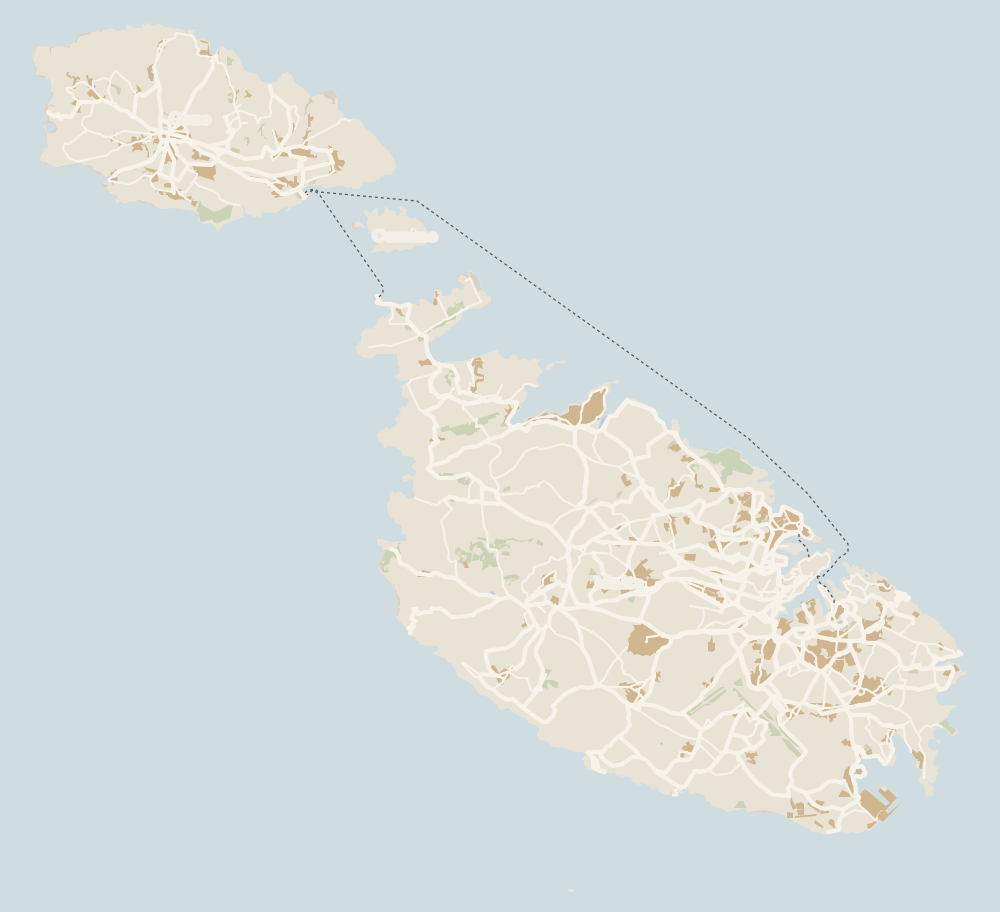 1Rabat (Malta) 2St Paul's Catacombs 3Domvs Romana 4St Paul's Grotto
 Map data © OpenStreetMap contributors (ODbL)
0 of 279 Malta guides
Your next stamp
- Rabat (Malta)
- St Paul's Catacombs
- Catacombs
- St Paul's Islands
- Domvs Romana
- Mdina Cathedral
- Mosta Rotunda
- Things to do in Malta
- Gozo
- Most beautiful places
- Comino
- Prettiest villages
- UNESCO World Heritage Sites
- Where is Malta
- The Maltese islands
- Towns and villages
- Island of Malta
- Blue Lagoon
- Fort Rinella
- Fort St Angelo
- Gardjola Gardens
- Ħal Saflieni Hypogeum
- Is Malta a country?
- Popeye Village
- Tarxien Temples
- Things to do in Gozo
- Valletta
- Esplora
- Golden Bay
- Gozo day trip
- Inquisitor's Palace
- Population
- St John's Co-Cathedral
- St Mary's Tower
- Grandmaster's Palace
- How big is Malta
- Maritime Museum
- Mellieħa Bay
- Fort St Elmo
- Language
- Malta at War Museum
- Paradise Bay
- Barrakka Gardens
- Red Tower
- Religion
- Malta government
- Saluting Battery
- MUŻA
- National Museum of Archaeology
- Underground Valletta
- Lascaris War Rooms
- Casa Rocca Piccola
- Malta in one day
- Three Cities
- Victoria
- Birgu
- Manoel Theatre
- Weekend in Malta
- Xagħra
- City Gate and Parliament
- Malta in three days
- Nadur
- Senglea
- Cospicua
- Malta in four days
- Qala
- Valletta Waterfront
- Għajnsielem
- Kalkara
- Malta in five days
- Malta in a week
- Paola
- Xewkija
- Sannat
- Tarxien
- Munxar
- Żabbar
- Fgura
- Fontana
- Kerċem
- Luqa
- Floriana
- Marsa
- Mellieħa
- The Citadel, Gozo
- Żebbuġ (Gozo)
- Ġgantija Temples
- Marsalforn
- Santa Luċija
- Ramla Bay
- San Lawrenz
- Xgħajra
- Xwejni salt pans
- Calypso's Cave
- Għarb
- Żejtun
- Għasri
- Gudja
- San Blas Bay
- Għaxaq
- Ħondoq Bay
- Marsaxlokk
- Kirkop
- Marsaxlokk Fish Market
- Mqabba
- St Peter's Pool
- Marsaskala
- Qrendi
- Żurrieq
- Beaches
- Comino ferry
- EU, Schengen and the euro
- Ħaġar Qim and Mnajdra
- Mdina
- Mġarr (Gozo)
- Blue Grotto
- Diving
- Entry requirements
- Xewkija Rotunda
- Birżebbuġa
- Money and payments
- Palazzo Falson
- Safi
- Shipwrecks
- Ta' Ċenċ Cliffs
- Għar Dalam
- Mdina Dungeons
- Mġarr ix-Xini
- Prices and budget
- Snorkelling
- Boat trips
- Malta on a budget
- Playmobil FunPark
- Xlendi
- Dwejra
- Gozo beaches
- History
- Siġġiewi
- Tipping
- Azure Window
- Għar Lapsi
- Great Siege of 1565
- Plugs
- Limestone Heritage Park
- Second World War
- Ta' Pinu Basilica
- Time zone
- Buskett Gardens
- Knights of Malta
- Mobile and roaming
- Wied il-Għasri
- Dingli
- Maltese cross
- Dingli Cliffs
- Flag
- Żebbuġ
- Coat of arms
- Mtarfa
- Balzan
- National anthem
- Lija
- Malta facts
- Game of Thrones
- Iklin
- Attard
- Film locations
- Forts and fortifications
- San Anton Gardens
- Ta' Qali Crafts Village
- Victoria Lines
- Megalithic temples
- Museums
- Where to eat
- Where to stay
- Churches
- Hotels in Valletta
- Restaurants in Valletta
- Hotels in Sliema
- Maltese food
- Restaurants in Marsaxlokk
- Viewpoints
- Hotels in St Julian's
- Pastizzi
- Walking and hiking
- Hotels in Buġibba and Qawra
- Maltese rabbit stew
- Safety
- Hotels in Mellieħa
- Kinnie and Cisk
- Scams
- Gozo hotels
- Nightlife
- Tap water
- Boat parties
- Holiday packages
- Tourist tax
- All inclusive
- Gay Malta
- Sightseeing passes
- Apartments
- Malta with kids
- Public holidays
- How to get there
- Luxury
- Malta for couples
- Taxis and ride-hailing
- Weather
- Best time to visit
- Cycling
- English schools
- Flights
- Flights from Madrid
- Sea temperature
- Shopping and souvenirs
- Airport
- Free walking tours
- In winter
- Airport transfers
- Day trips and tours
- In summer
- Ferry from Sicily
- In January
- Cruise stop
- In February
- In March
- In April
- In May
- Getting around
- In June
- Buses
- July
- August
- Hop on hop off
- Gozo ferry
- September
- Gozo fast ferry
- October
- November
- Valletta ferries
- Car hire
- December
- Driving
- Events
- St Paul's Bay
- Village feasts
- Buġibba
- Christmas
- Easter
- Qawra
- Carnival
- Xemxija
- Fireworks festival
- Malta National Aquarium
- Isle of MTV
- Mosta
- Naxxar
- Palazzo Parisio
- Għargħur
- Mġarr (Malta)
- Sliema
- Ta' Ħaġrat and Skorba Temples
- Għajn Tuffieħa Bay
- Tigné Point
- Ġnejna Bay
- St Julian's
- Paceville
- St George's Bay
- Gżira
- Msida
- Ta' Xbiex
- Pietà
- Pembroke
- Swieqi
- San Ġwann
- Birkirkara
- Ħamrun
- Santa Venera
- Qormi
Frequently asked questions
What is St Paul's Grotto in Rabat?
The cave where, by tradition, St Paul lived during the three months he spent on Malta after his shipwreck in AD 60. It lies beneath St Paul's Church and is linked to the Wignacourt Museum.
How much does it cost to visit St Paul's Grotto?
Entry to the Wignacourt Museum, which covers the grotto and the underground areas, is €6 for adults and €4.50 for seniors and students. Children aged 7 to 11 pay €3.50.
What are the Wignacourt Museum's opening hours?
Every day from 09:30 to 17:00, with last admission at 16:00, according to its website.
Which popes have visited the grotto?
The museum mentions John Paul II and Benedict XVI, and Fabio Chigi, who later became Pope Alexander VII.
Is it the same as St Paul's Catacombs?
No. The catacombs are run by Heritage Malta and form a large underground cemetery. The grotto and the Wignacourt Museum are a separate visit nearby, with their own ticket.
Who was Wignacourt?
Alof de Wignacourt was Grand Master of the Order of St John from 1601 to 1622. He promoted devotion to St Paul and founded the chaplains' college that is now the museum.
By
Tourism graduate with a master’s in Tourism Management and Planning from the University of Málaga, who has travelled across Europe. He writes every guide from official sources and his own judgement.
Published on . Facts checked on .
Sources
Photos: Diego Delso (CC BY-SA 4.0), via Wikimedia Commons.