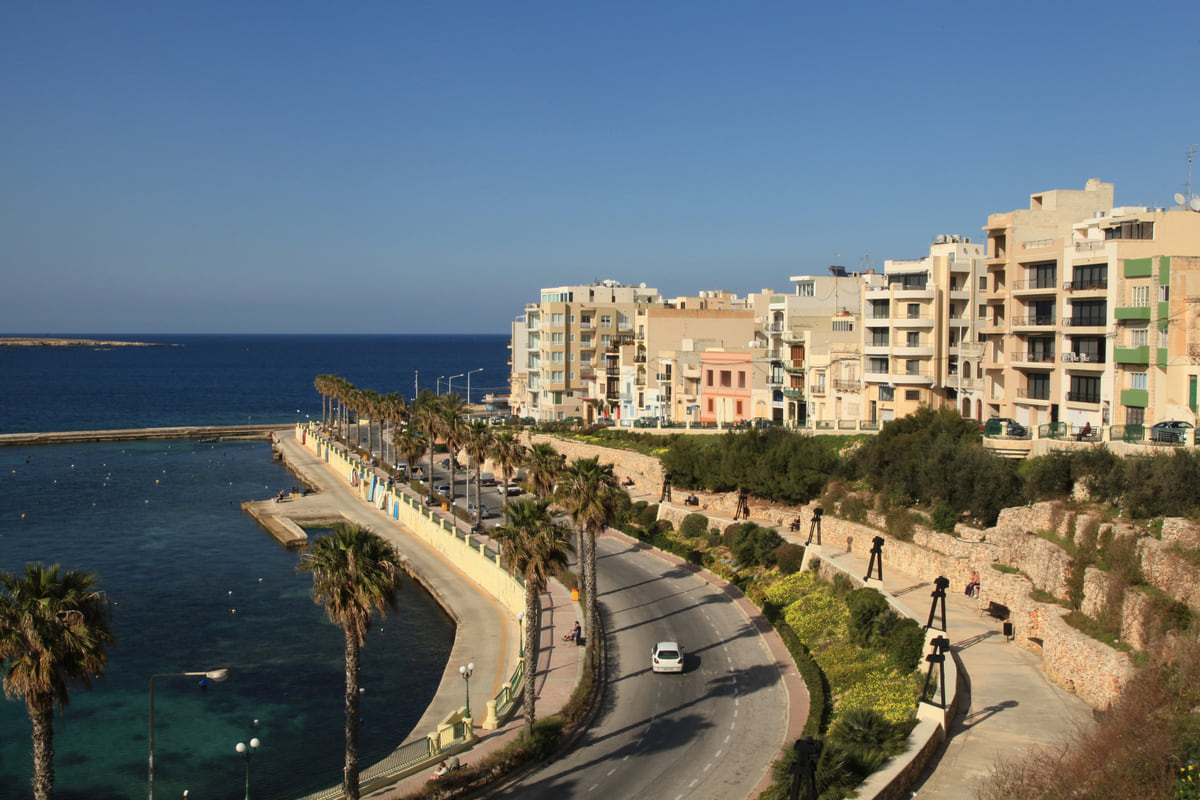
Wristband, half board or room only
All-inclusive in Malta, for and against

- UK in-resort spend per person
- €412
- Resort areas
- Mellieħa, Qawra, Buġibba, St Julian's
- Hotels with 400+ rooms
- 9 in the whole country
All-inclusive in Malta is mostly sold through packages and the big resort hotels of Mellieħa, Qawra, Buġibba and St Julian's. The maths favours it, because food and drink make up more than half of what visitors spend in Malta, 56.6% for British visitors according to the MTA. Even so, I wouldn't choose it for a sightseeing trip.
My ranking, scored
Who all-inclusive suits in Malta
My scores out of 10 for how well all-inclusive pays off by type of trip, for a week in peak season.
0 of 4 seen
-
Family with young children, pool week
Meals sorted, children's drinks included, and big resorts in Mellieħa and Qawra designed for it.
8.9 out of 10
-
Couple switching off in the north
Works if the plan is hotel and beach. Malta's only adults-only hotel on the MTA register is in Mellieħa.
7.6 out of 10
-
Stag or hen group in St Julian's
You'll be out for dinner and drinks every night, so you'd pay twice.
5.8 out of 10
-
Sightseeing trip with daily excursions
You'll eat in Valletta, Mdina or Gozo most days. Breakfast or half board is the better fit.
3.5 out of 10
Who I would recommend it to
Yes, if…
- Families with small children planning a pool week
- Groups who'd rather not think about the bill
Better not, if…
- Travellers out sightseeing every day
- Anyone staying on Gozo
I'd only go all-inclusive in Malta with young children and a pool week in the north, ideally January to March, when the big resorts are half empty. For a trip round Valletta, Mdina and Gozo, I'd take breakfast only and eat out.
What I would book for Malta
In 30 seconds
Full read: 3 min
- All-inclusive in Malta is concentrated in the resorts of Mellieħa, Qawra, Buġibba and St Julian's.
- Food and drink are 56.6% of what UK visitors spend during their stay, according to the MTA.
- It pays off with children and a pool week; not on a sightseeing trip.
- The €1.50 per adult per night eco-contribution is charged separately.
What I would check before going
Before you go
What I would keep in mind
-
01 Money
Food is over half the holiday spend
In 2025 UK visitors spent €412 each during their stay, and €233 of it went on food and drink, according to the MTA's survey. That's the slice an all-inclusive deal covers.
-
02 My tip
Price up half board too
The MTA lists bed and breakfast, half board and all-inclusive among what package prices cover. Half board leaves you free to eat out on day trips.
Malta holiday packages -
03 Watch out
Read what the wristband covers
Every hotel sets its own all-inclusive rules. Before paying, I'd check bar hours, whether branded drinks are included and whether sunbeds or à la carte dinners cost extra.
-
04 To save money
The eco-contribution isn't included
Since 1 July 2026, every licensed property charges €1.50 per adult per night, capped at €22.50, on top of the accommodation price.
Malta tourist tax
All-inclusive gets sneered at by independent travellers and loved by parents, and in Malta both camps are half right. It all comes down to how often you’ll eat away from the hotel. Before giving my view, I looked at what the Malta Tourism Authority’s own figures say, because they go a long way to explaining why the wristband sells.
Why the maths can work
According to the MTA’s research on 2025 spending, the average British visitor got through €412 while on the island, leaving aside whatever was paid before flying out. Of that, €233 went on food and drink, 56.6%, against a six-market average of 53.3%. So the part of the holiday an all-inclusive deal covers is by far the biggest part of what you’d otherwise spend on the island.
The MTA also lists all-inclusive, along with bed and breakfast and half board, among the things visitors pay for within their packages. If you’re buying that way, look for the ATOL certificate, as I explain in Malta holiday packages.
Where you’ll find it
The hotel register doesn’t say which board each hotel offers, so I can’t give you a trustworthy list of wristband hotels. What it does show is where the big resorts are, which is where all-inclusive makes sense. Mellieħa has the largest hotels in the country, with a median of 240 rooms. St Paul’s Bay, home to Buġibba and Qawra, has 37 mid-range hotels with a median of 108 rooms. St Julian’s has the big five-stars. Every one of the nine hotels with 400-plus rooms sits in those three areas or in Valletta. In Qawra, the clearest example is Qawra Palace Resort & Spa, with four themed restaurants.
For a family beach week I’d start with hotels in Mellieħa, near the sand at Għadira, and compare them with Qawra, where the aquarium is next door. In Valletta, where the median hotel has 28 rooms, all-inclusive barely makes sense.
Once your dates are set, check which hotels are still free in Mellieha before prices climb.
When I’d give all-inclusive in Malta a miss
If your trip is about sights and day trips, the sums flip. You’ll spend your days in Valletta, Mdina or Gozo and eat out most of the time, paying twice for the same meal. In that case breakfast or half board suits me better, with dinner at the hotel and lunch wherever you happen to be. The same goes for a stag or hen group in St Julian’s who’ll be out every night.
You’d also miss part of the point of coming. Maltese food, from pastizzi to rabbit stew, is found outside the hotel gates, and I cover it in Maltese food.
What I’d check before paying
Every hotel writes its own all-inclusive rules, and they vary a lot. Before booking, I’d read the hotel’s own website for bar and restaurant hours, whether drinks are local only or include branded spirits, whether à la carte restaurants carry a supplement, and whether sunbeds cost extra. And I’d budget for the environmental contribution, which the MTA keeps apart from the room price and which comes to €1.50 a day for each adult, up to €22.50.
My summary is simple. With young children and a week by the pool in the north, all-inclusive buys peace of mind and quite possibly saves money. For anything else, bed and breakfast or half board, and get out and eat.
So you do not pay over the odds, look at trains, coaches and flights to Malta on Omio and pick the one that suits you.
Season and value
Between July and September 2024 the islands’ hotels were close to 84% full, and between January and March they dropped to 51.3%. With the big resorts half empty in winter, that’s when there’s most room to find a good-value meal plan, although it’s also when you’ll use the pool least. October half-term strikes me as the sweet spot for an all-inclusive week with children. The Met Office at Malta airport gives a normal sea temperature of 24°C for October, and hotel occupancy from October to December 2024 was 61.7%, well below the summer peak.
What about Gozo?
On Gozo, all-inclusive fits even less. The island’s 20 licensed hotels share 941 rooms, and the MTA says only 12.3% of its international tourists in 2024 came on a package. Nearly half of those staying only on Gozo used flats, farmhouses or villas with their own kitchens. If you want Gozo with meals sorted, I’d look for half board at a hotel in Marsalforn or Xlendi, or take a farmhouse and use the village restaurants. More in my guide to Gozo hotels.
If you would rather have a local show you round, book a guided tour in Mellieha and choose by the reviews.
A car frees you from timetables: search car hire in Mellieħa on DiscoverCars and compare companies.
Once your dates are set, check which hotels are still free in Mellieha before prices climb.
What visitors spend during their stay in Malta (2025)
| Item | UK visitors | Six-market average |
|---|---|---|
| Food and drink | €233.0 (56.6%) | €215.4 (53.3%) |
| Everything else (accommodation paid locally, transport, recreation, shopping, other) | €179.0 | €188.5 |
| Total per person during the stay | €412.0 | €403.9 |
MTA, Evaluating Tourism Expenditure 2025 by market. Excludes anything paid before travel. UK sample of 739.
Where the big resort hotels are (MTA, 28-09-2026)
| Area | Hotels | Median rooms |
|---|---|---|
| Mellieħa | 11 | 240 |
| St Paul's Bay (Buġibba and Qawra) | 37 | 108 |
| St Julian's (incl. Paceville) | 58 | 87 |
| Valletta | 16 | 28 |
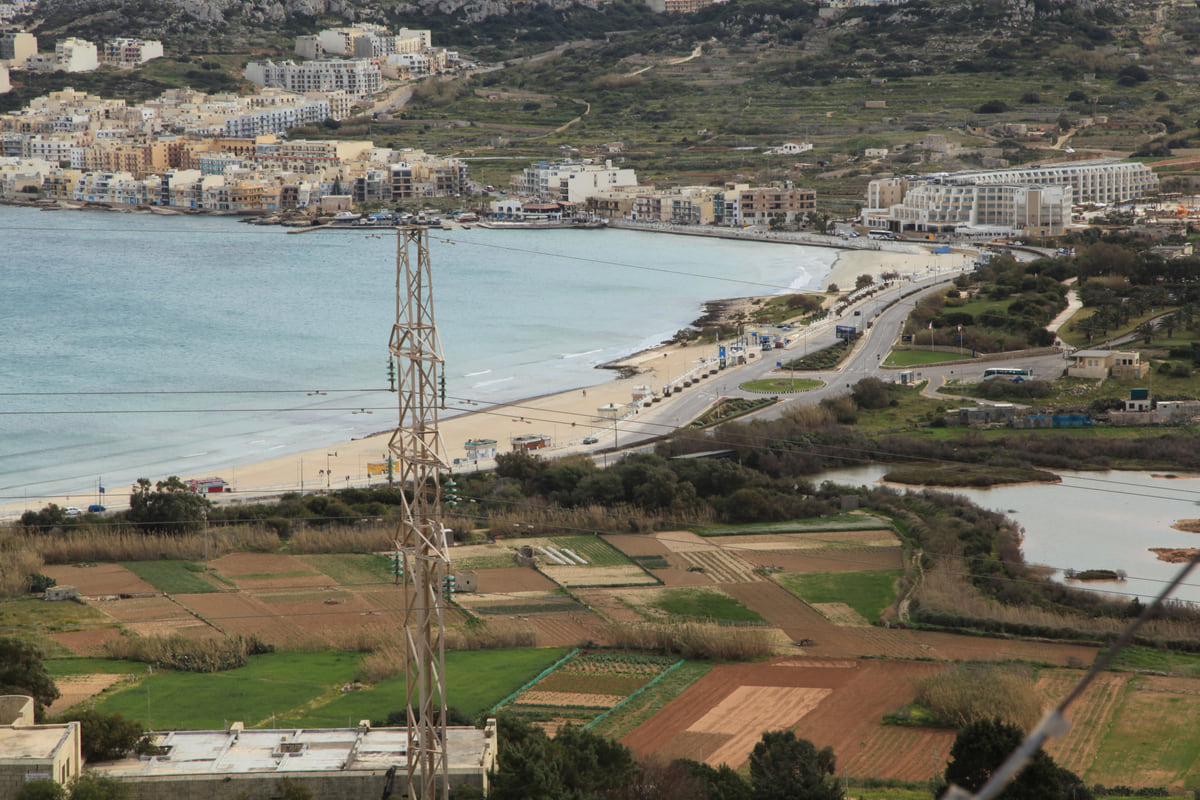
Mellieħa Bay with the long sandy beach of Għadira, the salt-marsh nature reserve behind it and the town on the hillside.
Test yourself
True or false?
0/3 Pick before you peek.
-
Most of what visitors spend during their stay in Malta goes on food and drink.
See the answer
True. The MTA's 2025 survey puts food and drink at 53.3% of in-resort spending on average, and 56.6% for UK visitors.
-
The eco-contribution is normally part of the all-inclusive price.
See the answer
False. The MTA describes it as a separate charge from the accommodation price, €1.50 per adult per night since 1 July 2026.
-
On average, Mellieħa's hotels are the largest in Malta.
See the answer
True. Their median is 240 rooms per hotel, according to the MTA register of 28 September 2026.
- Of UK visitors' in-resort spend goes on food and drink
- 56.6%
- Food and drink per UK visitor during the stay
- €233
- Median rooms of Mellieħa's hotels
- 240
0 of 294 Malta guides
Your next stamp
- Malta on a budget
- Prices and budget
- Car hire
- Holiday packages
- Things to do in Malta
- Sightseeing passes
- Buses
- Day trips and tours
- Gozo
- Most beautiful places
- Comino
- Prettiest villages
- UNESCO World Heritage Sites
- Where is Malta
- The Maltese islands
- Towns and villages
- Island of Malta
- Blue Lagoon
- Fort Rinella
- Fort St Angelo
- Gardjola Gardens
- Ħal Saflieni Hypogeum
- Is Malta a country?
- Popeye Village
- Tarxien Temples
- Things to do in Gozo
- Valletta
- Esplora
- Golden Bay
- Gozo day trip
- Inquisitor's Palace
- Population
- St John's Co-Cathedral
- St Mary's Tower
- Grandmaster's Palace
- How big is Malta
- Maritime Museum
- Mellieħa Bay
- Fort St Elmo
- Language
- Malta at War Museum
- Paradise Bay
- Barrakka Gardens
- Red Tower
- Religion
- Malta government
- Saluting Battery
- MUŻA
- National Museum of Archaeology
- Underground Valletta
- Lascaris War Rooms
- Casa Rocca Piccola
- Malta in one day
- Three Cities
- Victoria
- Birgu
- Manoel Theatre
- Weekend in Malta
- Xagħra
- City Gate and Parliament
- Malta in three days
- Nadur
- Senglea
- Cospicua
- Malta in four days
- Qala
- Valletta Waterfront
- Għajnsielem
- Kalkara
- Malta in five days
- Malta in a week
- Paola
- Xewkija
- Sannat
- Tarxien
- Munxar
- Żabbar
- Fgura
- Fontana
- Kerċem
- Luqa
- Floriana
- Marsa
- Mellieħa
- The Citadel, Gozo
- Żebbuġ (Gozo)
- Ġgantija Temples
- Marsalforn
- Santa Luċija
- Ramla Bay
- San Lawrenz
- Xgħajra
- Xwejni salt pans
- Calypso's Cave
- Għarb
- Żejtun
- Għasri
- Gudja
- San Blas Bay
- Għaxaq
- Ħondoq Bay
- Marsaxlokk
- Kirkop
- Marsaxlokk Fish Market
- Mqabba
- St Peter's Pool
- Marsaskala
- Qrendi
- Żurrieq
- Beaches
- Comino ferry
- EU, Schengen and the euro
- Ħaġar Qim and Mnajdra
- Mdina
- Mġarr (Gozo)
- Blue Grotto
- Diving
- Entry requirements
- Mdina Cathedral
- Xewkija Rotunda
- Birżebbuġa
- Money and payments
- Palazzo Falson
- Safi
- Shipwrecks
- Ta' Ċenċ Cliffs
- Għar Dalam
- Mdina Dungeons
- Mġarr ix-Xini
- Snorkelling
- Boat trips
- Playmobil FunPark
- Rabat (Malta)
- Xlendi
- Dwejra
- Gozo beaches
- History
- Siġġiewi
- St Paul's Catacombs
- Tipping
- Azure Window
- Domvs Romana
- Għar Lapsi
- Great Siege of 1565
- Plugs
- Limestone Heritage Park
- Second World War
- St Paul's Grotto
- Ta' Pinu Basilica
- Time zone
- Buskett Gardens
- Knights of Malta
- Mobile and roaming
- Wied il-Għasri
- Dingli
- Maltese cross
- Dingli Cliffs
- Flag
- Żebbuġ
- Coat of arms
- Mtarfa
- Balzan
- National anthem
- Lija
- Malta facts
- Game of Thrones
- Iklin
- Attard
- Film locations
- Forts and fortifications
- San Anton Gardens
- Ta' Qali Crafts Village
- Victoria Lines
- Megalithic temples
- Catacombs
- Museums
- Where to eat
- Where to stay
- Churches
- Hotels in Valletta
- Restaurants in Valletta
- Hotels in Sliema
- Maltese food
- Restaurants in Marsaxlokk
- Viewpoints
- Hotels in St Julian's
- Pastizzi
- Walking and hiking
- Hotels in Buġibba and Qawra
- Maltese rabbit stew
- Safety
- Hotels in Mellieħa
- Kinnie and Cisk
- Scams
- Gozo hotels
- Nightlife
- Ramla Bay Resort
- Tap water
- Boat parties
- Sliema Marina Hotel
- Tourist tax
- Gay Malta
- Qawra Palace
- Apartments
- Malta with kids
- Novotel Malta Sliema
- Public holidays
- How to get there
- Luxury
- Malta for couples
- Natural History Museum
- Taxis and ride-hailing
- Weather
- Best time to visit
- Cycling
- English schools
- Flights
- Fort Delimara
- Flights from Madrid
- Sea temperature
- Shopping and souvenirs
- Tas-Silġ
- Airport
- Free walking tours
- In winter
- Ta' Bistra Catacombs
- Airport transfers
- Gran Castello Historic House
- In summer
- Ferry from Sicily
- In January
- Old Prison, Gozo
- Cruise stop
- In February
- Ta' Kola Windmill
- In March
- Kordin III
- In April
- Villa Frere
- In May
- Villa Guardamangia
- Getting around
- In June
- Roman Baths
- July
- August
- Hop on hop off
- Gozo ferry
- September
- Gozo fast ferry
- October
- November
- Valletta ferries
- December
- Driving
- Events
- St Paul's Bay
- Village feasts
- Buġibba
- Christmas
- Easter
- Qawra
- Carnival
- Xemxija
- Fireworks festival
- Malta National Aquarium
- Isle of MTV
- St Paul's Islands
- Mosta
- Mosta Rotunda
- Naxxar
- Palazzo Parisio
- Għargħur
- Mġarr (Malta)
- Sliema
- Ta' Ħaġrat and Skorba Temples
- Għajn Tuffieħa Bay
- Tigné Point
- Ġnejna Bay
- St Julian's
- Paceville
- St George's Bay
- Gżira
- Msida
- Ta' Xbiex
- Pietà
- Pembroke
- Swieqi
- San Ġwann
- Birkirkara
- Ħamrun
- Santa Venera
- Qormi
All-inclusive in Malta: questions and answers
Are there all-inclusive hotels in Malta?
Yes. The MTA's survey lists all-inclusive among what visitors pay for in their packages. It's typically offered by the large hotels in Mellieħa, Qawra, Buġibba and St Julian's, but each hotel sets its own board options, so check its website.
Is all-inclusive worth it in Malta?
With children and a pool week, I'd say yes. With daily excursions, no, because you'll eat out most of the time. Half board is the middle way.
How much do people spend on food and drink in Malta?
The MTA estimates UK visitors spent €233 each on food and drink during their stay in 2025, 56.6% of their in-resort spending. The six-market average was €215.4.
Where is best for an all-inclusive holiday in Malta?
The resort areas. Mellieħa has the biggest hotels in the country, with a median of 240 rooms, and St Paul's Bay, with Buġibba and Qawra, has 37 hotels, nearly all three and four-star.
Is all-inclusive a good idea in Valletta?
Rarely. Valletta's hotels have a median of 28 rooms and the city is full of places to eat within walking distance. I'd stay there on bed and breakfast.
Is the tourist tax included in all-inclusive prices?
Usually not. The MTA describes the eco-contribution, €1.50 per adult per night since 1 July 2026, as a charge separate from the accommodation price.

Questions about Malta? Write to me
If you need something else to finish planning, write to me. I answer myself, no templates.
My email sergiolepone@gmail.com
By
Tourism graduate with a master’s in Tourism Management and Planning from the University of Málaga, who has travelled across Europe. He writes every guide from official sources and his own judgement.
Published on . Updated on . Facts checked on .
Sources
Some links in this guide are affiliate links: if you book through them, the site earns a commission at no extra cost to you. Affiliate disclosure
Photos: Frank Vincentz (CC BY-SA 3.0); Frank Vincentz (CC BY-SA 3.0), via Wikimedia Commons.