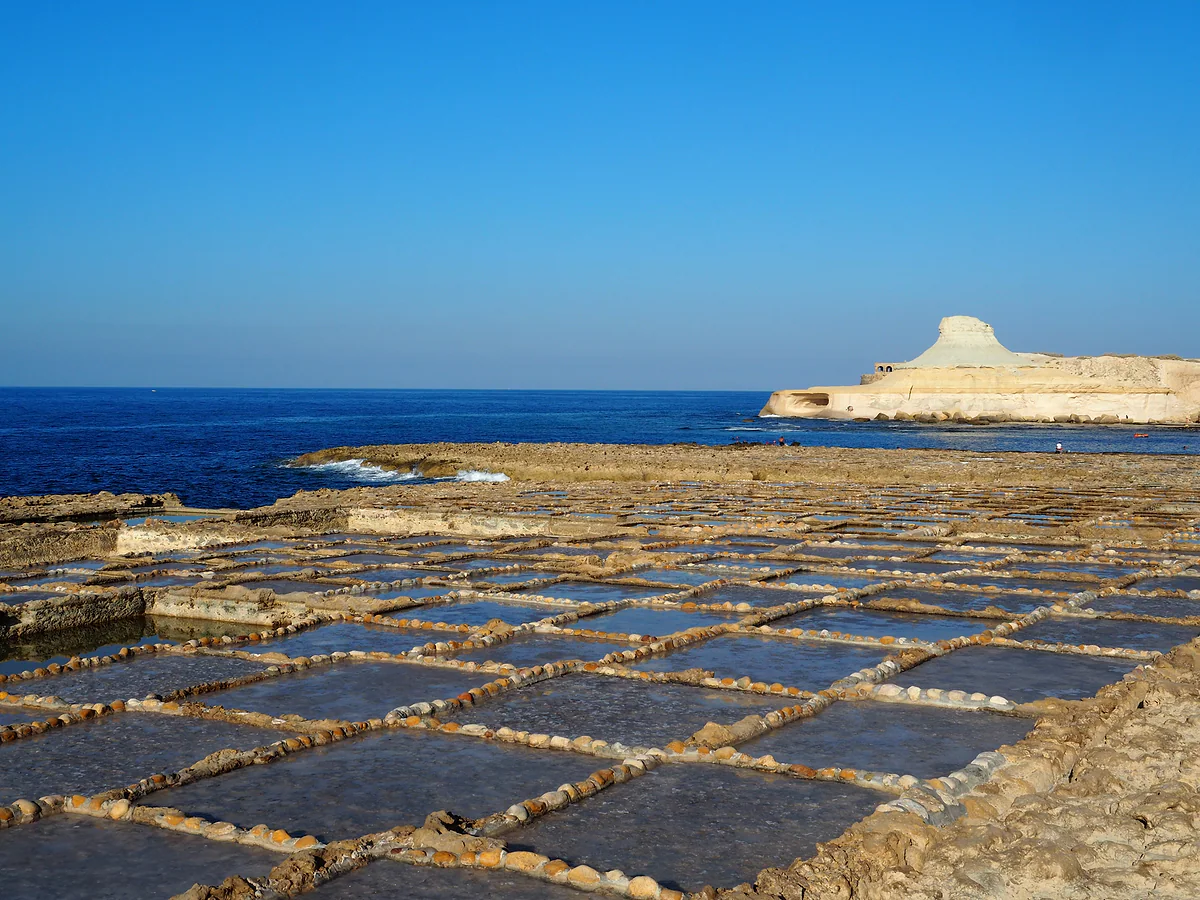
North coast of Gozo, near Marsalforn
The Xwejni salt pans, Gozo's chequerboard of salt
The Xwejni salt pans are a chequerboard of rock-cut pools stretching about 3 km along Gozo's north coast, west of Marsalforn. They're around 350 years old and still harvested by hand from mid-May to September, according to the Ministry for Gozo. You can see them all year in the open air, and buy the salt from the families who make it.
In 30 seconds
Full read: 3 min
- The Xwejni salt pans cover about 3 km of Gozo's north coast, west of Marsalforn.
- They're around 350 years old and harvested by hand from mid-May to September.
- You can see them in the open air all year, as long as you stay off the pans.
- The salt is sold in shops, at markets and by the salt-makers themselves.
I'd go late on a summer afternoon, walking from Marsalforn along the shore. That way you might catch the harvesters at work, the pools light up at sunset and you can buy a bag of salt from the people who gathered it.

Before you go
What I would keep in mind
-
01 Most beautiful
Sunset on the pans
The Ministry for Gozo describes how, as the sun goes down, the still water in the pools turns into mirrors of crimson, gold and amber. That's the hour I'd choose.
-
02 My tip
Come in summer to see the harvest
The shapes are there all year, but salt is gathered from mid-May to September, when the sun evaporates the seawater in the pools.
Malta in summer -
03 Watch out
Keep off the pans
The Ministry for Gozo asks visitors not to walk on the salt pans to avoid damaging them. Take your photos from the edge.
-
04 To save money
Salt straight from the salt-maker
Xwejni salt is sold in shops, at markets and sometimes by the roadside, and there's a rock-cut store you reach up carved steps. It beats a fridge magnet as a souvenir.
Malta souvenirs
What I would book
The Xwejni salt pans are one of those sights you’ve seen in every photo of Gozo that still catch you off guard in person. They’re a chequerboard of square and rectangular pools cut into the limestone, running into the sea along the north coast, just past Qbajjar Bay and west of Marsalforn. The Ministry for Gozo reckons they stretch for about 3 km and are around 350 years old. After Dwejra, I think they’re the most photogenic landscape on the island.
How they work
The system is as simple as it is old. Seawater fills the shallow pools, the sun evaporates it over several days, and salt crystals are left behind. The cycle repeats through the summer, from mid-May to September. The salt is dried and stored in caves cut into the coastal rock, and it’s still raked by hand with traditional tools.
According to the Ministry, the method dates back to the Phoenicians and developed under the Romans. What’s documented by name is the continuity. Families such as the Cinis have harvested salt here since the 1860s, and the Ministry mentions Josephine Xuereb and her family as keepers of the tradition. Out of season, the same families repair the pools against wind and wave erosion.
When to go
The shapes are there all year, because this is open coastline. But if you want to see the harvesters at work, it has to be summer. Timing matters too. The Ministry describes how, as the sun sets, the still water in the pools becomes a mosaic of mirrors in crimson, gold and amber. I’d go late on an afternoon in June or September, when the harvest is on and the heat has eased. There’s more on that season in Malta in summer.
One rule worth respecting. The Ministry asks people not to walk on the salt pans, to avoid damaging them. Photos from the edge or the path.
Getting there
The nicest way is on foot from Marsalforn. The Ministry says the walk to Qbajjar is like strolling along the water’s edge, and carrying on brings you to Xwejni and the pans. You can also come down a coastal path from Żebbuġ, the village on the hill above. By car, the pans line the road between Marsalforn and Żebbuġ, where the largest stretch runs between Xwejni and Wied il-Għasri. For a swim afterwards, Qbajjar and Xwejni are two shallow bays of pebbles and rock right beside the pools.
Coming over from the main island for the day, you’ll take Gozo Channel from Ċirkewwa to Mġarr, a crossing of around 25 minutes with a €4.65 return ticket bought on Gozo for the trip back, and Malta Public Transport lists bus 322 to Marsalforn. From there it’s the walk along the shore. With a hire car, check your insurance covers the ferry crossing and Gozo, as Spain’s foreign ministry advises its own citizens, and leave time for parking at the busiest spots in summer.
Next door
The salt pans pair well with two other spots on the north coast. To the east, Qbajjar has a couple of bars and restaurants on the seafront and a few fishing boats, says the Ministry for Gozo. To the west, at the end of the salt-pan stretch, is Wied il-Għasri, a deep gorge ending in a pebbly cove reached by steps cut into the cliff. In rough weather, the Ministry advises admiring it from a safe distance. I’d do all three in one afternoon, from Qbajjar to the pans and, light permitting, on to the gorge.
Salt, the best souvenir on Gozo
Xwejni salt is sold in plastic bags, cloth sacks and jars, at village markets and craft shops, sometimes straight from the roadside and by the salt-pan keepers themselves. The Ministry mentions an old store room cut into the rock at Xwejni, now a shop, reached by steps carved in the cliff. If you want to take home something from Malta that isn’t a fridge magnet, this is where I’d buy it; more ideas in Malta souvenirs.
Gozo’s other salt pans
Xwejni isn’t the only place. The Ministry mentions disused salt pans at Xatt l-Aħmar, by the swimming area overlooked by Fort Chambray at the edge of Mġarr, and on the headland below Xlendi’s tower, beside deep water and much harder to reach. They’re lovely, but for working salt pans, Xwejni is the one.
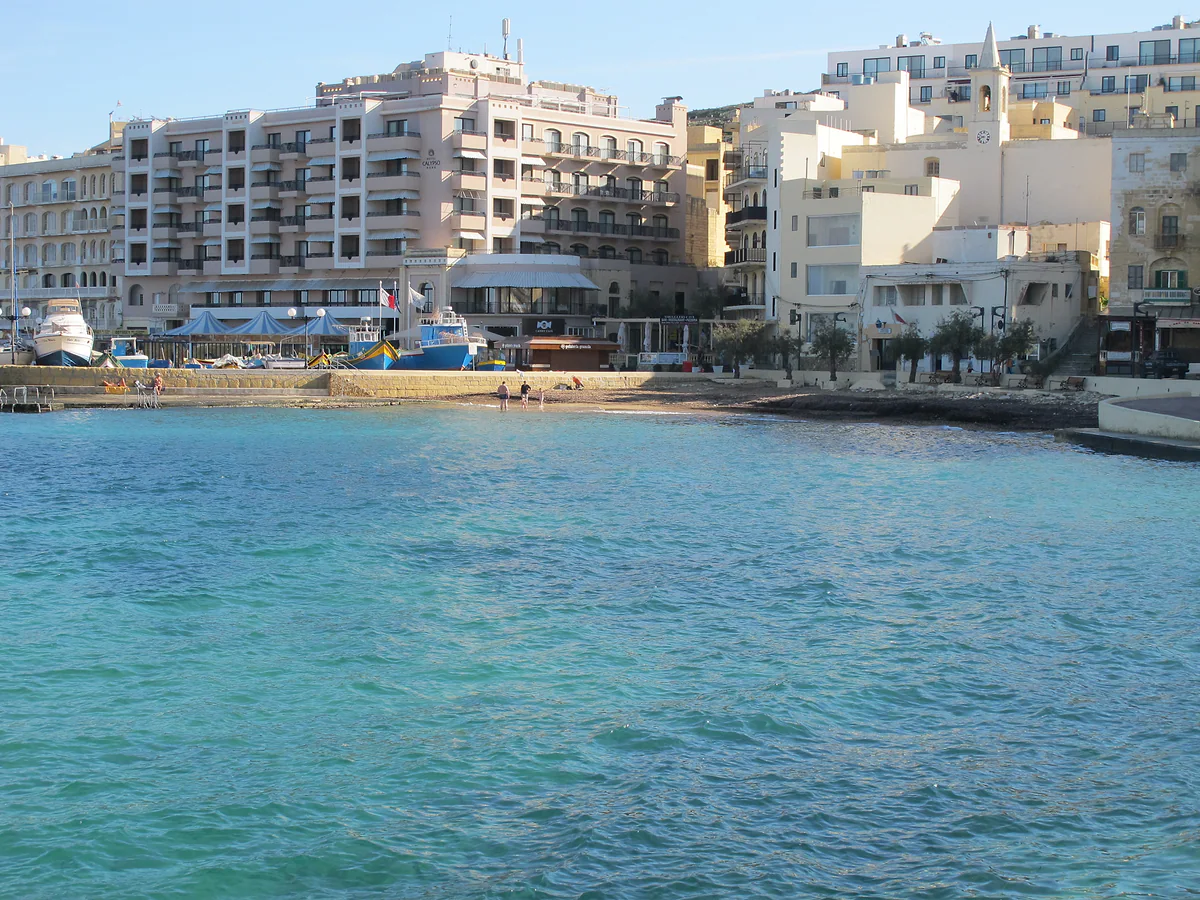
The seafront at Marsalforn on the north coast of Gozo, with the turquoise water of the bay in front of white hotels and apartment blocks.
The Xwejni salt pans at a glance
| Item | Detail |
|---|---|
| Location | North coast of Gozo, past Qbajjar Bay, west of Marsalforn |
| Extent | About 3 km of coast, mainly at Xwejni |
| Age | Around 350 years; the method dates back to the Phoenicians |
| Harvest season | Mid-May to September |
| Who works them | Families such as the Cinis, since the 1860s |
| Visiting | Open-air, all year |
Ministry for Gozo (visitgozo.com), checked on 28-09-2026. No opening hours or charge are published, as it's open coastline.
Other salt pans on Gozo
| Place | Status |
|---|---|
| Xwejni | Working, the largest stretch |
| Xatt l-Aħmar (Mġarr) | Disused, by the swimming area below Fort Chambray |
| Xlendi | Disused, below the tower, hard to reach |
Test yourself
True or false?
0/3 Pick before you peek.
-
The Xwejni salt pans are no longer worked.
See the answer
False. They're still in use. Families such as the Cinis have harvested here since the 1860s, from mid-May to September.
-
It's fine to walk across the pans for a photo.
See the answer
False. The Ministry for Gozo asks visitors not to walk on them, to avoid damage.
-
Gozo's salt-making method goes back to the Phoenicians.
See the answer
True. The Ministry for Gozo says the method dates back to the Phoenician era and developed under the Romans.
- Approximate age in years
- 350
- Of coastline covered by the pans
- 3 km
- When the Cini family started harvesting
- 1860s
Map
Where Xwejni salt pans is
Gozo lies to the north-west, across the channel the ferry crosses from Ċirkewwa, with Comino between the two islands. Every number opens its guide.
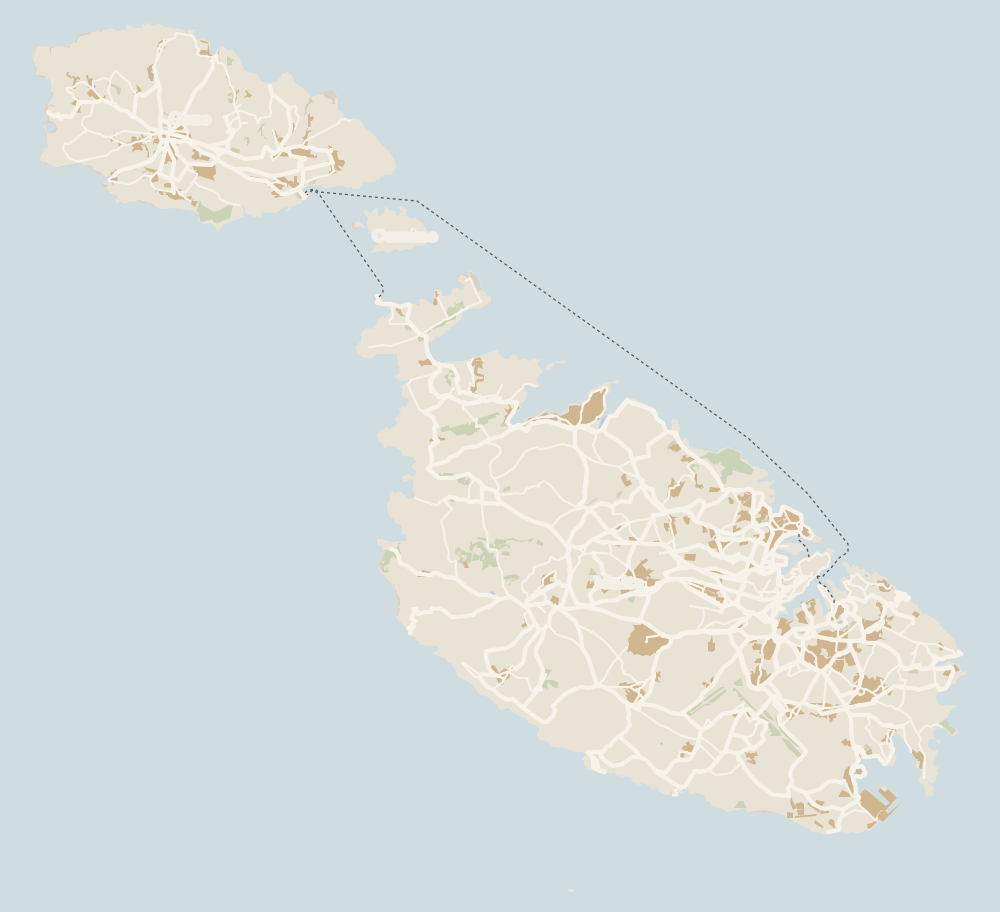
0 of 279 Malta guides
Your next stamp
- Most beautiful places
- Żebbuġ (Gozo)
- Things to do in Gozo
- Marsalforn
- Gozo
- Wied il-Għasri
- Viewpoints
- Malta in four days
- Things to do in Malta
- Comino
- Prettiest villages
- UNESCO World Heritage Sites
- Where is Malta
- The Maltese islands
- Towns and villages
- Island of Malta
- Blue Lagoon
- Fort Rinella
- Fort St Angelo
- Gardjola Gardens
- Ħal Saflieni Hypogeum
- Is Malta a country?
- Popeye Village
- Tarxien Temples
- Valletta
- Esplora
- Golden Bay
- Gozo day trip
- Inquisitor's Palace
- Population
- St John's Co-Cathedral
- St Mary's Tower
- Grandmaster's Palace
- How big is Malta
- Maritime Museum
- Mellieħa Bay
- Fort St Elmo
- Language
- Malta at War Museum
- Paradise Bay
- Barrakka Gardens
- Red Tower
- Religion
- Malta government
- Saluting Battery
- MUŻA
- National Museum of Archaeology
- Underground Valletta
- Lascaris War Rooms
- Casa Rocca Piccola
- Malta in one day
- Three Cities
- Victoria
- Birgu
- Manoel Theatre
- Weekend in Malta
- Xagħra
- City Gate and Parliament
- Malta in three days
- Nadur
- Senglea
- Cospicua
- Qala
- Valletta Waterfront
- Għajnsielem
- Kalkara
- Malta in five days
- Malta in a week
- Paola
- Xewkija
- Sannat
- Tarxien
- Munxar
- Żabbar
- Fgura
- Fontana
- Kerċem
- Luqa
- Floriana
- Marsa
- Mellieħa
- The Citadel, Gozo
- Ġgantija Temples
- Santa Luċija
- Ramla Bay
- San Lawrenz
- Xgħajra
- Calypso's Cave
- Għarb
- Żejtun
- Għasri
- Gudja
- San Blas Bay
- Għaxaq
- Ħondoq Bay
- Marsaxlokk
- Kirkop
- Marsaxlokk Fish Market
- Mqabba
- St Peter's Pool
- Marsaskala
- Qrendi
- Żurrieq
- Beaches
- Comino ferry
- EU, Schengen and the euro
- Ħaġar Qim and Mnajdra
- Mdina
- Mġarr (Gozo)
- Blue Grotto
- Diving
- Entry requirements
- Mdina Cathedral
- Xewkija Rotunda
- Birżebbuġa
- Money and payments
- Palazzo Falson
- Safi
- Shipwrecks
- Ta' Ċenċ Cliffs
- Għar Dalam
- Mdina Dungeons
- Mġarr ix-Xini
- Prices and budget
- Snorkelling
- Boat trips
- Malta on a budget
- Playmobil FunPark
- Rabat (Malta)
- Xlendi
- Dwejra
- Gozo beaches
- History
- Siġġiewi
- St Paul's Catacombs
- Tipping
- Azure Window
- Domvs Romana
- Għar Lapsi
- Great Siege of 1565
- Plugs
- Limestone Heritage Park
- Second World War
- St Paul's Grotto
- Ta' Pinu Basilica
- Time zone
- Buskett Gardens
- Knights of Malta
- Mobile and roaming
- Dingli
- Maltese cross
- Dingli Cliffs
- Flag
- Żebbuġ
- Coat of arms
- Mtarfa
- Balzan
- National anthem
- Lija
- Malta facts
- Game of Thrones
- Iklin
- Attard
- Film locations
- Forts and fortifications
- San Anton Gardens
- Ta' Qali Crafts Village
- Victoria Lines
- Megalithic temples
- Catacombs
- Museums
- Where to eat
- Where to stay
- Churches
- Hotels in Valletta
- Restaurants in Valletta
- Hotels in Sliema
- Maltese food
- Restaurants in Marsaxlokk
- Hotels in St Julian's
- Pastizzi
- Walking and hiking
- Hotels in Buġibba and Qawra
- Maltese rabbit stew
- Safety
- Hotels in Mellieħa
- Kinnie and Cisk
- Scams
- Gozo hotels
- Nightlife
- Tap water
- Boat parties
- Holiday packages
- Tourist tax
- All inclusive
- Gay Malta
- Sightseeing passes
- Apartments
- Malta with kids
- Public holidays
- How to get there
- Luxury
- Malta for couples
- Taxis and ride-hailing
- Weather
- Best time to visit
- Cycling
- English schools
- Flights
- Flights from Madrid
- Sea temperature
- Shopping and souvenirs
- Airport
- Free walking tours
- In winter
- Airport transfers
- Day trips and tours
- In summer
- Ferry from Sicily
- In January
- Cruise stop
- In February
- In March
- In April
- In May
- Getting around
- In June
- Buses
- July
- August
- Hop on hop off
- Gozo ferry
- September
- Gozo fast ferry
- October
- November
- Valletta ferries
- Car hire
- December
- Driving
- Events
- St Paul's Bay
- Village feasts
- Buġibba
- Christmas
- Easter
- Qawra
- Carnival
- Xemxija
- Fireworks festival
- Malta National Aquarium
- Isle of MTV
- St Paul's Islands
- Mosta
- Mosta Rotunda
- Naxxar
- Palazzo Parisio
- Għargħur
- Mġarr (Malta)
- Sliema
- Ta' Ħaġrat and Skorba Temples
- Għajn Tuffieħa Bay
- Tigné Point
- Ġnejna Bay
- St Julian's
- Paceville
- St George's Bay
- Gżira
- Msida
- Ta' Xbiex
- Pietà
- Pembroke
- Swieqi
- San Ġwann
- Birkirkara
- Ħamrun
- Santa Venera
- Qormi
Frequently asked questions
Where are the salt pans in Gozo?
The main ones are at Xwejni Bay on the north coast, just past Qbajjar Bay west of Marsalforn. They run for about 3 km between Xwejni and Wied il-Għasri, along the road from Marsalforn to Żebbuġ.
When can you see the salt harvest?
From mid-May to September, according to the Ministry for Gozo. The rest of the year you can see the pans, but not the harvesters at work.
Is there a charge to see the Xwejni salt pans?
I haven't found one. They're open coastline you can see from the path, as long as you don't walk on the pans, as the Ministry for Gozo asks.
How do I get to the Gozo salt pans?
On foot from Marsalforn along the shore via Qbajjar, or down a coastal path from Żebbuġ. By car, they're on the road linking Marsalforn and Żebbuġ.
Can you buy salt at the salt pans?
Yes. The Ministry for Gozo says it's sold in plastic bags, cloth sacks and jars, at village markets, craft shops, sometimes by the roadside and by the salt-pan keepers themselves.
How old are the Gozo salt pans?
Around 350 years for Xwejni, according to the Ministry for Gozo, which traces the method back to Phoenician and Roman times.
By
Tourism graduate with a master’s in Tourism Management and Planning from the University of Málaga, who has travelled across Europe. He writes every guide from official sources and his own judgement.
Published on . Facts checked on .
Sources
Photos: Corina Möller (CC BY-SA 4.0); Kritzolina (CC BY-SA 4.0), via Wikimedia Commons.