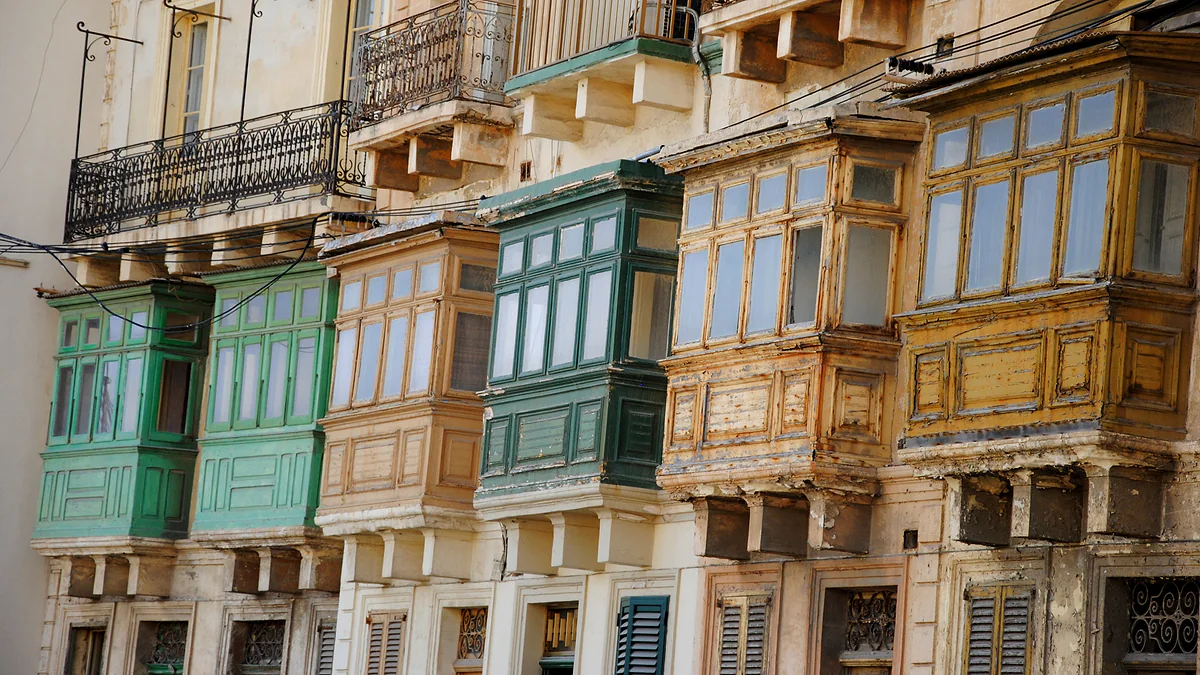
Opened on 19 January 1732
The Manoel Theatre, the Knights' playhouse that never stopped working
The Manoel Theatre is Malta's national theatre, on Old Theatre Street in Valletta. Grand Master Antonio Manoel de Vilhena had it built, and it opened on 19 January 1732. It is reputed to be Europe's third-oldest working theatre. Guided tours run Monday to Saturday for €10, though rehearsals can cancel them.
In 30 seconds
Full read: 3 min
- The Manoel Theatre opened on 19 January 1732 on Old Theatre Street, Valletta.
- It is reputed to be Europe's third-oldest working theatre.
- Guided tours run Monday to Saturday for €10; there are none on Sundays.
- Malta's national anthem was first played in public here on 27 December 1922.
I'd take the tour on a Saturday morning, when there are most slots, and if my trip lined up with the season I'd buy a ticket for a performance too. A theatre makes far more sense full than empty.

Before you go
What I would keep in mind
-
01 My tip
Tour times change on 20 June and 1 September
On weekdays tours run at 11:00 and 15:00 from 1 September to 19 June, and at 10:30 and 12:00 from 20 June to 31 August. Saturdays are 10:30, 11:30 and 12:30.
-
02 Most beautiful
Where Malta's anthem was first heard
L-Innu Malti, the national anthem, was played in public for the first time at a concert here on 27 December 1922.
the Malta national anthem -
03 Worth the splurge
See a show, not just the building
This is a working venue for music, drama and dance. If your dates allow, an evening inside the Baroque auditorium beats any tour.
events in Malta -
04 Getting there
Five minutes from the Palace
It's on Old Theatre Street in central Valletta, close to the Grandmaster's Palace and Casa Rocca Piccola. The whole centre is walkable.
Valletta, Malta's capital
What I would book
My ranking, scored
What I'd look for at the Manoel
My own scores out of 10, on how each feature lands and what it tells you about the theatre's story.
0 of 4 seen
-
The oval auditorium and its 51 boxes
Three tiers of boxes plus the gallery, 547 seats in all. Pure Baroque in an intimate hall.
9.0 out of 10
-
The inscription over the entrance
Ad honestam populi oblectationem, for the honest entertainment of the people. It sums up why it was built.
8.2 out of 10
-
The story of its names
Teatro Pubblico, Teatro Reale from 1800 and Teatru Manoel from 1866, when it lost its royal title to the new Opera House.
7.8 out of 10
-
The Murano chandeliers
Replaced during the pandemic closure with blown white Murano glass in the Rezzonico style.
7.2 out of 10
Over the Manoel Theatre’s door is a line in Latin, ad honestam populi oblectationem, for the honest entertainment of the people. I love that the Grand Master of a military and religious order spent his money on that. Nearly three centuries on it’s still doing exactly the same job, and you can go inside.
A theatre built in ten months
In 1731 Grand Master Antonio Manoel de Vilhena bought two houses on what was then Strada del Carmine, now Old Theatre Street, to build a public theatre. It took only ten months and cost him 2,184 scudi, which the theatre puts at €41,715 today. On 19 January 1732 it opened with Merope, Scipione Maffei’s tragedy, performed by the Italian knights. Two days later the French knights put on a play of their own.
The theatre itself passes on, as something that “is said”, that part of the Grand Master’s reasoning was to keep the young knights out of mischief by giving them plays to act in during their time off. I can’t confirm it, but it rings true to me. For who those knights were, read up on the Knights of St John in Malta.
Three names and an auditorium that changed shape
It started life as the Teatro Pubblico. When the British arrived in 1800 it became the Real Teatro di Malta and was reworked to seat more people, under the Royal Engineer George Whitmore. That’s why today’s oval auditorium isn’t the original, which was horseshoe-shaped. In 1866 it lost its status as Theatre Royal to the new, much bigger Royal Opera House at the city entrance, and took the name Teatru Manoel. What’s left of that opera house, bombed in 1942, is on my page about Valletta City Gate and Parliament.
There are other episodes I enjoy. In 1813 and 1814 it was shut on the Civil Commissioner’s orders during an outbreak of bubonic plague. In 1907 it staged its first British-style pantomime, which the theatre says remains its most popular event every year, something any British visitor will recognise. In 1948 a Maltese tenor, Oreste Kirkop, stepped into the Duke of Mantua halfway through a Rigoletto, the start of a career that took him to Covent Garden. In 1960 it reopened after three years of restoration. And on 27 December 1922, Malta’s national anthem, L-Innu Malti, was played in public here for the first time.
What the guided tour shows you
The guided tour covers the theatre’s history and takes you into the Baroque interior. The theatre describes itself as reputed to be Europe’s third-oldest working theatre and the oldest working theatre in the Commonwealth, and I’ll quote that as its own claim.
The main auditorium seats 547 across the stalls, the parterre boxes, 51 individual boxes on three tiers and the gallery. The chandelier and the sconces along the boxes were replaced during the pandemic closure with blown white Murano glass, and the theatre reopened at the end of October 2021.
Next door, the old Monastery of Navarre is being turned into rehearsal rooms, a foyer, box office and bar, and the façade is being taken back to its 1731 design. The work began in 2015 and the theatre still lists it as ongoing. Up on the top floor there’s also a small Studio Theatre, entered through the stage door on Old Mint Street, with room for 60.
Times, price and the rehearsal caveat
The tour costs €10 and suits all ages. On weekdays from 1 September to 19 June it runs at 11:00 and 15:00; from 20 June to 31 August at 10:30 and 12:00. Saturdays have three slots, 10:30, 11:30 and 12:30, and there are no tours on Sundays.
The caveat is that this is a working theatre. Rehearsals or technical work can put the auditorium out of bounds and tours may be cancelled or rescheduled, so I wouldn’t leave it to your last day. If you’re travelling in January, the Manoel is one of the venues of the Valletta International Baroque Festival, held that month since 2013, and that’s when I’d most want to hear music in the room.
It sits in central Valletta, a short walk from the Grandmaster’s Palace and Casa Rocca Piccola, so it slots into any walk round Valletta.
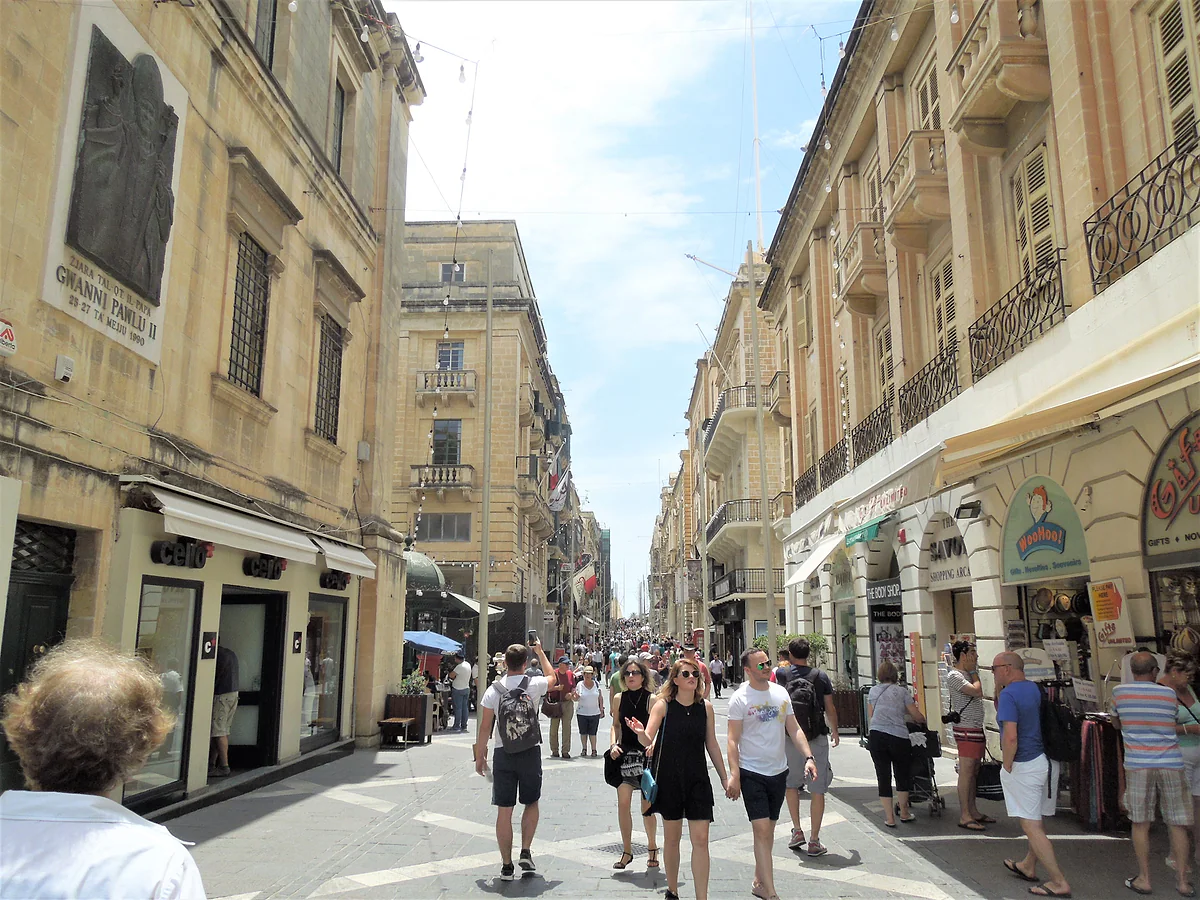
Republic Street, the main street of Valletta, busy with people walking between stone façades with balconies and shops on both sides.
Manoel Theatre guided tours
| Period | Days | Times |
|---|---|---|
| 1 September to 19 June | Monday to Friday | 11:00 and 15:00 |
| 20 June to 31 August | Monday to Friday | 10:30 and 12:00 |
| All year | Saturdays | 10:30, 11:30 and 12:30 |
| All year | Sundays | Closed |
€10 per person. As a working theatre, tours can be cancelled or moved for rehearsals or technical work. Groups should book by email.
Test yourself
True or false?
0/4 Pick before you peek.
-
The Manoel Theatre was built in under a year.
See the answer
True. Work took only ten months and cost the Grand Master 2,184 scudi.
-
It has always been called the Manoel Theatre.
See the answer
False. It began as Teatro Pubblico, became Teatro Reale in 1800 and has been Teatru Manoel since 1866.
-
Malta's anthem was first heard in public at this theatre.
See the answer
True. At a concert on 27 December 1922, according to the theatre.
-
The auditorium still has its original 1732 shape.
See the answer
False. It was horseshoe-shaped; today's oval comes from George Whitmore's alterations in the early 19th century.
- Year of the first performance, Merope
- 1732
- Time it took to build
- 10 months
- Seats in the main auditorium
- 547
- Guided tour
- €10
Map
Where Manoel Theatre is
Gozo lies to the north-west, across the channel the ferry crosses from Ċirkewwa, with Comino between the two islands. Every number opens its guide.
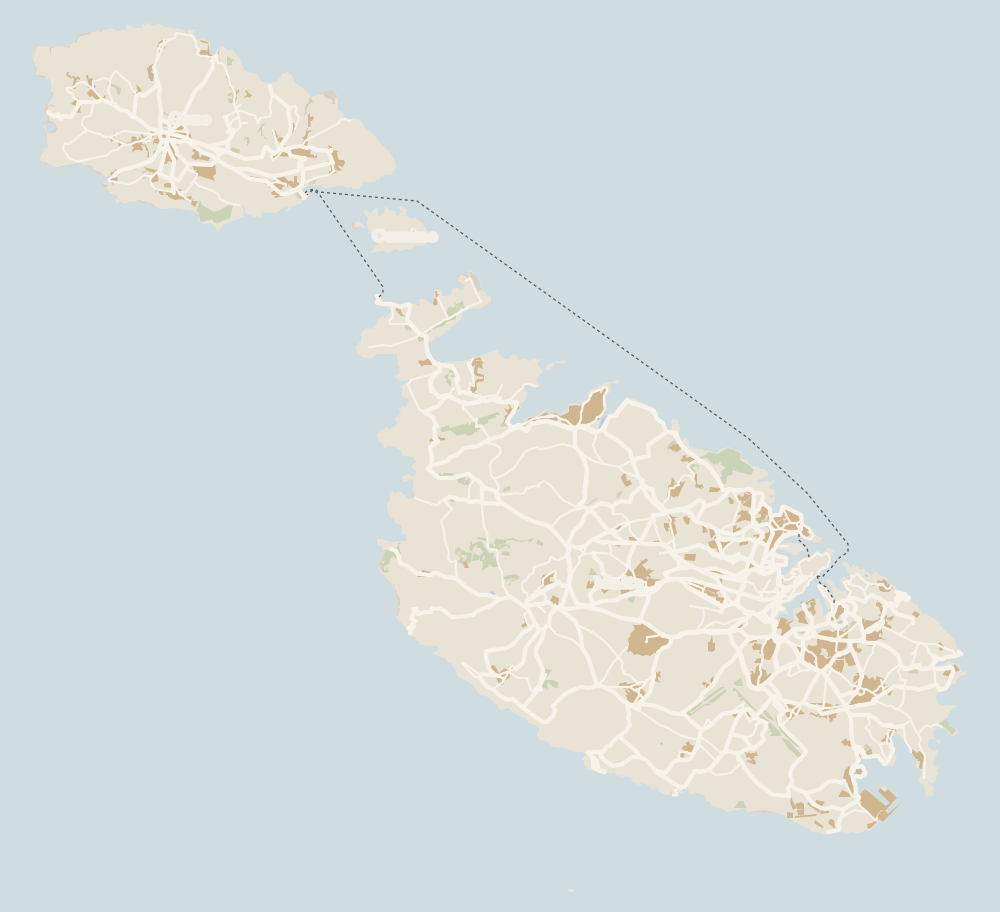 1Valletta 2St John's Co-Cathedral 3Grandmaster's Palace 4Fort St Elmo 5Barrakka Gardens 6Saluting Battery 7MUŻA 8National Museum of Archaeology 9Underground Valletta 10Lascaris War Rooms 11Casa Rocca Piccola 12Manoel Theatre 13City Gate and Parliament 14Valletta Waterfront
 Map data © OpenStreetMap contributors (ODbL)
- 1VallettaFounded 1566, on the UNESCO list since 1980
- 2St John's Co-CathedralFinished in 1577, closed on Sundays
- 3Grandmaster's PalaceHeritage Malta's most visited site
- 4Fort St ElmoFell on 23 June 1565
- 5Barrakka GardensGun salute at 12:00 and 16:00
- 6Saluting BatteryTwo firings a day, Monday to Saturday
- 7MUŻAOpened in late 2018
- 8National Museum of ArchaeologyNeolithic to Phoenician for €5
- 9Underground VallettaThree days a week, booking essential
- 10Lascaris War RoomsEisenhower's advance HQ in 1943
- 11Casa Rocca PiccolaGuided tours on the hour, 10:00 to 16:00
- 12Manoel TheatreOpened on 19 January 1732
- 13City Gate and ParliamentThe city's fifth gate, by Renzo Piano
- 14Valletta Waterfront19 Baroque warehouses from 1752
0 of 279 Malta guides
Your next stamp
- Grandmaster's Palace
- City Gate and Parliament
- Things to do in Malta
- Gozo
- Most beautiful places
- Comino
- Prettiest villages
- UNESCO World Heritage Sites
- Where is Malta
- The Maltese islands
- Towns and villages
- Island of Malta
- Blue Lagoon
- Fort Rinella
- Fort St Angelo
- Gardjola Gardens
- Ħal Saflieni Hypogeum
- Is Malta a country?
- Popeye Village
- Tarxien Temples
- Things to do in Gozo
- Valletta
- Esplora
- Golden Bay
- Gozo day trip
- Inquisitor's Palace
- Population
- St John's Co-Cathedral
- St Mary's Tower
- How big is Malta
- Maritime Museum
- Mellieħa Bay
- Fort St Elmo
- Language
- Malta at War Museum
- Paradise Bay
- Barrakka Gardens
- Red Tower
- Religion
- Malta government
- Saluting Battery
- MUŻA
- National Museum of Archaeology
- Underground Valletta
- Lascaris War Rooms
- Casa Rocca Piccola
- Malta in one day
- Three Cities
- Victoria
- Birgu
- Weekend in Malta
- Xagħra
- Malta in three days
- Nadur
- Senglea
- Cospicua
- Malta in four days
- Qala
- Valletta Waterfront
- Għajnsielem
- Kalkara
- Malta in five days
- Malta in a week
- Paola
- Xewkija
- Sannat
- Tarxien
- Munxar
- Żabbar
- Fgura
- Fontana
- Kerċem
- Luqa
- Floriana
- Marsa
- Mellieħa
- The Citadel, Gozo
- Żebbuġ (Gozo)
- Ġgantija Temples
- Marsalforn
- Santa Luċija
- Ramla Bay
- San Lawrenz
- Xgħajra
- Xwejni salt pans
- Calypso's Cave
- Għarb
- Żejtun
- Għasri
- Gudja
- San Blas Bay
- Għaxaq
- Ħondoq Bay
- Marsaxlokk
- Kirkop
- Marsaxlokk Fish Market
- Mqabba
- St Peter's Pool
- Marsaskala
- Qrendi
- Żurrieq
- Beaches
- Comino ferry
- EU, Schengen and the euro
- Ħaġar Qim and Mnajdra
- Mdina
- Mġarr (Gozo)
- Blue Grotto
- Diving
- Entry requirements
- Mdina Cathedral
- Xewkija Rotunda
- Birżebbuġa
- Money and payments
- Palazzo Falson
- Safi
- Shipwrecks
- Ta' Ċenċ Cliffs
- Għar Dalam
- Mdina Dungeons
- Mġarr ix-Xini
- Prices and budget
- Snorkelling
- Boat trips
- Malta on a budget
- Playmobil FunPark
- Rabat (Malta)
- Xlendi
- Dwejra
- Gozo beaches
- History
- Siġġiewi
- St Paul's Catacombs
- Tipping
- Azure Window
- Domvs Romana
- Għar Lapsi
- Great Siege of 1565
- Plugs
- Limestone Heritage Park
- Second World War
- St Paul's Grotto
- Ta' Pinu Basilica
- Time zone
- Buskett Gardens
- Knights of Malta
- Mobile and roaming
- Wied il-Għasri
- Dingli
- Maltese cross
- Dingli Cliffs
- Flag
- Żebbuġ
- Coat of arms
- Mtarfa
- Balzan
- National anthem
- Lija
- Malta facts
- Game of Thrones
- Iklin
- Attard
- Film locations
- Forts and fortifications
- San Anton Gardens
- Ta' Qali Crafts Village
- Victoria Lines
- Megalithic temples
- Catacombs
- Museums
- Where to eat
- Where to stay
- Churches
- Hotels in Valletta
- Restaurants in Valletta
- Hotels in Sliema
- Maltese food
- Restaurants in Marsaxlokk
- Viewpoints
- Hotels in St Julian's
- Pastizzi
- Walking and hiking
- Hotels in Buġibba and Qawra
- Maltese rabbit stew
- Safety
- Hotels in Mellieħa
- Kinnie and Cisk
- Scams
- Gozo hotels
- Nightlife
- Tap water
- Boat parties
- Holiday packages
- Tourist tax
- All inclusive
- Gay Malta
- Sightseeing passes
- Apartments
- Malta with kids
- Public holidays
- How to get there
- Luxury
- Malta for couples
- Taxis and ride-hailing
- Weather
- Best time to visit
- Cycling
- English schools
- Flights
- Flights from Madrid
- Sea temperature
- Shopping and souvenirs
- Airport
- Free walking tours
- In winter
- Airport transfers
- Day trips and tours
- In summer
- Ferry from Sicily
- In January
- Cruise stop
- In February
- In March
- In April
- In May
- Getting around
- In June
- Buses
- July
- August
- Hop on hop off
- Gozo ferry
- September
- Gozo fast ferry
- October
- November
- Valletta ferries
- Car hire
- December
- Driving
- Events
- St Paul's Bay
- Village feasts
- Buġibba
- Christmas
- Easter
- Qawra
- Carnival
- Xemxija
- Fireworks festival
- Malta National Aquarium
- Isle of MTV
- St Paul's Islands
- Mosta
- Mosta Rotunda
- Naxxar
- Palazzo Parisio
- Għargħur
- Mġarr (Malta)
- Sliema
- Ta' Ħaġrat and Skorba Temples
- Għajn Tuffieħa Bay
- Tigné Point
- Ġnejna Bay
- St Julian's
- Paceville
- St George's Bay
- Gżira
- Msida
- Ta' Xbiex
- Pietà
- Pembroke
- Swieqi
- San Ġwann
- Birkirkara
- Ħamrun
- Santa Venera
- Qormi
Frequently asked questions
Can you visit the Manoel Theatre?
Yes, on a guided tour from Monday to Saturday. It costs €10, and the times change with the season. There are no tours on Sundays.
How much is the Manoel Theatre tour?
€10. It's suitable for all ages, and groups are asked to book by email with the theatre.
When was the Manoel Theatre built?
Grand Master Antonio Manoel de Vilhena bought two houses to build it in 1731. Work took only ten months, and it opened on 19 January 1732 with Scipione Maffei's tragedy Merope.
Is the Manoel Theatre the oldest theatre in Europe?
No. The theatre describes itself as reputed to be Europe's third-oldest working theatre and the oldest working theatre in the Commonwealth. That's its own claim rather than an official ranking.
Is the Manoel Theatre panto still going?
Yes. The first British-style pantomime was staged here in 1907, and the theatre says it's still its most popular event of the year.
By
Tourism graduate with a master’s in Tourism Management and Planning from the University of Málaga, who has travelled across Europe. He writes every guide from official sources and his own judgement.
Published on . Facts checked on .
Sources
Photos: Leandro Neumann Ciuffo (CC BY 2.0); Cosal (CC BY-SA 4.0), via Wikimedia Commons.