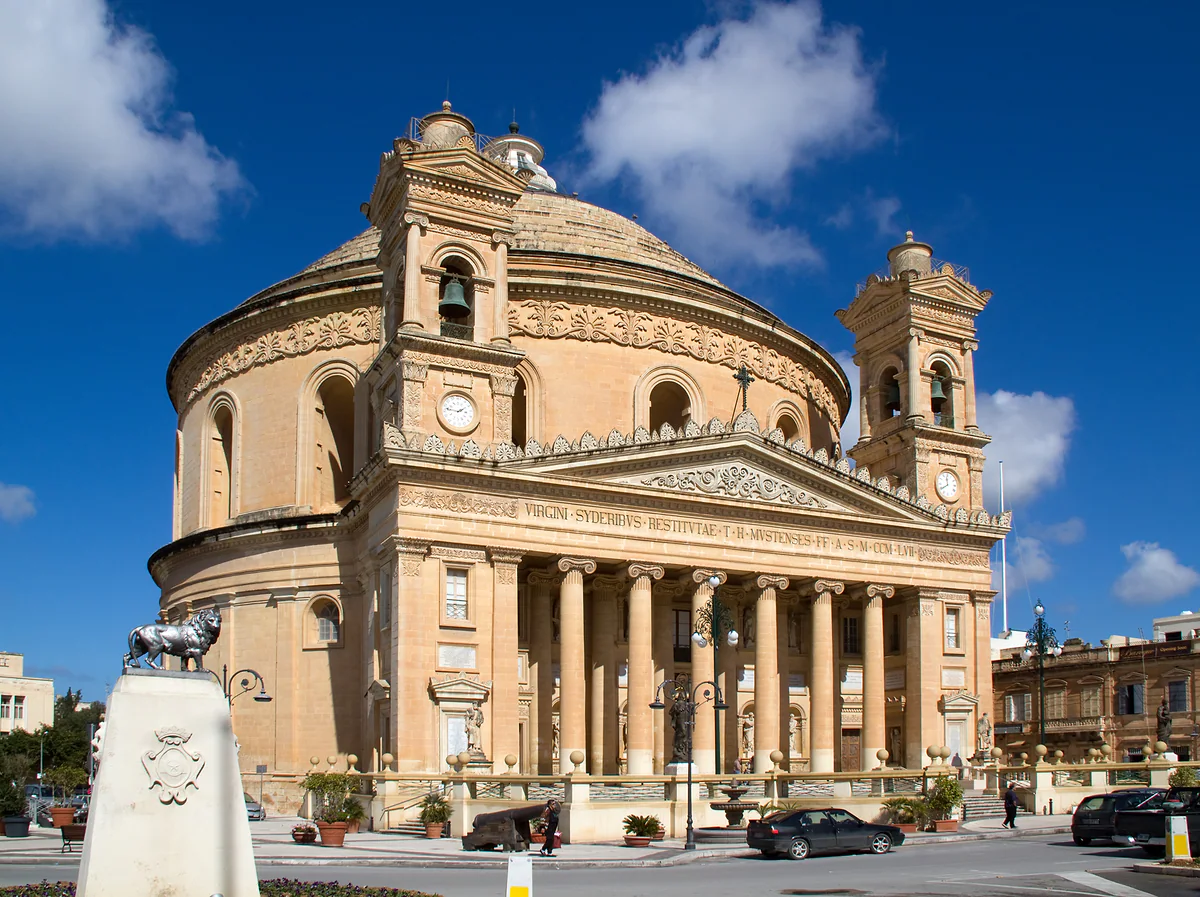
Local council in central Malta
Mosta, the town of the dome and a bit more
Mosta is Malta's third most populous locality, with 25,845 residents in 2025 (NSO), in the middle of the island. Most visitors come for the Rotunda, the Basilica of the Assumption, whose dome was pierced by a bomb in 1942 that never went off. It also has the Ta' Bistra catacombs and the central fort of the Victoria Lines.
In 30 seconds
Full read: 3 min
- Mosta is Malta's third most populous locality, with 25,845 residents in 2025.
- Its Rotunda is famous for the bomb that pierced the dome in 1942 and never exploded.
- The Ta' Bistra catacombs open on the last Sunday of each month.
- The 41, 42, 44, 45 and 48 run from Valletta; the 31, 45, 48, 186 and 280 from Qawra.
Mosta takes a morning, and I'd slot it in on the way between Valletta and the north. If you can, time it for the last Sunday of the month so you can add Ta' Bistra, which opens on very few days and hardly anyone knows about.

Before you go
What I would keep in mind
-
01 Most beautiful
The bomb that didn't go off
At 16:40 on 9 April 1942 a bomb pierced the Rotunda's dome and landed on the church floor without exploding. The parish displays a replica in the sacristy.
Mosta Rotunda -
02 My tip
Ta' Bistra opens one Sunday a month
The Ta' Bistra catacombs open on the last Sunday of each month, 10:00 to 16:00, according to Heritage Malta. Adult entry is €5.
the catacombs of Malta -
03 Worth the splurge
Magical Mosta on Tuesdays
Every Tuesday the parish runs a visit taking in the Rotunda, the shelter, a guided walk round the old core and a Maltese buffet at Dar Mustija, a house from 1800. €25 per adult.
-
04 Getting there
Mosta is on the way
The 41, 42, 44, 45 and 48 come from Valletta, and the 31, 45, 48, 186 and 280 from the Qawra terminus. It sits neatly between the capital and the north.
Malta buses
What I would book
Almost everyone comes to Mosta for the same thing, the enormous dome you can see from half the island, and almost everyone leaves without looking at anything else. Fair enough, since the Rotunda justifies the trip on its own. But Mosta is a big town, Malta’s third largest by population, and it hides a couple of extras worth the stop if the calendar plays along.
A big town in the middle of the island
The NSO counted 25,845 residents at the end of 2025, putting it behind only St Paul’s Bay and Birkirkara. It sits in the centre of Malta, halfway between Valletta and the north, which makes it a natural stop if you’re heading for Mellieħa or Ċirkewwa. Most people living here are Maltese, 21,102 against 4,743 foreign nationals, the opposite of neighbouring St Paul’s Bay.
The Rotunda and its bomb
The Basilica of St Mary, the Assumption, is the Rotunda everyone photographs. Work began in 1833 and dragged on for more than two decades, partly because the new church grew around the one it replaced. On Thursday 9 April 1942, during a raid by fifty bombers, a bomb pierced the dome at 16:40 and landed on the floor without exploding. The parish is keen to point out that no lives were lost and the building survived.
Measurements, opening times, the two ticket types and what you’ll see inside are all on my Mosta Rotunda page. I’ll just say that the full €8 ticket, which gets you onto the inner balcony of the dome, is the one I’d buy.
Ta’ Bistra, catacombs that open one Sunday a month
Halfway between ancient Melite and the old harbour at Salina, Heritage Malta looks after the Ta’ Bistra catacombs, which it describes as the largest set of tombs and catacombs beyond the confines of the ancient city. They were recorded in the late 1800s, investigated by Captain Charles Zammit in 1933, and part of the site was lost under the road down to Burmarrad.
There’s now a farmhouse visitor centre, a children’s area, plenty of parking and full wheelchair access. The catch is the timetable. They open only on the last Sunday of each month, 10:00 to 16:00, and adult entry is €5. If they interest you, I compare them with the others under catacombs in Malta.
The Victoria Lines fort
Mosta sits on the Great Fault, the natural barrier crossing the island north of Mdina. The British fortified it in the 19th century, and UNESCO’s Tentative List names three forts, Madliena in the east, Binġemma in the west and Mosta in the centre. When the line lost its military value in 1907, Mosta was the one fort that didn’t stay armed. What remains to see is covered on my Victoria Lines page.
Bidnija and its 500-year-old olives
Bidnija is one of the areas the Mosta parish counts as its own, and there Heritage Malta protects a small living treasure. It’s a grove of around twenty olive trees, legally protected since 1933, holding the oldest known specimens of the Bidni variety. Carbon dating of the oldest trunks puts them at about 500 years, and Heritage Malta says they carry a genetic signature of their own and resist pests that attack other olives. Next door, a joint project with the University of Malta is studying remains, possibly Roman, linked to oil production. The listing gives no clear visiting hours, so I’d check before going.
Magical Mosta on Tuesdays
The parish runs a full-day visit on Tuesdays, 10:30 to 15:30. It includes the Rotunda, the wartime shelter, an old farmhouse turned arts centre, the Speranza chapel in the valley of the same name, a guided walk round the old streets and a Maltese buffet at Dar Mustija, a house of 1800 that three siblings left to the parish in 1974. It’s €25 per adult, with under-12s free alongside an adult. On a first trip it’s a lot of time; on a return visit, with an appetite for village life, it’s a good day.
Getting there
The parish recommends five routes from the capital, listed in the fact box above, two from Mellieħa, the 41 and 44, and five more from the Qawra terminus. If you’re staying in St Paul’s Bay, Mosta is one bus away and easily done in a morning.
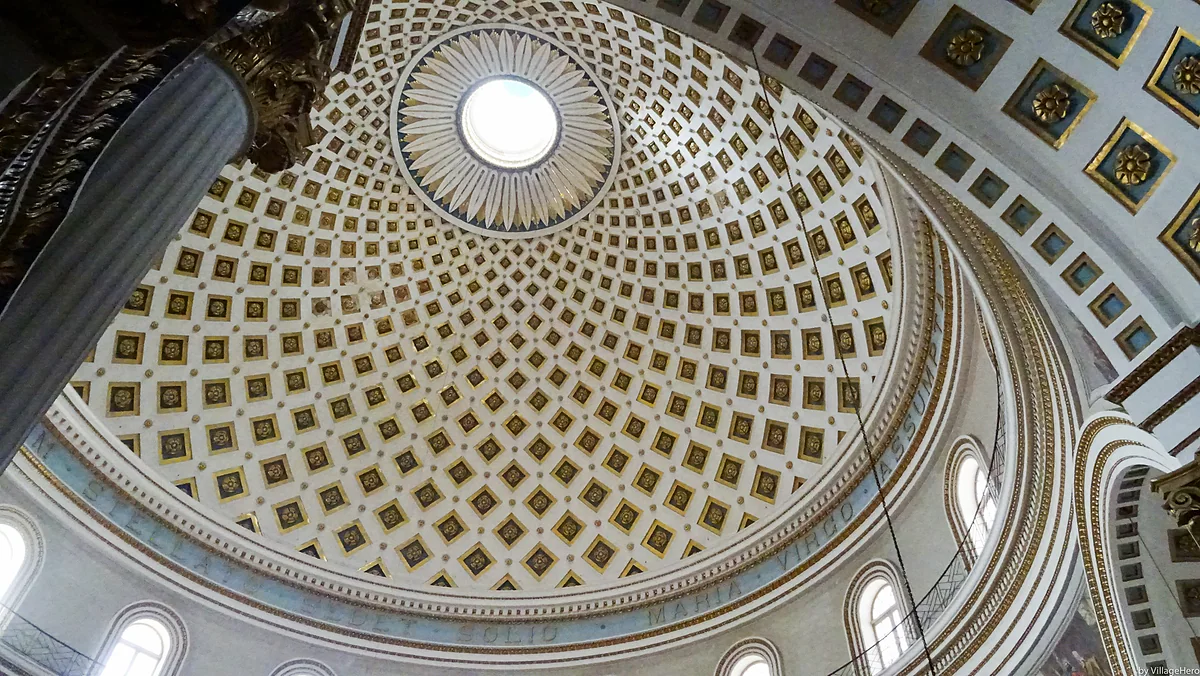
Inside the dome of the Rotunda of Mosta, its diamond-shaped coffers rising in rings towards the oculus of light at the centre.
What to see in Mosta
| Place | What it is | Hours and price |
|---|---|---|
| Mosta Rotunda | Basilica of the Assumption, dome and wartime shelter | Mon-Fri 09:30-18:00, Sat 09:30-16:30, Sun 12:00-17:00; €8 or €5 |
| Ta' Bistra Catacombs | Largest set of tombs outside ancient Melite | Last Sunday of the month 10:00-16:00; €5 |
| Magical Mosta | Rotunda, shelter, old core and buffet | Tuesday 10:30-15:30; €25 |
Hours and prices from Mosta parish and Heritage Malta, checked on 28 September 2026.
Mosta in figures (NSO)
| Figure | Value |
|---|---|
| Residents, 31 Dec 2025 | 25,845 |
| Maltese | 21,102 |
| Foreign nationals | 4,743 |
| Density | 3,813 per km² |
Test yourself
True or false?
0/4 Pick before you peek.
-
Mosta is one of Malta's three most populous localities.
See the answer
True. With 25,845 residents at the end of 2025, only St Paul's Bay (43,095) and Birkirkara (30,166) are bigger, according to the NSO.
-
The Mosta bomb exploded inside the church.
See the answer
False. The parish says it pierced the dome and landed on the floor without exploding. Nobody died and the church wasn't destroyed.
-
Fort Mosta is part of the Victoria Lines.
See the answer
True. UNESCO's Tentative List names it as the central fort of the line, between Madliena to the east and Binġemma to the west.
-
The Ta' Bistra catacombs open every day.
See the answer
False. Heritage Malta opens them only on the last Sunday of each month, 10:00 to 16:00.
- Residents (NSO, 2025)
- 25,845
- The bomb that didn't explode
- 1942
- Rotunda foundation stone
- 1833
- Ta' Bistra entry
- €5
Map
Where Mosta is
Gozo lies to the north-west, across the channel the ferry crosses from Ċirkewwa, with Comino between the two islands. Every number opens its guide.
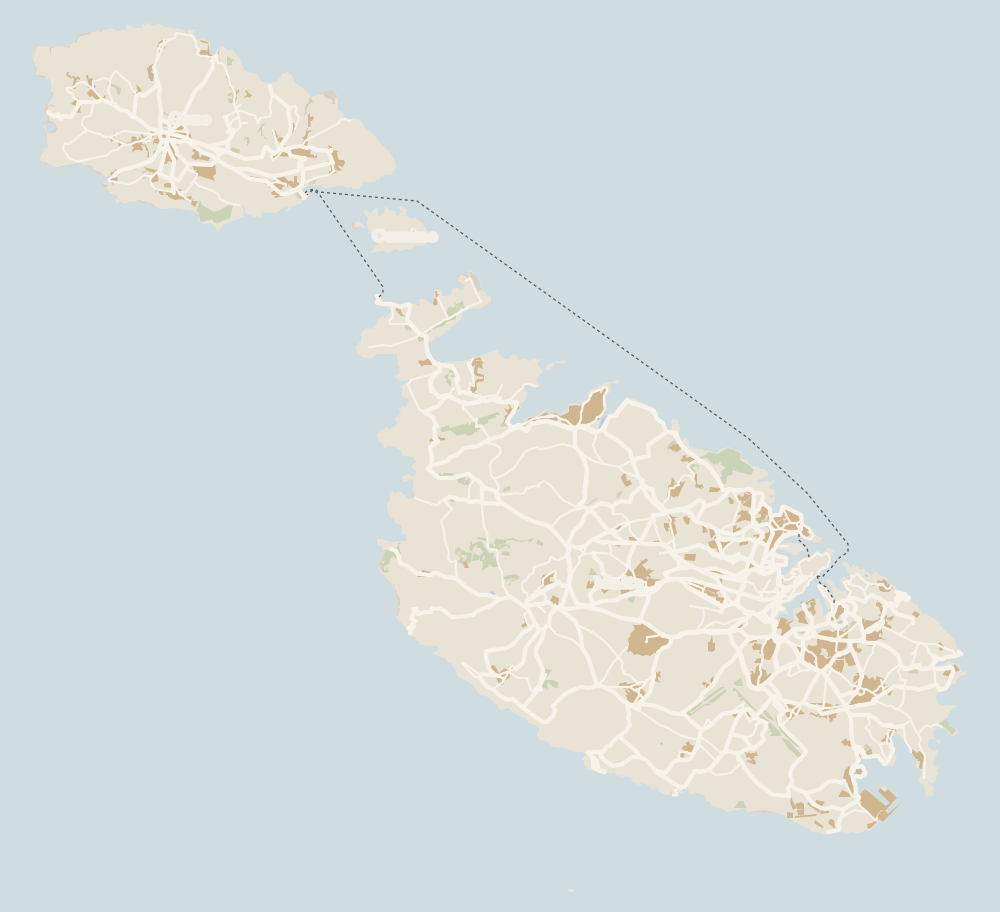 1Island of Malta 2Valletta 3Three Cities 4Kalkara 5Paola 6Tarxien 7Żabbar 8Fgura 9Luqa 10Floriana 11Marsa 12Mellieħa 13Santa Luċija 14Xgħajra 15Żejtun 16Gudja 17Għaxaq 18Marsaxlokk 19Kirkop 20Mqabba 21Marsaskala 22Qrendi 23Żurrieq 24Mdina 25Birżebbuġa 26Safi 27Rabat (Malta) 28Siġġiewi 29Dingli 30Żebbuġ 31Mtarfa 32Balzan 33Lija 34Iklin 35Attard 36Victoria Lines 37St Paul's Bay 38Mosta 39Naxxar 40Għargħur 41Mġarr (Malta) 42Sliema 43St Julian's 44Gżira 45Msida 46Ta' Xbiex 47Pietà 48Pembroke 49Swieqi 50San Ġwann 51Birkirkara 52Ħamrun 53Santa Venera 54Qormi
 Map data © OpenStreetMap contributors (ODbL)
- 1Island of Malta245 km² and 54 local councils
- 2VallettaFounded 1566, on the UNESCO list since 1980
- 3Three CitiesBirgu, Senglea and Cospicua
- 4Kalkara3,322 residents beside Birgu
- 5Paola10,064 residents above the Grand Harbour
- 6Tarxien10,266 residents and four temples
- 7ŻabbarSouthern Harbour district
- 8FguraSouthern Harbour district
- 9LuqaSouthern Harbour district
- 10Floriana2,043 residents at the capital's gates
- 11MarsaSouthern Harbour district
- 12MellieħaMalta's northern beach country
- 13Santa LuċijaSouthern Harbour district
- 14XgħajraEast coast, Southern Harbour district
- 15ŻejtunSouth Eastern district
- 16GudjaSouth Eastern district
- 17GħaxaqSouth Eastern district
- 18MarsaxlokkMalta's main fishing port
- 19KirkopSouth Eastern district
- 20MqabbaSouthern Malta, South Eastern district
- 21Marsaskala19,211 residents in the south east
- 22QrendiMalta's south coast
- 23ŻurrieqSouthern Malta, South Eastern district
- 24MdinaIsland of Malta, Western district
- 25BirżebbuġaSouth Eastern district, next to the Freeport
- 26SafiSouth Eastern district
- 27Rabat (Malta)Island of Malta, Western district
- 28SiġġiewiWestern Region, between Buskett and Għar Lapsi
- 29DingliIsland of Malta, Western district
- 30ŻebbuġWestern district, not the one on Gozo
- 31MtarfaIsland of Malta, Western district
- 32BalzanIsland of Malta, Western district
- 33LijaIsland of Malta, Western district
- 34IklinIsland of Malta, Western district
- 35AttardOne of central Malta's Three Villages
- 36Victoria LinesNamed in 1897 for Queen Victoria's Diamond Jubilee
- 37St Paul's BayLocal council in northern Malta
- 38MostaLocal council in central Malta
- 39NaxxarLocal council in northern Malta
- 40GħargħurLocal council in northern Malta
- 41Mġarr (Malta)Local council in western Malta
- 42SliemaIsland of Malta, Northern Harbour
- 43St Julian'sIsland of Malta, Northern Harbour
- 44GżiraIsland of Malta, Northern Harbour
- 45MsidaIsland of Malta, Northern Harbour
- 46Ta' XbiexIsland of Malta, Northern Harbour
- 47PietàIsland of Malta, Northern Harbour
- 48PembrokeIsland of Malta, Northern Harbour
- 49SwieqiIsland of Malta, Northern Harbour
- 50San ĠwannIsland of Malta, Northern Harbour
- 51BirkirkaraIsland of Malta, Northern Harbour
- 52ĦamrunIsland of Malta, Northern Harbour
- 53Santa VeneraIsland of Malta, Northern Harbour
- 54QormiIsland of Malta, inland from the Grand Harbour
What to see
What to see in Mosta
0 of 279 Malta guides
Your next stamp
- Mosta Rotunda
- Second World War
- Catacombs
- Forts and fortifications
- Ħamrun
- Birgu
- Żebbuġ
- Siġġiewi
- Things to do in Malta
- Gozo
- Most beautiful places
- Comino
- Prettiest villages
- UNESCO World Heritage Sites
- Where is Malta
- The Maltese islands
- Towns and villages
- Island of Malta
- Blue Lagoon
- Fort Rinella
- Fort St Angelo
- Gardjola Gardens
- Ħal Saflieni Hypogeum
- Is Malta a country?
- Popeye Village
- Tarxien Temples
- Things to do in Gozo
- Valletta
- Esplora
- Golden Bay
- Gozo day trip
- Inquisitor's Palace
- Population
- St John's Co-Cathedral
- St Mary's Tower
- Grandmaster's Palace
- How big is Malta
- Maritime Museum
- Mellieħa Bay
- Fort St Elmo
- Language
- Malta at War Museum
- Paradise Bay
- Barrakka Gardens
- Red Tower
- Religion
- Malta government
- Saluting Battery
- MUŻA
- National Museum of Archaeology
- Underground Valletta
- Lascaris War Rooms
- Casa Rocca Piccola
- Malta in one day
- Three Cities
- Victoria
- Manoel Theatre
- Weekend in Malta
- Xagħra
- City Gate and Parliament
- Malta in three days
- Nadur
- Senglea
- Cospicua
- Malta in four days
- Qala
- Valletta Waterfront
- Għajnsielem
- Kalkara
- Malta in five days
- Malta in a week
- Paola
- Xewkija
- Sannat
- Tarxien
- Munxar
- Żabbar
- Fgura
- Fontana
- Kerċem
- Luqa
- Floriana
- Marsa
- Mellieħa
- The Citadel, Gozo
- Żebbuġ (Gozo)
- Ġgantija Temples
- Marsalforn
- Santa Luċija
- Ramla Bay
- San Lawrenz
- Xgħajra
- Xwejni salt pans
- Calypso's Cave
- Għarb
- Żejtun
- Għasri
- Gudja
- San Blas Bay
- Għaxaq
- Ħondoq Bay
- Marsaxlokk
- Kirkop
- Marsaxlokk Fish Market
- Mqabba
- St Peter's Pool
- Marsaskala
- Qrendi
- Żurrieq
- Beaches
- Comino ferry
- EU, Schengen and the euro
- Ħaġar Qim and Mnajdra
- Mdina
- Mġarr (Gozo)
- Blue Grotto
- Diving
- Entry requirements
- Mdina Cathedral
- Xewkija Rotunda
- Birżebbuġa
- Money and payments
- Palazzo Falson
- Safi
- Shipwrecks
- Ta' Ċenċ Cliffs
- Għar Dalam
- Mdina Dungeons
- Mġarr ix-Xini
- Prices and budget
- Snorkelling
- Boat trips
- Malta on a budget
- Playmobil FunPark
- Rabat (Malta)
- Xlendi
- Dwejra
- Gozo beaches
- History
- St Paul's Catacombs
- Tipping
- Azure Window
- Domvs Romana
- Għar Lapsi
- Great Siege of 1565
- Plugs
- Limestone Heritage Park
- St Paul's Grotto
- Ta' Pinu Basilica
- Time zone
- Buskett Gardens
- Knights of Malta
- Mobile and roaming
- Wied il-Għasri
- Dingli
- Maltese cross
- Dingli Cliffs
- Flag
- Coat of arms
- Mtarfa
- Balzan
- National anthem
- Lija
- Malta facts
- Game of Thrones
- Iklin
- Attard
- Film locations
- San Anton Gardens
- Ta' Qali Crafts Village
- Victoria Lines
- Megalithic temples
- Museums
- Where to eat
- Where to stay
- Churches
- Hotels in Valletta
- Restaurants in Valletta
- Hotels in Sliema
- Maltese food
- Restaurants in Marsaxlokk
- Viewpoints
- Hotels in St Julian's
- Pastizzi
- Walking and hiking
- Hotels in Buġibba and Qawra
- Maltese rabbit stew
- Safety
- Hotels in Mellieħa
- Kinnie and Cisk
- Scams
- Gozo hotels
- Nightlife
- Tap water
- Boat parties
- Holiday packages
- Tourist tax
- All inclusive
- Gay Malta
- Sightseeing passes
- Apartments
- Malta with kids
- Public holidays
- How to get there
- Luxury
- Malta for couples
- Taxis and ride-hailing
- Weather
- Best time to visit
- Cycling
- English schools
- Flights
- Flights from Madrid
- Sea temperature
- Shopping and souvenirs
- Airport
- Free walking tours
- In winter
- Airport transfers
- Day trips and tours
- In summer
- Ferry from Sicily
- In January
- Cruise stop
- In February
- In March
- In April
- In May
- Getting around
- In June
- Buses
- July
- August
- Hop on hop off
- Gozo ferry
- September
- Gozo fast ferry
- October
- November
- Valletta ferries
- Car hire
- December
- Driving
- Events
- St Paul's Bay
- Village feasts
- Buġibba
- Christmas
- Easter
- Qawra
- Carnival
- Xemxija
- Fireworks festival
- Malta National Aquarium
- Isle of MTV
- St Paul's Islands
- Naxxar
- Palazzo Parisio
- Għargħur
- Mġarr (Malta)
- Sliema
- Ta' Ħaġrat and Skorba Temples
- Għajn Tuffieħa Bay
- Tigné Point
- Ġnejna Bay
- St Julian's
- Paceville
- St George's Bay
- Gżira
- Msida
- Ta' Xbiex
- Pietà
- Pembroke
- Swieqi
- San Ġwann
- Birkirkara
- Santa Venera
- Qormi
Frequently asked questions
What is there to see in Mosta?
The Rotunda, with its dome, the replica of the 1942 bomb and the wartime shelter; the Ta' Bistra catacombs on the last Sunday of the month; and, if fortifications appeal, Fort Mosta on the Victoria Lines.
How do I get to Mosta from Valletta?
By bus on the 41, 42, 44, 45 or 48, according to Mosta parish. A single fare is €2.50 in summer and €2 in winter.
How do I get from Buġibba to Mosta?
The 31, 45, 48, 186 and 280 run from the Qawra terminus. The parish also suggests the 212 to the Andru stop in Buġibba and then the 103 to Mosta.
How long do you need in Mosta?
A morning. The Rotunda with crypt, museum and dome balcony takes an hour or an hour and a half, and Ta' Bistra, if your dates match, another hour.
When is the Mosta festa?
The basilica is dedicated to the Assumption, Santa Marija, and 15 August is a national holiday. The parish doesn't publish the festa programme online, so confirm the 2027 date with them.
By
Tourism graduate with a master’s in Tourism Management and Planning from the University of Málaga, who has travelled across Europe. He writes every guide from official sources and his own judgement.
Published on . Facts checked on .
Sources
Photos: Tony Hisgett from Birmingham, UK (CC BY 2.0); VillageHero from Ulm, Germany (CC BY-SA 2.0), via Wikimedia Commons.