588,254 on 31 December 2025
How many people live in Malta, and who they are
Malta had 588,254 residents on 31 December 2025, according to the National Statistics Office (NSO): 405,561 Maltese and 182,693 foreign nationals, or 31.1%. That's 14,004 more than a year earlier and 40% more than in 2012. Across 316 km², density is 1,867 people per km², rising to 2,218 on the island of Malta.
In 30 seconds
Full read: 3 min
- Malta had 588,254 residents on 31 December 2025, according to the NSO.
- 31.1% were foreign nationals, almost eight times as many as in 2012.
- Density is 1,867 people per km², or 2,218 on the island of Malta.
- The largest locality is St Paul's Bay (43,095); the capital has 5,189.
- The 574,250 figure still doing the rounds is the one for 2024.
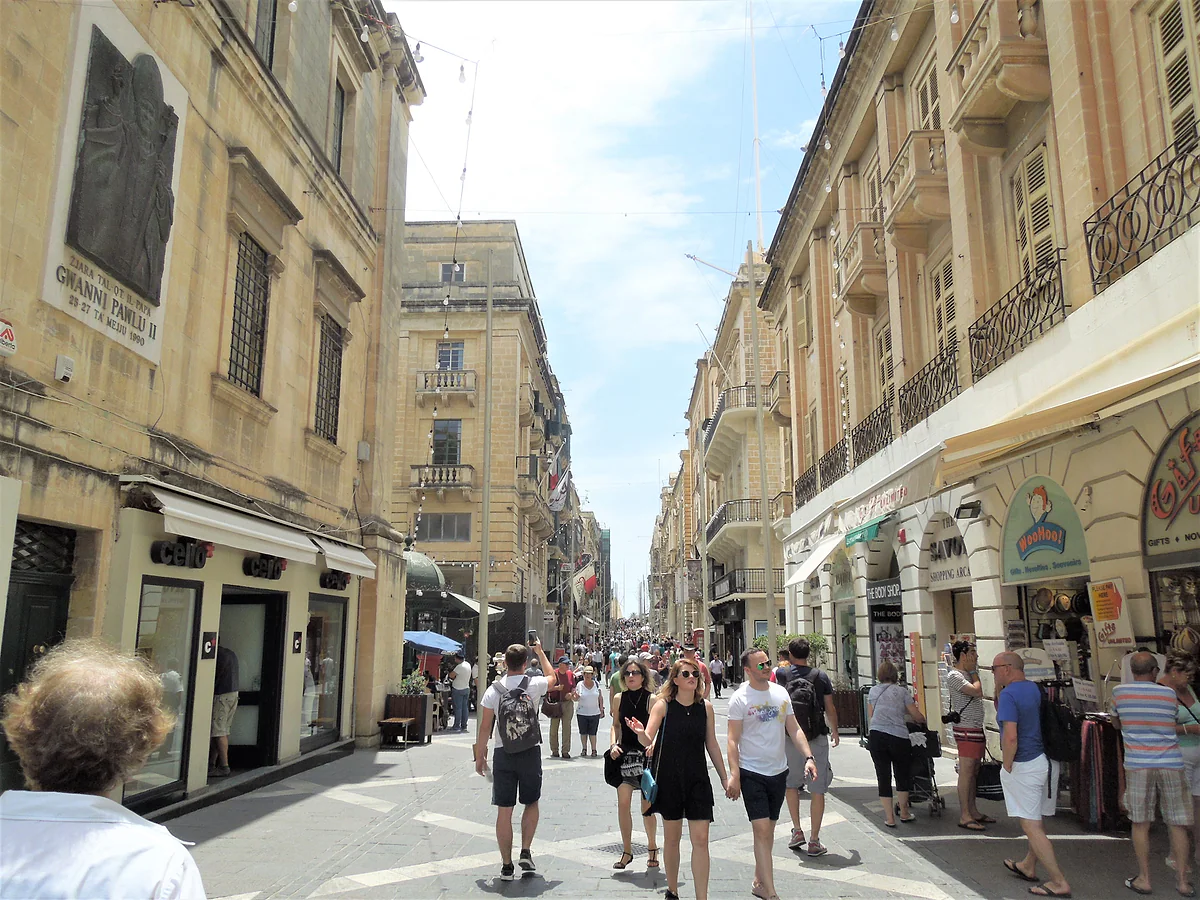
I'd bear these figures in mind when choosing where to stay. The Sliema and St Julian's seafront sits in the country's densest district, at 7,836 people per km², so if you want peace you'll find it sooner around Mdina, in the west or on Gozo.

Before you go
What I would keep in mind
-
01 My tip
Don't trust the 574,250 figure
The EU's website and Spain's foreign ministry still quote 574,250, but that's the NSO figure for the end of 2024. The current one, at 31 December 2025, is 588,254.
towns and villages in Malta -
02 Most beautiful
Gozo, the quiet counterweight
Gozo and Comino have 41,793 residents at 609 per km², under a third of the density on Malta. To me you feel that difference the moment you step off the ferry.
Gozo island -
03 Getting there
The biggest town is on the coast
St Paul's Bay, including Buġibba and Qawra, has 43,095 residents, 65% of them foreign nationals. It's the north's big hotel area and grew fastest in 2025, by 7.2%.
St Paul's Bay
What I would book
The figure you’ll find almost everywhere is out of date. Both the EU’s country page and Spain’s foreign ministry give 574,250, but that’s Malta’s population at the end of 2024. The NSO, Malta’s statistics office, counted 588,254 on 31 December 2025. And behind that number sits a story that, to my mind, explains the Malta you’ll actually find better than any other.
Malta’s population in 2026
On 31 December 2025, 588,254 people lived in Malta, 14,004 more than a year before, growth of 2.4%. Of those, 405,561 held Maltese nationality and 182,693 were foreign nationals, 31.1%. Nearly all of them live on the main island, which accounts for 546,461, leaving 41,793 on Gozo and Comino. Density across the country is 1,867 people per square kilometre, rising to 2,218 on the island of Malta. I put that into perspective in how big is Malta.
A country that grew 40% in thirteen years
This is what strikes me most in the data. In 2012 Malta had 421,464 residents, only 23,365 of them foreign nationals. By 2025 the total had grown by 40% and foreign residents had multiplied almost eightfold. Maltese nationals, meanwhile, barely moved, from 398,099 to 405,561. Practically all the growth has come from outside.
You notice it on the coast. In 2025 foreign residents outnumbered Maltese in Pietà, Gżira, Msida, St Julian’s, Sliema and St Paul’s Bay. In St Paul’s Bay, which is also the largest locality in the country with 43,095 people, foreign nationals make up 65%. The full breakdown by town is in towns and villages in Malta.
Where do people live?
This is where many visitors are surprised. The capital, Valletta, has just 5,189 residents, fewer than the 5,635 it had in 2012. The big towns are on the coast and in the middle of the island, St Paul’s Bay, Birkirkara (30,166), Mosta (25,845) and Sliema (23,570). The Northern Harbour district, around Sliema and Birkirkara, holds 188,162 people at 7,836 per square kilometre.
At the other end of the scale is Mdina, with 201 residents, the smallest locality, and on Gozo, Għasri, with 519. Senglea, on the Grand Harbour, reaches 15,060 people per square kilometre, the highest density in the country.
Maltese, foreign nationals and visitors
People from Malta are Maltese, which is also the name of the language. The NSO file I used groups residents as Maltese or foreign without splitting them by country, so I can’t give an official figure for British residents.
Two other numbers help with scale. In 2025 Malta welcomed 4,022,310 tourists, roughly seven for every resident, and 76,063 foreign students took English courses at its 34 licensed language schools. If you’re wondering which languages you’ll hear in the street, I cover that in the language of Malta.
What this means for your trip
My practical reading is simple, and it runs through my whole Malta travel guide. The island of Malta is small and very full, especially in the strip from Valletta to St Julian’s. That has upsides, with frequent buses, restaurants close at hand and services everywhere, and it has a price in traffic and a heavily built-up coast. If you want calm, you’ll find it in the west, in the interior around Mdina, and above all on Gozo, at under a third of the main island’s density.
Seven tourists for every resident
Residents are only part of the crowd. According to the NSO, 4,022,310 tourists arrived in 2025, spending 25.4 million nights in the country and €3,904.4 million, about €971 each. Even December, a quiet month, brought 225,104, up 17% on a year earlier. Gozo and Comino received 589,343 tourists, but 67.4% were Maltese from the other island. My takeaway is that in high season the main island feels far busier than its 546,461 residents suggest, so book early. That goes double for July and August, the airport’s two busiest months. In Malta, the census figure and the feel on the ground in August can be two very different things, and it pays to plan for the second.
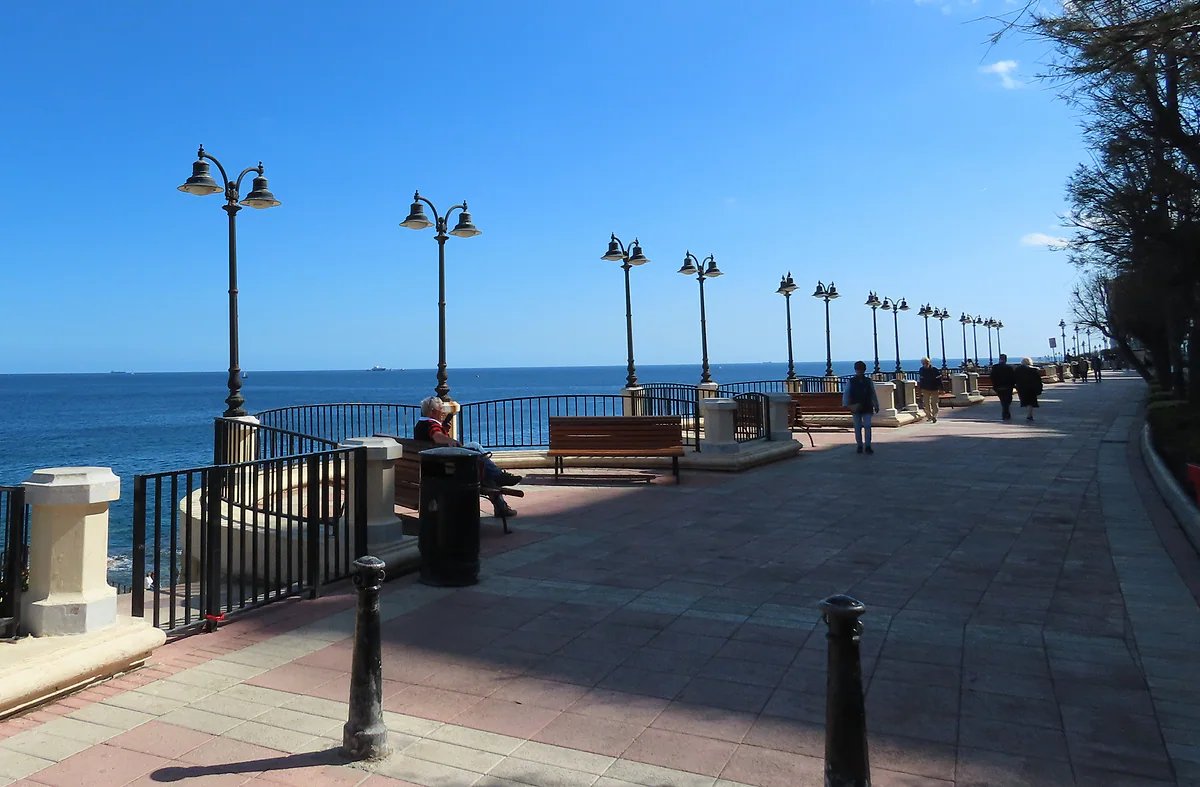
The seafront promenade between Sliema and St Julian's, with lamp posts, benches and railings open to a deep blue sea on a clear day.
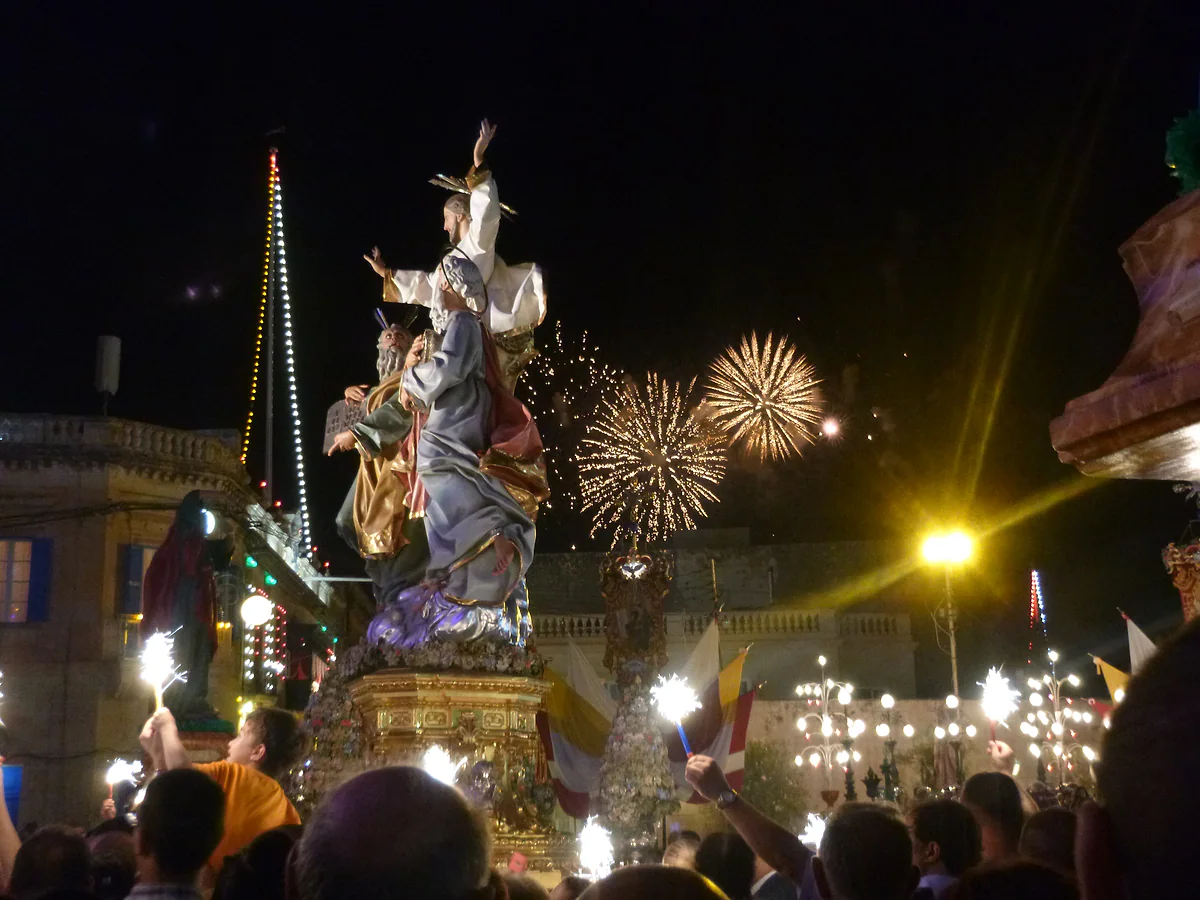
The statue of the Saviour carried through the streets of Lija at the close of its festa, with crowds, street lights and fireworks behind.
Malta's population, 2012-2025
| Year (31-12) | Total | Maltese | Foreign nationals |
|---|---|---|---|
| 2012 | 421,464 | 398,099 | 23,365 |
| 2024 | 574,250 | No breakdown in the sources | No breakdown in the sources |
| 2025 | 588,254 | 405,561 | 182,693 |
NSO population-by-locality files for 2012-2024 (archive.org copy) and 2012-2025.
Where people live
| Area | Residents (31-12-2025) | Per km² |
|---|---|---|
| Island of Malta | 546,461 | 2,218 |
| Gozo and Comino | 41,793 | 609 |
| Northern Harbour (most populous district) | 188,162 | 7,836 |
| St Paul's Bay (largest locality) | 43,095 | 2,974 |
| Valletta (capital) | 5,189 | 6,170 |
| Mdina (smallest locality) | 201 | 227 |
NSO. Island totals are the sum of their localities.
Test yourself
True or false?
0/4 Pick before you peek.
-
Malta has a population of 574,250.
See the answer
False. That was the figure at the end of 2024. On 31 December 2025 the NSO counted 588,254, up 2.4%.
-
Nearly a third of Malta's residents are foreign nationals.
See the answer
True. At the end of 2025 they numbered 182,693 out of 588,254, or 31.1%, according to the NSO.
-
The number of Maltese nationals has grown by 40% since 2012.
See the answer
False. It's the total that's up 40%. Maltese nationals went from 398,099 to 405,561; almost all the growth came from foreign residents.
-
Some Maltese towns have more foreign residents than Maltese ones.
See the answer
True. In 2025 that was true of six, including Sliema, St Julian's and St Paul's Bay, according to the NSO.
- Residents at 31-12-2025
- 588,254
- Foreign nationals
- 31.1%
- People per km²
- 1,867
- Growth since 2012
- +40%
0 of 279 Malta guides
Your next stamp
- Malta facts
- Island of Malta
- Gay Malta
- Is Malta a country?
- How big is Malta
- Malta government
- Things to do in Malta
- Gozo
- Most beautiful places
- Comino
- Prettiest villages
- UNESCO World Heritage Sites
- Where is Malta
- The Maltese islands
- Towns and villages
- Blue Lagoon
- Fort Rinella
- Fort St Angelo
- Gardjola Gardens
- Ħal Saflieni Hypogeum
- Popeye Village
- Tarxien Temples
- Things to do in Gozo
- Valletta
- Esplora
- Golden Bay
- Gozo day trip
- Inquisitor's Palace
- St John's Co-Cathedral
- St Mary's Tower
- Grandmaster's Palace
- Maritime Museum
- Mellieħa Bay
- Fort St Elmo
- Language
- Malta at War Museum
- Paradise Bay
- Barrakka Gardens
- Red Tower
- Religion
- Saluting Battery
- MUŻA
- National Museum of Archaeology
- Underground Valletta
- Lascaris War Rooms
- Casa Rocca Piccola
- Malta in one day
- Three Cities
- Victoria
- Birgu
- Manoel Theatre
- Weekend in Malta
- Xagħra
- City Gate and Parliament
- Malta in three days
- Nadur
- Senglea
- Cospicua
- Malta in four days
- Qala
- Valletta Waterfront
- Għajnsielem
- Kalkara
- Malta in five days
- Malta in a week
- Paola
- Xewkija
- Sannat
- Tarxien
- Munxar
- Żabbar
- Fgura
- Fontana
- Kerċem
- Luqa
- Floriana
- Marsa
- Mellieħa
- The Citadel, Gozo
- Żebbuġ (Gozo)
- Ġgantija Temples
- Marsalforn
- Santa Luċija
- Ramla Bay
- San Lawrenz
- Xgħajra
- Xwejni salt pans
- Calypso's Cave
- Għarb
- Żejtun
- Għasri
- Gudja
- San Blas Bay
- Għaxaq
- Ħondoq Bay
- Marsaxlokk
- Kirkop
- Marsaxlokk Fish Market
- Mqabba
- St Peter's Pool
- Marsaskala
- Qrendi
- Żurrieq
- Beaches
- Comino ferry
- EU, Schengen and the euro
- Ħaġar Qim and Mnajdra
- Mdina
- Mġarr (Gozo)
- Blue Grotto
- Diving
- Entry requirements
- Mdina Cathedral
- Xewkija Rotunda
- Birżebbuġa
- Money and payments
- Palazzo Falson
- Safi
- Shipwrecks
- Ta' Ċenċ Cliffs
- Għar Dalam
- Mdina Dungeons
- Mġarr ix-Xini
- Prices and budget
- Snorkelling
- Boat trips
- Malta on a budget
- Playmobil FunPark
- Rabat (Malta)
- Xlendi
- Dwejra
- Gozo beaches
- History
- Siġġiewi
- St Paul's Catacombs
- Tipping
- Azure Window
- Domvs Romana
- Għar Lapsi
- Great Siege of 1565
- Plugs
- Limestone Heritage Park
- Second World War
- St Paul's Grotto
- Ta' Pinu Basilica
- Time zone
- Buskett Gardens
- Knights of Malta
- Mobile and roaming
- Wied il-Għasri
- Dingli
- Maltese cross
- Dingli Cliffs
- Flag
- Żebbuġ
- Coat of arms
- Mtarfa
- Balzan
- National anthem
- Lija
- Game of Thrones
- Iklin
- Attard
- Film locations
- Forts and fortifications
- San Anton Gardens
- Ta' Qali Crafts Village
- Victoria Lines
- Megalithic temples
- Catacombs
- Museums
- Where to eat
- Where to stay
- Churches
- Hotels in Valletta
- Restaurants in Valletta
- Hotels in Sliema
- Maltese food
- Restaurants in Marsaxlokk
- Viewpoints
- Hotels in St Julian's
- Pastizzi
- Walking and hiking
- Hotels in Buġibba and Qawra
- Maltese rabbit stew
- Safety
- Hotels in Mellieħa
- Kinnie and Cisk
- Scams
- Gozo hotels
- Nightlife
- Tap water
- Boat parties
- Holiday packages
- Tourist tax
- All inclusive
- Sightseeing passes
- Apartments
- Malta with kids
- Public holidays
- How to get there
- Luxury
- Malta for couples
- Taxis and ride-hailing
- Weather
- Best time to visit
- Cycling
- English schools
- Flights
- Flights from Madrid
- Sea temperature
- Shopping and souvenirs
- Airport
- Free walking tours
- In winter
- Airport transfers
- Day trips and tours
- In summer
- Ferry from Sicily
- In January
- Cruise stop
- In February
- In March
- In April
- In May
- Getting around
- In June
- Buses
- July
- August
- Hop on hop off
- Gozo ferry
- September
- Gozo fast ferry
- October
- November
- Valletta ferries
- Car hire
- December
- Driving
- Events
- St Paul's Bay
- Village feasts
- Buġibba
- Christmas
- Easter
- Qawra
- Carnival
- Xemxija
- Fireworks festival
- Malta National Aquarium
- Isle of MTV
- St Paul's Islands
- Mosta
- Mosta Rotunda
- Naxxar
- Palazzo Parisio
- Għargħur
- Mġarr (Malta)
- Sliema
- Ta' Ħaġrat and Skorba Temples
- Għajn Tuffieħa Bay
- Tigné Point
- Ġnejna Bay
- St Julian's
- Paceville
- St George's Bay
- Gżira
- Msida
- Ta' Xbiex
- Pietà
- Pembroke
- Swieqi
- San Ġwann
- Birkirkara
- Ħamrun
- Santa Venera
- Qormi
Frequently asked questions
What is the population of Malta?
588,254 on 31 December 2025, according to the NSO, Malta's statistics office. Of those, 405,561 were Maltese nationals and 182,693 foreign nationals.
What is the population of the island of Malta?
546,461 at the end of 2025, adding up its 54 localities. Gozo and Comino account for the other 41,793.
What is the population of Valletta?
5,189 on 31 December 2025. It's the capital but it's shrinking, down from 5,635 in 2012, and it's nowhere near the largest town.
What are people from Malta called?
Maltese. The same word covers the language, Maltese, which is official alongside English.
How many foreigners live in Malta?
182,693 at the end of 2025, 31.1% of the population. In 2012 there were 23,365, so the number has risen almost eightfold in thirteen years.
Is Malta densely populated?
Very. It has 1,867 people per km² across the country and 2,218 on the island of Malta. In Senglea the figure reaches 15,060.
By
Tourism graduate with a master’s in Tourism Management and Planning from the University of Málaga, who has travelled across Europe. He writes every guide from official sources and his own judgement.
Published on . Facts checked on .
Sources
Photos: Cosal (CC BY-SA 4.0); Tracey Hind from Aups, France (CC BY-SA 2.0); SharonPisani (CC BY-SA 4.0), via Wikimedia Commons.