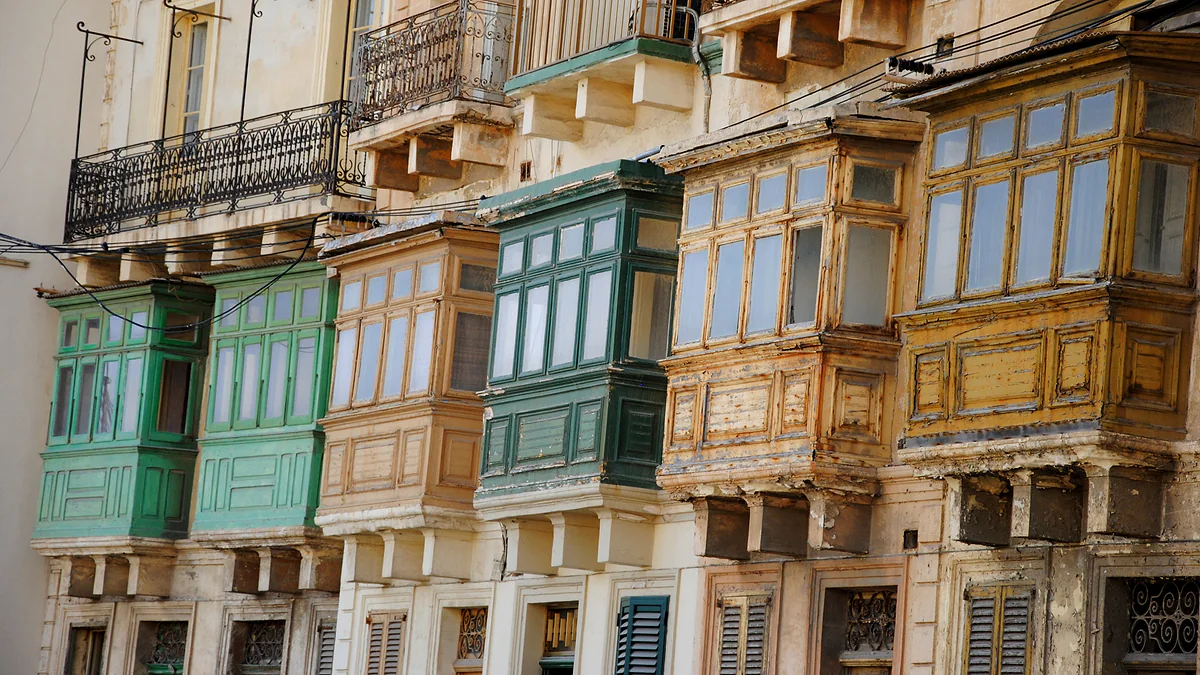
Two official languages
What language they speak in Malta, and why you'll be fine
Malta has two official languages, Maltese and English, according to the Maltese government. English gets you through hotels, restaurants, museums and buses without any effort, while Maltese gives its name to almost every town and street. In 2025, 76,063 foreign students came to study English at its 34 licensed language schools.
In 30 seconds
Full read: 3 min
- Malta has two official languages, Maltese and English.
- English is all a British visitor needs.
- Maltese uses the Latin alphabet plus letters such as ħ, ġ, ċ and ż.
- Most places have a Maltese name, and many an English or Italian one too.
- In 2025, 76,063 foreign students studied English at 34 licensed schools.
For a British visitor, language is the one thing about Malta you don't need to plan. What I'd do is learn to recognise the Maltese letters, because they're on every bus stop and road name and they'll save you missing your stop.

Before you go
What I would keep in mind
-
01 My tip
Learn to spot ħ, ġ and ż
Official place names are in Maltese, such as Ħal Luqa, Għajnsielem or Iż-Żurrieq. You needn't pronounce them perfectly, but recognising the letters helps you follow the bus route.
towns and villages in Malta -
02 Most beautiful
Place names with two lives
Plenty of places carry a Maltese name and an English or Italian one. The capital is Il-Belt Valletta, Gozo is Għawdex and Comino is Kemmuna, while Birgu is also Vittoriosa.
the Maltese islands -
03 Watch out
English courses only at licensed schools
Spain's foreign ministry advises booking English courses only with officially recognised schools. The NSO counted 34 licensed schools in 2025.
English schools in Malta -
04 Getting there
Buses in Maltese and English
Malta Public Transport names routes in both languages, so the airport stop reads 'Ħal Luqa (Airport)' and the 119 runs 'Ajruport - Marsaskala'. It's easy once you know.
Malta buses
What I would book
For a British traveller this is one of the most reassuring facts about Malta. The country has two official languages, Maltese and English, and both are genuinely in use. In practice that means language won’t be an obstacle at any point, and on top of that you’ll hear a language that sounds like nothing else you know.
Maltese and English, both official
The Maltese government puts it plainly, listing the languages as Maltese and English, ‘both official’. Because English is official, it gets you through hotels, restaurants, museums and public transport, and Maltese is the language that gives its name to almost everything. The two sit side by side in place names, since many places have both a Maltese form and an English or Italian one. The capital is Il-Belt Valletta, Gozo is Għawdex and Comino is Kemmuna.
There’s a great deal of history behind that. Malta passed from Sicily to the Order of St John, then to France and to Britain until independence in 1964, which I cover in is Malta a country?.
Will you get by in English?
Completely. You can order, ask directions, buy a bus ticket and follow a museum audio guide in English without a second thought. That’s also why Malta works so well for families and older travellers who don’t want the stress of a language barrier. English is also all you need for a free walking tour in Valletta. What you won’t find is English replacing Maltese on names, so the thing worth learning is how to read them.
What Maltese looks like
Maltese is written in the Latin alphabet but with letters of its own that you’ll see everywhere, such as ħ, ġ, ċ, ż and the pair għ. That’s why town names look impossible at first, Għajnsielem, Ħal Luqa or Iż-Żurrieq. The NSO also writes them with the article, Il-Birgu, L-Isla, Ħal Tarxien.
You don’t need to learn the language, but I find it useful to recognise those letters, because Malta Public Transport uses the Maltese form on its stops and routes. A stop marked ‘Ħal Luqa (Airport)’ is the airport, and route 119 runs ‘Ajruport - Marsaskala’. The list of places with their English equivalents is in towns and villages in Malta.
Malta as a place to learn English
This is where language turns into a reason to travel. According to the NSO, 76,063 foreign students went to Malta in 2025 to study English at 34 licensed schools, 4,883 fewer than in 2024. Italians were the largest group at 23.0%, followed by Germans and French, and 71.8% came from the EU. Nearly a third were 15 or under, and July and August were the busiest months.
For a July or August trip that’s worth knowing, because those are also the airport’s busiest months, with more than a million passengers each in 2025. Spain’s foreign ministry, advising its own students, recommends booking only with officially recognised schools. I go into it in English schools in Malta.
My advice
You won’t need a phrasebook. English will carry you through the whole trip. Take ten minutes to get used to the Maltese letters and the double names, Birgu and Vittoriosa, Senglea and Isla, Gozo and Għawdex, and you’ll read bus timetables and maps with far more confidence. It’s a small effort, and it also gives you a feel for the one thing in Malta that really is unlike anywhere else, the sound of its own language.
The names you’ll read
In practice, where you’ll meet Maltese most is in names. Official statistics write L-Imdina for Mdina, Ir-Rabat, Għawdex for Victoria and Il-Belt Valletta for the capital, and Heritage Malta’s sites carry names like Ħaġar Qim, Ġgantija or Ta’ Ħaġrat. Many places have two or three forms, Birgu is also Vittoriosa, Senglea is Isla and Cospicua is Bormla, and throughout this guide I give the usual English name, adding the Maltese in brackets on first mention.
In an emergency language won’t be an issue either. The Foreign Office lists 112 for ambulance, fire and police, and you’ll be understood in English. Once you stop reading għ as a typo, half the map suddenly makes sense.
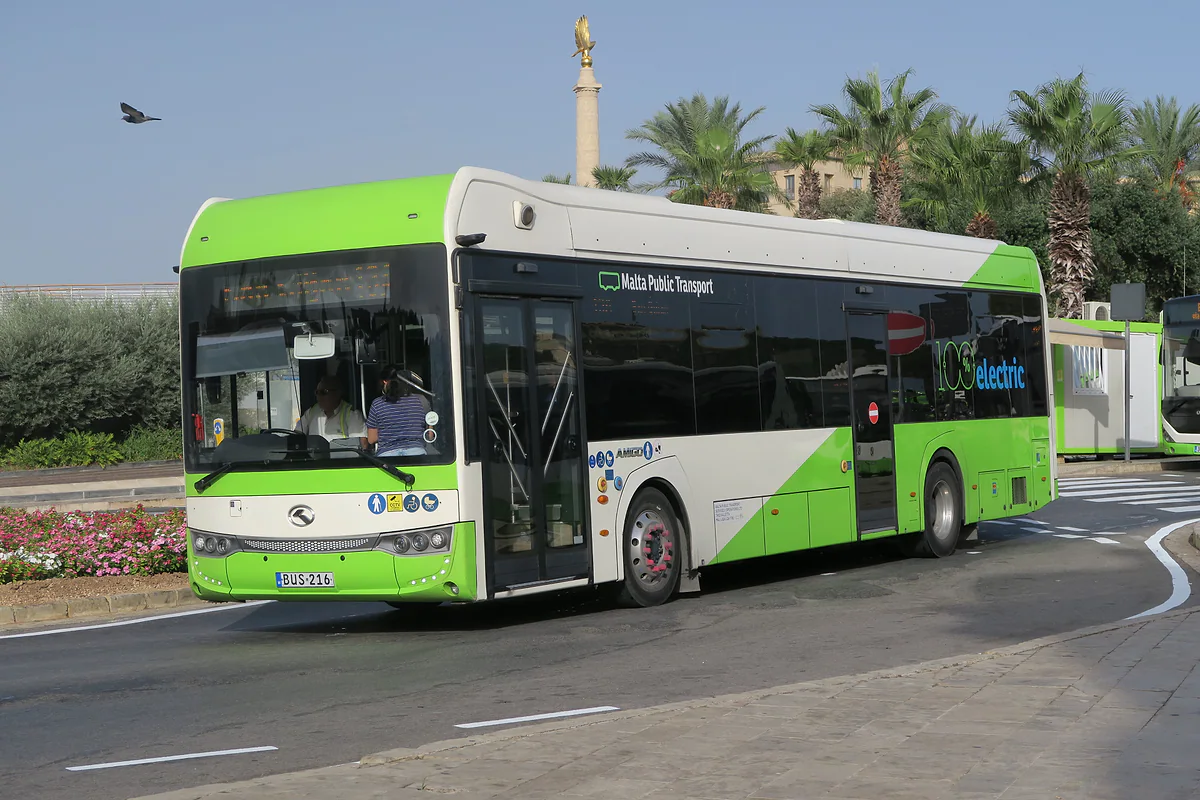
A green and white Malta Public Transport bus turning at a roundabout lined with palm trees, the public transport that covers the whole island.
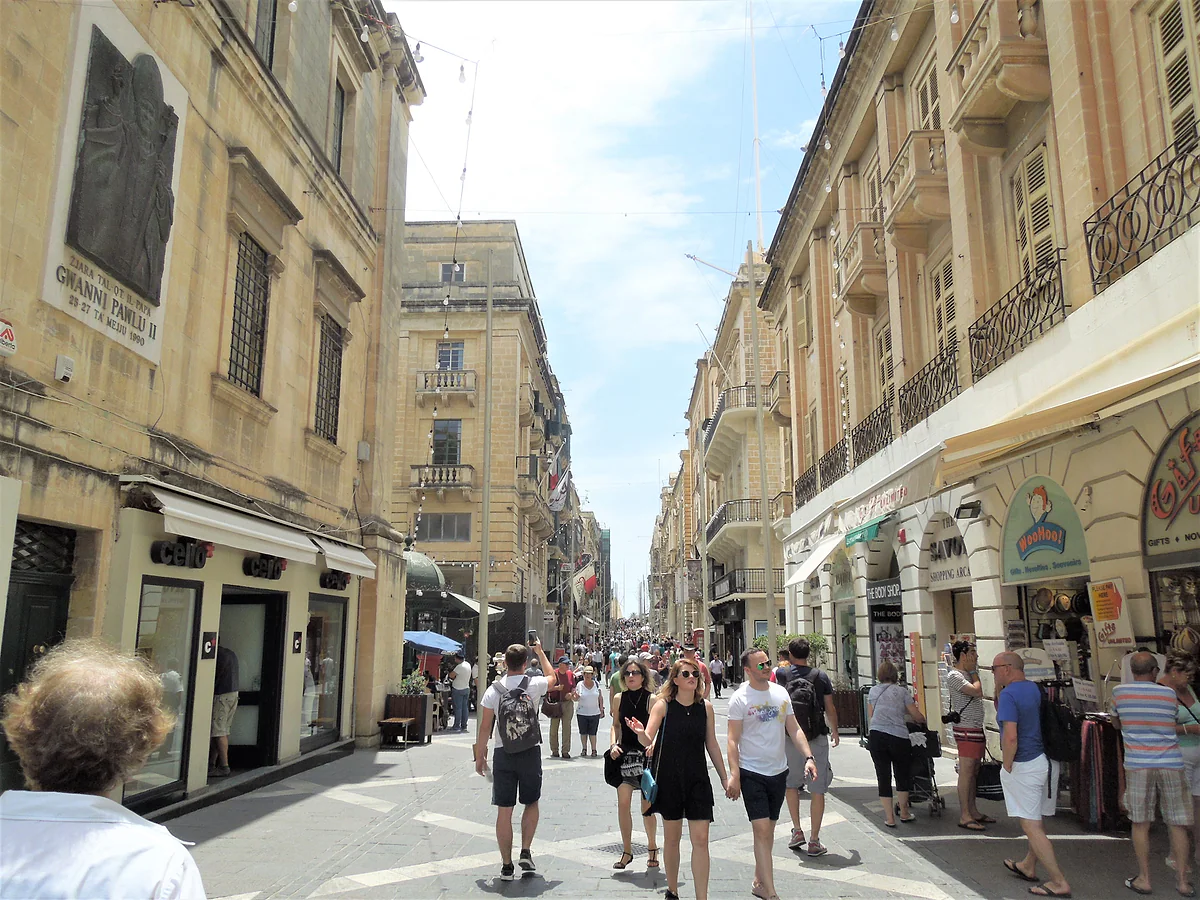
Republic Street, the main street of Valletta, busy with people walking between stone façades with balconies and shops on both sides.
English students in Malta (2025)
| Figure | Value |
|---|---|
| Foreign students | 76,063 (4,883 fewer than in 2024) |
| Licensed schools | 34 |
| Italians | 23.0% |
| Germans | 10.6% |
| French | 10.4% |
| From the EU | 71.8% |
| Busiest month | July (16.5%), then August (15.8%) |
NSO, Teaching English as a Foreign Language 2025.
Maltese names you'll see everywhere
| Maltese | English | What it is |
|---|---|---|
| Il-Belt Valletta | Valletta | The capital |
| Għawdex | Gozo | The second island |
| Kemmuna | Comino | The third island |
| Il-Birgu | Birgu (Vittoriosa) | One of the Three Cities |
| L-Isla | Senglea | One of the Three Cities |
| San Pawl il-Baħar | St Paul's Bay | The largest town |
| Ħal Luqa | Luqa | The airport town |
Test yourself
True or false?
0/4 Pick before you peek.
-
English is an official language in Malta.
See the answer
True. The Maltese government lists Maltese and English as its languages, both official.
-
Italian is one of Malta's official languages.
See the answer
False. There are only two official languages, Maltese and English, according to the Government of Malta.
-
Britons are the largest group of English-language students in Malta.
See the answer
False. They'd hardly need to be. According to the NSO, in 2025 the largest groups were Italians (23.0%), Germans (10.6%) and French (10.4%).
-
Gozo is called Għawdex in Maltese.
See the answer
True. The NSO names Victoria as Ir-Rabat, Għawdex, using the island's Maltese name.
- Official languages, Maltese and English
- 2
- Foreign English students in 2025
- 76,063
- Licensed English schools
- 34
- Italian students, the largest group
- 23%
0 of 279 Malta guides
Your next stamp
- English schools
- Is Malta a country?
- Malta facts
- Driving
- Island of Malta
- Entry requirements
- Maltese cross
- Things to do in Malta
- Gozo
- Most beautiful places
- Comino
- Prettiest villages
- UNESCO World Heritage Sites
- Where is Malta
- The Maltese islands
- Towns and villages
- Blue Lagoon
- Fort Rinella
- Fort St Angelo
- Gardjola Gardens
- Ħal Saflieni Hypogeum
- Popeye Village
- Tarxien Temples
- Things to do in Gozo
- Valletta
- Esplora
- Golden Bay
- Gozo day trip
- Inquisitor's Palace
- Population
- St John's Co-Cathedral
- St Mary's Tower
- Grandmaster's Palace
- How big is Malta
- Maritime Museum
- Mellieħa Bay
- Fort St Elmo
- Malta at War Museum
- Paradise Bay
- Barrakka Gardens
- Red Tower
- Religion
- Malta government
- Saluting Battery
- MUŻA
- National Museum of Archaeology
- Underground Valletta
- Lascaris War Rooms
- Casa Rocca Piccola
- Malta in one day
- Three Cities
- Victoria
- Birgu
- Manoel Theatre
- Weekend in Malta
- Xagħra
- City Gate and Parliament
- Malta in three days
- Nadur
- Senglea
- Cospicua
- Malta in four days
- Qala
- Valletta Waterfront
- Għajnsielem
- Kalkara
- Malta in five days
- Malta in a week
- Paola
- Xewkija
- Sannat
- Tarxien
- Munxar
- Żabbar
- Fgura
- Fontana
- Kerċem
- Luqa
- Floriana
- Marsa
- Mellieħa
- The Citadel, Gozo
- Żebbuġ (Gozo)
- Ġgantija Temples
- Marsalforn
- Santa Luċija
- Ramla Bay
- San Lawrenz
- Xgħajra
- Xwejni salt pans
- Calypso's Cave
- Għarb
- Żejtun
- Għasri
- Gudja
- San Blas Bay
- Għaxaq
- Ħondoq Bay
- Marsaxlokk
- Kirkop
- Marsaxlokk Fish Market
- Mqabba
- St Peter's Pool
- Marsaskala
- Qrendi
- Żurrieq
- Beaches
- Comino ferry
- EU, Schengen and the euro
- Ħaġar Qim and Mnajdra
- Mdina
- Mġarr (Gozo)
- Blue Grotto
- Diving
- Mdina Cathedral
- Xewkija Rotunda
- Birżebbuġa
- Money and payments
- Palazzo Falson
- Safi
- Shipwrecks
- Ta' Ċenċ Cliffs
- Għar Dalam
- Mdina Dungeons
- Mġarr ix-Xini
- Prices and budget
- Snorkelling
- Boat trips
- Malta on a budget
- Playmobil FunPark
- Rabat (Malta)
- Xlendi
- Dwejra
- Gozo beaches
- History
- Siġġiewi
- St Paul's Catacombs
- Tipping
- Azure Window
- Domvs Romana
- Għar Lapsi
- Great Siege of 1565
- Plugs
- Limestone Heritage Park
- Second World War
- St Paul's Grotto
- Ta' Pinu Basilica
- Time zone
- Buskett Gardens
- Knights of Malta
- Mobile and roaming
- Wied il-Għasri
- Dingli
- Dingli Cliffs
- Flag
- Żebbuġ
- Coat of arms
- Mtarfa
- Balzan
- National anthem
- Lija
- Game of Thrones
- Iklin
- Attard
- Film locations
- Forts and fortifications
- San Anton Gardens
- Ta' Qali Crafts Village
- Victoria Lines
- Megalithic temples
- Catacombs
- Museums
- Where to eat
- Where to stay
- Churches
- Hotels in Valletta
- Restaurants in Valletta
- Hotels in Sliema
- Maltese food
- Restaurants in Marsaxlokk
- Viewpoints
- Hotels in St Julian's
- Pastizzi
- Walking and hiking
- Hotels in Buġibba and Qawra
- Maltese rabbit stew
- Safety
- Hotels in Mellieħa
- Kinnie and Cisk
- Scams
- Gozo hotels
- Nightlife
- Tap water
- Boat parties
- Holiday packages
- Tourist tax
- All inclusive
- Gay Malta
- Sightseeing passes
- Apartments
- Malta with kids
- Public holidays
- How to get there
- Luxury
- Malta for couples
- Taxis and ride-hailing
- Weather
- Best time to visit
- Cycling
- Flights
- Flights from Madrid
- Sea temperature
- Shopping and souvenirs
- Airport
- Free walking tours
- In winter
- Airport transfers
- Day trips and tours
- In summer
- Ferry from Sicily
- In January
- Cruise stop
- In February
- In March
- In April
- In May
- Getting around
- In June
- Buses
- July
- August
- Hop on hop off
- Gozo ferry
- September
- Gozo fast ferry
- October
- November
- Valletta ferries
- Car hire
- December
- Events
- St Paul's Bay
- Village feasts
- Buġibba
- Christmas
- Easter
- Qawra
- Carnival
- Xemxija
- Fireworks festival
- Malta National Aquarium
- Isle of MTV
- St Paul's Islands
- Mosta
- Mosta Rotunda
- Naxxar
- Palazzo Parisio
- Għargħur
- Mġarr (Malta)
- Sliema
- Ta' Ħaġrat and Skorba Temples
- Għajn Tuffieħa Bay
- Tigné Point
- Ġnejna Bay
- St Julian's
- Paceville
- St George's Bay
- Gżira
- Msida
- Ta' Xbiex
- Pietà
- Pembroke
- Swieqi
- San Ġwann
- Birkirkara
- Ħamrun
- Santa Venera
- Qormi
Frequently asked questions
What language do they speak in Malta?
Two official languages, Maltese and English, according to the Government of Malta. You'll hear both in the street, and English works everywhere a visitor is likely to go.
Do people in Malta speak English?
Yes. English is one of the two official languages, so hotels, restaurants, museums and buses all work in English. British visitors won't need a phrasebook.
Is Maltese similar to English?
Not at all. It's written in the Latin alphabet but with its own letters, such as ħ, ġ, ċ, ż and the pair għ, which is why names like Għajnsielem or Iż-Żurrieq look so unfamiliar at first.
Why do so many people learn English in Malta?
In 2025, 76,063 foreign students attended its 34 licensed English schools, according to the NSO. Italians were the largest group, and July and August were the busiest months.
Do they speak Italian in Malta?
It isn't an official language. Some places do carry Italian names, like Vittoriosa for Birgu, but the official languages are only Maltese and English.
Are Maltese road and bus signs in English?
Place names usually appear in Maltese, sometimes with the English form alongside. Malta Public Transport, for example, labels the airport stop 'Ħal Luqa (Airport)'.
By
Tourism graduate with a master’s in Tourism Management and Planning from the University of Málaga, who has travelled across Europe. He writes every guide from official sources and his own judgement.
Published on . Facts checked on .
Sources
Photos: Leandro Neumann Ciuffo (CC BY 2.0); Kk70088 (CC BY 4.0); Cosal (CC BY-SA 4.0), via Wikimedia Commons.