From the Neolithic to the Arabs, above Marsaxlokk
Tas-Silġ, the sacred site five civilisations used in turn
Tas-Silġ is an archaeological complex above Marsaxlokk Bay and, according to Heritage Malta, the site with the longest history of use on the islands. It began as a megalithic temple around 3150 BC, became a Phoenician shrine to Astarte, grew under the Greeks and Romans, gained a Christian basilica and ended as a burial ground in the Arab period. There are no regular opening hours.
I'd only see it with a guide, on one of Heritage Malta's open days. On your own it's a field of stones that's hard to read, and the whole point is understanding how each people reused the temple of the one before.

Before you go
What I would keep in mind
-
01 Most beautiful
A temple reused for 3,500 years
What makes Tas-Silġ unique is that nobody fully abandoned it. Phoenicians, Romans and Christians adapted the prehistoric temple rather than starting from scratch.
the megalithic temples of Malta -
02 My tip
It doesn't make sense without a guide
Heritage Malta itself admits the site's complexity makes it very hard to understand without a trained guide. Wait for an organised visit.
-
03 Getting there
Next to the Sunday market
It sits above Marsaxlokk, so it fits with the Sunday fish market and lunch by the harbour. The bus stop is about five minutes' walk away.
Marsaxlokk fish market
Some sites tell you about one era and others tell you a whole country’s story. Tas-Silġ is the second kind. On the hill above Marsaxlokk Bay, the same sacred place was used by the Neolithic temple builders, the Phoenicians, the Greeks and Romans, the first Christians, and finally, in the Arab period, it served as a burial ground. Heritage Malta describes it as the archaeological complex with the longest history of use on the islands, and to me it’s the best history lesson in Malta that fits on a single plot.
From megalithic temple to Astarte
It all started in the Tarxien phase, between 3150 and 2500 BC, when a megalithic temple and surrounding structures were built, from the same family as the megalithic temples of Malta. Occupation carried on into the Bronze Age, in what archaeologists call the Borġ in-Nadur phase, between 1500 and 700 BC.
The interesting part comes later. Between the 8th and 3rd centuries BC, the Phoenicians and Punic settlers adapted the old temple to their own rites while keeping it sacred, and the small shrine of Astarte they founded became known across the Mediterranean. In the Punic-Hellenistic and Roman periods, from the 3rd century BC to the 5th century AD, the temple grew into a sanctuary with a colonnaded portico.
How did it end up as a basilica and a cemetery?
With the arrival of Christianity in the Byzantine period, around the 5th century, a basilica was built, and at its rear a baptismal font was set into the prehistoric temple. It’s one of those images I find hard to shake, Christian baptisms held among stones raised three thousand years earlier.
Until then the site had kept its sacred role. Only in the Arab period, between the 9th and 11th centuries, was it used for burials, after which it was abandoned and turned into farmland. The farmhouse beside it dates from the 17th century and grew out of that farming. It has been excavated by the Missione Archeologica Italiana a Malta, the University of Malta and Heritage Malta.
So you do not lose the morning at the ticket office, browse tickets and tours in Tas-Silġ on GetYourGuide.
How and when to see it
It pays to be realistic here. Heritage Malta’s page gives no regular opening hours, and the site opens on set occasions, such as the open day on 27 September 2026. Heritage Malta itself admits that, given its complexity, it’s very hard to understand without a guide. I’d wait for one of those organised visits rather than peering in on my own.
If you want to see the finds, Heritage Malta’s calendar lists a Phoenician exhibition on Tas-Silġ in Valletta’s National Museum of Archaeology from November 2026 to February 2027. It’s a good complement, or a stand-in if your dates don’t match an open day.
Combining it with Marsaxlokk
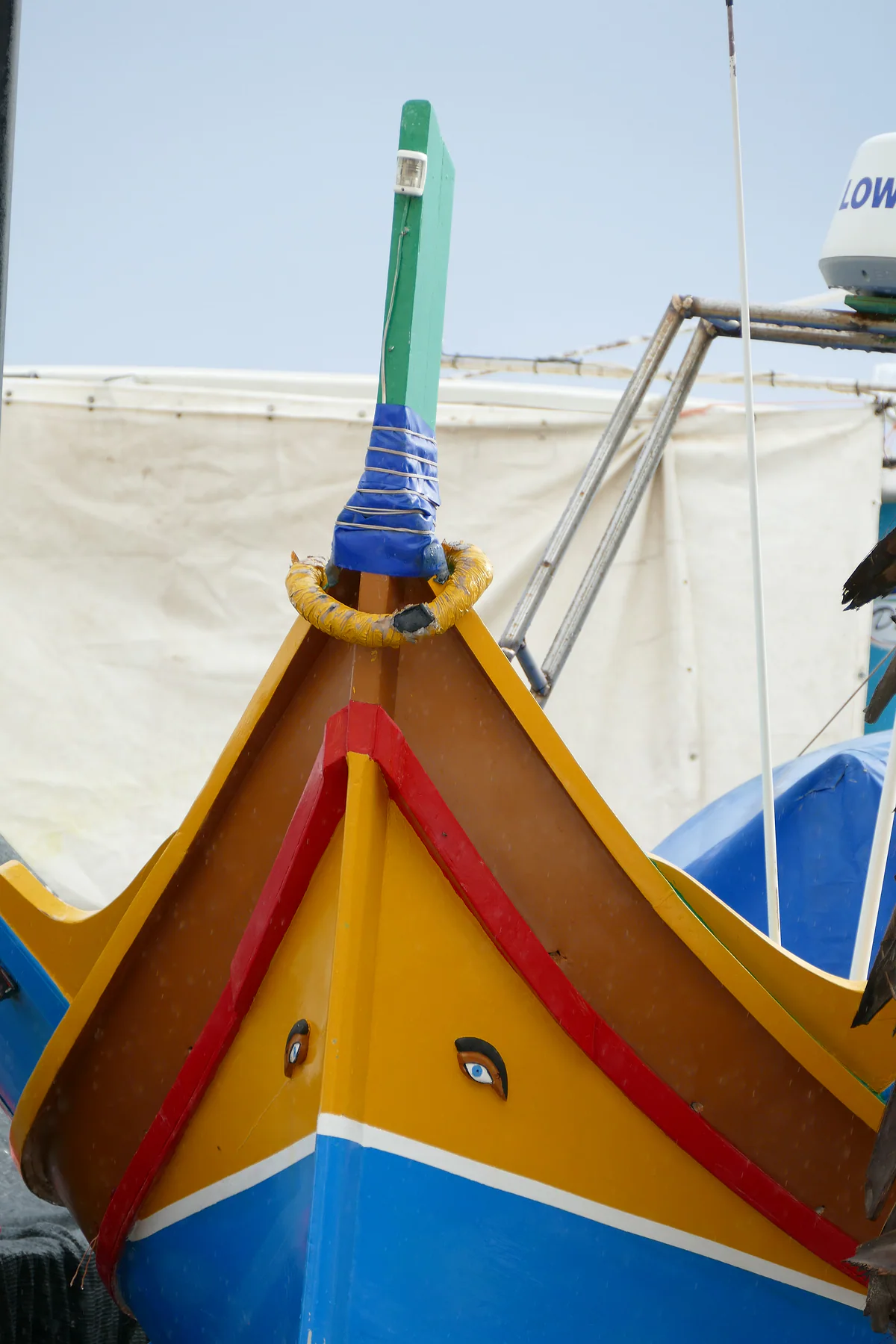
Tas-Silġ sits above Marsaxlokk, with a bus stop about five minutes away. I’d go on a Sunday morning, when the fish market is on at the harbour, and finish with lunch facing the luzzu boats. It was also part of the same defensive landscape as Fort Delimara, since there was a Fort Tas-Silġ nearby guarding the harbour too.
If you would rather go at your own pace, see the car hire deals in Valletta: the earlier you book, the more cars are left to choose from.
Before you fix your dates, compare tickets to Malta: the same journey can cost very different amounts from one day to the next.
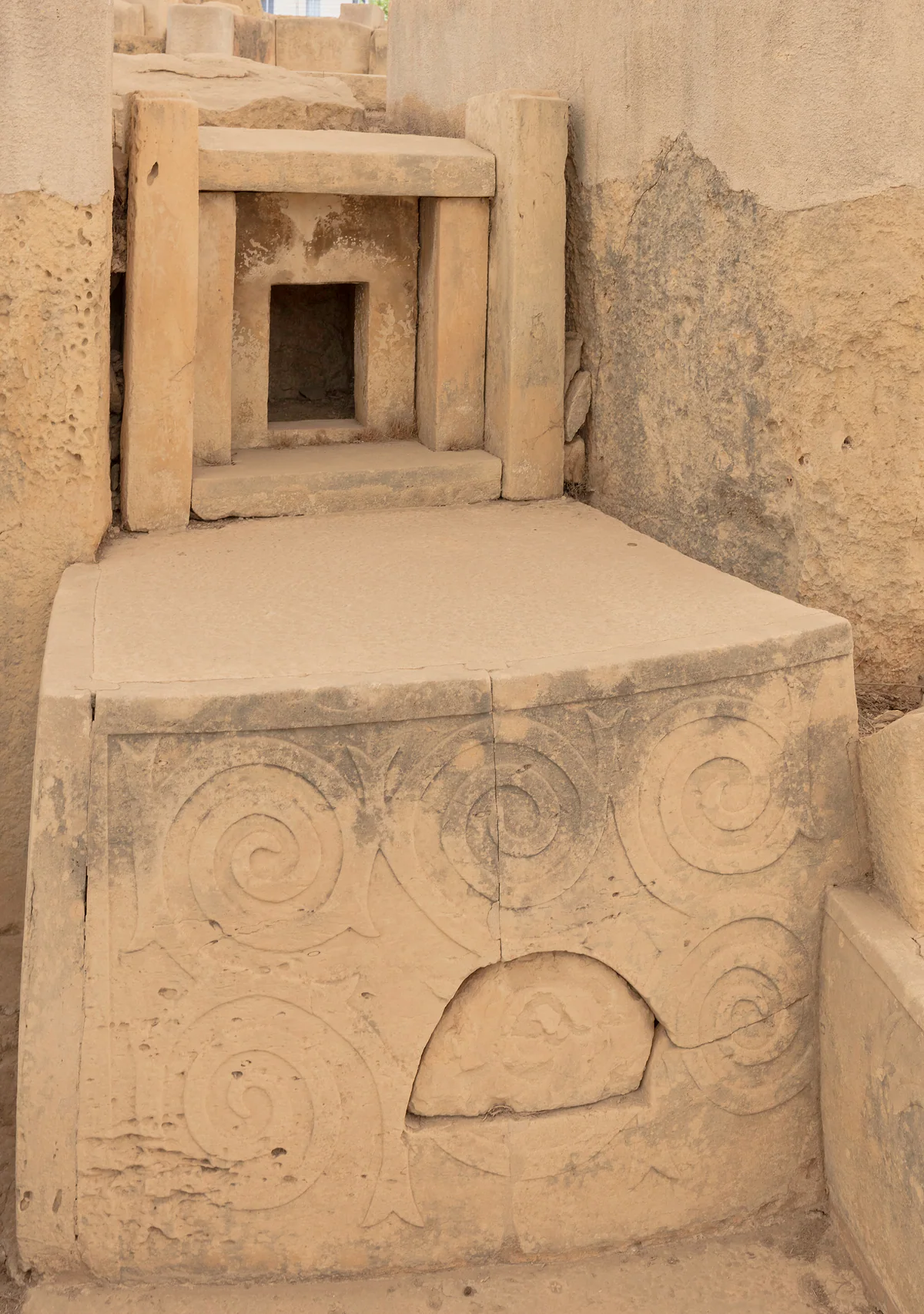
An altar in the Tarxien Temples decorated with spirals carved into the stone, in front of a lintelled niche at the back of the shrine.
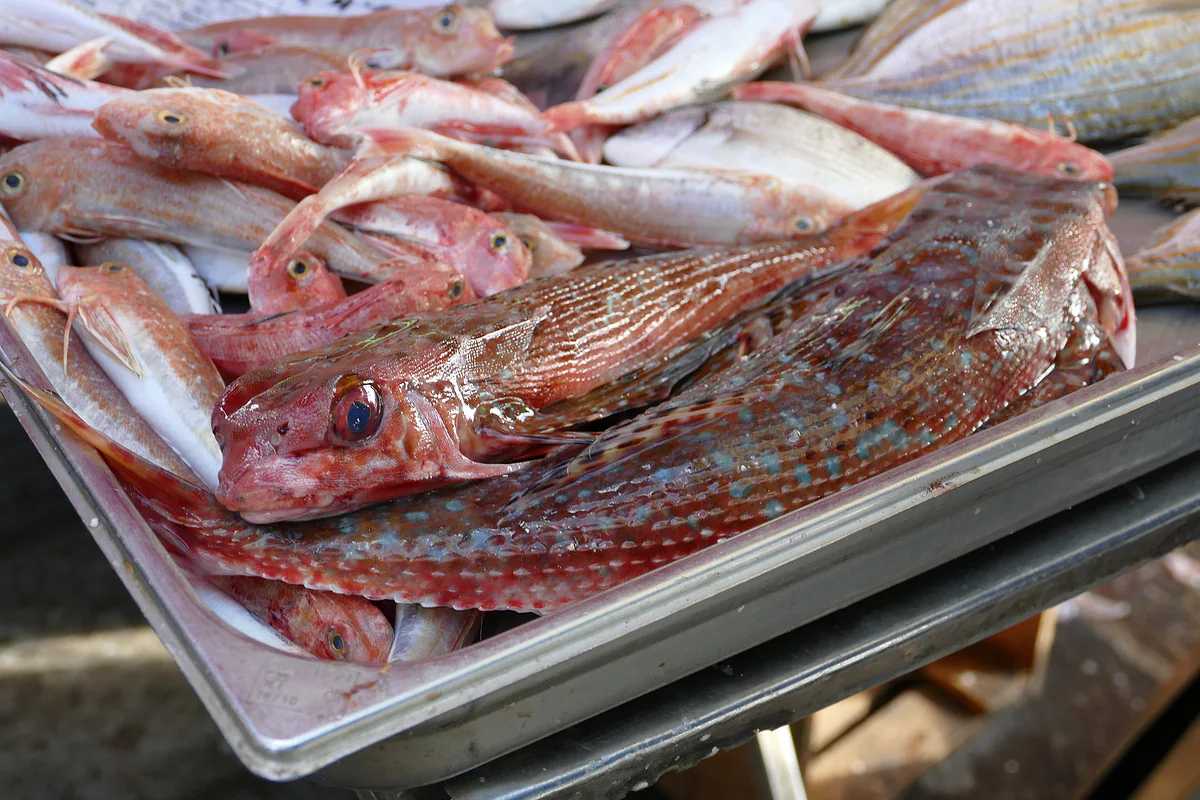
Freshly caught red mullet and gurnard on a tray at the Sunday market in Marsaxlokk, along the harbour front.
The phases of Tas-Silġ
| Period | What was there |
|---|---|
| Tarxien phase (3150-2500 BC) | Megalithic temple and associated structures |
| Bronze Age, Borġ in-Nadur phase (1500-700 BC) | Still occupied |
| Phoenician-Punic (8th-3rd century BC) | Temple adapted; shrine of Astarte known across the Mediterranean |
| Punic-Hellenistic and Roman (3rd century BC-5th century AD) | Extensions and a colonnaded portico |
| Byzantine (5th century AD) | Christian basilica and a baptismal font inside the prehistoric temple |
| Arab (9th-11th century) | Used for burials, then abandoned |
| 17th century | Neighbouring farmhouse built; the site is farmland |
Heritage Malta site page checked on 04-10-2026. Excavations by the Missione Archeologica Italiana a Malta, the University of Malta and Heritage Malta.
Test yourself
True or false?
0/3 Pick before you peek.
-
Tas-Silġ was only used in prehistory.
See the answer
False. It was used for over 3,500 years, from the Tarxien-phase temple to burials in the Arab period.
-
The Phoenicians dedicated a temple here to Astarte.
See the answer
True. The small temple of Astarte founded by the Phoenicians became renowned across the Mediterranean, according to Heritage Malta.
-
A Christian basilica was built here in the Byzantine period.
See the answer
True. Around the 5th century a basilica went up and a baptismal font was set inside the old prehistoric temple.
Map
Where Tas-Silġ is
Gozo lies to the north-west, across the channel the ferry crosses from Ċirkewwa, with Comino between the two islands. Every number opens its guide.
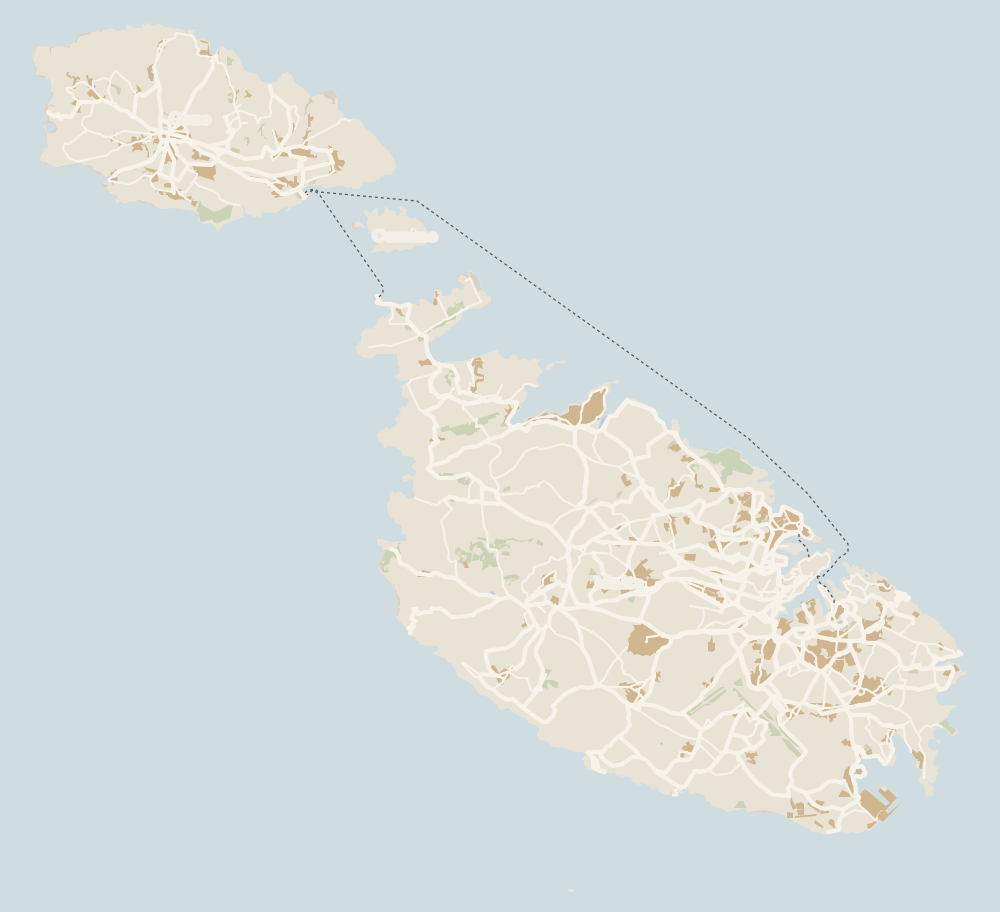 1Marsaxlokk 2Marsaxlokk Fish Market 3St Peter's Pool 4Fort Delimara 5Tas-Silġ
 Map data © OpenStreetMap contributors (ODbL)
0 of 294 Malta guides
Your next stamp
- Megalithic temples
- UNESCO World Heritage Sites
- Ta' Pinu Basilica
- History
- Ta' Ħaġrat and Skorba Temples
- Marsaxlokk
- Tarxien
- Għar Dalam
- Things to do in Malta
- Gozo
- Most beautiful places
- Comino
- Prettiest villages
- Where is Malta
- The Maltese islands
- Towns and villages
- Island of Malta
- Blue Lagoon
- Fort Rinella
- Fort St Angelo
- Gardjola Gardens
- Ħal Saflieni Hypogeum
- Is Malta a country?
- Popeye Village
- Tarxien Temples
- Things to do in Gozo
- Valletta
- Esplora
- Golden Bay
- Gozo day trip
- Inquisitor's Palace
- Population
- St John's Co-Cathedral
- St Mary's Tower
- Grandmaster's Palace
- How big is Malta
- Maritime Museum
- Mellieħa Bay
- Fort St Elmo
- Language
- Malta at War Museum
- Paradise Bay
- Barrakka Gardens
- Red Tower
- Religion
- Malta government
- Saluting Battery
- MUŻA
- National Museum of Archaeology
- Underground Valletta
- Lascaris War Rooms
- Casa Rocca Piccola
- Malta in one day
- Three Cities
- Victoria
- Birgu
- Manoel Theatre
- Weekend in Malta
- Xagħra
- City Gate and Parliament
- Malta in three days
- Nadur
- Senglea
- Cospicua
- Malta in four days
- Qala
- Valletta Waterfront
- Għajnsielem
- Kalkara
- Malta in five days
- Malta in a week
- Paola
- Xewkija
- Sannat
- Munxar
- Żabbar
- Fgura
- Fontana
- Kerċem
- Luqa
- Floriana
- Marsa
- Mellieħa
- The Citadel, Gozo
- Żebbuġ (Gozo)
- Ġgantija Temples
- Marsalforn
- Santa Luċija
- Ramla Bay
- San Lawrenz
- Xgħajra
- Xwejni salt pans
- Calypso's Cave
- Għarb
- Żejtun
- Għasri
- Gudja
- San Blas Bay
- Għaxaq
- Ħondoq Bay
- Kirkop
- Marsaxlokk Fish Market
- Mqabba
- St Peter's Pool
- Marsaskala
- Qrendi
- Żurrieq
- Beaches
- Comino ferry
- EU, Schengen and the euro
- Ħaġar Qim and Mnajdra
- Mdina
- Mġarr (Gozo)
- Blue Grotto
- Diving
- Entry requirements
- Mdina Cathedral
- Xewkija Rotunda
- Birżebbuġa
- Money and payments
- Palazzo Falson
- Safi
- Shipwrecks
- Ta' Ċenċ Cliffs
- Mdina Dungeons
- Mġarr ix-Xini
- Prices and budget
- Snorkelling
- Boat trips
- Malta on a budget
- Playmobil FunPark
- Rabat (Malta)
- Xlendi
- Dwejra
- Gozo beaches
- Siġġiewi
- St Paul's Catacombs
- Tipping
- Azure Window
- Domvs Romana
- Għar Lapsi
- Great Siege of 1565
- Plugs
- Limestone Heritage Park
- Second World War
- St Paul's Grotto
- Time zone
- Buskett Gardens
- Knights of Malta
- Mobile and roaming
- Wied il-Għasri
- Dingli
- Maltese cross
- Dingli Cliffs
- Flag
- Żebbuġ
- Coat of arms
- Mtarfa
- Balzan
- National anthem
- Lija
- Malta facts
- Game of Thrones
- Iklin
- Attard
- Film locations
- Forts and fortifications
- San Anton Gardens
- Ta' Qali Crafts Village
- Victoria Lines
- Catacombs
- Museums
- Where to eat
- Where to stay
- Churches
- Hotels in Valletta
- Restaurants in Valletta
- Hotels in Sliema
- Maltese food
- Restaurants in Marsaxlokk
- Viewpoints
- Hotels in St Julian's
- Pastizzi
- Walking and hiking
- Hotels in Buġibba and Qawra
- Maltese rabbit stew
- Safety
- Hotels in Mellieħa
- Kinnie and Cisk
- Scams
- Gozo hotels
- Nightlife
- Ramla Bay Resort
- Tap water
- Boat parties
- Holiday packages
- Sliema Marina Hotel
- Tourist tax
- All inclusive
- Gay Malta
- Qawra Palace
- Sightseeing passes
- Apartments
- Malta with kids
- Novotel Malta Sliema
- Public holidays
- How to get there
- Luxury
- Malta for couples
- Natural History Museum
- Taxis and ride-hailing
- Weather
- Best time to visit
- Cycling
- English schools
- Flights
- Fort Delimara
- Flights from Madrid
- Sea temperature
- Shopping and souvenirs
- Airport
- Free walking tours
- In winter
- Ta' Bistra Catacombs
- Airport transfers
- Day trips and tours
- Gran Castello Historic House
- In summer
- Ferry from Sicily
- In January
- Old Prison, Gozo
- Cruise stop
- In February
- Ta' Kola Windmill
- In March
- Kordin III
- In April
- Villa Frere
- In May
- Villa Guardamangia
- Getting around
- In June
- Roman Baths
- Buses
- July
- August
- Hop on hop off
- Gozo ferry
- September
- Gozo fast ferry
- October
- November
- Valletta ferries
- Car hire
- December
- Driving
- Events
- St Paul's Bay
- Village feasts
- Buġibba
- Christmas
- Easter
- Qawra
- Carnival
- Xemxija
- Fireworks festival
- Malta National Aquarium
- Isle of MTV
- St Paul's Islands
- Mosta
- Mosta Rotunda
- Naxxar
- Palazzo Parisio
- Għargħur
- Mġarr (Malta)
- Sliema
- Għajn Tuffieħa Bay
- Tigné Point
- Ġnejna Bay
- St Julian's
- Paceville
- St George's Bay
- Gżira
- Msida
- Ta' Xbiex
- Pietà
- Pembroke
- Swieqi
- San Ġwann
- Birkirkara
- Ħamrun
- Santa Venera
- Qormi
Frequently asked questions
What is Tas-Silġ?
An archaeological site above Marsaxlokk where a megalithic temple, a Phoenician shrine to Astarte, a Graeco-Roman sanctuary and a Christian basilica followed one another. Heritage Malta calls it the complex with the longest history of use in the Maltese Islands.
Can you visit Tas-Silġ?
Yes, on the open days Heritage Malta organises, such as the one on 27 September 2026. Its page gives no regular opening hours, so check its events calendar.
What can you see today?
The remains of the structures of the successive temples. Heritage Malta warns that the site is complex and hard to make sense of without a guide.
Where can I see the finds from Tas-Silġ?
Heritage Malta's calendar lists a Phoenician exhibition on Tas-Silġ at the National Museum of Archaeology in Valletta from November 2026 to February 2027.
How do I get there?
The nearest bus stop is about five minutes' walk away. The site is in the Marsaxlokk area, which has buses from Valletta.
By
Tourism graduate with a master’s in Tourism Management and Planning from the University of Málaga, who has travelled across Europe. He writes every guide from official sources and his own judgement.
Published on . Facts checked on .
Some links in this guide are affiliate links: if you book through them, the site earns a commission at no extra cost to you. Affiliate disclosure
Photos: Kritzolina (CC BY-SA 4.0); Diego Delso (CC BY-SA 4.0); Kritzolina (CC BY-SA 4.0), via Wikimedia Commons.