A village on Gozo
Xagħra, the plateau village that holds Gozo's temples
Xagħra is a village of 5,386 people (NSO, 2025) on a plateau north-east of Victoria. Within it are the Ġgantija temples, a World Heritage Site, Ta' Kola Windmill, the Xagħra Circle and Calypso's Cave, perched above Ramla Bay. Its big feast day is 8 September.
In 30 seconds
Full read: 3 min
- Xagħra is a Gozo village of 5,386 people on a plateau north-east of Victoria.
- It's home to the Ġgantija temples and Ta' Kola Windmill, both on a €10 ticket.
- Beneath two village houses are stalactite caves, Xerri's Grotto and Ninu's Cave.
- Its feast, Il-Bambina, falls on 8 September.
Xagħra is where I'd stay on Gozo if I wanted countryside and temples rather than town. Ġgantija first thing, the square at lunchtime and Ramla in the afternoon, with the car needed only for the beach.

Before you go
What I would keep in mind
-
01 To save money
Temples and windmill, one ticket
Your Ġgantija ticket (€10) includes Ta' Kola Windmill a few streets away. The €13 Discover Gozo combo adds the three Heritage Malta sites in the Citadel.
Ġgantija temples -
02 Most beautiful
Two caves under two houses
Beneath two private homes in the village lie Xerri's Grotto and Ninu's Cave, known for their stalactites and stalagmites. They're among my favourite oddities on Gozo.
-
03 My tip
The Circle takes groups of ten
The Neolithic burial site of the Xagħra Circle, 400 metres from Ġgantija, only admits groups of up to 10 people. Children under 8 go no further than the entrance.
-
04 Getting there
Ramla is right below
From the edge of the village you look down on Ramla Bay, reached from Xagħra or Nadur. The Ministry for Gozo's walking route from Marsalforn to Ramla passes through here.
Ramla Bay
What I would book
Xagħra packs more history into a small space than any other village on Gozo, and I mean what’s underground as much as what’s on the surface. There are temples over five thousand years old, a Neolithic burial site, two caves hidden under people’s houses and a windmill from the Knights’ era, all within a few streets of the square.
A village on the plateau, north-east of Victoria
Xagħra sits on a long plateau north-east of the capital, framed by the bays of Ramla, Għajn Barrani and Marsalforn and by farming valleys. The Ministry for Gozo describes the land as some of the best on the island, which explains why people settled here so early. It has 5,386 residents according to Malta’s statistics office, nearly one in five of them foreign nationals, which makes it Gozo’s second-largest locality after Victoria.
The square is dominated by the Basilica of the Nativity of Our Lady. Its foundation stone was laid in 1815, it was consecrated in 1878 and became a basilica in 1967. Inside is Il-Bambina, a marble statue of the young Virgin brought from Marseilles in 1878. The first parish church, from 1688, was the medieval chapel of St Anthony the Abbot, which still stands in the village.
Ġgantija and Ta’ Kola Windmill
The Ġgantija temples are why almost everyone comes to Xagħra, and rightly so. They’re two Neolithic structures within a single wall, part of the megalithic temples of Malta that UNESCO inscribed in 1980. You enter through an interpretation centre displaying finds from other Gozo sites, and the visit takes about an hour.
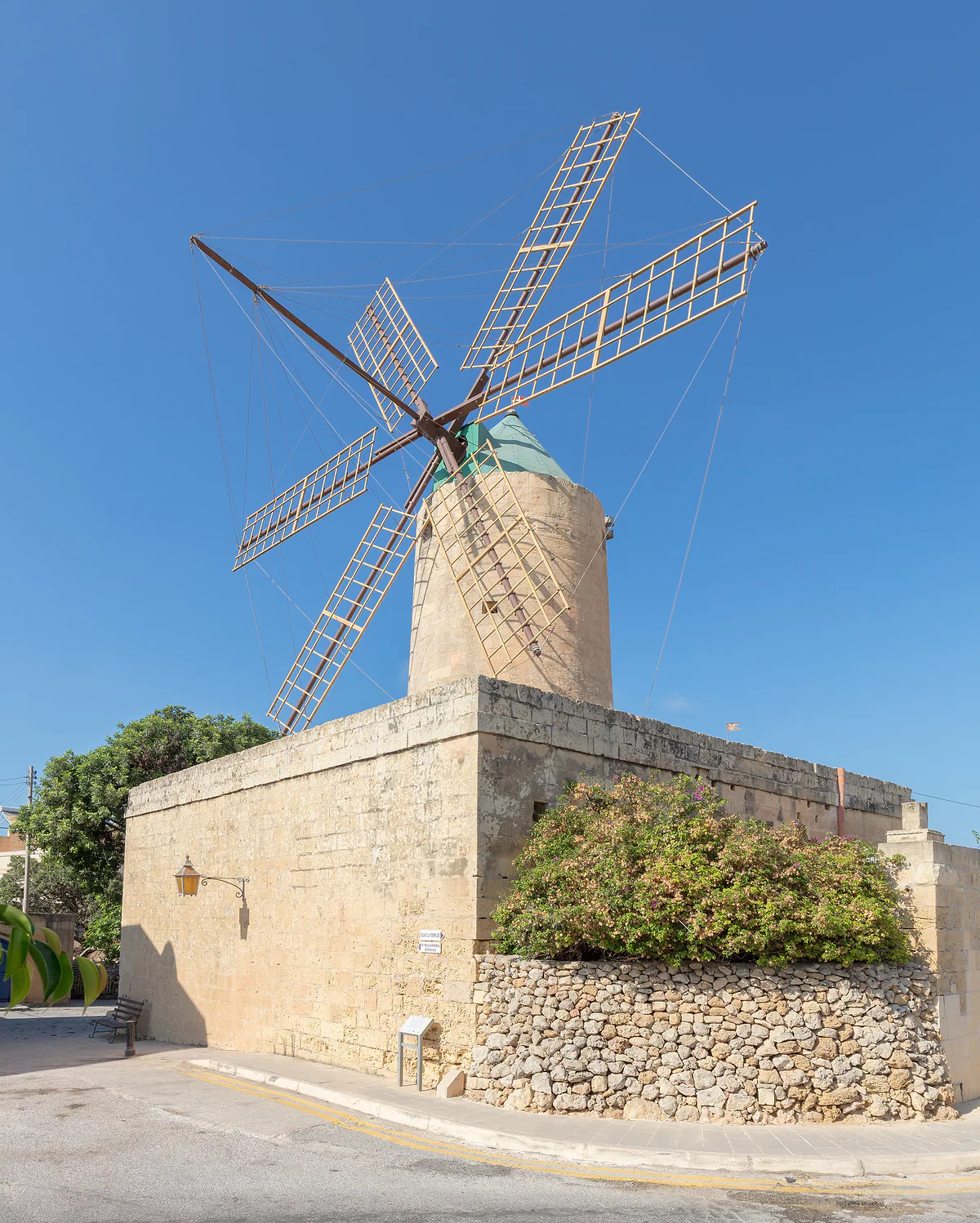
The same €10 ticket covers Ta’ Kola Windmill, a few streets away. Heritage Malta explains that the village’s first mill, from 1725, was so badly built it had to be taken down, and that the current one dates from 1787. The wooden mechanism and millstones are the originals, restored in 2016, and upstairs the miller’s family home has been recreated. For me it’s the ideal companion to Ġgantija, since it shows how people lived in the same village three centuries later.
What lies underground
Some 400 metres south-west of Ġgantija is the Xagħra Circle, a Neolithic burial site in natural caves, excavated between 1987 and 1994. It yielded figurines that Heritage Malta ranks among the finest artistic works of European prehistory. The ground is uneven, visits are in groups of up to ten and children under eight wait at the entrance.
Then come the curiosities. Under two private houses on residential streets are Xerri’s Grotto and Ninu’s Cave, full of stalactites and stalagmites formed by water seeping through the limestone. And on the edge of the village, looking over Ramla, is Calypso’s Cave, traditionally held to be the nymph’s home in the Odyssey, and these days more lookout than cave.
More stones with a legend
Heritage Malta has two smaller sites in Xagħra that round off a wander. Ta’ Għejżu Cave was discovered in 1933, and the Sansuna stone is a slab of about four metres that may be a Bronze Age dolmen, tied, like Ġgantija, to the legend of a giantess. I wouldn’t squeeze them into a rushed day, but if you’re staying in the village they’re a good excuse for a walk on the outskirts.
Toys, Edward Lear and the square
The Pomskizillious Museum of Toys is a private collection of antique toys that Susan and Edwin Lowe began in the 1970s. The name comes from a word Edward Lear coined on his 1866 visit to describe Gozo’s coastline. I wouldn’t cross the island for it, but with children or a taste for something different, it slots in nicely between the temples and lunch in the square.
Ramla, the feast and when to go
From Xagħra you head down to Ramla Bay, the red-sand beach on the north coast, and the Ministry for Gozo’s walking route from Marsalforn passes through the village, the windmill and the temples before reaching the sand.
The big feast is on 8 September, the Nativity of Our Lady, known here as Il-Bambina. It’s also Il-Vittorja, commemorating victory in the Great Siege of 1565 and a national holiday across Malta. According to the Ministry for Gozo it draws big crowds and brings the island’s festa season to a close. Given the choice, I’d visit Xagħra early in the morning on any ordinary day, and on that particular day, in the evening.
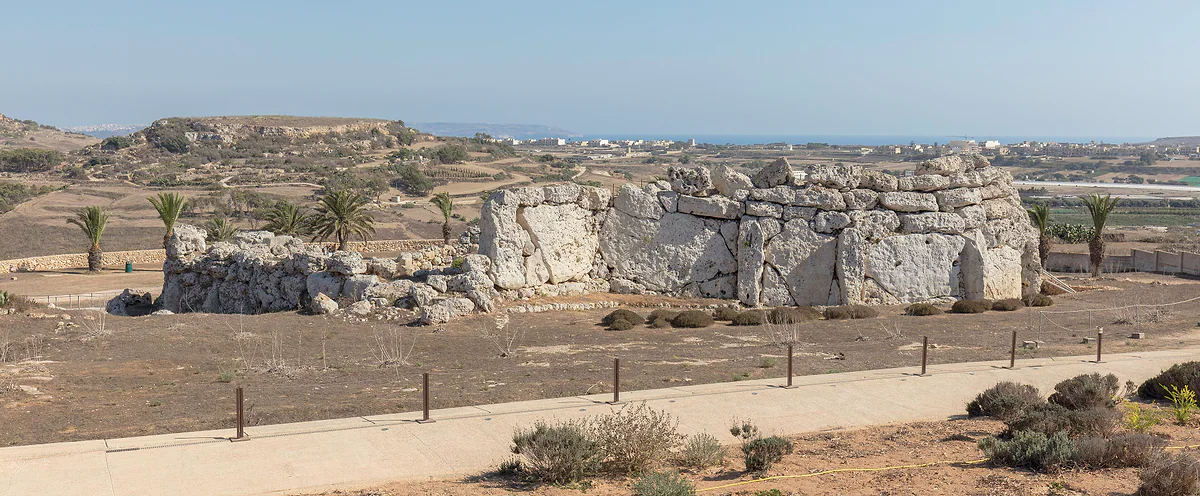
The walls of huge limestone blocks of the Ġgantija temples at Xagħra, among palm trees and the visitor path on the Gozo plateau.
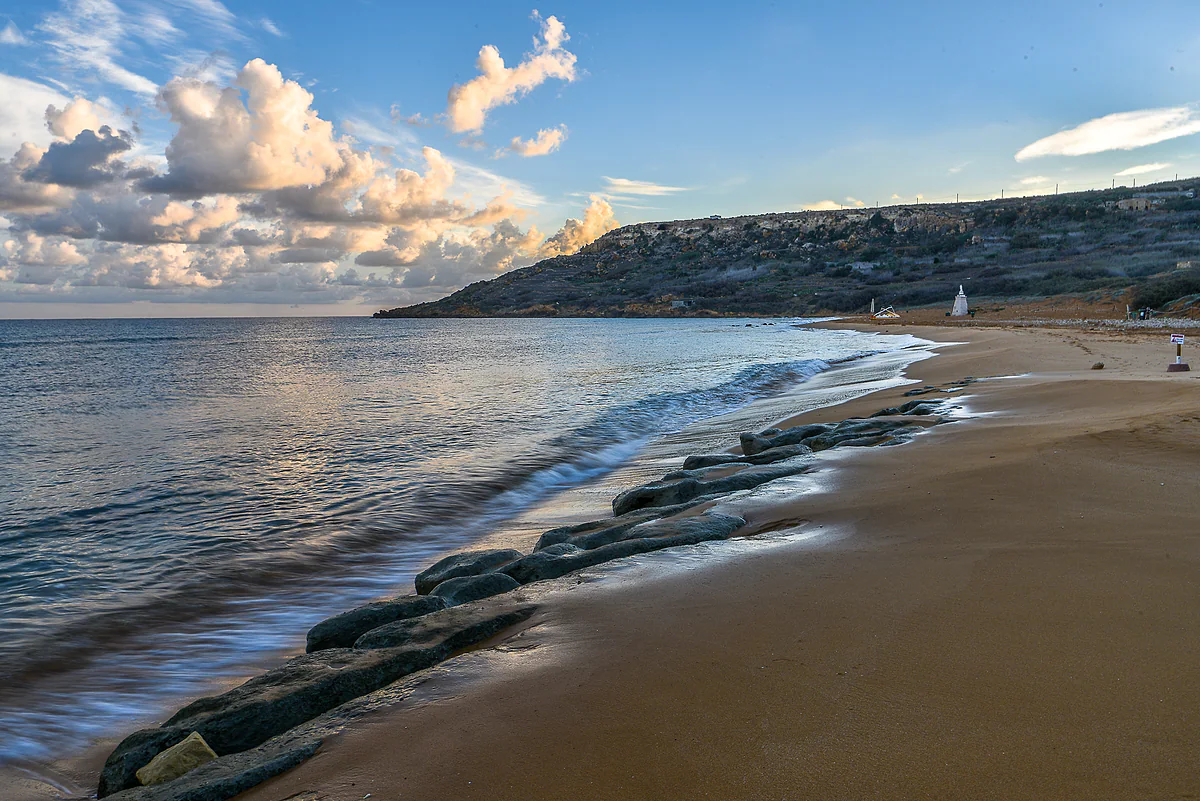
Ramla l-Ħamra beach in Gozo, with its reddish sand, gentle waves on the shore and the green hill that closes off the bay.
What to see in Xagħra
| Place | What it is | Entry |
|---|---|---|
| Ġgantija Temples | Two Neolithic temples, World Heritage | €10 with Ta' Kola |
| Ta' Kola Windmill | 1787 windmill with its original mechanism | Included with Ġgantija |
| Xagħra Circle | Neolithic cave burial site | Groups of up to 10 |
| Xerri's Grotto and Ninu's Cave | Stalactite caves beneath private homes | Private, no published price |
| Pomskizillious Museum of Toys | Private museum of antique toys | No published price |
| Calypso's Cave | Lookout over Ramla Bay | No entry charge |
| Basilica of the Nativity | Parish church consecrated in 1878 | Ask at the parish |
Ġgantija and Ta' Kola opening hours (Heritage Malta)
| Period | Hours |
|---|---|
| Until 31 Oct 2026 | 10:00-18:00, daily |
| 1 Nov 2026 to 28 Feb 2027 | 09:00-17:00, daily |
Last entry 30 minutes before closing. Closed on 1 January, Good Friday and 24, 25 and 31 December.
Test yourself
True or false?
0/3 Pick before you peek.
-
Ta' Kola was the first windmill Xagħra ever had.
See the answer
False. The first was built in 1725 but so poorly that it was dismantled. Ta' Kola, on a different site, dates from 1787, according to Heritage Malta.
-
Xagħra's 8 September feast also marks the end of the Great Siege of 1565.
See the answer
True. As well as the Nativity of Our Lady, the day is Il-Vittorja, celebrating the Order's victory over the Ottomans in 1565, according to the Ministry for Gozo.
-
Xagħra's toy museum is run by Heritage Malta.
See the answer
False. It's a private museum, founded by Susan and Edwin Lowe in the 1970s. The name comes from a word Edward Lear made up to describe Gozo's coast.
- Residents of Xagħra (NSO, 2025)
- 5,386
- Year Ta' Kola Windmill was built
- 1787
- From the Xagħra Circle to Ġgantija
- 400 m
- Il-Bambina feast day
- 8 Sep
Map
Where Xagħra is
Gozo lies to the north-west, across the channel the ferry crosses from Ċirkewwa, with Comino between the two islands. Every number opens its guide.
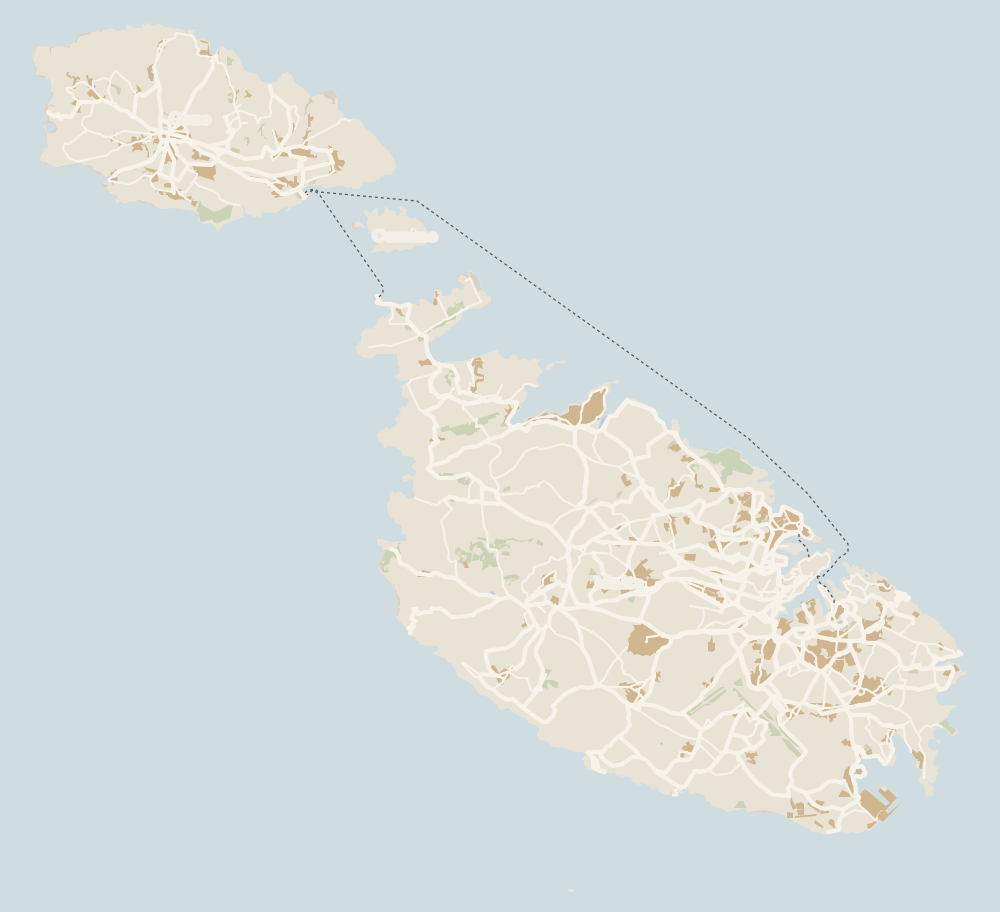 1Gozo 2Victoria 3Xagħra 4Nadur 5Qala 6Għajnsielem 7Xewkija 8Sannat 9Munxar 10Fontana 11Kerċem 12Żebbuġ (Gozo) 13San Lawrenz 14Għarb 15Għasri
 Map data © OpenStreetMap contributors (ODbL)
- 1GozoThe second island of the Maltese archipelago
- 2VictoriaThe capital of Gozo
- 3XagħraA village on Gozo
- 4NadurA village on Gozo
- 5QalaA village on Gozo
- 6GħajnsielemA village on Gozo
- 7XewkijaA village on Gozo
- 8SannatA village on Gozo
- 9MunxarA village on Gozo
- 10FontanaA village on Gozo
- 11KerċemA village on Gozo
- 12Żebbuġ (Gozo)A local council in northern Gozo
- 13San LawrenzA village on Gozo
- 14GħarbA village on Gozo
- 15Għasri519 residents between two hills
What to see
What to see in Xagħra
0 of 279 Malta guides
Your next stamp
- Ġgantija Temples
- Xewkija
- Għasri
- Calypso's Cave
- Għarb
- Mġarr (Malta)
- Xgħajra
- Things to do in Gozo
- Things to do in Malta
- Gozo
- Most beautiful places
- Comino
- Prettiest villages
- UNESCO World Heritage Sites
- Where is Malta
- The Maltese islands
- Towns and villages
- Island of Malta
- Blue Lagoon
- Fort Rinella
- Fort St Angelo
- Gardjola Gardens
- Ħal Saflieni Hypogeum
- Is Malta a country?
- Popeye Village
- Tarxien Temples
- Valletta
- Esplora
- Golden Bay
- Gozo day trip
- Inquisitor's Palace
- Population
- St John's Co-Cathedral
- St Mary's Tower
- Grandmaster's Palace
- How big is Malta
- Maritime Museum
- Mellieħa Bay
- Fort St Elmo
- Language
- Malta at War Museum
- Paradise Bay
- Barrakka Gardens
- Red Tower
- Religion
- Malta government
- Saluting Battery
- MUŻA
- National Museum of Archaeology
- Underground Valletta
- Lascaris War Rooms
- Casa Rocca Piccola
- Malta in one day
- Three Cities
- Victoria
- Birgu
- Manoel Theatre
- Weekend in Malta
- City Gate and Parliament
- Malta in three days
- Nadur
- Senglea
- Cospicua
- Malta in four days
- Qala
- Valletta Waterfront
- Għajnsielem
- Kalkara
- Malta in five days
- Malta in a week
- Paola
- Sannat
- Tarxien
- Munxar
- Żabbar
- Fgura
- Fontana
- Kerċem
- Luqa
- Floriana
- Marsa
- Mellieħa
- The Citadel, Gozo
- Żebbuġ (Gozo)
- Marsalforn
- Santa Luċija
- Ramla Bay
- San Lawrenz
- Xwejni salt pans
- Żejtun
- Gudja
- San Blas Bay
- Għaxaq
- Ħondoq Bay
- Marsaxlokk
- Kirkop
- Marsaxlokk Fish Market
- Mqabba
- St Peter's Pool
- Marsaskala
- Qrendi
- Żurrieq
- Beaches
- Comino ferry
- EU, Schengen and the euro
- Ħaġar Qim and Mnajdra
- Mdina
- Mġarr (Gozo)
- Blue Grotto
- Diving
- Entry requirements
- Mdina Cathedral
- Xewkija Rotunda
- Birżebbuġa
- Money and payments
- Palazzo Falson
- Safi
- Shipwrecks
- Ta' Ċenċ Cliffs
- Għar Dalam
- Mdina Dungeons
- Mġarr ix-Xini
- Prices and budget
- Snorkelling
- Boat trips
- Malta on a budget
- Playmobil FunPark
- Rabat (Malta)
- Xlendi
- Dwejra
- Gozo beaches
- History
- Siġġiewi
- St Paul's Catacombs
- Tipping
- Azure Window
- Domvs Romana
- Għar Lapsi
- Great Siege of 1565
- Plugs
- Limestone Heritage Park
- Second World War
- St Paul's Grotto
- Ta' Pinu Basilica
- Time zone
- Buskett Gardens
- Knights of Malta
- Mobile and roaming
- Wied il-Għasri
- Dingli
- Maltese cross
- Dingli Cliffs
- Flag
- Żebbuġ
- Coat of arms
- Mtarfa
- Balzan
- National anthem
- Lija
- Malta facts
- Game of Thrones
- Iklin
- Attard
- Film locations
- Forts and fortifications
- San Anton Gardens
- Ta' Qali Crafts Village
- Victoria Lines
- Megalithic temples
- Catacombs
- Museums
- Where to eat
- Where to stay
- Churches
- Hotels in Valletta
- Restaurants in Valletta
- Hotels in Sliema
- Maltese food
- Restaurants in Marsaxlokk
- Viewpoints
- Hotels in St Julian's
- Pastizzi
- Walking and hiking
- Hotels in Buġibba and Qawra
- Maltese rabbit stew
- Safety
- Hotels in Mellieħa
- Kinnie and Cisk
- Scams
- Gozo hotels
- Nightlife
- Tap water
- Boat parties
- Holiday packages
- Tourist tax
- All inclusive
- Gay Malta
- Sightseeing passes
- Apartments
- Malta with kids
- Public holidays
- How to get there
- Luxury
- Malta for couples
- Taxis and ride-hailing
- Weather
- Best time to visit
- Cycling
- English schools
- Flights
- Flights from Madrid
- Sea temperature
- Shopping and souvenirs
- Airport
- Free walking tours
- In winter
- Airport transfers
- Day trips and tours
- In summer
- Ferry from Sicily
- In January
- Cruise stop
- In February
- In March
- In April
- In May
- Getting around
- In June
- Buses
- July
- August
- Hop on hop off
- Gozo ferry
- September
- Gozo fast ferry
- October
- November
- Valletta ferries
- Car hire
- December
- Driving
- Events
- St Paul's Bay
- Village feasts
- Buġibba
- Christmas
- Easter
- Qawra
- Carnival
- Xemxija
- Fireworks festival
- Malta National Aquarium
- Isle of MTV
- St Paul's Islands
- Mosta
- Mosta Rotunda
- Naxxar
- Palazzo Parisio
- Għargħur
- Sliema
- Ta' Ħaġrat and Skorba Temples
- Għajn Tuffieħa Bay
- Tigné Point
- Ġnejna Bay
- St Julian's
- Paceville
- St George's Bay
- Gżira
- Msida
- Ta' Xbiex
- Pietà
- Pembroke
- Swieqi
- San Ġwann
- Birkirkara
- Ħamrun
- Santa Venera
- Qormi
Frequently asked questions
What is there to see in Xagħra?
The Ġgantija temples and Ta' Kola Windmill, both on one ticket, Xerri's Grotto and Ninu's Cave, the Xagħra Circle, the square and its basilica, and the Calypso's Cave lookout over Ramla Bay.
Where is Xagħra?
On Gozo, on a long plateau north-east of Victoria, framed by the bays of Ramla, Għajn Barrani and Marsalforn.
How do I get to Ġgantija from Victoria?
By bus or car to Xagħra. Heritage Malta says the nearest bus stop is a two-minute walk from the entrance.
When is the Xagħra feast?
On 8 September, the Nativity of Our Lady, known locally as Il-Bambina. It's one of the best-attended feasts on Gozo and marks the end of the festa season.
Is Xagħra a good base on Gozo?
I think so, if you're after village life and peace and quiet. Ġgantija, the square and the path down to Ramla are all close, though a car helps for the rest of the island.
Can you go inside Calypso's Cave?
The Ministry for Gozo describes it as a spot overlooking Ramla and doesn't say it can be visited inside. I'd treat it for what it is today, a balcony over the bay.
By
Tourism graduate with a master’s in Tourism Management and Planning from the University of Málaga, who has travelled across Europe. He writes every guide from official sources and his own judgement.
Published on . Facts checked on .
Sources
Photos: Diego Delso (CC BY-SA 4.0); Diego Delso (CC BY-SA 4.0); Bellina 09 (CC BY-SA 4.0), via Wikimedia Commons.