National park since 1952
Lovćen, the mountain that looks down on the sea and the whole country
Lovćen National Park has protected about 6,220 hectares of limestone mountain between Cetinje and the Bay of Kotor since 1952, from 939 to 1,749 metres. Entry costs €3 per person per day. Its two main summits are Štirovnik (1,749 m) and Jezerski vrh (1,657 m), home of the Njegoš Mausoleum, and the visitor centre is at Ivanova korita.
In 30 seconds
Full read: 3 min
- Lovćen National Park has protected 6,220 ha between Cetinje and the Bay of Kotor since 1952.
- Entry is €3 per person per day.
- Jezerski vrh (1,657 m) holds the Njegoš Mausoleum, reached by 461 steps.
- You get up from Cetinje via Ivanova korita, from Kotor via the serpentine, or by cable car to Kuk.
For me Lovćen gives the best view for the least effort anywhere in Montenegro. I'd drive up from Kotor on the serpentine, stop in Njeguši for lunch and save the mausoleum for late afternoon, when the light drops over the bay.

Before you go
What I would keep in mind
-
01 To save money
Three euros for the whole park
Entry, including the visitor centre and educational trails, is €3 per person per day. Car parking costs €1 an hour, according to National Parks of Montenegro.
-
02 Most beautiful
Two thirds of the country from one summit
The National Tourism Organisation says you can see two thirds of Montenegro from Lovćen and, on a clear morning after rain, sometimes the Italian coast.
Njegoš Mausoleum -
03 Worth the splurge
Sleep inside the park
National Parks rents bungalows on Lovćen at €30 a night, and camping costs €3 a day, or €20 on an equipped pitch.
-
04 Getting there
The Kotor cable car ends at Kuk
The Kotor cable car runs from Dub to the village of Kuk on Lovćen, 3,900 metres long with a 1,316-metre climb in 11 minutes, according to the National Tourism Organisation.
-
05 My tip
A barefoot trail for the children
Beside the Ivanova korita visitor centre there's a roughly 140-metre trail for walking barefoot, plus the Wolf educational trail, both handy with children.
What I would book
Few mountains carry as much weight in a nation’s sense of itself as Lovćen does for Montenegro. The National Tourism Organisation compares it to what the Statue of Liberty means to Americans, and locals have a saying that anyone who hasn’t climbed Lovćen hasn’t really been to Montenegro. Hyperbole aside, this is the mountain wall between the Bay of Kotor and Cetinje, and from the top the whole country starts to make sense.
A small park with a long history
Lovćen has been a national park since 1952 and covers about 6,220 hectares, from 939 to 1,749 metres. Its two main summits are Štirovnik, the highest at 1,749 metres, and Jezerski vrh at 1,657, where Petar II Petrović Njegoš asked to be buried. It sits where continental and Mediterranean climates meet, and the Cetinje tourist board counts about 1,300 plant species here, a third of Montenegro’s flora, along with wolves, bears, wild boar and some 200 bird species.
According to National Parks of Montenegro, Njeguši, on the edge of the park, supplied seven of the Petrović dynasty’s rulers. The stone houses, old Austro-Hungarian roads and the caravan route down to Kotor are as much part of the park as its beech woods.
The Cetinje tourist board lists five protected zones within the park, each with its own rules. There is a reserve of Bosnian pine at the foot of Štirovnik and Jezerski vrh, a beech forest reserve between Jezerski vrh, Štirovnik and Treštenički vrh, another beech reserve at Konjsko, a pine reserve between Rupa and Blatište at about 1,100 metres, and a herpetological reserve around the small lake below Jezerski vrh, for reptiles and amphibians. You won’t notice the boundaries on the ground, but it explains why you should stick to the marked paths.
The Njegoš Mausoleum
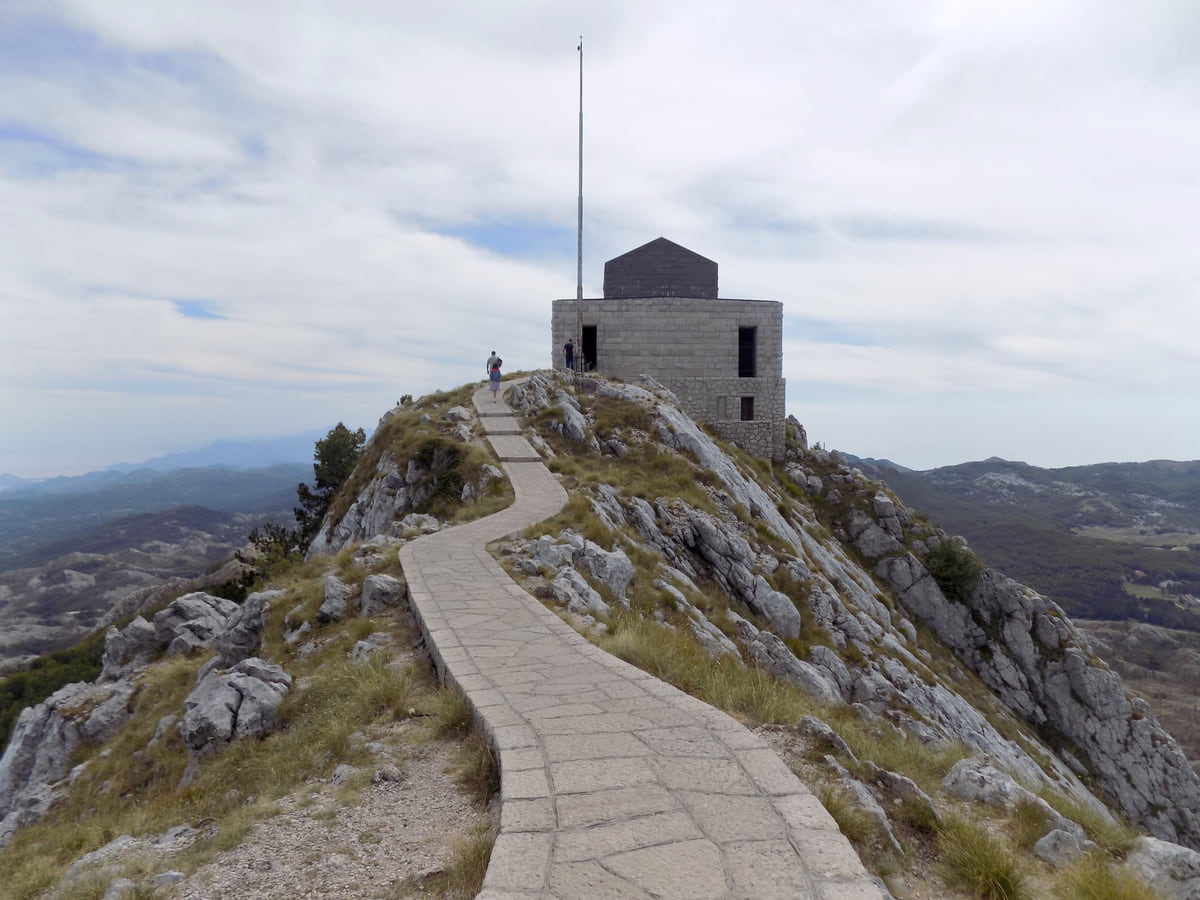
The unmissable stop is on Jezerski vrh. The Njegoš Mausoleum, designed by the sculptor Ivan Meštrović and opened in 1974, is reached by climbing 461 steps from the car park. Inside are two figures of Montenegrin women in black granite, a vault covered with 200,000 gilded tiles and a seated statue of Njegoš. In good visibility, National Parks says, the summit takes in the country’s great ranges and slices of its neighbours.
Once your dates are set, check which hotels are still free in Cetinje before prices climb.
Ivanova korita, trails and viewpoints
The park’s gateway from Cetinje is Ivanova korita, about ten kilometres from town. Here you’ll find the visitor centre, a roughly 140-metre barefoot trail, the Wolf educational trail, an adventure park with ziplines for ages 5 to 70 and sports pitches. National Parks describes five trails through beech forest and old Austro-Hungarian stone roads, a circular route to Kuk from Ivanova korita and three mountain-bike routes, one of them, the great loop round Lovćen, for bikes only.
The viewpoints all have names, Štirovnik, Jezerski vrh, Treštenički vrh, Kuk, Krstac, Babljak and Kraljevo počivalo, the King’s Rest. More i visine, the 283 km panoramic route signposted by the National Tourism Organisation, also crosses Lovćen and Cetinje between the bay and Lake Skadar, and I cover it with the others under scenic drives in Montenegro.
Getting up there
There are three ways. From Cetinje, via Ivanova korita, is the shortest. From Kotor, the road climbs the Kotor serpentine, the old caravan route, to Njeguši and into the park. The third is the Kotor cable car, which according to the National Tourism Organisation covers 3,900 metres of cable and a 1,316-metre climb between Dub and Kuk in 11 minutes, with 48 cabins of ten. The official page lists neither fares nor times.
Once your dates are set, check which hotels are still free in Cetinje before prices climb.
Sleeping, eating and what to pack
National Parks rents bungalows at €30 a night and allows camping for €3 a day, or €20 on an equipped pitch, and Ivanova korita has small hotels such as Ivanov konak and Monte Rosa, according to the Cetinje tourist board. For lunch, Njeguši is the obvious stop, for its pršut and cheese. In winter you can hire snowshoes for €4 a day, and walking poles cost €3 a day.
What I’d always pack is a warm layer. However hot it is down by the bay, at 1,600 metres the weather turns quickly, and gov.uk reminds walkers in Montenegro’s mountains to stick to marked trails and carry a charged phone. The emergency number is 112.
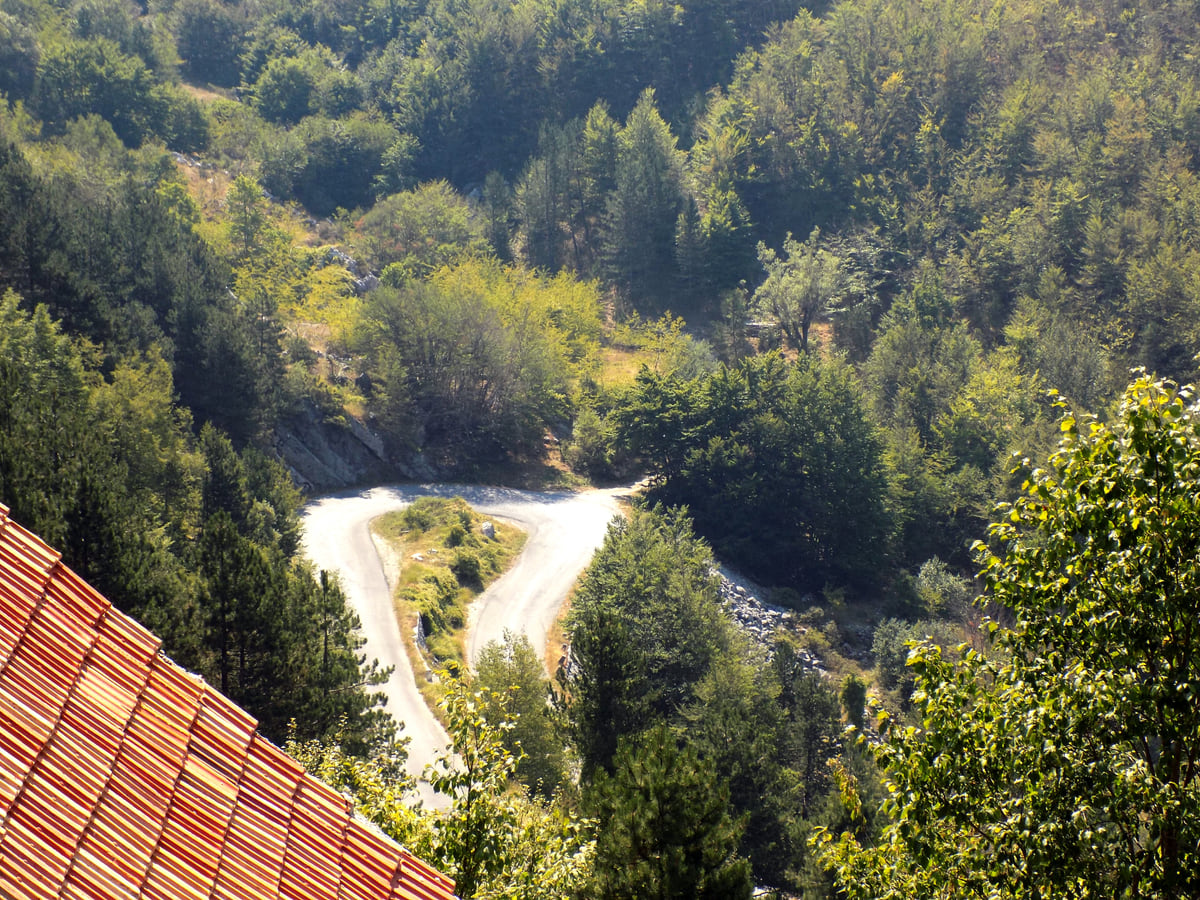
The hairpin bends of the mountain road between Kotor and Cetinje, zigzagging down through woodland and rocky slopes
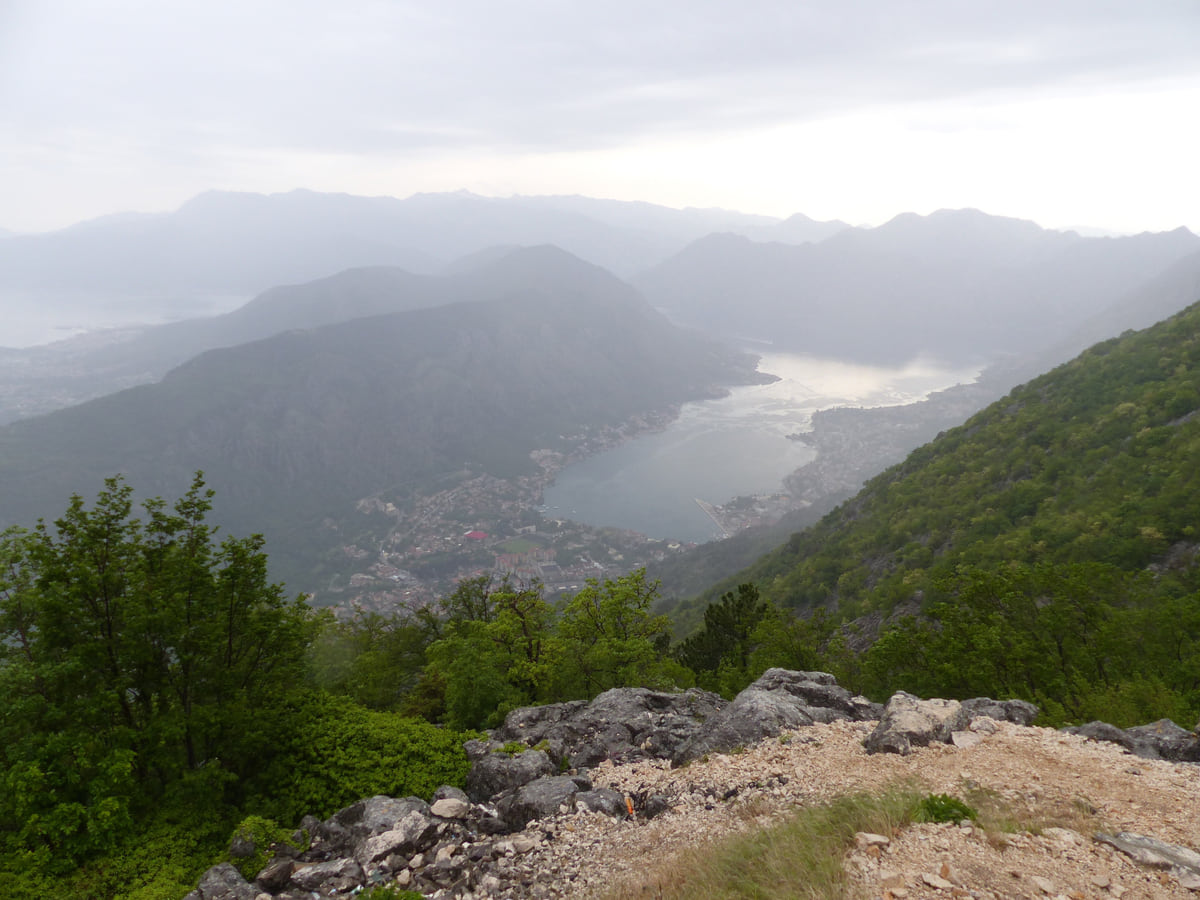
The Bay of Kotor from a mountain lookout, the water winding between green slopes under low cloud over the peaks
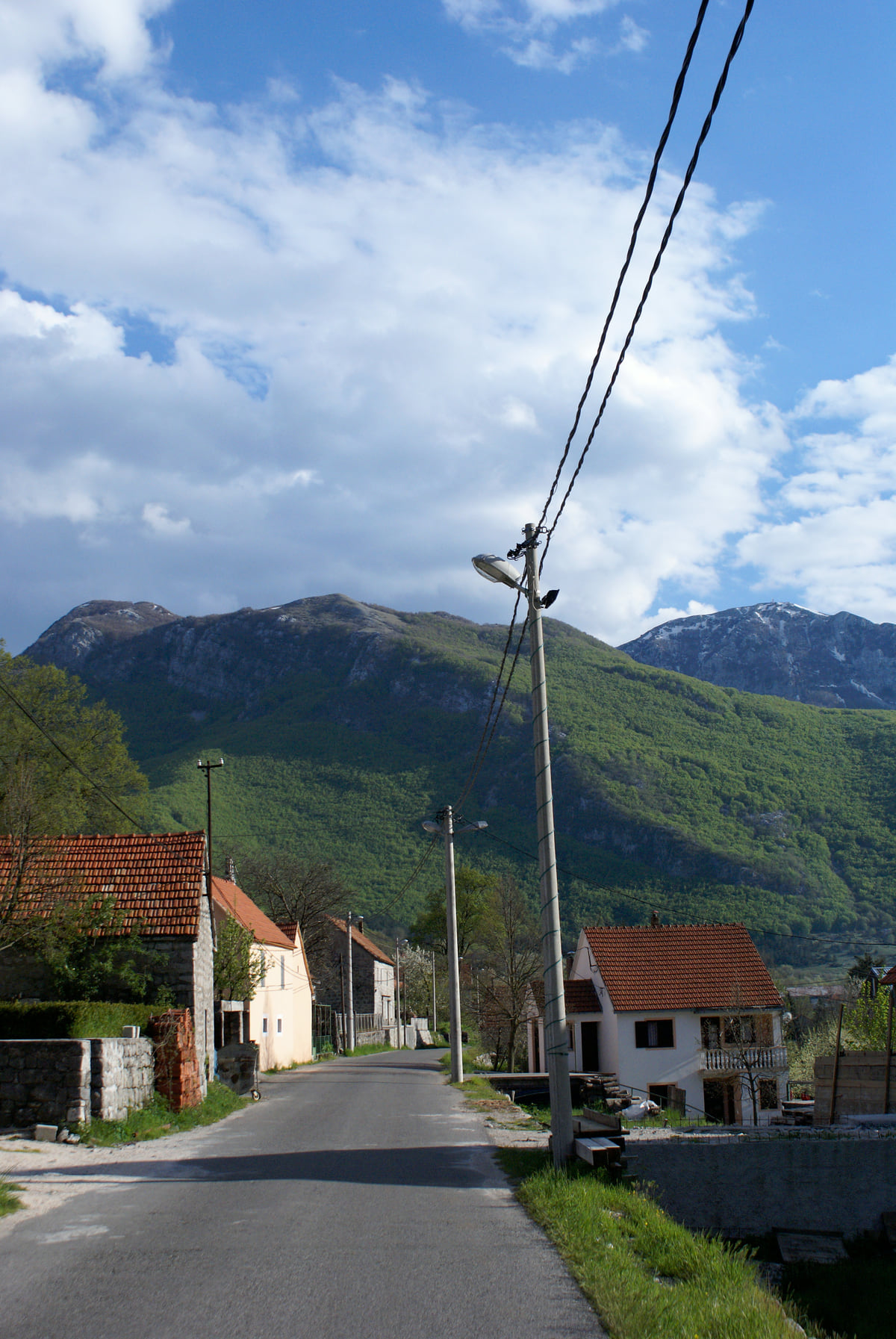
The road through the village of Njeguši between stone houses with red roofs, with the green slopes of Mount Lovćen behind
Lovćen National Park charges
| Service | Price |
|---|---|
| Entry (visitor centre and educational trails) | €3 per person per day |
| Bicycle hire | €3 an hour / €8 a day |
| Guide | €40 (4 h) / €80 (8 h) |
| Snowshoes | €4 a day |
| Walking poles | €3 a day |
| Bungalow | €30 a night |
| Camping | €3 a day (€20 on an equipped pitch) |
| Car parking | €1 an hour |
Source: National Parks of Montenegro, checked on 10-10-2026. Entry to the Njegoš Mausoleum is run by the National Museum and has no published price.
Test yourself
True or false?
0/3 Pick before you peek.
-
Jezerski vrh is Lovćen's highest summit.
See the answer
False. The highest is Štirovnik, at 1,749 m. Jezerski vrh, with the Njegoš Mausoleum, is 1,657 m.
-
A third of Montenegro's plant species grow on Lovćen.
See the answer
True. The Cetinje tourist board counts about 1,300 plant species, a third of the country's flora.
-
The Kotor cable car reaches Lovćen.
See the answer
True. It climbs from Dub, near Kotor, to the village of Kuk on Lovćen, according to the National Tourism Organisation.
- Area of the park
- 6,220 ha
- Štirovnik, the highest summit
- 1,749 m
- Entry per person per day
- €3
- Plant species, a third of the country's flora
- 1,300
Map
Where Lovćen is
The Adriatic coast runs from Herceg Novi to Ulcinj; the centre holds Podgorica, Cetinje and Lake Skadar, and the north, Durmitor and the Tara Canyon. Every number opens its guide.
 1Cetinje 2Cetinje Monastery 3King Nikola's Palace 4Biljarda 5Museums in Cetinje 6Lovćen 7Njeguši 8Lipa Cave 9Rijeka Crnojevića
 Map data © OpenStreetMap contributors (ODbL)
- 1CetinjeMontenegro's historic capital
- 2Cetinje MonasteryOrthodox monastery in Cetinje
- 3King Nikola's PalaceKing Nikola Museum, Cetinje
- 4BiljardaNjegoš Museum in Cetinje
- 5Museums in CetinjeNational Museum of Montenegro
- 6LovćenNational park since 1952
- 7NjegušiLovćen villages, Cetinje municipality
- 8Lipa CaveShow cave near Cetinje
- 9Rijeka CrnojevićaLake Skadar village, Cetinje municipality
What to see
What to see in Lovćen
0 of 278 Montenegro guides
Your next stamp
- Njegoš Mausoleum
- Cetinje
- Hiking
- Kotor serpentine
- Five-day itinerary
- Njeguši
- Kotor
- Prokletije National Park
- Aman Sveti Stefan
- Budva Old Town
- Haj-Nehaj
- Lučice Beach
- Montenegro's coast
- Peaks of the Balkans
- Porto Montenegro
- Sea Dance Festival
- Splendid Conference & Spa Resort
- Stari Bar
- Ulcinj Old Town
- Bay of Kotor
- Budva Riviera
- Heroj submarine
- Iberostar Bellevue
- Independence Day
- Old olive tree of Mirovica
- Tivat
- Velika plaža
- Ada Bojana
- Beaches in Budva
- Eurostars Queen of Montenegro
- Herceg Novi
- Kotor Old Town
- Mount Rumija
- Igalo
- Kotor city walls
- Mogren Beach
- Montenegro Beach Resort
- Svač
- Vrmac
- Jaz Beach
- Kanli kula
- Luštica peninsula
- St Tryphon Cathedral
- Ulcinj salt pans
- Forte Mare
- Gornja Lastva
- Maritime Museum, Kotor
- Slovenska Beach
- Drobni Pijesak Beach
- Kotor viewpoints
- Mamula
- Žanjic beach
- Kotor cruise port
- Orjen
- Plavi horizonti beach
- Sveti Nikola Island
- Blue Cave
- Restaurants in Budva
- Restaurants in Kotor
- Canyoning
- Hotels
- Perast
- Sutomore
- Sveti Stefan
- Čanj
- Luxury hotels
- Our Lady of the Rocks
- Pržno
- Things to do
- Activities
- All-inclusive hotels
- Bar Riviera
- Bečići
- Hotel Palma
- St George island
- Dobrota
- Hladna uvala
- Most beautiful places
- Petrovac
- Crvena stijena
- Prčanj
- Prettiest villages
- Cycling
- Risan
- UNESCO sites
- Heritage Grand Perast
- Map
- Hyatt Regency Kotor Bay
- Where is it?
- Regions
- Cities
- Beaches in Bar
- Budva
- Central Montenegro
- Hotels in Budva
- Hotels in Kotor
- Iberostar Waves Herceg Novi
- Kitesurfing
- The name
- Beaches in Ulcinj
- Flag
- Hotels in Perast
- Palmon Bay Hotel & Spa
- Podgorica
- Cathedral of the Resurrection
- One&Only Portonovi
- Population
- Sandy beaches
- Azul Beach Resort Montenegro
- Naturist beaches
- Size
- Stara Varoš
- Doclea
- Language
- Mimosa Festival
- Medun
- Religion
- Zipline
- Currency
- Museums in Podgorica
- Dajbabe Monastery
- EU membership
- History
- Restaurants in Podgorica
- Hotels in Podgorica
- Public holidays
- Avala Resort & Villas
- Bar
- Beaches in Kotor
- Birdwatching
- Hotels in Ulcinj
- Kotor carnival
- Time zone
- Tivat beaches
- Tuzi
- Boka Night
- Dukley Hotel & Resort
- Facts
- Hotels in Tivat
- Zeta
- Caves
- Herceg Novi beaches
- National parks
- Šipčanik
- Hotels in Herceg Novi
- Monasteries
- Fortresses
- Fly fishing
- Museums
- Canyons and waterfalls
- Lakes
- Mountains
- Montenegro and Croatia
- Beaches
- Boat trips
- Montenegro and Albania
- Nightlife
- Ulcinj
- Weather
- Best time to visit
- Cetinje Monastery
- Kayaking
- Montenegro and the Balkans
- How to get there
- In summer
- King Nikola's Palace
- Sailing
- Biljarda
- Flights
- In winter
- Airports
- Museums in Cetinje
- New Year's Eve
- Paragliding
- Tivat Airport
- Podgorica Airport
- Dubrovnik to Kotor
- Belgrade to Montenegro
- Ferry to Italy
- Njeguši prosciutto
- Border crossings
- In January
- Lipa Cave
- Where to stay
- In February
- Kamenari-Lepetane ferry
- Pavlova strana
- Getting around
- In March
- Rijeka Crnojevića
- In April
- Trains
- Buses
- In May
- Car hire
- In June
- Driving
- In July
- In August
- Taxis
- Distances
- In September
- In October
- Road trip
- Food
- In November
- Lake Skadar
- Scenic drives
- In December
- Kotor cable car
- Virpazar
- Where to eat
- Budva to Kotor
- Godinje
- Wine
- Podgorica to Kotor
- Vranjina
- Besac fortress
- Prices and budget
- On a budget
- Žabljak Crnojevića
- Danilovgrad
- Entry requirements
- Ostrog Monastery
- Tourist registration
- Customs
- Nikšić
- Crvena Stijena cave
- Safety
- Events
- Healthcare
- Northern Montenegro
- Mobile and roaming
- Žabljak
- Durmitor
- Plugs
- Black Lake
- With kids
- Bobotov Kuk
- Holidays
- Day trips
- Stećci tombstones
- Hotels in Žabljak
- Three-day itinerary
- Skiing in Montenegro
- One-week itinerary
- Skiing in Žabljak
- Šavnik
- Ten-day itinerary
- Nevidio Canyon
- Tara Canyon
- Tara rafting
- Đurđevića Tara Bridge
- Plužine
- Lake Piva
- Piva Monastery
- Mojkovac
- Brskovo
- Pljevlja
- Husein Pasha Mosque
- Kolašin
- Hotels in Kolašin
- Skiing in Kolašin
- Biogradska Gora National Park
- Komovi
- Morača Monastery
- Morača Canyon
- Bijelo Polje
- Đalovića Cave
- Berane
- Andrijevica
- Petnjica
- Rožaje
- Plav
- Lake Plav
- Gusinje
- Vusanje
Frequently asked questions
How much does it cost to enter Lovćen National Park?
€3 per person per day, covering the visitor centre and educational trails, according to National Parks of Montenegro. Car parking is €1 an hour.
How do you get to Lovćen National Park from Kotor?
By road up the Kotor serpentine to Njeguši and into the park, or by the Kotor cable car, which climbs from Dub to the village of Kuk in 11 minutes, according to the National Tourism Organisation.
Can you visit Lovćen from Budva?
Yes, as a day trip by car or on an organised tour. The usual approach is via Cetinje and Ivanova korita, about 10 km from Cetinje, or via Kotor and the serpentine.
What is the highest peak of Lovćen?
Štirovnik, at 1,749 metres. The best known is Jezerski vrh, at 1,657 metres, where the Njegoš Mausoleum stands.
What is there to do at Ivanova korita?
It's the park's visitor centre, with a barefoot trail, the Wolf educational trail, an adventure park with ziplines for ages 5 to 70, sports pitches and the start of hiking and biking routes.
When did Lovćen become a national park?
In 1952, according to the National Tourism Organisation, the same year as Durmitor and Biogradska Gora.
By
Tourism graduate with a master’s in Tourism Management and Planning from the University of Málaga, who has travelled across Europe. He writes every guide from official sources and his own judgement.
Published on . Facts checked on .
Sources
Some links in this guide are affiliate links: if you book through them, the site earns a commission at no extra cost to you. Affiliate disclosure
Photos: Milica Buha (CC BY-SA 4.0); Milica Buha (CC BY-SA 4.0); Wolfgang Sauber (CC BY-SA 4.0); Mary Ro (Public domain), via Wikimedia Commons.