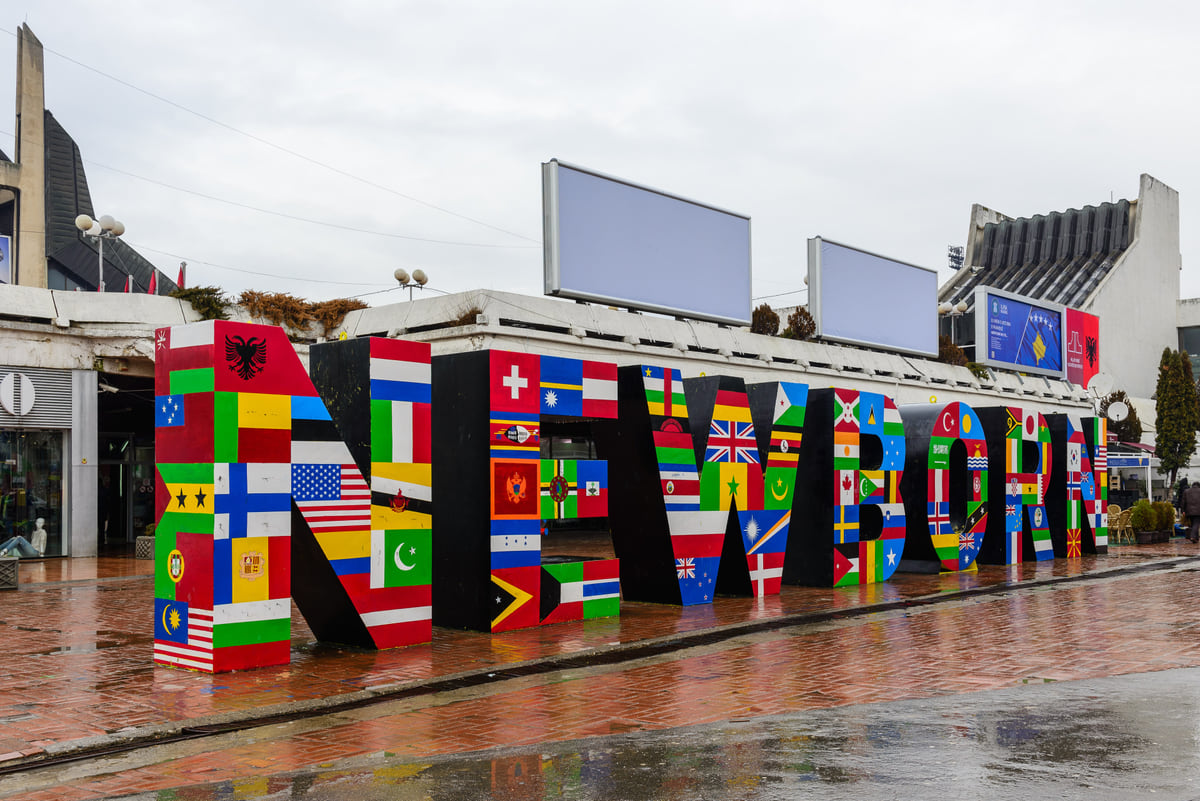
Independence declared on 17 Feb 2008
Is Kosovo a country? Who says what, and what it means for you
Kosovo declared independence from Serbia on 17 February 2008, and the International Court of Justice found in 2010 that the declaration did not violate international law. Recognition is still split. The UK deals with Kosovo as a state, Serbia regards it as its own territory, and the EU lists it as a potential candidate for membership.
Whether Kosovo is a country is a diplomatic argument I'm not here to settle. What matters on the ground is the order you cross the Serbian border in, and that has a very clear answer.

Before you go
What I would keep in mind
-
01 My tip
The bit that affects you is the Serbian border
Fly into Pristina or arrive from Albania, North Macedonia or Montenegro, and Serbia will not let you continue through its crossings with Kosovo without an earlier Serbian entry stamp. I set out the order in the border guide.
Kosovo-Serbia border -
02 Getting there
Your passport, your stamp, your 90 days
Gov.uk says British passport holders can stay up to 90 days without a visa and get a Republic of Kosovo entry stamp. That stamp is exactly what can cause trouble at a Serbian border later.
Kosovo entry requirements -
03 Money
Euros, but not the EU
Kosovo uses the euro with no agreement with the EU, and it is in neither the EU nor Schengen. The European Commission classes it as a potential candidate.
is Kosovo in the EU
This is the one page of my Kosovo guide where I deal with its status, and I’ve written it by a simple rule. No view on who is right, just dated facts, each tied to the institution that states it, followed by what any of it changes for a British traveller. Less than you’d think, but one part matters a lot.
From Resolution 1244 to 17 February 2008
On 10 June 1999 the UN Security Council adopted Resolution 1244, with 14 votes in favour and China abstaining. It put international civil and security presences in Kosovo under UN auspices. Nearly nine years later, on 17 February 2008, Kosovo’s parliament declared independence, and its Constitution came into force on 15 June that year. Article 1 calls Kosovo an independent state and adds that it has no territorial claims on any other state and will not seek to join one, which answers the “is Kosovo part of Albania” question better than I could.
Everything before that, from Roman Ulpiana to the 1998-1999 war, is set out as dated facts in my history of Kosovo.
What the International Court of Justice found
The ICJ looked at the declaration in its case 141. On 22 July 2010 it concluded that the declaration of independence adopted on 17 February 2008 did not violate international law. It was an advisory opinion, not a ruling that obliges anyone to recognise Kosovo, which is why recognition stayed divided afterwards.
If you are staying the night, see the best hotel deals in Pristina for your dates: the well-placed rooms go fast.
Who recognises Kosovo, and who doesn’t?
Each institution uses its own language, so I’ll take them one at a time.
The UK deals with Kosovo’s authorities as a state. Gov.uk sends British travellers to the Kosovan Embassy in the UK for entry questions and refers to Republic of Kosovo stamps in passports.
Spain does not. Its foreign ministry puts Kosovo inside its travel advice for Serbia and says it has no relations with Kosovo’s authorities. The same ministry’s Serbia country profile, dated April 2026, says 103 of the 193 UN member states recognise Kosovo, that five EU members don’t (Spain, Romania, Greece, Cyprus and Slovakia), and that Serbia counts it among its provinces with special status.
The EU writes “Kosovo*”, asterisk included. The European Commission lists it as a potential candidate, and the EU-Kosovo Stabilisation and Association Agreement has been in force since 1 April 2016. What that means for the euro, Schengen and your GHIC is in is Kosovo in the EU.
UNESCO inscribed the medieval monasteries in 2004 and 2006 and lists them under the state party Serbia, with a disclaimer that names and maps imply no opinion on any territory’s legal status. They’re the four sites in UNESCO sites in Kosovo.
What this changes for your trip
For a British visitor, the practical side comes down to three points.
The first, and the only one that can genuinely ruin a plan, is Serbia. Gov.uk says Serbia does not consider its crossing points with Kosovo to be official international borders. You can travel from Serbia into Kosovo and back again, but you cannot go from Kosovo into Serbia without a Serbian entry stamp from an airport or another Serbian border, and travellers have been turned away for carrying Kosovo stamps. I explain the sequence in crossing from Serbia to Kosovo.
The second is paperwork. Gov.uk says your passport must be undamaged and valid for the whole stay, and you get a 90-day visa-free stamp. The details, including the GHIC point, are in Kosovo entry requirements.
The third is vocabulary. You’ll see “Republika e Kosovës” on stamps and at the top of laws, and the flag at every border crossing, because Kosovo’s law on state symbols requires it there. Worth knowing, not worth debating with a border officer. Keep your views on the status to yourself at the counter and the whole thing takes a couple of minutes.
So you do not lose the morning at the ticket office, browse tickets and tours in Pristina on GetYourGuide.
How I write about it on this site
On every page I write “Kosovo”, without an asterisk, as gov.uk does in its own text. Places get their Albanian and Serbian names the first time, and the Orthodox monasteries keep the names UNESCO uses. If you want to place it on the map first, start with where is Kosovo, which covers its four neighbours and how far the nearby capitals are.
If you are staying the night, see the best hotel deals in Pristina for your dates: the well-placed rooms go fast.
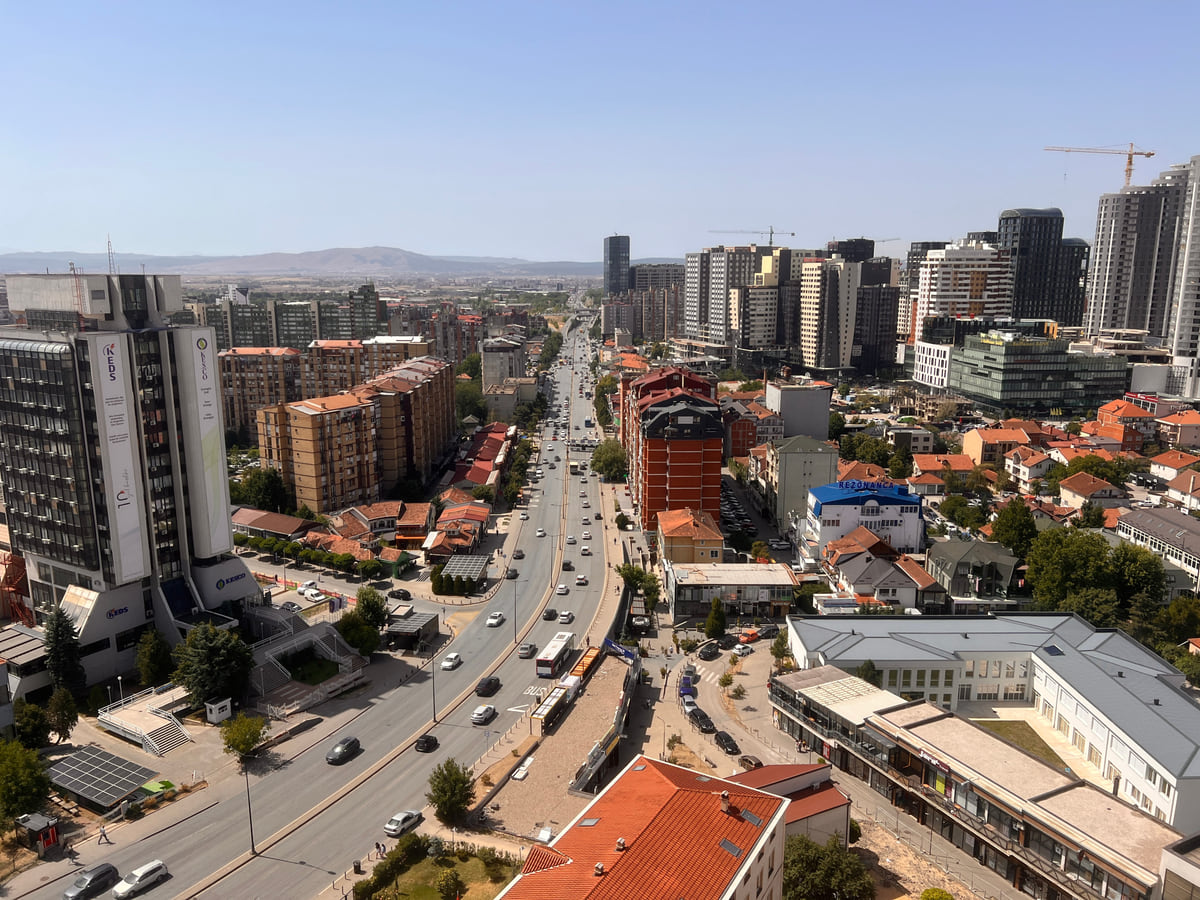
Pristina from the cathedral tower, looking down Bill Clinton Boulevard to tower blocks and green hills beyond
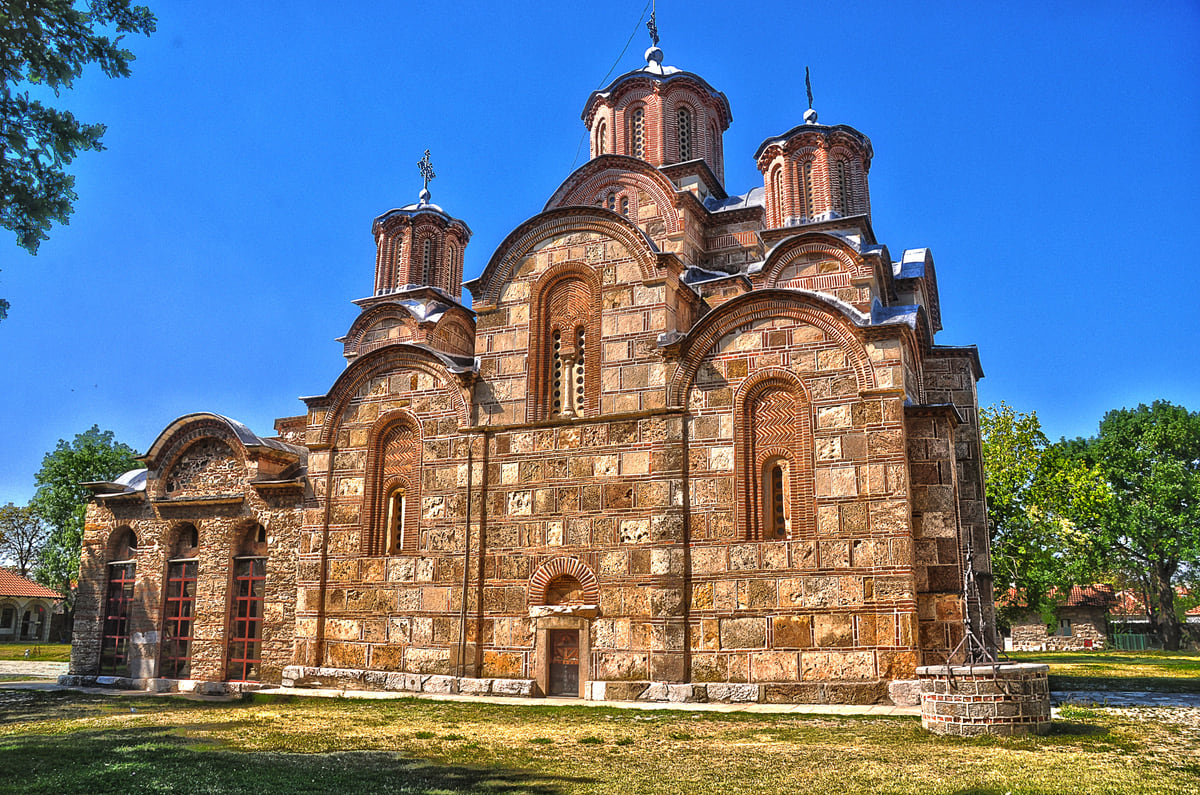
The church of Gračanica Monastery, with its stepped stone-and-brick domes, standing on a lawn under a deep blue sky
Who says what about Kosovo
| Institution | Position, in its own terms |
|---|---|
| United Kingdom (gov.uk) | Refers travellers to the Kosovan Embassy in the UK and to Republic of Kosovo passport stamps |
| Spain (foreign ministry) | Does not recognise the 2008 declaration and has no relations with Kosovo's authorities |
| European Union (Commission) | Potential candidate; Stabilisation and Association Agreement in force since 1 April 2016 |
| UN Security Council | Resolution 1244 of 1999, with international civil and security presences |
| International Court of Justice | The 2008 declaration did not violate international law (advisory opinion, 2010) |
| UNESCO | Lists the four medieval monuments under the state party Serbia |
Sources: gov.uk, Spain's foreign ministry, European Commission, UN, ICJ and UNESCO, checked in October 2026.
Test yourself
True or false?
0/3 Pick before you peek.
-
The International Court of Justice ruled Kosovo's independence illegal.
See the answer
False. The opposite. Its advisory opinion of 22 July 2010 found that the declaration of 17 February 2008 did not violate international law.
-
Every EU member recognises Kosovo.
See the answer
False. Five do not, according to the Spanish foreign ministry: Spain, Romania, Greece, Cyprus and Slovakia.
-
Kosovo's Constitution rules out joining another state.
See the answer
True. Article 1 says Kosovo has no territorial claims on any state and will not seek to join any state or part of one.
- Declaration of independence
- 2008
- UN members recognising it (Spanish ministry)
- 103/193
- EU members that don't
- 5
- Visa-free stay for British passports
- 90 days
0 of 208 Kosovo guides
Your next stamp
- Facts
- Holidays
- EU membership
- Currency
- Independence Day
- Map
- History
- Public holidays
- Gjakova Grand Bazaar
- Gjeravica
- Places to visit
- Pristina region
- Visoki Dečani Monastery
- Bjeshkët e Nemuna National Park
- Hadum Mosque
- Mitrovica Region
- Things to do
- Most beautiful places
- Sheh Danjolli tekke
- Prettiest villages
- Tailors' Bridge
- Rugova Canyon
- UNESCO sites
- Gjakova
- Where is Kosovo
- Regions
- Municipalities
- Cities
- Gračanica Monastery
- Mitrovica
- Patriarchate of Peć
- Pristina
- Prizren
- Rugova via ferrata
- Fushë Kosovë
- Population
- Vushtrri
- Podujeva
- Radavc Cave
- Size
- Bajrakli Mosque
- Devič Monastery
- Gazimestan
- Ibar Bridge
- Istog
- One day in Pristina
- Peja
- Prizren region
- Ulpiana
- Vushtrri Stone Bridge
- Gadime Cave
- Klina
- Name
- Vushtrri Fortress
- Deçan
- Flag
- Isa Boletini Complex
- Novo Brdo Fortress
- Junik
- Lake Batllava
- Zvečan Fortress
- Banjska Monastery
- Ferizaj region
- Languages
- Rahovec
- Ferizaj
- Religion
- Sokolica Monastery
- Lake Gazivoda
- Štrpce
- Brezovica
- Entry requirements
- Skiing in Kosovo
- Kaçanik
- Serbian border
- Gračanica
- Guesthouses in Rugova
- Hotels in Peja
- Kaçanik fortress
- Newborn monument
- North Mitrovica
- One day in Prizren
- Peja bazaar
- Peja region
- Velika Hoča
- Gjakova region
- Hani i Elezit
- Hotels in Gjakova
- National Library
- Obiliq
- Zočište Monastery
- Drenas
- Mother Teresa Cathedral
- Shtime
- Skënderaj
- Lipjan
- Mother Teresa Boulevard
- Zvečan
- Kosovo Museum
- Leposavić
- Novo Brdo
- Emin Gjiku Ethnological Museum
- Janjevo
- Zubin Potok
- Imperial Mosque
- Pristina Clock Tower
- Pristina Old Bazaar
- Great Hammam of Pristina
- Bogë
- Germia Park
- Getting there
- Lake Radoniq
- Prizren Fortress
- Bear Sanctuary Prishtina
- Drelaj
- Flights
- Sinan Pasha Mosque
- Hotels in Pristina
- Pristina airport
- Prizren stone bridge
- Buses
- Grand Hotel Pristina
- Our Lady of Ljeviš
- Prizren hammam
- Swiss Diamond Hotel
- Tirana to Pristina
- League of Prizren
- Restaurants in Pristina
- Skopje to Pristina
- Belgrade to Pristina
- Prizren Archaeological Museum
- Balkans itinerary
- St George's Cathedral
- Church of the Holy Saviour
- Getting around
- Holy Archangels Monastery
- Trains
- Car hire
- Day trips
- Marash
- Driving
- Sharr National Park
- Taxis
- Distances
- Prevalla
- Dragash
- Road trip
- Brod
- Prices and budget
- On a budget
- Restelica
- Free things to do
- Mirusha waterfalls
- Malisheva
- Safety
- Mamusha
- Scams
- Healthcare
- National parks in Kosovo
- Nightlife
- Suhareka
- Mobile and roaming
- Mountains in Kosovo
- Mushtisht
- Hiking in Kosovo
- Korisha
- Packing list
- DokuFest
- Peaks of the Balkans
- With kids
- Hotels in Prizren
- Kosovo lakes
- 3 days
- Caves and waterfalls
- Restaurants in Prizren
- 5 days
- One week
- Gjilan region
- Kosovo food
- Sunny Hill Festival
- Gjilan
- Rahovec wine
- Atik Mosque, Gjilan
- Kosovo beer
- Draganac Monastery
- Where to eat in Kosovo
- Kamenica
- Where to stay in Kosovo
- Kllokot
- Weather in Kosovo
- Best time to visit Kosovo
- Partesh
- Kosovo in winter
- Ranillug
- Kosovo in spring
- Viti
- Kosovo in summer
- Letnica
- Binač Monastery
- Kosovo in autumn
- Events in Kosovo
- Kosovo monasteries
- Mosques in Kosovo
- Kullas in Kosovo
- Castles in Kosovo
- Museums in Kosovo
- Bazaars in Kosovo
Frequently asked questions
Is Kosovo a country?
Its 2008 Constitution defines it as an independent state, and part of the international community recognises it, but not all. According to the Spanish foreign ministry's Serbia country profile of April 2026, 103 of the 193 UN member states recognise it.
Is Kosovo part of Serbia?
Serbia considers it part of its territory, and Serbia does not treat its crossings with Kosovo as international borders. Kosovo has defined itself as an independent state since 2008, and the UK deals with it as one.
Is Kosovo part of Albania?
No. It borders Albania and most people speak Albanian, but Article 1 of its Constitution says Kosovo has no territorial claims on any state and will not seek to join any state or part of one.
Does the UK recognise Kosovo?
The UK government deals with Kosovo as a state. Gov.uk's travel advice refers British travellers to the Kosovan Embassy in the UK and talks about Republic of Kosovo passport stamps.
How many countries recognise Kosovo?
The most recent official figure I've found is in the Spanish foreign ministry's Serbia profile of April 2026, which says 103 of the 193 UN members recognise it. Inside the EU, Spain, Romania, Greece, Cyprus and Slovakia do not.
When did Kosovo become a country?
It declared independence on 17 February 2008 and its Constitution came into force on 15 June 2008. The International Court of Justice gave its advisory opinion on the declaration on 22 July 2010.
By
Tourism graduate with a master’s in Tourism Management and Planning from the University of Málaga, who has travelled across Europe. He writes every guide from official sources and his own judgement.
Published on . Facts checked on .
Sources
Some links in this guide are affiliate links: if you book through them, the site earns a commission at no extra cost to you. Affiliate disclosure
Photos: Arild Vågen (CC BY-SA 3.0); Bdx (CC0); Sasa Micic (CC BY-SA 3.0), via Wikimedia Commons.