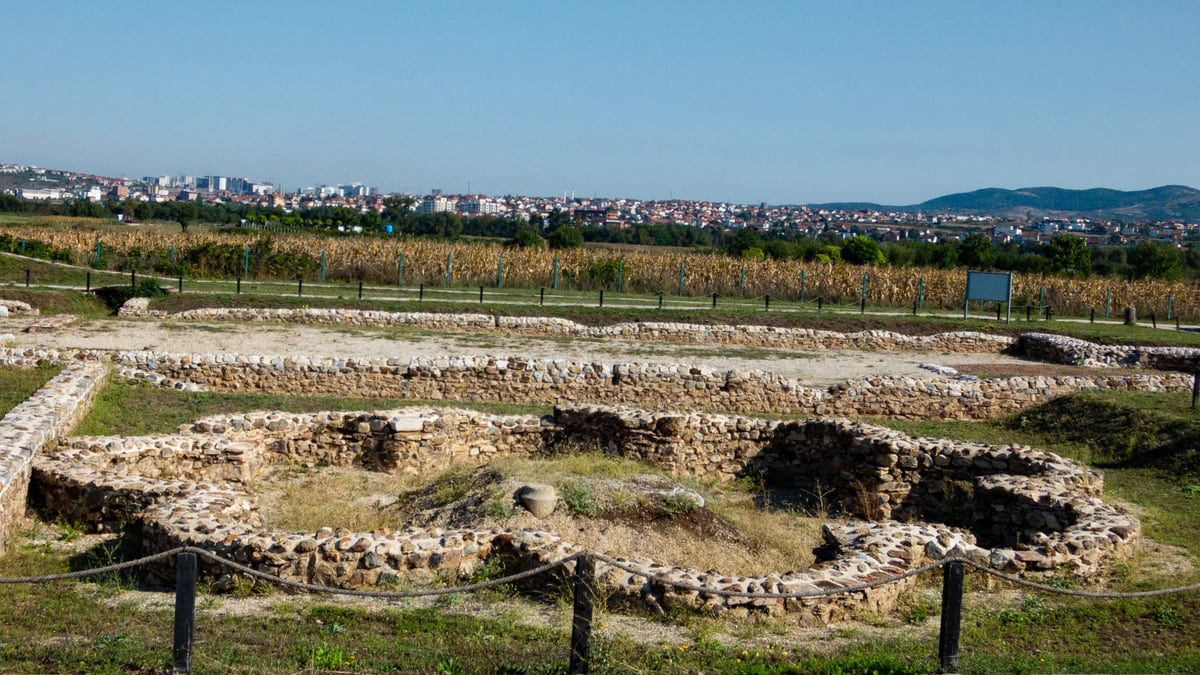
Archaeological park since 2016
Ulpiana, the Roman town Justinian rebuilt
Ulpiana is Kosovo's great Roman town, about 12 km south-east of Pristina and less than a kilometre from Gračanica monastery. According to the Ministry of Culture, its walls enclosed 35.5 hectares, it peaked in the 3rd and 4th centuries and, after the earthquake of 518, Emperor Justinian rebuilt it as Justiniana Secunda. It has been an archaeological park since 2016.
In 30 seconds
Full read: 2 min
- Ulpiana is Kosovo's most important Roman town, about 12 km south-east of Pristina.
- Its walls enclosed 35.5 hectares and after the earthquake of 518 it was rebuilt as Justiniana Secunda.
- It's been an archaeological park since 2016 and lies under a kilometre from Gračanica monastery.
Ulpiana isn't Ephesus, and it's best to go knowing that, but right next to Gračanica it's well worth the stop. I'd see it straight after the monastery, with the Ministry's record in mind to place the basilica, the baths and the walls.

Before you go
What I would keep in mind
-
01 Most beautiful
A basilica with an octagonal baptistery
Among the excavated remains, the Ministry of Culture highlights a late Roman bishop's basilica with an octagonal baptistery, a fortified basilica with round towers and the remains of baths.
-
02 Getting there
A stone's throw from Gračanica monastery
The site is less than 1,000 m west of the monastery, 1.8 km by road, according to the Ministry. The two make a neat morning together.
Gračanica monastery -
03 My tip
Think big as you look
What you see is only part of it. The Ministry reckons that with its suburbs the town covered around 120 hectares, and the Roman military camp, about 100 m from the east wall, another 16.
-
04 To save money
Free to approach, no published price
No official source publishes opening hours or a price for the archaeological park. What is free is walking over from Gračanica.
What I would book
A stone’s throw from Gračanica monastery, on a plain between the Graçanka river and the Drenoc hills, lie the remains of Kosovo’s most important Roman town. Ulpiana doesn’t have the grandeur of the great Mediterranean sites, but its story is first-rate, and the Kosovo Ministry of Culture’s record is detailed enough to make sense of what’s under your feet.
A Roman town between mines and roads
The Ministry places the site about 12 km south-east of Pristina, in the municipality of Graçanicë, less than 1,000 metres west of the monastery and 1.8 km by road. People lived here from the Neolithic onwards, but the town proper took shape at the end of the 1st century, a few decades after Rome conquered the kingdom of the Dardanians. Some written sources credit its founding and municipal status to Emperor Trajan, whose family name, Ulpius, would have given the town its name.
Its heyday came in the 3rd and 4th centuries, when it was known as Municipium Ulpiana Splendidissima, the splendid one. The reasons were practical. It sat beside deposits of lead, zinc, silver and gold, on fertile land and at a crossroads linking the Adriatic with the Aegean, near the Lissus-Naissus road and the road to Scupi, today’s Skopje. The Ministry relates that in 1993 lead ingots stamped Met(alli) Dard(anici) were found in the ancient harbour of Caesarea, in Israel, thought to have come from these mines.
Justiniana Secunda
In 518 an earthquake destroyed it. Emperor Justinian rebuilt it in the 6th century and renamed it Justiniana Secunda, and in that period it was an important religious centre. Pristina’s municipal leaflet tells the same story and adds that it was one of the busiest centres between Constantinople and Rome.
To sleep close to everything, search places to stay in Pristina on Expedia and filter by area before price.
What has been excavated
Over the last sixty years, according to the Ministry, archaeologists have recorded a late Roman bishop’s basilica with an octagonal baptistery, a fortified basilica with round towers, the north and west cemeteries, the town wall with towers and a gate, a Roman military camp, a pagan temple with a portico, remains of baths, a stretch of the main street and the drain. The walls enclosed 35.5 hectares, the camp covered another 16 about 100 metres from the east wall, and with its suburbs the town reached around 120.
I’m giving you the detail because on the ground you’ll see low walls among the grass. Without that mental map, Ulpiana can look like very little; with it, you grasp the scale.
The archaeological park
On 24 October 2016 the Ministry of Culture signed the regulation creating the Ulpiana archaeological park, with a perimeter of 161.10 hectares and a buffer zone of 96.23. The site has permanent protection and, according to the record, visitor infrastructure is being developed. There are no published opening hours or prices, so I’d go in the morning and pair it with Gračanica monastery.
Both are in the municipality of Gračanica and make up the first of my day trips from Pristina. If Roman Kosovo interests you, the wider background is in the history of Kosovo.
If you are short on time, see the best tours in Ulpiana and pick one that fits your day.
To sleep close to everything, search places to stay in Pristina on Booking.com and filter by area before price.
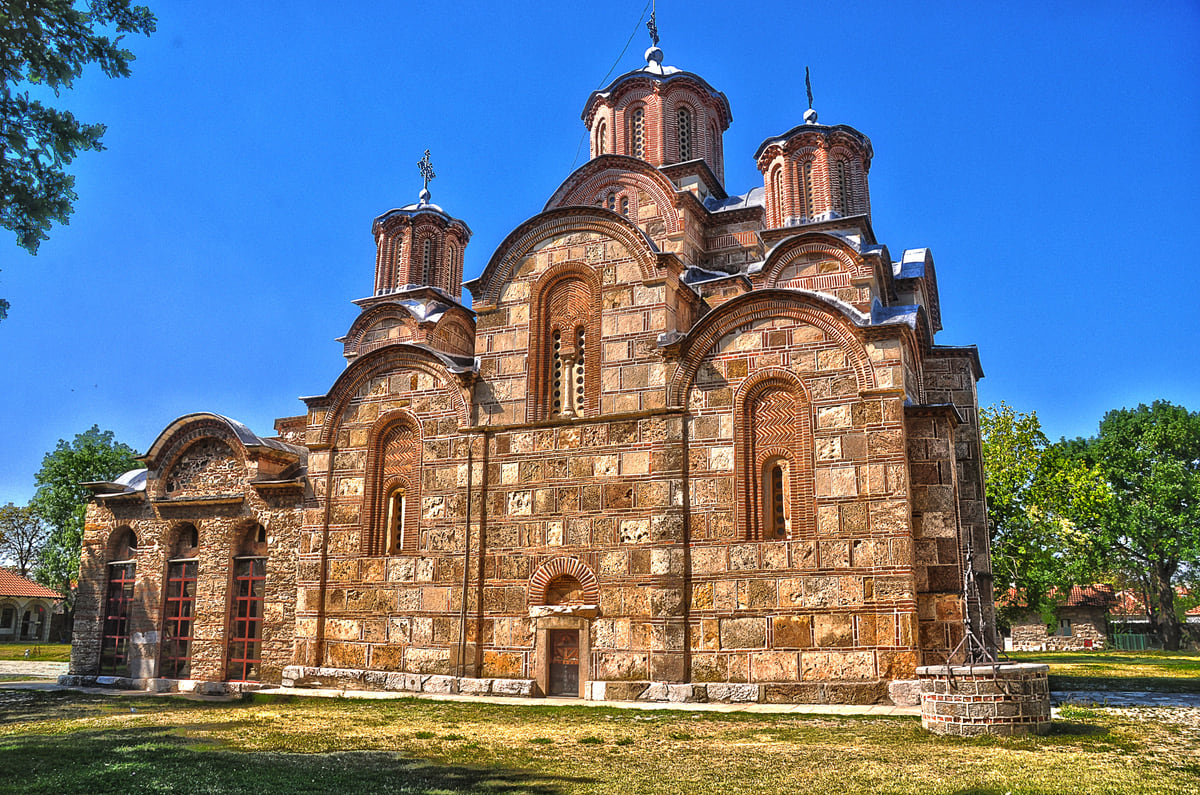
The church of Gračanica Monastery, with its stepped stone-and-brick domes, standing on a lawn under a deep blue sky
Ulpiana at a glance
| Detail | Value |
|---|---|
| Location | About 12 km south-east of Pristina, Graçanicë municipality |
| Founded as a town | Late 1st century, with municipal status under Trajan according to some written sources |
| Heyday | 3rd and 4th centuries, as Municipium Ulpiana Splendidissima |
| Earthquake | 518 |
| New name | Justiniana Secunda, 6th century |
| Walled area | 35.5 ha |
| Roman military camp | 16 ha (400 x 400 m) |
| Town with suburbs | About 120 ha |
| Archaeological park | Created 24 October 2016; perimeter 161.10 ha and buffer zone 96.23 ha |
Kosovo Ministry of Culture heritage database (record 6688) and Municipality of Pristina tourist leaflet, checked on 10 October 2026. No opening hours or price published.
Test yourself
True or false?
0/3 Pick before you peek.
-
Ulpiana was destroyed by an earthquake and rebuilt under a new name.
See the answer
True. After the earthquake of 518, Emperor Justinian rebuilt it in the 6th century as Justiniana Secunda, according to the Ministry of Culture.
-
Ulpiana is in the centre of Pristina.
See the answer
False. It's about 12 km south-east of the capital, in Graçanicë municipality, beside Gračanica monastery.
-
Ingots possibly from Ulpiana's mines have been found in Israel.
See the answer
True. The Ministry of Culture says lead ingots inscribed Met(alli) Dard(anici) turned up in 1993 in the ancient harbour of Caesarea.
Map
Where Ulpiana is
The Bjeshkët e Nemuna mountains close off the west and the Sharr the south; in the middle lies the Pristina plain. Every number opens its guide.

0 of 208 Kosovo guides
Your next stamp
- Gračanica
- Pristina region
- Day trips
- Fushë Kosovë
- Distances
- 3 days
- Places to visit
- Gjakova Grand Bazaar
- Gjeravica
- Visoki Dečani Monastery
- Bjeshkët e Nemuna National Park
- Hadum Mosque
- Mitrovica Region
- Things to do
- Most beautiful places
- Sheh Danjolli tekke
- Prettiest villages
- Tailors' Bridge
- Rugova Canyon
- UNESCO sites
- Gjakova
- Map
- Where is Kosovo
- Regions
- Municipalities
- Cities
- Gračanica Monastery
- Mitrovica
- Patriarchate of Peć
- Pristina
- Prizren
- Rugova via ferrata
- Population
- Vushtrri
- Podujeva
- Radavc Cave
- Size
- Bajrakli Mosque
- Devič Monastery
- Gazimestan
- Ibar Bridge
- Is it a country?
- Istog
- One day in Pristina
- Peja
- Prizren region
- Vushtrri Stone Bridge
- Gadime Cave
- Klina
- Name
- Vushtrri Fortress
- Deçan
- Flag
- Isa Boletini Complex
- Novo Brdo Fortress
- History
- Junik
- Lake Batllava
- Zvečan Fortress
- Banjska Monastery
- Ferizaj region
- Languages
- Rahovec
- Ferizaj
- Religion
- Sokolica Monastery
- Currency
- Lake Gazivoda
- Štrpce
- Brezovica
- EU membership
- Entry requirements
- Skiing in Kosovo
- Kaçanik
- Serbian border
- Guesthouses in Rugova
- Hotels in Peja
- Kaçanik fortress
- Newborn monument
- North Mitrovica
- One day in Prizren
- Peja bazaar
- Peja region
- Public holidays
- Velika Hoča
- Facts
- Gjakova region
- Hani i Elezit
- Hotels in Gjakova
- National Library
- Obiliq
- Zočište Monastery
- Drenas
- Mother Teresa Cathedral
- Shtime
- Skënderaj
- Lipjan
- Mother Teresa Boulevard
- Zvečan
- Kosovo Museum
- Leposavić
- Novo Brdo
- Emin Gjiku Ethnological Museum
- Janjevo
- Zubin Potok
- Imperial Mosque
- Pristina Clock Tower
- Pristina Old Bazaar
- Great Hammam of Pristina
- Bogë
- Germia Park
- Getting there
- Lake Radoniq
- Prizren Fortress
- Bear Sanctuary Prishtina
- Drelaj
- Flights
- Sinan Pasha Mosque
- Hotels in Pristina
- Pristina airport
- Prizren stone bridge
- Buses
- Grand Hotel Pristina
- Our Lady of Ljeviš
- Prizren hammam
- Swiss Diamond Hotel
- Tirana to Pristina
- League of Prizren
- Restaurants in Pristina
- Skopje to Pristina
- Belgrade to Pristina
- Prizren Archaeological Museum
- Balkans itinerary
- St George's Cathedral
- Church of the Holy Saviour
- Getting around
- Holy Archangels Monastery
- Trains
- Car hire
- Marash
- Driving
- Sharr National Park
- Taxis
- Prevalla
- Dragash
- Road trip
- Brod
- Prices and budget
- On a budget
- Restelica
- Free things to do
- Mirusha waterfalls
- Malisheva
- Safety
- Mamusha
- Scams
- Healthcare
- National parks in Kosovo
- Nightlife
- Suhareka
- Mobile and roaming
- Mountains in Kosovo
- Mushtisht
- Hiking in Kosovo
- Korisha
- Packing list
- DokuFest
- Peaks of the Balkans
- With kids
- Holidays
- Hotels in Prizren
- Kosovo lakes
- Caves and waterfalls
- Restaurants in Prizren
- 5 days
- One week
- Gjilan region
- Kosovo food
- Sunny Hill Festival
- Gjilan
- Rahovec wine
- Atik Mosque, Gjilan
- Kosovo beer
- Draganac Monastery
- Where to eat in Kosovo
- Kamenica
- Where to stay in Kosovo
- Kllokot
- Weather in Kosovo
- Best time to visit Kosovo
- Partesh
- Kosovo in winter
- Ranillug
- Kosovo in spring
- Viti
- Kosovo in summer
- Letnica
- Binač Monastery
- Kosovo in autumn
- Events in Kosovo
- Independence Day
- Kosovo monasteries
- Mosques in Kosovo
- Kullas in Kosovo
- Castles in Kosovo
- Museums in Kosovo
- Bazaars in Kosovo
Frequently asked questions
Where is Ulpiana?
About 12 km south-east of Pristina, in the municipality of Graçanicë, on land belonging to the villages of Graçanicë, Llapllasellë and Hajvali. It's less than a kilometre west of Gračanica monastery, according to the Ministry of Culture.
What can you see at Ulpiana?
Remains of a bishop's basilica with an octagonal baptistery, a fortified basilica with round towers, the town wall with a gate and towers, a pagan temple with a portico, baths, part of the main street and the drain, according to the Ministry of Culture.
Why is it also called Justiniana Secunda?
Because after the earthquake that destroyed it in 518, Emperor Justinian rebuilt it in the 6th century and renamed it, according to the Ministry of Culture and the Municipality of Pristina's leaflet.
How much does it cost to visit Ulpiana?
No official source publishes a price or opening hours for the archaeological park. I'd combine it with Gračanica and ask locally.
Why did Ulpiana matter in Roman times?
The Ministry of Culture explains it sat beside mines rich in lead, zinc, silver and gold and at a crossroads between east and west, near the Lissus-Naissus and Scupi roads. Lead ingots marked as Dardanian metal were found at Caesarea in Israel.
By
Tourism graduate with a master’s in Tourism Management and Planning from the University of Málaga, who has travelled across Europe. He writes every guide from official sources and his own judgement.
Published on . Facts checked on .
Sources
Some links in this guide are affiliate links: if you book through them, the site earns a commission at no extra cost to you. Affiliate disclosure
Photos: Julianruizp (CC BY-SA 4.0); Sasa Micic (CC BY-SA 3.0), via Wikimedia Commons.