Town in western Kosovo
Gjakova, the town that revolves around its bazaar
Gjakova (Gjakovë in Albanian, Đakovica in Serbian) is a town in western Kosovo with 41,809 residents in 2024. Its centre is the Grand Bazaar, protected since 1955 and holding 525 buildings of interest according to the Culture Ministry, with the 1585 Hadum Mosque, several Sufi tekkes and, 7 km out, the Tailors' Bridge over the Erenik.
In 30 seconds
Full read: 3 min
- Gjakova (Đakovica) has 41,809 residents and is the hub of its region.
- Its Grand Bazaar, protected since 1955, has 525 buildings of interest.
- The Hadum Mosque dates from 1585 and has one of Kosovo's oldest libraries.
- It is a good base for Visoki Dečani Monastery.
Gjakova rewards a slow pace. I would stay in or beside the bazaar, walk it first thing and again at dusk, and use the day in between for Dečani.

Before you go
What I would keep in mind
-
01 Most beautiful
The Grand Bazaar
Permanently protected since 1955, with 525 buildings of interest according to its record. The official record itself calls it the largest bazaar in south-east Europe.
Gjakova Grand Bazaar -
02 Most beautiful
A mosque of 1585 with a library
The Hadum Mosque forms a complex with a Koranic school, cemetery, fountain and a library that its record counts among the oldest in Kosovo.
Hadum Mosque -
03 Worth the splurge
Sleep in an old han
Hani i Haraqisë, a caravan inn described by 19th-century travellers, now works as a hotel according to the Culture Ministry.
hotels in Gjakova -
04 My tip
Dečani is close by
Gjakova makes a good base for Visoki Dečani Monastery, a World Heritage component, in neighbouring Deçan municipality.
Visoki Dečani Monastery
What I would book
My ranking, scored
What I would see in Gjakova, in order
My own scores out of 10, based on the weight their official records give them and how easily they fit into a walk round town.
0 of 5 seen
-
Grand Bazaar (Çarshia e Madhe)
The Ottoman ensemble that defines the town, with 525 buildings of interest and permanent protection since 1955.
9.2 out of 10
-
Hadum Mosque
Dated 1585, with its library, Koranic school and cemetery in the same precinct, right in the middle of the bazaar.
8.8 out of 10
-
Tailors' Bridge
An 18th-century Ottoman bridge 192.8 m long with 11 arches over the Erenik, 7 km out of town.
8.5 out of 10
-
Sheh Danjolli tekke
A 19th-century tekke whose ceremonial hall is decorated with wall paintings, under permanent protection.
7.8 out of 10
-
Ethnographic Museum
A house built in 1810 by the Sina family and turned into a museum, opposite the town hall.
7.4 out of 10
Gjakova has no monument that appears on every postcard, which is why many people drive through on their way to Prizren without stopping. I think that is a mistake. Few towns in Kosovo keep such a complete Ottoman centre that is still so much in use, with open shops, working tekkes and a 16th-century mosque in the middle of the bazaar.
A town that grew around a mosque
Gjakova (Gjakovë in Albanian, Đakovica in Serbian) had 41,809 residents in the 2024 census. It heads a municipality of 78,699 people and 88 settlements, more villages than any other in the territory, and the wider Gjakova region.
The official tourism site, offline for rebuilding and read here in an archived copy, records a story about the town’s origins. The tale goes that Hadum Aga talked a landowner, Jak Vula, into handing over a plot for the mosque, and the town that grew around it was first called Jakovë. I take it for what it is, a local tale, but it explains why everything turns on the same spot.
What is there to see in Gjakova?
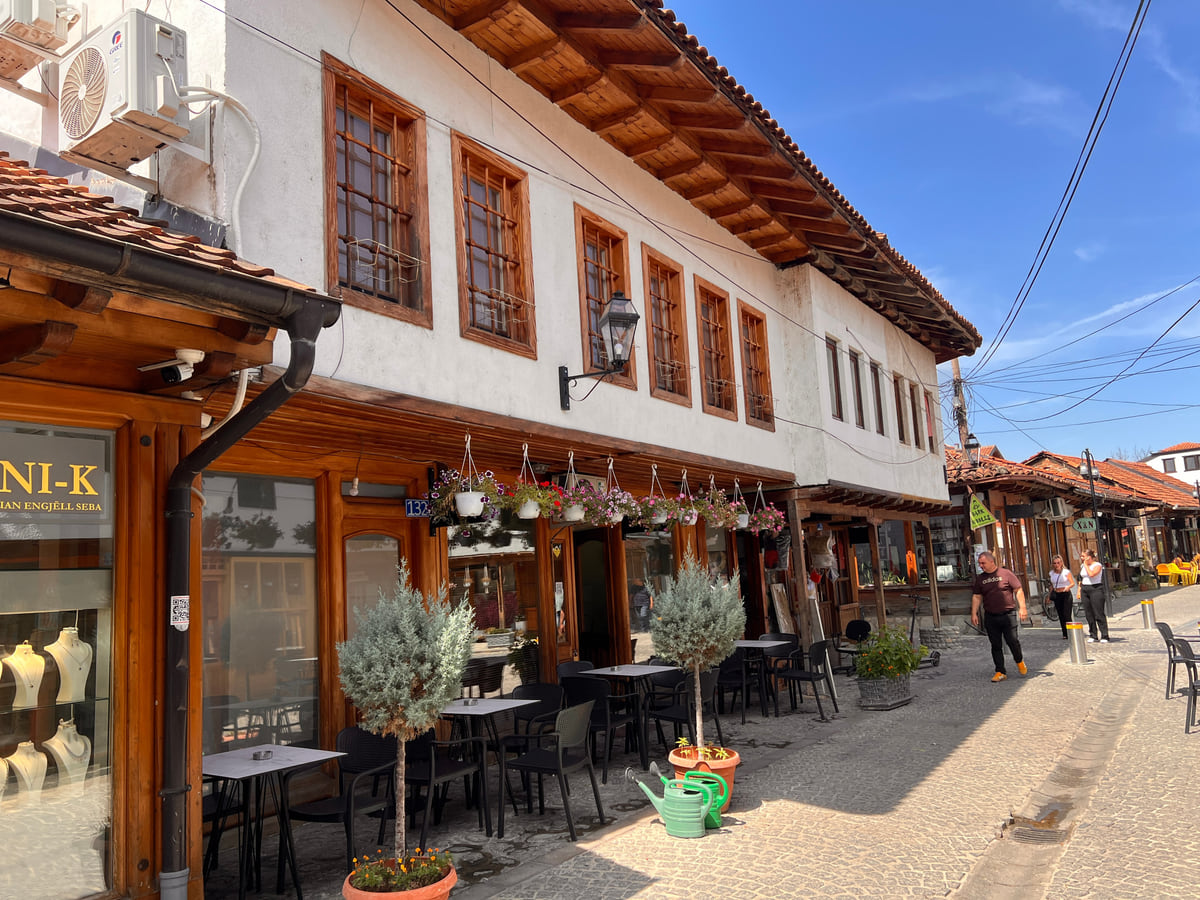
Everything centres on the Gjakova Grand Bazaar (Çarshia e Madhe), a 16th-century ensemble under permanent protection since 1955. Its DTK entry counts 525 buildings of interest, built of stone, timber, adobe and old tiles, and says it served crafts, trade and administration. It is still an area of shops and workshops.
In the middle of the bazaar stands the Hadum Mosque, dated by the DTK to 1585. It forms a complex with its minaret, Koranic school, old cemetery and a library the record ranks among the oldest in Kosovo. Nearby, the 30 m clock tower, lost to fire in 1912, was rebuilt a century later from archive photographs.
Gjakova is a town of tekkes, too, the lodges of the Sufi orders. The DTK protects, among others, the 18th-century Sheh Emin tekke in the bazaar area and the 19th-century Sheh Danjolli tekke on the way into town from Peja. And opposite the town hall, the Ethnographic Museum occupies a house built in 1810 by the Sina family.
If you are staying the night, see the best hotel deals in Gjakova for your dates: the well-placed rooms go fast.
Bridges over the Erenik
The River Erenik runs south of town and has two protected Ottoman bridges. The Tanners’ Bridge (Ura e Tabakëve), 127 m long with seven arches, is now for pedestrians only. The more spectacular one is out of town, at km 7 on the Prizren road, in the village of Bishtazhin. That is the Tailors’ Bridge (Ura e Terziut), 18th century, with 11 arches and 192.8 m long.
Sleeping and eating
The whole region had only 34 establishments and 828 beds in 2025 according to ASK, nearly all of them in town. According to the DTK, two old bazaar buildings have been turned into places to stay, Hani i Haraqisë and the Çarshia e Jupave. I have no official source for restaurants, so no names from me; OpenStreetMap does mark cafés, bars and restaurants inside the bazaar itself, around the Çarshia e Jupave.
If you are staying the night, see the best hotel deals in Gjakova for your dates: the well-placed rooms go fast.
Beyond the bazaar
Gjakova has Catholic heritage too. On what is known as the Catholics’ street, the DTK lists the church of St Anthony, called Shën Ndou locally. A first church of 1882 was lost, and Father Lorenc Mazreku built the present one on the same site in 1931; it has a single nave and two bell towers on its front.
To the south, near the village of Kusar at the foot of Mount Pashtrik, the government tourism portal describes Kusar Cave, with a stepped rocky entrance. According to that text it opened only recently and has no guide, so I would treat it as a short walk rather than an organised visit. I cover it with the others in Kosovo’s caves and waterfalls.
How many days?
For the town, one full day is enough. I would add a second for Visoki Dečani Monastery in the neighbouring municipality and, with a car, an afternoon for Rahovec and Lake Radoniq. Bring euros; Kosovo uses the euro without being in the EU, and carrying some cash is sensible, as nothing official tells you which bazaar shops take cards. The FCDO gives no Gjakova-specific warnings, so the general ones apply, like ordering taxis by phone and using ATMs inside banks.
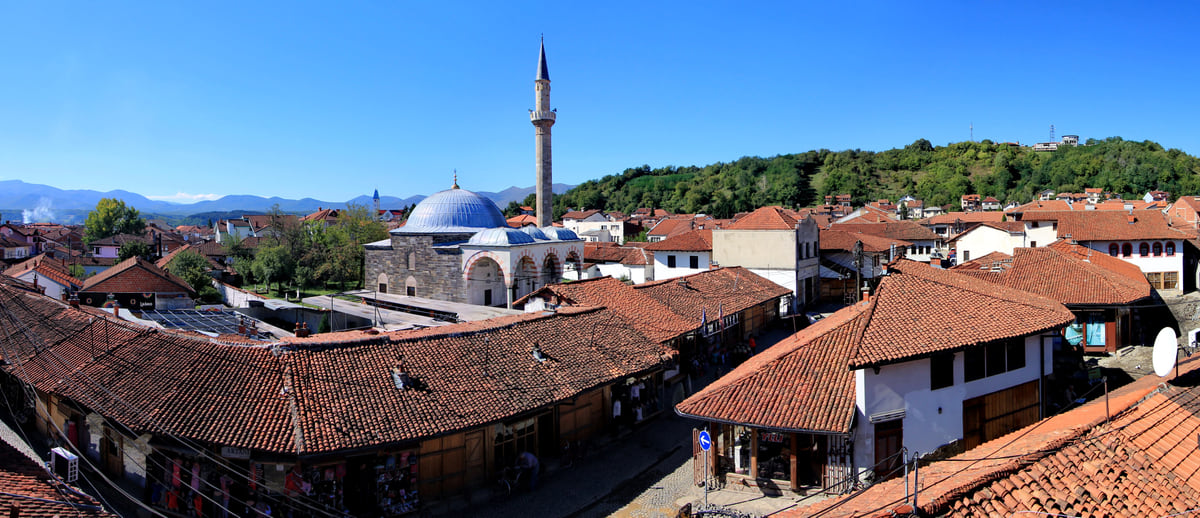
Panorama of the Grand Bazaar of Gjakova with the Hadum Mosque, its blue dome and minaret above the rooftops
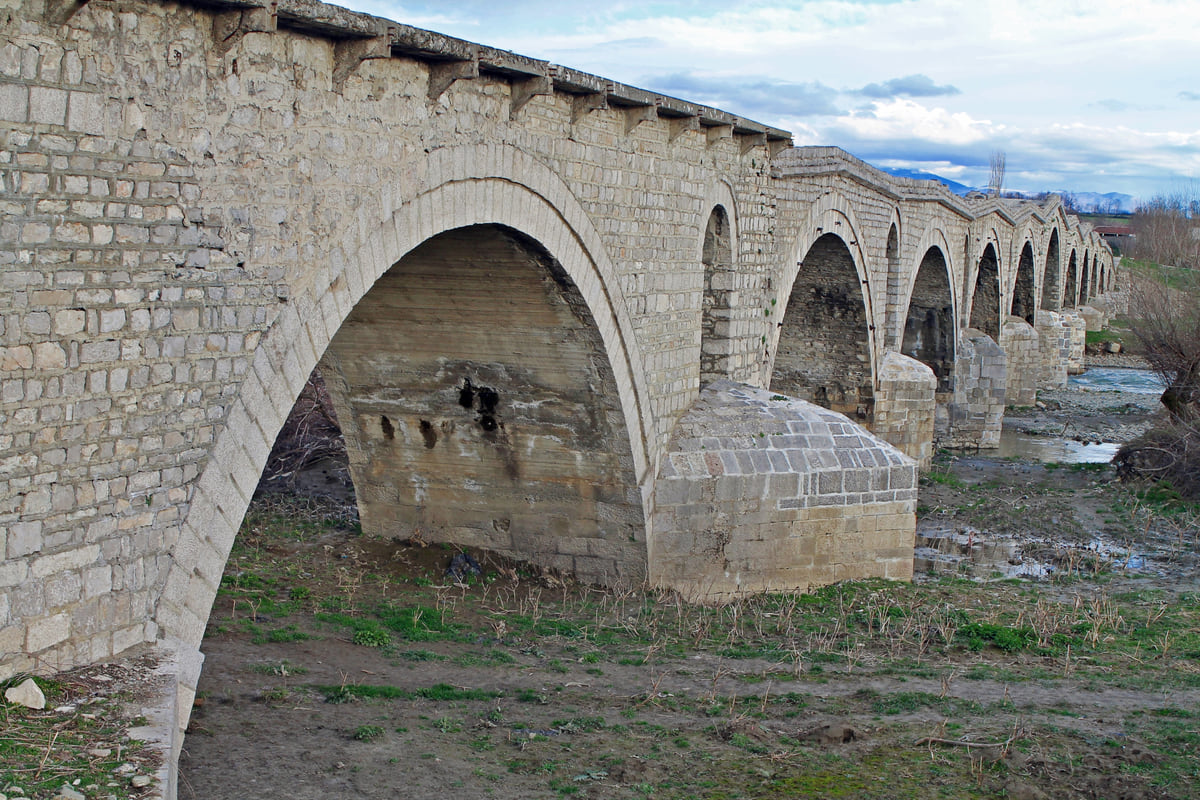
The Terzi stone bridge near Gjakova, with its main arch and the row of smaller arches crossing the riverbed
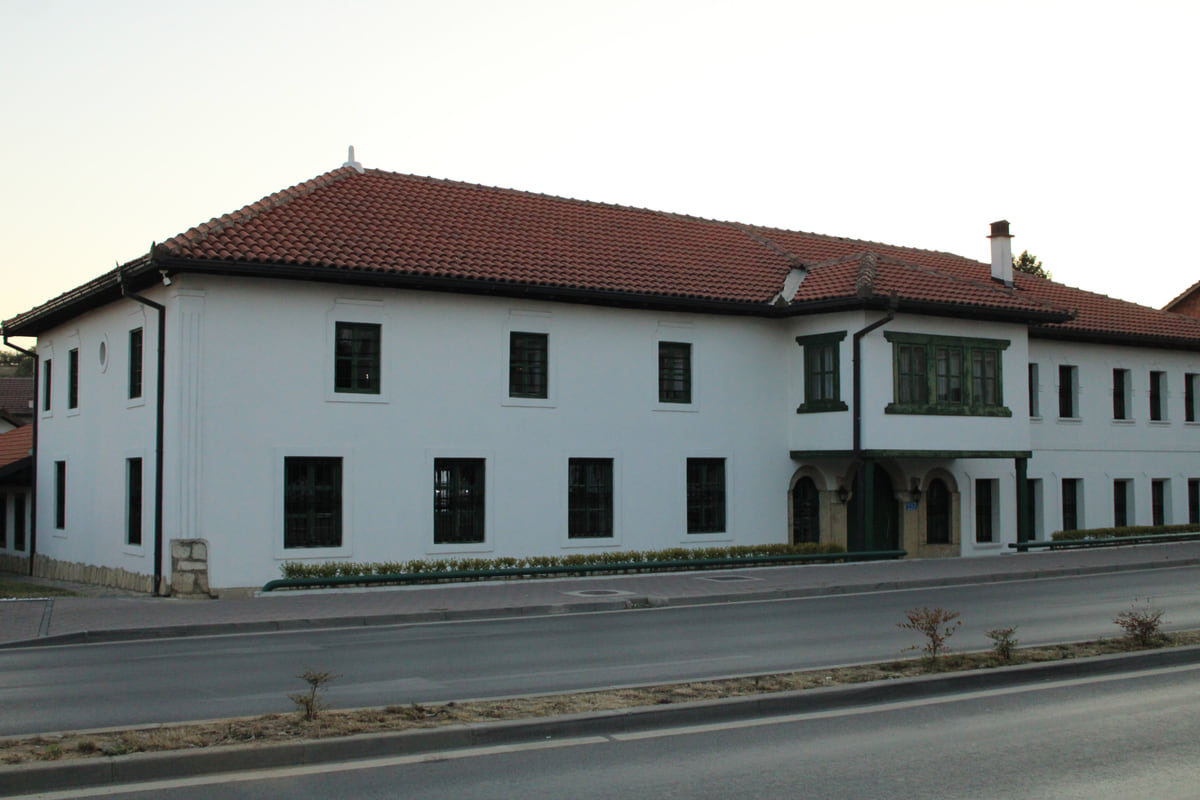
The white two-storey building of the Sheh Danjolli tekke in Gjakova, with a red tiled roof and dark windows
Gjakova's heritage in the Culture Ministry database
| Site | Period | Protection |
|---|---|---|
| Grand Bazaar (Çarshia e Madhe) | 16th century | Permanent since 1955 |
| Hadum Mosque and complex | 1585 | Permanent since 1955 |
| Ethnographic Museum (house of 1810) | 19th century | Permanent since 1955 |
| Sheh Danjolli tekke | 19th century | Permanent since 1978 |
| Tailors' Bridge (Ura e Terziut) | 18th century | Permanent since 1962 |
| Tanners' Bridge (Ura e Tabakëve) | 17th-18th century | Permanent since 1962 |
| Clock tower | Rebuilt after 1912 | Provisional |
Source: DTK, Kosovo Cultural Heritage database of the Culture Ministry. Opening times and prices: no official figure.
Gjakova in figures
| Item | Figure |
|---|---|
| Town, 2024 | 41,809 residents |
| Municipality, 2024 | 78,699 residents |
| Municipality, 2011 | 94,556 residents |
| Settlements in the municipality | 88, the most in Kosovo |
Source: ASK, 2011 and 2024 censuses and number of settlements.
Test yourself
True or false?
0/3 Pick before you peek.
-
The Hadum Mosque dates from the 16th century.
See the answer
True. Its record in the Culture Ministry database gives 1585 and names Hadum Aga as the builder.
-
Gjakova's Grand Bazaar has no official protection.
See the answer
False. It has been under permanent protection since 19 February 1955, according to the DTK.
-
Gjakova municipality has more settlements than any other in Kosovo.
See the answer
True. ASK counts 88 settlements in it, more than in any of the other 37 municipalities.
- Town population (ASK, 2024)
- 41,809
- Buildings of interest in the bazaar
- 525
- Year of the Hadum Mosque (DTK)
- 1585
- Settlements in the municipality
- 88
Map
Where Gjakova is
The Bjeshkët e Nemuna mountains close off the west and the Sharr the south; in the middle lies the Pristina plain. Every number opens its guide.
 1Gjakova 2Deçan 3Junik 4Rahovec 5Gjakova region 6Lake Radoniq
 Map data © OpenStreetMap contributors (ODbL)
What to see
What to see in Gjakova
0 of 208 Kosovo guides
Your next stamp
- Hadum Mosque
- Bazaars in Kosovo
- Gjakova Grand Bazaar
- Gjakova region
- Mosques in Kosovo
- Pristina Old Bazaar
- Free things to do
- Sheh Danjolli tekke
- Gjeravica
- Places to visit
- Pristina region
- Visoki Dečani Monastery
- Bjeshkët e Nemuna National Park
- Mitrovica Region
- Things to do
- Most beautiful places
- Prettiest villages
- Tailors' Bridge
- Rugova Canyon
- UNESCO sites
- Map
- Where is Kosovo
- Regions
- Municipalities
- Cities
- Gračanica Monastery
- Mitrovica
- Patriarchate of Peć
- Pristina
- Prizren
- Rugova via ferrata
- Fushë Kosovë
- Population
- Vushtrri
- Podujeva
- Radavc Cave
- Size
- Bajrakli Mosque
- Devič Monastery
- Gazimestan
- Ibar Bridge
- Is it a country?
- Istog
- One day in Pristina
- Peja
- Prizren region
- Ulpiana
- Vushtrri Stone Bridge
- Gadime Cave
- Klina
- Name
- Vushtrri Fortress
- Deçan
- Flag
- Isa Boletini Complex
- Novo Brdo Fortress
- History
- Junik
- Lake Batllava
- Zvečan Fortress
- Banjska Monastery
- Ferizaj region
- Languages
- Rahovec
- Ferizaj
- Religion
- Sokolica Monastery
- Currency
- Lake Gazivoda
- Štrpce
- Brezovica
- EU membership
- Entry requirements
- Skiing in Kosovo
- Kaçanik
- Serbian border
- Gračanica
- Guesthouses in Rugova
- Hotels in Peja
- Kaçanik fortress
- Newborn monument
- North Mitrovica
- One day in Prizren
- Peja bazaar
- Peja region
- Public holidays
- Velika Hoča
- Facts
- Hani i Elezit
- Hotels in Gjakova
- National Library
- Obiliq
- Zočište Monastery
- Drenas
- Mother Teresa Cathedral
- Shtime
- Skënderaj
- Lipjan
- Mother Teresa Boulevard
- Zvečan
- Kosovo Museum
- Leposavić
- Novo Brdo
- Emin Gjiku Ethnological Museum
- Janjevo
- Zubin Potok
- Imperial Mosque
- Pristina Clock Tower
- Great Hammam of Pristina
- Bogë
- Germia Park
- Getting there
- Lake Radoniq
- Prizren Fortress
- Bear Sanctuary Prishtina
- Drelaj
- Flights
- Sinan Pasha Mosque
- Hotels in Pristina
- Pristina airport
- Prizren stone bridge
- Buses
- Grand Hotel Pristina
- Our Lady of Ljeviš
- Prizren hammam
- Swiss Diamond Hotel
- Tirana to Pristina
- League of Prizren
- Restaurants in Pristina
- Skopje to Pristina
- Belgrade to Pristina
- Prizren Archaeological Museum
- Balkans itinerary
- St George's Cathedral
- Church of the Holy Saviour
- Getting around
- Holy Archangels Monastery
- Trains
- Car hire
- Day trips
- Marash
- Driving
- Sharr National Park
- Taxis
- Distances
- Prevalla
- Dragash
- Road trip
- Brod
- Prices and budget
- On a budget
- Restelica
- Mirusha waterfalls
- Malisheva
- Safety
- Mamusha
- Scams
- Healthcare
- National parks in Kosovo
- Nightlife
- Suhareka
- Mobile and roaming
- Mountains in Kosovo
- Mushtisht
- Hiking in Kosovo
- Korisha
- Packing list
- DokuFest
- Peaks of the Balkans
- With kids
- Holidays
- Hotels in Prizren
- Kosovo lakes
- 3 days
- Caves and waterfalls
- Restaurants in Prizren
- 5 days
- One week
- Gjilan region
- Kosovo food
- Sunny Hill Festival
- Gjilan
- Rahovec wine
- Atik Mosque, Gjilan
- Kosovo beer
- Draganac Monastery
- Where to eat in Kosovo
- Kamenica
- Where to stay in Kosovo
- Kllokot
- Weather in Kosovo
- Best time to visit Kosovo
- Partesh
- Kosovo in winter
- Ranillug
- Kosovo in spring
- Viti
- Kosovo in summer
- Letnica
- Binač Monastery
- Kosovo in autumn
- Events in Kosovo
- Independence Day
- Kosovo monasteries
- Kullas in Kosovo
- Castles in Kosovo
- Museums in Kosovo
Frequently asked questions
What is there to see in Gjakova?
The Grand Bazaar, the Hadum Mosque, the Sheh Danjolli and Sheh Emin tekkes, the Ethnographic Museum, the Tanners' Bridge and, 7 km out, the Tailors' Bridge over the Erenik.
What is the population of Gjakova?
The town had 41,809 residents in the 2024 census and the municipality 78,699, according to ASK. In 2011 the municipality had 94,556.
Is Gjakova in Albania or Kosovo?
It is in western Kosovo, close to the Albanian border. Gjakova (Gjakovë) is the Albanian form of the name and Đakovica the Serbian one.
How do I get from Gjakova to Prizren or Pristina?
By road. The Tailors' Bridge sits at km 7 of the Gjakova to Prizren road. I found no official bus timetable, so check at the bus station before you travel.
Is it worth staying in Gjakova?
Yes, especially if you want to see Dečani. Beds are scarce, 828 across the whole region in 2025 according to ASK, so book ahead in summer.
Is Gjakova safe for tourists?
The FCDO flags no particular risk for the town. The general Kosovo advice applies, watch for pickpockets, use ATMs inside banks and order taxis by phone.
By
Tourism graduate with a master’s in Tourism Management and Planning from the University of Málaga, who has travelled across Europe. He writes every guide from official sources and his own judgement.
Published on . Facts checked on .
Sources
Some links in this guide are affiliate links: if you book through them, the site earns a commission at no extra cost to you. Affiliate disclosure
Photos: Bdx (CC0); Shkëlzen Rexha (Valed Promotion) (CC BY-SA 3.0); GentiBehramaj (CC BY-SA 4.0); Arianit (CC BY-SA 4.0), via Wikimedia Commons.