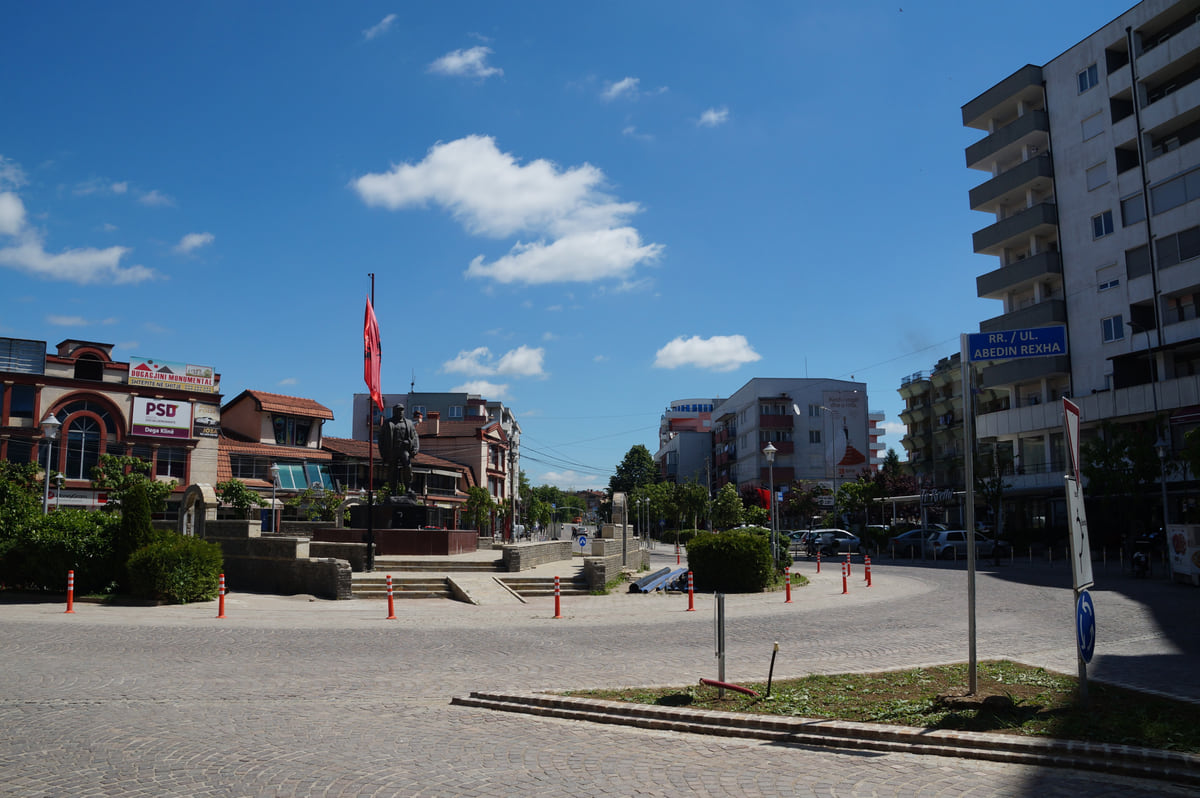
Municipality in the Peja region
Klina, the White Drin plain with three protected Orthodox sites
Klina (Klinë in Albanian) is a municipality in the Peja region, on the White Drin plain, with 30,503 residents in the 2024 census and 54 settlements according to ASK. The Special Protective Zones law covers Budisavci monastery, the Church of the Hermits at Uljaricë and Dolac monastery, and OpenStreetMap places part of the Mirusha waterfalls area within its boundary.
In 30 seconds
Full read: 2 min
- Klina (Klinë) is a Peja-region municipality with 30,503 residents in 2024.
- The law protects Budisavci monastery, the Church of the Hermits and Dolac.
- OpenStreetMap places part of the Mirusha waterfalls area within it.
- It works as a stop between Peja and Pristina.
I see Klina as a stop on the way rather than a destination. If you are driving from Peja towards Pristina or Mirusha, a short visit to Budisavci or the Church of the Hermits fits in nicely.

Before you go
What I would keep in mind
-
01 Most beautiful
Three Orthodox sites with protective zones
Law 03/L-039 protects Budisavci monastery and the Church of the Hermits at Uljaricë with their own zones, and Dolac monastery with a 50 m band.
Kosovo monasteries -
02 My tip
Mirusha close by
OpenStreetMap places the Mirusha waterfalls protected area beside Dush, a Klina village, although ASK puts the settlement of Mirushë in Malishevë.
Mirusha waterfalls -
03 Getting there
Between Peja and the centre
Klina sits on the plain between Peja and the Pristina region. If you drive that way, it is the natural halfway stop.
Peja region
What I would book
Klina (Klinë in Albanian) is the municipality you cross going from Peja towards central Kosovo, nearly always without stopping. I will not pretend it is a destination, but it has three Orthodox sites protected by law and a back door to the Mirusha waterfalls that justify an hour.
Plain, river and figures
Klina lies on the White Drin plain, east of Peja. ASK, the Kosovo Agency of Statistics, counted 30,503 people in 2024, against 38,496 in 2011, across 54 settlements. Do the sum and that is almost 8,000 fewer residents, 21 % in thirteen years, the steepest fall of the region’s three municipalities. Klina town had 5,527, followed by Drsnik, Sferkë, Gllarevë and Jashanicë. According to OpenStreetMap it makes up the Peja region with Peja and Istog.
Budisavci, the Hermits and Dolac
The 2008 Special Protective Zones law (03/L-039) names three Orthodox sites in Klina. Budisavci, a monastery, and the Hermits’ church at Uljaricë have zones with their own maps; Dolac monastery, in the village of Dollc, has a 50 m band around it. It is the same law that protects the Patriarchate of Peć and the larger monasteries elsewhere in Kosovo.
I have not found opening times or visiting rules from an official source. My advice is the usual for these places, modest dress, discretion and no assumption that it will be open. I cover them all in Kosovo’s Orthodox monasteries.
To sleep close to everything, search places to stay in Peja on Expedia and filter by area before price.
Two Bronze Age sites
The Culture Ministry’s DTK register has only two entries for Klina, both Bronze Age, the prehistoric site of Rigjeva at Gllarevë and the Illyrian burial mounds of Boka at Përçevë. As far as I can tell they are not set up for visitors, but they show this plain was lived on thousands of years ago.
Are the Mirusha waterfalls in Klina?
Here the sources disagree, and I would rather say so. OpenStreetMap places the Mirusha waterfalls protected area beside Dush, a Klina village; ASK puts the settlement of Mirushë in Malishevë municipality, in the Prizren region. The canyon lies between the two, so both versions make sense. For you, the practical point is that Klina is a good northern approach if you are coming from Peja. One FCDO health note applies here, too. Crimean-Congo haemorrhagic fever is endemic in Kosovo, especially around Malishevë in summer, so in the countryside wear long trousers and use a tick repellent.
If you are short on time, see the best tours in Peja and pick one that fits your day.
How I would do it
I would not stay in Klina. Peja has far more choice and is close. I would treat it as a stop of an hour or two on the way to Pristina or Mirusha, by car, bearing in mind the FCDO advice not to drive at night in Kosovo and that your green card does not cover you here.
To sleep close to everything, search places to stay in Peja on Booking.com and filter by area before price.
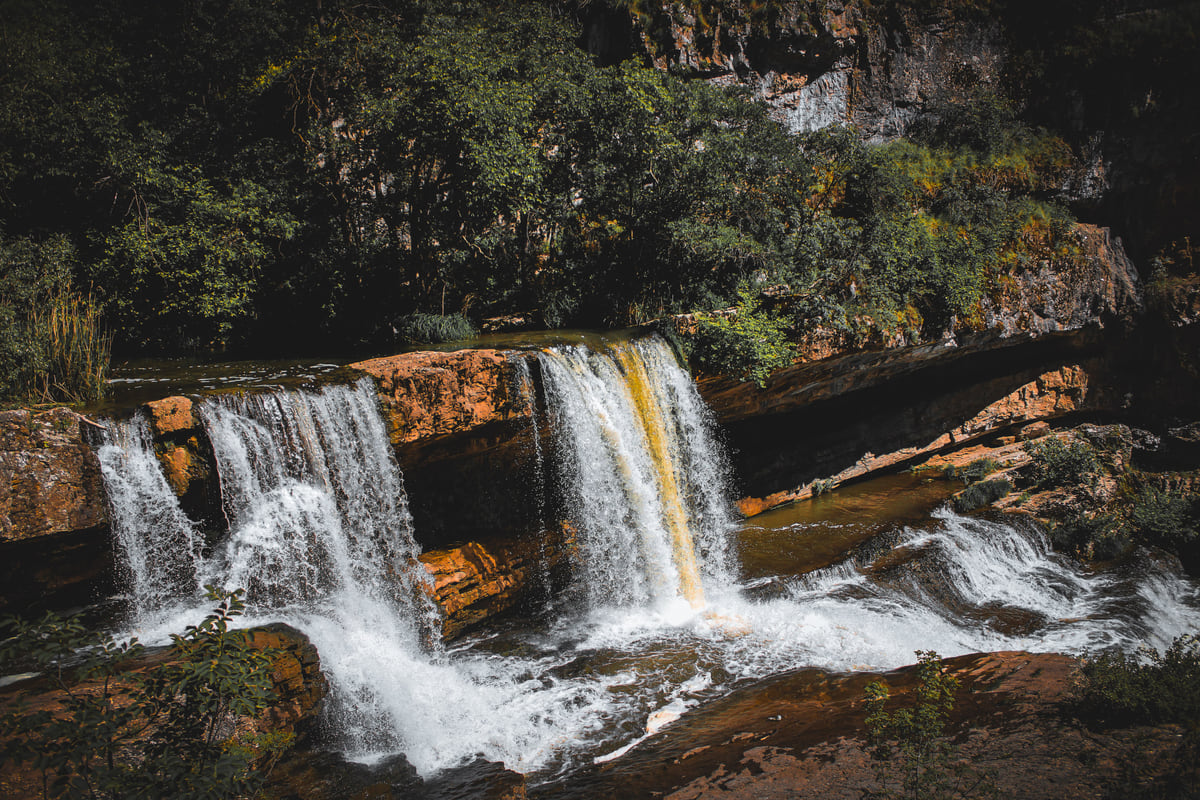
One of the Mirusha waterfalls tumbling over rock ledges among trees, with the water blurred in motion
Klina's largest settlements (2024)
| Settlement | Residents |
|---|---|
| Klinë | 5,527 |
| Drsnik | 2,719 |
| Sferkë | 1,599 |
| Gllarevë | 1,419 |
| Jashanicë | 1,145 |
Source: ASK, population by settlement, 2024 census. The municipality had 38,496 residents in 2011.
Protected heritage in Klina
| Site | Place | Protection or period |
|---|---|---|
| Budisavci monastery | Klinë | Special Protective Zone (Law 03/L-039, 7.1 g) |
| Church of the Hermits | Uljaricë | Special Protective Zone (7.1 q) |
| Dolac monastery | Dollc | 50 m Special Protective Zone (7.5 a) |
| Rigjeva prehistoric site | Gllarevë | Bronze Age (DTK) |
| Boka Illyrian burial mounds | Përçevë | Bronze Age (DTK) |
Sources: Law 03/L-039 and the Culture Ministry's heritage database (DTK). Opening times and visiting rules: no official figure.
Test yourself
True or false?
0/3 Pick before you peek.
-
Klina is part of the Peja region.
See the answer
True. According to OpenStreetMap, the Peja region is made up of Peja, Istog and Klina.
-
Klina has three Orthodox sites with Special Protective Zones.
See the answer
True. Law 03/L-039 lists Budisavci monastery, the Church of the Hermits at Uljaricë and Dolac monastery.
-
Klina had more residents in 2024 than in 2011.
See the answer
False. ASK counted 38,496 in 2011 and 30,503 in 2024.
- Municipal population in 2024 (ASK)
- 30,503
- Settlements (ASK)
- 54
- Special Protective Zones
- 3
Map
Where Klina is
The Bjeshkët e Nemuna mountains close off the west and the Sharr the south; in the middle lies the Pristina plain. Every number opens its guide.
 1Bjeshkët e Nemuna National Park 2Istog 3Peja 4Klina 5Peja region
 Map data © OpenStreetMap contributors (ODbL)
0 of 208 Kosovo guides
Your next stamp
- Peja region
- Gjilan region
- Malisheva
- Things to do
- Mirusha waterfalls
- Istog
- Mosques in Kosovo
- Gjakova Grand Bazaar
- Gjeravica
- Places to visit
- Pristina region
- Visoki Dečani Monastery
- Bjeshkët e Nemuna National Park
- Hadum Mosque
- Mitrovica Region
- Most beautiful places
- Sheh Danjolli tekke
- Prettiest villages
- Tailors' Bridge
- Rugova Canyon
- UNESCO sites
- Gjakova
- Map
- Where is Kosovo
- Regions
- Municipalities
- Cities
- Gračanica Monastery
- Mitrovica
- Patriarchate of Peć
- Pristina
- Prizren
- Rugova via ferrata
- Fushë Kosovë
- Population
- Vushtrri
- Podujeva
- Radavc Cave
- Size
- Bajrakli Mosque
- Devič Monastery
- Gazimestan
- Ibar Bridge
- Is it a country?
- One day in Pristina
- Peja
- Prizren region
- Ulpiana
- Vushtrri Stone Bridge
- Gadime Cave
- Name
- Vushtrri Fortress
- Deçan
- Flag
- Isa Boletini Complex
- Novo Brdo Fortress
- History
- Junik
- Lake Batllava
- Zvečan Fortress
- Banjska Monastery
- Ferizaj region
- Languages
- Rahovec
- Ferizaj
- Religion
- Sokolica Monastery
- Currency
- Lake Gazivoda
- Štrpce
- Brezovica
- EU membership
- Entry requirements
- Skiing in Kosovo
- Kaçanik
- Serbian border
- Gračanica
- Guesthouses in Rugova
- Hotels in Peja
- Kaçanik fortress
- Newborn monument
- North Mitrovica
- One day in Prizren
- Peja bazaar
- Public holidays
- Velika Hoča
- Facts
- Gjakova region
- Hani i Elezit
- Hotels in Gjakova
- National Library
- Obiliq
- Zočište Monastery
- Drenas
- Mother Teresa Cathedral
- Shtime
- Skënderaj
- Lipjan
- Mother Teresa Boulevard
- Zvečan
- Kosovo Museum
- Leposavić
- Novo Brdo
- Emin Gjiku Ethnological Museum
- Janjevo
- Zubin Potok
- Imperial Mosque
- Pristina Clock Tower
- Pristina Old Bazaar
- Great Hammam of Pristina
- Bogë
- Germia Park
- Getting there
- Lake Radoniq
- Prizren Fortress
- Bear Sanctuary Prishtina
- Drelaj
- Flights
- Sinan Pasha Mosque
- Hotels in Pristina
- Pristina airport
- Prizren stone bridge
- Buses
- Grand Hotel Pristina
- Our Lady of Ljeviš
- Prizren hammam
- Swiss Diamond Hotel
- Tirana to Pristina
- League of Prizren
- Restaurants in Pristina
- Skopje to Pristina
- Belgrade to Pristina
- Prizren Archaeological Museum
- Balkans itinerary
- St George's Cathedral
- Church of the Holy Saviour
- Getting around
- Holy Archangels Monastery
- Trains
- Car hire
- Day trips
- Marash
- Driving
- Sharr National Park
- Taxis
- Distances
- Prevalla
- Dragash
- Road trip
- Brod
- Prices and budget
- On a budget
- Restelica
- Free things to do
- Safety
- Mamusha
- Scams
- Healthcare
- National parks in Kosovo
- Nightlife
- Suhareka
- Mobile and roaming
- Mountains in Kosovo
- Mushtisht
- Hiking in Kosovo
- Korisha
- Packing list
- DokuFest
- Peaks of the Balkans
- With kids
- Holidays
- Hotels in Prizren
- Kosovo lakes
- 3 days
- Caves and waterfalls
- Restaurants in Prizren
- 5 days
- One week
- Kosovo food
- Sunny Hill Festival
- Gjilan
- Rahovec wine
- Atik Mosque, Gjilan
- Kosovo beer
- Draganac Monastery
- Where to eat in Kosovo
- Kamenica
- Where to stay in Kosovo
- Kllokot
- Weather in Kosovo
- Best time to visit Kosovo
- Partesh
- Kosovo in winter
- Ranillug
- Kosovo in spring
- Viti
- Kosovo in summer
- Letnica
- Binač Monastery
- Kosovo in autumn
- Events in Kosovo
- Independence Day
- Kosovo monasteries
- Kullas in Kosovo
- Castles in Kosovo
- Museums in Kosovo
- Bazaars in Kosovo
Frequently asked questions
Where is Klina in Kosovo?
In western Kosovo, in the Peja region, on the plain between Peja and the centre of the territory. According to OpenStreetMap it makes up the region with Peja and Istog.
Klina or Klinë?
Same municipality. Klinë is the Albanian form used by ASK and Klina the Serbian one, which is also the form most used abroad.
What is there to see in Klina?
Budisavci monastery, the Church of the Hermits at Uljaricë and Dolac monastery, all three with Special Protective Zones, plus two Bronze Age sites at Gllarevë and Përçevë.
How many people live in Klina?
The municipality had 30,503 residents in 2024, against 38,496 in 2011, and Klina town had 5,527, according to ASK.
Are the Mirusha waterfalls in Klina?
Depends on the source. OpenStreetMap places the protected area beside the village of Dush, in Klina; ASK puts the settlement of Mirushë in Malishevë municipality. Both can be true, as the canyon lies between the two.
By
Tourism graduate with a master’s in Tourism Management and Planning from the University of Málaga, who has travelled across Europe. He writes every guide from official sources and his own judgement.
Published on . Facts checked on .
Sources
Some links in this guide are affiliate links: if you book through them, the site earns a commission at no extra cost to you. Affiliate disclosure
Photos: albinfo (CC0); Berishasinan (CC0), via Wikimedia Commons.